
Energy as a security issue and the ECB's gloomy forecast: Why we are now paying a heavy price for yesterday's government aid
Xpert Pre-Release

Available in 27 languages 📢
Prefer Xpert.Digital on GoogleⓘPublished on: May 2, 2026 / Updated on: May 2, 2026 – Author: Konrad Wolfenstein
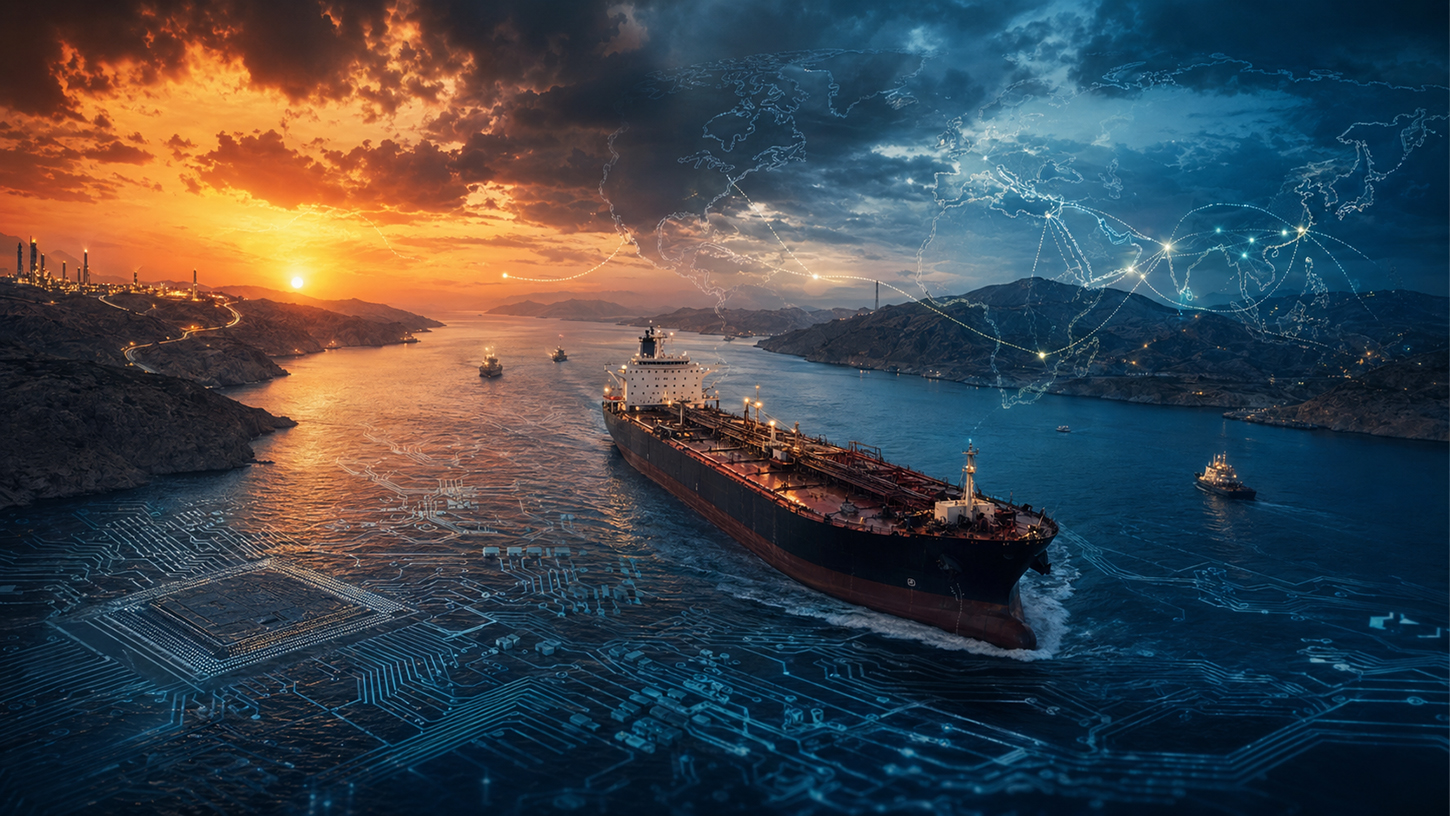
Energy as a security issue and the gloomy ECB forecast: Why we are now paying a heavy price for yesterday's government aid – Image: Xpert.Digital
The end of cheap energy: Lagarde's stark truth about our economic future
Inflation, shortages, rationing: What the global energy shock really means for us
While media and political attention at the major banking conference in Berlin focused entirely on the new German Chancellor Friedrich Merz, ECB President Christine Lagarde spoke a far more uncomfortable truth on the same stage: Europe is at the epicenter of a geopolitical and economic earthquake. With the de facto closure of the Strait of Hormuz following the Iran-Iraq War in the spring of 2026, not only will global energy supplies collapse, but also large parts of essential value chains – from oil and gas to semiconductors and agriculture. In a stark, almost historical analysis, Lagarde made it clear that the era of cheap energy for Europe is irrevocably over. At the same time, she denounced the indiscriminate fiscal policies of recent years and delivered a crystal-clear plea: The energy transition is no longer merely a climate project. It has become the ultimate question of survival for our economic resilience and national security. An in-depth analysis of a groundbreaking speech that reveals an unvarnished view of a new, uncomfortable global economic order.
While everyone was looking at Merz, the ECB president lifted the curtain on the new world economic order – and hardly anyone noticed
Berlin, April 20, 2026. Around 500 representatives from politics, business, and the financial sector gathered in the ballroom of the Association of German Banks to celebrate the association's 75th anniversary. The list of speakers reads like a who's who of economic power in Europe: Chancellor Friedrich Merz, ECB President Christine Lagarde, Deutsche Bank CEO and President of the German Banking Association Christian Sewing. A lineup that deserves attention – and yet, the evening's media coverage was dominated primarily by the speech of the newly elected Chancellor.
This analysis is based on the full speech given by ECB President Christine Lagarde at the annual reception of the Association of German Banks on April 20, 2026 in Berlin, as well as on further sources on the Strait of Hormuz, the IMF Spring Meeting 2026 and the sectoral impacts of the current energy crisis.
That's perfectly understandable. Friedrich Merz is the new face of the German government, and his statements on economic policy, Germany's competitiveness, and European defense readiness have been widely discussed. But anyone who listened closely to what Christine Lagarde said that same evening—and especially how she said it—received a different kind of message. One that sounded less like a euphoric new beginning and more like a sober assessment of a Europe that has fundamentally changed.
Lagarde opened her speech with a historical arc that was anything but decorative. When the banking association was founded in 1951, Europe was just emerging from the worst phase of its recent history and entering a golden age of peace and economic growth. Today, however, Lagarde argued, there is more uncertainty than at any time since that dawn. And this uncertainty stems predominantly from outside. A barely veiled assessment: Europe has once again become a pawn in the hands of external shocks over which it can scarcely influence.
Historians will one day look back on the past few years and highlight the sheer ruthlessness of this period, Lagarde stated in a sentence worth remembering. A virtually unprecedented pandemic. Then a land war on European soil. Then the worst energy crisis in fifty years. Then the most dramatic tariff increases since the 1930s. And now a military conflict that has led to the closure of the world's most important energy corridor – the Strait of Hormuz. Each of these shocks has robbed Europe of something it had previously taken for granted.
This is not rhetorical exaggeration by a central bank chief looking for an effective opening statement. This is a serious, factual description of the situation – and it forms the framework for everything that follows.
The bottleneck of the global economy: When twenty miles of water bring global supplies to a standstill
The Strait of Hormuz is an unassuming piece of geography. At its narrowest point, the waterway between Iran and the Musandam Peninsula is no more than about 34 kilometers wide, and the actual shipping lane is even narrower. Yet no other point on the globe has comparable importance for global energy supply. Around 3,000 ships pass through it every month in normal times. Since the start of the US-Israeli war against Iran on February 28, 2026, this traffic has virtually come to a standstill.
The specific figures Lagarde cited in her speech are extraordinary. The net decline in oil supply – even after taking into account pipeline diversions and the release of strategic reserves – is estimated at around 13 million barrels per day. This corresponds to approximately 13 percent of total global consumption. By comparison, the ECB's most adverse scenarios from 2020 modeled a disruption of only one-third of Hormuz traffic as a worst-case assumption. The actual disruption is therefore significantly higher than what was considered the worst-case scenario until just a few months ago.
Other sources paint an even bleaker picture. At the start of the crisis, the International Energy Agency (IEA) estimated the actual amount of oil blocked at almost 15 million barrels of crude oil per day, plus another 4.5 million barrels of refined fuels. The price of Brent crude oil exceeded $100 per barrel for the first time since 2022 on March 8, peaking at $126. Saudi Arabia's state-owned company, Saudi Aramco, has ramped up its East-West pipeline to its full capacity of seven million barrels per day—a measure that by no means compensates for the disruption. The Strait of Hormuz is the only natural bottleneck that simply cannot be completely bypassed by pipelines.
But Lagarde did not limit herself to oil and gas. She explicitly emphasized that as the conflict continues, another, less visible dimension of supply chain disruptions is gaining importance – and this dimension is significant.
Around a third of the world's helium production comes from the Gulf region, primarily from Qatar. Helium is not a luxury commodity – it's a critical input for semiconductor manufacturing. TSMC, Samsung, and SK Hynix, which together account for the majority of global chip production capacity, source around 65 percent of their helium from Qatar, according to industry figures. Helium cannot be produced synthetically and is difficult to store. Production facilities in Qatar were severely damaged in an Iranian missile attack on the emirate's main LNG liquefaction plant – repairs are estimated to take up to five years. The full impact on global chip production is not yet clear. But supply chain expert Cameron Johnson summed it up perfectly for Reuters: A helium shortage is truly worrying.
There is a similarly high dependence on methanol: almost a fifth of global production is affected by the Strait of Hormuz. Methanol is a basic chemical used in the production of plastics, paints, varnishes, and numerous intermediate products in the chemical industry. And finally, there are fertilizers: around 30 percent of all nitrogen- and phosphorus-containing mineral fertilizers traded worldwide are shipped through the Strait of Hormuz. For sulfur—an essential raw material for fertilizers and sulfuric acid—the figure is even higher, at around 50 percent of total maritime trade. Fertilizer prices have already risen by up to 30 percent, with foreseeable consequences for food prices worldwide.
These are not abstract figures. They describe a cascading supply chain disruption that extends from energy to semiconductors to agriculture. And they explain why Lagarde emphasized the difference between a price shock and a rationing shock: Higher prices primarily act as inflation drivers. But genuine shortages directly impact production – and that is structurally far more damaging to growth.
Aviation demonstrates that this shift from price to quantity dimensions has already begun. The price of kerosene has roughly doubled since the start of the conflict. At some European airports – including Milan-Linate, Bologna, Venice, and Treviso – kerosene has been rationed since the beginning of April. In mid-April, the International Air Transport Association (IATA) warned of massive flight cancellations in Europe starting at the end of May, as around 75 percent of European kerosene supplies originate in the Middle East. The aviation industry association ACI Europe spoke of an impending systemic shortage.
Washington without direction: The spring meeting of the IMF and World Bank overshadowed by the crisis
The spring meetings of the International Monetary Fund and the World Bank, held in Washington from April 13 to 16, were entirely dominated by the Iran-Iraq War and its economic consequences. In her Berlin speech, Lagarde described the atmosphere of this meeting in a way rarely heard from an ECB president – namely, as a gathering where everyone was looking to each other for guidance and no one had a reliable compass. There was no blueprint, no tried and tested set of tools for a crisis of this magnitude and complexity.
The IMF lowered its global growth forecast to around three percent – a downward revision that, according to IMF chief economist Pierre-Olivier Gourinchas, would not have been necessary without the conflict in the Middle East. Europe is being hit particularly hard, and within that, Germany, as an energy-intensive economy with a high dependence on imports, is especially affected. For the Middle Eastern countries excluding Iran, the World Bank forecasts growth of just 1.8 percent for 2026 – 2.4 percentage points lower than in the pre-war forecasts. Even before the meeting, IMF Managing Director Kristalina Georgieva had called for thinking the unthinkable – and preparing for it.
The implications for the world's poorest countries are staggering. According to the World Food Programme, 45 million people are at risk of acute food insecurity as a consequence of the Gulf crisis. Rising energy and food prices, capital flight, and a stronger US dollar are increasing the pressure on the already strained public finances of developing and emerging economies. The Iran war is thus generating a wave of humanitarian damage that extends far beyond the Persian Gulf and threatens to accelerate a debt spiral in the Global South.
For Lagarde, the lack of a clear compass is not an admission of helplessness. It is a precise description of the situation, one that is more honest than many diplomatically softened communiqués that typically emerge from international bodies in such situations. She is saying that the uncertainty is real, it is multidimensional, and it cannot be managed through routine monetary policy responses. In her view, two factors are crucial but not yet reliably predictable: first, the duration of the disruption, and second, the extent to which energy prices impact overall inflation.
One fundamental difference between the current situation and that of 2022 is this: Back then, after the Russian invasion of Ukraine, it quickly became clear that the shock would be lasting. Europe would no longer receive Russian gas deliveries. The strategic consequence was clear, albeit painful. Today, however, the situation is oscillating: On March 31, when the conflict appeared to be escalating, oil prices would have directly triggered the ECB's adverse scenario. On April 10, after a ceasefire was announced, the situation was again somewhere between the baseline and adverse scenarios. This extreme volatility – war, ceasefire, negotiations, naval blockade, lifting, reinstatement – makes precise economic policy responses exceptionally difficult.
Our EU and German expertise in business development, sales and marketing

Our EU and German expertise in business development, sales and marketing - Image: Xpert.Digital
Industry focus areas: B2B, digitalization (from AI to XR), mechanical engineering, logistics, renewable energies and industry
More information here:
A thematic hub offering insights and expertise:
- Knowledge platform covering global and regional economies, innovation and industry-specific trends
- A collection of analyses, insights, and background information from our key areas of focus
- A place for expertise and information on current developments in business and technology
- A hub for companies seeking information on markets, digitalization, and industry innovations
Energy crisis, Hormuz stoppage and the new stagflation of Europe
The expensive legacy of government generosity: How fiscal policy in 2022 prolonged inflation until 2025
One of the most remarkable parts of Lagarde's speech was her analysis of fiscal policy in 2022 and 2023 – and the conclusions she draws for the current situation. Here she enters intellectually uncomfortable territory, because her conclusions are an implicit critique of European fiscal policy during the hyperinflationary period.
The fiscal policy measures implemented at the time to offset rising energy and living costs amounted to 1.7 percent of gross domestic product in the Eurozone. Governments across Europe lowered energy taxes, capped electricity and gas prices, and paid energy allowances to almost all households – across all income groups, without time limits and without sufficient differentiation between the most affected population groups and those who did not require government support. In the short term, this worked. Tax breaks and price ceilings reduced measured inflation in the Eurozone by almost one percentage point. This was not irrational: energy prices are highly visible in the public consciousness and disproportionately influence inflation expectations. It was politically logical to interrupt the spiral of rising expectations and rising demands early on.
The problem lay in the design: broad measures that affected all income groups and offered too little incentive to actually reduce energy consumption. When the aid ended—because political will had waned and budgetary constraints were mounting—inflation automatically rose. The phasing out of these fiscal support measures extended the period of above-target inflation rates into 2024 and 2025. What was intended as a temporary buffer became a structural driver of inflation.
Lagarde's message to finance ministers is clear: Don't make this mistake a second time. Support is legitimate and socially necessary – but it must be specifically tailored to those genuinely in need, time-limited, and designed in such a way that the price signal is maintained. Artificially lowering energy prices sends the wrong signal to businesses and households: saving energy isn't worthwhile. Paying transfers to everyone, regardless of actual need, maintains aggregate demand, which companies can then use to justify price increases. This forces monetary policy to tighten more than would be necessary without this fiscal expansion – with all the negative growth effects that entails.
There is a third, novel limitation that Lagarde explicitly points out: In the years since the pandemic, a societal expectation has taken hold that the state will shield private households and businesses from any major shock. This expectation is understandable—after all, it arose from the state's practice of crisis intervention. However, fiscal policy leeway has narrowed dramatically. If public budgets attempt to compensate for every shock for every household, the sustainability of public finances will be eroded in the long run. Lagarde articulates a politically uncomfortable conflict of objectives here: Too much state aid can jeopardize the economic recovery in the long term just as much as too little.
More than a price shock: The tectonic shift in the global energy structure
What Lagarde described in Berlin is not, in sum, a temporary exogenous shock that will be absorbed after a few quarters and then disappear. It is a structural shift – geopolitical, energy-political, and economic – of a quality unseen since the end of the Cold War.
One must understand the historical context that Lagarde herself has provided. Within just a few years, Europe has lost the secure and cheap energy supply on which its business model had been based for decades. It has lost predictable trade relations with the United States. It has seen the foundations of its military security architecture shaken. And now, with the closure of the Strait of Hormuz, that part of the global energy supply infrastructure which ensured the supply of oil, gas, helium, methanol, and fertilizers for the rest of the world—and thus indirectly for Europe—has also come under pressure.
The ECB has modeled three scenarios for this shock: a baseline scenario, an adverse scenario, and a severe scenario, all with higher inflation and lower growth than in the December projections. That's the technocratic side. The political side is more serious: there is no going back to the situation that existed before February 2026. Or, as Lagarde put it: the pre-conflict situation will not simply return.
This also applies to the geopolitical framework. The Iran war has not only disrupted supply chains – it has recalibrated the strategic calculations of all major importing nations. China, India, the European countries, Japan, and South Korea: they are all dependent, to varying degrees, on the energy route through the Persian Gulf. Countries like Iraq and Kuwait simply have no alternative export routes. Saudi Arabia can divert some of the oil to Yanbu via its East-West pipeline, but even this capacity is limited and not available to other Gulf states.
The asymmetry of the impact is striking. In the US, inflation is already above the target level, but for different reasons – strong domestic demand dominates the inflation picture there. Europe, on the other hand, is energy-intensive and dependent on raw materials; its industry – especially German industry – processes gas, oil, and petrochemical intermediates to such an extent that supply disruptions directly impact production costs and competitiveness. The IMF has explicitly identified Germany and energy-intensive European industries as being particularly hard hit. Thus, the shock is hitting precisely those economies hardest that are already suffering from structural competitiveness problems.
What does this mean for monetary policy? Lagarde faces a classic stagflation dilemma. Rising energy prices are driving inflation, while subdued consumer sentiment and increased costs are slowing growth. The ECB cannot simply raise interest rates to curb inflation – that would further burden already weak growth. But it also cannot simply lower interest rates to support growth – that would further fuel inflation. The ECB has therefore adopted a wait-and-see approach: it is monitoring the data and will react once there is clarity about the duration and impact of the shock. Its commitment to the two percent inflation target remains unwavering – but the path to achieving it is less clear this time than it has been for years.
However, another difference compared to 2022 is indeed advantageous: the eurozone is entering the crisis with inflation close to its target. In 2022, inflation was already elevated when the shock hit – due to supply chain problems stemming from the pandemic and an acute labor shortage. The broader economic context is more robust today, even if it is overlaid by geopolitical uncertainty.
From nice-to-have to strategic obligation: The new risk calculation for investors and the financial industry
Lagarde's analysis has a consequence for the financial sector that is not rhetorical but can be clearly justified on economic grounds: energy is no longer just a question of costs or climate targets. It has become a question of security and stability.
For the field of sustainable finance – that is, the systematic consideration of sustainability criteria in financing and investment decisions – this means a recalibration of the central argument. Up to now, the energy transition has been discussed primarily as a necessary response to climate change, sometimes supplemented by arguments for cost reduction in renewable energies. This isn't wrong – but it falls short. The events of spring 2026 brutally demonstrated what dependence on fossil fuel imports from geopolitically unstable regions actually means: supply disruptions, price explosions, and rationing.
Renewable energies and decentralized production infrastructures are therefore no longer primarily a climate policy program, but a strategic security program. Photovoltaics on German roofs, wind power in the North and Baltic Sea region, domestic biogas plants, and green hydrogen from European production – all of this directly reduces geopolitical vulnerability. Those who treated the energy transition as a nice-to-have now treat it as what it always was: a core element of economic resilience.
For institutional investors and the banking sector – the audience Lagarde addressed in Berlin – this has concrete consequences. The risk profile of investments in fossil fuel infrastructure has changed: not only due to climate change, not only due to regulatory pressure, but also due to the sudden increase in geopolitical supply risks. At the same time, the risk-weighted attractiveness of investments in renewable energies, energy storage, grid infrastructure, and energy efficiency is rising. These assets reduce systemic risk, are less vulnerable to external shocks, and generate stable, long-term cash flows – precisely what is needed in times of heightened uncertainty.
The German government's special fund for infrastructure and climate neutrality, totaling €300 billion and flowing significantly into energy infrastructure and innovation promotion from 2026 onwards, should be viewed in this context: not as an ideological project, but as a strategic investment in the independence and crisis resilience of Germany as a business location. The lessons learned in spring 2026 will reinforce this line of reasoning.
According to industry experts, sustainable finance in 2026 means taking an integrated approach to transformation risks, physical risks, supply chain resilience, and social sustainability. Transition financing is no longer a niche topic – it has moved into the core of strategic corporate and portfolio management. Companies that do not systematically analyze and reduce their energy dependencies expose themselves to risks that are increasingly no longer considered tail risks, but rather likely scenarios.
The chemical industry, representative of many energy-intensive sectors, has been hit hardest by the consequences. The German Chemical Industry Association (VCI) has completely withdrawn its production forecast for 2026. Prices for basic chemicals such as benzene, ethylene, and methanol have surged in an unprecedented way due to the Hormuz blockade. For companies that addressed decarbonization, alternative raw material sources, and the circular economy early on, this shock is less severe. This is the strategic added value of ESG-oriented business models, which is not expressed in climate reports but in operational resilience to crises.
Structural change as a mandatory task: Europe's response to a world without reliable certainties
Lagarde concluded her Berlin speech with a double quotation – Hegel and Goethe. Hegel for the diagnosis: Minerva's owl only begins its flight with the onset of dusk. Understanding comes after experience, not before. And Goethe for the imperative: It is not enough to know – one must also apply.
It is an elegantly constructed framework, but it is more than just academic rhetoric. It describes the central political dilemma in which Europe finds itself: It has learned a great deal from recent years – about energy dependencies, about the limits of fiscal stabilization policies, about the necessity of strategic autonomy. But it has not yet fully translated this knowledge into concrete action.
The shift in German defense policy last year—which Lagarde explicitly cites as an example of successful adaptation—would have been unthinkable without the lessons learned from previous shocks. This is an encouraging sign. It shows that political systems are capable of learning, even if they appear sluggish. But it also shows how long it takes: a shock is necessary before the response comes. When it comes to the energy transition, Europe cannot afford to wait until the next shock before acting.
The equation is simple, even if its implementation is complex: Every kilowatt-hour that Europe produces from domestic renewable sources is a kilowatt-hour that doesn't need to be transported across the Strait of Hormuz. Every investment in storage technology reduces vulnerability to geopolitical supply disruptions. Every increase in energy efficiency in industrial processes reduces import needs. These measures simultaneously contribute to climate goals, security of supply, and industrial competitiveness—they are not either-or decisions.
What Lagarde described in Berlin is the end of a world in which energy issues were primarily treated as a question of cost. Cheap fossil fuels were the subsidy upon which the post-war European economic model rested. This subsidy has irrevocably disappeared – first through the Russian war of aggression, now through the Iran conflict, and tomorrow through whatever else may come. The structural vulnerability remains as long as Europe cannot provide for itself.
That is the real message of the evening of April 20, 2026, in Berlin. Not the Chancellor's words about location policy and economic strength—however important these may be. But rather the sober assessment of a central bank chief who explains that the familiar certainties will not return. And that, therefore, it is now a matter of applying what Europe has learned so costly in recent years.
Your global marketing and business development partner
☑️ Our business language is English or German
☑️ NEW: Correspondence in your native language!

Konrad Wolfenstein
I and my team are happy to be available to you as your personal advisor.
You can contact me by filling out the contact form here simply call me at +49 7348 4088 965. My email address is [email protected]:or
I'm looking forward to our joint project.
☑️ SME support in strategy, consulting, planning and implementation
☑️ Creation or realignment of the digital strategy and digitization
☑️ Expansion and optimization of international sales processes
☑️ Global & Digital B2B trading platforms
☑️ Pioneer Business Development / Marketing / PR / Trade Fairs
🎯🎯🎯 Data-driven B2B industry hub as a quasi-in-house solution

The quasi-in-house solution: How Xpert.Digital closes operational gaps in B2B marketing and sales – Smart Content-Driven Business - Image: Xpert.Digital
Xpert.Digital is a data-driven B2B industry hub led by Konrad Wolfenstein . The company acts as an external, quasi-in-house solution for industrial partners, closing operational gaps in marketing, content, and sales – without requiring additional resources on the client side.
More information here:










