
Black March: Oil price exceeds the $100 mark, Asian stock market crashes, and China fears total energy collapse
Xpert Pre-Release

Language selection 📢
Published on: March 9, 2026 / Updated on: March 9, 2026 – Author: Konrad Wolfenstein
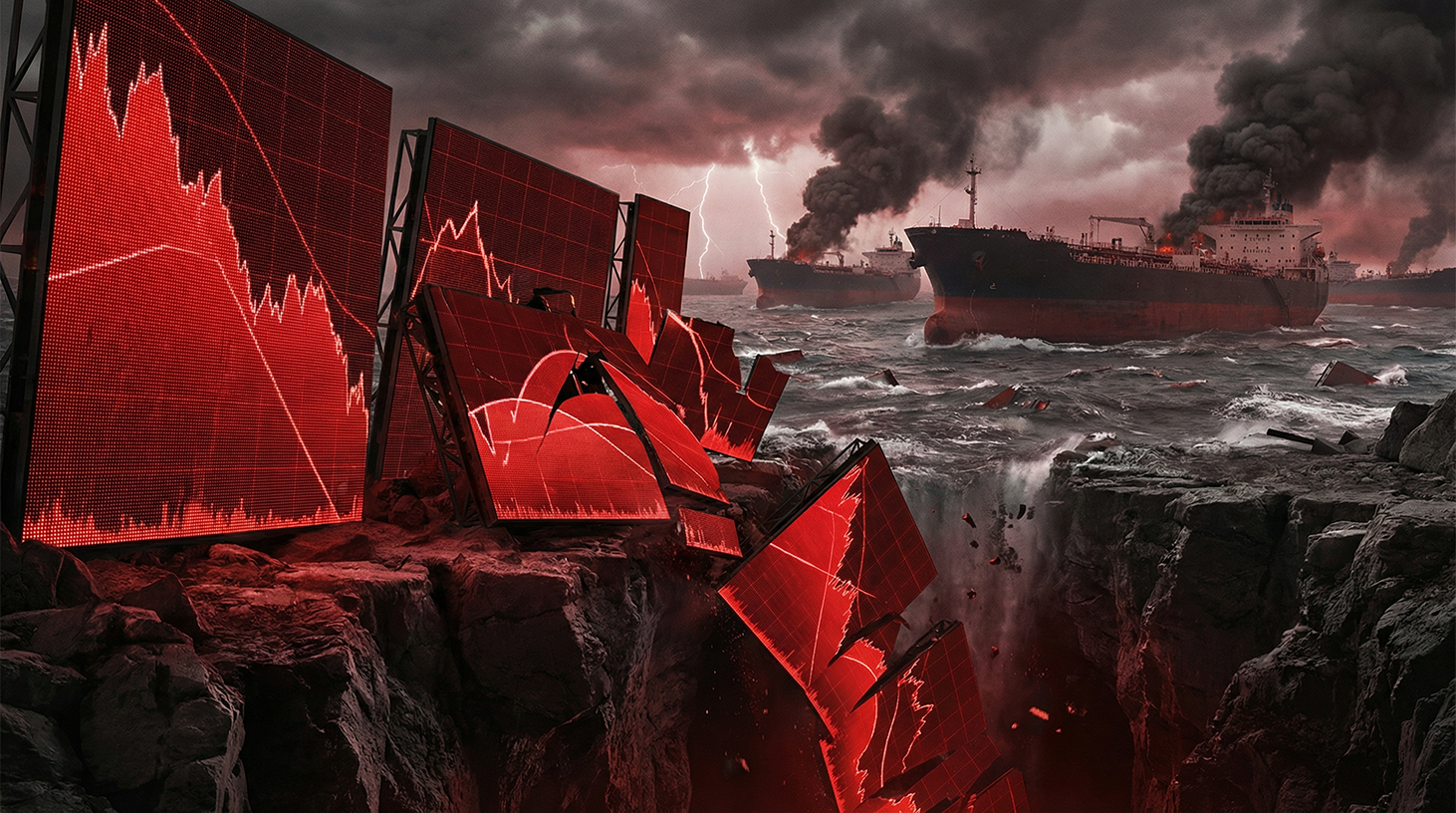
Black March: Oil price exceeds $100 mark, Asian stock market crashes, and China fears total energy collapse – Image: Xpert.Digital
Iran War 2026: Oil shock, stock market crash and the reorganization of the global economy
Stock market turmoil after escalation in the Middle East: KOSPI crashes at an unprecedented rate – DAX under massive pressure
These are days in which economic history is being written – and with drastic, devastating figures. On this day, March 9, 2026, the world gazes upon the wreckage of a fragile geopolitical order and the direct, catastrophic consequences for global trade. What had been foreshadowed in the preceding weeks of fruitless diplomatic negotiations is now a grim reality: the Middle East is ablaze. With "Operation Epic Fury" and the massive Iranian counterattack, a conflict has ignited that has completely sealed off the most critical bottleneck in the global energy supply – the Strait of Hormuz.
The consequences affect not only military strategists, but every consumer at the gas pump, every investor in the stock markets, and every central bank in its monetary policy leeway. We are experiencing the perfect economic storm: Exploding energy and commodity prices collide with an already nervous global economy. While gold, as a safe haven, climbs to new all-time highs, technology and industrial centers from Seoul to Stuttgart face the question of how to survive the sudden deprivation of their most important energy sources.
The following in-depth analysis unravels the complex web of military escalation, panicked financial markets, and the real-economic shockwaves. It reveals why this conflict has the potential to plunge the world into severe stagflation and which three scenarios will determine the fate of the global economy in the coming weeks.
Related to this:

When a strait brings the global economy to its knees
On the morning of March 9, 2026, the global economy faces a watershed moment reminiscent in its magnitude of the oil crises of the 1970s. What began on February 28 as a targeted military operation by the United States and Israel against Iran has, within ten days, developed into a regional conflagration that shakes the foundations of global energy, financial, and commodity markets. Brent crude oil has broken through the symbolic $100 mark and is trading at $107.48 per barrel on March 8 – an increase of almost 56 percent in a single month.
The Strait of Hormuz, the narrow waterway between Iran and Oman through which some 20 percent of the world's crude oil and liquefied natural gas are transported, is effectively closed. Gold prices are at record highs, stock markets from Seoul to São Paulo are experiencing historic losses, and central bankers from Washington to Tokyo are facing a dilemma unseen in decades: simultaneous rising inflation and a cooling economy. This analysis examines the full breadth and depth of the economic impact of the Iran-Iraq War—from energy and financial markets to the real-world consequences for the world's major economies.
Anatomy of an escalation: From the negotiating table to the battlefield
The military confrontation did not come out of nowhere. Since the collapse of the Iran nuclear negotiations under Trump's second presidency, a diplomatic tug-of-war had developed, failing to produce a viable agreement in three rounds of talks in Oman, Geneva, and finally Vienna. The American side demanded the complete dismantling of the Iranian nuclear program, including the enrichment facilities in Natanz, Fordow, and Isfahan—a demand that Tehran categorically rejected. The third round of talks on February 26 ended with disappointment on the American side, according to Bloomberg reports, even though the Omani mediators still spoke of significant progress.
On February 28, 2026, the US and Israel launched Operation Epic Fury, carrying out nearly 900 attacks in the first twelve hours. The Israeli Air Force, with approximately 200 fighter jets, conducted the largest combat operation in its history. The attacks targeted Iran's missile infrastructure, air defense systems, military bases, and the country's political leadership. The killing of Supreme Leader Ali Khamenei marked the most symbolically and strategically significant single success of the operation. At the same time, the attacks also caused civilian casualties, including more than 160 deaths when a missile struck a girls' school in Minab, located directly adjacent to a naval base.
The Iranian response was swift and aggressive, surprising many observers. Tehran launched hundreds of drones and ballistic missiles at Israel and at American military bases in Qatar, Bahrain, the United Arab Emirates, Kuwait, Iraq, Jordan, and Saudi Arabia. Particularly devastating was the attack on the Qatari industrial complexes in Ras Laffan and Mesaieed, where QatarEnergy, the world's largest LNG producer, was forced to completely halt production. The Islamic Revolutionary Guard Corps declared the Strait of Hormuz closed and threatened to set fire to any ship attempting to cross it.
On March 9, just over a week after the start of the war, Tehran signaled its continued control by appointing Mojtaba Khamenei as the new Supreme Leader, while the Islamic Revolutionary Guard Corps declared it was prepared for at least six months of high-intensity warfare. The Iranian side rejected any negotiations. Foreign Minister Abbas Araghchi told NBC News unequivocally that Iran was not seeking a ceasefire or talks with the United States, as it had negotiated twice and been attacked each time in the middle of negotiations. On the other side, President Trump reiterated his demand for Iran's unconditional surrender and ruled out any form of negotiation. The White House anticipated the military campaign would last four to six weeks.
The Strait of Hormuz: A bottleneck of the global economy kept secret
The closure of the Strait of Hormuz is by far the most economically devastating element of this conflict. Approximately 20 percent of the world's crude oil and an equally large share of global LNG exports flow through this narrow strait, which is only 33 kilometers wide, every day. The closure was implemented gradually: Within hours of the first attacks, the Revolutionary Guard Corps (IRGC) broadcast warnings via VHF radio to all ships in the strait. On March 1, the oil tanker "Skylight" was hit by a projectile north of Khasab in Oman, killing two Indian crew members. On March 2, a senior IRGC officer confirmed the official closure.
By March 4, the Revolutionary Guard claimed complete control of the Strait of Gibraltar. At least eight ships had been damaged. Major container shipping companies Maersk, CMA CGM, and Hapag-Lloyd suspended their operations through the strait and related routes. Yemeni Houthi rebels announced the resumption of their attacks on ships in the Red Sea, which also severely disrupted traffic through the Suez Canal, forcing ships to take a weeks-long detour around the Cape of Good Hope.
The insurance industry reacted by canceling coverage for transits from March 5th, making the economic risk for shipowners unbearably high. On the same day, the Automatic Identification System (AIS) no longer showed any tankers in the strait – an unmistakable signal of a complete standstill in maritime traffic. Approximately 150 ships were stranded in the strait.
The consequences of this blockade extend far beyond the immediate oil market. Kuwait and the United Arab Emirates began to reduce their oil production as their reservoirs rapidly filled; Iraq halted parts of its output. While Saudi Arabia has the East-West pipeline to the Red Sea, which allows some exports to bypass the Strait of Hormuz, the capacity of this alternative is limited. Rystad Energy estimates that the overall impact of the closure could result in a shortfall of eight million barrels per day, even if some flows are diverted through alternative pipelines.
Oil prices in free flight: From $60 to over $110 in three months
The price development on the crude oil market reflects the escalation of the crisis with dramatic accuracy. As recently as mid-December 2025, Brent crude was trading at around $59 per barrel. The gradual rise to $72.48 on the day of the first attacks reflected the growing nervousness of the markets during the weeks of failed negotiations. But it was only the actual military confrontation, and especially the closure of the Strait of Hormuz, that triggered a price explosion of almost unprecedented speed in history.
On March 1, Brent crude jumped 10 percent in after-hours trading to around $80, briefly reaching prices above $82. The following week, the momentum escalated further: On March 5, Brent stood at $85.69, and by March 6, it had already climbed above $90 after Trump ruled out any negotiations and demanded unconditional surrender. On Friday, March 7, US crude closed just under $91 per barrel, marking its largest weekly increase since 1983.
Monday, March 9th, brought the actual breakthrough above the $100 mark. Brent crude jumped more than 20 percent to $111.04, its highest level since July 2022. West Texas Intermediate (WTI) crude rose by 22 percent in parallel. Various sources report trading levels between $107 and $114 during the day. Within a month, the price of Brent crude has thus increased by 55.68 percent.
JPMorgan warned as early as the first week of the war that if the Hormuz blockade continued beyond three weeks, the Gulf states would have to exhaust their storage capacities and further reduce production, which could result in Brent prices between $100 and $120 per barrel. Qatar's energy minister went even further, predicting that if all Gulf exporters halted production within a few weeks, oil prices of $150 per barrel were realistic.
OPEC+ responded on March 1st with a production increase of 206,000 barrels per day starting in April – a measure that was more symbolic than substantial. The organization's available reserve capacity, estimated at 2.5 million barrels per day, is largely concentrated in Saudi Arabia and the United Arab Emirates. Saudi Arabia had already proactively increased its production by 250,000 barrels per day in February. But even this capacity is of little help as long as the oil cannot reach consumers via the Strait of Hormuz.
Before the conflict, market forecasts for 2026 painted a completely different picture. JPMorgan expected an average Brent price of around $60, while ABN AMRO even predicted $55, with a drop to $50 by the end of the year. The oversupply of more than 3.5 million barrels per day that had been anticipated for 2026 has, due to the war, transformed into an acute supply shortage.
Natural gas and LNG: Europe's vulnerable flank
The impact on the natural gas market is in some respects even more dramatic than on crude oil. The Iranian drone attack on the Qatari industrial complexes of Ras Laffan and Mesaieed on March 2 forced QatarEnergy to shut down the world's largest LNG export facility. Goldman Sachs estimated that this production halt could reduce the global LNG supply by 19 percent in the short term.
Asian LNG spot prices surged nearly 40 percent on Monday, March 3, reaching $25.40 per million British thermal units (MMBtu), their highest level since 2023. In Europe, gas prices on the Dutch TTF hub, the European benchmark market, jumped almost 70 percent in just two trading days, briefly exceeding €60 per megawatt-hour – a level last seen in February 2025. On a weekly basis, the TTF gas price recorded an increase of around 50 percent, the strongest weekly rise since the energy crisis in the summer of 2023. Implied volatility in TTF gas trading has quadrupled since the beginning of the year.
For Europe, which is still grappling with the fallout from the energy crisis following Russia's invasion of Ukraine, these developments are particularly worrying. While European gas storage facilities were adequately filled at around 83 percent at the start of the winter of 2025/26, a prolonged disruption in gas supplies from the Gulf could quickly deplete these reserves. TTF gas prices, which ABN AMRO had projected to average €30 per megawatt-hour for 2026, with a drop to €26 in the summer, are now in a completely different league.
Our global industry and economic expertise in business development, sales and marketing

Our global industry and economic expertise in business development, sales and marketing - Image: Xpert.Digital
Industry focus areas: B2B, digitalization (from AI to XR), mechanical engineering, logistics, renewable energies and industry
More information here:
A thematic hub offering insights and expertise:
- Knowledge platform covering global and regional economies, innovation and industry-specific trends
- A collection of analyses, insights, and background information from our key areas of focus
- A place for expertise and information on current developments in business and technology
- A hub for companies seeking information on markets, digitalization, and industry innovations
Global collapse: How a war plunges the world economy into a chain reaction
Gold and raw materials: Flight to a safe haven
Gold has once again proven its role as the ultimate safe haven in times of geopolitical turmoil. On March 2, the first trading day after the outbreak of war, the price of gold jumped by over 5 percent to around $5,400 per troy ounce. Having already reached an all-time high of $5,594.82 in January 2026, the war with Iran catapulted it back toward this record level.
In the following week, gold initially stabilized slightly below its peak levels, with the spot price at around $5,156 on March 6. JPMorgan analysts projected a short-term risk premium of 5 to 10 percent and reaffirmed their year-end target of $6,000 per troy ounce. Longer-term forecasts, such as those from the Nomura Research Institute, even saw potential for a price of up to $10,000 if the conflict continued.
Gold's performance is situated within a revealing historical context. During the Iranian Revolution and the oil crisis of 1979-1980, gold appreciated by 126 percent, while the dollar lost 8 percent in real terms. The current situation—rising oil prices, escalating geopolitical uncertainty, and increasing inflation—creates a near-ideal environment for the precious metal. While the US dollar has also benefited from its safe-haven status and appreciated against most major currencies, gold is likely to prevail in the long run as an inflation hedge and a sovereign, country-independent store of value.
Related to this:

Wall Street between panic and resilience
American stock markets reacted to the Iran war with volatility reminiscent of the most turbulent periods in recent financial history, though without a full-blown sell-off. On the first trading day after the attacks, March 3, the Dow Jones Industrial Average plunged by more than 1,200 points at one point, but recovered during the day and closed only 403 points lower. The S&P 500 fell by as much as 2.5 percent, but ended the day down only 0.9 percent at 6,816.63 points.
This remarkable resilience of the US markets during the first week of the war was driven by several factors. Major technology stocks, led by Nvidia with a gain of 2.9 percent, stabilized the indices. Defense stocks such as Lockheed Martin (+6 percent) and Northrop Grumman (+5 percent) benefited directly from the conflict, as did Palantir Technologies (+5.8 percent) and drone manufacturer AeroVironment (+10 percent). Oil companies like Exxon Mobil and Marathon Petroleum also posted significant gains.
But in the second week of the war, sentiment deteriorated noticeably. On March 5, the Dow Jones Industrial Average lost 785 points, or 1.6 percent. The weak February jobs report, which showed a loss of 92,000 jobs, exacerbated concerns about potential stagflation. By the end of the week on March 7, the Dow had lost 3 percent, the S&P 500 2 percent, and the Nasdaq Composite 1.2 percent. On Monday, March 9, the losses continued: The S&P 500 fell to 6,629 points, a decline of 1.65 percent from the previous day and 4.51 percent from the previous month.
The sectors hardest hit were airlines, whose shares came under massive pressure due to rising fuel costs and flight cancellations, and consumer-related cyclical stocks. The yield on ten-year US Treasury bonds rose to over 4.1 percent, reflecting rising inflation expectations.
Europe caught in the grip of the oil price shock
European stock markets were hit harder by the Iran war than Wall Street, which is hardly surprising given Europe's greater energy dependence. On March 2, the pan-European Stoxx 600 opened down 1.4 percent, the German DAX lost 2.3 percent, the French CAC 40 fell 2.4 percent, and the British FTSE 100 declined 1 percent. The sell-off accelerated the following day: the Stoxx 600 plunged 3.2 percent, bank stocks lost 4.3 percent, insurance stocks 3.6 percent, and utilities 4.4 percent.
The DAX, Germany's leading stock index, experienced a particularly turbulent week. From its record high of over 25,000 points, reached just a few weeks earlier, it fell to 23,591 points by March 6, a weekly loss of around 6.9 percent. Cyclical industrial and chemical stocks such as BASF, Bayer, Continental, and Volkswagen were particularly hard hit, with losses of up to 4 percent. Semiconductor manufacturer Infineon alone lost 7.1 percent on Friday, while specialty chemicals manufacturer Lanxess even plummeted by 17.4 percent. The Euro Stoxx 50 recorded a weekly decline of 5.8 percent, its steepest drop since April of the previous year.
There were also winners in Europe, albeit in narrowly defined sectors. Norwegian oil producers Equinor and Vår Energi rose by 8 and 6 percent, respectively. Defense stocks showed mixed results: BAE Systems (+6 percent) and Italy's Leonardo (+3 percent) gained, while Saab and Avio declined. The German defense company Rheinmetall bucked the trend with a gain of 3 percent.
Germany: Export nation in the energy price storm
The German economy, as an energy-intensive export nation particularly affected by these developments, is facing a significant burden. Political leaders in Berlin are suddenly confronted with massive economic policy challenges in order to support the competitiveness of domestic industry. The DAX, which reached record highs at the beginning of 2026 – driven by the resilience of corporate profits, rising defense and infrastructure spending, and expectations of a looser monetary policy from the ECB – is now facing a fundamental reassessment of the economic environment.
German industry, which had only just begun to partially overcome the consequences of the energy crisis following the Ukraine war, is facing a fundamental threat from the renewed oil price shock. Chemical companies like BASF and Lanxess, whose business models are heavily dependent on energy prices, are among the biggest losers on the stock market. The automotive industry, Germany's most important export sector, is doubly burdened by rising production costs and potentially weakening global demand.
The European Central Bank (ECB) is facing a classic stagflation dilemma. ING analysts noted that recent market movements—a weaker euro and higher oil prices—are likely to inevitably push inflation in the eurozone higher in the coming months. Traditionally, oil price shocks in the eurozone have a stagflationary effect, which has often led the ECB in the past to simply ignore oil-driven inflation spikes. But this time the situation is more complex: Preliminary Eurostat data showed inflation in the eurozone at 2.4 percent in February, just slightly above the ECB's target. A sustained rise in oil prices could quickly push this figure to 3 percent or above, forcing central bankers to choose between sacrificing their interest rate cut plans or accepting an acceleration in inflation.
Asia's vulnerability: From technology boom to energy crisis
Asian markets have experienced the most severe disruptions since the global financial crisis. The region is particularly exposed, as China, India, Japan, and South Korea together account for 75 percent of oil exports and 59 percent of LNG exports from the Persian Gulf.
South Korea: The deepest stock market crash in history
The most spectacular losses were recorded by South Korea's KOSPI index. After South Korean markets were closed on Monday for a public holiday, the KOSPI plunged by 7.2 percent on Tuesday. Then, on Wednesday, March 5, came the historic crash: the KOSPI plummeted by 12.06 percent to 5,093.54 points – the largest single-day loss in the index's 46-year history, and even more dramatic than the day after the attacks of September 11, 2001. The technology-heavy KOSDAQ even fell by 14 percent, also marking a new all-time low.
Circuit breakers were triggered, halting trading for 20 minutes. Samsung Electronics, the index's heavyweight, lost 11.74 percent, closing at 172,200 won, while SK Hynix fell 9.58 percent. Within two trading days, the KOSPI had lost more than 18 percent, wiping out half a trillion dollars in market value. The Korean won fell overnight to 1,506.5 won per dollar, its weakest level since March 2009.
The reasons for South Korea's disproportionate losses lie in the country's extreme energy dependence. South Korea imports almost all of its energy, a significant portion of it via the Strait of Hormuz. The combination of rising oil prices and a weaker currency threatens both import prices and corporate profits. Furthermore, the fact that the KOSPI was the best-performing major stock index in the world last year amplified the potential for a sharp decline.
On March 5, an equally dramatic rebound followed: The KOSPI shot up by 9.63 percent, and the KOSDAQ even by 14.1 percent – triggered by rumors of covert contacts between the US and Iran and the previous day's recovery on Wall Street. Buy-side circuit breakers were activated, an extremely rare occurrence. But this recovery proved unsustainable: On March 9, the KOSPI fell again by 7.67 percent to 5,156 points.
Japan: 90 percent energy dependency as its Achilles' heel
Japan, which imports more than 90 percent of its crude oil from the Middle East and is heavily reliant on LNG deliveries through the Strait of Hormuz, faces a potentially devastating energy shock. The Nikkei 225 fell 6.1 percent in the first four trading days of the conflict, making it one of the weakest major stock indices worldwide. On March 3, the Nikkei lost 2.1 percent, and on March 4, it fell another 3 percent to 56,279 points.
On Monday, March 9, the real shock came: The Nikkei plunged by almost 7 percent to 51,740 points, its lowest level since early January. Nikkei futures fell even further, by as much as 7.8 percent, approaching the level that would have triggered the circuit breaker. Chip supplier Advantest lost 12.84 percent, Tokyo Electron 8.83 percent, and SoftBank Group 11.21 percent. Just two weeks earlier, both the Nikkei and the Topix had reached record highs.
The macroeconomic consequences for Japan could be significant. Morgan Stanley MUFG Securities calculates that a 10 percent increase in oil prices would reduce Japan's real GDP by approximately 0.1 percentage points. The Nomura Research Institute estimated that a sustained 30 percent price increase would cause GDP to fall by 0.18 percent and consumer prices to rise by 0.31 percentage points. Japan does possess strategic oil reserves sufficient for approximately 254 days, and the government has already ordered preparations for a potential release.
For the Bank of Japan, the oil price shock is massively complicating the already complex monetary policy situation. Markets had anticipated an interest rate hike as early as April before the war, but this expectation is now virtually off the table. A simultaneous rise in inflation and a slowdown in growth – the classic stagflation pattern – leaves the central bank with no easy solution.
China: The Vulnerable Giant
China, the world's largest energy importer, finds itself in a particularly precarious situation. The country imports around 70 percent of its oil and gas needs, with about half of its oil imports crossing the Strait of Hormuz. Iran has been a particularly important supplier: in 2025, China purchased 1.38 million barrels of Iranian oil per day, representing approximately 80 percent of Iran's exports.
Henry Wang, president of the Centre for China and Globalization, summed up the situation: The entire supply chain is being seriously disrupted by what he called a "man-made crisis," and this affects not only China but the entire world. China has oil reserves sufficient for four to five months, but its structural dependence on the Persian Gulf remains a strategic vulnerability.
Chinese stock markets reacted relatively moderately. The Shanghai Composite Index fell 1.3 percent on March 3, while Hong Kong's Hang Seng declined by 0.1 percent. However, on March 9, the Hang Seng dropped 3.1 percent and the Shanghai Composite 1.7 percent. The relatively subdued reaction of the Chinese stock exchanges can be partly explained by the fact that Beijing had already begun reducing its imports of Iranian oil and increasing its reliance on Russian crude oil before the war. Analysts at Kpler predicted that if the conflict continued for an extended period, China would further increase its dependence on Russian oil.
Some observers see a strategic component to the US attacks on Iran, directed against China. The disruption of Iranian and Venezuelan oil supplies simultaneously impacts two of Beijing's most important alternative energy providers. However, Wang contradicted this interpretation: Trump is harming himself, as European countries, the G7, and the US itself are also severely affected.
Latin America: Between oil profiteers and economic fears
Latin American markets experienced a consistent downward trend, affecting all of the region's major indices. Brazil's Ibovespa lost around 4.7 percent from Monday's close, falling to 180,464 points in the week ending Thursday. The decline continued on Friday, with the index closing at 179,365 points, a one-month low. Mexico's IPC fell 2.91 percent, Chile's IPSA dropped 1.88 percent, and Argentina's MERVAL approached oversold territory with an RSI of 30.13.
The situation in the region is complex. As a major oil producer, Brazil theoretically benefits from higher oil prices, as reflected in Petrobras' impressive results: the company reported a net profit of 110.1 billion reais for 2025 – a 201 percent increase over the previous year. However, the overall impact on the Brazilian economy is negative, as rising energy prices fuel inflation and slow the central bank's (BCB) interest rate cuts. The Brazilian swap curve already priced in a reversal of interest rate policy, with the December 2028 (DI) at 12.975 percent – a 19 basis point increase in just one day.
The situation is particularly complex for Mexico. Although the country is a major crude oil producer, it is heavily dependent on international energy imports, especially refined products. Scotiabank warned that the sharp rise in oil prices could increase the risk of inflation and prompt Mexico's central bank, Banxico, to revise its expectations for interest rate cuts upwards. With Brent crude rising 35 percent since the beginning of the year, the upside risks to Mexican inflation are becoming increasingly clear and can no longer be easily dismissed by policymakers.
India: The subcontinent under double strain
India is one of the most severely affected major economies in several respects. The country imports more than 80 percent of its crude oil, with over 40 percent of those imports transported through the Strait of Hormuz. This vulnerability has been exacerbated by a strategically unfortunate decision in recent weeks: the Indian government pledged to President Trump that it would reduce oil purchases from Russia and instead import more from the Persian Gulf in order to receive relief from American tariffs. These very shipments are now acutely threatened by the war.
Analysts estimate that a sustained increase in oil prices of $10 per barrel could raise India's annual import bill by $13 to $14 billion, widen the current account deficit by 40 to 50 basis points, and put downward pressure on the rupee. Growth could decline from over 7 percent to around 6.5 percent.
Indian companies have already begun cutting natural gas deliveries to industry in preparation for tighter supplies from the Middle East, which could impact production in the fertilizer and power generation sectors. The Reserve Bank of India faces the immense challenge of keeping interest rates low to support growth while inflation is simultaneously being driven up by rising energy prices.
🎯🎯🎯 Benefit from Xpert.Digital's extensive, five-fold expertise in one comprehensive service package | BD, R&D, XR, PR & Digital Visibility Optimization

Benefit from Xpert.Digital's extensive, five-fold expertise in a comprehensive service package | R&D, XR, PR & Digital Visibility Optimization - Image: Xpert.Digital
Xpert.Digital possesses in-depth knowledge across various industries. This allows us to develop tailored strategies precisely aligned with the requirements and challenges of your specific market segment. By continuously analyzing market trends and monitoring industry developments, we can act proactively and offer innovative solutions. The combination of experience and expertise generates added value and provides our clients with a decisive competitive advantage.
More information here:
Three scenarios for the global economy: From a rapid collapse to a prolonged crisis
Central banks in a vice: Monetary policy without good options
For the world's central banks, the Iran war represents the worst possible time for an oil price shock. The Federal Reserve (Fed) cut interest rates by 75 basis points in 2025 to a range of 3.5 to 3.75 percent to support the labor market, even though inflation was above the 2 percent target. Cleveland Fed President Beth Hammack succinctly summarized the dilemma: a prolonged oil shock could simultaneously drive up inflation and dampen growth and employment; the Fed must carefully assess the situation before making any monetary policy adjustments.
The disastrous February jobs report, which showed a loss of 92,000 jobs, exacerbated the dilemma. Rising gasoline prices, combined with import prices already inflated by Trump's tariffs, could destabilize inflation expectations and force the Fed to keep interest rates high for longer or even raise them. At the same time, a weak labor market would actually argue for interest rate cuts.
The Bank of Japan finds itself in a similar predicament. Markets had already priced in an interest rate hike in April before the war, but the oil price shock shattered those expectations. The yen fell to 158.67 per dollar, further increasing import costs and fueling inflation. The ECB is also facing the stagflation dilemma, with ING analysts pointing out that the question is no longer how the ECB should react to falling below its inflation target, but rather how it should deal with another oil price shock.
The Reserve Bank of India has decided to keep interest rates low for the time being, as the growth effect of the war is considered more severe than its inflationary effect. In Latin America, the central banks of Brazil and Mexico are taking the opposite approach, reducing their expectations for interest rate cuts in light of high inflation risks.
Related to this:

Petrol prices and consumers: The war at the pump
For American consumers, the war first materialized at the gas pump. The average price of gasoline in the US exceeded $3 per gallon for the first time since November on March 2nd. By Thursday, March 6th, it had risen to $3.25 – a weekly increase of 27 cents, comparable to the price shock following the start of the war in Ukraine in 2022. The 8.5 percent increase over three days was the highest since Hurricane Katrina in 2005.
This price increase has immediate political implications. Nearly half of those surveyed in a Reuters/Ipsos poll said they would be less inclined to support Trump's Iran policy if oil and gas prices continued to rise. The psychological impact of gasoline prices as a daily indicator of inflation should not be underestimated. Experts predicted that for every $10 increase in the price of crude oil, the price of gasoline at the pump could rise by 25 cents.
Beyond the gas pump, rising energy prices are also impacting consumers. Mortgage rates increased during the week of the war, further worsening already subdued consumer sentiment. Mark Malek, chief investment strategist at Siebert Financial, summed up the underlying mechanism: "When consumers spend more on gasoline, they have less money available for other things."
The global recession threat: Temporary shock or structural change
Chatham House, in an analysis published on March 5, offered a more nuanced assessment: even a prolonged war would have only a limited impact on global GDP. The world economy is more resilient to oil price shocks today than it was in the 1970s, as the share of energy costs in GDP has decreased and most economies are in a better fiscal position than they were decades ago.
But this reassuring outlook doesn't apply equally to all countries. Economies with extensive energy subsidies and shaky budgets, such as Egypt, Tunisia, and Pakistan, are particularly vulnerable. Capital Economics warned that if Iranian oil production or the Strait of Hormuz remains disrupted, the price of oil could rise to $100, increasing the global inflation rate by 0.5 to 0.7 percentage points. Iran's economy itself will suffer the most: Based on the impact of wars elsewhere, Iranian GDP is expected to fall by more than 10 percent.
For the global economy as a whole, one key variable is emerging: the duration of the disruption. Sophie Corbett of the Center on Global Energy Policy at Columbia University aptly put it: The market is currently assuming a short disruption without physical destruction, but that could change as the situation develops. It is not yet clear how this crisis will end.
Morgan Stanley strategists, led by Michael Wilson, identified an oil price above $100 per barrel as the threshold at which US stocks could experience a significant and sustained decline. This threshold was breached on March 9. Whether this marks the beginning of a more profound market correction or whether a diplomatic solution will stabilize the markets is the crucial question at this time.
Sectoral winners and losers in a global overview
The effects of the Iran war are highly unevenly distributed across various economic sectors and asset classes. The following overview summarizes the key market reactions:
| sector | trend | Examples |
|---|---|---|
| Oil and gas | Strongly positive | Equinor +8%, Vår Energi +6%, Marathon Petroleum +5.9%, Inpex +1.88% |
| armor | Positive | Lockheed Martin +6%, Northrop Grumman +5%, BAE Systems +6%, Rheinmetall +3% |
| Gold & Precious Metals | Strongly positive | Gold price up 5.2% to $5,400, mining stocks outperform |
| Airlines | Strongly negative | Korean Air -8.9%, Japan Airlines -5.2%, Lufthansa under pressure |
| semiconductor | Negative | Samsung -11.7%, SK Hynix -9.6%, Advantest -12.8%, Infineon -7.1% |
| Chemistry & Industry | Negative | BASF, Bayer, Lanxess -17.4% |
| Banking & Finance | Negative | European bank stocks -4.3%, Mitsubishi UFJ -7.3% |
| Shipping & Logistics | Mixed | Insurance premiums +50%, longer routes, higher costs |
Among the strongest sectors were oil and gas, where stocks such as Equinor (+8%), Vår Energi (+6%), and Marathon Petroleum (+5.9%) gained ground. The defense industry also performed well, with gains from Lockheed Martin (+6%), Northrop Grumman (+5%), BAE Systems (+6%), and Rheinmetall (+3%). Gold and precious metals also showed a strong upward trend, with the price of gold rising by 5.2% to $5,400 and mining stocks outperforming.
On the other hand, airlines suffered heavy losses, as exemplified by Korean Air (-8.9%) and Japan Airlines (-5.2%), while Lufthansa also came under pressure. The semiconductor industry was also negatively impacted, with declines at Samsung (-11.7%), SK Hynix (-9.6%), Advantest (-12.8%), and Infineon (-7.1%), as was the chemical and industrial sector, with losses at companies such as BASF, Bayer, and Lanxess (-17.4%). The banking and financial sector also performed poorly, reflected in declines at European bank stocks (-4.3%) and Mitsubishi UFJ (-7.3%).
The shipping and logistics sector showed mixed developments, characterized by insurance premiums rising by 50%, longer routes and higher costs.
Outlook: Three scenarios for the coming weeks
The further development of global markets and the world economy depends significantly on three scenarios that are currently emerging:
Scenario 1: Rapid De-escalation
The first and most optimistic scenario envisions a rapid de-escalation within two to three weeks, possibly through covert diplomatic channels or a collapse of Iran's combat capabilities. In this case, oil prices would likely fall quickly again, following the pattern of the brief conflict in June 2025, perhaps to a level between $70 and $80. Stock markets would recover most of their losses, and long-term economic damage would remain limited.
Scenario 2: Medium-term conflict
The second scenario, considered by many analysts to be the most likely, assumes a conflict lasting four to six weeks, as indicated by the White House. In this case, oil prices are likely to remain in the $90 to $120 range for an extended period, which could boost global inflation by 0.5 to 0.8 percentage points and significantly dampen global growth. Central banks would have to put their interest rate cut plans on hold or even consider tightening them. Energy-dependent economies in Asia and Europe, in particular, would be under considerable pressure.
Scenario 3: Protracted blockage
The third and most threatening scenario, which can no longer be ruled out given the escalating dynamics of recent days, involves a protracted conflict lasting several months, physical damage to energy infrastructure in the Gulf states, and a permanent blockade of the Strait of Hormuz. In this case, oil prices of $150 and above would be conceivable, a global recession likely, and the economic damage comparable to that of the major oil crises of the 20th century. Qatar's energy minister explicitly warned of a collapse of the global economy in this scenario.
On March 9, 2026, the signs point more toward escalation than de-escalation. Trump's demand for unconditional surrender and Iran's rejection of any negotiations leave little room for diplomatic solutions. The appointment of Mojtaba Khamenei as the new Supreme Leader signals the continuation of the hardline course. Oil prices have broken through the psychologically important $100 mark, and every additional day of the Hormuz blockade worsens the supply situation. The global economy is in a phase of maximum uncertainty, where the lines between temporary shock and structural crisis are blurred.
Your global marketing and business development partner
☑️ Our business language is English or German
☑️ NEW: Correspondence in your native language!

Konrad Wolfenstein
I and my team are happy to be available to you as your personal advisor.
You can contact me by filling out the contact form here or simply call me at +49 7348 4088 965. My email address is: [email protected]
I'm looking forward to our joint project.










