
Economic warfare in the shadow of diplomacy: Why Xi and Trump shake hands smilingly – while their countries are economically attacking each other
Xpert Pre-Release

Available in 27 languages 📢
Prefer Xpert.Digital on GoogleⓘPublished on: August 10, 2026 / Updated on: August 10, 2026 – Author: Konrad Wolfenstein
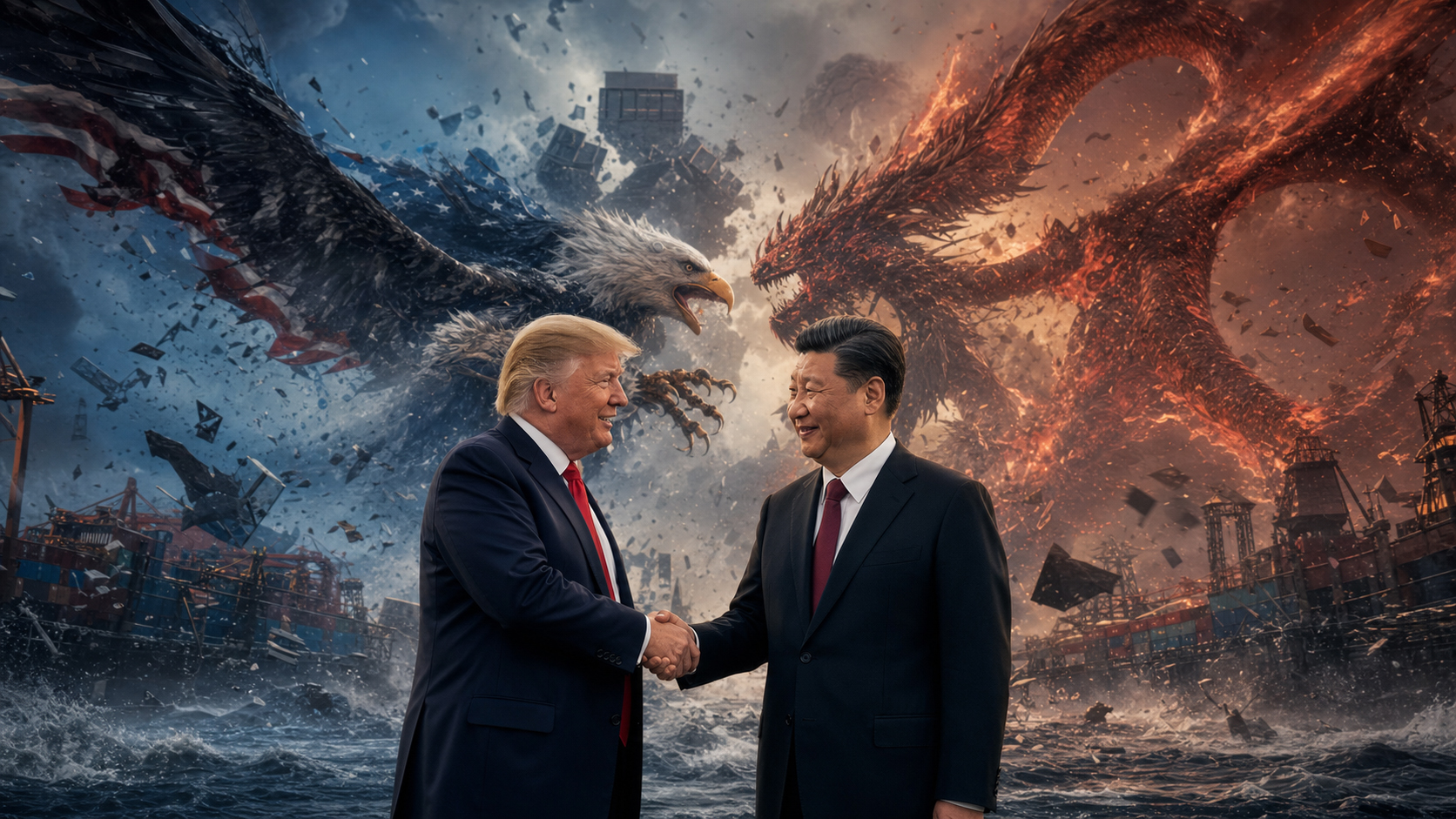
Economic warfare in the shadow of diplomacy: Why Xi and Trump shake hands smilingly – while their countries are economically attacking each other – Image: Xpert.Digital
Smiling for the camera, war in the background: The secret economic war between Trump and Xi
Retaliation from Beijing: Why China's new sanctions are making the German economy tremble
Systemic rivalry instead of summit meetings: The new era of economic trench warfare
On the diplomatic stage, smiles are exchanged for the cameras, but within the ministries, a relentless battle for global dominance is raging: The US and China have escalated their former trade dispute into a highly complex technological and geoeconomic shadow war. From export controls on rare earths and drone technology to the targeted sanctioning of Western supply chain auditors, the latest escalation in August 2026 ruthlessly demonstrates how systematically both superpowers are weaponizing their dependencies. This trench warfare poses incalculable risks, particularly for third countries and the German export industry. The following analysis examines the strategic motives behind the latest retaliatory strikes, the dual role of regulatory authorities, and the worrying fact that even a historic presidential summit between Xi Jinping and Donald Trump will no longer be able to halt this dangerous dynamic.
Related to this:

Economic shadow war: Why the US-China conflict undermines all diplomacy
The latest clash between Beijing and Washington reveals a pattern that now characterizes the global trade order: at the highest political levels, cooperation is celebrated, while behind the scenes in trade ministries, a fierce economic trench warfare has long been raging. The latest round of escalation, which became public in early August 2026, exemplifies how deep the systemic rivalry between the world's two largest economies now runs and how little a summit of presidents announced for September will be able to change this fundamental dynamic.
Related to this:


The starting point: A dispute over forced labor as a pretext for geopolitical calculations
The trigger for the latest tightening of regulations was a decision by the US Department of Homeland Security, which added 43 more Chinese companies to the so-called "Uyghur Forced Labor Prevention Act Entity List" at the end of July 2026. This increased the list from 144 to 187 entries, representing a rise of approximately 30 percent and considered the largest single expansion since the law's introduction in 2021. The affected companies operate in diverse sectors, including aluminum, textiles, copper, seafood, frozen foods, and critical intermediates such as polysilicon. This is particularly significant for the global solar industry, as China controls a large portion of the world's polysilicon production. Goods produced by these companies will now be subject to a rebuttable presumption that they were manufactured using forced labor, effectively barring them from the US market unless importers can prove otherwise. From an economic point of view, this is an instrument that formally aims at protecting human rights, but in practice is increasingly used as a trade policy tool against strategically important Chinese supplier industries.
Beijing's response follows a now familiar script of retaliation
Within days, China responded with a multi-pronged counterattack bearing the hallmarks of a now-routine foreign trade retaliation strategy. The Chinese Ministry of Commerce prohibited Chinese organizations and individuals from any cooperation with six US companies and organizations, including Applied DNA Sciences, Stratum Reservoir, Altana Technologies, the Responsible Business Alliance, the Vérité Group, and the human rights organization Human Rights in China. This selection is noteworthy because these are predominantly not traditional industrial companies, but rather specialized service providers that monitor supply chains for links to Xinjiang, as well as civil society organizations that document human rights violations. Beijing accuses them of actively participating in the implementation of the US sanctions, which effectively means that China is attempting to cripple the information infrastructure upon which Western supply chain audits are based.
Drone technology as a new battleground for export control
In parallel, the Chinese Ministry of Commerce significantly tightened export controls on drones and their key components destined for the US. Going forward, corresponding export licenses will be individually and rigorously reviewed, while previous lenient regulations have been eliminated without replacement. The justification given by Beijing is noteworthy: The Chinese government explicitly refers to a summit of presidents in Busan, after which the US Federal Communications Commission (FCC) nevertheless imposed increasingly restrictive measures against Chinese technology companies, for example in the areas of telecommunications operations, testing laboratories, drones, consumer routers, and submarine cables. This chronology is economically revealing because it shows that while diplomatic summits may send short-term signals of détente, the structural technological conflicts persist unchanged and are even accelerating in their pace.
The FCC as an unexpected key player in the technology conflict
A third element of the Chinese countermeasures is specifically targeting a US company that allegedly supported the restrictive policies of the American Federal Communications Commission (FCC) against Chinese suppliers. The FCC had already blocked the approval of new foreign drone models in December 2025 and extended this blockade at the end of July 2026 to include newly manufactured advanced robotics and networked inverters for photovoltaic systems. From an economic policy perspective, this last point is highly relevant, as inverters are a key component of every solar power system, and Chinese manufacturers such as Huawei and Sungrow largely dominate this global market. An import restriction on networked inverters would therefore directly impact the European and American energy transitions, since alternative sources of supply are unlikely to be available in comparable quantities and price quality in the short term.
A pattern with a history: From the arms sector to rare earths
The current measures are part of a longer series of retaliatory actions that has steadily intensified since early summer 2026. As early as June, China added ten American companies, including the defense contractors Oshkosh Defense and L3Harris Maritime Services, as well as the raw materials companies MP Materials and USA Rare Earth, to its export control list after the Pentagon published an updated list of 188 Chinese companies with alleged ties to the Chinese military. In addition, China's Ministry of Finance prohibited its state procurement agencies from purchasing products from a total of 46 other US companies, including defense industry heavyweights such as Lockheed Martin, Raytheon, and Boeing. This timeline illustrates that the trade conflict has long since evolved from purely tariff-related issues into a comprehensive systemic conflict over technological sovereignty, arms supply chains, and critical raw materials.
The economic logic behind China's target selection
A closer look at China's countermeasures reveals a strategic pattern that differs significantly from the blunt retaliatory strikes of earlier trade conflicts. Beijing now deliberately avoids broad, indiscriminate tariff increases, which would also severely impact its own export-oriented economy, and instead relies on surgically precise sanctions against individual, often medium-sized companies with limited market power outside China. This effectively reduces these companies to bargaining chips, limiting the economic damage but generating considerable symbolic and legal repercussions. At the same time, China retains an effective means of exerting pressure through instruments such as export controls on rare earth elements and photovoltaic components, leveraging structural dependencies of the West that are difficult to resolve in the short term.
America's counter-argument: Human rights as a trade policy vehicle
On the American side, the Uyghur Forced Labor Prevention Act is increasingly serving as a flexible instrument that extends far beyond its original human rights purpose. Its expansion to sectors such as polysilicon and critical minerals reveals that Washington is specifically targeting supply chains where China holds a dominant market position and which are strategically important for both the green transition and the defense industry. While the US Department of Homeland Security publicly emphasizes the protection of American workers from unfair competition through forced labor, the timing of this action, coinciding with the Pentagon's list of Chinese companies with military ties and the parallel FCC regulation, strongly suggests that human rights and geoeconomic objectives are now closely intertwined.
🎯🎯🎯 Data-driven B2B industry hub as a quasi-in-house solution

The quasi-in-house solution: How Xpert.Digital closes operational gaps in B2B marketing and sales – Smart Content-Driven Business - Image: Xpert.Digital
Xpert.Digital is a data-driven B2B industry hub led by Konrad Wolfenstein . The company acts as an external, quasi-in-house solution for industrial partners, closing operational gaps in marketing, content, and sales – without requiring additional resources on the client side.
More information here:
Technological system conflict: Why the FCC is becoming the driving force behind decoupling
The role of the FCC as a technological policy accelerant
Within just a few months, the American Federal Communications Commission (FCC) has become one of the most active players in the technological rivalry between the two countries. Its successive expansion of import restrictions—from telecommunications equipment and test labs to submarine cables, drones, consumer routers, advanced robotics, and inverters—demonstrates an agency that is increasingly interpreting national security concerns broadly, targeting virtually every Chinese hardware ecosystem. From a Chinese perspective, this appears to be a systematic campaign of technological decoupling that extends far beyond traditional security concerns and increasingly affects sectors central to the global energy transition and consumer electronics.
Related to this:

Why a summit won't break the escalation spiral
What is particularly striking about the current situation is the temporal contrast between diplomatic choreography and economic policy reality. The presidents of both countries met in Beijing as recently as May, and a return visit by Xi Jinping to Donald Trump has already been announced for September 24. Nevertheless, both governments further tightened their mutual restrictions shortly before this symbolically significant date, instead of initiating a de-escalation phase. This observation suggests that the actual economic policy dispute is now largely detached from intergovernmental summit diplomacy and is instead driven by the respective ministries, security agencies, and regulatory bodies in both countries, which pursue their own institutional escalation logics.
The structural costs of global supply chains
The cumulative effects of these reciprocal measures are creating an increasingly complex compliance environment for multinational companies, extending far beyond bilateral customs issues. Companies operating in both the US and China must now simultaneously consider American import bans, Chinese export controls, American procurement restrictions on Chinese suppliers, and Chinese restrictions on cooperation with certain US firms. The photovoltaic and wind energy sectors, in particular, which rely heavily on Chinese intermediate products such as polysilicon and inverters, face considerable uncertainty in long-term procurement planning. This creates a growing pressure for European SMEs, which often act as suppliers in both American and Chinese value chains, to diversify. In the short term, this translates into higher procurement costs, while in the long term, it leads to a structural reorganization of global supply chains.
Rare earths and critical raw materials as the real lever of power
A crucial, often underestimated aspect of this conflict lies in China's continued dominance in rare earths and related critical raw materials. The targeted inclusion of companies like MP Materials and USA Rare Earth on China's export control list demonstrates that Beijing understands precisely where Western industry is most vulnerable. While both the US and Europe have been striving for years to establish alternative supply chains for these strategic raw materials, building competitive processing capacity outside of China typically requires many years and substantial capital investment. This structural dependency also gives China considerable leverage in the medium term, far exceeding the symbolic value of individual sanctions lists.
The instrumentalization of human rights organizations as a new area of conflict
A largely overlooked but economically significant aspect of recent Chinese countermeasures is the targeted sanctioning of organizations like the Responsible Business Alliance and Human Rights in China, whose core business model is supply chain transparency and human rights audits. These sanctions aim to weaken the very infrastructure of due diligence audits upon which Western companies rely to comply with supply chain laws such as the German Supply Chain Due Diligence Act or comparable EU regulations. Should this trend continue, European and American companies face considerable practical difficulties in fulfilling their own regulatory compliance obligations, as the service providers necessary for auditing and certification are themselves increasingly becoming targets of geopolitical sanctions.
Economic symbolism versus real economic impact
A sober assessment of the scale reveals that the immediate economic effects of the recent individual measures are limited. China's sanctioning of six US companies or the expansion of the American list of companies subject to forced labor by 43 predominantly medium-sized Chinese firms represents only a comparatively small sum compared to the bilateral trade volume of several hundred billion US dollars annually. The true significance of these measures, however, lies less in their immediate quantitative impact than in their cumulative and structural signaling effect: they demonstrate to both economies, and to the wider global economy, that the willingness to impose reciprocal economic punishment persists and has become institutionally entrenched, regardless of the tone of the respective diplomatic summits.
Consequences for third countries and the German export industry
For economies like Germany, which have traditionally relied heavily on open multilateral trade relations, this increasing fragmentation poses significant risks. German companies that source components from China and deliver finished products to the US, or vice versa, are increasingly finding themselves navigating between two expanding regulatory blocs. Sectors with high technological integration, such as automotive suppliers, mechanical engineering, and renewable energies, are particularly affected, as German companies are simultaneously dependent on Chinese intermediate products and serve American sales markets. The growing need for parallel, geographically separated supply chains, often referred to as de-risking or friend-shoring, increases production costs in the medium term and diminishes the efficiency gains that have formed the basis of globalized value creation for decades.
A structural reorganization instead of a temporary trade dispute
The overall picture suggests an assessment that goes beyond a description of a single trade dispute: it is now a structural realignment of economic relations between the world's two largest economies, manifesting itself in increasingly shorter cycles of mutual retaliation. Unlike previous trade conflicts, which focused primarily on tariffs and trade balances, the current confrontation combines geopolitical security interests, technological sovereignty, human rights instruments, and industrial protections into a complex, self-reinforcing system. The fact that both sides are adhering to this logic of escalation despite planned presidential meetings suggests that the underlying structural tensions are more deeply rooted than short-term diplomatic gestures indicate, and that businesses worldwide must prepare for a permanent state of heightened geoeconomic uncertainty.
📈🚀 From visibility to trust 👀🤝 Your scalable path with Xpert.Digital

From visibility to trust: Your scalable path with Xpert.Digital - Image: Xpert.Digital
In industrial B2B, sustainable business relationships rarely emerge overnight. They develop step by step – through visibility, professional relevance, recurring touchpoints, and growing trust. Xpert.Digital's 4-stage model addresses precisely this: It offers a structured path that begins with a manageable entry point and can evolve into deeper collaboration in business development if needed.
Instead of relying on loud marketing promises, this model puts the relationship at the forefront. Companies start with clearly defined, easily calculable measures and then decide, based on their own experience, how far they want to expand the collaboration. A key factor for this undisturbed trust-building process: The platform completely avoids annoying advertising ads, so the editorial focus remains solely on the companies' expertise.
More information here:
Consulting - Planning - Implementation

Konrad Wolfenstein
I would be happy to serve as your personal advisor.
You can contact me at wolfenstein∂xpert.digital or
Just call me on +49 7348 4088 965 .










