
China's vulnerable strength: How the Iran war is testing Beijing's energy policy
Xpert Pre-Release

Available in 27 languages 📢
Prefer Xpert.Digital on GoogleⓘPublished on: March 31, 2026 / Updated on: March 31, 2026 – Author: Konrad Wolfenstein
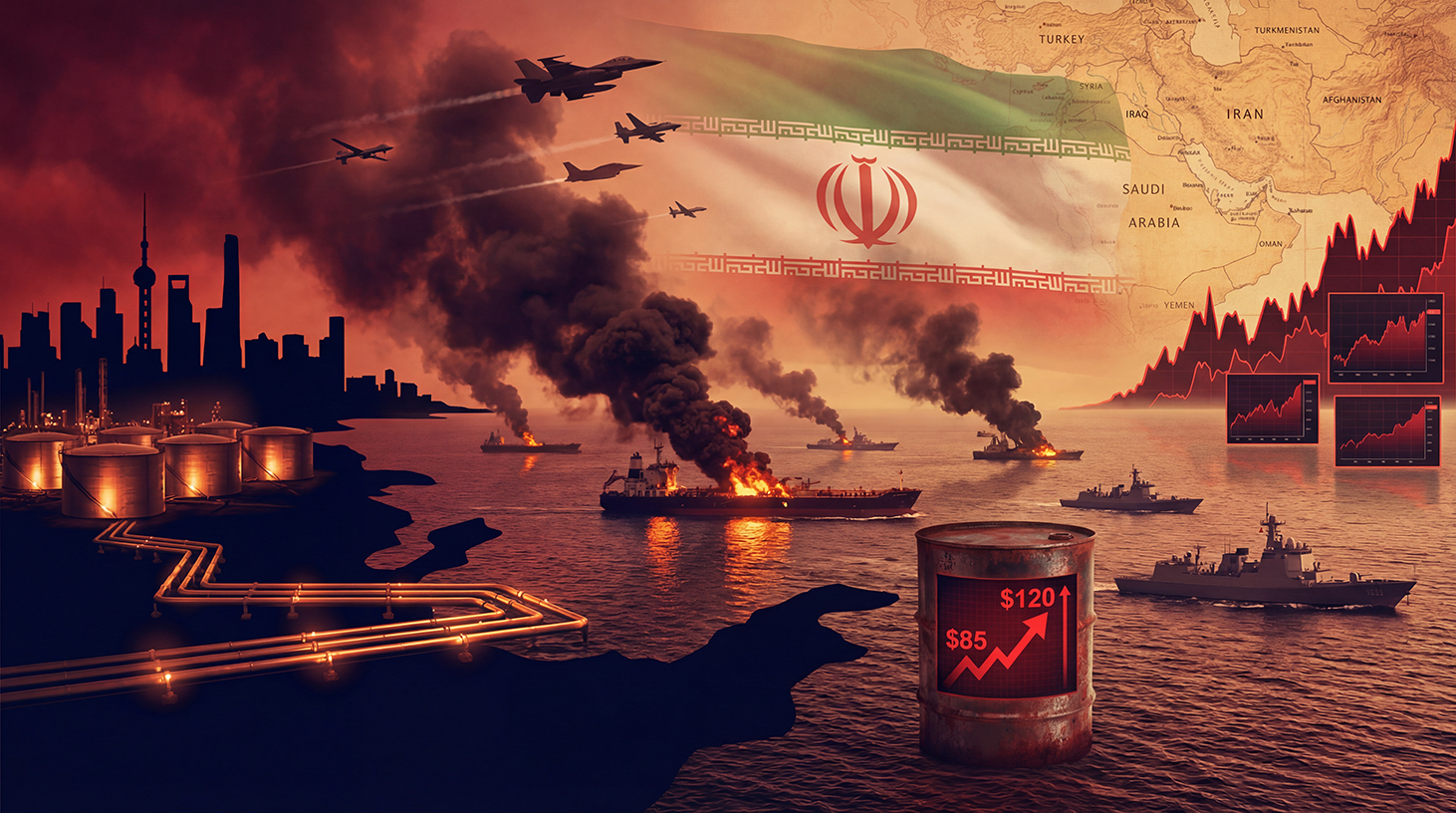
China's vulnerable strength: How the Iran war is testing Beijing's energy policy – Image: Xpert.Digital
The world's largest oil importer was prepared for a shock – but not for this one
Trump's oil trap: China's dangerous game over the Strait of Hormuz
A war in the Middle East, a blocked bottleneck in global trade, and a faltering Asian economic power: The outbreak of hostilities between the US, Israel, and Iran in the spring of 2026 strikes China at its most vulnerable point. While Beijing has wisely built up gigantic strategic oil reserves, the escalation around the Strait of Hormuz reveals a profound vulnerability. It is not only the fatal dependence on Middle Eastern oil that threatens the country, but also the convergence of this geopolitical crisis with an already struggling, deflationary domestic economy. Under the additional pressure of US President Donald Trump's strategic energy policy, the Middle East conflict becomes an existential stress test for China – with far-reaching and dangerous consequences for the entire global economy.
Related to this:

Bottleneck blocked: How the Middle East conflict is disrupting China's energy strategy
China had prepared. Strategic oil reserves were built up, alternative supply routes explored, and the diversification of energy sources pursued. And yet: When hostilities between the US, Israel, and Iran began on February 28, 2026, and shipping in the Strait of Hormuz virtually ground to a halt, the People's Republic faced a situation that severely tested its meticulous preparations. For China, the war with Iran was not merely a geopolitical problem—it was an economic dilemma that further strained an already weakened domestic economy.
The Strait of Hormuz as a global bottleneck
The Strait of Hormuz, the narrow waterway just 54 kilometers wide between Iran and Oman, is the most strategically important bottleneck in the global energy system. Around 20 percent of the world's oil consumption is transported through it. Over 80 percent of these shipments are destined for Asian customers – China, India, Japan, and South Korea are the largest recipients. For Europe, roughly 30 percent of its aviation fuel supply and one-fifth of global liquefied natural gas (LNG) trade are also affected.
Since the outbreak of hostilities at the end of February 2026, shipping through the strait has virtually ceased. Ten ships were attacked or sunk in the first two weeks of the conflict, and at least seven sailors lost their lives. Many tankers have deactivated their automatic identification systems and are thus operating as "dark" ships – a sign of extreme uncertainty. As a direct reaction, the price of Brent crude oil rose sharply; initial estimates predicted a rise to over $120 per barrel should the passage remain permanently closed.
China's dependence: greater than admitted
The official narrative from Beijing emphasizes China's preparedness and relative independence. The reality is more complex. China is the world's largest oil importer and in 2025 purchased an average of 1.38 million barrels of Iranian oil per day – equivalent to roughly 90 percent of total Iranian oil exports. Iranian oil accounts for about twelve percent of China's total imports, which is significant but not dominant. The real problem lies elsewhere: China sources roughly half of its total oil imports from countries bordering the Persian Gulf – Saudi Arabia, Iraq, Kuwait, and the United Arab Emirates – whose tankers also have to navigate the Strait of Hormuz. This means that non-Iranian oil is also directly affected by the conflict.
Added to this is the strategically crucial dimension of the 25-year partnership between China and Iran, signed in 2021, which envisages up to $400 billion in Chinese investment in Iranian energy, infrastructure, and technology sectors. For Beijing, Iran is not merely a cheap oil supplier, but a strategic partner in a network of alternative supply chains designed to reduce dependence on Western-controlled trade routes. A weakened or destabilized Iran directly jeopardizes this long-term investment program.
The preparations: What China has done and what they are worth
China's preparations for an energy crisis are real and substantial. Last year, the People's Republic increased its strategic oil reserves by more than 400 million barrels. Experts estimate that this gives China a supply flexibility of more than 120 days. This provides Beijing with considerable leeway to manage a short-term supply disruption and explains why financial markets perceived China's initial reaction as relatively measured.
At the same time, satellite images and tanker tracking data show that Iran has continued to ship significant quantities of oil to China since the start of the war. The analysis firm TankerTrackers identified at least 11.7 million barrels of Iranian crude oil en route to China since February 28, while the data provider Kpler estimated the amount at around 12 million barrels. Three of the six tankers tracked by satellite were sailing under the Iranian flag – and many ships had their tracking systems switched off. Iran itself has little room to maneuver: The mullah regime conducts around 70 percent of its total trade, excluding oil exports, through ports that depend on access to the Strait of Hormuz. A complete blockade would economically strangle Tehran itself.
Our China expertise in business development, sales and marketing

Our China expertise in business development, sales and marketing - Image: Xpert.Digital
Industry focus areas: B2B, digitalization (from AI to XR), mechanical engineering, logistics, renewable energies and industry
More information here:
A thematic hub offering insights and expertise:
- Knowledge platform covering global and regional economies, innovation and industry-specific trends
- A collection of analyses, insights, and background information from our key areas of focus
- A place for expertise and information on current developments in business and technology
- A hub for companies seeking information on markets, digitalization, and industry innovations
Hormuz, oil and trade: China's risky balance between resource security and diplomacy
The economic burden: China on the brink of shock
What makes the Iran shock particularly problematic for China is the economic situation it encounters. Even before the conflict, the People's Republic was grappling with a number of structural challenges. Its 2026 growth target was lowered to its lowest range since 1991 – 4.5 to 5 percent – after China had just barely met its 5 percent target for 2025. The International Monetary Fund praised the official figure but warned of persistently weak domestic demand and a real estate sector that is slowing down more than expected.
Deflationary dynamics in China are a significant underlying concern. While consumer prices rose surprisingly sharply by 1.3 percent in February 2026 – the strongest increase in three years – producer prices continue to struggle with persistent declines, now for the third consecutive year. This signals an economy that, while showing signs of warmth on the surface, is grappling with deep-seated deflationary pressures. The Chinese middle class, which in recent years has been considered the engine of consumption growth, is exhibiting marked reluctance to spend: private consumption accounts for only around 40 percent of economic output – well below the global average.
Related to this:

The geopolitical dilemma: China between energy security and neutrality
Beijing finds itself in a classic geopolitical dilemma. On the one hand, China is Iran's closest economic partner and its most important buyer of crude oil. On the other hand, Beijing has intensive economic ties with the Arab Gulf states – especially with Saudi Arabia, Iran's arch-enemy – and does not want to jeopardize these. Added to this is the upcoming visit of US President Donald Trump to China, which further restricts diplomatic room for maneuver.
Chinese state media portrayed the US as a disruptor of the world order, while state broadcaster CCTV emphasized the economic risks of the Hormuz blockade for the global economy. Officially, Beijing positions itself as a champion of international law and warns of the humanitarian and economic consequences of the conflict. This stance is not merely rhetorical: China has a significant interest in keeping the Strait of Hormuz open – not only because of Iranian oil, but also because of the entire Gulf energy supply chain. Military expert Cao Weidong stressed on Chinese state television that a disruption of shipping through Hormuz would lead to rising energy prices, higher insurance costs for tankers, and significant disruptions to the entire global economy.
Trump's strategy: Weaken China through energy policy
Behind the conflict lies an overarching strategic logic that many observers recognize in Trump's Middle East policy. The US president had already threatened tariffs of 25 percent on goods from countries that continue to do business with Iran—a direct means of exerting pressure on China. Trump's energy policy apparently aims to reintegrate Venezuelan and Iranian oil into the global market under controlled conditions, thereby weakening China, the largest buyer of Iranian oil. At the same time, the US oil industry benefits from higher global market prices. The calculation is cynical, but effective: If China no longer receives Iranian oil discounts, its production costs rise, its export margins fall, and its competitive advantage in global industrial production is diminished.
The fact that Russia also plays a role in this situation complicates matters further. Since the beginning of the Iran conflict, Russian and Iranian tankers have been competing for the Chinese market, both delivering sanctioned oil at a discount. Russian oil deliveries to Chinese ports rose to 2.09 million barrels per day in the first 18 days of February 2026 – an increase of around 20 percent compared to January. China is at the negotiating table and is benefiting in the short term from favorable energy prices. But it is a structurally unstable situation: the dependence on two sanctioned suppliers makes Beijing vulnerable in the long run.
The search for alternatives: A race against time
China is desperately seeking alternatives to Iranian oil. In the short term, tankers waiting for cargo off Asian coasts can still meet the needs of Chinese refineries for a while. In the medium term, buyers are turning to supplies from Russia, Angola, Brazil, and West Africa – sources that do not require transiting the Strait of Hormuz. In the long term, China is focusing on accelerating its already ambitious electrification strategy. The new five-year plan for 2026 to 2030 aims to increase the value added of the digital economy to 12.5 percent of GDP and reduce CO₂ emissions per unit of GDP by 17 percent. More electric vehicles, more renewable energy, and greater efficiency structurally mean a lower demand for oil – a long-term buffer against energy price shocks.
The dilemma lies in the time horizon: these structural changes take years or decades. The oil price shock is a matter of weeks and months. For a middle class already waiting for better economic times and burdened by the housing crisis, deflationary pressures, and uncertain job prospects, rising energy prices represent a further psychological and material strain. China's growth model was designed to create economic prosperity through increased exports. If rising oil prices now increase production costs, make exports more expensive, and simultaneously weaken domestic demand, this mechanism will be severely damaged. China was prepared—but not for the combination of a geopolitical shock, structural economic weakness, and a US president who deliberately uses energy policy as a geopolitical weapon.
Your global marketing and business development partner
☑️ Our business language is English or German
☑️ NEW: Correspondence in your native language!

Konrad Wolfenstein
I and my team are happy to be available to you as your personal advisor.
You can contact me by filling out the contact form here or simply call me at +49 7348 4088 965. My email address is : [email protected]
I'm looking forward to our joint project.
☑️ SME support in strategy, consulting, planning and implementation
☑️ Creation or realignment of the digital strategy and digitization
☑️ Expansion and optimization of international sales processes
☑️ Global & Digital B2B trading platforms
☑️ Pioneer Business Development / Marketing / PR / Trade Fairs
🎯🎯🎯 Data-driven B2B industry hub as a quasi-in-house solution

The quasi-in-house solution: How Xpert.Digital closes operational gaps in B2B marketing and sales – Smart Content-Driven Business - Image: Xpert.Digital
Xpert.Digital is a data-driven B2B industry hub led by Konrad Wolfenstein . The company acts as an external, quasi-in-house solution for industrial partners, closing operational gaps in marketing, content, and sales – without requiring additional resources on the client side.
More information here:










