
War and Peace: What now, Donald? Is Trump's Iran gamble backfiring? How the Iran war is dragging the US economy into the abyss
Xpert Pre-Release

Available in 27 languages 📢
Prefer Xpert.Digital on GoogleⓘPublished on: March 16, 2026 / Updated on: March 16, 2026 – Author: Konrad Wolfenstein
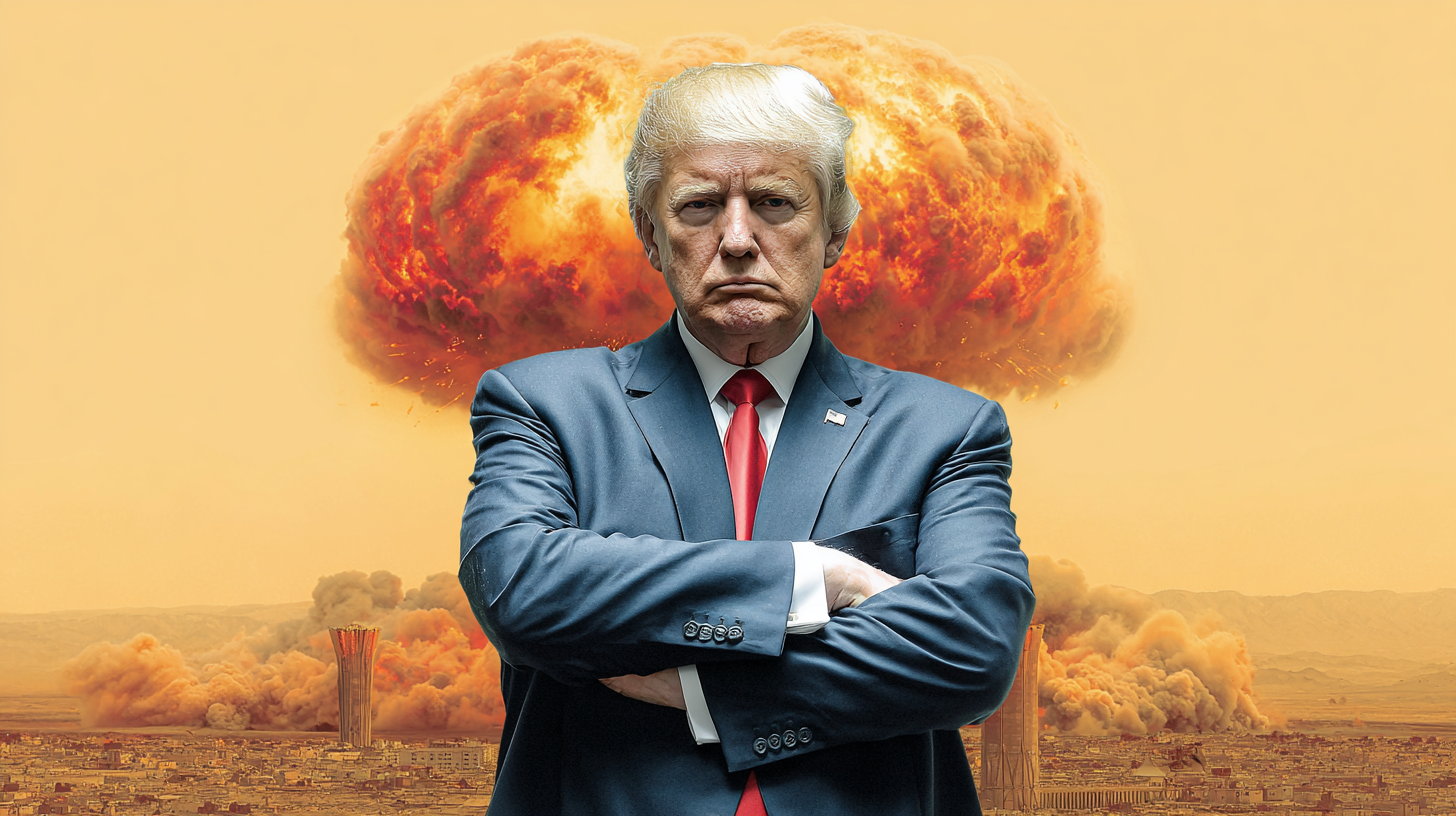
War and Peace: What now, Donald? Is Trump's Iran gamble backfiring? How the Iran war is dragging the US economy into the abyss – Creative image: Xpert.Digital
Trump's $11 billion trap: Gas price shock and blocked seas – Trump's most devastating miscalculation
Geopolitical own goal: The global oil crisis of 2026 – Why China and Russia are cheering Trump's war
In the spring of 2026, "Operation Epic Fury" was meant to demonstrate America's absolute strength—but Donald Trump's military preemptive strike against Iran has rapidly become the most expensive foreign policy miscalculation of his second term. Instead of falling energy prices and a swift regime change in Tehran, the world is witnessing an unprecedented geo-economic conflagration. The strategically vital Strait of Hormuz is effectively blocked, global oil prices are skyrocketing, and the US economy is groaning under incalculable war costs of up to a billion dollars a day. While Washington now desperately searches for an exit strategy and alienates European allies, two geopolitical rivals are rubbing their hands in glee: China and Russia are emerging as the true strategic beneficiaries of a crisis ignited by the White House itself. This is a detailed analysis of the collapse of the American logic of deterrence and the fatal consequences of a purely domestically motivated foreign policy.
Related to this:

Trump's Iran bet: The geo-economic conflagration
How a calculated show of force could become the most expensive foreign policy miscalculation of the second term
Donald Trump wanted to send a signal of strength with a targeted military strike against Iran: America is back, determined and fearless. What he got was a rapidly spreading conflagration that is shaking the global economy, plunging energy markets into a state of emergency, and leaving Russia and China as strategic winners in a crisis that Washington itself ignited. The question economists, military strategists, and Republican campaign advisors alike are now asking is no longer whether Trump's Iran calculation will work, but how much greater the damage can become.
Operation Epic Fury: A show of force with incalculable consequences
On February 28, 2026, the United States and Israel jointly launched "Operation Epic Fury," a coordinated bombing campaign against Iranian military infrastructure that upended the geopolitical order of the Middle East within hours. The attack cost more than $11.3 billion in munitions alone in the first six days, with the first 48 hours alone accounting for $5.6 billion. The Pentagon simultaneously prepared a supplemental budget request of $50 billion to cover the unforeseen munitions expenditures. The daily cost of the war is estimated by the Penn Wharton Budget Model at around $800 million, while other experts put the figure at up to $1 billion per day.
Within a few days, US forces destroyed and sank a total of 17 Iranian warships and a submarine, attacked Iranian missile launch sites, air defense systems, and command and control centers, and, according to their own statements, eliminated 90 to 95 percent of Tehran's ballistic missile capabilities. Ayatollah Ali Khamenei was killed in the attacks; his son succeeded him as Supreme Leader. Nevertheless, the operation developed a momentum of its own, which clearly surprised Washington. Iran blockaded the Strait of Hormuz, attacked tankers, and turned the world's most vital energy artery into a battle zone. Ten ships were attacked in or near the strait during the first two weeks of the war, and at least seven sailors were killed.
Trump's calculations: Energy prices, campaign promises and the weight of domestic policy
To understand Trump's decision to escalate militarily, one must first understand his domestic political agenda. During his election campaign and in his State of the Union address, Trump promised American voters low energy prices. The target of $50 per barrel of crude oil was a central guiding principle of his economic policy. This aligned with the strategy of exerting maximum pressure on Iran: punitive tariffs against all of Tehran's trading partners, threats of sanctions, and ultimately, the use of military force to permanently weaken the mullah regime and thus sustainably suppress Iranian oil supplies.
The escalation dynamic had its own history. As early as January 2026, when Iranian security forces violently suppressed mass protests, Trump announced punitive tariffs of 25 percent against all of Iran's trading partners. Brent crude oil reacted immediately: On January 13, 2026, the price rose by more than four dollars within a few days, representing a seven percent increase. Energy Secretary Chris Wright disseminated the message that the US attacks on Iran in the summer of 2025 had not triggered an oil price explosion because American domestic production acted as a buffer. This assumption proved to be a dangerous miscalculation in the spring of 2026.
The failure of price assumptions: The oil shock hits US households
Trump's domestic political calculations rested on a foundation that quickly proved fragile. The outbreak of open hostilities sent crude oil prices soaring to levels even the most optimistic experts hadn't predicted. In the first week of the war, oil prices rose by more than 25 percent. Brent crude briefly reached almost $120 per barrel before falling back to around $88 after Trump's announcement that the war would soon be over, still remaining nearly 30 percent above pre-war levels. Before the war began, a barrel had cost around $70; Trump's target of $50 now seems like a relic from another era.
For American consumers, the consequences were immediately noticeable. The national average price of gasoline rose by 27 cents within the first days of the war, reaching $3.25 per gallon, 15 cents higher than the previous year. Since then, the price has risen by more than 21 percent. Trump himself acknowledged in a Reuters interview that prices could rise, but downplayed the problem, claiming the price increases were temporary and small. He had previously stated that he saw no need to tap into the strategic oil reserves because the Strait of Hormuz remained passable thanks to the weakened Iranian navy. A few days later, he signaled to the IEA a coordinated release of 400 million barrels from national reserves—a clear indication that his initial optimism had given way to reality.
Fiscal experts estimate that a $10 increase in the price of oil would have an inflationary effect of approximately 0.2 percentage points and reduce economic growth by 0.1 percentage points. The price increases that have occurred so far significantly exceed this threshold. Kent Smetters, director of the Penn Wharton Budget Model, puts the total economic damage to the American economy at $115 billion, with a range between $50 billion and $210 billion, depending on the intensity and duration of the conflict.
The Strait of Hormuz: Where geopolitics and global energy supply collide
The Strait of Hormuz is more than just a geographical bottleneck. Around 20 percent of the world's crude oil and liquefied natural gas (LNG) supplies flow through it, including 30 percent of Europe's aviation fuel and 20 percent of globally traded LNG. Iran immediately exploited this strategic advantage. The Revolutionary Guard declared it would not allow a single liter of oil to pass to the enemy or its allies as long as the attacks continued. From March 4th onward, sources reported that Iran was effectively only permitting free passage for Chinese ships.
Iran produces roughly four percent of global crude oil demand and is the third-largest OPEC producer. This makes it a globally systemically important player, whose disruption would hit markets harder than comparable production outages in Venezuela or other medium-sized oil-producing countries. In the event of a complete blockade of the strait, analysts estimated the price potential at over $200 per barrel, as Iran itself announced. The Economist wrote that the effective Iranian blockade had already cut off 15 percent of the world's oil supply. Tankers were avoiding the strait en masse; shipping companies suspended operations in the Gulf.
Trump's response to the Strait of Hormuz crisis revealed a characteristic mix of overconfidence and belated improvisation. First, he claimed that Iran no longer had a navy and that the strait would remain open. Then, he publicly considered taking control of the Strait of Hormuz. Finally, he called on other countries to send warships to ensure the security of the waterway. The initial certainty of conducting a short, clean operation that would keep energy cheap and markets calm had been overtaken by reality.
Related to this:

Sentiment in the USA: Consumers in crisis mode, approval ratings under pressure
The economic impact of the war is directly reflected in the mood of the American public. The University of Michigan Consumer Sentiment Index fell to 55.5 points in March 2026, its lowest level in three months, and was 2.6 percent below the previous year's level. Notably, survey coordinator Joanne Hsu noted that interviews conducted before the outbreak of war on February 28 showed rising sentiment scores; however, data collected afterward completely erased this improvement. A broad-based decline of 7.5 percent in personal financial expectations is evident across all income brackets, age groups, and political affiliations. Inflation expectations for the coming year remain flat at 3.4 percent, significantly above the Federal Reserve's target of 2 percent.
Trump's approval ratings are frozen at a remarkably low level. An Economist/YouGov poll from March 2026 showed a 40 percent approval rating, with 55 percent disapproval. The Quinnipiac survey measured even lower figures: just 37 percent approval compared to 57 percent disapproval. There is particularly pronounced skepticism regarding his Iran policy: 52 percent of respondents disapprove of Trump's handling of the Iran conflict, 53 percent oppose the military actions, and 55 percent do not see Iran as an immediate military threat to the United States. A New York Times analysis of historical US military interventions since World War II found that support for the war in Iran, at only 41 percent, is among the lowest of any conflict; only the 2011 intervention in Libya, at 47 percent, also lacked majority support.
The fact that this dissatisfaction has barely affected Trump's overall approval ratings so far is paradoxically due to the fact that the starting figures were already so low. Nate Silver's aggregate model shows a decline of less than one percentage point since February 28. Support for the war among Trump's loyal MAGA base stands at 90 percent; however, among Republicans outside this core, it is just over 50 percent, and a third of this group opposes the military action. For the midterm elections in November 2026, this division is more significant than any absolute figure.
The debt problem: How war is destabilizing an already fragile fiscal edifice
The costs of the Iran war are impacting an already dire American fiscal situation, which the Congressional Budget Office (CBO) had already described as extremely serious in February 2026. The CBO projected a deficit of $1.853 trillion for fiscal year 2026, with total expenditures exceeding tax revenues by approximately 33 percent. The debt-to-GDP ratio is expected to rise to 120 percent by 2035. According to Penn Wharton, a 60-day war with Iran would increase the deficit by approximately $139 billion, including interest payments and reduced tax revenues, representing a 7.5 percent increase over the CBO's forecast.
At the same time, indirect economic damage from rising energy costs, growing consumer uncertainty, and declining investment is weighing on growth. Economist Kent Smetters warned that the total damage to the US economy from trade disruptions, energy market turmoil, and rising gasoline prices could amount to between $50 billion and $210 billion. This scenario is further complicated by Trump's decision to lift sanctions on Russian oil deliveries to India: While this is intended to dampen price pressure in the short term, it simultaneously strengthens Russia, a beneficiary of the war, structurally.
Our US expertise in business development, sales and marketing

Our US expertise in business development, sales and marketing - Image: Xpert.Digital
Industry focus areas: B2B, digitalization (from AI to XR), mechanical engineering, logistics, renewable energies and industry
More information here:
A thematic hub offering insights and expertise:
- Knowledge platform covering global and regional economies, innovation and industry-specific trends
- A collection of analyses, insights, and background information from our key areas of focus
- A place for expertise and information on current developments in business and technology
- A hub for companies seeking information on markets, digitalization, and industry innovations
The war at the gas pump: Rising gasoline prices are becoming Trump's biggest problem
Russia: The laughing third party in the American war
While the US invests billions in the war effort, Russia profits daily from rising crude oil prices and relaxed sanctions. Since the start of hostilities, Russia has earned approximately €510 million more per day from oil and gas exports than in February 2026—an increase of 14 percent. In two weeks of the war, this additional profit amounted to around €6 billion. Analysts at the Center for Research on Energy and Clean Air calculated that this sum is enough to purchase 17,000 Shahed-136 drones per day, which are being used in Russia's war against Ukraine.
US Treasury Secretary Scott Bessent justified a 30-day sanctions waiver on Indian imports of Russian oil as a short-term measure to stabilize prices. In effect, this means that Washington, through its own Iran policy, is indirectly financing Moscow's war chest while simultaneously supplying weapons to Ukraine. This contradiction is not only strategically questionable, but also demonstrates the reactive, short-term nature of Trump's foreign policy, which prioritizes short-term PR calculations over long-term geopolitical coherence.
The lost energy battle against China: Beijing as the strategic beneficiary
Trump's Iran offensive has a key geostrategic context that is too rarely considered in public debate: the global energy war against China. Beijing buys roughly 80 to 90 percent of Iran's exported oil, which in 2025 averaged 1.38 million barrels per day and accounted for about 13.4 percent of China's total marine oil imports. China's total imports from the Gulf amount to well over half of all its marine crude oil imports; Saudi Arabia, Iraq, and the United Arab Emirates transport almost all of their oil exports through the Strait of Hormuz.
At first glance, the Iranian oil blockade looks like a blow to Beijing. In reality, however, China had been systematically preparing for precisely this situation in the years leading up to the conflict. In January 2026, China held strategic reserves of an estimated 1.2 billion barrels—enough to meet three to four months of Chinese demand. Even more remarkable: While the strait became a danger zone for all other tankers, tracking services reported that Iran was effectively granting free passage only to Chinese vessels. Between February 28 and March 10, 2026, at least 11.7 million barrels of Iranian oil reached Chinese customers despite the ongoing war.
The real strategic weakness of the US, however, lies not in short-term supply volumes, but in a structural shift. China has aggressively diversified and electrified its energy mix in recent years. Renewable energies and electromobility have drastically reduced China's dependence on fossil fuels relative to its GDP. The US under Trump, meanwhile, has moved in the opposite direction, expanding subsidies for fossil fuels and scaling back climate protection programs. In a global war for energy dominance, increasingly decided in the realm of renewable technologies, Trump's Iran policy is paradoxically worsening America's position. The war is driving up energy prices, severely impacting the American economy, and simultaneously allowing China to gain a relative strategic advantage—the opposite of its stated intention.
From signal effect to boomerang: The collapse of the deterrence logic
Trump's initial logic was simple and, at first glance, plausible: A decisive military strike would weaken Iran to such an extent that the regime would capitulate or collapse, the region would reorganize, and America would emerge as the dominant power. Even the summer of 2025, when "Operation Midnight Hammer" attacked Iranian nuclear enrichment facilities, did not result in a massive oil price shock. Energy Secretary Wright presented this as proof of the superiority of the US energy dominance strategy. But there is a world of difference—militarily, diplomatically, and economically—between a limited attack on nuclear facilities and a full-scale military operation that eliminates the country's leadership.
Iran, from its weaker external position, played its only remaining strategic trump card: control of the Strait of Hormuz. Revolutionary Guard spokesman Ali Mohammad Naini put it bluntly: Iranian forces would not allow a single drop of oil to reach the enemy or its allies until further notice. At the same time, Iran continued exporting to China, signaling that the blockade was being used selectively and deliberately—as a political instrument, not as a form of total economic self-destruction. For Washington, this means that the hoped-for rapid collapse of Iranian resistance failed to materialize. What was planned as a three- to four-week operation has developed into an undefined confrontation with an uncertain outcome.
Military boundaries: Why the US Navy can't solve everything alone
Operation Epic Fury impressively demonstrates the conventional superiority of US forces in a high-intensity conflict. Over the course of 13 days, more than 15,000 targets were attacked, nine Iranian warships and a submarine were sunk, and Iran's missile capabilities were reduced by 90 to 95 percent. US destroyers fired Tomahawk cruise missiles, B-2 bombers attacked hardened missile emplacements, and Precision Strike Missiles (PRISM) were used in combat for the first time. But all this conventional superiority has a clear limit: asymmetric warfare.
Iran possesses hundreds of coastal drones, underwater drones, speedboats, and mine-hunting capabilities—weapons systems that cost thousands of dollars to manufacture and must defend against US naval assets worth many times their value. The loss of three F-15 Strike Eagles to friendly fire in Kuwait and eleven MQ-9 Reapers alone resulted in over $600 million in damages. A fire aboard the USS Gerald R. Ford, drone attacks on US bases in the region that killed seven and wounded at least 140 service members—this seemingly clear dominance comes at a price that was apparently underestimated in the initial calculations. Trump himself spoke of a timeframe of four to five weeks; military analysts publicly doubted this.
To open the Strait of Hormuz, the US Navy primarily needs minesweepers—and America has significantly fewer of these than its European allies. Trump therefore called on seven countries to send warships to keep the strait open, naming China, France, Japan, South Korea, and Great Britain as potential partners.
The reaction of the allies: Western solidarity with strict limits
The European reaction to "Operation Epic Fury" revealed the extent of transatlantic estrangement under Trump. On the day the attack began, key European NATO allies emphasized that their armed forces were not involved in the offensive. French President Macron described the US-Israeli attacks as outside the bounds of international law, yet simultaneously sent troops to the region to protect French interests. Spain refused the US access to military bases on its territory, prompting Trump to threaten a complete trade embargo against Madrid; German Chancellor Friedrich Merz, visibly unwell, refused to publicly defend Madrid.
The result is a coalition of reluctant cooperation: European governments rhetorically distance themselves from the US escalation, but quietly and secretly provide Washington with their infrastructure because, in the current economic and security climate, open confrontation with Washington is considered riskier than going along with it. Great Britain is allowing the use of its base in Akrotiri, Cyprus, for defensive operations. Lithuania has signaled its willingness to provide support. But this is not resulting in a genuine coalition mission. A high-ranking German security official succinctly summed up the bewilderment in Washington and European capitals alike: Even at the highest US levels, people are just as uninformed as their European counterparts about the actual objective of the operation.
Shifting responsibility instead of building a coalition: The structural dilemma of Trump's foreign policy
Trump's demand for international participation in securing the Strait of Hormuz is more than a tactical request. It reveals a fundamental structural problem with Trump's foreign policy: America acts unilaterally, yet then demands multilateral burden-sharing without having done the groundwork for diplomacy that makes genuine coalitions possible. Trump justified his claim to support by pointing to the US involvement in Ukraine: America helps Europe against Russia, so Europe should help America in the Gulf. This sounds like reciprocal logic, but it ignores the crucial difference: Support for Ukraine was the result of years of diplomatic work in alliances and international institutions—the war with Iran was launched without consulting allies, against their explicit recommendation for restraint.
NATO's threat that a cancellation would spell a very bleak future for the alliance largely missed its mark. When asked by the Financial Times what he specifically expected, Trump replied: "Whatever it takes." This vagueness is not a negotiating style; it is the symptomatic sign of a strategic vacuum. Without clearly articulated war aims, without a defined endpoint, and without allies involved, the Hormuz crisis remains an American problem for which Washington is attempting to shift the blame. China was also asked to send warships—China, of all countries, which benefits doubly from the Hormuz blockade: as a consumer of the continued flow of Iranian oil and as a strategic winner from American exhaustion in the Middle East.
Republican cracks and the midterm horizon
For the Republican Party, the Iran war is a domestic political minefield. Trump won in 2024 largely because the public punished the Biden administration's economic policies and fell for his promises of low energy prices and falling inflation. Now the argument is reversed: rising gasoline prices, inflation expectations at 3.4 percent, declining consumer confidence—precisely the factors that worked against Biden back then are now working against the incumbent president. Republican strategists in Florida are discussing how to keep the war out of the spotlight of the election campaign.
Within the Republican base, a split is emerging that recalls the debates of the Tea Party era. Ninety percent of MAGA core supporters back the war. Republican senators like Lindsey Graham and Tom Cotton are pushing for continued military pressure. But populists like Tucker Carlson and Steve Bannon warn against another Middle East adventure like Vietnam and urge an immediate withdrawal. A quarter of Republicans overall oppose the war; on the question of a possible ground troop deployment, even a narrow majority of the party base shifts to opposition. Retired Lieutenant Colonel Daniel L. Davis publicly warned against a repeat of the Vietnam dynamic, in which America, despite superior resources, is trapped in an asymmetric conflict.
The price of a bet without an exit strategy
Trump's Iran strategy rested from the outset on three assumptions, all of which have proven false. First, that the operation would be short and decisive, without major economic collateral damage. Second, that the Strait of Hormuz would remain open because Iran could not mount any credible resistance. Third, that the allies would share the costs and risks once America assumed leadership. All three assumptions have been refuted by reality.
The geoeconomic damage is tangible: crude oil prices up to $120 per barrel, a rise in US gasoline prices of more than 21 percent, war costs exceeding $11 billion in the first week alone, an American public that largely rejects the operation, allies offering forced solidarity with poorly disguised resistance, and a China emerging as a strategic winner from American exhaustion.
Your global marketing and business development partner
☑️ Our business language is English or German
☑️ NEW: Correspondence in your native language!

Konrad Wolfenstein
I and my team are happy to be available to you as your personal advisor.
You can contact me by filling out the contact form here or simply call me at +49 7348 4088 965. My email address is: [email protected]
I'm looking forward to our joint project.










