

“Zero Mileage Used Cars”: The absurd subsidy trick behind China’s alleged automotive miracle
Xpert Pre-Release

Available in 27 languages 📢
Prefer Xpert.Digital on GoogleⓘPublished on: July 11, 2026 / Updated on: July 11, 2026 – Author: Konrad Wolfenstein
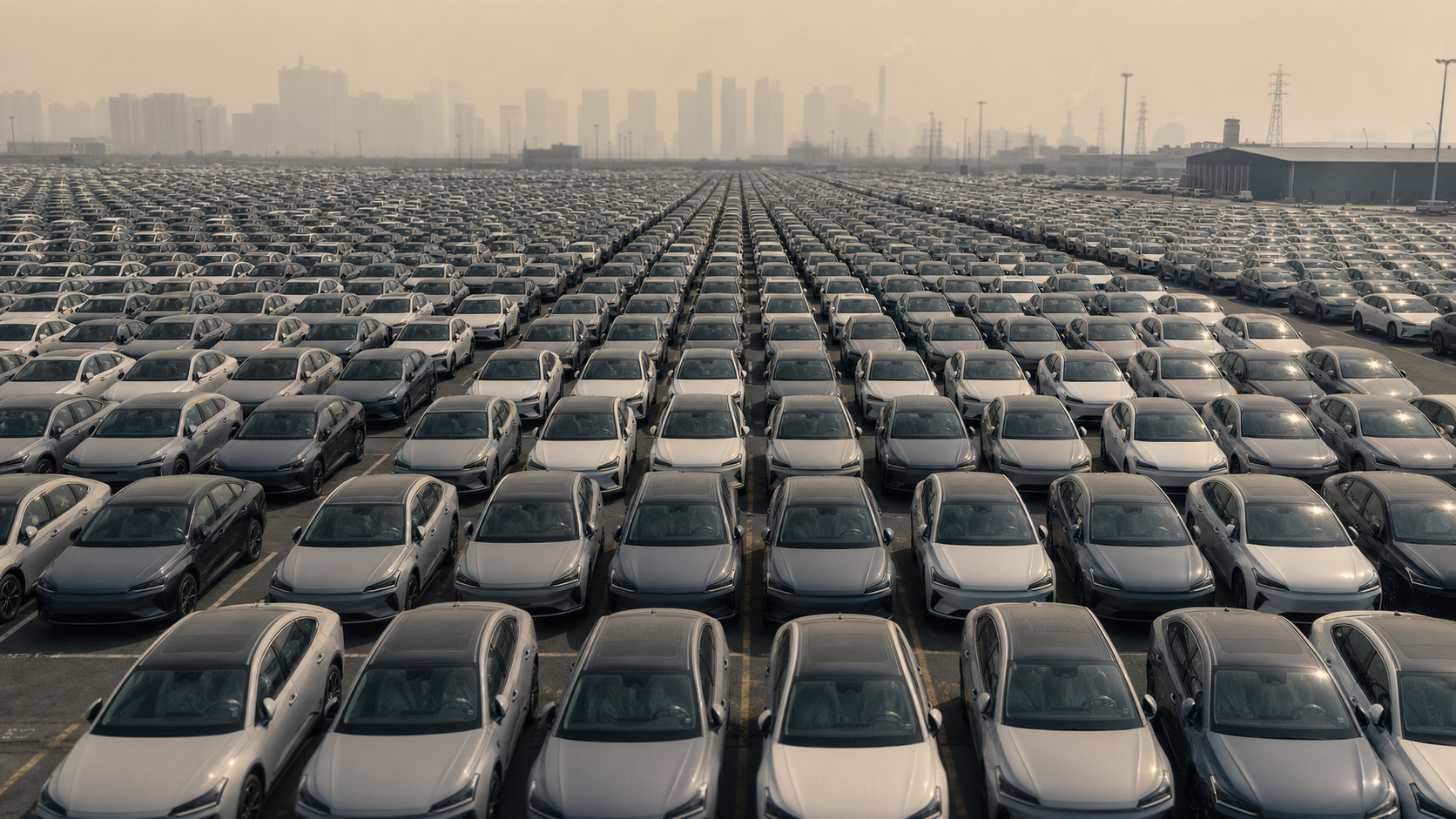
“Zero Mileage Used Cars”: The absurd subsidy trick behind China’s alleged automotive miracle – Image: Xpert.Digital
Overproduction and ghost cars: Is China's auto industry on the verge of collapse?
When statistics learn to lie – how China's automakers systematically mislead the world's largest automotive market
On paper, China's automotive industry is celebrating one historic record after another. But behind the gleaming sales and production figures lies an absurd phenomenon that casts the entire sector in a new light: the so-called "zero-mileage used cars." Brand-new vehicles are registered on a massive scale and immediately resold as used cars – without the odometer registering a single kilometer. What at first glance appears to be a bizarre market anomaly turns out, upon closer inspection, to be systemic fraud. Through this practice, Chinese automakers conceal massive overcapacity, illegally siphon off millions in government subsidies, and inflate their balance sheets for investors. The ruinous price war fueled by this overproduction is no longer just damaging the Chinese domestic market, but is increasingly flooding global trade as well. This is an investigation into the engine room of an industry that has learned to optimize its own statistics – and in doing so, risks suffocating under its own illusions.
Related to this:

Brand new, zero kilometers, used cars – a new category of industrial fiction
The absurd car trick: Why flawless new cars end up as used cars en masse in China
Anyone visiting a used car dealership in Beijing might witness a peculiar scene: Immaculate vehicles stand in the lot, without a single scratch, with protective film on the seats, shrink-wrapped accessories in the trunk, and an odometer reading exactly zero kilometers. And yet, these vehicles are officially classified as "used." Beijing dealer Wang Jun points to a white electric compact car and explains with disarming candor: "A new car as a used car – you certainly wouldn't find that where you come from. That only exists in China. It's due to the political measures in the automotive industry."
This statement is not a footnote on the sidelines of Chinese economic affairs, but rather a symptom of a profound systemic failure. What at first glance appears to be a bizarre market phenomenon, upon closer inspection reveals itself to be an elaborate system of subsidy abuse, statistical manipulation, and short-sighted industrial policy. The so-called "zero-mileage used cars"—brand-new vehicles that are resold as used cars immediately after registration—are the most visible symptom of a Chinese automotive industry that is structurally ill, yet outwardly presents consistently impressive sales figures.
Related to this:

From big dreams to full warehouses – the origin story of the overproduction problem
To understand the phenomenon of "zero-mileage used cars," one has to go back two decades. Since 2009, the Chinese leadership has pursued an aggressive industrial policy to promote electromobility, at the heart of which were massive state subsidies. Between 2009 and 2023, according to calculations by the US think tank Center for Strategic and International Studies (CSIS), Beijing pumped at least US$230.8 billion into the electric car industry. This sum, considered a "very conservative estimate," grew from around US$6.7 billion annually in the initial phase to US$45.2 billion in 2023 alone. This was supplemented by subsidies from local governments, discounted land, and low-interest loans with interest rates of around two percent—about half the market rate.
The immediate effect of this policy was a dramatic increase in the number of manufacturers. Where there were once only a handful of state-controlled automakers, over 100 new manufacturers emerged within just a few years. Production capacity skyrocketed: In 2024, China's theoretical capacity was around 55.6 million vehicles annually, while actual domestic sales were only about 27 to 31 million units. This corresponds to a capacity utilization of less than 60 percent, and in some segments, significantly lower. At the same time, Chinese factories were already producing around 31 million vehicles, accounting for a third of all passenger cars manufactured worldwide.
This overcapacity is not an unfortunate accident, but the logical result of a subsidy policy that rewarded production without adequately considering actual market demand. Manufacturers receiving government funding had strong incentives to expand their production volumes and optimize their sales figures—regardless of whether genuine demand existed. Figures were manipulated for investors, banks, and government agencies: those who sold more—or appeared to have sold more—had access to more capital, more government support, and a better stock price.
Approved, but not driven – the mechanics of a system trick
The operating principle of "zero-mileage used cars" is simple and almost admirable in its audacity. In the first phase, dealers, finance companies, or specially established intermediaries buy brand-new vehicles directly from the manufacturer and register them in their own names. Under Chinese law, once a vehicle is registered, it is considered "sold"—the manufacturer can record it in their official sales statistics. In a second step, these intermediaries resell the vehicles via used car platforms like Guazi or Uxin at significant discounts of around 20 percent compared to the new price. Since the vehicles are formally considered "used," buyers can, under certain conditions, claim government subsidies—in particular, the scrappage scheme, which provided up to 20,000 yuan (approximately 2,400 euros) when purchasing a vehicle in exchange for an old one.
Another practice, revealed by the Reuters news agency, involved manufacturers like Neta and Zeekr insuring vehicles before actually selling them. Since vehicle insurance is also considered a sales indicator in China, this step was sufficient to register the delivery as a sale. Neta reportedly used this method to register around 64,700 vehicles as sold between January 2023 and March 2024 alone – more than half of all officially reported sales during that period. Similar methods were documented at Zeekr, the premium brand of the Geely Group, in the city of Xiamen.
Particularly revealing is the discrepancy between wholesale and end-customer sales. In 2025, according to industry data, BYD delivered 4.5 million vehicles to wholesalers, while only 3.5 million actually went to end customers – a difference of around 30 percent. Tesla China showed an even greater discrepancy of approximately 37 percent. These figures illustrate the extent of a practice in which official sales figures systematically overstate actual consumer behavior.
Between 3,000 and 4,000 traders on platforms – who started it all?
The public discourse surrounding "zero-mileage used cars" was sparked by an unusual figure: Wei Jianjun, CEO of Great Wall Motor, one of China's traditional automakers. In an interview, Wei stated that between 3,000 and 4,000 dealers on Chinese used car platforms were offering such zero-mileage vehicles and drew a striking comparison: the automotive industry had its "own Evergrande." With this reference to the spectacular collapse of the Chinese real estate giant, Wei outlined the extent of the latent crisis—an industry built on illusions, dependent on government favors, and structurally built on sand.
Wei's public criticism was not an isolated incident. In May 2025, the Chinese Ministry of Commerce summoned executives from major manufacturers, including BYD and Dongfeng, to an emergency meeting to address the issue of price wars and market distortion. Then, in June, an editorial appeared in the People's Daily, the official newspaper of the Chinese Communist Party, stating unequivocally: "This disguised price reduction undermines the normal market order and is a prime example of the involution of the automotive industry." The term "involution" (Chinese: 内卷, Nèijuǎn) describes destructive competition that leads not to greater efficiency, but to collective decline.
The Ministry of Industry and Information Technology (MIIT) subsequently held an emergency meeting with 17 major automakers to halt the price war and address the practice of selling zero-mileage used cars. This coordinated response from central authorities demonstrates the seriousness with which the problem is being taken – and how far it has progressed from a fringe phenomenon to a systemic threat to the Chinese automotive industry.
Related to this:


864 million yuan in unjustified subsidies – the fraud gets a face
As part of an audit of the government subsidy program for the years 2016 to 2020, the Ministry of Industry and Information Technology (MIIT) has presented concrete figures quantifying the extent of abuse. The industrial oversight agency found that some automakers had applied for subsidies totaling more than 864 million yuan (approximately 103 million euros) to which they were not entitled. Among the manufacturers named are two industry heavyweights: Chery, China's largest car exporter, and BYD, the current market leader.
Chery had reportedly applied for around 240 million yuan for approximately 8,760 electric and hybrid vehicles that were simply ineligible for subsidies. BYD had 143 million yuan removed from its books for around 4,900 vehicles. In total, across all affected manufacturers, 21,725 vehicles were subsequently disqualified from the subsidy program, although the review had encompassed 75,000 vehicles. The reasons for the disqualification: manufacturers could not provide operating data for the supposedly sold vehicles, or the mileage did not meet the requirements of the subsidy program – a clear indication that the vehicles had never actually reached customers.
Neither Chery nor BYD responded to requests for comment. According to Bloomberg, it is not yet clear whether the fraudulently obtained funds must be repaid or were already deducted from the payments. The Ministry of Industry and Information Technology (MIIT) announced further audits for 2021 and 2022. Given the significantly increased subsidy volume during these years—up to 60,000 yuan per vehicle—the expected findings are likely to far exceed the extent known so far. Historically, this is not the first time: In 2016, the People's Daily reported that dozens of companies had fraudulently received approximately 9.3 billion yuan in subsidies. Five companies alone had received subsidies for electric buses that were never produced.
Subsidy paradox – when government aid creates the crisis
The state-run subsidy system for electric vehicles in China was structurally vulnerable to abuse. The subsidies were not paid directly to end customers, but rather as a lump sum to the manufacturers, who were then expected to pass the benefit on to their buyers as a discount. This model created a significant informational advantage for the manufacturers: they could largely control which vehicles were reported as eligible for subsidies, without any systematic verification of actual deliveries to end users.
The problem worsened at the level of sales incentives. The scrappage bonus – up to 20,000 yuan for the purchase of a new electric vehicle in exchange for a combustion engine car – was tempting for dealers and intermediaries: They bought new cars, registered them in their own names, collected the bonus, and then sold the now formally "used" vehicle at a reduced price. In May 2025, a staggering 70 percent of all private car buyers in China took advantage of this government trade-in bonus. A system that was actually supposed to run until the end of 2025 had already exhausted its funds in some regions by mid-year – not because there was so much genuine demand, but because dealers systematically drained the funding pools.
The consequence was inevitable: At least six major Chinese cities, including Zhengzhou, Luoyang, Shenyang, Chongqing, and areas in Guangdong, Henan, and Zhejiang, prematurely ended their electric vehicle purchase incentives in June 2025. According to reports in the state-owned newspaper Dahe Daily, dealers in Henan province had deliberately reclassified new cars as used vehicles to fraudulently claim government subsidies – and this was identified as one of the main reasons for the early depletion of the subsidy funds. The Ministry of Commerce responded by launching investigations into the dealers and platforms involved in this scheme.
Related to this:

The ruinous price war – when competition becomes a self-destructive mechanism
The deeper economic context that enabled the emergence of "zero-mileage used cars" is a price war of historic intensity. In May 2025, BYD announced price reductions of up to 34 percent on 22 of its electric and hybrid models. The entry-level Seagull was then available for the equivalent of roughly US$6,800 to US$7,780. These dramatic price cuts have far-reaching consequences: The average net profit margin of Chinese automakers fell to 4.3 percent in 2024, down from 5 percent in 2023. More than half of the new car dealerships are now operating at a loss, according to the China Automobile Dealers Association (CADA). Dealer inventories reached their highest level since the end of 2023 in April 2025, with an average vehicle sitting on the lot for 57 days.
The chain reaction is affecting the entire industry. Suppliers are waiting six to eight months for payment. Outstanding receivables in the sector are estimated at around 400 billion yuan – roughly 50 billion euros. In Shandong province alone, more than 20 BYD dealerships closed due to insolvency. Thousands of other Chinese retailers have also gone out of business because they could no longer operate profitably.
This creates a perverse logic that Chinese economists call "Neijuan"—involution: Every player lowers prices to maintain market share. This forces lower margins, which in turn compels further overproduction, because only economies of scale can ensure break-even. In the end, industry produces more than ever before, but earns less and less. China's production capacity met half of global demand—yet it was only operating at half capacity. This contradiction is not a temporary market adjustment, but the structural result of decades of state-supported overinvestment.
Our China expertise in business development, sales and marketing

Our China expertise in business development, sales and marketing - Image: Xpert.Digital
Industry focus areas: B2B, digitalization (from AI to XR), mechanical engineering, logistics, renewable energies and industry
More information here:
A thematic hub offering insights and expertise:
- Knowledge platform covering global and regional economies, innovation and industry-specific trends
- A collection of analyses, insights, and background information from our key areas of focus
- A place for expertise and information on current developments in business and technology
- A hub for companies seeking information on markets, digitalization, and industry innovations
Regulation under pressure: Can new rules stop China's export manipulation?
When fraud is exported – global markets as a safety valve
Faced with overflowing warehouses and a disastrous domestic market, Chinese manufacturers have found an obvious solution: exports. China's used car exports surged from a mere 4,300 units in 2020 to 436,000 units in 2024 – a growth of over 10,000 percent in just four years. Export targets for 2025 were set at over 500,000 units. It is estimated that 70 to 80 percent of these exported vehicles are "zero-kilometer" models.
The main buyers of these vehicles are Russia, Central Asia, and the Middle East. After Western brands left the Russian market following the start of the war in Ukraine, Chinese "zero-kilometer" used cars filled the gap. Offered at significant discounts compared to the new car price, they formally boasted the quality of a new vehicle. This created a lucrative business model for exporters: On the one hand, the vehicles were listed as sold in the Chinese sales register, thus qualifying them for subsidies; on the other hand, they could benefit from tariff advantages for "used vehicles" in international markets.
However, this practice increasingly damaged the international reputation of Chinese car brands. Buyers in Russia, Kazakhstan, and the Middle East acquired vehicles without formal after-sales service, without the original manufacturer's warranty, and without adequate spare parts availability. If a battery or electronics malfunctioned, owners were often faced with a repair problem that seemed impossible to solve. Changan CEO Zhu Huarong explicitly warned at the China Auto Chongqing Summit in June 2025 that the export of zero-kilometer used cars was damaging the local market structure and seriously jeopardizing the international reputation of Chinese brands. Li Xiang, founder of Li Auto, confirmed that models from his brand had been exported to the Middle East, Russia, and Kazakhstan as zero-kilometer used cars without official authorization—sometimes at higher prices than in China.
Related to this:

Regulatory response – between too hesitant and too late
The Chinese government's regulatory response to the zero-kilometer phenomenon followed a characteristic sequence: first informal, then public, and finally legislative. In a closed-door meeting in May 2025, Ministry of Commerce officials warned manufacturers and platforms about manipulating sales data. In June 2025, the first official admonitions appeared in state-run media. Finally, in November 2025, the Ministry of Commerce issued a formal regulation: starting in January 2026, exporters of vehicles intended for export within 180 days of initial registration must provide an after-sales confirmation from the manufacturer specifying the destination country and vehicle details. While the new regulation does not outright prohibit the export of zero-kilometer used cars, it significantly raises the compliance threshold and formally prioritizes after-sales responsibility.
At the same time, the eligibility criteria for the subsidy were tightened: In the 2026 subsidy period, buyers must purchase a vehicle worth at least 166,700 yuan to receive the maximum subsidy of 20,000 yuan. This specifically excludes the cheaper entry-level models – which previously served as a tool for subsidy abuse – from the highest subsidy category. A BYD Seagull, for example, which was fully eligible for subsidies until 2025, would only receive a subsidy of approximately 8,400 yuan under the new rules, instead of 20,000 yuan. The MIIT also announced that vehicles registered as sold may not be resold within six months.
Critics consider these measures necessary but insufficient. The fundamental structural problem—the overcapacity that gives rise to this systemic fraud—is not addressed by any of the existing regulations. As long as production capacity of 55 to 60 million vehicles meets actual demand of approximately 27 to 34 million vehicles, incentives to manipulate statistics will persist. Those who possess this overcapacity will seek ways to exploit it—and they will find them.
What the numbers really say – a correction of the China narrative
The global narrative of China's unstoppable electric vehicle triumph must be reassessed in light of these findings. The official figures are impressive: in 2025, Chinese manufacturers produced and sold over 34 million vehicles each, a record high. The NEV sector saw growth of around 28 to 29 percent, reaching over 16 million units. Chinese brands held a domestic market share of 68.8 percent. These figures are circulating worldwide and are interpreted as evidence of China's industrial power.
However, systematic distortions lurk behind these figures. First, a significant portion of the vehicles recorded as "sold" ended up in warehouses, not in customer hands. At BYD alone, the discrepancy between dealer deliveries and end-customer sales amounted to around one million vehicles in 2025. Second, some sales were generated by tax revenue and subsidies, which were prematurely exhausted through manipulative practices. As a result, actual subsidy expenditures were far higher than the actual market objectives would have justified. Third, sales figures that include vehicles formally registered but never driven, some of which were even shipped abroad, can hardly be considered a measure of genuine consumer demand.
One detail important for the overall assessment: According to internal estimates, the phenomenon of zero-kilometer used cars grew to around one million vehicles in the domestic market in 2024 – roughly 5 percent of the Chinese used car market. Together with the 436,000 exported vehicles, 70 to 80 percent of which were also virtually new, this figure raises serious doubts about the reliability of official Chinese automotive statistics.
The damage to consumers, industry and the global competitive order
The phenomenon of "zero-mileage used cars" harms a wide range of stakeholders – and on several levels simultaneously. Domestic consumers face immediate risks: purchasing a vehicle that is formally "used" means losing their original owner rights, potential battery degradation due to improper storage, and accelerated depreciation upon resale. Furthermore, these buyers often do not receive full manufacturer warranties because the vehicle was not formally sold to them as the first owner.
For the automotive industry itself, the long-term damage is considerable. The People's Daily aptly puts it: Even if the practice reduces inventories in the short term, it compresses profit margins, increases losses, and hinders investment in product quality and innovation. An industry that secures its competitiveness not through genuine quality improvement, but through statistical opportunism and the optimization of subsidies, jeopardizes its own long-term viability. Consumer confidence in the integrity of the Chinese automotive market—and of Chinese car brands as a whole—is being structurally damaged.
At the global level, this practice opens up new lines of trade policy confrontation. The US and the EU have already imposed increased tariffs on Chinese electric vehicles and classified state subsidies as an unfair competitive advantage. The revelation that vehicles are being deliberately exported as "used cars" to circumvent tariffs that apply to new cars will further fuel this debate. Countries like Russia have already begun to introduce their own verification requirements. Kazakhstan imposes a tax burden of up to 42 percent on individual imports. The business model, which was based on a combination of subsidy skimming, tariff arbitrage, and statistical optimization, is thus losing its economic foundation.
Related to this:

A structural problem without a simple solution
What distinguishes the discussion surrounding "zero-mileage used cars" from other trade law debates is its complexity: it is not an isolated scandal, but a systemic symptom. The real problem is China's long-standing overcapacity in automobile production. Over two decades of state subsidies, some 169 automakers have built up a capacity structure that far exceeds actual demand. In September 2025, a production capacity of 55.6 million vehicles stood in contrast to a sales volume of approximately 27.6 million.
This structural over-dimensioning constantly creates incentives for price wars, subsidy abuse, and statistical manipulation. As long as local authorities continue to measure production targets as a success criterion and manufacturers remain dependent on sales figures for government subsidies, the systemic pressure to manipulate the numbers will not disappear. Beijing has recognized the problem—the coordinated wave of regulations since mid-2025 clearly demonstrates this—but the actual correction of the structural incentive systems is still pending.
At the same time, there are real economic consequences that make short-term correction difficult: An abrupt reduction in production would jeopardize millions of jobs, devalue government investments, and plunge local governments, which are heavily dependent on tax revenues from the automotive industry, into financial difficulties. The political economy of the crisis therefore favors gradualism rather than structural reform.
China's automotive industry: between Potemkin figures and real competitiveness
The story of "zero-mileage used cars" is ultimately the story of an industrial policy model that has reached its limits. In two decades of state-driven support, China has become a global powerhouse in electric mobility – with real progress in battery technology, vehicle design, and cost-efficiency. BYD and other manufacturers actually offer high-performance vehicles at competitive prices. This is not a Potemkin village.
However, what constitutes such a village are the inflated sales figures, the cycles of subsidies, and the exported excess capacity. If 70 percent of all private customers can only be persuaded to buy through government-subsidized scrappage premiums, if a third of factory-built new vehicles never reach a real end customer, and if subsidies in the hundreds of millions are wrongfully claimed – then these figures are not a measure of genuine industrial strength.
The real question that should concern the global automotive industry is therefore not whether China is expanding its electric vehicle market faster or slower. It is how much of this growth actually reflects demand and how much is merely the result of a subsidy-driven overproduction machine that has learned to optimize its own statistics. The difference between these two worlds is of central importance to competitors, investors, and regulators worldwide – and is made rarely clear by the phenomenon of "zero-mileage used cars.".
Your global marketing and business development partner
☑️ Our business language is English or German
☑️ NEW: Correspondence in your native language!

Konrad Wolfenstein
I and my team are happy to be available to you as your personal advisor.
You can contact me by filling out the contact form here [email protected]:or simply call me at +49 7348 4088 965. My email address is
I'm looking forward to our joint project.
☑️ SME support in strategy, consulting, planning and implementation
☑️ Creation or realignment of the digital strategy and digitization
☑️ Expansion and optimization of international sales processes
☑️ Global & Digital B2B trading platforms
☑️ Pioneer Business Development / Marketing / PR / Trade Fairs
🎯🎯🎯 Data-driven B2B industry hub as a quasi-in-house solution

The quasi-in-house solution: How Xpert.Digital closes operational gaps in B2B marketing and sales – Smart Content-Driven Business - Image: Xpert.Digital
Xpert.Digital is a data-driven B2B industry hub led by Konrad Wolfenstein . The company acts as an external, quasi-in-house solution for industrial partners, closing operational gaps in marketing, content, and sales – without requiring additional resources on the client side.
More information here:





