
China's silent vulnerability: Technological bottlenecks behind the export powerhouse
Xpert Pre-Release

Available in 27 languages 📢
Prefer Xpert.Digital on GoogleⓘPublished on: April 6, 2026 / Updated on: April 6, 2026 – Author: Konrad Wolfenstein
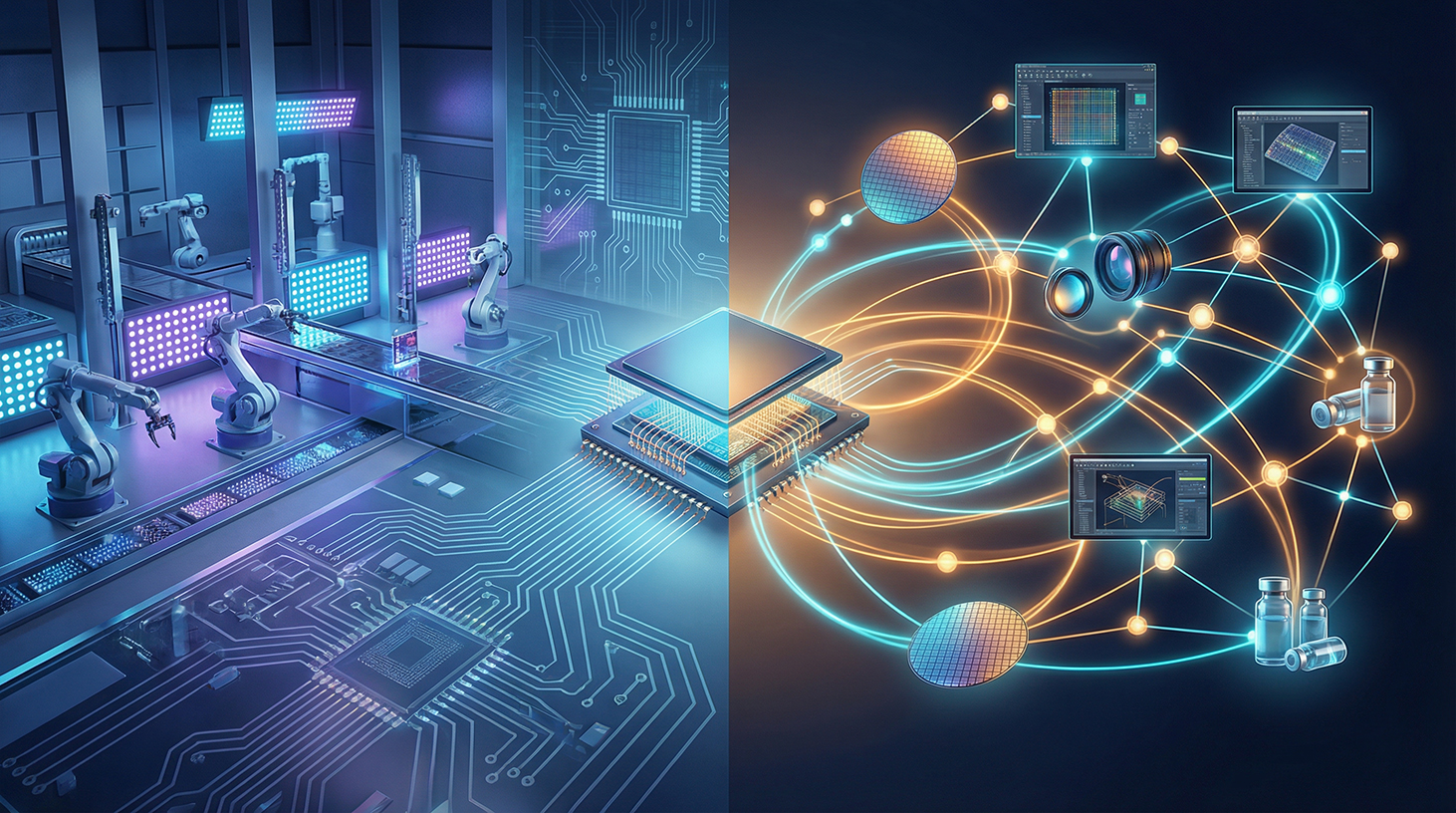
China's silent vulnerability: Technological bottlenecks behind the export powerhouse – Image: Xpert.Digital
China's secret Achilles heel: Why the export powerhouse stagnates without the West
The paper tiger: China is completely powerless when it comes to these 5 key technologies
Dependent instead of self-sufficient: The hidden bottleneck of the Chinese economy
China is flooding the global market with cheap electric cars, solar panels, and batteries – that's the prevailing narrative in Western economic policy. But the constant, often emotionally charged debate about Chinese overcapacity obscures a crucial reality: the supposedly all-powerful and monolithic export nation has a massive structural Achilles' heel. In the most important key technologies of the 21st century – from high-performance semiconductors and chip design software to aircraft engines and precision machinery – the People's Republic is existentially and heavily dependent on Western imports. Those who perceive China solely as an economic threat overlook Beijing's quiet vulnerability, which the government has long recognized as a massive security risk. A thorough analysis of these technological bottlenecks reveals that the image of a completely self-sufficient Chinese superpower is an illusion – and complete economic decoupling would entail devastating costs for both sides.
Related to this:

The People's Republic as export world champion – and yet dependent: Where the narrative of Chinese overcapacity falls dangerously short
For several years, Western economic policy discussions about China have followed a dominant narrative: China is flooding the world with cheap manufactured goods, creating overcapacity in strategic sectors, and thus threatening the economic foundations of Western industrialized nations. This assessment is not entirely wrong—in areas such as solar panels, batteries, electric vehicles, and steel, there is indeed significant Chinese surplus production that exerts pressure on global markets. The problem, however, lies not in the assessment itself, but in its selective application: The overcapacity debate systematically ignores those sectors in which China does not possess export strength, but rather significant structural bottlenecks. This creates a distorted picture of a monolithic Chinese export machine that fails to reflect the real interconnectedness of global value chains.
Those who view China merely as an export threat overlook a fundamental asymmetry: the People's Republic is highly dependent on Western supplies in some of the most strategically important technology fields of the 21st century. These dependencies are not marginal phenomena, but rather structural features of the Chinese economy, which Beijing itself classifies as national security risks. A nuanced view of these constraints is not only academically relevant—it is the prerequisite for a rational foreign economic policy that avoids both naiveté and geopolitical hysteria.
Semiconductors: China's biggest structural deficit
No technological bottleneck in China is more serious, well-known, and persistent than its dependence on semiconductors. In 2021, according to market research firm IC Insights, China's self-sufficiency rate for chips was a mere 17 percent. The goal, originally formulated as part of the "Made in China 2025" strategy, of increasing this rate to 70 percent by 2025 has become a distant prospect. The People's Republic now spends more foreign currency on importing semiconductors than on crude oil: In 2020, Chinese semiconductor imports amounted to US$350 billion, exceeding spending on oil imports.
These figures alone underscore the extent of the dependence. But it's not just any chips that China remains reliant on – it's the most advanced logic semiconductors, the latest generation of memory chips, and above all, high-performance processors for artificial intelligence, where Chinese producers lag significantly behind Taiwanese, South Korean, and US manufacturers. Western export controls, which have been gradually tightened since 2022 under the Biden administration and which Japan and the Netherlands have partially adopted, have further exacerbated the situation. In 2022, China's semiconductor imports fell by 15 percent as a result of these sanctions.
The situation is particularly dire for automotive chips. China's self-sufficiency rate in this segment is below ten percent, as Luo Daojun, deputy director of the Institute of Components and Materials at the Chinese Ministry of Industry and Information Technology (MIIT), confirmed at several industry conferences. For computing and control chips, the rate is even lower, below one percent, while for power and memory chips it barely reaches eight percent. At the same time, China's explosive growth in electric vehicles is driving the demand for automotive chips sky-high: In 2024 alone, China produced more than 11.49 million electric vehicles, representing a 37.5 percent increase compared to the previous year.
The attempt to overcome dependence through massive state capital investment is ambitious, but it is running up against fundamental technological limitations. According to the US industry association Semiconductor Industry Association, Beijing provides around US$17 billion annually in state funding for the semiconductor sector. China's largest chip manufacturer, SMIC, is now able to produce chips in a 7-nanometer process using multi-exposure techniques based on older DUV technology – albeit with significantly higher defect rates and costs than its international competitors. To make further progress, access to the EUV lithography technology of the Dutch global market leader ASML would be essential – but this access is blocked by export bans. In 2023 and 2024, a total of 97 production facilities were commissioned worldwide in the semiconductor ecosystem, 57 of them in China alone – but expansion there is primarily focused on older, so-called mature node technologies, not on cutting-edge manufacturing.
Lithography and chip production equipment: Dependence on machines that no one supplies
Even more fundamental than its dependence on finished chips is China's dependence on the machinery needed to manufacture them. In 2024, China imported semiconductor manufacturing equipment worth a record US$49.2 billion – an increase of 17 percent compared to the previous year. This meant that China accounted for 42 percent of all global spending on chip production equipment, compared to 34 percent the previous year. The main suppliers were Japan, the Netherlands, Singapore, and the USA.
The core problem lies in EUV lithography. ASML, based in the Netherlands, is the world's only mass-produced EUV lithography systems, which are essential for manufacturing chips with feature sizes below ten nanometers. Exporting these systems to China is prohibited. Nevertheless, in the first quarter of 2024, almost half of ASML's system revenue went to Chinese chip manufacturers – but exclusively for older DUV systems used in mature manufacturing technologies. This effectively prevents Chinese chip manufacturers from entering the high-performance segment.
Chinese engineers have apparently attempted to circumvent the export bans through reverse engineering. Reports indicate that Huawei, commissioned by the state, disassembled ASML systems to reconstruct their design. Initial prototypes of a Chinese EUV machine are said to have been developed – though there are significant doubts about their actual performance and suitability for mass production. The technological gap created by decades of research and billions in investment cannot be closed in a few years of catching up. ASML machines are not merely optical devices, but complex systems in which mechanical precision, vacuum technology, laser physics, and software interact in a way that has puzzled even highly skilled engineers for years.
Chip design software: An often underestimated bottleneck
Besides physical chip manufacturing, China is also dependent on Western technologies for chip design. Three US companies – Synopsys, Cadence, and Siemens EDA – control the global market for electronic design automation (EDA) software, without which it is simply impossible to design modern chips. Just a few years ago, these three US vendors accounted for over 90 percent of all EDA tool sales in China. By 2025, this share had decreased to around 80 percent – still significantly higher than these companies' global market share of approximately 70 percent.
For Chinese semiconductor companies, this dependency is of vital importance: without EDA software, modern chip architectures cannot be developed, designs cannot be prepared for foundries, and quality assurance during manufacturing cannot be carried out. In 2025, the US government temporarily banned the export of this software to China, thus using a more effective tool than many physical export bans. Xiaomi was particularly affected, having developed its XRING-O1 processor using 3-nanometer technology based on US software, and its access to updates and technical support was consequently cut off. Following sanctions, Huawei began investing in Chinese EDA alternatives such as Empyrean Technology in 2019 – however, these are currently only suitable for less demanding chip designs.
In the summer of 2025, the US temporarily eased restrictions after China, in turn, had slightly relaxed its export restrictions on rare earth elements. This diplomatic quid pro quo illustrates the true nature of their mutual dependence: both sides hold leverage over the other, and a complete breakdown would be painful for both.
AI accelerators: The new focal point in the technology conflict
A new and particularly dynamic chapter in China's technological dependence is currently being written in the field of AI accelerators. Nvidia's high-performance processors for AI training and inference—especially the H100, H200, and Blackwell series—are virtually indispensable for training large language models and developing sophisticated AI systems. China has an immense demand for these chips—reportedly exceeding two million H200 units for 2026. At the same time, these chips are subject to strict US export controls, which have been progressively tightened since 2022.
Beijing finds itself in a strategic dilemma: On the one hand, Chinese AI companies need cutting-edge hardware to remain competitive. On the other hand, the government wants to promote technological independence and protect domestic chip manufacturers. The Chinese government has therefore ordered domestic technology companies to temporarily suspend purchases of Nvidia's H200 chips and considered a quota system under which Nvidia buyers would also have to purchase a certain percentage of domestically produced AI chips. Meanwhile, a legal black market for AI accelerators is thriving in China.
Chinese alternatives such as Huawei's Ascend chips, Baidu's Kunlun processors, or Cambricon chips do exist and are not technologically insignificant, but according to industry experts, they are still considerably less powerful than Nvidia's top-of-the-line products. A complete substitution of the AI chip demand with domestic products is not realistic in the medium term – especially since Western EDA software and manufacturing facilities are also required for the development of these chips.
Civil aviation and engines: Interdependence in high complexity
Nowhere is China's technological dependence more evident than in aerospace. China's national aircraft manufacturer, COMAC, has developed the C919, a passenger aircraft in the Boeing 737/Airbus A320 class that holds considerable political symbolic value in China. However, the aircraft flies exclusively with LEAP-1C engines from CFM International, a joint venture between the US company GE Aerospace and the French Safran Group. Without these Western engines, the C919 would remain grounded.
The domestically produced Chinese alternative engine, the CJ-1000A, received certification from the Chinese Civil Aviation Administration (CAAC) in 2025, but is not yet ready for regular use in commercial aviation. Mass production and international certification are likely to be years away. Meanwhile, in 2025, the US government suspended the sale of critical US engine components to China—a move that directly threatens C919 production. In response, China is considering bringing Airbus into the supply process to replace US components with European ones.
The fundamental challenge in engine manufacturing lies in materials technology: Modern civil gas turbines require single-crystal turbine blades, ceramic matrix composites, and high-temperature superalloys, the production of which demands decades of experience and highly specialized expertise. Added to this is the dependence on precise five- and seven-axis machine tools for engine manufacturing, which China must continue to import from Germany, Japan, Italy, and South Korea. These machines are not only expensive but also represent a wealth of accumulated knowledge that cannot be rapidly developed through government directives.
Our global industry and economic expertise in business development, sales and marketing

Our global industry and economic expertise in business development, sales and marketing - Image: Xpert.Digital
Industry focus areas: B2B, digitalization (from AI to XR), mechanical engineering, logistics, renewable energies and industry
More information here:
A thematic hub offering insights and expertise:
- Knowledge platform covering global and regional economies, innovation and industry-specific trends
- A collection of analyses, insights, and background information from our key areas of focus
- A place for expertise and information on current developments in business and technology
- A hub for companies seeking information on markets, digitalization, and industry innovations
Why precision machines remain China's Achilles' heel — and what that means for Europe
Biomedicine and pharmaceuticals: Between emerging exporter and structural import dependency
The picture of Chinese biomedicine is particularly complex because China is simultaneously an emerging exporter and a structurally dependent importer. On the export side, the findings are remarkable: from 2023 to 2024 alone, the value of deals involving Western pharmaceutical companies from Europe and the US and Chinese biotech firms increased by 66 percent to US$41.5 billion. In the first half of 2025, approximately US$48.5 billion flowed into collaborations with Chinese biotech companies. China is increasingly developing into a global innovation driver in drug development and now files more patents in the pharmaceutical sector than its European competitors.
At the same time, significant structural weaknesses exist. Foreign manufacturers continue to dominate large market shares in highly complex, large-scale medical equipment: Localization rates for magnetic resonance imaging (MRI) scanners were recently 38 percent, for PET-CT scanners 41 percent, and for computed tomography (CT) scanners 52 percent. Hearing aids were 74 percent imported in 2022. In the area of high-precision diagnostic equipment and innovative drugs for personalized medicine, a considerable gap still exists between Chinese ambitions and Chinese capacity.
The situation regarding biopharmaceuticals and biosimilars is particularly relevant to the question of interdependence: While 51 percent of biosimilars are still produced in Europe, China is rapidly catching up and has set itself the goal of becoming the global market leader in biopharmaceuticals by 2035. Until China achieves this goal, it remains dependent on Western biotechnological know-how, Western fermentation and production technology, and Western regulatory expertise for clinical trials. The irony, therefore, is that China simultaneously acts as a geopolitical force for the West in the pharmaceutical sector (through drug production) and is itself dependent on Western innovation transfer.
Related to this:

Precision instruments, measuring technology and machine tools
Another sector in which China remains structurally dependent on imports despite all its progress is precision measurement technology and mechanical engineering for high-precision manufacturing. According to data from the German Economic Institute (IW Cologne), 64 percent of Chinese imports of measuring and control instruments came from Western countries. For machinery in general, the Western import share was 63 percent, and for electrical machinery and equipment, it was 35 percent. These figures place precision instruments and machinery among China's most strategically important import categories.
Coordinate measuring machines from Germany, high-precision machine tools from the Czech Republic and Japan, and Swiss metrology form the technological backbone not only of China's civilian industry but also of its arms production. A former insider in the Chinese military industry attested that Chinese arms production could not be sustained without access to Western machinery and raw materials. Ironically, therefore, the sector in which China most aggressively demonstrates its military strength also exhibits one of its deepest technological dependencies on the West.
While China's machine-building capacity is developing dynamically, and European manufacturers are increasingly complaining about dumping competition from Chinese suppliers in the low and mid-range segments, in the absolute high-precision sector – i.e., for five- and seven-axis machining centers, electrical discharge machining (EDM) machines for the finest geometries, or ultrasonic positioning systems – China remains dependent on Western suppliers.
Rare earths: strength and blind spot at the same time
Rare earth elements are among the few sectors in which China truly holds a dominant position: Approximately 70 percent of global production takes place in China, and up to 90 percent of worldwide processing is carried out in the People's Republic. Beijing recently demonstrated this dominance in the trade conflict with the US by imposing export restrictions that put Western industries under considerable pressure. Germany sources around two-thirds of its rare earth imports from China.
However, a crucial connection is overlooked: China's strength in rare earths does not compensate for its weaknesses in refining and technologically utilizing these materials in high-performance products. Processing rare earths into high-performance magnets, such as those needed for wind turbines, electric motors, or defense systems, requires specialized expertise. The German Federal Institute for Geosciences and Natural Resources (BGR) warns that there are very few experts outside of China worldwide who can process rare earths. This loss of expertise is the result of decades of strategic shifting. It means that the West readily left this dirty and costly business to China – and now has to live with the geopolitical consequences.
At the same time, however, China also relies on Western equipment for the use of rare earth elements in high technology. High-quality permanent magnets for modern electric motors require precise manufacturing processes, in which Chinese suppliers have made progress, but still rely on foreign machinery and process control in certain areas.
Digital infrastructure: Between decoupling ambitions and remaining dependencies
China is also fighting technological dependencies on several fronts in the area of digital infrastructure and software. Traditionally, Western operating systems, database managers, and cloud platforms dominated the Chinese market. Microsoft Azure, Microsoft 365, and other Western enterprise software were widely used in China. However, in 2025, China decided to replace Microsoft as the operator of its own cloud services. Digital infrastructure dependency is being systematically reduced under the 15th Five-Year Plan (2026–2030), with the goal of building a largely self-sufficient digital infrastructure.
In the area of firmware, China has introduced its own standard, UBIOS, which is intended to eventually replace the Western UEFI standard. China has also instructed Chinese companies to forgo cybersecurity solutions from more than a dozen Western vendors. These decoupling ambitions are real and politically serious. However, they also illustrate how deep the original dependencies run: complete digital autarky is still a long way off and would entail significant losses in efficiency and innovation speed. Particularly in the area of semiconductor design tools, where EDA software forms the foundation for all chip development, China still has a long way to go to achieve independence.
The costs of decoupling: What the numbers say
The mutual dependencies between China and the West are not an accidental byproduct of globalization, but rather the result of decades of economic integration that has generated significant welfare gains for all involved. The International Monetary Fund estimates that a complete decoupling of the two largest economies could reduce global economic output by up to seven percent. A study conducted specifically for Germany concludes that the long-term costs of decoupling would be approximately 60 percent higher for China than for Germany. China's GDP would shrink roughly twice as much as the GDP of Western economies as a result of an abrupt trade cessation with the West.
This asymmetry is analytically important: China suffers structurally more from a forced decoupling than the West. However, this does not mean that the West will escape without costs – dependence on critical raw materials, pharmaceutical precursors, electronic components, and certain processed materials would also entail significant adjustment costs for Western economies. As the Mercator Institute for China Studies (MERICS) has analyzed, critical EU dependencies on Chinese imports exist in 103 product categories, including electronics, chemicals, minerals, and pharmaceuticals.
Xi Jinping's strategy of targeted dependency cultivation
To understand the geoeconomic significance of these interconnections, it is instructive to examine China's own strategic logic. In internal strategy papers and public speeches, Xi Jinping has explicitly stated the goal of developing so-called killer technologies, with which China deepens the dependence of international value chains on itself and thereby builds its capacity for deterrence and countermeasures against foreign countries. This strategy is the mirror image of Western export control regimes: While the West attempts to block China's access to key technologies, China seeks to make the West vulnerable to blackmail through its own technology monopolies.
The strategic concept of interdependence as a geopolitical instrument, however, differs fundamentally from the zero-sum logic that increasingly characterizes US foreign economic policy. Economists like Jeffrey D. Sachs have pointed out that US trade policy toward China is spiraling into a destructive cycle that serves neither American nor Chinese interests, but rather harms both. The alternative to zero-sum confrontation would not be naive openness, but a nuanced strategy that protects sensitive technology sectors without sacrificing overall economic integration.
The Paradox of Chinese Technology Policy
The overarching paradox of China's technological situation can be described as follows: China is indeed globally competitive or even leading in the sectors it has identified as its most strategically important export markets – green energy technology, electric vehicles, and batteries. However, in the underlying technological layers that enable these export strengths – semiconductor manufacturing, chip design software, precision lithography, engine technology, biotechnological fermentation processes, and high-precision machine tools – China remains heavily reliant on Western imports.
This dichotomy makes it clear that China's economic strength is not a homogeneous phenomenon, but rather based on selective depth. China has managed to build enormous production capacity in certain product segments using imported technologies, thereby achieving massive economies of scale. However, building the underlying technological foundations is a long-term process that cannot be accelerated by government decree. This explains why China's 14th Five-Year Plan (2021–2025) and its long-term plans up to 2035 identify technological self-sufficiency as the highest economic policy priority.
For a nuanced geopolitics of interdependence
China's technological limitations are not a weakness to be exploited, nor a threat to be ignored—they are a structural feature of a global economy where deep interdependence and strategic rivalries coexist. The People's Republic is a dangerous competitor in some sectors and a necessary trading partner in others. Both truths must be acknowledged simultaneously in order to arrive at rational policy.
A foreign economic policy that rejects this differentiation and instead relies on complete decoupling would incur significant economic costs without achieving the actual security objectives. A policy that ignores strategic risks and relies solely on market logic would be equally inadequate. The economically and security-wise rational path lies somewhere in between: targeted investments in resilience where genuinely critical dependencies exist, combined with the pragmatic preservation of economic ties where they generate welfare gains for both sides. This is not an easy policy – but it is the only one that does justice to the complexity of reality.
Your global marketing and business development partner
☑️ Our business language is English or German
☑️ NEW: Correspondence in your native language!

Konrad Wolfenstein
I and my team are happy to be available to you as your personal advisor.
You can contact me by filling out the contact form here or simply call me at +49 7348 4088 965. My email address is : [email protected]
I'm looking forward to our joint project.
☑️ SME support in strategy, consulting, planning and implementation
☑️ Creation or realignment of the digital strategy and digitization
☑️ Expansion and optimization of international sales processes
☑️ Global & Digital B2B trading platforms
☑️ Pioneer Business Development / Marketing / PR / Trade Fairs
🎯🎯🎯 Data-driven B2B industry hub as a quasi-in-house solution

The quasi-in-house solution: How Xpert.Digital closes operational gaps in B2B marketing and sales – Smart Content-Driven Business - Image: Xpert.Digital
Xpert.Digital is a data-driven B2B industry hub led by Konrad Wolfenstein . The company acts as an external, quasi-in-house solution for industrial partners, closing operational gaps in marketing, content, and sales – without requiring additional resources on the client side.
More information here:










