
Trump, law and trust – the moral foundation of a world power is crumbling
Xpert Pre-Release

Available in 27 languages 📢
Prefer Xpert.Digital on GoogleⓘPublished on: July 5, 2026 / Updated on: July 5, 2026 – Author: Konrad Wolfenstein
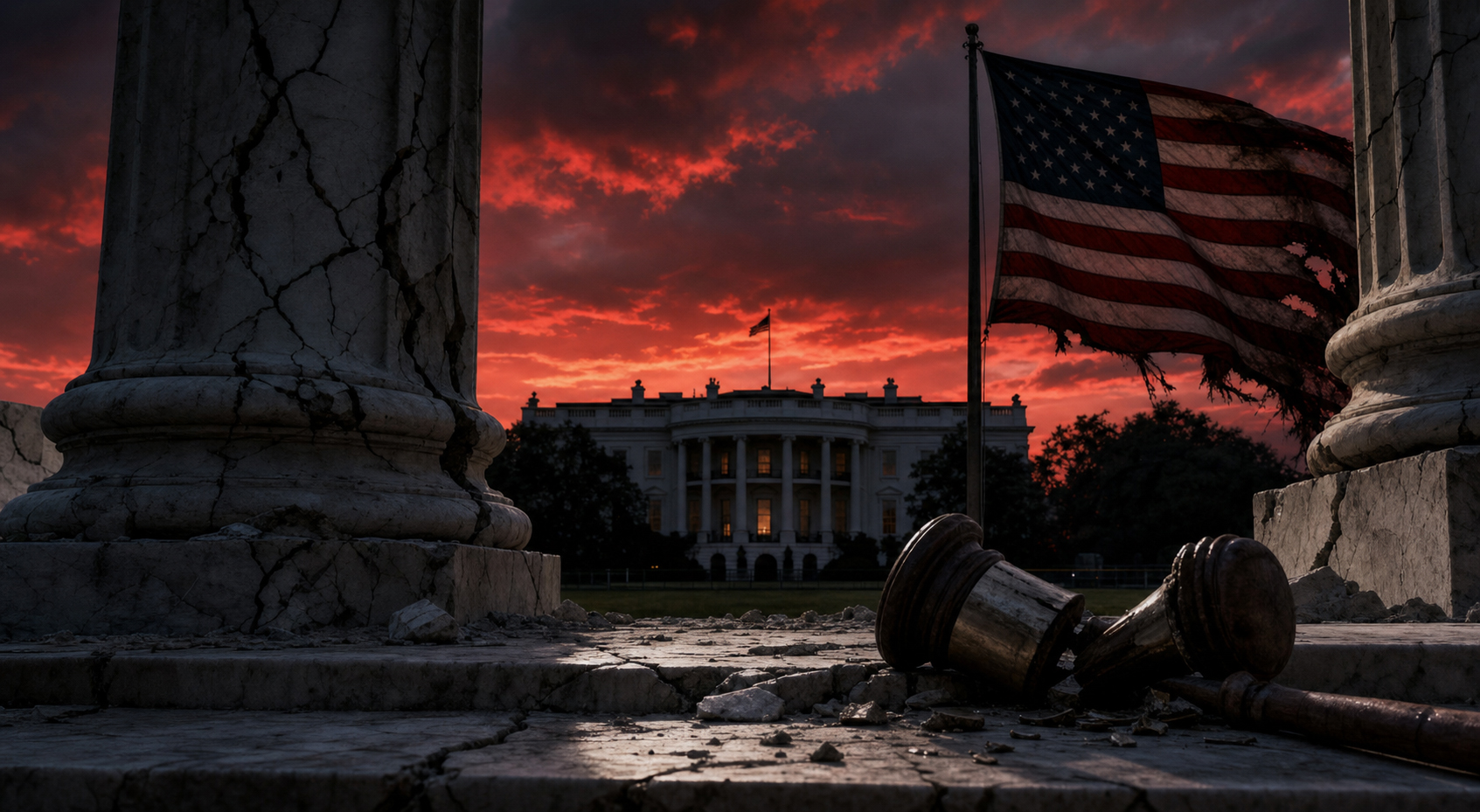
Trump, law and trust – The moral foundation of a world power is crumbling – Image: Xpert.Digital
When a convicted criminal holds the most powerful office in the world – and nobody stops him
White House crash: Why Trump's approval ratings reached historic lows in his second term
From trump card to "Titanic": Trump's economic policy fails dramatically
Donald Trump is the first convicted felon in United States history to hold the most powerful office in the world. As his legal defeats mount—from the far-reaching E. Jean Carroll sex abuse scandal to the historic guilty verdict in the hush money trial—his approval ratings plummet to unprecedented lows in his second term. Even his once formidable domain, the economy, has become a disastrous weakness. Yet the Republican Party and large segments of the evangelical electorate remain steadfastly loyal. This is a stark assessment of a fractured superpower: how moral foundations are crumbling, democratic institutions are eroding, and a political system is reaching its constitutional limits—with massive consequences for the entire free world.
Historical judgments and crumbling power: The shocking truth about Trump's second term
The history of legal battles surrounding Donald Trump is unprecedented in its density and severity in the history of the American presidency. It does not begin with a single incident, but with a long, documented pattern of allegations spanning decades. More than 25 women have publicly accused Trump of sexual assault—ranging from forced kisses and unwanted touching to allegations of a more serious nature. These accusations date back to the early 1980s and, taken together, describe a pattern that courts, juries, and appeals courts have subsequently explicitly recognized as proven.
The most well-known and legally consequential case is that of author and journalist E. Jean Carroll. Carroll alleged that Trump sexually assaulted her in the mid-1990s in the dressing room of the upscale New York department store Bergdorf Goodman. She described the incident as violent and against her express will. She first made her allegation public in 2019—during Trump's first term in office. Trump responded by calling Carroll a liar, declaring her mentally ill, and claiming she wasn't his type, mistaking Carroll for his ex-wife in photos shown to him. This reaction formed the basis for a defamation lawsuit that Carroll filed concurrently with the sexual assault claim.
In May 2023, a nine-member jury in Manhattan—six men and three women—reached a unanimous verdict after less than three hours of deliberation: Trump was found guilty of sexual assault and defamation. The jury dismissed the most serious charge of rape for lack of sufficient evidence, but found that Trump had sexually assaulted Carroll without her consent, thereby committing assault. Carroll was awarded five million dollars in damages—two million for the assault and three million for the public defamation. In a subsequent ruling, Federal Judge Lewis Kaplan determined that the first verdict already proved that Trump had assaulted Carroll.
In January 2024, the second trial followed. Because Trump continued to publicly call Carroll a liar and defame her even after the first verdict, another jury awarded Carroll $83.3 million in damages—one of the largest sums ever awarded to an individual in a US defamation case. A New York appeals court upheld this verdict in September 2025, calling the amount just and appropriate. In the sexual assault case, the same appeals court had already upheld the original verdict in December 2024, finding that Trump had failed to demonstrate any procedural error. Thus, to this day, Trump remains a convicted sex offender, convicted by a federal court—while still serving as President of the United States.
Boasting on tape: The "Access Hollywood" pattern and its meaning
The Carroll trial would be difficult to fully understand without the 2005 audio recording released by the program Access Hollywood in 2016. In the conversation with host Billy Bush, Trump boasts that as a famous man, he can get away with anything—he kisses women without waiting and grabs them by the genitals. Trump later dismissed the recording as "locker room talk" and words without consequences. The court in the Carroll trial considered the tape evidence of a pattern of his behavior and admitted it as evidence.
This pattern was corroborated by other witnesses. In the Carroll trial, two more women testified, also claiming to have experienced sexual assault by Trump. Across all the trials, the justice system emphasized that these were not isolated incidents, but rather a recurring pattern of behavior. Author Jessica Leeds reported that Trump groped her inappropriately on an airplane in the early 1980s and attempted to reach under her skirt. Rachel Crooks described how Trump kissed her on the mouth against her will in Trump Tower in 2005. Kristin Anderson, Natasha Stoynoff, Summer Zervos, Amy Dorris – the list of women who have publicly accused Trump of sexual assault is long and, in its details, reveals a disturbing consistency.
For the first time in history: A convicted criminal in the White House
Parallel to the civil proceedings, a criminal trial was underway in New York, which would also take on historic dimensions. District Attorney Alvin Bragg indicted Trump on 34 counts of falsifying business records. The background: Shortly before the 2016 presidential election, Trump's then-lawyer Michael Cohen had paid porn actress Stormy Daniels $130,000 in hush money to keep her silent about an alleged sexual encounter with Trump in 2006. Daniels later testified in court about this meeting, which Trump continues to deny.
The actual crime lay not in the hush money payment itself, which is not prohibited under civil law, but in the way Trump accounted for the repayment to Cohen. The money was declared as legal fees, which constituted falsification of the accounting records. The prosecution also saw this as an attempt to manipulate the 2016 election through a deliberate cover-up. In late May 2024, a jury found Trump guilty on all 34 counts. Judge Juan Merchan granted Trump unconditional amnesty shortly before his re-election—no jail time, no fine, but the conviction stood.
On January 20, 2025, for the first time in United States history, a convicted felon moved into the White House. The historical significance of this moment can hardly be overstated: An office that for over 200 years had been a symbol of democratic integrity and moral leadership was assumed by a man convicted of crimes by twelve independently selected citizens. Trump himself denounced this process as a politically motivated witch hunt and announced that he would fight the conviction by any means necessary.
Trust in free fall: What surveys reveal about America today
Donald Trump's approval ratings are perhaps the most accurate barometer of how low American trust in its highest office has sunk. After nearly 100 days of his second term, Trump's approval rating stood at just 42 percent. By comparison, Joe Biden had an approval rating of 57 percent after his first 100 days, Barack Obama even 65 percent, George W. Bush 62 percent, and George H.W. Bush 56 percent. Historically, Trump fared worse than any other incumbent after 100 days – with one exception: himself in his first term, when he was slightly lower at 41 percent.
As his second term progressed, the picture deteriorated steadily. In May 2026, according to a survey by ABC News, the Washington Post, and Ipsos, Trump's approval ratings reached a new low of his presidency: only 37 percent of respondents said they were satisfied with Trump, while almost two-thirds – 62 percent – were dissatisfied. This was an increase of ten percentage points from the beginning of his second term, when 45 percent still signaled approval. An NBC poll from June 2026 put Trump's approval rating at 39 percent, with particularly sharp declines among his most loyal base: the percentage of those who rated his performance as strongly positive fell from 30 to 24 percent. Other surveys by Reuters/Ipsos, the Marquette School, and Strength in Numbers/Verasight even placed Trump's approval rating between 35 and 38 percent.
The comparison over longer periods is particularly relevant. According to Gallup data, Trump's approval rating remained consistently below 50 percent throughout his first term—an unprecedented finding for a modern US president. Obama and Bush scored six to eight percentage points higher during comparable terms. Researchers at Boise State University and the University of Houston ranked Trump last in their Presidential Greatness Project among all US presidents ever evaluated since George Washington—behind virtually every other officeholder in American history, including presidents considered failures or corrupt.
The economy as a lost trump card
Ironically, the economy, which Trump marketed as his greatest strength and which had won him voter support again in 2024, became his biggest weakness in his second term. CNN data analyst Harry Enten described the situation drastically: the economy, once the wind beneath the wings of his presidency, was now his "Titanic." Net approval of Trump's economic policies stood at minus 18 percentage points at the beginning of 2026—a dramatic drop compared to his first term, when he had still achieved positive ratings in this category.
The reasons are multifaceted. Trump's tariff policy, which he considered a core project of economic nationalism, was largely declared unconstitutional and struck down by the Supreme Court. Consequently, Trump imposed new blanket tariffs based on a rarely used trade clause, which, according to the Council on Foreign Relations, drove the effective tariff rate to its highest level since 1946. Inflation remained persistent, and the cost of living hit middle- and lower-income groups particularly hard. Seventy-six percent of those surveyed criticized Trump's handling of the cost of living, and 72 percent criticized his stance on inflation. Even among Republicans, the percentage of those with strong support fell from 53 percent in September 2025 to 45 percent by May 2026. The white working class, previously one of Trump's most loyal voter segments, also began to lose confidence in him on economic issues.
Loyalty out of calculation: Why the Republican Party remains silent
For observers from other democracies, particularly in Europe, the Republican Party's continued support for Trump, despite all the court convictions and scandals, remains a difficult phenomenon to comprehend. However, it is neither irrational nor inexplicable – it follows a political logic that runs deeper into the structure of the American party system than public pronouncements suggest.
Trump has transformed the Republican Party to an extent that is virtually unparalleled in modern American history. Despite his defeat to Joe Biden in 2020, he received 74 million votes—more than any other sitting president in U.S. history. This electorate is indispensable for Republican representatives in their respective districts. Anyone who opposes Trump risks being punished by their own voters in the next primary campaign. The fate of Representative Liz Cheney, who was expelled from the party leadership after her repeated public criticism of Trump, serves as a cautionary tale that few dare to follow.
Added to this is an unspoken transactional pact: Trump delivered an unprecedented number of conservative federal judges to the party, implemented sweeping tax cuts, rolled back environmental regulations, and protected gun rights. Party strategists like Mitch McConnell supported Trump not out of personal conviction, but because he implemented the political agenda the conservative movement had been pursuing for decades. The moral question of whether Trump's personal conduct is compatible with the office of the president is thus overshadowed by a cost-benefit analysis. Signs of growing internal party criticism became visible in 2025 when individual Republican representatives pushed through the release of the Epstein files against Trump's wishes and distanced themselves from him on issues such as free trade and fiscal discipline. But Trump's systemic power over the party remains unbroken.
God's chosen sinner: Evangelicals and moral double standards
No phenomenon in 21st-century American politics is as paradoxical as the relationship between Donald Trump and white evangelical Christians. Trump, married three times, embroiled in affairs, convicted of sexual abuse, with a biography full of documented violations of the strict sexual morality his circle champions—and yet, in 2016, roughly 81 percent of white evangelical voters cast their ballots for him. This ratio remained remarkably high in the years that followed.
The explanation runs deeper than hypocrisy. For large segments of the evangelical movement, Trump is not primarily a moral role model, but a political tool. Influential pastors like Robert Jeffress put it bluntly: the president's character was irrelevant to their support; what mattered was whether he implemented their political goals—conservative judges on the Supreme Court, restrictions on abortion rights, and the protection of religious freedoms. Tony Perkins of the influential Family Research Council declared after the release of the "Access Hollywood" tape that his support for Trump had never been based on shared values. With that, the president's moral judgment was simply eliminated from the equation.
The sociologist of religion Adam Kotsko has developed a psychological explanation for this: Trump gives evangelicals a sense of respect. The fact that a rich, powerful man from outside their community takes their demands seriously strengthens the emotional bond. Added to this is the deep cultural alienation from liberal America that has been cultivated in evangelical circles for decades. As a figure of demarcation from a secular-liberal establishment—for abortion rights, homosexuality, immigration, and the cultural hegemony of coastal cities—Trump is functionally indispensable despite all his personal failings. Evangelical culture has built its own sphere of information and interpretation: its own schools, universities, and media outlets, in which Trump's condemnations are categorized as fabricated attacks on Christian America. Almost 70 percent of all evangelicals reject the theory of evolution—ignoring inconvenient facts has a long tradition in this community.
Prudery as a backdrop: American moral discourse and its selective application
The United States is perceived by outsiders as one of the most prudish Western societies: nudity on television, sexually explicit advertising, and explicit language in public are punished far more severely than in Germany, France, or the Netherlands. This self-image of a morally upright nation, however, contrasts starkly with political reality. A convicted sex offender governs the country, and well over a third of the population does not consider this a sufficient obstacle to him holding the office of president.
This discrepancy between public moral rhetoric and political practice is no accident, but rather deeply entrenched in the system. American prudery has always been selective: historically, it has been directed more strongly against marginalized groups—against women who lived their sexuality openly, against gay men, against pornographic performers like Stormy Daniels, who faced massive hostility after her court appearance—than against powerful white men. Moral discourse often serves not to protect the vulnerable, but to exert social control. The fact that Daniels appeared as a key witness in the hush money trial and received death threats after her testimony, while Trump was considered the victim of a witch hunt, reveals this asymmetry in all its starkness.
The Clinton example is revealing in this context: Bill Clinton faced impeachment proceedings in 1998 because of his affair with intern Monica Lewinsky. The moral outcry was enormous, the societal shock real. Clinton survived the proceedings but suffered lasting reputational damage. Trump, on the other hand, who faces far more serious and legally substantiated allegations, was elected president for a second term after all this. The difference lies not in the severity of the offenses, but in the political polarization: In Clinton's case, there was still a critical public that transcended partisan boundaries. In Trump's case, the polarization destroyed any common moral reference point.
The fractured republic: polarization, institutional decay and democratic erosion
What no longer works in the United States is not an isolated defect, but the result of a decades-long systemic erosion process dramatically accelerated by the Trump era. The “economy” of democracy—the system of shared truth, common institutions, and minimal normative commonalities—is in crisis, the depth of which has not yet been fully measured.
Freedom House, the renowned US-based non-governmental organization that monitors political freedoms worldwide, awarded the US only 81 out of a possible 100 points in its 2026 report – the lowest score in 54 years of measurement and the steepest decline among all countries classified as free. From 2005 to 2025, the US experienced the largest decline among all countries categorized as free, with the exception of Nauru and Bulgaria. The Economist Intelligence Unit has classified the US as a flawed democracy for several years and ranked it only 28th in its global democracy ranking in 2024.
Political scientists have identified several mutually reinforcing mechanisms. First, the manipulation of the electoral process: numerous states have introduced laws that make it more difficult to vote and, according to research by the Brennan Center, disproportionately affect minorities and the socially disadvantaged. Then there is the concentration of executive power, which reached historic proportions under Trump. In 2024, the Supreme Court ruled in favor of broad presidential immunity, effectively giving Trump free rein for actions related to his office—a decision that constitutional scholars considered a watershed moment for American democracy. The German Institute for International and Security Affairs (SWP) characterizes Trump as a system disruptor whose overriding principle is the consolidation of his own power.
The media landscape contributes to this erosion: Extreme political polarization has led to the emergence of parallel information worlds in which facts are not shared, but rather reinterpreted or simply rejected. Trump's strategy of defaming any critical reporting as "fake news" and portraying institutions like the judiciary as politically corrupt undermines the foundation upon which democratic decisions rest: a shared reality. The Bavarian Broadcasting Corporation's 11KM podcast network summarized it in 2024: Republicans didn't cling to Trump despite the scandals, but rather strengthened their loyalty precisely because every new attack on him was interpreted as an attack on themselves.
The societal divide extends beyond politics. Democrats and Republicans increasingly live in separate social spaces, marry more frequently within their political camps, move to different neighborhoods, and consume different media. Compromise, the heart of any functioning democracy, has become a sign of weakness, punished by one's own base.
Why Trump is still in office: Law, immunity, and political gridlock
The question of why Trump remains in office despite legally binding convictions and countless documented scandals has several layers of answer. From a purely legal standpoint, the US Constitution does not provide for automatic removal from office based on criminal convictions. The only constitutional instrument for removing a sitting president is impeachment proceedings by Congress. Such proceedings require a simple majority in the House of Representatives for impeachment and a two-thirds majority in the Senate for conviction. With a Republican-dominated chamber where 85 percent of party members continue to support Trump, this is mathematically impossible.
The hush money ruling also concerned actions prior to Trump's current term, raising constitutional questions. Given the impending inauguration, Judge Merchan opted for the symbolic solution of unconditional immunity, meaning Trump did not actually have to serve any sentence. The civil judgments in the Carroll case—totaling over $88 million—have no direct impact on his conduct in office; they affect his personal wealth, not his official powers.
Added to this is the aforementioned Supreme Court ruling on immunity, which grants Trump comprehensive protection from criminal prosecution for actions taken in his official capacity. This decision has fundamentally altered the constitutional landscape and is considered by experts to be an invitation to abuse power without legal consequences. The paradox of the American constitutional order is revealed in all its starkness: A system originally designed to prevent abuse of power has, through its own institutions, created a situation in which the most powerful man in the world is protected from virtually all legal consequences of his actions.
A nation searches for itself: What this America means for the world
The question of what is wrong in the US ultimately leads to a more fundamental diagnosis than the individual Trump. Trump is both a symptom and a catalyst – he has accelerated and brought to light developments that have been underway for decades, without having caused them alone. The deindustrialization of large parts of the American Midwest, the growing economic inequality, the crisis in the education system, the deep distrust of political and media elites – all of this forms the breeding ground in which a politics of resentment and self-victimization thrives.
The implications for the global economy, international alliances, and the global democracy movement are significant. A US president who is rejected by almost two-thirds of his own population and whose credibility on the international stage is fundamentally shaken can hardly fulfill the moral leadership role that America has claimed since the Second World War. Trading partners, NATO allies, and institutions such as the International Monetary Fund and the World Trade Organization operate in an environment of persistent uncertainty about the reliability of American commitments.
Nevertheless, it would be wrong to conclude from the Trump era that America is lost or beyond saving. The institutions withstood the strain: courts delivered independent rulings, federal judges rejected politically motivated directives, and the press remained active. The poll numbers documenting Trump's continued decline also demonstrate that a majority of Americans disapprove of his leadership and want democratic norms defended. The crucial question is whether this majority will be able to form a political force that remains effective in the long term and beyond elections—or whether the structural deficiencies of the American electoral system, from gerrymandering to the redrawing of electoral district boundaries, will continue to work against the will of the majority of the population.
What remains is an America at a historic crossroads: between a return to its founding democratic principles and a creeping slide into a form of leadership culture incompatible with those principles. The legal case of Trump is closed and legally binding. Whether the political case of America will find similar clarity and consequence is the open question that must be asked beyond this president's term in office.










