
Fact check on the “US economic miracle”: A dead country? The surprising truth about the US economy before Trump
Xpert Pre-Release

Language selection 📢
Published on: February 13, 2026 / Updated on: February 13, 2026 – Author: Konrad Wolfenstein
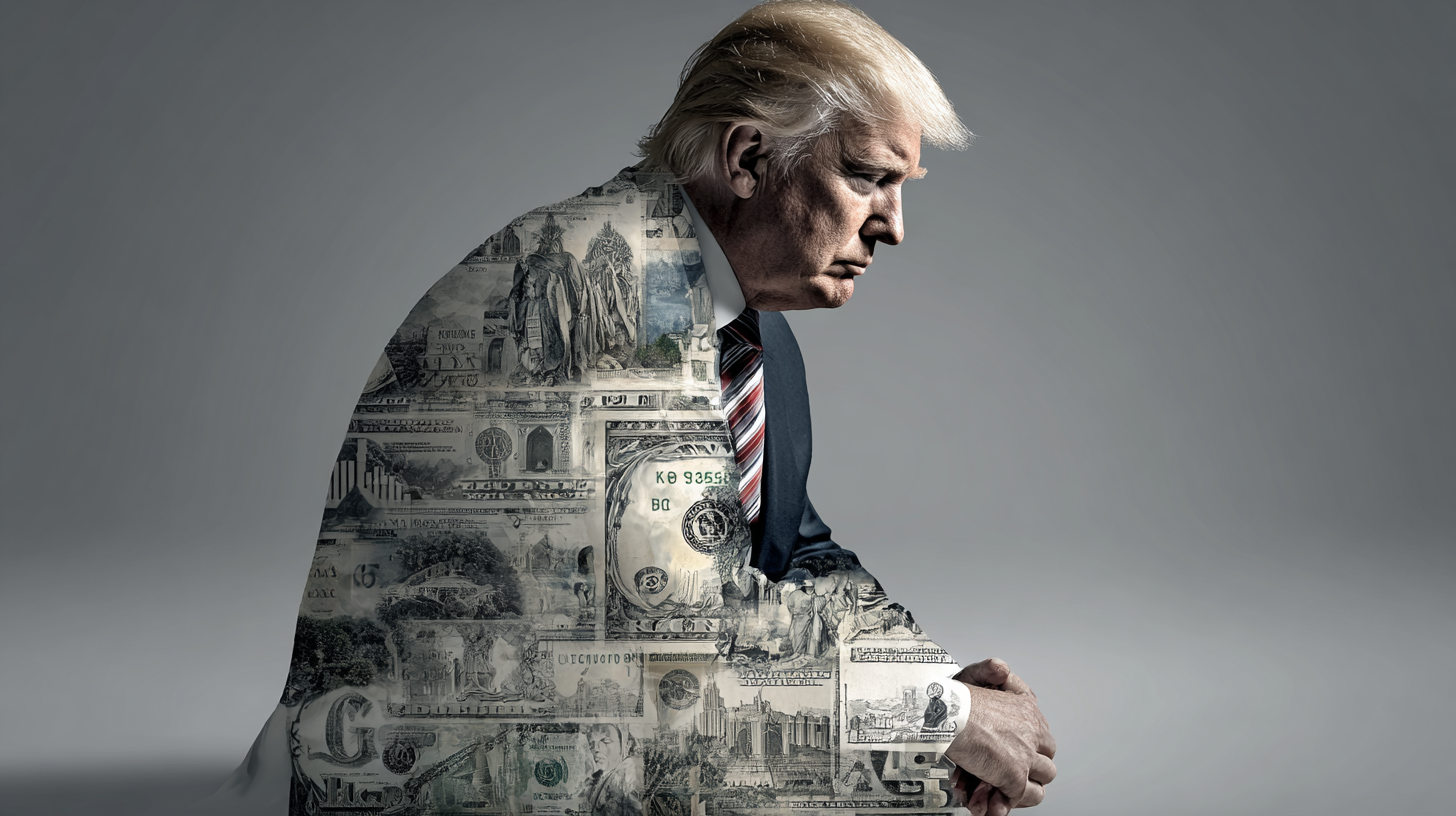
Fact check on the “economic miracle”: “Dead country”? The surprising truth about the US economy before Trump – Image: Xpert.Digital
Distorted inflation data: Why the official figures are misleading
Trump celebrates alleged “economic miracle” – the reality looks different
US President Donald Trump is currently portraying himself as an economic savior: In an opinion piece in the “Wall Street Journal,” he celebrates his tariff policy as a historic success and speaks of an “American economic miracle” that has revived a previously “dead” nation. But does this narrative stand up to scrutiny? A detailed fact check by the Associated Press, as well as analyses from renowned institutions such as Harvard Business School and Goldman Sachs, paint a completely different picture.
The reality behind the headlines reveals complex relationships: While Trump points to record stock market highs and supposedly falling inflation rates, economists warn of statistical distortions caused by the recent government shutdown and the short-term effects of frontloading imports. Furthermore, data refutes the claim that the US economy was in dire straits under his predecessor, Biden – in fact, the US economy grew more strongly in 2024 than that of most other industrialized nations. The central promise that foreign actors would bear the costs of the new tariffs is also undermined by recent studies that place the burden primarily on American companies and consumers.
Change in public sentiment in the USA: Trump's poll numbers unexpectedly collapse
US President Donald Trump describes his trade policies as a great success. In an opinion piece in the “Wall Street Journal,” he declared that the tariffs he imposed had created an “American economic miracle.” Critics, including many economists, were wrong, according to Trump. However, according to the Associated Press, many of his claims are false or misleading. The following section subjects the president’s central claims to a detailed fact check and reveals the actual economic context.
Was the US economy “dead” before Trump?
What specific claims did Trump make about the state of the US economy before he took office?
Trump literally claims that the US was “a DEAD country just over a year ago” and is now “the HOTTEST country in the world.” This statement is one of his standard phrases and is intended to create the impression that he inherited an economically devastated nation and, through his policies, led it into an unprecedented boom. The rhetorical strategy aims to maximize his own share of the economic success by portraying the initial situation in the most bleak light possible.
What was the actual state of the US economy at the end of 2024?
The claim that the US economy was “dead” does not stand up to empirical scrutiny. In 2024, the final year of the Biden presidency, the American gross domestic product grew by 2.8 percent, adjusted for inflation. This meant the US economy grew faster than almost all other wealthy industrialized nations worldwide, with the exception of Spain. The United States also recorded solid growth in the years 2021 to 2023. The White House under Biden released data showing that real GDP had increased cumulatively by 12.6 percent since the fourth quarter of 2020, a historically robust expansion. In international comparison, US growth since the fourth quarter of 2019 was 11.4 percent, more than double that of the next best G7 country.
How did the economy develop in the first months under Trump?
The first months of Trump's second term were by no means an economic triumph. In the first quarter of 2025, from January to March, US GDP contracted for the first time in three years. The main reason was clearly identifiable: a massive increase in imports, which are deducted in the GDP calculation. American companies had purchased large quantities of foreign goods before the announced tariffs took effect. This so-called "frontloading" was a rational business response to the announced tariff policy and caused a statistical dip that reflected less the underlying economic dynamics than the uncertainty created by Trump's trade policies.
How did the economic recovery progress in the remainder of 2025?
The economy recovered significantly in the second half of 2025. From April to June, it expanded at an annualized rate of 3.8 percent. From July to September, growth accelerated even further to 4.4 percent, the strongest GDP growth since the third quarter of 2023. However, a key driver of this upswing was a decline in imports, likely due to both Trump's tariffs and the fact that importers had already replenished their inventories at the beginning of the year. Robust household consumption also contributed to the recovery. The upward revision of the second-quarter figure from the initial 3.3 percent to 3.8 percent was primarily due to an upwardly revised estimate of consumer spending.
What role did the previous period play in the statistical upswing?
A crucial aspect often overlooked in the debate is the so-called base effect. If the first quarter suffers an artificial dip due to the import boom, the subsequent recovery appears exaggeratedly strong, even if the underlying economic dynamics remain largely unchanged. The strong growth figures in the second and third quarters of 2025 partly reflect a normalization after the distorted first quarter. This is a statistical pattern, not proof of an “economic miracle.” The final annual figures for 2025 are not yet available, so a conclusive assessment of overall economic performance under Trump is still pending.
How did the US economy fare under Biden in historical comparison?
Independent analyses show that the US economy did not fare badly under Biden. An analysis by the Yale School of Management revealed nearly identical annualized growth rates over the first three years of their respective terms: Trump 2.58 percent, Biden 2.59 percent. Per capita GDP grew by an average of 2.5 percent per year under Biden, the highest rate since Clinton's second term. In a comparison of all 19 presidential terms since Truman, Biden ranked sixth, in the top third, while Trump's first term, with 1.3 percent growth per year, ranked 13th, near the bottom third.
What is the state of the stock market under Trump?
Trump often points to the 52 new record highs reached by the US stock market in 2025. Indeed, the American stock market performed well in 2025. However, compared internationally, it lagged behind many foreign stock exchanges. The S&P 500 rose by 17 percent, a respectable increase, but significantly less than the 71 percent rise in South Korea, 29 percent in Hong Kong, 26 percent in Japan, 22 percent in Germany, and 21 percent in Great Britain. This considerably undermines Trump's narrative of an American economic miracle.
Inflation lower than expected
What inflation figure does Trump cite and why is it problematic?
Trump is celebrating the fact that annual core inflation for the past three months has fallen to just 1.4 percent, “far lower than almost everyone but me predicted.” But according to the AP fact check, this is a deliberate selection of distorted data. The figure may be mathematically correct, but it doesn't accurately reflect the actual rate of inflation because it has been skewed by exceptional circumstances.
How did the government shutdown distort the inflation data?
In the fall of 2025, a government shutdown lasted 43 days and had a massive impact on data collection by the Bureau of Labor Statistics. The BLS was unable to collect price data in October 2025, and the CPI report for October had to be omitted entirely. When data collection resumed in mid-November, the agency was unable to retrospectively gather the missing information. Instead, it relied on statistical assumptions, often simply extrapolating September prices as if there had been no inflation at all.
What specific distortions occurred in the inflation data?
The most serious distortions occurred in the area of housing costs, which account for more than 40 percent of the core consumer price index. Shelter costs, meaning rents and homeownership equivalent rent, were effectively set to zero for October because the September figures were carried forward. Diane Swonk, chief economist at KPMG, called the November inflation figures “a crazy number” and warned that the October assumptions not only distorted one month but “anchored the index for the future” and had lasting effects. Joseph Brusuelas, chief economist at RSM, also wrote that it was “a flawed CPI report.” Other discrepancies involved gasoline prices, which showed a seasonally adjusted increase despite actual declines, and childcare costs, which suddenly fell after previously being among the fastest-rising categories.
What was the actual core inflation rate?
Looking at the entire second half of 2025, a period less susceptible to shutdown distortions, annual core inflation was 2.6 percent. While this represents a decrease compared to January 2025, it is roughly on par with the level of October 2024. Overall inflation in September 2025, before the government shutdown, was 3 percent, exactly the same as in January 2025. Inflation stabilized overall in 2025, but did not improve dramatically.
Why did inflation remain below the feared levels?
Many economists had predicted that Trump's tariffs would significantly boost inflation. However, the fact that this only partially occurred had less to do with the brilliance of the tariff policy than with its partial reversal. Many of the tariffs announced on "Liberation Day" in April 2025 were withdrawn, reduced, or riddled with exceptions. When Democrats scored points in several high-profile elections by focusing on affordability, the administration rescinded existing or planned tariffs on coffee, beef, and kitchen cabinets. This was an indirect admission that the tariffs were indeed driving up prices.
What measurable effect did the tariffs have on inflation?
Alberto Cavallo, an economist at Harvard Business School and author of a study cited by Trump himself, has calculated that Trump's tariffs have raised overall inflation by roughly three-quarters of a percentage point, or about 0.7 percentage points. His research with the HBS Pricing Lab tracks the daily prices of more than 350,000 retail products whose country of origin is known. The results show that imported goods have become about 5 percent more expensive since March 2025, while domestic goods have increased by 2.5 percent. Taking into account the deflationary trend of 2024, the effect is even greater: imported goods are 6.6 percent more expensive, while domestic goods are almost 3.8 percent more expensive.
How does the effect of tariffs manifest itself in the prices of core commodities?
A particularly revealing indicator is core commodity prices, which exclude food and energy. Before the pandemic, these prices barely rose or even fell every year. In December 2025, however, they were 1.4 percent higher than a year earlier, the largest non-pandemic increase since 2011. This is a clear fingerprint of tariffs, as goods, unlike services, are most affected by import duties.
Who bears the costs of the customs duties?
What does Trump claim about the distribution of tariff costs?
In his WSJ article, Trump claims that the data showed “the burden or incidence of the tariffs fell predominantly on foreign producers and intermediaries, including large non-U.S. corporations.” He cites a Harvard Business School study and asserts that “these groups pay at least 80 percent of the tariff costs.”.
What does the Harvard study cited by Trump actually say?
In a remarkable distortion of the facts, the study cited by Trump appears to prove the exact opposite of what he claims. The study by Alberto Cavallo and his colleagues Paola Llamas and Franco Vazquez concludes that, “after seven months, US consumers bore about 43 percent of the tariff-related border costs, with the remainder absorbed primarily by US firms.” The estimated retail tariff pass-through is 20 percent, with the cumulative contribution to overall inflation at about 0.7 percentage points. Cavallo explained to the AP via email that import prices barely fell, “suggesting that foreign exporters did not lower their pre-tariff prices enough to absorb a large portion of the burden.”.
What did the Goldman Sachs analysis reveal regarding cost distribution?
An independent analysis by Goldman Sachs paints an even clearer picture. As of August 2025, US companies absorbed a net 51 percent of tariff costs, while American consumers bore 37 percent. Foreign exporters absorbed only 9 percent, and about 3 percent was avoided through tariff evasion. Goldman Sachs projected that by the end of 2025, consumers would bear 55 percent of the costs, US companies 22 percent, foreign exporters 18 percent, and 5 percent would be avoided through evasion. This stands in stark contrast to Trump's claim that foreign producers bear 80 percent of the costs.
Why do companies initially bear a higher share?
Goldman Sachs explained that US companies are currently bearing a larger share of the costs because some tariffs were only recently implemented, and it takes time to raise prices for consumers and negotiate lower import prices with foreign suppliers. As contracts are renewed and supply chains adjusted, the burden increasingly shifts to consumers. Should the consumer share rise to 70 percent, inflation could climb another 0.6 percentage points, falling well short of the Federal Reserve's two percent target until well into 2026.
How did the Trump administration react to these analyses?
The official response of the Trump administration to these analyses is noteworthy. White House spokesman Kush Desai stated that the administration's position had "always been clear: While Americans may experience a transition period through the tariffs, which are intended to overturn a broken status quo that has placed America last, the cost of the tariffs will ultimately be borne by foreign exporters." Treasury Secretary Scott Bessent dismissed the notion that tariffs are a tax on American consumers. These statements, however, contradict the findings of Harvard, Goldman Sachs, and the Bureau of Labor Statistics, which document rising consumer prices.
What long-term price effects will emerge?
Cavallo's research shows that retail prices began to rise immediately after tariff announcements, with accelerated increases following "Liberation Day" on April 2, 2025. However, retailers have so far only partially raised prices, employing various short-term adjustment mechanisms: margin reductions, stockpiling, and trade diversion. These mechanisms are finite, though. Once inventories are depleted and margins have already been compressed, the full impact of the tariffs will be felt by consumers with a delay.
Our US expertise in business development, sales and marketing

Our US expertise in business development, sales and marketing - Image: Xpert.Digital
Industry focus areas: B2B, digitalization (from AI to XR), mechanical engineering, logistics, renewable energies and industry
More information here:
A thematic hub offering insights and expertise:
- Knowledge platform covering global and regional economies, innovation and industry-specific trends
- A collection of analyses, insights, and background information from our key areas of focus
- A place for expertise and information on current developments in business and technology
- A hub for companies seeking information on markets, digitalization, and industry innovations
Economic miracle or perception crisis? The growing divide in North America
Trade deficit remains high
What does Trump claim about the trade deficit?
Trump boasts that he has reduced the monthly trade deficit by an “astonishing 77 percent.” This figure is mathematically correct, but a classic example of selective data: it refers to the percentage decrease from an extremely high trade deficit in January 2025 to an unusually low deficit in October 2025.
How has the trade deficit actually developed?
The overall trend tells a different story. From January to November 2025, the cumulative US trade deficit amounted to approximately $840 billion, a 4 percent increase compared to the same period in 2024. In the first quarter of 2025, importers rushed to purchase foreign goods before tariffs could take effect. March 2025 saw the highest monthly trade deficit ever recorded, at $136.42 billion. While subsequent monthly trade deficits were consistently lower than in 2024, the massive surge in imports from January to March was so significant that the annual trade deficit in 2025 remained higher than that of 2024.
What did the monthly development look like in detail?
The monthly dynamics were characterized by extreme fluctuations. In October 2025, the trade deficit fell to just $29.4 billion, the lowest level since mid-2009, driven by a 2.6 percent increase in exports and a 3.2 percent decrease in imports. In November, however, the deficit rose sharply again to $56.8 billion, the highest level in four months. These pronounced monthly fluctuations underscore the volatility caused by Trump's frequently changing tariff positions in trade flows. The October low, which Trump celebrated as a success, was a statistical outlier and not a sustainable trend.
Why are the trade balance effects of tariffs more complicated than presented?
The trade balance dynamics under Trump's tariffs follow a pattern long recognized by economists. In the short term, tariffs can reduce imports and thus lower the deficit, but this effect is counteracted by several factors: First, trading partners respond with countermeasures that negatively impact American exports. Second, tariffs make imported intermediate goods more expensive for American manufacturers, weakening their international competitiveness. Third, a strong dollar, partly supported by the tariffs, can make imports cheaper and exports more expensive. The annual goods deficit was $1.2 trillion in 2024. By the first half of 2025, the goods trade balance had already reached negative $606 billion, suggesting a continuation of the large deficits.
What about the long-term effectiveness of customs policy in reducing the deficit?
Historical experience shows that tariffs alone are rarely sufficient to sustainably reduce the trade deficit. The US has had a structural trade deficit for decades, attributable to fundamental macroeconomic factors: high domestic consumption, low savings rates, and the dollar's role as the world's reserve currency. The largest deficits in 2024 were with China ($295 billion), Mexico ($172 billion), Vietnam ($123 billion), Ireland ($87 billion), and Germany ($85 billion). While the decline in the deficit with China to $102 billion in the first half of 2025 reflects the effect of tariffs, the overall picture shows that trade flows are often simply redirected.
Billions in investments unclear
What investment amount does Trump mention and how does he substantiate it?
Trump claims his tariff policies have secured over $18 trillion in investment commitments, a figure he says is “unimaginable to many.” He did, in fact, use the threat of tariffs to coerce investment pledges from major trading partners, such as the European Union, which pledged $600 billion over four years. However, Trump has never explained how he arrived at the $18 trillion figure.
What figures do the White House and independent sources cite?
There is a significant discrepancy between the various figures. The White House itself published a figure of $9.6 trillion, which includes both private and public investment pledges from other countries. Independent analyses arrive at considerably lower sums. Bloomberg Economics estimated the actual pledges at around $7 trillion. Researchers Gregory Auclair and Adnan Mazarei of the Peterson Institute for International Economics calculated investment pledges in January 2026 at approximately $5 trillion, based on commitments from the EU, Japan, South Korea, Taiwan, Switzerland, Liechtenstein, and the Gulf states of Saudi Arabia, Qatar, Bahrain, and the United Arab Emirates. Adam Posen, president of the Peterson Institute, stated that while the public pledges represented a “significant increase,” it amounted to hundreds of billions of dollars, not trillions.
Why are the investment commitments questionable?
The researchers at the Peterson Institute pose the central question: “How feasible are these pledges?” Their short answer is: “They are shrouded in uncertainty.” The problems are manifold. First, many of the announcements are non-binding declarations of intent and press releases, not formal, enforceable contracts. Second, the timeframes of the pledges vary considerably, and the criteria for evaluation and verification are largely unclear. Third, some countries would be barely able to actually raise the pledged sums. Jared Bernstein, a former Biden advisor, summed up the skepticism: “There is a considerable gap between what is announced at the podium and what ultimately builds factories or creates jobs.”.
How large would these investments be in this context?
To put these figures into perspective: Total private investment in the US currently amounts to an annual rate of $5.4 trillion. Total foreign direct investment (FDI) in the US in 2024 was only $151 billion. FDI includes funds invested in physical assets such as factories and offices, but not financial investments such as stocks and bonds. Even if only the most conservative estimate of $5 trillion is accurate, this would represent a massive increase over previous FDI flows, but its realization over several years is highly uncertain.
How were some of the biggest commitments secured?
Trump's strategy was to use the threat of high tariffs as a negotiating weapon to induce trading partners to make investment commitments. The EU pledged $600 billion over four years. Large technology companies like Apple and Nvidia announced investments. Saudi Arabia and Japan were also among those making pledges. However, some of these commitments had already been planned under the Biden administration and were simply re-announced under Trump. The White House website appears to have included some investment pledges from the Biden era.
What long-term risks does the strategy entail?
Adam Posen of the Peterson Institute warned that the strategy could have long-term costs, as countries might be less inclined to cooperate voluntarily with the US in the future. While blackmail through tariff threats may yield short-term results, it undermines trust in the US as a predictable economic partner. Furthermore, there is a risk that investment commitments made under pressure will never be fully implemented, especially if the political landscape shifts again following a potential change of government.
How has public opinion regarding Trump changed since the elections?
What are Trump's current approval ratings?
Donald Trump's approval ratings have declined significantly since he took office in January 2025. The most recent Pew Research Center poll, conducted in January 2026 with 8,512 US adults, showed an approval rating of just 37 percent, a drop from 40 percent in the fall of 2025. Gallup's last survey, in December 2025, recorded an approval rating of 36 percent, one of the lowest of his entire presidency. The Morning Consult poll from early February 2026 showed an approval rating of 44 percent, three points lower than at the same time during his first term.
How has approval ratings developed since he took office?
The trend shows a clear reversal. When Trump took office in January 2025, his approval ratings from Emerson College Poll were 49 percent and 41 percent, respectively. By December 2025, these figures had reversed: 41 percent approval and 50 percent disapproval. Nate Silver's Silver Bulletin recorded a net approval rating of minus 13.7 points in mid-February 2026, worse than Joe Biden's rating at the same point in his presidency (minus 12.2). The percentage of Americans who "strongly disapprove" of Trump exceeded 46 percent for the first time.
How do Americans rate Trump's economic policies?
The economic policy assessment is particularly revealing. According to an AP/NORC poll from September 2025, only 37 percent of US adults approved of Trump's economic management, a drop from a peak of 56 percent in early 2020 during his first term. According to the Pew survey from January 2026, more than twice as many Americans said the administration's actions were worse than expected (50 percent) as better (21 percent). A Harvard CAPS/HarrisX poll from January 2026 found that 51 percent of respondents believed Trump was performing worse than Biden, while 49 percent thought he was performing better.
How has support among Republicans changed?
Particularly noteworthy is the decline in support within Trump's own party. According to Pew, his approval rating among Republicans stands at 73 percent, a slight decrease since September. Even more serious: only 56 percent of Republicans now say they support "all or most" of Trump's plans and policies, a drop from 67 percent at the beginning of his presidency. Republican confidence in Trump's ethical conduct in office fell from 55 to 42 percent, confidence in his respect for democratic values from 60 to 52 percent, and confidence in his mental fitness from 75 to 66 percent.
What role does affordability play in public opinion?
The cost of living remains a key factor in public sentiment. Despite Trump's claims of an economic miracle, many Americans find the price situation unsatisfactory. While voters' perceptions of inflation and prices have improved slightly, from a net score of -34 in October to -23 in February, according to the Economist/YouGov survey, they remain decidedly negative. Democrats won several high-profile elections in 2025 by prioritizing affordability, which even prompted the Trump administration to roll back some tariffs.
How do Americans rate Trump's most important advisors and allies?
The assessment of Trump's inner circle is also revealing. Vice President JD Vance enjoys the highest approval rating at 46 percent, while 41 percent disapprove. Elon Musk, on the other hand, is viewed positively by 40 percent and negatively by 46 percent. Only 25 percent of Americans trust that Trump chooses good advisors, and a mere 21 percent are confident that he acts ethically in office—the lowest figure among all six characteristics surveyed.
What does this mean for the 2026 congressional elections?
The generic congressional election campaign indicator points to a difficult environment for Republicans. At Emerson College in December 2025, Democrats led 44 percent to 42 percent, with independent voters favoring the Democratic candidate 40 percent to 32 percent. Approval of the Republican-controlled Congress fell to 15 percent. Sixty-one percent of Republicans now say that Republican members of Congress have no obligation to support Trump's policies if they disagree, up from 55 percent a year earlier. Forty-seven percent of Americans now believe Trump will be an unsuccessful president in the long run, a 14-point increase since he took office.
What overall picture emerges from the survey data?
The poll data paints a clear picture: The initial optimism following Trump's re-election has given way to growing disillusionment. His approval ratings have shifted from positive to negative territory in almost all polls. Disappointment is spreading not only among Democrats and independents, but increasingly among Republicans as well. Trump's narrative of an "economic miracle" stands in growing contrast to the public's perception, which laments persistently high prices, economic uncertainty, and what it sees as chaotic trade policies. The gap between the success story proclaimed by the president and the actual realities of many Americans' lives is widening with each passing month.
Your global marketing and business development partner
☑️ Our business language is English or German
☑️ NEW: Correspondence in your native language!

Konrad Wolfenstein
I and my team are happy to be available to you as your personal advisor.
You can contact me by filling out the contact form here or simply call me at +49 7348 4088 965. My email address is: [email protected]
I'm looking forward to our joint project.
☑️ SME support in strategy, consulting, planning and implementation
☑️ Creation or realignment of the digital strategy and digitization
☑️ Expansion and optimization of international sales processes
☑️ Global & Digital B2B trading platforms
☑️ Pioneer Business Development / Marketing / PR / Trade Fairs
🎯🎯🎯 Benefit from Xpert.Digital's extensive, five-fold expertise in one comprehensive service package | BD, R&D, XR, PR & Digital Visibility Optimization

Benefit from Xpert.Digital's extensive, five-fold expertise in a comprehensive service package | R&D, XR, PR & Digital Visibility Optimization - Image: Xpert.Digital
Xpert.Digital possesses in-depth knowledge across various industries. This allows us to develop tailored strategies precisely aligned with the requirements and challenges of your specific market segment. By continuously analyzing market trends and monitoring industry developments, we can act proactively and offer innovative solutions. The combination of experience and expertise generates added value and provides our clients with a decisive competitive advantage.
More information here:










