Blog/Portal for Smart FACTORY | CITY | XR | METAVERSE | AI | DIGITIZATION | SOLAR | Industry Influencer (II)

Industry Hub & Blog for B2B Industry - Mechanical Engineering - Logistics/Intralogistics - Photovoltaics (PV/Solar)
For Smart FACTORY | CITY | XR | METAVERSE | AI | DIGITIZATION | SOLAR | Industry Influencers (II) | Startups | Support/Consulting

Business Innovator - Xpert.Digital - Konrad Wolfenstein
More information here

The “ugly, self-centered American” – How the Trump era damaged the image of the USA for decades

Xpert Pre-Release


Konrad Wolfenstein - Brand Ambassador - Industry InfluencerOnline contact (Konrad Wolfenstein)

Language selection 📢

Published on: March 24, 2026 / Updated on: March 24, 2026 – Author: Konrad Wolfenstein

The ugly, egocentric American – How the Trump era damaged the image of the USA for decades

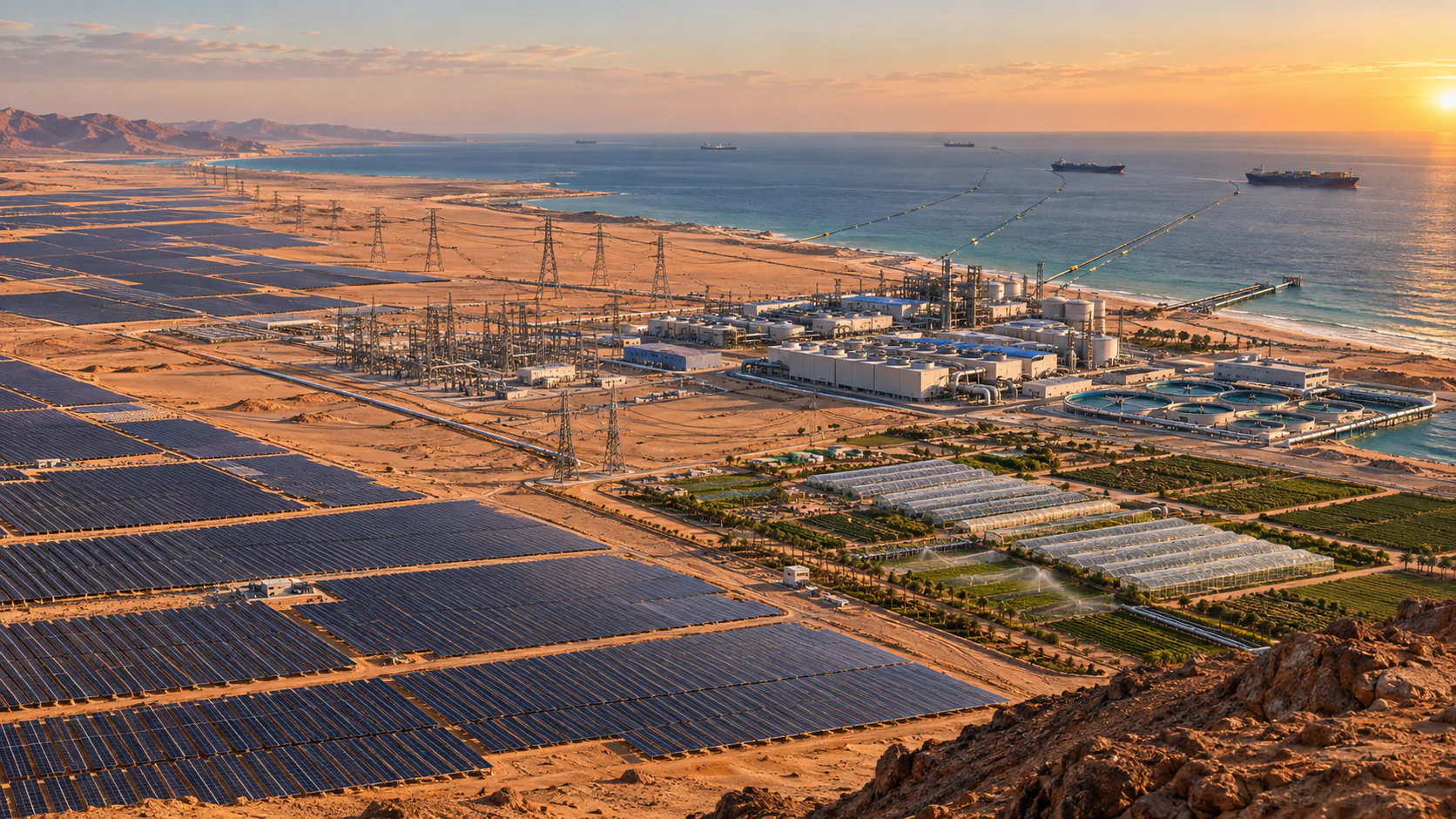
The ugly, egocentric American – How the Trump era is damaging the image of the USA for decades – Image: Xpert.Digital

When self-aggrandizement becomes a matter of state policy: America between lust for power and loss of credibility

The collective good called stability – and those who destroy it

Global economic stability is not a natural phenomenon. It does not arise spontaneously, it does not appear on command, and it does not increase simply through the size of a single actor. It is the result of decades of painstaking institution-building, mutual coordination of interests, and the willingness of powerful states to limit their own room for maneuver in favor of a binding framework of rules. This collective good—the rules-based world order—is the very foundation upon which the prosperity of the last eight decades has been built. And it is precisely this foundation that Donald Trump's second presidency is systematically eroding.

The pattern is not random, but programmatic. Tariffs are imposed, then withdrawn, then readjusted, without any discernible strategic logic beyond generating short-term negotiating pressure. Ultimatums are issued and ignored. Allies are subjected to the same economic sanctions as adversaries. The consequence is not strength, but a structurally generated unpredictability that forces investors, governments, and businesses worldwide to drastically shorten their planning horizons. The Penn Wharton Budget Model estimates that the increase in economic policy uncertainty alone reduced investment by around 4.4 percent in the first quarter of 2025—an effect that is not offset by increased tariff revenues.

The macroeconomic consequences are tangible, albeit less catastrophic than feared – which should not be misinterpreted as a success, but rather as a sign of the high resilience of other actors. The International Monetary Fund forecasts global growth of 3.3 percent for 2026 – a figure that has been revised slightly upwards compared to earlier forecasts, but is still significantly below the pre-crisis average of 3.7 percent. JP Morgan Research estimates that a universal 10 percent US tariff combined with a 110 percent tariff on Chinese goods will reduce global GDP by around one percent – ​​and that second-round effects via sentiment and financial markets could potentially double this damage. The OECD sees global growth falling to 2.9 percent by 2026 once the full impact of the tariffs is felt through supply chains.

The promised golden age has failed to materialize. Trump's tariff regime generates roughly $30 billion in monthly revenue for the US treasury, but simultaneously fuels inflation, increases the cost of goods for American companies, and undermines consumer confidence. The effective total US tariff rate has reached its highest level since 1933. Anyone familiar with history knows what followed.

The Strait of Hormuz as a seismograph of a new vulnerability

The second major finding of this analysis stems from a specific event that shook global commodity markets in March 2026 and painfully exposed the most dangerous aspect of a monocausally structured energy supply. Following joint American-Israeli military strikes against Iran on February 28, 2026, the situation in the Persian Gulf escalated with a dynamic that surprised even seasoned energy market analysts. The Strait of Hormuz, the narrow 54-kilometer waterway between Iran and Oman, became the epicenter of a global supply crisis.

This shipping corridor is not an abstract geopolitical entity – it is a physical artery of the global energy system. In 2024, an average of 20 million barrels of crude oil and petroleum products passed through this strait daily, representing approximately 20 percent of global crude oil trade. Significant volumes of liquefied natural gas (LNG) and fertilizer precursors are also transported from Saudi Arabia, Kuwait, Iraq, the United Arab Emirates, and Qatar to world markets. Asian markets would be particularly hard hit by a complete closure: 84 percent of the crude oil and condensate, as well as 83 percent of the LNG flowing through the strait, are destined for Asia, with China, India, Japan, and South Korea alone accounting for 69 percent of all Hormuz shipments.

The immediate market reactions reflected the structural severity of this vulnerability. While Brent crude was trading in the mid-$60 range before the blows, prices rose by 28 to 35 percent within ten days. Reuters reported Brent prices of $107.07 per barrel and WTI of $94.84 on March 20, 2026. The IEA explicitly warned of the largest supply disruption in the history of the global oil market, calculating that global oil supply could plummet by up to 8 million barrels per day in March 2026. At the same time, Iran reacted immediately when Trump threatened to destroy the country's power plants if the strait was not reopened within 48 hours—a threat that further escalated the crisis rather than containing it.

What fundamentally distinguishes this crisis from previous episodes is the combination of several negative factors: The physical supply is actually at risk – not just symbolically threatened. Production in southern Iraq has been partially halted. The alternative routes – Saudi Arabia's East-West pipeline with a capacity of seven million barrels per day and the UAE-Fujairah pipeline – cannot mathematically compensate for a complete Hormuz shutdown because the infrastructure at the Jeddah terminal limits the required throughput. This is not a theoretical gap, but a physical limitation.

Russia's gas dependence and Hormuz – two crises, one lesson

Comparing the 2022 energy crisis with the 2026 Hormuz crisis reveals the same structural failure, albeit in different forms. In both cases, the affected global economy or individual regions had benefited for a long time from favorable, politically stable energy supply chains and, in doing so, had failed to seriously assess the vulnerability of these dependencies.

In the case of European gas supplies, the pattern was particularly clear. In 2021, the EU sourced around 45 percent of its gas imports from Russia. This dependence had grown over decades, been deliberately deepened through political decisions, and repeatedly defended through calculations of economic efficiency. When Russia invaded Ukraine in February 2022 and used energy as a geopolitical weapon, Europe paid an enormous price. The subsequent diversification was painful, expensive, and incomplete—by 2023, the Russian share of EU gas imports had fallen to 15 percent, an impressive but drastically reduced figure achieved under extreme economic pressure. In 2025, the European Commission presented a roadmap for a complete phase-out of Russian energy imports by 2027.

But the lesson was only half learned. As an analysis by the Clingendael Institute shows, while Europe has reduced its gas dependence on Russia, it has simultaneously created a new structural dependence on American LNG: US LNG imports rose by 61 percent in 2025 compared to 2024 and now account for over 59 percent of EU LNG imports and around 38 percent of total gas imports. This is not diversification – it is a shift in dependency. And it is not without irony that a US president whose tariff policies burden the EU economy is simultaneously its most important gas supplier.

The Hormuz crisis of 2026 emphatically confirms this lesson. Energy security in the 21st century means diversification on several axes simultaneously: source countries, transport routes, energy carriers, and storage capacities. Anyone who is content with eliminating a single dependency while creating new ones has failed to grasp the fundamental structure of the problem. The economic risk premium for a mono-causal energy architecture is simply too high in a world that has become structurally more unpredictable.

Financial markets as an early warning system – and what companies need to learn from it

The reaction of global financial markets in March 2026 provided a dramatic demonstration of geopolitical risk translation. Oil prices, freight rates, supply chain disruptions, and insurance premiums for shipping routes skyrocketed within a matter of days. Shipping companies began announcing emergency surcharges and bunker price adjustments as early as March 6, 2026. UNCTAD described the disruption as a threat to a quarter of the world's maritime oil trade. The market had spoken—and it spoke loudly.

For business leaders who based their investment and supply chain planning on the assumption of stable geopolitical conditions, this was a costly awakening. The truth is uncomfortable, but clear: Geopolitical risk mitigation is no longer a corporate luxury. Scenarios that were once considered extreme events—the closure of a critical strait, total trade embargoes, military conflicts between major powers—are now part of standard planning, not the exception. The Boston Consulting Group explicitly recommends a cost model for resilience that doesn't solely optimize supply chain networks for efficiency, but treats flexibility and geographic diversity as independent dimensions of quality.

One particularly critical aspect concerns inventory management strategies. The decades-long dominance of the just-in-time principle has streamlined supply chains for efficiency, but in doing so, it has eliminated buffers that are crucial in times of crisis. Which companies remained operational in March 2026? Those with higher strategic inventory levels, geographically diversified supplier bases, and supply contracts that included crisis clauses. Which faced closed warehouses? Those that had optimized for maximum capital efficiency without ever conducting a scenario workshop on geopolitical shocks. A 2026 Geopolitical Resilience Report explicitly identified geopolitical instability as the single greatest threat to global supply chains.

The IEA as proof of the indispensability of multilateral institutions

Amidst the crisis of March 2026, an event occurred whose significance extends beyond immediate energy policy: The International Energy Agency, with its 32 member states, unanimously decided to release 400 million barrels of crude oil from strategic reserves – the largest collective emergency action in the organization's 50-year history. This amount exceeds the combined volumes of all previous IEA emergency actions, including the 182.7 million barrels released after the Russian attack on Ukraine in 2022.

The coordination effort behind this deserves special recognition. Thirty-two sovereign states with differing national interests, energy structures, and geopolitical orientations agreed on a joint, binding emergency response in a historically short time. IEA Executive Director Fatih Birol called the situation the greatest challenge the global oil market had ever faced – and precisely for that reason, a response of unprecedented scale was required. Later estimates even spoke of up to 426 million barrels in the overall coordination across various national and industrial reserve categories.

This is not something to be taken for granted – it is the result of decades of institutional investment. The IEA was founded in 1974, immediately after the first oil price shock. Its strategic reserves collection mechanism, its monitoring capabilities, and its diplomatic infrastructure were built in peacetime so that they would function in times of crisis. The willingness to coordinate 32 governments on a unanimous emergency measure is not a spontaneous occurrence – it is the result of decades of building trust and nurturing institutions.

This finding is particularly telling in contrast to American policy: While the IEA acted collectively, the Trump administration simultaneously withdrew from or restricted participation in more than 66 multilateral organizations, treaties, and institutions—including the WHO, UNESCO, the World Health Framework Convention, and various UN bodies. This is the profound contradiction of the present moment: The most powerful actor in the IEA's emergency coordination is simultaneously the actor that is systematically dismantling the multilateral institutions upon which such coordination is based.


Our US expertise in business development, sales and marketing

Our US expertise in business development, sales and marketing

Our US expertise in business development, sales and marketing - Image: Xpert.Digital

Industry focus areas: B2B, digitalization (from AI to XR), mechanical engineering, logistics, renewable energies and industry

More information here:

  • Expert Business Hub

A thematic hub offering insights and expertise:

  • Knowledge platform covering global and regional economies, innovation and industry-specific trends
  • A collection of analyses, insights, and background information from our key areas of focus
  • A place for expertise and information on current developments in business and technology
  • A hub for companies seeking information on markets, digitalization, and industry innovations


Soft power in decline: Why trust is becoming strategic capital

Trust as a strategic resource – and its gradual decline

The term "soft power," coined by Harvard political scientist Joseph Nye, refers to a state's ability to influence others through attraction rather than coercion. Cultural appeal, political credibility, the attractiveness of a societal model—these are the resources upon which American claims to global leadership have been largely based since 1945. These resources are not subject to rapid depletion, but rather to a gradual erosion process that, after a certain point, is difficult to reverse.

Empirical data on America's international reputation paints a consistent picture of decline. In the Anholt Nation Brands Index, which has measured the perception of nations in 40,000 surveys from 20 countries since 2005, the US consistently ranked first from 2005 to 2016. After Trump's first inauguration, the country fell to seventh place. From 2017 to 2024, its ranking fluctuated between sixth and tenth place, before plummeting to a historic low of fourteenth place after Trump's re-election in 2025. Today, America ranks between Austria and New Zealand in this index—a symbol of its lost status as a nation of exceptionalism.

Morning Consult, a large-scale survey of 42 countries, recorded a 20-percentage-point drop in net US favorability in the first quarter of 2025—the sharpest decline outside of wartime. The declines were particularly pronounced in traditional partner countries: minus 54.9 percentage points in Canada, minus 41.3 in Mexico, minus 40.0 in Japan, minus 38.6 in France, and minus 38.3 in the Netherlands. These are not abstract figures—these are political partners needed in times of crisis, and whose support is now considerably less assured.

In the spring of 2025, the Pew Research Center surveyed 24 nations and found that in 19 of them, a majority had little or no confidence in Trump's leadership of world politics. The global median of those who trusted Trump was only 34 percent. In Mexico, his most important trading partner, it was 8 percent. These figures are not mere sentiments—they are strategic indicators because they reflect the willingness of governments to follow American initiatives, welcome American investments, or participate in American-led coalitions.

Boycott economics – when anti-Americanism becomes a market factor

The erosion of the American brand image has now developed an economic momentum of its own that extends beyond mere survey results. Within 72 hours of the imposition of universal tariffs on April 2, 2025, #BoycottUSA and #BoycottUSAProducts were trending worldwide on social media platforms. In Canada, American products were removed from supermarket shelves and replaced with signs urging consumers to "Buy Canadian Instead." European Facebook groups mobilized for consumer boycotts of American goods.

Companies responded to this shift in sentiment with remarkable adjustments. Levi's, the venerable American jeans company, listed "rising anti-Americanism" as an explicit business risk in a British regulatory document. McDonald's and Coca-Cola launched advertising campaigns that deliberately downplayed the American origins of their brands. IBM CEO Arvind Krishna cited anti-Americanism as a potential headwind for international business during the Q1 earnings call. These aren't footnotes—these are executives at world-leading companies factoring in a reputation-related competitive disadvantage.

In parallel, the number of international students at American universities fell by 17 percent in the fall of 2025—a decline that will cause short-term economic damage through lower tuition fees and create a long-term human capital problem. The world's best minds, who previously automatically chose the USA as their destination, are now more frequently choosing Canada, Australia, Germany, or the Netherlands. Tourism Economics predicted a 9.4 percent drop in international arrivals in 2025—almost twice as much as expected at the beginning of the year.

Brand Finance, a leading British consultancy, succinctly summarized the situation: Trump's policies and political approach have contributed to a decline in the global perception of American leadership and threaten America's soft power, with potential consequences for future business rankings. The first line of economic repercussions is already visible – the second and third will follow in the coming years.

Unilateralism as self-blockage – the paradox of strength

The deepest paradox of American foreign policy under Trump is structural: The doctrine of unilateralism, designed to pursue American interests without regard for multilateral ties, ultimately undermines precisely the power base that makes America strong. For in the 21st century, power is far more than military capability or GDP size. It is the ability to persuade others to want what one wants – and this ability diminishes proportionally with the loss of trust.

The Institut Montaigne in Paris documented that between the beginning of 2025 and January 2026, the US withdrew from or restricted its participation in a total of 66 multilateral organizations, agreements, and treaties—31 of them within the UN system and 35 outside of it. This is the most comprehensive US withdrawal from the multilateral system since the end of World War II. The European University of Florence commented that Trump is not only damaging individual institutions but is attacking the ideological foundations of the global governance system by framing international institutions as threats to US sovereignty.

The systemic consequence is a dangerous signal: when the world's most powerful state selectively adheres to multilateral rules, uses tariffs as a foreign policy weapon, terminates agreements, and issues threats it cannot or will not enforce, the binding force of the entire system erodes. Why should a medium-sized state abide by agreements when the world's largest economy demonstratively withdraws from them? This is not a rhetorical problem—it is a real problem of global governance architecture.

China, itself no model of multilateral adherence to rules, has recognized and exploited this dynamic. Beijing is positioning itself globally as a guarantor of continuity, reliability, and non-interference – and is thus finding an audience in regions exhausted by American volatility. This is the true geopolitical dividend of Trump's unilateralism: not for America, but for its strongest strategic rival.

The lasting call – what might come after Trump

A central question that any analysis of the Trump era must address is that of reversibility. Can a successor restore the damaged trust, the diminished reputation, and the eroded institutional relationships? The answer is nuanced: Much is, in principle, repairable, but not without considerable political effort, not quickly, and perhaps not completely.

The precedent of Trump's first term is instructive. After Trump's departure in 2021, the world hoped for an immediate reset. President Biden rejoined the Paris Agreement, returned to the WHO, and sought closer ties with traditional allies. In the short term, US approval ratings recovered significantly in the polls. But the experience of that period had sharpened an awareness that could not be lulled back to sleep: America can vote for Trump. America can vote for Trump again. And it did vote for him again.

This finding is a recurring theme in current geopolitical debates. The question of whether one can rely on American guarantees, American trade agreements, or American institutional commitments over a period of ten, twenty, or thirty years is no longer the same as it was before 2016. European governments have begun to structurally increase their defense spending, not because the immediate situation demands it, but because the experience of American unreliability is triggering a systemic response that extends beyond individual decisions.

For the international economic order, this means that even a post-Trump USA will face increased risk premiums. Investors who have experienced how trade agreements can be undermined overnight by tariffs will lower their long-term assessment of American reliability. The Anholt Institute aptly comments that a damaged reputation bears its commercial, cultural, and diplomatic fruit over time – and the first signs of this effect on the US economy are already visible.

Europe and the rest of the world – structural responses to structural instability

What strategic consequences remain? For Europe, this complex situation yields a clear, albeit difficult, agenda. Strengthening multilateral institutions is not merely a normative imperative—it is an economic policy necessity in a world where the traditional anchor of these institutions is disintegrating. The IEA demonstrated in March 2026 that collective action is possible even without active US leadership. The coordination of 32 nations for the largest emergency response in the history of energy supply worked—this shows that multilateralism is not an American invention, but an instrument that functions even without its original architect.

At the same time, Europe's energy policy lessons must be implemented swiftly. The Hormuz crisis demonstrates that energy dependence is a structural risk even beyond Russian pipelines. True diversification means maximizing renewable energy self-sufficiency, spreading LNG sources more broadly, expanding storage infrastructure, and understanding the diplomatic safeguarding of transport corridors as part of foreign policy. The EU roadmap for a complete phase-out of Russian energy by 2027 is a step in the right direction, but it is insufficient on its own if it creates new, single-cause dependencies.

For companies, this results in a clear operational imperative: scenario planning is not a department for strategic future thinking, but a core competency of corporate management. The BCG approach of a resilient operating model, which explicitly accepts a cost premium for geographical flexibility, reflects the economic reality of a permanently more unpredictable world. In 2026, geopolitical risk management is no longer a nice-to-have – it is a matter of survival.

The legacy of unilateralism – a sober assessment

Trump's second term will be recorded in economic history as the catalyst for a threefold erosion: the erosion of the rules-based trading system, the erosion of American reputation capital, and the erosion of the multilateral governance architecture. None of these erosions is final and irreversible—but each is real, measurable, and its consequences are far from fully foreseeable.

What is particularly significant here is the self-inflicted damage. Trump's America is economically robust – GDP is growing, the labor market is holding up, the stock market fluctuates but doesn't collapse. However, this is not proof of the policies' effectiveness, but rather a sign of the resilience of an economy that functions despite its political leadership, not because of it. The promised golden age failed to materialize. What remains is an economy that has squandered potential, eroded trust, and damaged the very institutions it will need in the next serious crisis.

The lesson is simple, but seemingly difficult to convey: In a world of economic interdependence, reliability is capital. Those who systematically squander this capital will be impoverished – even if they remain the world's strongest military and economic player. The reputation of the ugly, egocentric American, cemented by Trump's second term, will have a lasting impact. Not as a moral judgment, but as an economic reality: in risk premiums, in alliance cost markups, in declining student numbers, in more hesitant investments, and in the quiet but persistent mistrust that has permeated government archives, corporate strategies, and consumer decisions around the globe.

Other topics

  • Russia | Trump needs the EU for a dual strategy against Putin: Why 100% tariffs on China and India could change everything now
    Russia | Trump needs the EU for a dual strategy against Putin: Why 100% tariffs on China and India could change everything now...
  • NATO summit in The Hague | “Europe is going to pay”: Trump embarrasses NATO chief with private text message – What else could happen today?
    NATO summit in The Hague | “Europe is going to pay”: Trump embarrasses NATO chief with private text message – What else could happen today?...
  • Trump and Xi Jinping meet in South Korea – A historic summit with far-reaching consequences: What was the meeting about?
    Trump and Xi Jinping meet in South Korea – A historic summit with far-reaching consequences: What was the meeting about?...
  • Germany's digital tax: Tax plan for Google, Meta, Amazon & Co. provokes Trump – Are we now threatened with a trade war?
    Germany's digital tax: Tax plan for Google, Meta, Amazon & Co. provokes Trump – Are we now facing a trade war?...
  • Escalation in the US-China trade conflict: 100 percent tariffs, export controls for software, and the shaky Trump-Xi meeting in South Korea
    Escalation in the US-China trade conflict: 100 percent tariffs, export controls on software, and the shaky Trump-Xi meeting in South Korea...
  • Europe faces unexpected benefits from Trump
    Europe faces unexpected benefits from Trump...
  • Setback for Donald Trump: EU arms financing for Ukraine at the center of tensions between the US and Europe
    Setback for Donald Trump: EU arms financing for Ukraine at the center of tensions between the US and Europe...
  • The new American strategy of US President Donald Trump: arms deliveries to Ukraine via NATO
    US President Donald Trump's new American strategy: arms deliveries to Ukraine via NATO...
  • Between expectation and disillusionment: The global assessment (including the USA, EU and China) of the Trump presidency in November 2025
    Between expectation and disillusionment: The global assessment (including the USA, EU and China) of the Trump presidency in November 2025...
Partner in Germany and Europe - Business Development - Marketing & PR

Your partner in Germany and Europe

  • 🔵 Business Development
  • 🔵 Trade Fairs, Marketing & PR

Business & Trends – Blog / AnalysesBlog/Portal/Hub: Smart & Intelligent B2B - Industry 4.0 - Mechanical Engineering, Construction Industry, Logistics, Intralogistics - Manufacturing - Smart Factory - Smart Industry - Smart Grid - Smart PlantContact - Questions - Help - Konrad Wolfenstein / Xpert.DigitalIndustrial Metaverse Online ConfiguratorOnline Solarport Planner - Solar Carport ConfiguratorOnline solar system roof & surface plannerUrbanization, logistics, photovoltaics and 3D visualizations Infotainment / PR / Marketing / Media 
  • Material handling - warehouse optimization - consulting - with Konrad Wolfenstein / Xpert.DigitalSolar/Photovoltaics - Consulting, Planning - Installation - With Konrad Wolfenstein / Xpert.Digital
  • Contact me:

    LinkedIn contact - Konrad Wolfenstein / Xpert.Digital
  • CATEGORIES

    • Logistics/Intralogistics
    • Artificial Intelligence (AI) – AI Blog, Hotspot and Content Hub
    • New PV solutions
    • Sales/Marketing Blog
    • Renewable energy
    • Robotics
    • New: Economy
    • Heating systems of the future – Carbon Heat System (carbon fiber heaters) – Infrared heaters – Heat pumps
    • Smart & Intelligent B2B / Industry 4.0 (including mechanical engineering, construction industry, logistics, intralogistics) – Manufacturing industry
    • Smart City & Intelligent Cities, Hubs & Columbarium – Urbanization Solutions – Urban Logistics Consulting and Planning
    • Sensors and measurement technology – Industrial sensors – Smart & Intelligent – ​​Autonomous & Automation systems
    • Advanced metal fabrication & joining technology
    • Augmented & Extended Reality – Metaverse Planning Office / Agency
    • Digital hub for entrepreneurship and start-ups – information, tips, support & advice
    • Agri-photovoltaics (Agri-PV) consulting, planning and implementation (construction, installation & assembly)
    • Covered solar parking spaces: Solar carports – Solar carports – Solar carports
    • Electricity storage, battery storage and energy storage
    • Blockchain technology
    • NSEO Blog for GEO (Generative Engine Optimization) and AIS Artificial Intelligence Search
    • Order acquisition
    • Digital Intelligence
    • Digital Transformation
    • E-commerce
    • Internet of Things
    • USA
    • China
    • Hub for Security and Defense
    • Social Media
    • Wind power / Wind energy
    • Cold Chain Logistics (fresh logistics/refrigerated logistics)
    • Expert advice & insider knowledge
    • Press – Xpert Press Relations | Consulting and Services
  • Further article: Trump's Middle East escalation as a lesson in the failure of non-partnership foreign policy
  • New article: Vibe Coding and AI Coding Agents – Who Still Needs Programmers? The Inconvenient Truth
  • Xpert.Digital Overview
  • Xpert.Digital SEO
Contact/Info
  • Contact – Pioneer Business Development Expert & Expertise
  • Contact form
  • imprint
  • Privacy Policy
  • Terms and Conditions
  • e.Xpert Infotainment
  • Infomail
  • Solar system configurator (all variants)
  • Industrial (B2B/Business) Metaverse Configurator
Menu/Categories
  • Managed AI Platform
  • AI-powered gamification platform for interactive content
  • LTW Solutions
  • Logistics/Intralogistics
  • Artificial Intelligence (AI) – AI Blog, Hotspot and Content Hub
  • New PV solutions
  • Sales/Marketing Blog
  • Renewable energy
  • Robotics
  • New: Economy
  • Heating systems of the future – Carbon Heat System (carbon fiber heaters) – Infrared heaters – Heat pumps
  • Smart & Intelligent B2B / Industry 4.0 (including mechanical engineering, construction industry, logistics, intralogistics) – Manufacturing industry
  • Smart City & Intelligent Cities, Hubs & Columbarium – Urbanization Solutions – Urban Logistics Consulting and Planning
  • Sensors and measurement technology – Industrial sensors – Smart & Intelligent – ​​Autonomous & Automation systems
  • Advanced metal fabrication & joining technology
  • Augmented & Extended Reality – Metaverse Planning Office / Agency
  • Digital hub for entrepreneurship and start-ups – information, tips, support & advice
  • Agri-photovoltaics (Agri-PV) consulting, planning and implementation (construction, installation & assembly)
  • Covered solar parking spaces: Solar carports – Solar carports – Solar carports
  • Energy-efficient renovation and new construction – Energy efficiency
  • Electricity storage, battery storage and energy storage
  • Blockchain technology
  • NSEO Blog for GEO (Generative Engine Optimization) and AIS Artificial Intelligence Search
  • Order acquisition
  • Digital Intelligence
  • Digital Transformation
  • E-commerce
  • Finance / Blog / Topics
  • Internet of Things
  • USA
  • China
  • Hub for Security and Defense
  • Trends
  • In practice
  • vision
  • Cyber ​​Crime/Data Protection
  • Social Media
  • eSports
  • glossary
  • Healthy eating
  • Wind power / Wind energy
  • Innovation & Strategy: Planning, consulting, and implementation for Artificial Intelligence / Photovoltaics / Logistics / Digitalization / Finance
  • Cold Chain Logistics (fresh logistics/refrigerated logistics)
  • Solar power in Ulm, around Neu-Ulm and Biberach: Photovoltaic solar systems – consultation – planning – installation
  • Franconia / Franconian Switzerland – Solar/Photovoltaic Solar Systems – Consulting – Planning – Installation
  • Berlin and surrounding areas – Solar/Photovoltaic systems – Consulting – Planning – Installation
  • Augsburg and surrounding area – Solar/Photovoltaic systems – Consulting – Planning – Installation
  • Expert advice & insider knowledge
  • Press – Xpert Press Relations | Consulting and Services
  • Tables for Desktop
  • B2B procurement: Supply chains, trade, marketplaces & AI-powered sourcing
  • XPaper
  • XSec
  • Protected area
  • Pre-release version
  • English Version for LinkedIn

© March 2026 Xpert.Digital / Xpert.Plus - Konrad Wolfenstein - Business Development