
Worse than Watergate? Tax immunity forever: How Donald Trump bought his way out of trouble with $1.7 billion
Xpert Pre-Release

Available in 27 languages 📢
Prefer Xpert.Digital on GoogleⓘPublished on: May 20, 2026 / Updated on: May 20, 2026 – Author: Konrad Wolfenstein
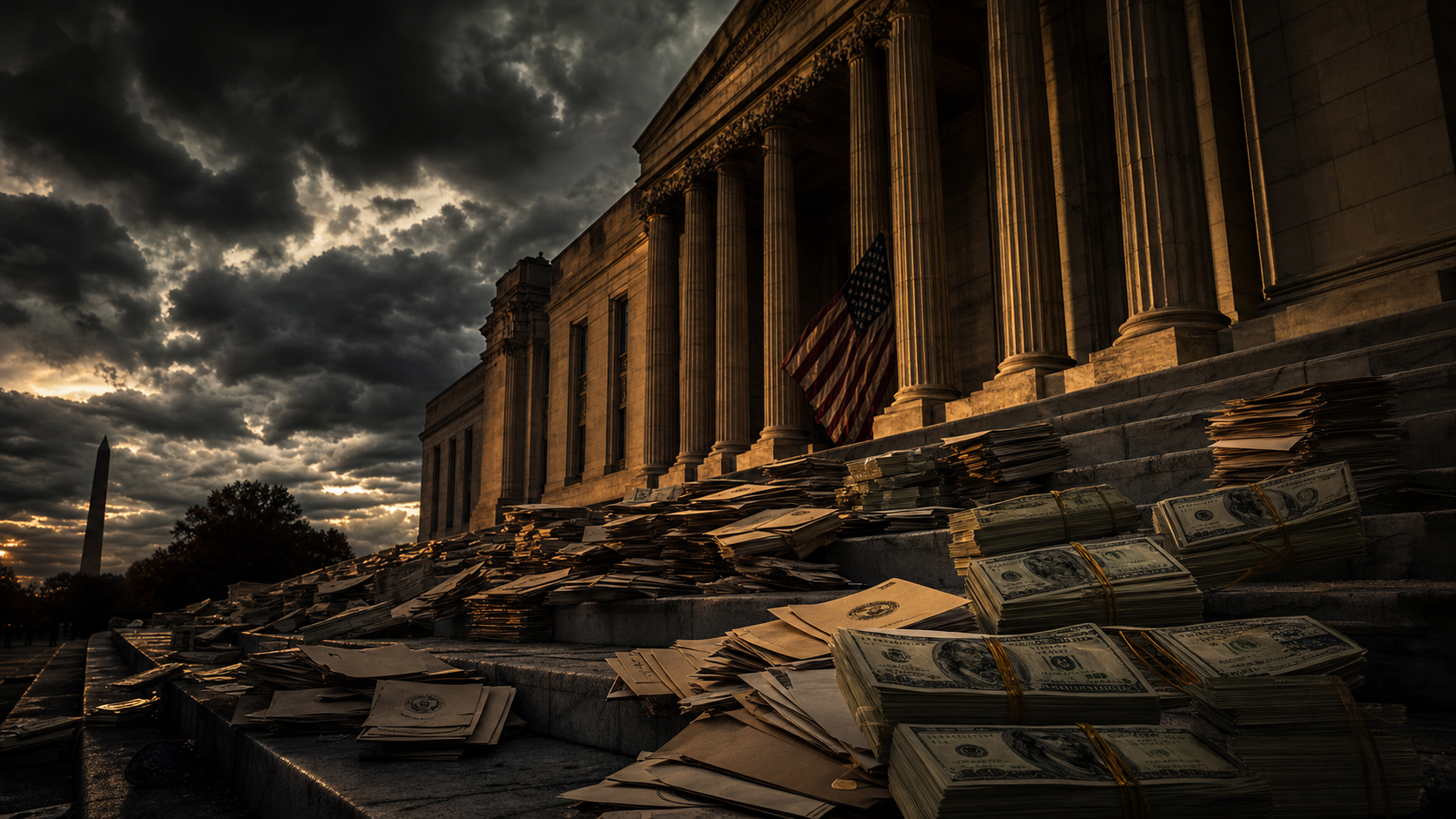
Worse than Watergate? Tax immunity forever: How Donald Trump is buying his way out of trouble with $1.7 billion – Image: Xpert.Digital
The secret document: How Trump circumvents US tax investigations for his family
Historic conflict of interest: The unprecedented IRS scandal that is shaking the US justice system
The state as prey: How Donald Trump is bringing down the American legal system
In May 2026, an unprecedented political and legal scandal rocked the United States: A sitting president sued his own administration—and subsequently reached a multi-billion-dollar settlement with the Justice Department, which he himself controlled. The result of this remarkable maneuver was not only a $1.77 billion compensation fund, financed by taxpayer money and potentially benefiting the stormers of the Capitol. There also existed a highly sensitive secret document, a so-called addendum, granting Donald Trump and his family absolute and lifelong immunity from tax audits by the Internal Revenue Service (IRS). Top economists and constitutional scholars sounded the alarm: This deal not only undermined the principle of equality before the law but also threatened to permanently destroy global trust in American institutions. An analysis of a construct that puts the constitutional boundaries of the USA to a historic test.
The comparison with the Watergate affair refers to the systematic abuse of state institutions by the US president, but has crucial and disturbing differences.
The parallel: instrumentalization of authorities
During the Watergate scandal (1972–1974), President Richard Nixon attempted to misuse federal agencies such as the FBI, the CIA, and especially the IRS (the internal tax authority) for his personal and political purposes—for example, to subject political opponents to tax audits and to cover up crimes. This very "weaponization" of the Department of Justice and the IRS is also at the heart of the Trump deal.
The crucial difference: secrecy vs. open stage
Nixon's Watergate actions were illegal covert operations. When they came to light, he attempted a cover-up. The Trump deal, on the other hand, is happening in broad daylight. He is using a quasi-legal facade (an official settlement and the Judgment Fund) to enrich himself and grant himself lifetime tax immunity. The corruption isn't hidden; it's being made official government policy.
The failure of institutions
The crux of the comparison lies in the outcome: Watergate is now considered proof that the American system of checks and balances works. Courts, Congress, and the press ultimately forced Nixon to resign. In the IRS deal scenario described, the opposite occurs: The control mechanisms fail, the construct holds firm, and the president successfully stands above the law.
In short: Watergate was a covert intrusion into democracy where the alarm system worked. The IRS deal described is the open dismantling of democracy where the alarm system is either ignored or broken.
How Donald Trump transformed the American justice system into a personal shield – and why the construct is more fragile than it appears
The United States has seen its fair share of political scandals throughout history, from the Whiskey Ring affair under Ulysses S. Grant to the Teapot Dome scandal under Warren G. Harding. However, what transpired in the second week of May 2026 in the relationship between the White House and the U.S. Department of Justice is of a nature that shakes even seasoned constitutional lawyers and economists to their core. For the first time in American history, a sitting president has filed a multi-billion-dollar lawsuit against a federal agency he himself controls, in order to forge a fiscal deal that grants him and his family perpetual immunity from tax scrutiny—funded by taxpayers' money.
In this construct, the American state is simultaneously prosecutor, defendant, and negotiator, with all three roles ultimately subordinate to a single person: Donald Trump. This structural absurdity did not escape the attention of the responsible federal court in Florida, which explicitly raised the question of whether a genuine legal dispute, as defined by Article III of the US Constitution, could even exist when the plaintiff is also the defendant's boss. The Justice Department's response was not to retreat, but to go on the offensive—with a settlement that rendered the original lawsuit moot before the court could dismiss it for lack of genuine parties.
The starting point: A tax lawsuit as a political maneuver
In January 2026, Donald Trump, along with his sons Donald Jr. and Eric, and the Trump Organization, filed a lawsuit in federal court for the Southern District of Florida against the Internal Revenue Service (IRS) and the Treasury Department. They sought at least ten billion US dollars in damages because a former IRS contractor had leaked the Trump family's tax returns to The New York Times between 2019 and 2021. This contractor, Charles Littlejohn, pleaded guilty in 2023 and was sentenced to five years in prison.
The data leak was real, and the damage itself was therefore, in principle, actionable. However, the amount of damages demanded—ten billion dollars—raised alarm bells among legal experts early on. Independent legal experts considered such a sum of damages hardly tenable; in the opinion of many trial observers, the lawsuit had from the outset been more of a tool for coercion than a genuinely pursued civil claim. Moreover, the fundamental dilemma was obvious: A sitting president can hardly credibly sue an agency that he completely controls by appointing its head and issuing directives to its oversight bodies. Judge Kathleen Williams therefore set a deadline of May 20, 2026, by which both sides were to demonstrate whether a genuine conflict of interest even existed.
The deal: billions in tax revenue as a benchmark
Just days before the deadline, the Justice Department revealed the core of the negotiated settlement. On Monday, May 18, 2026, the establishment of the so-called Anti-Weaponization Fund was announced, endowed with $1.776 billion – a sum symbolically alluding to the founding year of the American republic. In return, Trump dropped his lawsuit, as well as other claims related to the 2016 search of his Mar-a-Lago estate and the Russia investigation.
The money comes from the so-called Judgment Fund, a permanent fund established by Congress to cover judgments and settlements against the federal government. This fund is intentionally not subject to annual congressional approval, which makes it particularly attractive to the executive branch: it can make payments from it without congressional consent. A five-member committee, four of whose members are appointed by Acting Attorney General Todd Blanche and the fifth of whose members are chosen in consultation with congressional leadership, will decide on the disbursement. Trump reserves the right to dismiss committee members.
According to the wording of the law, all individuals wrongfully harmed by state law enforcement are eligible to apply – an intentionally broad formulation that does not include any partisan restrictions. In practice, this means that payments can be made to the approximately 1,600 people charged in connection with the storming of the Capitol on January 6, 2021. Other Trump associates who complain about politically motivated investigations under the Biden administration are also eligible to apply. The fund is scheduled to process applications until December 1, 2028; any remaining funds will then be returned to the general budget.
The addendum: Immunity for eternity
What surpassed the outrage over the settlement itself was a one-sided addendum, published only on Tuesday on the Justice Department's website. This document, signed by Todd Blanche, declares the United States permanently barred from pursuing any tax claims against Trump, his relatives, the Trump Organization, and related trusts, subsidiaries, and affiliates relating to tax returns filed before the settlement date.
The word that has dominated public discourse ever since is: forever. Banned and excluded for good. Daniel Werfel, the former IRS commissioner in the Biden administration, stated that he was unaware of a single instance in which the IRS had definitively waived its right to review previously filed tax returns of a specific individual or company. This, he argued, effectively grants Trump and his family their own tax code, distinct from that of all other citizens of the country.
Senator Ron Wyden, the leading Democrat on the Senate Finance Committee, pointed out that this move may violate a federal law that explicitly prohibits government officials from influencing IRS audits of certain taxpayers. The law specifically lists the president, vice president, and senior executive officials as prohibited actors. An order from the attorney general, who served as Trump's former private attorney in three criminal cases, could therefore constitute undue influence.
Constitutional Achilles heels
From a constitutional perspective, the entire construct exhibits several critical weaknesses that are highly likely to lead to legal disputes. The first point of attack is the requirement of genuine parties to the dispute under Article III, Section 2, Clause 1 of the US Constitution. Ninety-three Democrats in the House of Representatives argued in a 31-page amicus curiae petition that Trump's lawsuit against the IRS never constituted a genuine legal dispute as defined by the Constitution, since Trump, as president, commanded the defendant agency. A settlement in such a case would therefore be constitutionally invalid.
The second point of contention concerns the Judgment Fund's expenditures. The fund is intended to settle genuine legal disputes; creating a politically motivated compensation program without a statutory basis or congressional approval could be considered a violation of Congress's budgetary powers under Article I of the Constitution. Legal analyses from American University have already indicated that the Judgment Fund is structurally vulnerable to politically motivated abuse precisely because it lacks disclosure requirements and congressional oversight.
Third, there is the Domestic Emoluments Clause – the prohibition against granting the president any payments from public funds beyond his official salary. Although Trump personally does not receive direct payments from the fund, affiliated companies and individuals in his immediate circle could benefit – which watchdog organizations like Citizens for Responsibility and Ethics in Washington consider a potential violation of the Constitution.
The economists' perspective: Corruption as a systemic risk
Kenneth Rogoff, an economist at Harvard University, former chief economist of the International Monetary Fund, and one of the world's most influential economists, has made it clear in various statements that he tries to assess Trump's policies impartially wherever possible. His verdict on the issue of institutional integrity, however, was devastating: Corruption—or at least the appearance of it—simply cannot be ignored. Rogoff drew a historical comparison: Trump has long since surpassed both Ulysses Grant and Warren Harding as the most corrupt presidents in US history, and American institutions will still be suffering the consequences ten years from now.
Rogoff's economic argument goes beyond the moral dimension. In his recently published book on the global role of the US dollar, he described the structural risks to the American economy that arise when the reliability of government institutions declines. In this view, the IRS deal is not an isolated scandal, but rather another data point in a worrying trend: the erosion of institutional credibility, which investors, trading partners, and international lenders had taken for granted. When the executive branch openly demonstrates that fiscal equality before the law does not apply to everyone, risk premiums for US investments will rise, and the dollar as a reserve currency will come under further pressure.
Political scientist Michael Bailey of Georgetown University in Washington succinctly summarized the political science dimension: The fund is taxpayer-funded compensation for the leak of Trump's tax returns, and the whole thing is a farce. For Bailey, the deal is a symptom of the general decline of democratic norms, which has accelerated under Trump. The administration has sunk low.
Our US expertise in business development, sales and marketing

Our US expertise in business development, sales and marketing - Image: Xpert.Digital
Industry focus areas: B2B, digitalization (from AI to XR), mechanical engineering, logistics, renewable energies and industry
More information here:
A thematic hub offering insights and expertise:
- Knowledge platform covering global and regional economies, innovation and industry-specific trends
- A collection of analyses, insights, and background information from our key areas of focus
- A place for expertise and information on current developments in business and technology
- A hub for companies seeking information on markets, digitalization, and industry innovations
How the IRS deal undermines US institutions: The dangerous precedent experiment
Historical context: Grant, Harding, and the measure of all things
A direct comparison with presidencies historically considered to be plagued by corruption is revealing. Under Ulysses Grant, the 18th US president, a series of serious corruption scandals occurred between 1869 and 1877, including the Whiskey Ring, in which tax officials and distillers evaded millions in taxes in an organized conspiracy. According to the prevailing view of historians, Grant himself was not personally involved in the scheme; his failing lay in naive loyalty to corrupt confidants. The Credit Mobilier scandal, with its damages now estimated at around $1.1 billion, was not orchestrated by Grant himself, but by a largely independent network of members of Congress and railroad tycoons.
Warren Harding, the 29th US president, is inextricably linked to the Teapot Dome scandal, in which Interior Secretary Albert Fall leased federal oil fields in Wyoming and California to private companies in exchange for bribes equivalent to about eight million dollars today. Fall was the first US cabinet secretary to be imprisoned for a crime committed in office. Here, too, it's important to note that Harding was personally naive, not actively criminal.
What structurally distinguishes the current situation from these historical precedents is not solely the moral dimension, but the institutional architecture. While Grant and Harding tolerated or overlooked corruption in their administrations, the current construct operates within a system controlled by the president himself, a system that turns the executive branch against itself—and simultaneously renders the IRS's oversight mechanisms permanently ineffective. The Brennan Center for Justice at NYU Law School has pointed out that even the Credit Mobilier scandal, with its inflation-adjusted $1.1 billion, is still smaller than the current compensation fund.
Political lines of resistance and cross-party nervousness
It is noteworthy that criticism of the Anti-Weaponization Fund was not entirely absent from the Republican camp. Senate Majority Leader John Thune openly stated that he was not a big fan of the fund. Republican Senator Lisa Murkowski, a member of the Appropriations Committee, spoke of serious and significant problems should compensation actually be paid to individuals convicted for their involvement in the storming of the Capitol. Vice President JD Vance attempted to defuse the situation by stating that they did not intend to compensate anyone who had attacked police officers—but simultaneously acknowledged that such cases would be assessed on a case-by-case basis, which the fund committee would have to confirm.
The Democratic opposition has responded on several fronts. Ninety-three representatives have filed the aforementioned amicus brief in Florida. Senator Chris Van Hollen directly confronted Todd Blanche in the Senate Appropriations Subcommittee, demanding that individuals convicted of assault during the storming of the Capitol be explicitly excluded from receiving payments. Blanche rejected such a commitment, citing the committee's jurisdiction.
At the parliamentary level, individual members of the Approval Committee discussed ways to financially freeze the Judgment Fund or to restrict its legal basis. However, such steps remain dependent on parliamentary majorities, which are difficult to achieve in the current political climate.
Durability analysis: How stable is the structure?
This is the crucial question for the long-term economic and institutional evaluation of the deal. The answer is: The construct is considerably more fragile than its architects seem to have intended – but its dissolution is by no means automatic or immediate.
First, regarding the question of legal challenge in the ongoing proceedings. Judge Williams' dismissal of the lawsuit was based formally on the withdrawal request filed by Trump himself, not on a substantive review. The settlement itself, as the judge explicitly stated in her ruling, is therefore not a formally judicially confirmed settlement—there is no judicial approval. This means that the agreement between the Justice Department and Trump's lawyers has no res judicata effect and could, in principle, be considered non-binding by a future Attorney General.
Second, regarding the legal challenges posed by the addendum. The addendum is signed only by Todd Blanche, bears neither the signature of an IRS representative nor that of Trump's lawyers, and was added retroactively without formal consultation with the other party to the settlement. Several law professors have pointed out that a unilateral executive order by the Department of Justice cannot have binding legal effect on the IRS as an independent agency if it is not based on a statutory foundation. Senator Wyden has already indicated that future IRS leadership should consider this document unlawful and therefore ineffective.
Third, regarding the question of precedent for a successor administration. Caution is advised here: The political and legal system of the United States lacks automatic reversibility mechanisms for executive decisions of this kind. A new president could freeze or close the fund by executive order. He could order the Department of Justice not to recognize the binding effect of the addendum. He could order new IRS audits—but only for tax returns filed after the settlement's cut-off date; the legal situation for older returns would be disputed.
The central problem lies not in the technical reversibility, but in the political cost-benefit analysis of any successor administration. A new administration succeeding Trump would have little interest in reversing the scheme. An opposition administration would undoubtedly attempt to dismantle the structure—but would face years of litigation, as lawyers close to Trump would insist on the protection of legitimate expectations and the acquired rights of the fund's beneficiaries. Furthermore, the financial payouts scheduled to continue until the end of 2028 are virtually impossible to recover legally.
Institutional erosion as a long-term economic risk
From a macroeconomic perspective, the real damage is not what appears in the headlines—the $1.776 billion is fiscally marginal on the scale of a $29 trillion budget. The real damage is structural: It consists of demonstrating that the rule of law in the US does not apply to certain actors under certain conditions.
Institutional economists like Daron Acemoglu and James Robinson have demonstrated in seminal works that long-term economic growth depends on inclusive institutions that enforce a level playing field for all actors. When a government openly communicates that tax equality before the law is not universal—and when the safeguarding of this exception is enshrined in a written document from the Department of Justice—it sets a toxic precedent. Future economic actors will rationally calculate that government rules are negotiable if one possesses sufficient political power.
In a Harvard Kennedy School discussion with Financial Times economist Martin Wolf in May 2026, Kenneth Rogoff made it clear that the real risk for the US lay not in the tariffs, but in what economists categorize as corruption – the systematic use of state power for the private enrichment of politically connected actors. This form of corruption is harder to measure and harder to combat than traditional forms because it presents itself in a legal or quasi-legal guise.
The international dimension reinforces this assessment. The IRS deal was interpreted by foreign business partners and governments as a further signal that the US under Trump can no longer reliably guarantee the rule of law. At a time when the dollar, as the global reserve currency, is already under structural pressure, every new scandal of this kind contributes to the gradual erosion of American financial primacy.
The anatomy of a self-reinforcing system
A particularly disturbing aspect of the entire mechanism lies in its self-reinforcing logic. Trump pardoned the individuals who stormed the Capitol on January 6, 2021, the first day of his second term. These pardoned individuals are now potentially eligible to draw from a fund financed by taxpayers' money. The chain goes like this: a pardon creates potential victims of state persecution; victim status entitles one to compensation; compensation is paid with public funds; and control over disbursement rests with a panel appointed by the president's friend and attorney general.
This mechanism is not only morally questionable, but also extremely dangerous from an institutional economic perspective. It creates material incentives for political loyalty and a willingness to take legal risks for a political leader. Those who act on behalf of Trump and are subsequently prosecuted thus gain the prospect of future taxpayer-funded compensation. This structure is more reminiscent of the patronage systems that analysts describe in emerging economies with weak institutions than of the governance practices of an established liberal democracy.
Scenarios for the institutional future
Three realistic scenarios can be outlined for further development.
In the first scenario, the status quo scenario, the structure remains legally intact until the end of the Trump administration in 2029. The fund will disburse payments of an as-yet-unknown amount until December 2028; the addendum protects Trump and his family from IRS audits regarding previously filed tax returns. Legal challenges fail due to lack of standing or are dismissed by a Trump-friendly judiciary. With the end of his term, the political safeguards collapse, but the financial payouts are irreversible.
In the second scenario, the legal collapse, one or more federal courts declare the addendum unconstitutional, either for violating the separation of powers, the prohibition against emoluments, or the specific federal law protecting the IRS from undue influence. In this case, IRS audits would still be possible. Fund payments could be significantly restricted by a Supreme Court ruling if the court deems the use of the Judgment Fund unconstitutional without a genuine legal challenge.
In the third scenario, the successor government scenario, a president takes office in 2029 who is willing and politically able to dismantle the scheme. In this case, the following steps would be conceivable: issuing an executive order declaring the addendum non-binding and allowing IRS audits of future tax returns; legislative initiatives to reform the Judgment Fund to limit politically motivated settlements; and congressional investigations into whether members of the Trump administration personally benefited from the scheme. Criminal prosecution of the deal's architects would be possible, but difficult to pursue due to the immunization tendencies in US law.
The price of normality
What is most serious about this scandal is not the scandal itself. It is the speed with which it is becoming normalized. In a functioning democracy, a president who permanently evades tax audits while in office and establishes a multi-billion-dollar fund for his political allies would trigger an institutional outcry leading to impeachment or at least political ruin. In the United States of 2026, the outcry is there, but the institutional mechanisms that translate it into concrete action no longer function with the reliability on which the political system has depended for generations.
Kenneth Rogoff is right to warn that the institutions will not have recovered in ten years. The damage is not in the $1.776 billion flowing from the Judgment Fund. The damage is that any future president—regardless of party—now possesses a blueprint by which to protect themselves and their allies with public funds, as long as they control the executive branch. Once demonstrated, this blueprint cannot be undone. For nearly 250 years, American institutions were built on the trust that no one is above the law. With the IRS deal and its perpetual addendum, this trust has been shattered, the depth of which only history will fully measure.










