
How the global crisis unleashed the German solar boom: Electricity price miracle thanks to solar power
Xpert Pre-Release

Available in 27 languages 📢
Prefer Xpert.Digital on GoogleⓘPublished on: July 16, 2026 / Updated on: July 16, 2026 – Author: Konrad Wolfenstein
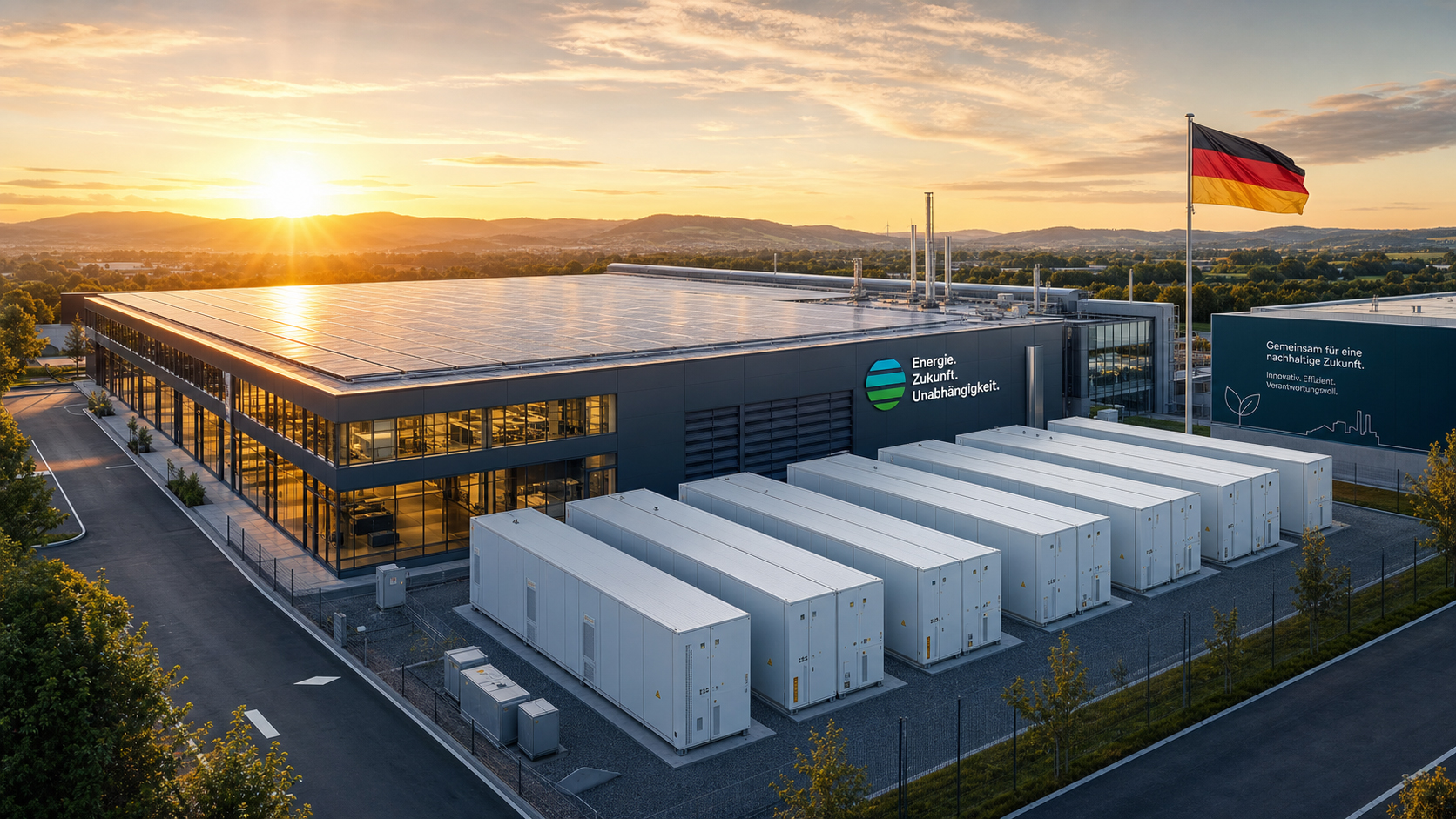
How the global crisis unleashed the German solar boom: Electricity price miracle thanks to solar – Image: Xpert.Digital
Escaping energy costs: Why solar expansion will break all records in 2026
Leveraging return on investment: When photovoltaics are really worthwhile for companies
The outbreak of the Iran-Iraq War in early 2026 and the rapidly rising prices of fossil fuels have once again shaken the European energy market to its core. But while the geopolitical situation remains tense and policymakers debate far-reaching reforms such as the 2027 amendment to the Renewable Energy Sources Act (EEG), the German economy is reacting with tremendous speed: An unprecedented boom in commercial photovoltaic systems and large-scale industrial storage is increasingly decoupling electricity prices from exploding gas costs. What in previous years was primarily driven by government subsidies is now a purely economic reflex to incalculable risks. Energy self-sufficiency is transforming from a green prestige project into a hard competitive advantage and a crucial lever for returns. A detailed analysis of the raw market data from the first half of 2026 shows that the path out of fossil fuel dependency has finally begun – driven not by ideology, but by sound business sense.
War as a catalyst
When crises accelerate the energy transition, something no funding program has ever achieved
The solar boom in Germany in the first half of 2026 can no longer be dismissed as mere market development. It is an economic reaction to a fundamental threat: the geopolitically driven dependence on fossil fuel markets. According to an analysis of the market master data register by the German Solar Association (BSW-Solar), new solar power plants with a combined capacity of almost 7.4 gigawatts peak were connected to the grid between January and the end of June 2026—nine percent more than in the first half of the previous year, which itself saw 6.8 gigawatts. Including expected late registrations, the association anticipates an adjusted figure of up to 8.3 gigawatts, which would represent a historically significant increase in capacity for a single half-year.
This means that more than six million photovoltaic systems with a total capacity of over 125 gigawatts are now installed in Germany. In a European comparison, grid feed-in from photovoltaics reached an all-time high of 43.2 terawatt-hours in the first half of 2026 – ten percent more than in the same period of the previous year. The share of renewable energies in net public electricity generation was 61.8 percent in the first half of 2026.
This level of expansion is remarkable, as it bucks the negative trend of previous years: In 2025, total new installations, at approximately 16.4 to 17.5 gigawatts (depending on the calculation method), were still slightly below the record figure of 2024. The residential segment had plummeted by almost 29 percent. The driving force behind the expansion in 2026 is structurally different: Commercial rooftop and ground-mounted systems are catching up rapidly, while small-scale private installations continue to stagnate. In the first quarter of 2026, commercial rooftop and solar park solar installations already accounted for around 60 percent of newly installed solar capacity—compared to just a quarter in 2023.
A war ignites the spark that decades of politics have failed to ignite
The immediate cause of this boom is clearly documented: The war with Iran, which broke out at the end of February 2026, shook European energy markets. Iran effectively closed the Strait of Hormuz, through which about one-fifth of global oil is transported, to shipping. The price of Brent crude oil temporarily jumped above the $100 mark per barrel. The price of natural gas rose by 48 percent from February to March—from €35.61 per megawatt-hour to €52.71. At German gas stations, gasoline and diesel prices climbed to over €2 per liter; the price of diesel, which had been around €1.75 before the war, rose to over €2.40 within six weeks.
Inflation promptly picked up. In March 2026, the inflation rate rose to 2.7 percent—the highest level since January 2024. Energy prices were hit particularly hard, increasing by 7.2 percent compared to the same month of the previous year. Commerzbank's chief economist, Jörg Krämer, warned that higher energy costs would erode value chains in the coming months. The German Economic Institute (IW Cologne) simulated specific damage scenarios: At an oil price of $100 per barrel, GDP losses would amount to 0.3 percent in 2026 and 0.6 percent in 2027—a total economic loss of approximately €40 billion. At a price of $150, GDP losses would rise to 0.5 percent (2026) and 1.3 percent (2027), corresponding to damages of over €80 billion.
In its spring 2026 forecast, the ifo Institute lowered its growth expectation for Germany to 0.8 percent in the de-escalation scenario and to just 0.6 percent in the escalation scenario. Deutsche Bank raised its inflation forecast to an average annual rate of 2.7 percent; the Bundesbank warned that the rate could rise to around three percent in the short term. For export-oriented sectors such as chemicals, transport, and mechanical engineering, raw materials, electricity, and logistics became significantly more expensive—an indirect burden that spread along the entire value chain to end-consumer prices.
This shock acted as a wake-up call. While political incentive programs had painstakingly tried to build up investment readiness over years, the war in Iran delivered, in just a few weeks, the most compelling argument for energy independence, one that no marketing budget could have formulated more convincingly: Anyone who relies on fossil fuels bears the full geopolitical risk on their own company's account.
Decoupling as a system advantage: How solar energy stabilizes the energy market
A key and economically significant phenomenon of the first half of 2026 was the divergence between gas and electricity prices. Had gas-fired power plants determined the wholesale electricity price according to the merit order principle, the price would have risen by around 39 percent after the outbreak of war—analogous to the increase in the marginal costs of gas-based electricity generation. In reality, however, the wholesale electricity price fell after the outbreak of war because renewable energies, with their low production costs, drove down the price. In April, the wholesale electricity price fell again by 27.7 percent, while the natural gas price declined by only 12.6 percent during the same period. The Fraunhofer Institute for Solar Energy Systems (ISE) calculated that if renewable energies had not contributed so significantly to electricity generation, the wholesale electricity price in April would have been 76 percent higher.
This decoupling is no accident, but rather the structural result of years of photovoltaic expansion. A system that feeds massive amounts of inexpensive electricity into the grid during sunny hours displaces expensive fossil fuel power plants from the operational sequence and drives down spot market prices. For companies with high self-consumption, this means a double benefit: they produce their own electricity at stable production costs, which are essentially dependent on investment costs, and simultaneously benefit from the fact that grid electricity remains inexpensive during periods of strong sunlight.
Germany imported only 1.3 terawatt-hours of electricity in the first half of 2026—compared to 9.6 terawatt-hours in the first half of 2025. This development illustrates how far the energy transition has already made the country less dependent on external shocks. At the same time, a significant structural gap remains: Spot market prices continue to rise sharply in the evenings and when wind and solar power generation is weak. The Fraunhofer analysis shows clear price peaks in the evenings, particularly pronounced during the heat wave in June 2026, which led to increased cooling demand coupled with reduced output from conventional power plants.
Battery storage is exploding: From complementary technology to strategic asset
Parallel to the expansion of photovoltaic (PV) capacity, the market for stationary battery storage is experiencing an even more dynamic upswing, exceeding the speed of the solar market. In the first quarter of 2026, more than two gigawatt-hours of new storage capacity were installed in Germany—an increase of 67 percent compared to the same period of the previous year. According to an analysis by RWTH Aachen University (ISEA Institute) based on the Battery Charts data platform, the market grew by around 38 percent compared to the first quarter of 2025. Particularly dynamic: The large-scale storage market recorded year-on-year growth of around 120 percent and is thus, for the first time, on par with the residential storage segment in terms of capacity growth.
In the first half of 2026, the total battery storage capacity grew by 2.6 gigawatts to approximately 29.6 gigawatt-hours, distributed across 2.59 million registered installations. This means that more new battery storage systems were commissioned in the first six months of the year than in the entire previous year. Projections based on the first quarter indicate an increase of between 8 and 10 gigawatt-hours for the full year 2026, which could bring the total capacity to around 35 gigawatt-hours by the end of the year.
The structure of this growth has fundamentally shifted: While residential storage systems dominated the market in recent years, large-scale commercial and industrial projects now take center stage. Commercial storage is transforming from a complementary product to an independent investment asset. In March 2026, the Federal Network Agency recorded a record monthly peak in storage capacity additions, driven primarily by large-scale projects—including a single large-scale storage facility in North Rhine-Westphalia with a capacity of 231 megawatt-hours, which alone accounted for 23 percent of the total monthly additions.
Profitability analysis for companies: What really pays off
The economic appeal of photovoltaics for businesses has fundamentally changed in recent years. During the era of government-guaranteed feed-in tariffs, the system was considered a financial instrument that generated returns through feeding electricity into the grid. Today, self-consumption is the real driver of returns—and this is all the more significant the higher the business's electricity demand and the more expensive grid electricity is.
Commercial PV systems typically pay for themselves in five to ten years, significantly faster than residential systems. With investment costs between €800 and €1,300 per kilowatt-peak for commercial systems, a high level of self-consumption often results in a more favorable return on investment than in previous boom years, as grid electricity has become more expensive due to rising energy prices. Important for tax planning: The German government's Growth Opportunities Act allows for tax relief of up to 70 percent of the investment costs in the first year alone, through a combination of the investment deduction (50 percent), special depreciation (40 percent), and accelerated depreciation. For an investment of €100,000 in a PV system, tax savings of over €32,000 can be realized over the first two years.
The economic viability of commercial energy storage systems follows a multi-dimensional logic that is often underestimated. Three revenue mechanisms are available and can be combined: First, self-consumption optimization, where excess solar power is stored and used during periods of high grid electricity prices. Second, peak shaving, i.e., the reduction of peak loads, which can lower capacity charges from the grid operator by 30 to 50 percent. Third, electricity price arbitrage, where cheaply purchased nighttime electricity (often €20 to €40 per megawatt-hour) is used or sold for expensive evening hours (often €80 to €150 per megawatt-hour). This multi-use strategy enables a payback period of 12 to 24 months for a one-megawatt battery storage system—a return on investment that few other business investments achieve. Payback periods of less than four years are also achievable for commercial battery storage systems without their own PV system if the company's load profile includes pronounced peaks.
At the same time, the regulatory risks cannot be ignored: The Federal Network Agency is discussing a gradual restriction of the exemption from grid fees for storage facilities, which would significantly impact their profitability in purely arbitrage-driven concepts. The currently reduced grid fees—on average by around ten percent, and in some cases at the high-voltage level even by up to 40 percent—are financed by a government subsidy package of 6.5 billion euros and are considered fragile in the long term, as the costs of grid expansion and digitalization will eventually affect the fees.
Innovative photovoltaic solution for cost reduction (up to 30%) and time savings (up to 40%)

Innovative photovoltaic solution for cost reduction and time savings - Image: Xpert.Digital
More information here:
EEG 2027: Why the solar boom benefits private households and businesses
Regulatory decision-making: The EEG 2027 and its explosive potential
The planned 2027 amendment to the Renewable Energy Sources Act (EEG) by Federal Minister for Economic Affairs Katherina Reiche (CDU) appears at first glance to be a step backward in energy policy—yet it is simultaneously accelerating the current solar boom. Reiche plans to systematically abolish the fixed feed-in tariff for new installations up to 25 kilowatts and transfer all new installations to direct marketing. This would hit private households particularly hard, as the infrastructure for cost-efficient direct marketing of small residential systems is not yet available nationwide. The think tank Agora Energiewende estimated the additional annual costs for a four-person household at between 185 and 277 euros. BSW-Solar anticipates that, if implemented, the residential solar segment will collapse from the current five gigawatts of new installations to under two gigawatts in 2027.
The situation is different for commercial enterprises. Installations with a peak power of 150 kilowatts or more are protected by grandfathering provisions and the Contracts for Difference (CfD) system as a new funding framework. The commercial and industrial sector effectively benefits from the EEG reform: Direct marketing and the market price risk that deters private homeowners are manageable for companies with professional energy management. At the same time, the combination of self-consumption and direct marketing creates a more robust and flexible revenue structure for commercial customers than the previous fixed feed-in tariff. For companies that already aim for high self-consumption, the feed-in tariff is essentially a residual amount—the reform changes little in their investment logic.
The announcement of the reform also acts as a pull-forward effect: The fear of the end of favorable funding conditions has brought forward investment decisions that would otherwise have been postponed to 2026 — and thus paradoxically is driving precisely the boom that is supposedly no longer necessary without state funding.
Security of supply as a competitive advantage: The new strategic dimension
The Iran war has reignited a discussion that has long been neglected in corporate strategy and business administration: the question of energy security as a strategic success factor. In fact, this question is not new—it returns with increased intensity with every major energy crisis, without the structural lessons being fully learned. The Russian attack on Ukraine in 2022 delivered the first severe shock; the Iran war in 2026 now confirms that geopolitical shockwaves in fossil fuel markets are not exceptional occurrences, but rather the new normal.
For industrial companies and energy-intensive medium-sized businesses, this means a forced reformulation of their energy risk management. Around 40 percent of industrial energy consumption in Germany still comes from oil and gas. This structural dependency cannot be resolved in the short term—but it can be addressed in the medium term. Photovoltaic systems on company roofs, combined with battery storage, offer a self-sufficiency rate that, with a favorable operating structure, can cover 60 to 80 percent of daily energy needs. For a manufacturer with a consistent load profile and large roof areas, this figure is even higher.
The economic logic behind this is compelling: self-producers protect themselves against two simultaneous risks—price levels and price volatility. A company that produces at stable production costs can plan its calculations more long-term and is largely immune to volatility-driven energy shocks. This argument is increasingly being treated in strategic management analogously to commodity hedging strategies: those who fail to hedge introduce an avoidable risk into their cost structure. The combination of stable energy production costs and increasing residual value of installed facilities creates a kind of balance sheet resilience that extends beyond operational benefits.
Traditionally, medium-sized companies with their own vehicle fleets and tightly integrated supply chains, which rely on logistics, are particularly vulnerable. Rising diesel prices not only increase the cost of their own transport but also impact the entire supply chain through supplier prices. For this group, energy self-sufficiency is not an ideological decision but a rational business decision. According to a 2025 survey, over 70 percent of medium-sized business owners who have invested in on-site power generation cite reducing dependence on volatile energy markets as their primary investment motivation—even more so than short-term cost savings.
Structural obstacles and the limits of the boom
Despite the impressive growth figures, a realistic assessment is warranted. With its current expansion trajectory, Germany is still significantly below its legally mandated target of 215 gigawatts of installed photovoltaic capacity by 2030. Of the current 125 gigawatts, approximately 19.9 gigawatts would need to be added annually in the remaining years – a good 20 percent more than what would be calculated based on the current record half-year level projected for the entire year. As of mid-2026, the 12-month total installed capacity was 16.5 gigawatts, which is even 2.1 percent below the previous year's figure.
The battery storage program faces a similarly significant gap. BSW-Solar estimates that a total installed storage capacity of around 100 gigawatt-hours would be necessary by 2030 to efficiently transition the electricity supply to renewable energies. At the current expansion rate, Germany would reach approximately 35 gigawatt-hours by the end of 2026—just over a third of the target. While the growth is impressive, the absolute capacity remains far below the level required for a robust system.
Added to this is a structural energy policy dilemma, which the International Economic Forum for Renewable Energies (IWR) has sharply analyzed: The more successfully battery storage systems are operated privately and compensate for price fluctuations, the less frequently gas-fired power plants are used on the market—and the greater the need for government guarantees for these power plants, as their economic viability becomes increasingly difficult to demonstrate with infrequent operating times. This systemic tension between decentralized storage logic and centralized capacity planning remains politically unresolved. Minister of Economic Affairs Reiche continues to rely on government-backed gas-fired power plants as the backbone of security of supply—a position that clearly runs counter to market trends.
Skilled labor shortages and limited grid connection capacity also restrict practical growth potential. The massive expansion of ground-mounted solar power plants has put considerable pressure on planning procedures and grid connection capacities in numerous regions. Despite the preferential treatment of large-scale storage facilities above one megawatt in building regulations, enshrined in the German Energy Industry Act (EnWG)—which simplifies planning procedures in rural areas—the implementation time for larger projects, from planning to commissioning, remains several years.
Between short cycles and structural change: The sustainability of the boom
The crucial question for entrepreneurs, investors, and energy strategists is not whether the current boom will continue—that seems unlikely given its current intensity. The question is whether the trend is structurally sound or whether it will remain a short-term cycle that will subside once energy markets calm down.
The answer is nuanced, but generally optimistic. The Fraunhofer Institute for Solar Energy Systems (ISE) found that strong renewable energy generation largely decoupled wholesale electricity prices from the gas price increase caused by the Iran-Iraq War in the spring of 2026. This effect is not a mere cyclical coincidence, but rather becomes more pronounced with each newly installed gigawatt-hour. The merit order logic of the electricity market structurally favors the expansion of renewables: Low marginal costs from solar and wind power displace expensive fossil fuel capacities and drive down the average wholesale electricity price—regardless of how highly gas or oil are traded on the world market.
For companies, this means that the investment decision for photovoltaics and battery storage is no longer dependent on short-term energy price volatility. The return on investment remains stable because the marginal cost of a self-generated kilowatt-hour of solar power is virtually zero, and battery storage provides arbitrage-capable flexibility that increases in value with rising market volatility. Those who invest today secure production costs and self-sufficiency rates for decades to come—thus protecting themselves against future geopolitical energy shocks, regardless of their source.
The Iran war didn't create a new trend. It massively accelerated an existing one and provided a broader audience of decision-makers—in corporate boards, small and medium-sized enterprises, and local governments—with the economic persuasion that years of climate debate alone couldn't generate. Those who invest in energy independence today not only protect themselves from rising costs but also strengthen their company's long-term viability—in an environment where geopolitical shocks are no longer exceptions but rather factored-in parameters.
🎯🎯🎯 Data-driven B2B industry hub as a quasi-in-house solution

The quasi-in-house solution: How Xpert.Digital closes operational gaps in B2B marketing and sales – Smart Content-Driven Business - Image: Xpert.Digital
Xpert.Digital is a data-driven B2B industry hub led by Konrad Wolfenstein . The company acts as an external, quasi-in-house solution for industrial partners, closing operational gaps in marketing, content, and sales – without requiring additional resources on the client side.
More information here:
Your global marketing and business development partner
☑️ Our business language is English or German
☑️ NEW: Correspondence in your native language!

Konrad Wolfenstein
I and my team are happy to be available to you as your personal advisor.
You can contact me by filling out the contact form here [email protected]:or simply call me at +49 7348 4088 965. My email address is
I'm looking forward to our joint project.







