
Nuclear power as an economic program? Why the math for new reactors often doesn't add up
Xpert Pre-Release

Available in 27 languages 📢
Prefer Xpert.Digital on GoogleⓘPublished on: November 27, 2026 / Updated on: November 27, 2026 – Author: Konrad Wolfenstein
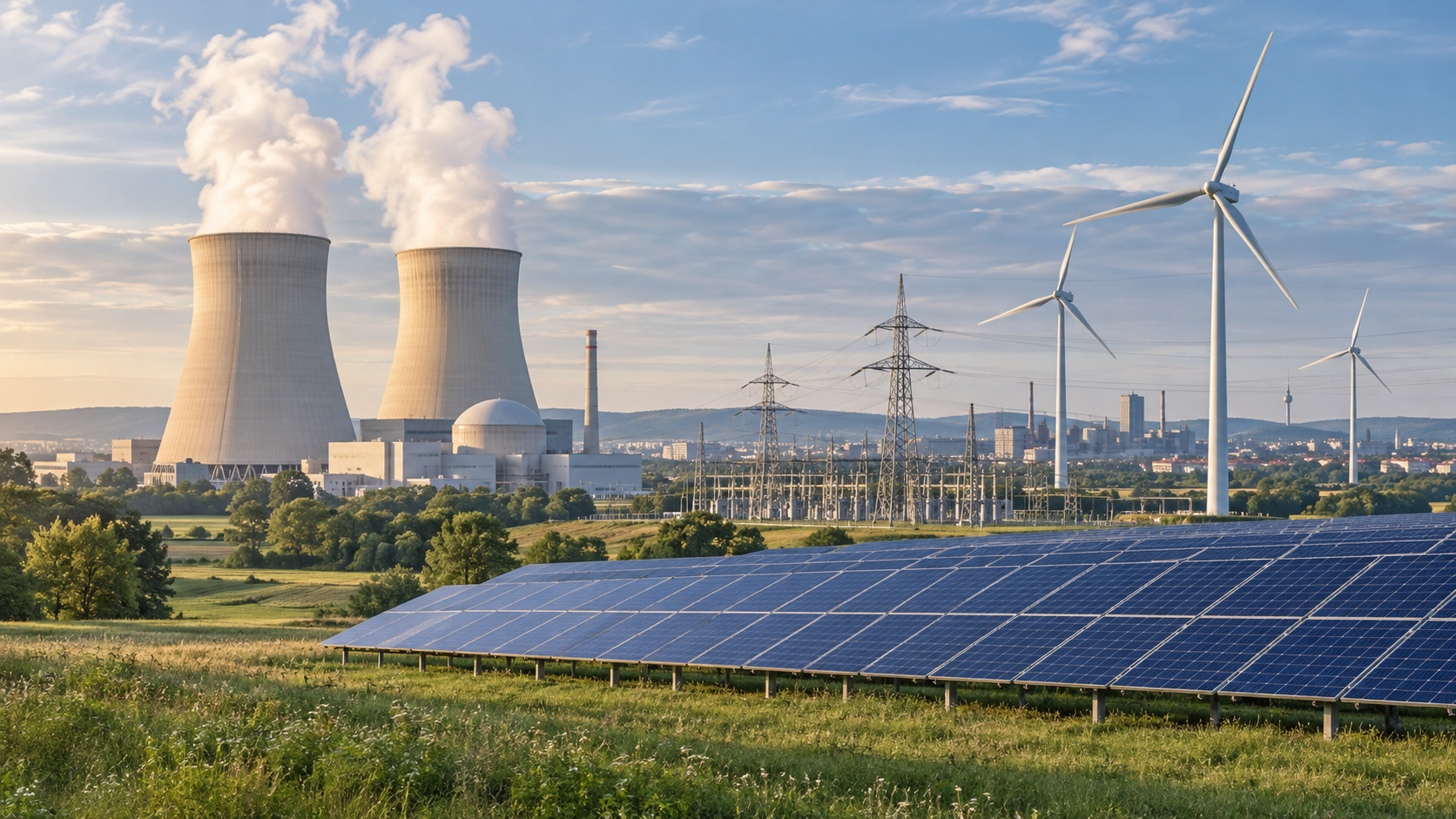
Nuclear power as an economic program? Why the math for new reactors often doesn't add up – a creative image on the topic, created with AI: Xpert.Digital
Cheap electricity from nuclear power? Construction time, financing and system costs tell a more complicated story
Nuclear power can help – but not as a panacea for the economy and climate protection
New nuclear power plants as a solution to high electricity prices? The crucial difference lies in the details
Nuclear power can generate large quantities of low-CO₂ electricity. Existing, safely operated, and economically depreciated plants can be valuable for electricity supply. However, this does not mean that new nuclear power plants are a universal solution to high energy prices, industrial location problems, or the climate crisis. There are significant differences in costs, financing, and time between continuing to operate an existing power plant and building a new reactor.
The crucial question, therefore, is not whether nuclear power can fundamentally supply electricity. It is about when additional capacity would be available, how much it would cost, and what alternatives could be implemented with the same capital within the same timeframe. The development of the electricity system also plays a role: high shares of wind and solar power change market prices and the utilization of other power plants. At the same time, the demands on grids, storage, flexible demand, and reliable power supply increase.
Global investment and expansion figures show that renewable energies are currently growing significantly faster than nuclear power. However, this is no proof that security of supply and system costs are automatically solved. A sound energy policy needs neither a nuclear panacea nor the notion that wind and solar power plants can take over all tasks without supplementary infrastructure. What is crucial is a fair comparison: Which combination of generation, grids, storage, and flexibility reliably delivers electricity – at affordable costs and on time?
Nuclear power is not an economic program: Why the great renaissance is failing due to economic reality
Anyone who promises cheap electricity while concealing construction time, capital requirements, and system costs is not selling energy policy, but an illusion
Nuclear energy can generate large quantities of low-CO₂ electricity. Existing, safely operated, and fully depreciated plants can be valuable for a country's electricity supply. However, this does not mean that new nuclear power plants are a universal solution to high energy prices, industrial location problems, or the climate crisis. There is a fundamental difference between the benefits of an existing power plant and the economic viability of constructing a new reactor complex. Equating the two confuses the operation of existing infrastructure with an investment decision involving significant financial and temporal risks.
The economically decisive question is therefore not whether nuclear power can fundamentally supply electricity. It is what contribution it can make under specific conditions, when this contribution would be available, and what alternatives could be implemented with the same capital within the same timeframe. Added to this is the question of how well the plants fit into an electricity system whose generation structure is already changing.
International investment and expansion figures clearly indicate a trend: renewable energies are growing significantly faster than nuclear power. At the same time, it would be analytically flawed to conclude from this development that security of supply, storage needs, and grid expansion are automatically solved. A sound energy policy requires neither a nuclear panacea nor the notion that wind turbines and solar panels can handle all tasks without supplementary infrastructure.
The false equation of nuclear energy and economic success
In public debate, a country's economic development is often reduced to a few energy policy decisions. Countries with nuclear power plants then appear rational and competitive, while those without nuclear power are seen as ideologically and economically vulnerable. This juxtaposition is too simplistic for a serious location analysis.
Industrial competitiveness arises from the interplay of numerous factors: productivity, labor costs, qualifications, financing, infrastructure, innovation capacity, tax system, permitting time, sales markets, and energy supply. Even within the energy sector, the price of electricity is only one part of the equation. For some industries, gas prices are more crucial, for others grid connection capacity, security of supply, or the ability to secure long-term supply contracts.
Therefore, a high share of nuclear power does not guarantee low end-customer prices or economic growth. Conversely, a nuclear phase-out does not automatically explain all industrial difficulties. Anyone claiming such a connection would have to demonstrate what quantities of electricity would have been available at what cost, how they would have affected market prices, and what proportion of overall economic development these changes represent.
This is not an excuse for failed energy policy. It is a prerequisite for recognizing its actual flaws. A country can simultaneously expand its grid too slowly, unsettle investors with changing regulations, and accept economic disadvantages in individual power plant decisions. However, this does not necessarily mean that a large-scale new construction program would be the most cost-effective solution.
Existing reactors and new power plants represent two different business models
The most important economic distinction is not between nuclear energy and renewable energies, but rather between existing and newly constructed plants.
For an existing nuclear power plant, a large portion of the original investment has already been made. For extending its operating life, the additional costs are then decisive: safety upgrades, maintenance, personnel, fuel, potentially larger replacement investments, and additional obligations for decommissioning and waste disposal. Under suitable conditions, the continued use of such plants can be a cost-effective way to maintain low-carbon electricity generation. International cost comparisons therefore explicitly differentiate between the continued operation of existing reactors and new nuclear power plants.
In contrast, a new nuclear power plant must recoup its entire investment, including financing costs, from future revenues or government-backed payments. During planning and construction, capital flows out before any electricity can be sold. Delays postpone revenues and simultaneously increase the financing requirements.
This leads to an important limitation of political argumentation: Even if a previous decommissioning was economically disadvantageous, this does not prove the profitability of a new construction project today. Likewise, criticism of expensive new construction projects should not lead to a blanket rejection of economically sensible extensions of operating lifetimes.
The sober perspective is therefore: Every plant and every investment project needs its own evaluation. Historical fundamental decisions do not replace a current economic analysis.
The core problem is not technical inflexibility, but high fixed costs
Nuclear power plants are often described as technically inflexible baseload facilities. While this description contains a kernel of economic truth, it is technically too generalized.
Numerous reactors can adjust their power output and are indeed used in load-following operation. In appropriately designed plants, regular power adjustments between 50 and 100 percent of the rated power are planned. Some designs also allow for lower power ranges under certain conditions. The specific flexibility depends, among other things, on the reactor type, operating state, fuel management, and licensing. The claim that no nuclear power plant can respond to the fluctuations of a renewable energy-dominated power system is therefore untenable.
The bigger problem lies in the cost structure. Nuclear power plants incur high investment and fixed costs, while the short-term fuel cost savings from reduced output are comparatively small. A plant that produces less electricity therefore does not save costs in nearly the same proportion.
Load sequentialization can also place additional demands on monitoring, operations management, and certain components. This can lead to maintenance and adjustment costs. However, the main economic effect is usually the lower capacity utilization: The largely unchanged fixed costs are spread across fewer kilowatt-hours sold.
This shifts the focus of the debate. The question is no longer whether nuclear power plants can be operated flexibly, but rather whether such operation generates sufficient revenue under the prevailing market conditions.
Why much cheaper electricity makes financing expensive power plants more difficult
A power system with high proportions of wind and solar power changes the economic conditions for all producers. During windy or sunny hours, a large amount of electricity is available at low short-term generation costs. This puts downward pressure on market prices.
A capital-intensive power plant faces a conflict of objectives. It needs as many operating hours as possible to recoup its investment. At the same time, electricity prices can be low precisely during periods of high operating hours. If it continues to produce, it may generate low revenues. If it reduces its output, the amount of electricity sold decreases.
A simple calculation illustrates the relationship: If the capacity utilization of a plant drops from 90 to 60 percent, while its annual fixed costs remain the same, the fixed cost share per kilowatt-hour generated increases by 50 percent. This is not a prediction for every nuclear power plant, but a direct consequence of cost distribution.
Wind and solar power plants are also affected by falling market values when many plants are producing simultaneously. This problem is known as cannibalization. It is therefore not an exclusively nuclear phenomenon. However, the investment level, construction time, production profile, and the ability to gradually adapt projects to market developments differ.
The most cost-effective combination is therefore not solely determined by the generation cost of individual plants. A consideration of generation, flexibility, and security of supply within the overall system is required. International cost analyses also indicate that high proportions of variable generation alter the utilization of conventional baseload power plants and necessitate additional flexibility options.
From night storage heaters to controllable demand
Adjusting consumption to electricity generation is not a new idea. Night storage heaters and cheaper nighttime tariffs were already intended in earlier electricity systems to shift demand to off-peak hours. This allowed for better utilization of a more consistently operating fleet of power plants.
Today, this principle is regaining importance under different technical conditions. Electric vehicles do not necessarily need to charge at full power immediately after being plugged in. Thermal storage systems can decouple electricity consumption and heating demand over time. In industry and commerce, some processes can be postponed, provided production processes and delivery obligations allow it.
What's economically interesting isn't a blanket demand for more flexibility. The crucial factor is how much a shift in consumption costs and what benefits it brings. A charging break for a vehicle that's already parked for several hours can be cost-effective. Conversely, a production interruption in a continuously operating industrial process can incur significant costs.
Flexible demand is therefore neither unlimited nor free. However, it can take over some of the balancing tasks that would otherwise require additional power plants, storage facilities, or grids.
The viable perspective lies in treating flexibility as an independent economic asset. Those who consume less at the right time or make sensible use of surpluses can be just as valuable to the electricity system as an additional producer.
Global expansion has long since moved on a different scale
Global investment figures provide a clear indication of the industrial dynamism of various technologies. In 2025, approximately US$690 billion flowed into renewable energies and around US$36 billion into nuclear energy. This corresponds to a ratio of roughly 19 to 1. At the same time, approximately US$483 billion was invested in electricity grids. This additional scale demonstrates that the transformation is by no means limited to the construction of new generation facilities.
However, one cannot directly infer a corresponding relationship to economic efficiency from the ratio of investments. The categories encompass different technologies, project durations, and cost structures. An annual investment in a nuclear power plant can be part of a long-term construction project. An investment in a solar park, on the other hand, may result in an operational asset much sooner.
Nevertheless, the difference is too large to dismiss as a mere statistical inconsequentiality. It demonstrates the scale on which production capacities, supply chains, project developers, and financing models are being mobilized.
Even the mention of government support only partially mitigates this development. Both renewable energies and nuclear energy are influenced by political regulations, public funding, and government risk assumption. A neutral comparison must take this support into account for both sides.
The global distribution of investment does not prove that every renewable energy project is worthwhile and every nuclear power project is uneconomical. However, it does refute the notion that the world relies primarily on nuclear energy and that only a few countries are pursuing a fundamentally different path.
Why the comparison of 693 and three gigawatts needs to be corrected
The order of magnitude is also clear regarding capacity expansion, although the precise definition is crucial. Initial international statistics indicated an increase in renewable power plant capacity of 692 gigawatts for 2025; later updates cite approximately 693 gigawatts. This discrepancy is irrelevant for the fundamental assessment.
However, a different correction is crucial: The three gigawatts of new nuclear power capacity that went online in 2025 did not represent a net increase of three gigawatts. This was offset by decommissioning of approximately three gigawatts. According to this calculation, the total installed nuclear power capacity worldwide remained roughly unchanged year-on-year.
Therefore, a ratio of approximately 230 to 1 between net renewable energy and net nuclear energy additions is methodologically incorrect. It compares different metrics. Comparing roughly 693 gigawatts of renewable energy additions with three gigawatts of new nuclear installations can only provide a rough idea of the different levels of construction activity.
This clarification does not weaken the central statement. It makes it more robust: Renewable energies massively expanded their global capacity, while nuclear commissioning this year essentially replaced phasing-out capacity.
However, a single year cannot be used as a complete forecast for the future. Especially with large power plant units, the number of commissioning projects per year fluctuates. Therefore, for long-term predictions, construction starts, ongoing projects, decommissionings, and operating life extensions must also be considered.
🎯🎯🎯 Data-driven B2B industry hub as a quasi-in-house solution

The quasi-in-house solution: How Xpert.Digital closes operational gaps in B2B marketing and sales – Smart Content-Driven Business - Image: Xpert.Digital
Xpert.Digital is a data-driven B2B industry hub led by Konrad Wolfenstein . The company acts as an external, quasi-in-house solution for industrial partners, closing operational gaps in marketing, content, and sales – without requiring additional resources on the client side.
More information here:
The impact of nuclear power on economic competitiveness
Rated power is not the amount of current, and the amount of current is not the same as security of supply
One gigawatt of installed capacity does not mean that this capacity is available throughout the entire year. To compare electricity generation, it is necessary to consider how fully utilized a plant actually is.
Assuming a capacity utilization of 85 to 90 percent for three gigawatts of nuclear power, this results in an electricity production of approximately 22 to 24 terawatt hours for a full operating year. This is a model annual production of the new plants, not necessarily the actual yield in their commissioning year.
For 693 gigawatts of renewable energy capacity, an assumed average capacity utilization of 20 to 30 percent results in an annual yield of approximately 1,214 to 1,821 terawatt-hours. Under average assumptions, the ratio of calculated annual production is therefore actually approximately 66 to 1.
This calculation is useful for comparing the order of magnitude. However, it remains dependent on the chosen capacity factors. The actual yield of renewable energy expansion depends, among other things, on its technology mix, the locations, the weather, technical availability, and potential curtailment.
Above all, this should not be interpreted as a guarantee of available power at all times. A large annual electricity output can be distributed unfavorably over time. Conversely, even a high average nuclear power plant utilization rate does not guarantee complete availability every single hour.
Therefore, three questions must be answered separately to ensure a reliable energy supply: How much energy is generated annually? What capacity is available during critical hours? And what infrastructure connects generation and consumption?
Which is why even a tripling of the number is not a global, one-size-fits-all solution
Long-term scenarios can show large growth figures and still represent a limited share of future energy supply. If total electricity demand rises faster than nuclear generation, nuclear energy loses relative importance, even though its absolute output increases.
As an illustrative calculation, the relationship is simple: If nuclear power generation triples while global electricity demand increases 3.6-fold, the initial share of 8.8 percent falls to around 7.3 percent. However, this figure is only meaningful if the base year, demand trends, and nuclear generation are derived from a consistent scenario. Furthermore, a tripling of installed capacity should not automatically be equated with a tripling of electricity production.
Current projections for 2060 range from a near doubling to a more than triple increase in nuclear operating capacity compared to the end of 2025. The upper scenario reaches approximately 1,284 gigawatts, starting from around 377 gigawatts according to the definition used therein. Such scenarios describe possible developments under certain conditions, not already confirmed construction programs.
The central conclusion, however, remains robust: Even a significant expansion would not make nuclear energy the sole basis of the world's electricity supply. The vast majority of future electricity demand would still have to be met by other sources.
This perspective puts the debate into perspective. The most important economic question is not whether nuclear energy can make any contribution at all. It is how large that contribution will realistically be and how the significantly larger remaining demand will be met.
The factor of time determines the climate benefit
For climate protection, it's not just about how low-emission a plant is after its completion. It's also crucial when it displaces fossil fuel-based energy production.
A technology that only becomes available after a long planning and construction period cannot avoid emissions in the short term. This leads to an opportunity cost problem: capital, political attention, and skilled workers are not unlimited resources. Their commitment to a long-term project must be weighed against the effects of alternative measures.
However, it would also be too simplistic to dismiss nuclear energy entirely as being too late for climate protection. Plants already in operation are making a contribution today. Operating lifetime extensions and advanced projects have different time horizons than new programs in countries without the necessary infrastructure.
A phased approach is therefore advisable. In the short term, the focus is on quickly achievable emission reductions. In the medium term, the emphasis is on transforming electricity systems, industry, and heat supply. In the long term, additional technologies may become relevant, provided they are economically and technically feasible.
Problems arise when long-term options are used as a substitute for short-term decisions. A future reactor type that is expected cannot replace a power line needed today. Likewise, a promised storage innovation cannot justify ignoring current supply gaps.
Capital commitment makes construction delays an economic risk
In large, capital-intensive projects, time is a cost factor. This is especially true when large sums are invested over several years before the first revenues are generated.
A nuclear power project can be burdened in multiple ways by delays. Capital already invested requires longer financing. Personnel and construction site infrastructure are needed for a longer period. Supply contracts must be adjusted. At the same time, repayment begins later than planned.
It is not crucial whether the project is privately or publicly financed. Public financing can lower the stated capital costs because a state often has access to more favorable financing options and distributes risks differently. However, the underlying risk does not disappear. It may be transferred to taxpayers, electricity customers, or other areas of the public budget.
The economic evaluation therefore includes the question of who bears the cost overruns. If these are fully offset by guaranteed payments, the operator's revenues appear stable. However, the project could still prove expensive for the overall system.
Conversely, a standardized, well-prepared, and consistently implemented construction program can reduce risks. Industrial experience, stable supply chains, and competent clients are significant advantages. However, these cannot be created overnight through political decisions. Financing and construction risks, in particular, are among the central challenges of expanding nuclear power.
Uranium is a finite resource, but its availability is not a fixed number of years
The question of fuel also requires careful consideration. Uranium is a finite resource. However, this does not mean that its economic scope can be expressed by a single, unchanging number.
Identified resources depend on exploration, extraction costs, market prices, and technological capabilities. What is not economically viable at low prices may become part of the usable supply at higher prices. Conversely, a geological occurrence does not guarantee that a permitted and productive mine will be available in the short term.
The latest international resource assessment identifies more than 8.1 million tons of uranium that could be extracted within the considered cost category. According to this assessment, the identified resources are sufficient to meet even the highest projected demand until 2050. At the same time, additional investments in mining and supply chains will be required.
The blanket statement that, with a 50 percent share of global electricity generation from nuclear power, uranium reserves would only last six to eight years after 2060 is therefore not a reliable general forecast. At best, it can only be the result of a narrowly defined mathematical model. This would require, among other things, disclosure of electricity demand, reactor efficiency, the fuel cycle, the upper cost ceiling for resources, and previous consumption.
The real economic problem is more concrete: a very large expansion would not only require reactors, but also more mining, processing, conversion, enrichment, fuel element manufacturing, and logistics. A bottleneck at any of these points could limit expansion long before geological exhaustion occurs.
Fast reactors do not yet solve the industrial fuel cycle
Advanced reactors and closed-loop fuel cycles aim to utilize existing materials more efficiently and to recycle certain long-lived components of spent fuel elements. These approaches are technically relevant, but should not be confused with an already widely available industrial solution.
It would be equally inaccurate to claim that fast reactors do not exist at all. For example, the BN-600 and BN-800 are operating such plants in Russia. However, this does not necessarily mean that a globally economical, standardized, and widely available fuel cycle has been established.
Numerous additional requirements lie between operating individual plants and establishing a globally sustainable system. Suitable reprocessing capacities, fuel plants, transportation, safety concepts, permits, and permanently functioning institutional structures are needed.
The issue of waste does not disappear entirely. Changes in land use can affect the composition, quantities, and required storage periods. However, this does not make all radioactive waste unproblematic.
For economic decisions, this leads to a simple principle: Future efficiency gains may be investigated and developed. However, investments planned today should not be calculated as if all the necessary technologies were already reliably available at known costs.
Small reactors still need to prove their cost advantage
Small Modular Reactors (SMLs) are intended to avoid some of the classic problems of large nuclear power plants. Smaller units can reduce the absolute capital requirement of a single project. A higher degree of prefabrication could limit construction work. Repeated production could enable learning effects.
This presents a fundamental conflict of objectives. Large power plant units benefit from economies of scale: certain technical and organizational facilities do not need to grow proportionally with output. Smaller units forgo some of these advantages and must compensate for this through mass production, simpler design, or other operational benefits.
Whether this calculation works out depends largely on the actual production volume achieved. An announced series does not automatically mean a fully utilized factory. Differing national requirements, changing designs, and a low number of firm orders can weaken the expected standardization effect.
The same applies to potential users such as data centers or industrial parks: a long-term interest in guaranteed power supply does not automatically translate into readily available on-site electricity. Until a facility is generating electricity, these companies still require grid connections, supply contracts, and backup plans.
SMRs are therefore a possible development option, but not yet a proven universal cost reducer. Their economic value will depend on completed projects, actual construction times, and reliable operational experience.
Waste, liability, and proliferation must be included in the overall calculation
The economic evaluation of nuclear energy doesn't end at the power plant fence. Decommissioning, interim storage, and permanent disposal create obligations spanning very long periods. The crucial question is whether these costs are realistically assessed, financially secured, and institutionally controlled.
Precision is also important when it comes to insurance. Nuclear power plants are not literally uninsurable. Nuclear liability regimes and insurance or other financial coverage obligations exist. This is distinct from the question of whether all conceivable damages from an extreme accident are fully covered by private insurance. The existence of insurance does not automatically answer this question.
The distribution of infrequent but potentially very large risks is therefore economically relevant. To the extent that a portion of the risk remains outside of private calculations, this must be taken into account when comparing technologies. This does not mean recording every theoretically conceivable loss as a certainty. It means not treating government risk assumption as free.
Proliferation, in turn, is a separate security issue. The historical civilian cooperation between Western states and Iran illustrates that legitimate technology transfer and subsequent political conflicts can coincide. However, this does not imply that every civilian use of reactors inevitably leads to a weapons program.
The crucial point is the control of sensitive materials and capabilities, particularly along the fuel cycle. Safety guarantees, monitoring, and international agreements are therefore not secondary issues, but rather integral components of the institutional costs of nuclear use.
Renewable energy sources are gaining ground in terms of expansion, but not without grids and reserves
The strong expansion of renewable energies is an industrial and economic fact. It does not replace comprehensive system planning.
With increasing shares of wind and solar power, the demands on grids, flexible demand, storage, and supplementary generation are rising. Different time periods must be considered. A battery storage system that shifts electricity from midday to the evening fulfills a different function than a reserve for a longer period of low wind and solar power generation.
Likewise, not every curtailed kilowatt-hour is proof of a fundamentally flawed expansion. Occasional curtailment can be more economically advantageous than designing grids and storage facilities for every rare production peak. High and persistent curtailment losses, on the other hand, can indicate a lack of infrastructure or unsuitable location incentives.
The decisive factor is therefore the total cost of a system at a defined level of security of supply. This includes generation, grids, storage, reserves, control systems, and, if applicable, fuel for rarely used power plants.
This perspective also protects the analysis of renewable energies from exaggeration. The very low generation costs of a solar power plant are not the same as the costs of a 24/7 secure electricity supply. Conversely, all grid costs should not be attributed solely to renewables when grids simultaneously serve electrification, trading, and general backup needs.
For Germany, the next sensible investment is crucial
The German debate is heavily influenced by the question of whether past exit strategies were correct. This discussion is legitimate. However, it does not automatically answer which measures would have the greatest economic benefit today.
For businesses, available capacity, reliable connection commitments, competitive total costs, and predictable framework conditions are crucial. A long-term commitment to new construction is of limited help to a company if its investment requires a high-performance grid connection in the coming years.
Recommissioning decommissioned plants is not the same as simply extending their operating life. The effort involved depends on the specific technical condition, the progress of dismantling, personnel availability, fuel deliveries, and legal requirements. Without a plant-specific assessment, general cost and deadline estimates are unreliable.
It would be equally uneconomical to exclude all nuclear energy contributions solely on principle. For a European electricity market, what matters is the efficiency of the interconnected system, not the technological purity of national generation profiles.
The pragmatic question, therefore, is: Which combination, feasible today, reduces costs and emissions, increases security of supply, and strengthens investment? Depending on the country and its starting point, this can yield different answers. For Germany, modernizing the existing system is a key task, regardless of how previous decisions are evaluated.
A sustainable energy policy buys supply, not promises of salvation
The figures provide no justification for the claim that nuclear power is the only solution adopted by economically successful nations and rejected by Germany. Global investment and expansion momentum clearly lies with renewable energies. Even an ambitious nuclear expansion would not cover the vast majority of future global electricity demand.
Likewise, some pointed counterarguments are unconvincing. Nuclear power plants are not inherently incapable of load following. Fast reactors exist. Uranium resources do not have a fixed, limited lifespan. And existing nuclear power plants may be economically viable in different ways than new builds.
This very distinction strengthens the criticism of the promise of nuclear energy as a panacea. The central problem with nuclear energy lies not in its fundamental unsuitability, but in the limits of its economic scalability: high capital commitment, complex project management, long lead times, and the need to secure sufficient revenues for decades.
The convincing energy policy perspective is therefore neither a blanket ban nor a blanket expansion promise. It is a comparison of realistic courses of action under the same requirements regarding costs, time, climate impact, and security of supply.
Ultimately, the country with the loudest technology debate is not the one that achieves economic success. Success belongs to the country that organizes a reliable, adaptable, and affordable energy system in a timely manner. Nuclear energy can play a role in this under certain conditions. However, it is not a substitute for this demanding overall task.
📈🚀 From visibility to trust 👀🤝 Your scalable path with Xpert.Digital

From visibility to trust: Your scalable path with Xpert.Digital - Image: Xpert.Digital
In industrial B2B, sustainable business relationships rarely emerge overnight. They develop step by step – through visibility, professional relevance, recurring touchpoints, and growing trust. Xpert.Digital's 4-stage model addresses precisely this: It offers a structured path that begins with a manageable entry point and can evolve into deeper collaboration in business development if needed.
Instead of relying on loud marketing promises, this model puts the relationship at the forefront. Companies start with clearly defined, easily calculable measures and then decide, based on their own experience, how far they want to expand the collaboration. A key factor for this undisturbed trust-building process: The platform completely avoids annoying advertising ads, so the editorial focus remains solely on the companies' expertise.
More information here:
Your global marketing and business development partner
☑️ Our business language is English or German
☑️ NEW: Correspondence in your native language!

Konrad Wolfenstein
I and my team are happy to be available to you as your personal advisor.
You can contact me by filling out the contact form here [email protected]:or simply call me at +49 7348 4088 965. My email address is
I'm looking forward to our joint project.