
💸📉 Mini nuclear power plants: The great SMR illusion ☢️ Why Europe's mini-reactors could become a billion-dollar trap
Xpert Pre-Release

Available in 27 languages 📢
Prefer Xpert.Digital on GoogleⓘPublished on: September 4, 2026 / Updated on: September 4, 2026 – Author: Konrad Wolfenstein
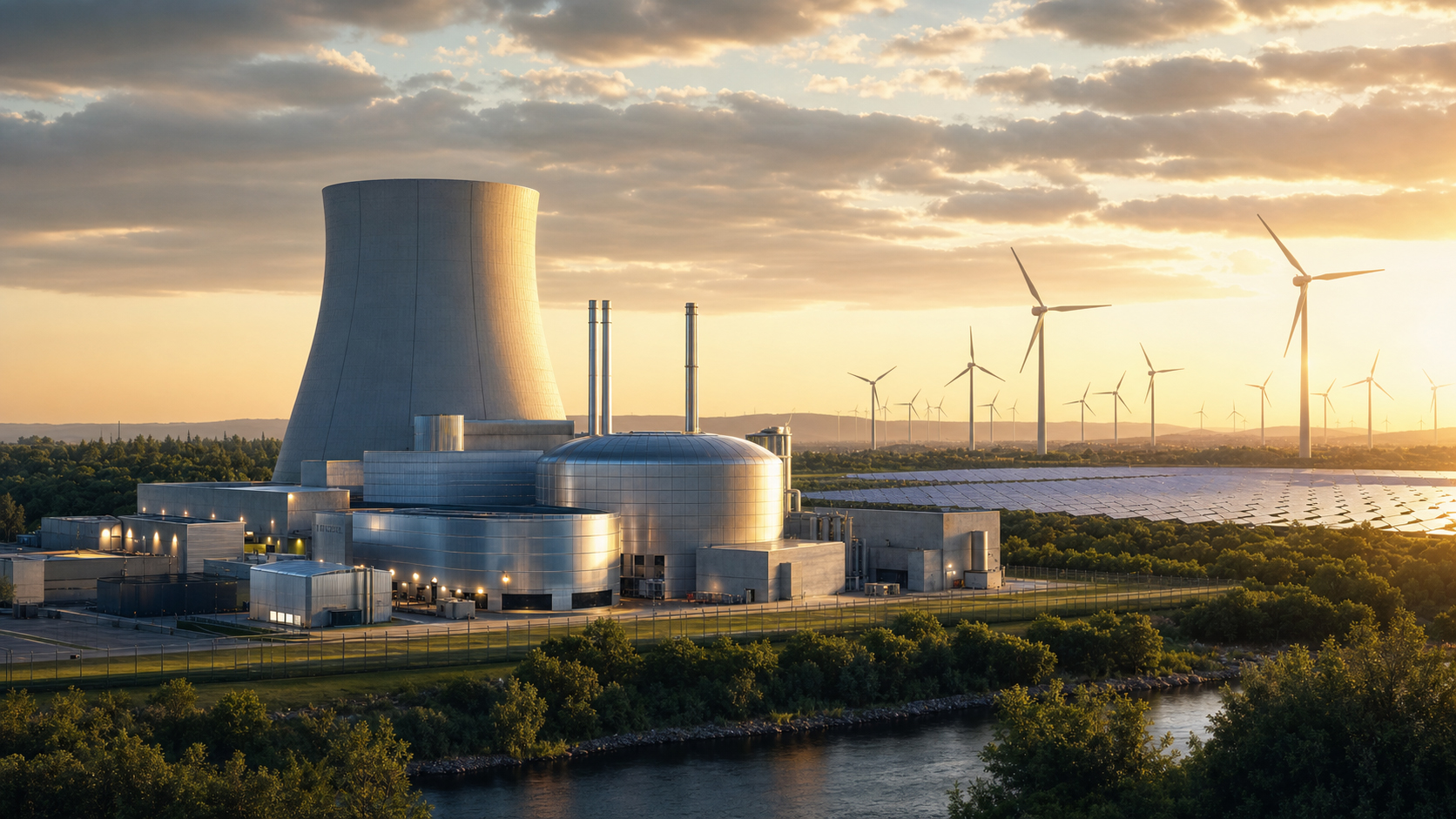
The Great SMR Illusion: Why Europe's Mini-Reactors Could Become a Billion-Dollar Trap – Creative Image on the Topic, with AI: Xpert.Digital
30 times more nuclear waste? The dark secret of the new mini nuclear power plants
A comeback for nuclear power? How Germany miscalculated with its "miracle reactors"
More expensive than wind and solar: Why the SMR hype is jeopardizing our energy transition
The political debate surrounding nuclear energy has reignited in Europe and, surprisingly, also in Germany. At the heart of the discussion are so-called Small Modular Reactors (SMRs) – small, modular nuclear power plants that, according to the EU Commission and some politicians, are supposed to serve as innovative saviors for climate protection, affordable electricity, and geopolitical energy security. However, behind the grandiose promises of industrial mass production and revolutionary safety concepts, a closer look reveals a completely different reality: exploding construction costs, unresolved issues of nuclear waste, novel safety risks due to highly enriched uranium, and a timeline that completely misses the mark when it comes to the urgent climate targets for 2030. This comprehensive analysis demonstrates why the political hype surrounding these mini-reactors is less akin to a tangible technological revolution and more a costly distraction tactic that threatens to severely hinder the urgently needed and more economically viable expansion of renewable energies and energy storage.
Small reactors, big illusion: Why Europe's billion-dollar bet on mini-nuclear power could slow down the energy transition
With its strategy for Small Modular Reactors (SMRs), presented in March 2026, the European Commission has set a new industrial policy priority whose symbolic significance can hardly be overestimated. Commission President Ursula von der Leyen presented the document at the Nuclear Energy Summit in Paris and described the European withdrawal from nuclear energy in recent decades as a "strategic error" that now needs to be corrected. The announcement was accompanied by a €200 million guarantee instrument funded by the European Emissions Trading System, designed to mobilize private investment in the technology. The debate has also been reignited in Germany: Federal Minister for Economic Affairs Katherina Reiche stated at an event hosted by the BMW Foundation on the sidelines of the Munich Security Conference in early February 2026 that Germany is looking "not only at storage and renewable energies, but also at SMRs." This political about-face raises the question of whether small modular reactors actually have the potential to make a relevant contribution to energy security and the climate targets of the European Union by the end of the current decade, or whether this is an expensive political diversionary tactic that delays the actually necessary expansion of renewable energies and storage technologies.
The political framework of a new nuclear ambition
The strategy presented by the European Commission (COM/2026/117) envisages bringing the first SMR projects in Europe online as early as the 2030s, with installed capacity expected to grow to between 17 and 53 gigawatts by 2050, which would correspond to around four to twelve percent of current European electricity generation. To underpin this ambition, the Commission is focusing on nine concrete measures, including the establishment of a European industrial alliance for SMR, the creation of so-called “SMR valleys” to concentrate manufacturing capacities, and closer regulatory cooperation between national supervisory authorities to enable joint pre-approval assessments and regulatory testbeds under the Net-Zero Industry Act. What is remarkable is the discrepancy between political rhetoric and actual financial commitment: Of the €241 billion in nuclear investments deemed necessary by 2050, the Commission is providing a mere €200 million in guarantees and €15 million for safety research under Euratom through the InvestEU program – a vanishingly small fraction of the actual required sum. Eleven member states have now signed a joint declaration in support of the technology, yet by the beginning of 2026, not a single construction permit for a single SMR had been granted in the entire European Union, starkly illustrating the gap between political pronouncements and industrial reality.
Germany's cautious return to an old debate
In Germany, the approach to nuclear energy is proceeding much more cautiously than at the European level, but is equally noteworthy because it is taking place only two years after the final shutdown of the last German nuclear power plants in the spring of 2023. Minister Reiche has repeatedly emphasized that a return to the old, decommissioned reactors is not planned, while at the same time an internal working group has been formed to research new SMR concepts abroad. Speaking to the Financial Times, Reiche was even more explicit, asking whether Germany wanted to continue relying solely on gas and thus become dependent on a single energy source, or whether it should develop a renewed interest in nuclear technology. There is also movement at the bilateral level: in early February 2026, Reiche and the Czech Minister of Industry, Karel Havlíček, agreed on possible cooperation in the field of small modular reactors, with the Czech Republic already planning a mini-reactor with innovative technology in Tušimice, near the border. These developments show that the German position is driven less by reliable technical or economic facts than by geopolitical uncertainty, particularly due to the Middle East conflict and concerns about becoming too one-sided in its energy dependence.
What SMR actually means technically
Small Modular Reactors (SMRs) are defined by the European Commission as innovative nuclear technologies that, compared to conventional large reactors, are supposed to have two key characteristics: significantly lower electrical power, typically up to 300 megawatts per module, and a modular design in which reactors or their components can be prefabricated in factories and then transported to the construction site. This concept differs fundamentally from conventional large reactors with a power output of 1,000 to 1,600 megawatts, which are built entirely on-site. The political narrative surrounding SMRs promises shorter construction times, lower upfront costs, and reduced unit costs through serial production, similar to the principle of industrial mass production. However, these promises hardly stand up to a sober examination of existing project experience, because, according to current knowledge, the vast majority of SMR concepts remain concept studies and not market-ready, industrially proven technologies.
The unresolved legacy of radioactive waste
One of the central counterarguments against SMRs concerns the waste disposal issue, which is by no means mitigated by the new generation of reactors, but rather exacerbated in several respects. A widely cited Stanford study concludes that small modular reactors can produce up to 30 times more radioactive waste per unit of energy generated compared to conventional large-scale power plants, due to the higher neutron losses in smaller reactor cores. Since many SMR designs use more highly enriched fuel for the nuclear reaction and the reactor core is smaller, more shielding material is required, which itself becomes radioactively contaminated during operation and must later be disposed of in a final repository. The German Federal Office for the Safety of Nuclear Waste Management also concludes in a recent statement that pressurized water SMRs, due to lower achievable burnup rates compared to conventional pressurized water reactors, would produce larger quantities and masses of high-level radioactive waste per gigawatt-hour generated. Furthermore, highly radioactive material can only be packaged in small quantities per container, which further increases the effort required for transport, interim storage, and the final repository site. As early as 2021, Wolfram König, President of the Federal Office for the Safety of Nuclear Waste Management, stated in an expert opinion that the new nuclear technologies currently under discussion could neither eliminate the legacy of previous nuclear energy use nor solve the pressing future challenges of climate change. The fundamental structural problem of nuclear energy—the still unresolved global issue of a final repository for highly radioactive waste spanning geological timescales of hundreds of thousands of years—thus remains completely unsolved even in the SMR era.
Higher levels of uranium pose a safety risk
Another significant point of criticism concerns the fuel cycle of numerous SMR concepts, which rely on highly enriched uranium, known in technical jargon as HALEU, with enrichment levels between five and twenty percent, significantly higher than the three to five percent typical of conventional light water reactors. This higher enrichment is technically necessary to achieve the same energy output with more compact reactor cores, but it also considerably increases the challenges of nuclear non-proliferation, as highly enriched material is technically closer to weapons-grade material and therefore requires stricter, but also more complex, international safeguards. In its statement on the SMR strategy, the Federal Office for the Safety of Nuclear Waste Management also points out that if the technology were to become widespread globally with a correspondingly large number of reactors, the overall risk of proliferation—that is, the military use of nuclear material—would also increase. This issue has been significantly underrepresented in the public debate surrounding SMR, although from a security policy perspective it is at least as important as the disposal issue, especially considering that widespread commercial deployment of SMR naturally entails a significantly larger number of locations, transport routes and actors involved than the operation of a comparatively small number of centralized large-scale power plants.
New security questions instead of solved old risks
Proponents of SMRs regularly argue that the new reactor concepts, with their passive safety systems, smaller core volumes, and more modern designs, are inherently safer than conventional large-scale reactors. However, this claim cannot be definitively substantiated based on current knowledge, as the underlying concepts largely exist only on paper or in early demonstration phases and have not yet accumulated sufficient operational experience to make reliable statements about their actual safety performance in continuous operation. At the same time, the Federal Office for the Safety of Nuclear Waste Management points out that widespread deployment of SMRs would necessitate new, reactor-specific national and international safety standards, because existing regulations are primarily tailored to large-scale reactors. Paradoxically, the very large number of SMR units required for a relevant overall capacity—experts assume several thousand identical modules before a genuine learning curve with decreasing costs begins—could increase the aggregated overall safety risk across the country, even if the individual risk per reactor turns out to be lower. Questions concerning dismantling, interim storage, fuel transport and incident management for a large number of decentralized small plants have so far hardly been systematically investigated and remain largely unanswered.
The core economic weakness of mini-reactors
Perhaps the most compelling objection to SMR, however, concerns its simple economics compared to renewable energies and storage technologies. A comprehensive analysis by the US state of Utah of a planned SMR project concludes that the levelized cost of electricity (LCOE) for the SMR portfolio under consideration is around US$67 per megawatt-hour, while alternative portfolios of wind, solar, and battery storage cost only between US$38 and US$43 per megawatt-hour—a cost difference of 40 percent in favor of the renewable alternatives. Over the lifetime of the plants, this difference amounts to a present value of up to US$355 million in potential savings that could be realized by foregoing the SMR option. The annual Levelized Cost of Energy report by the financial consulting firm Lazard also confirms this pattern: According to the report, unsubsidized wind and solar energy remain the cheapest form of new power generation, while new nuclear power capacity ranks at the upper end of the cost scale. A case study of an SMR unit in Darlington, UK, estimates construction costs of around 15,000 euros per installed kilowatt, while even a classic large reactor like the EPR unit Hinkley Point C is calculated to be comparatively cheaper at around 12,600 euros per kilowatt, which empirically refutes the supposed cost superiority of small, modular plants.
Rising costs despite decades of experience
Particularly noteworthy is the contrasting cost trends between nuclear and renewable energy over the past decade and a half. While the generation costs for solar and wind power plants have fallen by 70 to 90 percent since 2009 due to technological learning and economies of scale, the costs for nuclear power in Western countries have risen by approximately 26 percent during the same period—a trend that directly contradicts the traditional expectation of a learning curve through increasing experience. This development is often attributed to the lack of true mass production, complex and constantly evolving safety regulations, and long construction times, which negatively impact financing costs. An economic analysis illustrates the leverage effect of financing costs using the example of a hypothetical gigawatt nuclear power plant with average construction costs: At a capital cost rate of eight percent, the annual financing costs amount to approximately 640 million euros, whereas they would fall to around 400 million euros with a lower, government-backed capital cost rate of five percent. Without such state risk assumption through loan guarantees, contracts for difference or co-financing, nuclear energy remains economically uncompetitive compared to decentralized renewable energies due to the enormous interest burden, which ultimately means that every economically viable SMR project in Europe would be heavily dependent on tax money or consumer levies.
Mass production as an unfulfilled hope for the future
A key argument of SMR proponents is that mass production and industrial economies of scale will fundamentally change the cost structure, similar to the automotive or solar industries. However, this hope is not supported by past project experience, as Western SMR projects have yet to demonstrate that they can actually be implemented more cheaply than conventional large-scale reactors. According to industry experts, a genuine learning curve that could make SMR economically competitive with established technologies would only be expected after the production of approximately 3,000 identical reactor units—a scale that does not appear realistically achievable within the current EU strategy or in foreseeable global market scenarios. A scientific analysis of various SMR designs concludes that, due to diseconomies of scale (disadvantages resulting from the smaller plant size), both the construction costs and the operating and maintenance costs of small modular reactors tend to be higher than those of conventional large-scale reactors. Within the SMR family itself, significant cost differences exist between individual reactor types such as the BWRX-300, NuScale, Xe-100, and sodium reactors. The politically promised cost-effective mass production thus far exists largely on paper, while real-world pilot projects, for example in North America, regularly struggle with substantial cost overruns, sometimes reaching four times the originally estimated investment.
A methodological objection to comparability
To be fair, a counter-argument must also be addressed, one that has recently been raised regarding common cost comparisons between renewable energies and nuclear power. An analysis published in the summer of 2026 argues that the much-cited Lazard figures represent generation costs at the power plant fence without including the additional costs for balancing capacities necessary when wind and sun are unavailable. According to this study, if solar and wind energy were brought up to the same reliability standard as baseload power plants, the actual costs of solar power would increase by approximately 44 percent and those of wind power by approximately 26 percent, while the costs of nuclear energy would hardly change. This objection is not without merit and underscores that a comprehensive macroeconomic cost comparison must always consider the entire energy system, including grid expansion, storage requirements, and reserve capacity, and should not simply compare the pure generation costs of individual technologies. Nevertheless, this justified objection regarding system costs does not change the fundamental fact that SMR, even when including backup costs for renewables, remains significantly more expensive than the combination of wind, solar, and battery storage, since nuclear power, unlike these system costs, hardly benefits from decreasing construction costs or technological learning and, even in optimistic scenarios, ends up with electricity generation costs of around 170 euros per megawatt hour, while wind and solar power in Europe usually cost between 40 and 90 euros per megawatt hour.
Investment risk without a government safety net
From the perspective of private investors, SMR projects are currently considered high-risk investments that, without massive government support in the form of subsidies for initial construction costs and guarantees to reduce capital costs, are simply not competitive with photovoltaics and wind power under current market conditions. This assessment aligns with the observation that even the €200 million in guarantees proposed by the European Commission may not be used for the actual construction or operation of nuclear power plants, as the underlying InvestEU rules explicitly exclude such support, meaning the funds are effectively only available for research and pre-commercialization. The resulting funding gap would therefore have to be closed by the member states themselves through national net-zero investment plans or potential projects of common European interest, which, given the strained public budgets in many EU countries, represents a considerable political and fiscal challenge. At least a realistic niche segment for SMR could emerge in areas where the alternatives are also very expensive, such as industrial process heat in energy-intensive industries or in geographically remote areas like the Arctic, where large-scale connection to renewable energies and transmission networks is hardly economically feasible.
Realistically assessed timeframe up to 2030
Regarding the specific question of whether SMRs can make a significant contribution to European energy security and climate targets by the end of the current decade, the answer, after evaluating the available facts, is unequivocal. Even the European Commission projects the commissioning of the very first European SMR projects to the early 2030s, the relevant timeframe in this question, and this timeframe is already considered ambitious, if not unrealistic, given the lack of building permits, unclear supply chains, and pending approval processes. Even in the most optimistic scenario, at best, only a few demonstration plants with low total capacity could be connected to the grid in Europe by 2030. Their contribution to the overall European electricity supply would be negligible, amounting to only a fraction of a percent, and thus would not be a significant factor in achieving the binding EU climate targets by 2030. In comparison, wind and solar energy in Europe already account for several tens of percent of electricity generation, have established, mass-producible supply chains and can be built within months instead of decades, which is why they will remain by far the more effective instrument for achieving climate targets and strengthening energy security in the short and medium term.
Political calculation behind the nuclear renaissance
The striking temporal proximity of the SMR debate to geopolitical tensions, particularly the Middle East conflict mentioned in several sources and the general concern about excessive dependence on fossil fuel imports, suggests that political support for SMR is at least partly symbolic and geopolitical in nature. The emphasis on technological openness and diversification, as advocated jointly by Minister Reiche and IAEA Director General Rafael Grossi at the Munich Security Conference, can also be interpreted as an attempt to demonstrate geopolitical capability and industrial export opportunities, regardless of whether the underlying technology actually delivers measurable energy-related benefits in the short term. The fact that the former CEO of the energy company Westenergie, whose parent company E.ON also has extensive gas network operations, is now, as Minister of Economic Affairs, promoting technological openness towards nuclear energy, raises further questions about the industrial policy interests behind this stance. From an economic perspective, the real danger of the current SMR debate lies less in the technology itself than in the misallocation of political attention, regulatory resources and ultimately public funding, which could otherwise be channeled into the accelerated expansion of grid infrastructure, storage technologies and renewable generation capacities, which would achieve the same energy policy objective faster, cheaper and with less risk.







