High-Bay Warehouse Metaverse and Smart City Logistics 4.0: High-bay warehouses as an engine for efficiency and sustainability
Language selection 📢
Published on: June 27, 2023 / Updated on: June 27, 2023 – Author: Konrad Wolfenstein
Smart City Logistics 4.0 and the Metaverse High-Bay Warehouse
In the age of digital transformation, virtual worlds and metaverses are playing an increasingly important role. One exciting development is the integration of the High-Bay Warehouse Metaverse into Smart City Logistics 4.0. High-bay warehouses are becoming a central element for increasing efficiency and sustainability in logistics.
The High-Bay Warehouse Metaverse combines virtual reality (VR) with data from real-world high-bay warehouses. It creates a virtual environment where companies can monitor, analyze, and optimize their inventory and logistics processes in real time. The data is extracted from the actual high-bay warehouses using sensors and IoT devices and transferred into the virtual world.
One of the most important applications of the High-Bay Warehouse Metaverse is the simulation and planning of warehouse processes. Companies can virtually run through various scenarios to determine the optimal rack layout, the best storage strategy, and the most efficient routing for the flow of goods. These virtual simulations allow companies to identify potential bottlenecks and take timely action to ensure smooth logistics.
Another major advantage of the High-Bay Warehouse Metaverse is the ability to remotely monitor and control warehouse processes. Logistics experts can access real-time inventory levels, the status of storage and retrieval machines, and other relevant information from anywhere. This allows them to react quickly to changes, resolve bottlenecks, and increase efficiency without needing to be physically present. This saves companies time and money and enables effective monitoring of multiple high-bay warehouses at different locations.
A fascinating aspect of the High-Bay Warehouse Metaverse is the integration of artificial intelligence (AI) and machine learning. By analyzing large datasets, algorithms can identify patterns and trends to forecast future demand. Based on these insights, companies can optimize their inventory management to avoid overstocking while ensuring high product availability. This leads to improved resource utilization and reduced waste.
The combination of high-bay warehouses and the High-Bay Warehouse Metaverse also has a significant impact on sustainability in Smart City Logistics 4.0. By optimizing the flow of goods and precisely managing inventory, companies can reduce their stock levels while simultaneously ensuring customer satisfaction. This leads to more efficient resource utilization and a reduction in waste. Furthermore, the integration of renewable energies and energy-efficient technologies in the high-bay warehouses enables more sustainable operations. For example, solar panels on the roofs can generate green energy to meet the warehouse's energy needs.
In addition to increased efficiency and sustainability, the High-Bay Warehouse Metaverse also offers an immersive experience for logistics experts and employees. Through virtual reality, they can interactively immerse themselves in the warehouse environment, visualize processes, and gain a deeper understanding. This fosters an appreciation for the complexity of logistics processes and facilitates the training of new employees.
➡️ The High-Bay Warehouse Metaverse is an innovative and exciting development in Smart City Logistics 4.0. It enables companies to operate high-bay warehouses more efficiently, virtually simulate and optimize warehouse processes, achieve sustainability goals, and offer better employee training. The integration of virtual worlds and real-world data opens up new possibilities for the logistics industry and will contribute to making smart cities even more efficient, sustainable, and technologically advanced in the future.
Our Industrial Metaverse Configurator
Simply try out our universally applicable (B2B/Business/Industrial) Metaverse Configurator for all CAD / 3D demo options:
Xpert (B2B/Business/Industrial) Metaverse Configurator for all CAD / 3D data, usable on all end devices, one platform!
Related to this:
High-Bay Warehouse Integration into Smart City Logistics 4.0
The challenges of urban supply in growing cities demand innovative solutions to ensure efficiency and sustainability. Smart City Logistics 4.0 relies on the integration of high-bay warehouses as a driving force for optimized urban supply. Micro-hubs play a particularly crucial role in last-mile logistics.
Last-mile logistics, the final stage of goods delivery from the distribution center to the end consumer, is often associated with inefficient and environmentally damaging processes. This is where micro-hubs come into play. These small distribution centers are strategically located within the city to shorten the last mile of delivery and make it more efficient.
Integrating high-bay warehouses into micro-hubs allows for better use of limited urban space. The vertical design of these warehouses enables more goods to be stored in a smaller area. This reduces the space required by the micro-hubs and frees up room for other urban activities and infrastructure projects.
A key advantage of micro-hubs in last-mile logistics is the reduction of delivery times. By storing goods in the high-bay warehouses of micro-hubs, deliveries can be assembled quickly and efficiently. This enables faster delivery to end consumers and significantly shortens delivery times. Furthermore, micro-hubs can serve as transshipment points for various delivery modes, such as cargo bikes or electric delivery vehicles.
Another crucial aspect of Smart City Logistics 4.0 is the integration of intelligent technologies and data analytics into micro-hubs. The use of sensors and IoT devices allows for real-time monitoring and management of inventory levels. This enables precise inventory planning and prevents overstocking or shortages. Furthermore, data analytics allows for optimized route planning for deliveries, based on traffic data, weather conditions, and other relevant factors. This leads to more efficient resource utilization and a reduction in environmental impact.
The combination of high-bay warehouses and micro-hubs in last-mile logistics also contributes to sustainability. Proximity to end consumers enables shorter delivery routes and reduces the use of vehicles in urban areas. This leads to a reduction in traffic congestion, energy consumption, and CO2 emissions. Furthermore, the micro-hubs can be powered by renewable energy to further reduce their environmental footprint.
In addition to increased efficiency and sustainability, micro-hubs also offer social benefits. Their decentralized location allows for the creation of jobs in various neighborhoods, potentially strengthening the local economy and improving social integration. Furthermore, micro-hubs could serve as collection points for orders, increasing flexibility and convenience for end consumers.
High-bay warehouses and micro-hubs play a crucial role in addressing the challenges of urban supply in Smart City Logistics 4.0. They enable efficient storage, optimized last-mile logistics, and contribute to sustainability. The use of intelligent technologies and data analytics can improve delivery processes and reduce environmental impact. Integrating micro-hubs into urban infrastructure creates new opportunities for efficient and sustainable supply of goods and services to the population.

Xpert.Plus Warehouse Optimization - High-bay warehouses and pallet warehouses: Consulting and planning
Is a high-bay warehouse a pallet warehouse?
Yes, a high-bay warehouse can be considered a type of pallet warehouse. A high-bay warehouse is a warehouse where goods are stacked on pallets and stored in high-height racks. These racks can have multiple levels and are often operated by stacker cranes that move the pallets up and down to the different levels.
The use of high-bay warehouses allows companies to optimally utilize available vertical space and maximize storage capacity. By stacking pallets vertically, large quantities of goods can be stored in a small footprint. High-bay warehouses also offer the advantage of efficient use of material handling systems such as forklifts or automated conveyors to move goods in and out of the warehouse.
➡️ A high-bay warehouse is a specific type of pallet warehouse characterized by the use of high-height racks to increase storage capacity.
High-bay warehouses as an engine for efficiency and sustainability

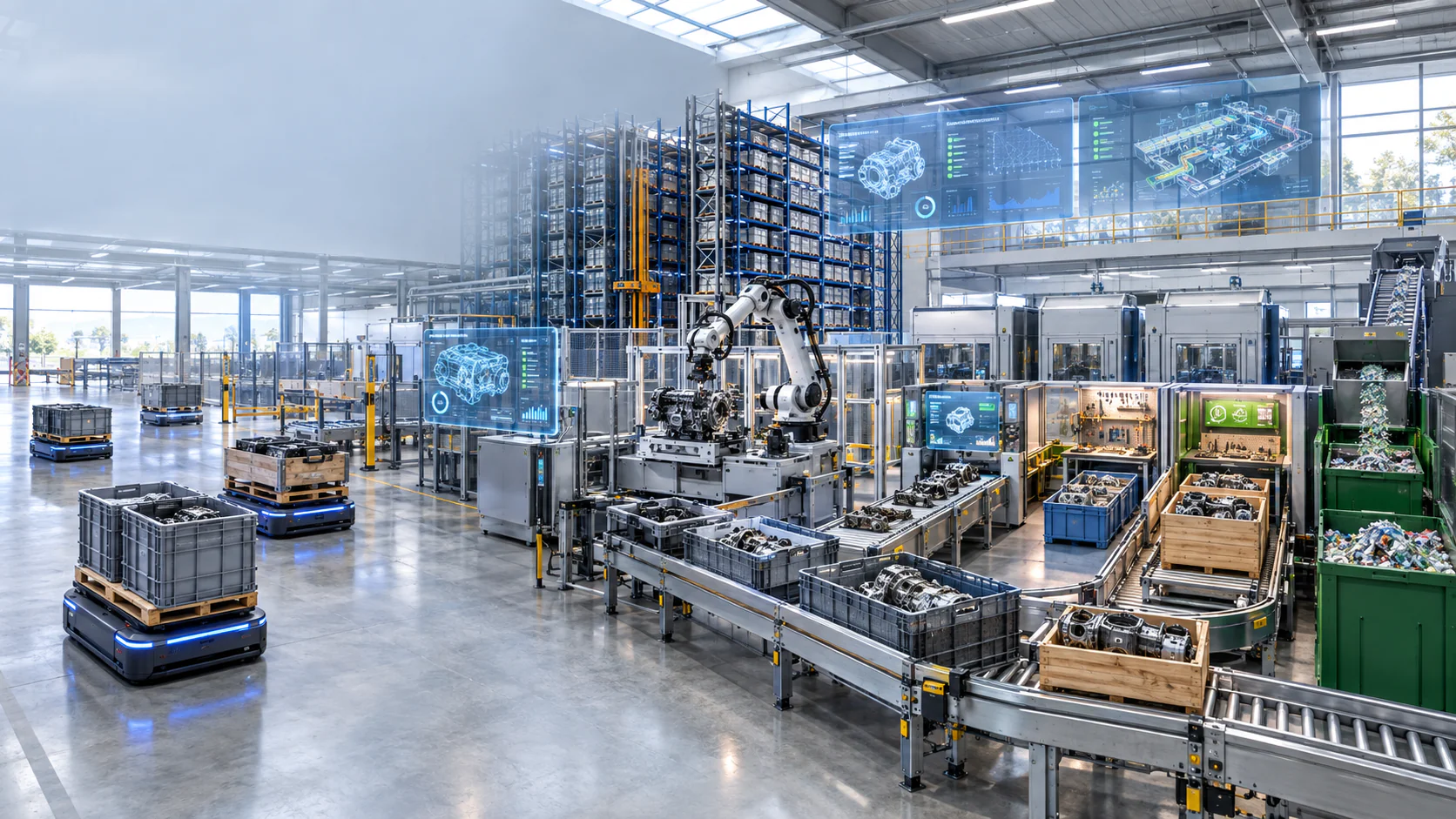
High-bay warehouses as a driver of efficiency and sustainability – Image: Xpert.Digital / Spitzi-Foto|Shutterstock.com
In today's world, where cities worldwide are confronted with growing populations, increasing traffic volumes, and environmental pollution, the development of smart cities is becoming ever more important. A crucial component for the success of a smart city is efficient and sustainable logistics. The integration of high-bay warehouses plays a central role in this.
High-bay warehouses are storage facilities that, due to their vertical design, enable high storage capacity on a small footprint. They utilize innovative technologies such as automated storage and retrieval systems, robot-assisted order picking systems, and advanced warehouse management systems to make warehouse operations more efficient.
A key aspect of Smart City Logistics 4.0 is the optimization of the flow of goods. High-bay warehouses enable companies to better manage their inventory and optimize the transport of goods. By integrating sensors and data analytics tools, companies can monitor inventory levels in real time, predict demand, and optimize supply chain planning. This leads to reduced inventory, shorter delivery times, and more efficient resource utilization.
Another key advantage of high-bay warehouses in Smart City Logistics 4.0 is their contribution to sustainability. By utilizing automated systems and intelligent energy efficiency measures, high-bay warehouses can reduce energy consumption and lower CO2 emissions. For example, storage and retrieval machines can be equipped with electric drives to minimize the use of fossil fuel-powered vehicles. Furthermore, solar panels can be installed on the roofs of high-bay warehouses to generate renewable energy and cover the warehouse's own energy needs.
Integrating high-bay warehouses into a smart city logistics infrastructure also improves urban traffic flow. Increased storage capacity in high-bay warehouses allows for more goods to be stored in a smaller space. This reduces the need for large warehouses and frees up space for other urban infrastructure projects. Furthermore, efficient logistics enables the use of environmentally friendly transport options such as electric vehicles or cargo bikes, minimizing the environmental impact of delivery traffic.
In addition to increased efficiency and sustainability, high-bay warehouses in Smart City Logistics 4.0 offer further advantages. Automated warehousing and order picking relieve workers of monotonous and physically demanding tasks. This allows them to concentrate on more challenging and value-adding activities, leading to increased job satisfaction and productivity.
Overall, high-bay warehouses are a key component of Smart City Logistics 4.0. They improve the efficiency of goods flow, contribute to sustainability, ease traffic congestion, and offer numerous benefits for the workforce. Through the integration of innovative technologies and intelligent systems, high-bay warehouses can serve as a driving force for efficiency and sustainability in a smart city. They are a pioneering example of the integration of logistics and urban development in the age of digitalization and will contribute to making our cities more livable and sustainable in the future.
Here are the details again regarding Smart City Logistics 4.0 and high-bay warehouses:
Increased efficiency through automation
High-bay warehouses utilize advanced automated systems such as stacker cranes, which are capable of independently storing and picking goods. By automating warehouse processes, companies can significantly increase their efficiency. Errors and bottlenecks that frequently occur in manual workflows are minimized, resulting in faster logistics processes.
Space saving thanks to vertical design
In densely populated cities, space is often a scarce commodity. High-bay warehouses offer a decisive advantage here, as they maximize storage capacity on a small footprint. By using tall racks and automated stacking techniques, companies can store more goods in a limited space. This enables the efficient use of inner-city areas and frees up space for other urban infrastructure projects such as parks or residential areas.
Real-time monitoring and analysis
In a Smart City Logistics 4.0 environment, high-bay warehouses are equipped with sensors that monitor inventory levels, temperature, humidity, and other relevant parameters in real time. This data is continuously analyzed to enable precise inventory management. As a result, companies can better forecast demand, avoid bottlenecks, and effectively implement just-in-time deliveries. The real-time data also allows for faster responses to market changes and adjustments to warehousing strategies.
Sustainability through energy efficiency
High-bay warehouses can make a significant contribution to sustainability through intelligent energy efficiency measures. For example, storage and retrieval machines can be equipped with regenerative braking to recover energy during deceleration. The lighting system can be converted to energy-efficient LED technology to reduce electricity consumption. Furthermore, automated control and monitoring systems can optimize energy consumption by adjusting the operating times of the equipment to actual demand.
Integration of Robotics and Artificial Intelligence
High-bay warehouses in Smart City Logistics 4.0 utilize advanced robotics and artificial intelligence to further optimize warehouse processes. Robots can be used, for example, in order picking to increase accuracy and speed. Through the use of machine learning and data analysis, algorithms can be continuously improved to recognize patterns and trends in warehouse data and make more efficient decisions.
Flexibility and scalability
High-bay warehouses offer a high degree of flexibility and scalability to meet the changing needs of businesses. The racks can be easily adapted to different product sizes and types. Furthermore, the modular design allows for easy warehouse expansion as demand increases. This gives companies the ability to flexibly adjust their storage capacity and continuously optimize their logistics processes.
➡️ The integration of high-bay warehouses as a driver of efficiency and sustainability in Smart City Logistics 4.0 offers numerous advantages for companies, cities, and the environment. It enables efficient goods logistics, space savings, real-time monitoring, sustainability, and flexibility. These innovative warehouse solutions contribute to making smart cities more livable, environmentally friendly, and future-proof.
Smart City Logistics 4.0
Smart City Logistics 4.0 – current status and further development
Smart City Logistics 4.0 has made great strides in recent years, developing into a promising solution for the challenges of urban logistics. By integrating cutting-edge technology, data analytics, and sustainable concepts, it aims to improve efficiency, sustainability, and quality of life in cities. Let's examine the current state of Smart City Logistics 4.0 and take a look at its future development.
At the current stage, many cities worldwide are implementing smart city logistics concepts and putting practical solutions into practice. Various elements play a role in this, such as the networking of transport systems, the introduction of electric vehicles, the integration of intelligent traffic management systems, and the establishment of micro-hubs for last-mile logistics.
A key element of Smart City Logistics 4.0 is connectivity and information exchange between the various stakeholders in the logistics system. Through the use of sensors, IoT devices, and data analytics, logistics processes can be monitored and controlled in real time. This enables precise traffic management, the identification of bottlenecks, and the timely planning of alternative routes. Intelligent use of data allows for the optimization of traffic flows and the avoidance of congestion.
Another important aspect is the electrification of the vehicle fleet. Electric vehicles play a central role in Smart City Logistics 4.0, as they can reduce emissions and improve air quality. Cities are increasingly focusing on expanding charging infrastructure and promoting electromobility to enable more sustainable logistics. Furthermore, alternative delivery methods such as cargo bikes and electric vans are being considered to optimize last-mile delivery.
A promising concept gaining increasing importance in Smart City Logistics 4.0 is that of micro-hubs. These small distribution centers are strategically located within the city and serve as hubs for the final stage of goods delivery. Their proximity to end consumers allows for shorter delivery routes and the use of more environmentally friendly delivery methods such as walking, cycling, or using electric vehicles. Micro-hubs enable more efficient deliveries, reduce traffic congestion, and improve customer satisfaction.
The further development of Smart City Logistics 4.0 promises even more exciting innovations. With the emergence of new technologies such as autonomous vehicles, drone delivery, and robotics, new opportunities are opening up for the logistics industry. Autonomous delivery vehicles could significantly improve delivery efficiency
Increase efficiency by autonomously and precisely planning their routes. Drones could be used as an alternative delivery method in densely populated areas to accelerate last-mile delivery. Robots could assist with order picking and storage in high-bay warehouses, further optimizing processes.
Furthermore, the integration of artificial intelligence and machine learning will play an increasingly important role. By analyzing large datasets, patterns and trends can be identified to forecast demand and optimize resource planning. Intelligent algorithms can analyze traffic patterns and generate accurate traffic forecasts to improve delivery times and minimize environmental impact.
Smart City Logistics 4.0 is constantly evolving, with a focus on the integration of technology, data, and sustainable concepts. Collaboration between cities, businesses, research institutions, and citizens is crucial for advancing Smart City Logistics. A holistic and interconnected approach can increase efficiency, reduce environmental impact, and improve the quality of life in cities. The future of Smart City Logistics 4.0 promises smarter, more sustainable, and more efficient logistics for urban centers worldwide.
Logistics consultants: Use our Xpert.Plus service for your logistics consulting, warehouse planning or warehouse consulting with automation & component solutions
Xpert.Plus is a project of Xpert.Digital. We have many years of experience in supporting and consulting on warehouse solutions and in logistics optimization, which we combine under Xpert.Plus in a large network.
I would be happy to serve as your personal advisor.
You can contact me by filling out the contact form below or simply call me on +49 7348 4088 965 (Munich) .
I'm looking forward to our joint project.
Xpert.Digital – Konrad Wolfenstein
Xpert.Digital is a hub for industry focusing on digitalization, mechanical engineering, logistics/intralogistics and photovoltaics.
With our 360° Business Development solution, we support renowned companies from new business to after-sales.
Market intelligence, smarketing, marketing automation, content development, PR, mail campaigns, personalized social media and lead nurturing are part of our digital tools.
You can find more information at: www.xpert.digital – www.xpert.solar – www.xpert.plus