
The fuel discount is the most expensive shortcut to the wrong destination: 17 cents savings, 20 cents price increase
Xpert Pre-Release

Available in 27 languages 📢
Prefer Xpert.Digital on GoogleⓘPublished on: September 30, 2026 / Updated on: September 30, 2026 – Author: Konrad Wolfenstein
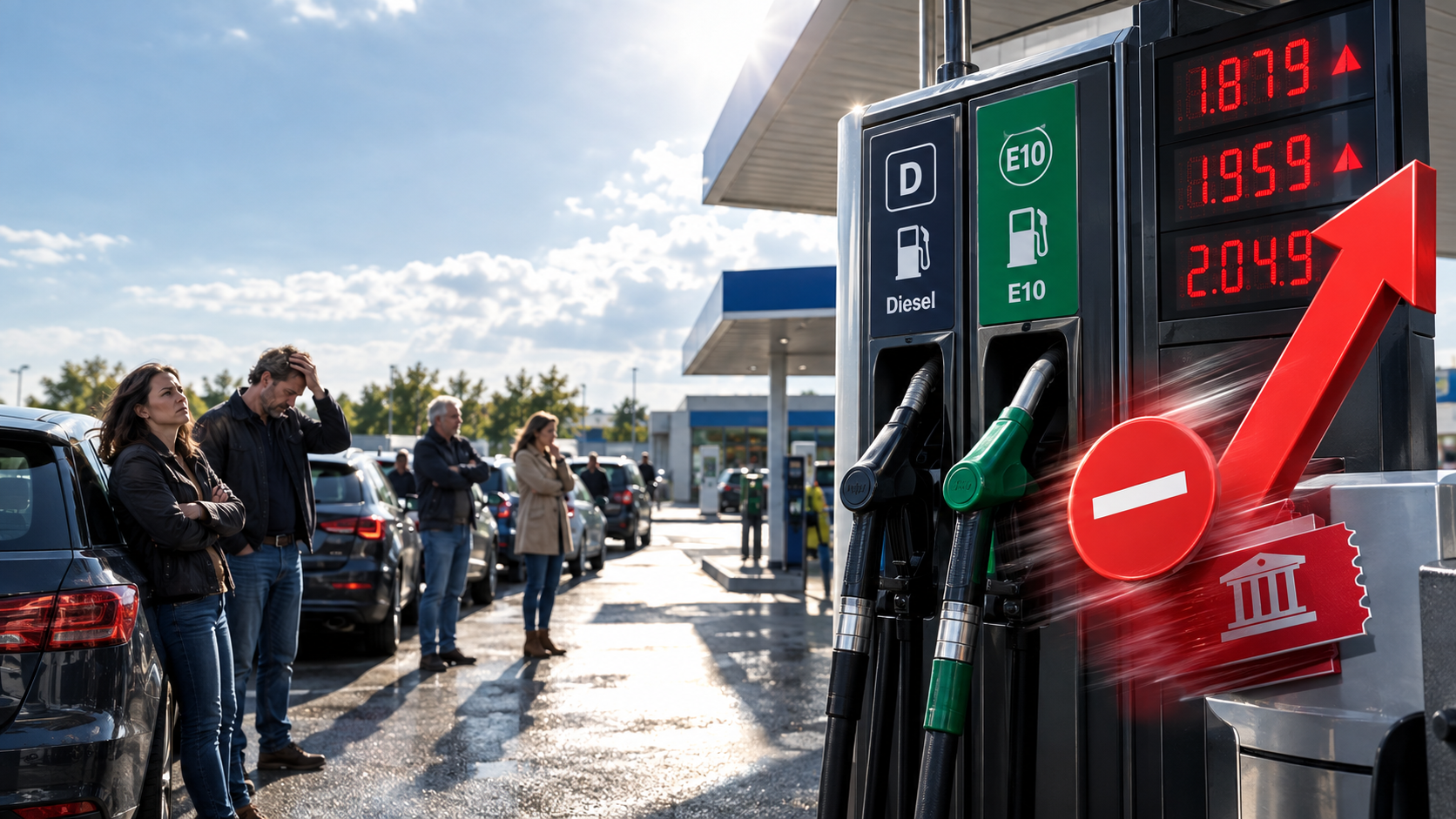
The fuel discount is the most expensive shortcut to the wrong destination: 17 cents savings, 20 cents price jump – creative image on the topic, with AI: Xpert.Digital
The state pays billions for a promise that the market will recoup within minutes
Political measures and market forces: The illusion of fuel discounts
Government relief at the gas pump: A look at reality
The fuel rebate, introduced as a government measure to relieve the burden on motorists, has proven to be a complex and often misunderstood instrument in practice. While a reduction in the energy tax of 14.04 cents per liter suggests a saving of 16.7 cents on paper, the reality at the pumps is often quite different. Price fluctuations of more than 20 cents within a short period illustrate the volatility of the market and how quickly government relief measures can be neutralized by market mechanisms. The political design of the fuel rebate promises immediate savings, but in practice, consumers often experience only sporadic price reductions, while the actual costs and market conditions remain in the background. This discrepancy between political communication and economic reality raises fundamental questions about the effectiveness and targeting of such measures. In a time of rising energy prices and geopolitical uncertainties, it is crucial to critically examine the actual impact of the fuel discount and analyze whether this government intervention truly works in the interest of consumers or whether it merely serves as a superficial solution that does not achieve the desired effects in the long term.
A 17-cent tax break, a 20-cent price jump: The government is paying billions for a promise that the market will snap up within minutes
## A discount that the market easily surpasses
If a government subsidy of nearly 17 cents per liter can be visually negated by a single regular price fluctuation at the pumps, that's not yet proof of unlawful enrichment by the oil industry. However, it is a damning indictment of the political design of the measure. An instrument whose success the public is supposed to gauge almost exclusively from a constantly changing indicator light can hardly be reliable in a volatile, concentrated market fraught with geopolitical risks. Above all, it generates expectations that the government cannot control.
The new fuel tax rebate reduces the energy tax on gasoline and diesel by 14.04 cents per liter. Because less sales tax is levied on the lower net price, the calculated relief amounts to 16.7 cents per liter. It applies from October 1st to December 31st, 2026, and will result in a revenue shortfall of approximately 2.5 billion euros for the federal and state governments. On paper, the calculation is simple: The government waives a portion of its taxes, the price per liter falls accordingly, and motorists and businesses benefit.
In economic reality, this calculation is incomplete. The final price consists not only of taxes, but also of procurement, refining, transport, storage, blending, and distribution costs, as well as margins at several stages of the value chain. Added to this are the price of crude oil, the euro-dollar exchange rate, geopolitical risk premiums, the availability of individual fuel types, refinery outages, regional logistics problems, and the intensity of competition. If these factors fluctuate simultaneously, the tax relief disappears from the overall price, even though it may still be included in the calculation.
This is precisely the fundamental design flaw. The fuel discount promises a noticeably lower price in the public perception. In reality, it only guarantees that the price is 16.7 cents lower than it would be under otherwise identical conditions without the tax cut. However, no one at the pump knows this hypothetical comparison price. Consumers only see that the price per liter remains high, or even increases, despite the discount. While the economic relief may exist, politically it still appears deceptive.
The 20-cent jump is a warning sign, but not proof
The price spike shortly after noon, during which E10 and diesel temporarily became more than 20 cents per liter more expensive, vividly illustrates the weakness of this mechanism. However, it must be put into perspective. Since price increases were limited to one time per day, gas stations are only permitted to raise their prices at noon, while price reductions remain possible at any time. This concentrates some of the price increases that were previously spread throughout the day into a single midday surge. Prices often rise sharply and then gradually fall again.
A price jump of more than 20 cents doesn't automatically mean that fuel has become permanently more expensive by the same amount compared to the previous day. It can largely reflect the daily price cycle. Comparing the midday price with the lower morning price measures something different than comparing daily averages or prices at the same time on consecutive days. For a reliable assessment, daily averages, wholesale prices, regional delivery conditions, and comparable markets must be considered.
This restriction, however, does not relieve the burden on policymakers. On the contrary: if the government knows that prices can fluctuate by double digits daily, it cannot present a reduction of 16.7 cents as if it guarantees a stable price discount. The 12 o'clock rule makes the communicative weakness of the fuel rebate particularly apparent. A measure that is celebrated as relief in the morning and seemingly vanishes by midday undermines trust, even if some of the tax reduction has been passed on economically.
The crucial comparison, therefore, is not: How much did the price rise within a quarter of an hour? It is: How would the price have developed without the tax cut? This calculation is only possible approximately using econometric methods. It requires comparison countries, crude oil and product prices, exchange rates, taxes, regional market structures, and time lags. Precisely because this analysis is complex, the fuel discount is poorly suited as a mass political instrument. Its effect cannot be directly observed, but its success is promised immediately.
Transmission is not the same as effectiveness
The debate is often reduced to the question of whether oil companies pass on the tax benefit. This question is important, but it doesn't solely determine whether the fuel discount is worthwhile. According to the final evaluation, for the discount in May and June 2026, approximately four-fifths of the calculated relief reached end customers, depending on the fuel type. Around 82.6 percent was passed on for diesel, and approximately 77.8 percent for gasoline. On average, this resulted in a shortfall of about 2.9 cents for diesel and 3.7 cents for gasoline.
Passing on around 80 percent of the tax relief is better than nothing and contradicts the blanket claim that all the relief goes directly into the coffers of corporations. At the same time, a loss of around one-fifth in a multi-billion-euro program is politically and fiscally significant. When 2.5 billion euros in public revenue are forgone, even a small percentage shortfall translates into substantial absolute figures. Furthermore, an average pass-through does not mean that all regions, gas stations, or customer groups benefit equally.
The experiences of 2022 demonstrate why snapshots are problematic. Immediately after the introduction of the tax cut, a large portion of the benefit was passed on to consumers. However, the price-dampening effect diminished over the entire period. A later analysis found that, for the three months, an average of 87 percent of the benefit was passed on for diesel and 71 percent for Super E10. This was lower in areas with few competing gas stations than in more competitive regions. Differences were also observed between wealthier and lower-income regions.
The crucial insight, therefore, is not that the fuel discount is completely ineffective. It generally lowers the price at least partially compared to a benchmark scenario. The real problem lies in the fact that it achieves this effect at a high cost, with significant inefficiencies, and without social targeting precision. A tool can function technically and still be detrimental from an economic policy perspective. This very distinction is lost in political discourse.
The state bears the risk, the market distributes the benefit
When a tax is cut on a scarce commodity, the distribution of the benefit depends on supply and demand. If supply barely reacts to price changes in the short term, while consumers still need to refuel, some of the relief may remain with the suppliers. If competition is intense and customers can easily find alternatives, the likelihood increases that a larger share of the tax reduction will be reflected in the final price. Fuel discounts thus inject billions of euros of public funds into a market whose structure policymakers simultaneously consider problematic.
The upstream level is particularly relevant. The visible gas station is only the last link in the chain. Refineries, wholesalers, storage facilities, and regional supply chains largely determine the price at which fuel reaches the stations. A few vertically integrated companies are active at several levels simultaneously. This allows for competition at the pump, while bottlenecks and market power in wholesale or refinery supply drive up procurement prices.
Regional differences in the pass-through of the tax rebate are therefore more than just statistical noise. They can indicate that supply relationships, refinery access, and the number of independent suppliers have a significant impact. If almost the entire tax benefit reaches the north or east, but several cents are missing in the south, this contradicts the idea of a uniformly functioning national market. The government grants the same tax break everywhere, but the actual relief is distributed according to local and regional market conditions.
This is a contradiction in economic policy. On the one hand, the market should pass on the tax cut to consumers as completely and quickly as possible. On the other hand, there is no legal obligation to pass on the benefit one-to-one. Such an obligation would also be difficult to monitor in a dynamic market because the counterfactual net price without the discount is not directly observable. The government is therefore foregoing revenue with certainty, while the extent of the tax relief remains uncertain.
Billions in aid distributed according to the scattergun principle
The fuel discount makes no distinction between the needy and the wealthy, between unavoidable driving and leisure travel, between economical small cars and heavy vehicles, or between people with and without a realistic alternative to a car. Every liter consumed is subsidized equally. Those who drive a lot and consume a lot receive the greatest absolute benefit. Those who don't own a car receive nothing.
This is often defended by pointing out that commuters in rural areas are particularly dependent on cars. This objection is valid. In many regions, there is a lack of frequent train connections, reliable bus services, or safe options for transferring to other modes of transport. Shift workers, tradespeople, caregivers, small businesses, and families with long commutes can hardly react quickly. High fuel prices hit them hard, and in some cases, very hard.
However, the existence of such hardship cases does not mean that every liter of fuel must be subsidized for every driver. Targeted commuter or mobility assistance could support low- and middle-income households without disproportionately subsidizing high mileage and large vehicles. The relief could be calculated based on income, distance, professional necessity, and regional accessibility. This would be more administratively demanding, but fiscally far more precise.
A simple calculation illustrates the limited impact of the tax break for a typical commute. With a daily commute of 20 kilometers and a fuel consumption of seven liters per 100 kilometers, the monthly relief amounts to only about ten euros, assuming the tax benefit is passed on in full. For a household facing acute financial hardship, this is helpful, but hardly sufficient. For a frequent driver with high fuel consumption, however, the benefit adds up considerably, even though their financial need is not necessarily greater.
The social impact is therefore ambivalent. Relative to their income, even small amounts can be valuable for low-income earners. In absolute terms, however, more money flows to households that buy more fuel. Higher-income households more often own multiple vehicles, tend to drive longer distances, and on average use larger cars. Households without cars, including many low-income individuals, contribute to financing the measure through the general state budget without directly benefiting from it.
Companies benefit, but not strategically
For freight forwarders, tradespeople, delivery services, agriculture, and other fuel-intensive industries, a lower diesel price is directly relevant. Even a few cents per liter can add up to significant sums for large fleets and high mileage. Fuel discounts therefore not only serve as consumer support but also as a broad-based reduction in operating costs. This can secure short-term liquidity and reduce pressure on transport prices.
However, this too lacks precision. Both efficient and inefficient companies benefit equally. A modern fleet with optimized routes receives the same benefit per liter as a company with high consumption and low utilization. The discount does not reward investments in efficiency, alternative drive systems, or improved logistics. It merely lowers the cost of existing fuel consumption.
Furthermore, it remains unclear how much of the relief will stay with the companies and how much will be passed on to their customers through lower prices. In highly competitive transport markets, part of the benefit could end up in lower freight rates. With longer-term contracts that include diesel surcharges, the effect can be passed on relatively quickly. In less competitive sectors, however, the discount is more likely to strengthen profit margins. Here, too, the market structure determines the actual distribution.
Better business support would differentiate between temporary liquidity problems and a permanent lack of competitiveness. Possible measures would include temporary, evidence-based aid for particularly vulnerable sectors, tax support for fleet renewal, investments in charging infrastructure, digitalization of route planning, or rail connections. Such measures have a slower effect than a fuel discount, but increase resilience against the next price shock.
The inflation gains remain short-lived
Lower fuel prices can dampen measured inflation in the short term. Petrol and diesel are directly included in the consumer price index. Additionally, lower transportation costs can somewhat reduce the price pressure on goods and services. In a period of sharply rising energy prices, this effect is politically attractive because it can become apparent quickly.
However, this is primarily a shift in the price level, not a permanent reduction in the underlying inflation. When the tax cut expires, the final price will rise again, all other things being equal. The beneficial base effect will then reverse. Furthermore, businesses and households are aware that the measure is temporary. Therefore, they will only make limited changes to their long-term wage, investment, and pricing decisions.
The time limit can even trigger additional distortions. Consumers try to postpone refueling before and after the measure begins. Gas stations, wholesalers, and refineries have to consider inventory levels, delivery times, and expectations. At the end of the discount, there are regularly sharp price fluctuations and political blame games. What initially appears to be straightforward emergency aid thus creates new uncertainty.
The stimulus for aggregate demand is also limited. Part of the relief is consumed, another part is saved, or used to purchase additional fuel. Since Germany imports a significant portion of crude oil and petroleum products, some of the additional demand flows abroad. The multiplier effect is lower than with transfers specifically targeted at lower-income households, because these households use a larger share of the additional funds for domestic consumption.
Our EU and German expertise in business development, sales and marketing

Our EU and German expertise in business development, sales and marketing - Image: Xpert.Digital
Industry focus areas: B2B, digitalization (from AI to XR), mechanical engineering, logistics, renewable energies and industry
More information here:
A thematic hub offering insights and expertise:
- Knowledge platform covering global and regional economies, innovation and industry-specific trends
- A collection of analyses, insights, and background information from our key areas of focus
- A place for expertise and information on current developments in business and technology
- A hub for companies seeking information on markets, digitalization, and industry innovations
Analyzing the true costs of the fuel discount
The bill doesn't end at the gas pump
The 2.5 billion euros are not an abstract figure. They represent lost revenue that will be lacking elsewhere, replaced by new debt, or offset by future burdens. Even if the federal and state governments share the costs, they don't disappear. The division merely changes in which budget the shortfall becomes visible.
Every euro spent on fuel discounts cannot simultaneously be allocated to infrastructure, social welfare, education, defense, digitalization, or energy efficiency upgrades. These opportunity costs are particularly high because the relief only lasts three months. After the turn of the year, no asset remains—no new railway line, no renovated bridge, no charging station, and no lasting improvement in energy efficiency. The state has redistributed purchasing power but has not reduced its structural vulnerability.
This doesn't mean that temporary aid is inherently wrong. In an acute crisis, speed can be crucial. If prices rise sharply and households cannot immediately adjust their spending, the state is justified in mitigating the hardship. However, the speed of an instrument is only one criterion. Equally important are precision, controllability, distributional impact, incentive effect, and fiscal efficiency.
The fuel rebate performs particularly well in terms of speed. It can be implemented relatively quickly via the energy tax and requires no new application from millions of households. It falls short in almost all other criteria. Its political appeal stems precisely from this administrative simplicity: it can be decided quickly, easily explained, and promoted with a single cent. However, this simplicity comes at a high economic price.
The wrong signal in a supply crisis
High prices are not only a burden, but also a signal of scarcity. They indicate that a good has become less readily available relative to demand. In oil crises, rising prices are intended to reduce consumption in the short term, attract alternative supplies, and make investments in efficiency more appealing. A general tax cut dampens this signal.
While the immediate demand for fuel reacts only to price changes to a limited extent—many journeys are unavoidable in the short term, vehicles cannot be spontaneously replaced, and alternatives are often lacking—over longer periods, prices nevertheless influence decisions: carpooling becomes more attractive, routes are optimized, unnecessary trips are eliminated, more fuel-efficient vehicles gain importance, and companies invest more heavily in efficiency. Artificially lowering prices weakens this adjustment.
This is not only problematic from a climate policy perspective, but also from a security policy perspective. In a geopolitically triggered supply crisis, the goal should be to reduce dependence on scarce imports. The fuel discount does the opposite: it stabilizes demand even though supply is under pressure. As a result, some of the fiscal relief can reach producers and suppliers outside Germany through higher sales volumes or stabilized global market prices.
Ecological criticism is therefore not a separate moral debate, but rather an integral part of economic evaluation. Fuel consumption incurs external costs through greenhouse gases, air pollutants, noise, accidents, and infrastructure strain. Energy taxes are intended to reflect a portion of these costs and steer consumption. If the tax is lowered during a crisis, private costs are reduced, while the societal costs remain.
Why the discount still survives politically
The fuel discount exemplifies the difference between political visibility and economic effectiveness. A tax reduction per liter can be expressed as a single number. It is immediately understandable, reaches millions of people without requiring an application, and sends a clear signal of action to the government. More complex instruments are often more effective but are harder to explain and require a functioning administrative infrastructure.
Added to this is the particular perception of fuel prices. Motorists see the prices on large displays, compare them daily, and experience every fill-up as an immediate loss of purchasing power. Hardly any other price is so visibly present. An increase of ten or twenty cents is perceived more strongly emotionally than the same amount of additional monthly costs for less visible products. Policymakers are responding to this heightened awareness.
This creates a dangerous cycle. High prices generate public pressure. The government announces a discount. The public expects a noticeable decrease. Other market forces override the reduction. This is followed by disappointment, mistrust, and suspicion that companies have siphoned off the aid. Subsequently, calls for a price cap or even stronger interventions grow.
The fuel discount thus not only inadequately solves the original problem, but can also create the basis for further problematic measures. If the promised relief doesn't appear on the display, a government-mandated maximum price seems like the next logical step. However, a price cap carries even greater risks: it can mask shortages, make imports less attractive, encourage avoidance strategies, and impose high compensation payments on the government.
Distrust is understandable, but sweeping judgments are not helpful
The anger of many drivers is understandable. When the government spends billions while prices remain high, it creates the impression that the oil industry is pocketing the relief. This suspicion is reinforced by high profit margins, complex pricing structures, and the strong concentration of power in refineries and wholesale. The exceptionally rapid price increases in Germany compared to some neighboring countries provide further grounds for critical scrutiny.
Nevertheless, it would be analytically incorrect to automatically book every price increase as additional corporate profit. Crude oil and product prices can develop differently. Diesel can become more expensive than crude oil due to limited refining capacity or altered trade flows. Low water levels increase regional transportation costs. A weaker euro makes dollar-based imports more expensive. Furthermore, inventories are valued at historical purchase prices and are not replaced in real time.
That's precisely why greater transparency is needed along the entire value chain. The public debate focuses too heavily on gas stations, even though significant price increases can occur much earlier. Refinery margins, wholesale prices, supply contracts, capacity utilization, import costs, and regional bottlenecks must be systematically monitored. Only then can we distinguish which part of a price increase is explained by costs, scarcity, market structure, or strategic behavior.
A functioning state governed by the rule of law should not rely on blanket accusations, but rather on data, market research, and enforceable competition law. Suspicious parallel movements are not, in themselves, proof of collusion. In a transparent oligopoly, companies can observe their competitors' behavior and adjust prices without explicitly colluding. This tacit coordination is difficult to sanction, but can nevertheless weaken competition.
Competition policy instead of discount policy
If excessive prices arise primarily from structural problems in the refinery and wholesale markets, a tax cut is the wrong answer. It changes neither ownership structures nor supply dependencies, neither market entry barriers nor the availability of independent import capacities. It merely puts public money on a price whose formation remains unchanged.
What is needed first is complete transparency across all upstream stages of the supply chain. The market transparency unit should not only record end-customer prices, but also be able to analyze the development of refinery delivery prices, wholesale margins, capacity bottlenecks, and regional transport costs in a timely manner. Data must be granular enough to reveal regional anomalies and unusual margin expansions without indiscriminately disclosing legitimate trade secrets.
In addition, the Federal Cartel Office needs effective instruments when a sector inquiry identifies significant and persistent distortions of competition. It should not be solely reliant on proving classic cartel agreements. In highly concentrated markets, structural measures, access obligations, the opening of infrastructure, or, in extreme cases, the unbundling of individual activities can be more effective than subsequent fines.
Independent suppliers must also have easier access to import terminals, warehouses, pipelines, and refinery products. Competition at 14,000 gas stations is insufficient if a large portion of procurement is controlled by a few upstream players. What matters is not just the number of brands visible on the road, but the actual number of independent sources of supply.
The 12 o'clock rule should also be reviewed using data. It has limited the number of possible price increase times and made the daily price pattern more predictable for consumers. At the same time, it clusters price jumps and can create a widely visible reference point at which providers can more easily monitor each other's decisions. Whether this strengthens competition or unintentionally facilitates coordinated behavior needs to be assessed using longer data series.
Direct help reaches the right people better
For private households, an income-based mobility allowance is superior to a flat-rate fuel allowance. It can support people with low and middle incomes who genuinely depend on a car. Unlike the fuel discount, the allowance does not automatically increase with fuel consumption. A fuel-efficient vehicle is therefore not treated less favorably than a heavy car.
Such a payment should ideally be processed through existing tax and social security structures. Employees, the self-employed, pensioners, and welfare recipients must be accessible without having to submit complicated individual applications. An additional mobility factor could be provided for people with long commutes or lacking access to public transportation. Crucially, income and objective accessibility should be weighted more heavily than the amount of fuel purchased.
For businesses, temporary hardship assistance is an option if energy costs represent an exceptionally high proportion of their added value and cannot be passed on in the short term. This support should be linked to transparency, efficiency plans, and, where applicable, investments. This way, the state would not permanently subsidize consumption, but rather finance an adjustment phase.
At the same time, the supply side should be strengthened. Temporarily easing fuel imports, better utilization of existing storage facilities, eliminating logistical bottlenecks, and coordinated European procurement can dampen prices more sustainably than a national tax cut. In an acute crisis, releasing strategic reserves can also be useful, provided it is internationally coordinated and clearly time-limited.
Finally, a credible perspective for the transition to less fossil fuel dependence is needed. This includes reliable public transport, charging infrastructure, more efficient commercial vehicles, digital logistics, rail, and combined transport. These measures won't lower fuel prices tomorrow morning, but they will reduce the number of households and businesses that will again rely on government emergency aid during the next crisis.
Good crisis management separates price and income
Policymakers should not reflexively react to high energy prices by lowering them. Often, it is more sensible to stabilize the income of particularly affected households and generally maintain the scarcity price. This preserves the incentive to save while mitigating social hardship. This approach separates redistributive policy from regulatory policy.
A direct payment also gives the recipient freedom of choice. Those who depend on their car can use the payment for fuel. Those who can save energy keep a larger portion of the aid for other expenses. With a fuel discount, on the other hand, the relief only comes from additional or already planned fuel purchases. The government ties the support to the consumption of a specific product.
The opposing view is that direct payments are too slow and could also reach people who aren't affected by high fuel prices at all. This problem is real, but solvable. Flat-rate payments can be scaled down based on income, distributed using existing data, and supplemented with distance-based components. No instrument will achieve perfect targeting. However, the fuel rebate system inherently avoids this goal.
For exceptionally rapid crises, a two-stage model can be useful. Initially, particularly affected households and sectors would receive simple, temporary emergency aid. This would then be replaced by more targeted transfers and adjustment investments. A blanket tax cut would only be justifiable as a very short-term bridge, not as a recurring standard instrument.
The real mistake is the repetition
When the first fuel rebate was introduced, policymakers could still argue that they had acted under exceptional time pressure and needed to gain experience. Now, experience from several periods is available. The following are well-known: incomplete and regionally varying pass-through of the rebate, high household costs, a stronger absolute advantage for high consumption, weak incentives to save, and the vulnerability of the system to new price shocks.
This changes how the new version is perceived. It is no longer an experiment conducted under uncertainty, but rather the deliberate repetition of an instrument with documented weaknesses. Its re-election demonstrates less economic conviction than political expediency. The discount is visible, quick, and easy to implement. Precisely for this reason, it crowds out better, but administratively more demanding, solutions.
The provocative claim that the billions would once again end up entirely in the coffers of the oil companies goes too far. Available experience shows that a large portion of the tax cut can reach consumers. However, this adjustment does not save the fuel discount. Even a widespread pass-through of the tax reduction does not transform an expensive, untargeted, and structurally ineffective measure into sound economic policy.
The price jump of more than 20 cents at midday is therefore primarily symbolic. It doesn't prove that the discount has completely disappeared. But it does demonstrate how little control the government has over the visible results of its billion-dollar measure. A geopolitical shock, a shift in wholesale prices, a regional shortage, or the daily price cycle is enough to erase the promised relief from consumers' perception.
Relief needs to be effective, not headlines
Responsible policymakers would have to clearly state what fuel rebates can and cannot achieve. They can temporarily reduce the price per liter compared to a hypothetical price without tax cuts. They can save households and businesses a few euros in the short term. However, they can neither control the global market price nor solve structural competition problems, address social needs, or reduce dependence on fossil fuel imports.
Anyone who nevertheless decides to allocate 2.5 billion euros must measure the benefits against realistic alternatives. Targeted mobility assistance could provide greater relief to those in need. Competition measures could more sustainably limit excessive profit margins. Investments in efficiency and infrastructure could mitigate the next shock. The fuel discount does too little of everything and costs far too much.
The anger of motorists doesn't stem solely from high prices. It arises from the gap between political messaging and daily experience. When a 17-cent reduction is announced and the price board shortly thereafter shows a 20-cent increase, the measure seems like an empty promise. Technical explanations about comparative prices, daily cycles, and wholesale markets may be correct, but they do nothing to change this loss of trust.
The clear perspective, therefore, is this: The fuel discount is not wrong because every cent is guaranteed to end up with the corporations. It is wrong because the state spends billions without being able to reliably control the visible final price, the distribution of the benefit, or the structural causes of high prices. It treats a supply, competition, and distribution problem like a simple tax error.
This time, no one can truly claim that the risks were unknown. The data from previous discounts, the regional differences, the market structure, and the daily price fluctuations are all readily available. Another disappointment would therefore not be an unforeseen market failure, but rather the predictable outcome of a political decision. Good crisis management must learn from experience. The new fuel discount demonstrates how difficult this is when a quick headline counts for more than a lasting solution.
🎯🎯🎯 Data-driven B2B industry hub as a quasi-in-house solution

The quasi-in-house solution: How Xpert.Digital closes operational gaps in B2B marketing and sales – Smart Content-Driven Business - Image: Xpert.Digital
Xpert.Digital is a data-driven B2B industry hub led by Konrad Wolfenstein . The company acts as an external, quasi-in-house solution for industrial partners, closing operational gaps in marketing, content, and sales – without requiring additional resources on the client side.
More information here:
Your global marketing and business development partner
☑️ Our business language is English or German
☑️ NEW: Correspondence in your native language!

Konrad Wolfenstein
I and my team are happy to be available to you as your personal advisor.
You can contact me by filling out the contact form here [email protected]:or simply call me at +49 7348 4088 965. My email address is
I'm looking forward to our joint project.










