
Why Bulgaria is becoming a key strategic market for European energy companies
Xpert Pre-Release

Available in 27 languages 📢
Prefer Xpert.Digital on GoogleⓘPublished on: July 14, 2026 / Updated on: July 14, 2026 – Author: Konrad Wolfenstein
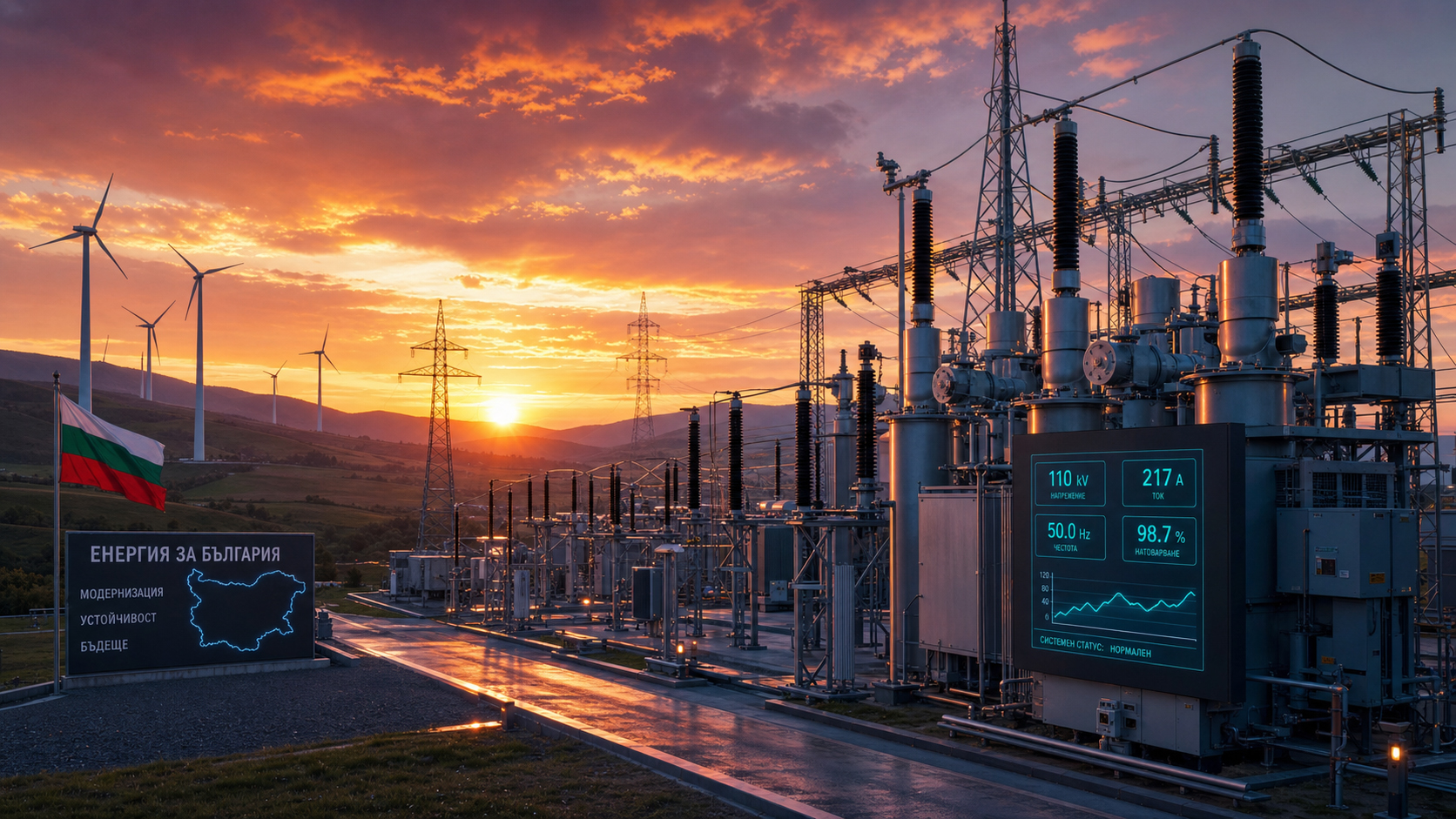
Why Bulgaria is becoming a key strategic market for European energy companies – Image: Xpert.Digital
Bulgaria between coal phase-out and grid modernization: The real challenge of the energy transition
Bulgaria after joining the Eurozone: Why investors are now focusing on electricity grids instead of solar parks
Wind turbines and solar parks dominate the glossy graphics of the energy transition – but the true foundation of this transformation lies hidden. Ultimately, the electricity grid determines whether the green transformation succeeds or fails due to physical bottlenecks. This tension is particularly evident in Southeast Europe: Following the introduction of the euro in January 2026, Bulgaria faces a massive macroeconomic leap and is simultaneously experiencing an unprecedented solar boom, which is putting immense pressure on its historic infrastructure. At the heart of this is the Austrian energy provider EVN. After two decades of political crises and multi-billion-euro regulatory power struggles, the company is now demonstrating why its seemingly unspectacular grid business has become a strategic anchor of stability and a guarantor of returns. This is an in-depth economic analysis of billion-euro investments, digital grids, regulatory risk in emerging markets, and the harsh operational reality of the European energy transition.
Silent infrastructure, strong returns: Why the electricity grid is the real axis of the energy transition
When politicians talk about climate goals, they point to wind turbines and solar farms. When business leaders present their investment pipelines, the charts gleam with megawatt figures for photovoltaic systems, offshore wind farms, and battery storage. The electricity grid, that largely invisible infrastructure of cables, substations, and switching stations that has grown over decades, usually plays the role of a mere footnote in this narrative. This perception is fundamentally wrong and economically dangerous.
The paradox of the energy transition lies precisely here: the more renewable energy enters the system, the more the grids become a bottleneck. Photovoltaic systems on factory roofs and wind farms in coastal regions generate electricity when the sun shines and the wind blows, not when industry needs to ramp up shifts or households are cooking in the evening. The only physical bridge between these uncontrollable generation peaks and actual demand is the electricity grid. Without high-performance distribution networks that are intelligently controlled, regionally interconnected, and digitized, the energy transition remains just a plan.
The European Union has quantified this reality: By 2030, the continent faces an investment gap in electricity grids of no less than €800 billion, and this is projected to grow to an estimated €2.5 trillion by 2050. The European Commission itself anticipates additional infrastructure investments of €584 billion by 2030. Annual spending on grid infrastructure must more than double current levels if Europe is to seriously pursue its climate goals. These are not abstract figures, but concrete capital allocations that affect energy companies, regulators, and investors alike.
Bulgaria on the verge of structural change
Within this pan-European context of tension, Bulgaria occupies a special position that has received far too little analytical attention. The country in southeastern Europe is undergoing a dual transformation: firstly, the energy sector's shift from a coal- and nuclear-dominated electricity generation system to a diversified, renewable energy mix; and secondly, the macroeconomic step into the Eurozone, which was completed on January 1, 2026, with the introduction of the euro.
The complexity of Bulgaria's starting point is clearly evident in its electricity mix. Nuclear power dominates the energy mix, supplying around 40 percent of electricity generation, followed by coal with approximately 28 percent. Solar energy accounts for around 17 percent and has thus become a key pillar within just a few years, while wind and hydropower together contribute almost 10 percent. The transition away from fossil fuels is therefore far from complete. Bulgaria has long been considered one of the EU members most dependent on coal, and this structural disadvantage shapes the speed and capital requirements of the transformation.
At the same time, solar expansion is proceeding at a pace that has surprised industry observers. In 2025, Bulgaria installed 1,416 megawatts of new solar capacity, bringing its total capacity to nearly 6,000 megawatts. This marked the third consecutive year in which more than one gigawatt of new capacity was added to the grid. Particularly noteworthy is that in 2025, around 90 percent of the new capacity was comprised of large-scale, utility-scale installations. Experts anticipate that 2026 could be another record year, as projects with an estimated total capacity of 2.5 gigawatts are either already under construction or in an advanced stage of development.
These figures pose massive challenges to the Bulgarian electricity system. A grid that for decades was designed to distribute electricity from a few, predictable large power plants must now integrate thousands of decentralized sources of power whose output fluctuates significantly. Grid bottlenecks, local overloads, and the need for intelligent control are the immediate consequences. The Bulgarian transmission grid, in cooperation with EU partners, has already taken initial steps to deploy mobile power flow control technologies to unlock capacity and improve cross-border electricity flows between Bulgaria and Romania.
The euro as an economic accelerator
Bulgaria's accession to the Eurozone on January 1, 2026, is not merely a monetary matter for the Bulgarian energy system. It structurally alters the investment climate. Since the introduction of the euro in 1999, the Bulgarian lev has been pegged to it, with an exchange rate of 1.95583 lev per euro corresponding exactly to the central rate in the European Exchange Rate Mechanism. While this effectively eliminated exchange rate risks for foreign investors, a residual uncertainty remained regarding a theoretically possible change in the fixed exchange rate. With the introduction of the euro, this residual risk is also completely eliminated.
For infrastructure investors investing in Bulgarian electricity and heat supply companies, this creates new stability. Infrastructure projects with planning horizons of 20 to 30 years benefit disproportionately from a stable monetary environment. At the same time, Eurozone membership opens broader access to European capital markets and simplifies cross-border financing. Even before the formal introduction, analysts had pointed to the positive investment effects that joining the euro would bring to the Bulgarian capital market.
However, critics urge caution. Bulgaria remains one of the most corrupt EU countries and has experienced political instability in recent years that far exceeded the usual parliamentary level. Institutional quality—that is, the reliability of regulatory authorities, the transparency of procurement procedures, and legal certainty for investors—remains a critical factor. The euro alone will not transform weak institutions into strong ones. However, it can create a framework in which better governance yields greater returns in the medium term.
Two decades of EVN in Bulgaria: Experiences beyond the press conference
No Western European energy company knows the intricacies and opportunities of the Bulgarian energy market as well as EVN AG from Lower Austria. Since entering the market in 2005, when EVN acquired Bulgarian utility companies for around €270 million, thus advancing its internationalization in Southeast Europe, the company has invested more than 1.8 billion Bulgarian leva in the market. Today, EVN Bulgaria serves around 1.6 million customers in the electricity distribution network of the southeast of the country, generates electricity from renewable sources, supplies end customers, and operates the district heating system in Plovdiv, the country's second-largest city.
These two decades have by no means been a story of smooth expansion. Bulgarian energy policy experienced several turning points during this period, posing significant risks for foreign investors. The crisis of 2012 to 2014 was particularly severe. In 2012, Bulgaria introduced a renewable energy subsidy program under which electricity providers had to pre-finance feed-in tariffs, which the state then failed to reimburse in a timely manner. When EVN subsequently stopped payments to the state-owned power company NEK, the government in Sofia responded by threatening to revoke EVN Bulgaria's license and nationalize the business.
What followed was an internationally noted investment dispute settlement proceeding before the World Bank's International Centre for Settlement of Investment Disputes (ICSID). EVN asserted claims amounting to approximately €850 million, basing its claims on the bilateral investment protection agreement between Austria and Bulgaria and the Energy Charter Treaty. The arbitration proceedings concluded in 2019 with a ruling in favor of the Bulgarian state. However, an out-of-court settlement regarding additional costs for renewable energy and default interest totaling €127 million had already been reached in 2017. This settlement resulted in a net gain of €38 million for EVN.
This episode is revealing for an economic analysis of the Bulgarian energy market for several reasons. First, it demonstrates that regulatory risks in emerging markets are not merely a theoretical planning element, but can manifest themselves in a way that is existential. Second, it shows that EVN did not withdraw from the market despite these experiences, but remained positioned as a long-term infrastructure investor. Third, the outcome of the proceedings demonstrates that bilateral investment protection has real economic value, even if it is not a complete instrument against regulatory arbitrariness. Crucially for future developments, according to EVN, the arbitration process now enables predictable regulatory decisions for the future.
Liberalization of the electricity market: The next phase begins
In addition to regulatory changes, the Bulgarian electricity market is undergoing a profound structural transformation. The Energy and Water Regulatory Commission (EWRC) has initiated the liberalization of the residential electricity market. After several politically motivated postponements, the transition phase came into effect on July 1, 2025: While end-user suppliers remain obligated to supply residential customers at regulated prices, they purchase the electricity at market prices on the exchange. The difference is covered by the System Security Fund. From January 2026, state price fixing for residential electricity will be completely abolished.
This liberalization has immediate consequences for EVN Bulgaria. The company must operate in a more competitive market environment while simultaneously meeting higher standards of efficiency, customer loyalty, and service quality. As of July 1, 2025, electricity prices for EVN Bulgaria Electricity Supply customers rose by 5.95 percent, the highest increase among the country's three major distribution companies. At the same time, the installation of smart meters is becoming a priority, a technical requirement for the fully liberalized market.
For the grid business, however, market liberalization is less disruptive. Electricity grids remain in regulated monopoly structures because parallel infrastructures would be economically inefficient. Grid fees continue to be set by the EWRC and are subject to fixed regulatory cycles. This model protects grid returns from direct competition, but it does not preclude regulatory intervention in capital cost reimbursement or the permissible return on equity. This is precisely where the persistent regulatory risk lies, which every investor must be aware of when entering this segment.
The network business as a strategic anchor of stability
European energy companies have undergone a remarkable strategic convergence in recent years: they are shifting the focus of their portfolios from volatile electricity generation to regulated grid operations. The reason lies in the fundamental economic structure of these two business models. In electricity trading and free-market generation, wholesale prices, fuel costs, and weather conditions determine the outcome, leading to significant fluctuations in earnings. In contrast, the regulated grid business allows for a predictable return on equity on the net assets invested, independent of short-term price swings.
E.ON, Europe's largest grid operator, has implemented this transformation most consistently. From 2026 to 2030, the company plans total investments of €48 billion, €40 billion of which will be in the grid business alone. Investments of €8.7 billion are planned for 2026. The digitalization of Germany's 700,000-kilometer-long electricity grid, including a digital twin for the entire network, is a key element of this strategy. E.ON's adjusted net income rose by 6 percent to €3.02 billion in 2025 – proof that the focus on regulated infrastructure is also successful in a challenging market environment.
EVN pursues a similar, albeit smaller-scale, approach. In the 2024/25 financial year, the Group's total investments exceeded €900 million for the first time, of which 89.1 percent were classified as taxonomy-compliant according to the EU Taxonomy Regulation. EVN plans to invest around €1 billion annually until 2030, totaling €5.5 billion. Four-fifths of these funds will flow into Lower Austria, the company's core region. The remainder will be allocated to international activities, particularly the Southeast Europe segment, including Bulgaria and North Macedonia.
The investment program reflects a clear strategic logic. According to EVN, around €100 million will be invested in grid expansion in Bulgaria. This aligns with the increasing integration requirements resulting from the explosive growth of renewable energies described above. Every new utility-scale photovoltaic system requires a grid connection; the associated grid node must be upgraded, and the control logic must be adapted. This is not construction for the sake of construction, but rather the logical technical consequence of the energy transition.
Karnobat and beyond: The operational reality in southeastern Bulgaria
EVN's strategy is materializing operationally on several levels simultaneously in Bulgaria. In the 2024/25 financial year, a new 2.5 megawatt peak photovoltaic plant was commissioned in Karnobat, driving the expansion of renewable energy generation in the region. While this single plant may seem small compared to the gigawatt projects elsewhere in Bulgaria, it exemplifies the decentralized approach EVN is using to gradually and grid-compatiblely expand its renewable energy capacity.
In parallel, the ongoing modernization of the network infrastructure in southeastern Bulgaria, the supply area where EVN serves around 1.6 million customers, is underway. The challenge here is not solely technical. It also involves realizing profitable infrastructure projects in the long term in a region with below-average purchasing power, limited local capital resources, and occasionally unstable regulatory frameworks. The segment's operational performance demonstrates that this is possible: the positive financing effects from increased network and energy sales in Bulgaria contributed significantly to the Group's earnings performance.
The district heating project in Plovdiv adds another infrastructure component with stabilizing properties to this portfolio. While district heating is a less dynamically growing business area than photovoltaics or battery storage, it offers predictable consumption volumes, long-term customer contracts, and an infrastructure whose replacement with alternative systems would be expensive and time-consuming. This stabilizing element should not be underestimated for the risk profile of EVN's overall Bulgaria portfolio.
Find a partner in Bulgaria 🇧🇬 🔍🤝 and become a partner ➕

Bulgaria - Find and become a partner - Image: Xpert.Digital
Bulgaria is transforming from an underestimated EU market into a strategic nearshoring hub for European industrial SMEs. With low location costs, EU legal certainty, access to the Eurozone, and strong logistics networks on the Black Sea, the country offers robust alternatives to Asian supply chains.
At the same time, Bulgarian companies also benefit from this growing economic network, which serves as a strong springboard for their own expansion into Germany, Europe and global markets.
More information here:
A thematic hub offering insights and expertise:
- Knowledge platform covering global and regional economies, innovation and industry-specific trends
- A collection of analyses, insights, and background information from our key areas of focus
- A place for expertise and information on current developments in business and technology
- A hub for companies seeking information on markets, digitalization, and industry innovations
Battery storage and digital twins – grids instead of turbines: Why infrastructure is the new core of the energy transition
Financial indicators: Southeast Europe as a driver of results
The importance of the Southeast Europe segment for the EVN Group is immediately apparent in its financial figures. This segment, which essentially encompasses activities in Bulgaria and North Macedonia, generated revenue of €928.6 million, EBITDA of €103.7 million, and EBIT of €54.6 million in the first half of fiscal year 2025/26. According to EVN, the segment benefited, among other things, from increased network and energy sales in Bulgaria due to the economic climate. EVN states that the Southeast Europe business has shown a significant improvement following a year of regulatory adjustments.
At the Group level, net income for the first half of fiscal year 2025/26 rose by 24.7 percent year-on-year to €312.4 million. Revenue increased by 3.2 percent to €1.787 billion, and EBITDA improved by 7.9 percent to €553.3 million. This result is particularly noteworthy because it was achieved despite weak wind and hydropower conditions. Generation coefficients for wind and water were significantly below the previous year and the long-term average. The fact that net income still increased demonstrates the buffering effect of the regulated grid and infrastructure business, which cushioned weather-related fluctuations in generation.
Particularly noteworthy is the development of network revenues at the Group level: they increased by 15 percent compared to the same period last year. This growth reflects both the organic increase in network sales and regulatory adjustments. For the full year 2025/26, EVN expects a Group result in the range of €430 million to €480 million, roughly on par with the previous year. Operating net cash flow amounted to €268.4 million in the first half of the year, while net debt stood at €1.094 billion, below the figure for the same period last year.
Around 60 percent of EVN's consolidated profit stems from its international activities in Bulgaria and North Macedonia, as well as from investments in companies such as Verbund, RAG, and Burgenland Energie. Bulgaria, as the largest foreign market in terms of volume, contributes the lion's share to this return on internationalization. This underscores why regulatory risks in this market cannot be treated as a peripheral issue, but rather have a systemically important dimension for the group's profit.
Digital transformation: No real energy transition without smart grids
The purely physical upgrading of power grids is necessary, but not sufficient. The real leap in quality lies in the digitalization of grid control. A modern distribution grid must be able to react in real time to thousands of variable feed-in points, shifting loads, battery storage, and electric vehicles. This requires sensors, data processing, and control algorithms that go far beyond the traditional tools of a grid operator.
EWRC has been driving the installation of smart meters as a technical prerequisite for the liberalized market in Bulgaria. Smart meters record consumption in real time and enable remote monitoring, forming the basis for dynamic tariffs, demand-driven grid control, and predictive maintenance. For EVN Bulgaria, this rollout represents not only an investment but also, in the long term, a data foundation that allows for better grid planning, reduced losses, and more efficient customer processes.
At the European level, E.ON is leading the way with the development of a digital twin for its 700,000-kilometer-long electricity grid. Digital twins enable simulations of load scenarios, predictive fault analysis, and optimized planning of investment measures. It is only a matter of time before such approaches become standard for distribution networks in medium-sized European markets like Bulgaria, not least because the costs of corresponding platform solutions are decreasing due to economies of scale.
In its 2030 strategy, entitled "More Sustainable. More Digital. More Productive," EVN has explicitly defined digitalization and artificial intelligence as key priorities. For its Bulgarian business, this means a gradual transfer of digital network management methods developed in Lower Austria to the operating conditions in the Southeast European segment. The potential synergies are considerable, but require consistent investment and a stable regulatory framework that adequately compensates for these expenditures.
Battery storage: The missing link in the energy system
Bulgaria's growing photovoltaic capacity not only presents the grid with integration challenges at midday, when feed-in exceeds the local load profile, but also creates the problem of peak demand in the evening, when the sun sets but consumption remains high. Battery storage is the technological solution to this imbalance. In Bulgaria, the 315-megawatt Tenevo hybrid project, with a storage capacity of 760 megawatt-hours, has demonstrated that large-scale storage projects are also feasible in the Bulgarian market. By mid-2026, battery storage facilities with a total capacity of 15 gigawatt-hours are expected to be operational nationwide.
EVN has incorporated this development into its own strategy. At the group level, the company plans to expand its battery storage capacity to 300 megawatts, or 600 to 1,200 megawatt hours, by 2030. At the end of the 2024/25 financial year, the installed battery capacity was only 8 megawatts, so the expansion is still in its early stages. From a regulatory perspective, battery storage systems occupy a gray area: They are situated at the interface between regulated grid operation and the free energy market, which means their economic classification and eligibility for remuneration vary depending on the national regulatory framework.
For Bulgaria, the development of a regulatory framework for energy storage remains an open question. While the National Recovery and Resilience Plan provides funding for battery storage projects, their long-term integration into capacity markets or grid service remuneration is not yet fully codified. For EVN Bulgaria, this means that storage investments in this market are even more dependent on regulatory developments than in Austria, where corresponding mechanisms are already more firmly established.
Capital market perspective: Stable returns in a volatile sector
For capital market participants, the regulated infrastructure business has become particularly attractive in a period of structurally high investment requirements and regulatory uncertainty. Energy suppliers with strong network segments exhibit lower earnings variability than pure generation companies and are considered a more defensive investment in economically uncertain times. At the same time, they benefit from long-term investment themes such as climate protection and digitalization, which are mandated by the government and therefore maintain a certain degree of continuity even in the face of political shifts.
The EVN share reflects this assessment in current analyst recommendations. Of the 10 analysts surveyed, 7 recommend buying the stock and 3 recommend holding it; no analyst recommends selling. The median price target is around €32.875, the lowest target is €29.50, and the highest is €36.00. Erste Group Research raised its price target to €35.50 after the release of the annual figures and confirmed its buy recommendation. In April 2026, Barclays Capital also raised its price target for EVN shares to €29.50. With a share price of around €28 to €29 at the time of the analysis, the median price target represents an upside potential of more than 10 percent, which is an above-average premium for the utilities sector, which is considered defensive.
Analysts specifically highlight EVN's attractive valuation compared to its European peers, its solid balance sheet, and its clear dividend policy. EVN plans to gradually increase its dividend from €0.90 per share in fiscal year 2024/25 to at least €1.10 per share by 2029/30, with a payout ratio of 40 percent. Erste analysts expect earnings per share of €2.45 for fiscal year 2026/27 and €2.59 for 2027/28. These forecasts, however, assume that the regulatory environment in Bulgaria and North Macedonia remains stable and that no new structural burdens arise from market liberalizations or political interventions.
The regulatory risk remains: No return without transparency
An objective analysis of EVN's involvement in Bulgaria must explicitly identify the regulatory risk and not conceal it with euphemisms. The arbitration proceedings between 2013 and 2019 demonstrated that the EWRC had previously made decisions that international investors considered violations of their capital protection rights. The fact that the ICSID ruling ultimately favored the Bulgarian state and dismissed all of EVN's claims is also part of the truth.
Structurally, this means that Bulgaria is not a regulatory risk-free market like Germany or the Netherlands. The institutional weaknesses that became apparent in the arbitration history—namely, opaque wage decisions, politically motivated interventions in remuneration systems, and inadequate handling of government payment obligations—cannot be structurally remedied by a single procedural decision. They require continuous political strengthening of the regulatory authority, stricter transparency requirements, and corporate governance capable of identifying regulatory risks early on and mitigating them contractually.
On the other hand, it must also be noted that no company that has remained in the market after such an intense regulatory dispute and continues to invest hundreds of millions does so without substantial conviction. Since the conclusion of the arbitration proceedings, EVN explicitly considers itself a long-term investor in Bulgaria and argues that the existing procedural rules now create planning certainty for future regulatory decisions. This assessment is understandable, but should not be interpreted as absolute certainty. Regulatory stability in Bulgaria must be consistently demonstrated over several years before it can be taken for granted.
Southeast Europe as a laboratory for a new infrastructure model
The developments in Bulgaria are paradigmatic of a broader reality in the Eastern European EU markets. These countries are simultaneously catching up on modernizing outdated infrastructure, building renewable energy generation capacity, and undergoing gradual market liberalization. This creates a structural demand for capital, know-how, and operational experience that Western European infrastructure companies with stable corporate structures can contribute.
For EVN, Bulgaria is more than just an individual market in this respect. It is proof of the viability of the business model under challenging conditions. When an Austrian regional utility delivers stable earnings over two decades in a market with an unstable regulatory history, below-average purchasing power, and political instability, operates regulated grid infrastructure, and simultaneously develops renewable generation capacity, then this is a methodologically sound argument for the resilience of the integrated infrastructure model.
EVN's investments in Bulgaria are not a zero-sum game. They make a measurable contribution to increasing the security of supply in one of the EU's structurally weakest regions, create jobs, pay taxes into the local system, and transfer technological know-how to the market. These are effects that are often undervalued in purely capital market-oriented analyses, but they fulfill an important legitimizing function in the political economy of the EU enlargement project.
Limits to Growth and Strategic Risks
A complete analysis cannot ignore the limitations and risks of the described model. First, EVN's investment program until 2030 is expected to increase net debt by approximately €200 million annually, which would likely double the current debt ratio of around 17 percent in the long term. If interest rates continue to rise or an economic downturn impacts both network sales and regulatory revenues, this increase in debt could put the financing model under pressure.
Secondly, the assumption of stable regulatory returns depends on the Bulgarian regulatory authority actually allowing an adequate return on equity on the net assets invested. Historically, this has not always been the case in Bulgaria. While integration into European regulatory standards has deepened with Eurozone membership, the operational independence of the EWRC and its resistance to political pressure are still not guaranteed.
Thirdly, competition in the free utility market following electricity market liberalization presents a new risk element. Large international providers or digital platform companies could lure away residential customers with cheaper tariffs or better digital services. While this does not affect the regulated network operation, it does impact sales margins and customer loyalty, which are relevant to EVN Bulgaria's entire value chain.
Fourthly, the question of the dynamics of the coal phase-out remains. Bulgaria's electricity generation is still significantly dependent on coal. A rapid coal phase-out enforced by political or EU law would pose considerable stability problems for the supply system, which would have to be mitigated by the grid without sufficient renewable energy capacity having been available beforehand to compensate for the reduced load flows. For a distribution network operator responsible for ensuring security of supply in its region, a disorderly coal phase-out would represent a serious operational risk.
Infrastructure as an economic exercise in patience
The economic logic of the grid business is not a story of rapid share price gains or explosive profit increases. It is a story of patience, regulatory continuity, and the quiet growth in value of well-operated infrastructure. Every investment in a substation, every installed intelligence component in the grid, every new solar panel connection in southeastern Bulgaria are building blocks of an infrastructure whose economic value only becomes apparent over decades.
This is what fundamentally distinguishes the grid business from the electricity generation business. A wind turbine can be depreciated after 20 to 25 years and replaced with a more efficient one. A distribution grid is a societal infrastructure to which millions of households, businesses, and industrial companies are connected. It cannot simply be replaced with a newer version, and its costs of failure far exceed the book loss.
EVN has demonstrated this philosophy over two decades of engagement in Bulgaria. The market has demanded everything of the company: political pressure, regulatory intervention, protracted arbitration proceedings, currency risks, and now the transition to a liberalized market model. The fact that the company persevered, invested, and is now considered a stabilizing factor in the southeastern Bulgarian electricity system is more than just a success story of a single company. It is proof that long-term infrastructure investments in developing EU markets can be viable business models, provided the institutional framework is sufficiently secure and the investor possesses the necessary strategic patience.
Looking ahead to the coming years, one thing is clear: the energy transition in Bulgaria and Southeast Europe will not be completed by press releases about new solar parks. It will be made possible by patient, financially intensive, and regulatory-secured grid development. Anyone who understands this also understands why the seemingly unspectacular grid business has become the strategic core of the modern energy system.
🎯🎯🎯 Data-driven B2B industry hub as a quasi-in-house solution

The quasi-in-house solution: How Xpert.Digital closes operational gaps in B2B marketing and sales – Smart Content-Driven Business - Image: Xpert.Digital
Xpert.Digital is a data-driven B2B industry hub led by Konrad Wolfenstein . The company acts as an external, quasi-in-house solution for industrial partners, closing operational gaps in marketing, content, and sales – without requiring additional resources on the client side.
More information here:
Your global marketing and business development partner
☑️ Our business language is English or German
☑️ NEW: Correspondence in your native language!

Konrad Wolfenstein
I and my team are happy to be available to you as your personal advisor.
You can contact me by filling out the contact form here [email protected]:or simply call me at +49 7348 4088 965. My email address is
I'm looking forward to our joint project.





