
AHK Bulgaria Business Climate Survey 2026 – Bulgaria as a Business Location: Stability, Opportunities and Structural Limits
Xpert Pre-Release

Available in 27 languages 📢
Prefer Xpert.Digital on GoogleⓘPublished on: July 13, 2026 / Updated on: July 13, 2026 – Author: Konrad Wolfenstein
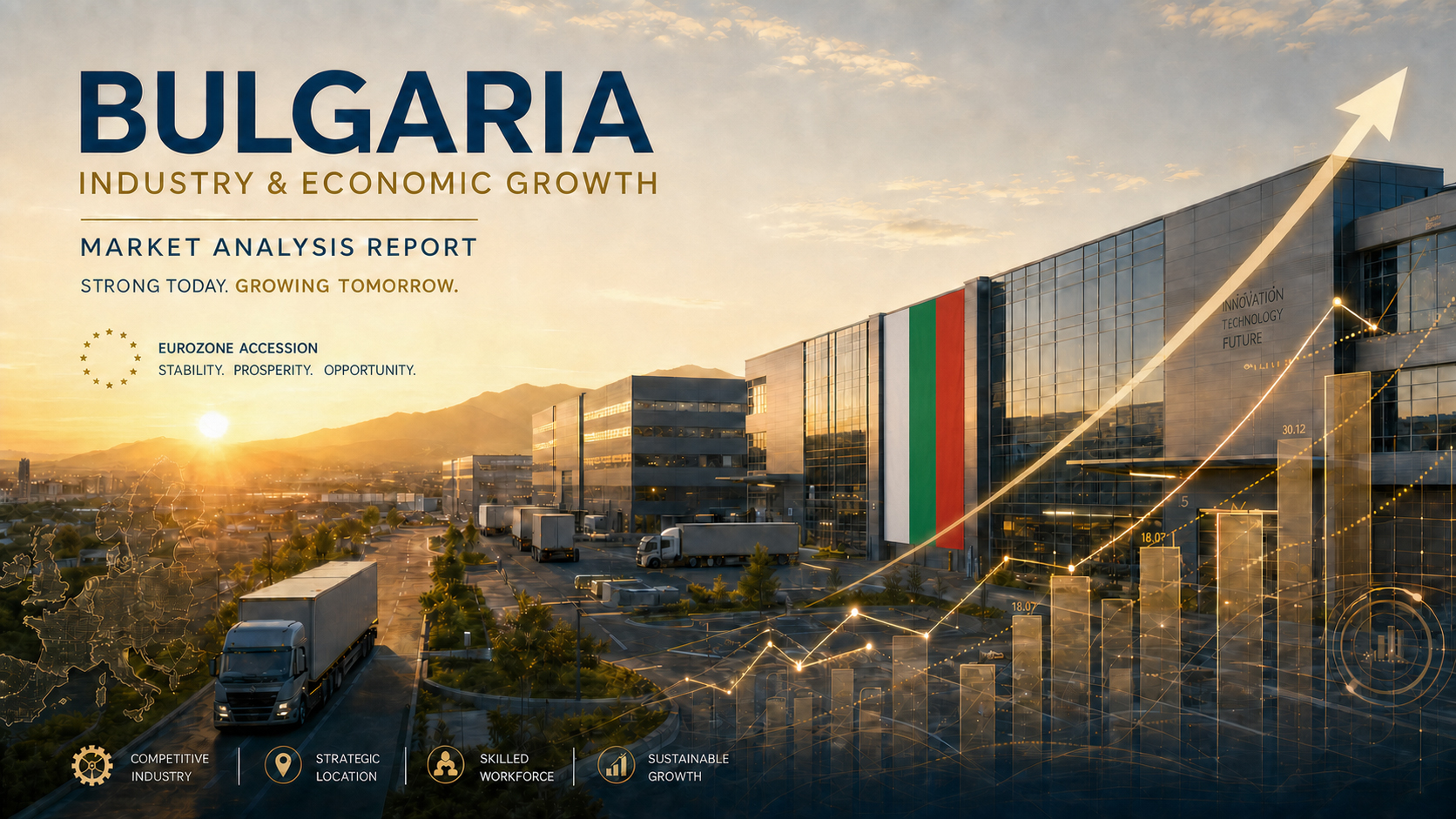
AHK Bulgaria Economic Survey 2026 – Bulgaria as a business location: Stability, opportunities and structural limitations – Image: Xpert.Digital
An economic analysis based on the AHK business survey 2026 and current market data
Europe's new growth engine: How Bulgaria is revolutionizing and transforming its economy by joining the Eurozone
The year 2026 marks a historic turning point for Bulgaria: With the introduction of the euro and full integration into the Schengen Area, the country will definitively move to the center of the European economic architecture. The southeastern European nation has long since shed its former reputation as merely a low-wage country and developed into a highly attractive tech and nearshoring hub. A unique combination within the EU of low taxes, excellent digital infrastructure, and rapidly growing innovation capacities is increasingly attracting international corporations seeking to secure and Europeanize their supply chains.
However, this dynamic growth also brings challenges: a worsening skills shortage and persistent political instability pose challenges for both investors and the government. An in-depth economic analysis based on the latest AHK Business Climate Survey 2026 reveals why German and European companies are heavily investing in Bulgaria despite geopolitical uncertainties and structural hurdles – and which reforms are now crucial to securing this exceptional momentum for the long term.
Related to this:
Growth engine Southeast Europe: Bulgaria's position in the EU economy
Bulgaria is currently among the fastest-growing economies in the European Union. In the first quarter of 2026, the country recorded GDP growth of 3.1 percent compared to the same period of the previous year, representing a quarterly increase of 0.7 percent. This places Bulgaria among the four countries with the highest annual growth rates in the EU – behind Ireland, Cyprus, and Poland. This is not a short-term phenomenon but rather the continuation of a multi-year growth trend: Bulgarian GDP already grew by 3.4 percent in 2024 – significantly above the Eurozone average of 0.9 percent.
Forecasts for the coming years remain solid, although estimates vary slightly depending on the institution. While the European Commission expects growth of 2.7 percent for 2026, the European Bank for Reconstruction and Development (EBRD) also forecasts 2.7 percent. The Economist Intelligence Unit clearly ranks Bulgaria among the fastest-growing economies in the EU in 2026 – driven primarily by private consumption and growing foreign demand. This foundation explains why 91 percent of the companies surveyed in the 2026 AHK business climate survey rated their current business situation as at least satisfactory.
The macroeconomic picture is further enhanced by other favorable indicators. The unemployment rate stood at 3.6 percent in October 2025, well below the eurozone average of 6.4 percent. Public debt amounts to just 23.8 percent of GDP – among eurozone countries, only Estonia has a lower figure. The inflation rate was projected at 3.5 percent for 2025 and is expected to moderate to around 2.9 percent by 2026. This combination of solid growth, low debt, and low unemployment forms the basis for the comparatively optimistic outlook of the surveyed companies.
A substantive snapshot of business sentiment: What the company survey really reveals
The economic survey of 83 companies, presented by the German-Bulgarian Chamber of Industry and Commerce (AHK Bulgaria) in May 2026, offers a nuanced picture of the current situation, going beyond a simple message of optimism. While 91 percent of respondents rate their current business situation as at least satisfactory, and 36 percent even consider it good, it also clearly shows that confidence in overall economic development has waned: Nearly half of the companies – 47 percent – expect a deterioration in the macroeconomic environment.
This discrepancy between a positive assessment of their own business situation on the one hand and a more cautious evaluation of the overall economic outlook on the other is a typical pattern for mature industrial locations: companies trust in their own resilience and their specific business model, while they perceive external risks as less controllable. The fact that 80 percent expect their own business situation to remain stable or improve, and that 40 percent even anticipate an improvement, demonstrates that fundamental entrepreneurial confidence in Bulgaria as a business location remains intact. This is therefore not euphoria, but a sound assessment based on concrete experience.
Looking at the time series of the German-Arab Chamber of Commerce (AHK) surveys, a long-term trend becomes apparent. As early as the 2025 survey, 52 percent of the companies surveyed rated their business situation as good – compared to 36 percent in 2026. At the same time, the proportion of companies expecting an improvement in their business situation rose from 35 percent (2024) to 46 percent (2025). The difference between the more enthusiastic sentiment of the previous year and the more cautious stance in the current survey can be directly attributed to the intensification of external factors, particularly energy price volatility and geopolitical uncertainties.
External pressure factors: energy, geopolitics, and supply chain disruptions
The most significant risk factor identified by the surveyed companies is the price of energy. Fifty-five percent consider rising energy costs a considerable risk – a level comparable to the crisis months of early 2022. This perception is not an isolated Bulgarian phenomenon, but reflects a Europe-wide reality: In June 2026, electricity prices in Europe skyrocketed to as high as €545 per megawatt-hour, triggered by geopolitical turmoil. For energy-intensive industries, this represents a significant strain on their pricing.
The Bulgarian government responded with a remarkable measure: Bulgaria became the first EU member state to introduce a special support program for energy-intensive industries, which came into effect retroactively to July 1, 2025. Financed with €125 million from the Energy System Security Fund, the program stipulates that the government will reimburse 50 percent of additional electricity costs once market prices exceed €63 per megawatt-hour. This proactive industrial policy sends a clear signal to international investors that the Bulgarian state is committed to actively protecting the competitiveness of its industries.
Besides energy prices, 41 percent of the surveyed companies cite supply chain risks as a significant burden, and 69 percent expect further cost increases as a result of global developments. Companies' response to these uncertainties is both pragmatic and strategic: around 65 percent have already diversified their supplier base or are planning to do so. Bulgaria benefits from its geographical location as a hub on five trans-European transport corridors, as well as from its four international airports and two seaports in Varna and Burgas. This logistical infrastructure makes the country not only a production location but also, increasingly, a distribution hub within the EU.
The euro as a catalyst: Structural effects of currency accession
On January 1, 2026, Bulgaria became the 21st member of the Eurozone to adopt the euro as its official currency. This step marks a turning point in the country's economic history and fundamentally changes the investment calculations of foreign companies. The exchange rate risk, which previously factored into investment decisions as a latent uncertainty despite the long-standing currency board system, has now been completely eliminated. According to a survey by the German-Bulgarian Chamber of Commerce (AHK), 13 percent of the companies surveyed are already actively shifting investments from Germany to Bulgaria.
The economic logic behind this trend is clear: joining the euro reduces transaction costs, simplifies financial reporting and accounting for multinational companies, and increases the country's macroeconomic credibility with international investors. Prior to accession, the KBC Group predicted that the euro boost would raise GDP growth to 2.7 percent in 2026, supported by increased consumer spending and growing investor interest. At the same time, the KBC Group cautions that the budget deficit could rise to 4.2 percent of GDP in 2026, compared to 3.0 percent the previous year – a risk factor that long-term investors should keep in mind.
With Bulgaria's full accession to the Schengen Area in 2025, complete integration into European economic and mobility structures is now taking place for the first time. Open borders, a stable currency, and clearer regulatory frameworks are creating an environment that is attractive to a wide range of business types – from medium-sized manufacturing companies and IT service providers to the research and development centers of large corporations. In March 2026, the Nuremberg Chamber of Industry and Commerce (IHK Nürnberg) reported a significant increase in interest from Franconian companies in Bulgaria as a nearshoring partner, with representatives from the metal industry, IT, pharmaceuticals, and legal consultancies present on site.
Competitive cost structure: Taxes, wages and operating costs in EU comparison
A key and lasting advantage of Bulgaria as a business location lies in its unique combination of low taxes, moderate labor costs, and an EU-compliant legal framework. The corporate tax rate is a flat 10 percent, making it one of the lowest in the European Union, along with Hungary. The same applies to personal income tax, which is also levied as a flat 10 percent tax. Dividends are taxed at only 5 percent, resulting in an effective tax burden of approximately 14.5 percent on distributed corporate profits. This tax system has been in place since 2008 and provides planning certainty – a value that companies place particular emphasis on when making long-term investment decisions.
On the cost side, Bulgaria remains the country with the lowest labor costs in the European Union, even after significant wage increases in recent years. These wage increases are themselves a sign of economic health and rising productivity, but they also present companies with a growing challenge in cost planning. Social security contributions will be capped at a maximum monthly contribution of €2,112 from January 2026, which represents a considerable cost advantage compared to Western European locations, especially for highly qualified professionals. This cost structure is particularly beneficial in the automotive industry: Bulgaria currently produces around 80 percent of the sensors used in European vehicles and is home to development centers of companies such as Bosch, Festo, Eberspächer, and Witte Automotive.
This picture is complemented by an evaluation aspect that emerges with remarkable clarity in the German-Bulgarian Chamber of Commerce (AHK) survey: 95 percent of the companies surveyed rate Bulgaria's digital infrastructure positively – a figure that is above the average of recent years. This must be seen against the backdrop of Bulgaria having one of the fastest and most comprehensive broadband networks in the EU, which is of central importance, particularly for IT-intensive business models, remote work, and the establishment of technology centers. Combined with the low tax rate, this makes the country one of the most attractive locations for digital business models within the Eurozone.
Nearshoring as a strategic response to global supply chain risks
Bulgaria's increasing attractiveness as a nearshoring destination is not a random phenomenon, but rather the result of structural trends in the global economy. Deglobalization, triggered by trade conflicts, the consequences of the pandemic, and geopolitical fragmentation, has led European companies to shorten their value chains and relocate to more geographically and legally stable locations. Bulgaria is in an exceptionally favorable position in this regard: it offers above-average integration into international value chains compared to other EU countries, combined with low wages and non-wage labor costs, as well as substantial EU funding for investment projects.
The German-Bulgarian Chamber of Commerce (AHK) survey confirms this trend with concrete figures: 77 percent of the companies surveyed are not planning to relocate, 89 percent rate Bulgaria's position as stable or improved, and 26 percent see the attractiveness of the location as having increased compared to the previous year. Nearshoring demand is becoming increasingly diversified: In addition to the traditionally strong automotive and electronics sectors, IT services, pharmaceuticals, and industrial software development are gaining in importance. Particularly noteworthy is Bulgaria's growing significance as a sourcing market for metal products: The German electrical and automotive industries are increasingly procuring copper and aluminum products from Bulgaria – raw materials that are a key component of modern supply chains for battery production and car body manufacturing.
The fact that 56 percent of companies plan to increase their investments, and a total of 70 percent intend to maintain or expand their investments, speaks to a sustainable corporate commitment to the location. The Economist Intelligence Unit confirms this trend from an external perspective: It sees Bulgaria as one of the main beneficiaries of the realignment of global supply chains towards the Balkans and Southeast Europe and cites the increase in interest from foreign investors as a viable growth driver.
Find a partner in Bulgaria 🇧🇬 🔍🤝 and become a partner ➕

Bulgaria - Find and become a partner - Image: Xpert.Digital
Bulgaria is transforming from an underestimated EU market into a strategic nearshoring hub for European industrial SMEs. With low location costs, EU legal certainty, access to the Eurozone, and strong logistics networks on the Black Sea, the country offers robust alternatives to Asian supply chains.
At the same time, Bulgarian companies also benefit from this growing economic network, which serves as a strong springboard for their own expansion into Germany, Europe and global markets.
More information here:
A thematic hub offering insights and expertise:
- Knowledge platform covering global and regional economies, innovation and industry-specific trends
- A collection of analyses, insights, and background information from our key areas of focus
- A place for expertise and information on current developments in business and technology
- A hub for companies seeking information on markets, digitalization, and industry innovations
Bulgaria as an engine of innovation: How investors gain confidence in Bulgaria
Research, development and digital transformation: The quiet upgrading of the location
While Bulgaria is often still perceived internationally primarily as a low-wage location, the country is undergoing a quiet but fundamental transformation towards becoming a technology-oriented business location. The German-Bulgarian Chamber of Commerce (AHK) survey shows that the companies surveyed invest an average of 8.5 percent of their investment volume in research and development – a figure that is exceptionally high for a location with this wage level and indicates a significant shift in the vertical integration of value creation.
Institutionally, this development is underpinned by the establishment of significant research infrastructures. The INSAIT research center, founded in Sofia in 2022, collaborates with partners such as ETH Zurich, EPFL, and technology companies like Google, AWS, and DeepMind. Furthermore, Bulgaria is home to one of six EU-funded AI factories with a budget of €90 million. International companies like SAP, Bosch, and VMware operate large development centers in Sofia, thereby leveraging the human capital produced by Bulgarian technical universities and colleges. This investment trend in research and development is strategically important because it frees the country from the trap of simple wage competition and fosters more stable and higher-quality economic relationships in the long term.
28 percent of companies want improved financing conditions for research and development – a signal that the demand for R&D capacity is already beginning to exceed the existing supply. For policymakers, this represents a clear mandate: targeted support for technology parks, strengthening university research, and expanding public-private partnerships in innovation financing are measures that can sustainably secure and expand the existing competitive advantage.
Robust labor market with increasing pressure for qualifications
The Bulgarian labor market is sending clearly positive signals in the AHK survey: 85 percent of the companies surveyed intend to maintain or increase their number of employees, and 33 percent are planning concrete workforce growth. These figures reflect the macroeconomic picture: An unemployment rate of under 4 percent – which has even fallen to 3.5 percent for 2025 – signals full employment and rising purchasing power among the population, which in turn supports domestic demand.
The downside of this development is the increasing shortage of skilled workers. For years, this skills shortage has been considered one of the country's key structural risks and was cited as the single biggest risk in the 2025 German-Bulgarian Chamber of Commerce (AHK) survey. Bulgaria's demographic trends exacerbate this problem: at the beginning of 2025, the country had approximately 6.4 million inhabitants – a decrease of around 30 percent compared to 1989. The emigration of skilled workers to Western European countries has led to a significant brain drain in recent decades, which cannot be fully compensated for by the domestic economy alone. In response to this pressure, companies are increasingly recruiting international workers – a strategy that can provide short-term relief but must be complemented in the medium to long term by stronger incentives for returning migrants and improvements to the education and training infrastructure.
Wage development reacts directly to the labor shortage: Wage growth was strong in 2024 and early 2025 and is expected to normalize only gradually. For companies, this presents a growing challenge in workforce planning, while for employees, rising purchasing power is a significant stabilizing factor for private consumption. Nevertheless, compared to other EU countries, wage levels remain significantly below the Western European average – a structural advantage that is likely to persist for many years to come.
Investment climate under scrutiny: Political instability and institutional weaknesses
The robust economic data should not obscure the fact that Bulgaria is struggling with significant structural governance deficits that are weighing on the investment climate. 82 percent of the companies surveyed in the German-Bulgarian Chamber of Commerce (AHK) survey are calling for more stable and reliable economic policy frameworks – an exceptionally high percentage that clearly highlights the need for action. A majority of the companies also expect more decisive measures to combat corruption.
These demands are not unfounded. The Bertelsmann Transformation Index (BTI) 2026 describes Bulgaria's political landscape as characterized by persistent instability, increasing polarization, and fragmented party competition. Repeated snap elections have resulted in unstable majorities, while low voter turnout reflects growing political disillusionment. The European Commission withheld reconstruction funds because delays in anti-corruption and judicial reforms jeopardized agreed-upon milestones. Criminal networks that have infiltrated the judiciary and parts of the public administration are a structural problem that undermines the reliability of the rule of law and warns foreign investors to exercise caution.
For companies, this tension means that transaction and compliance costs must be factored in, costs that do not arise in countries with a stable rule of law. Administrative predictability—that is, the reliability of official decisions and the predictability of regulatory processes—remains a key weakness. The fact that 82 percent of companies explicitly demand better framework conditions is a clear indication that the economic location can only reach its full potential when institutional reforms gain substance and permanence. It is hoped that Eurozone membership and the associated European accountability mechanisms will act as an external incentive for reform.
Willingness to invest as a signal of confidence: Where the capital flows
Despite all the aforementioned risks and structural limitations, the investment plans of the surveyed companies signal a remarkably high level of confidence in the location. 56 percent plan to increase their investments, and a total of 70 percent are keeping their investments constant or expanding them, with 30 percent of these having concrete expansion plans. These figures are significantly higher than one would expect in an environment primarily characterized by uncertainty and caution.
The Bulgarian government is supporting this trend with ambitious infrastructure programs. Major investments of around €4.9 billion are planned for defense and infrastructure in 2026, complemented by substantial EU funding from the Recovery and Resilience Mechanism. These public investments act as a multiplier for private investment decisions: improvements to the road network, port infrastructure, and broadband connectivity directly increase the attractiveness of Bulgaria for manufacturing and logistics operations. The European Commission expects that investments—supported by EU funding and the euro accession process—will continue to contribute positively to economic development.
The sectoral distribution of investments is particularly revealing. The automotive supply industry contributes around 11 percent to GDP and comprises over 380 certified companies. In the technology sector, the ecosystem around INSAIT, the AI factory, and the development centers of international corporations is growing continuously. And in the metal processing sector, Bulgaria is gaining importance as a supplier of precision components for the European automotive and electronics industries. This sectoral diversification of investments is a positive sign for the stability of the growth model.
Reform agenda as a lever for growth: What Bulgaria needs now
The analysis of Bulgaria's strengths and weaknesses as a business location leads to a clear reform agenda, articulated by both the surveyed companies and international institutions. First and foremost is the strengthening of the rule of law: without a reliable judiciary, transparent procurement procedures, and effective anti-corruption measures, the investment climate remains burdened with a structural uncertainty premium that deters potential investors or at least leads to a higher risk premium.
The second most pressing issue is the skilled labor shortage. Bulgaria's human capital is perhaps its most important strategic resource, and its erosion through emigration and demographic decline poses an existential challenge to the growth model. Investments in education, dual vocational training programs modeled on the German system, attractive return programs for emigrants, and the targeted recruitment of international skilled workers are not merely social measures, but economic policy necessities. In this context, the European Commission recommends the increased integration of newly recruited international workers as a medium-term strategy.
Third on the list are administrative predictability and the acceleration of bureaucratic processes. 82 percent of companies are calling for more stable framework conditions, primarily aimed at the predictability of regulatory decisions. Faster approval processes, single points of contact for foreign investors, and the consistent digitalization of public administration are measures that can have a significant impact at comparatively low fiscal costs. Bulgaria already has excellent starting conditions in terms of digital infrastructure – this strength must now be extended to public administration in order to unlock the full potential of the location.
Strategic Outlook: Bulgaria in European Location Competition 2026 and Beyond
Bulgaria is at a crossroads. The structural prerequisites for sustainable and high-quality growth are in place: a low debt-to-GDP ratio, an attractive tax system, excellent digital infrastructure, growing R&D capacities, and an increasingly strategic position in European supply chains. Eurozone accession and full Schengen integration have firmly established the country as an EU-compliant and reliable business location.
The risks are real, but manageable. Geopolitical uncertainties, energy price volatility, and supply chain risks affect all European economies – Bulgaria is no more exposed than comparable locations, but possesses initial instruments for active risk mitigation through its energy support program and diversification strategies. The main structural risk remains political instability and the institutional governance deficit, which, without decisive and sustainable reforms, will keep overall economic development on a suboptimal path.
The overall picture is that of a country undergoing a transformative phase in the second half of the 2020s. Bulgaria is no longer the simple low-wage location it was perceived as a decade ago. It is a location with low taxes, good infrastructure, growing innovation capacity, and stable EU integration – and at the same time, it is a location that still has considerable reform needs. For companies willing to objectively analyze this context and leverage it strategically, Bulgaria offers one of the most attractive combinations of cost, growth, and innovation potential currently available in Europe.
🎯🎯🎯 Data-driven B2B industry hub as a quasi-in-house solution

The quasi-in-house solution: How Xpert.Digital closes operational gaps in B2B marketing and sales – Smart Content-Driven Business - Image: Xpert.Digital
Xpert.Digital is a data-driven B2B industry hub led by Konrad Wolfenstein . The company acts as an external, quasi-in-house solution for industrial partners, closing operational gaps in marketing, content, and sales – without requiring additional resources on the client side.
More information here:
Your global marketing and business development partner
☑️ Our business language is English or German
☑️ NEW: Correspondence in your native language!

Konrad Wolfenstein
I and my team are happy to be available to you as your personal advisor.
You can contact me by filling out the contact form here [email protected]:or simply call me at +49 7348 4088 965. My email address is
I'm looking forward to our joint project.





