
Energy transition: Norwegian hydropower as an anchor in stability for the European power grid
Xpert pre-release

Language selection 📢
Published on: July 2, 2025 / update from: July 2, 2025 - Author: Konrad Wolfenstein
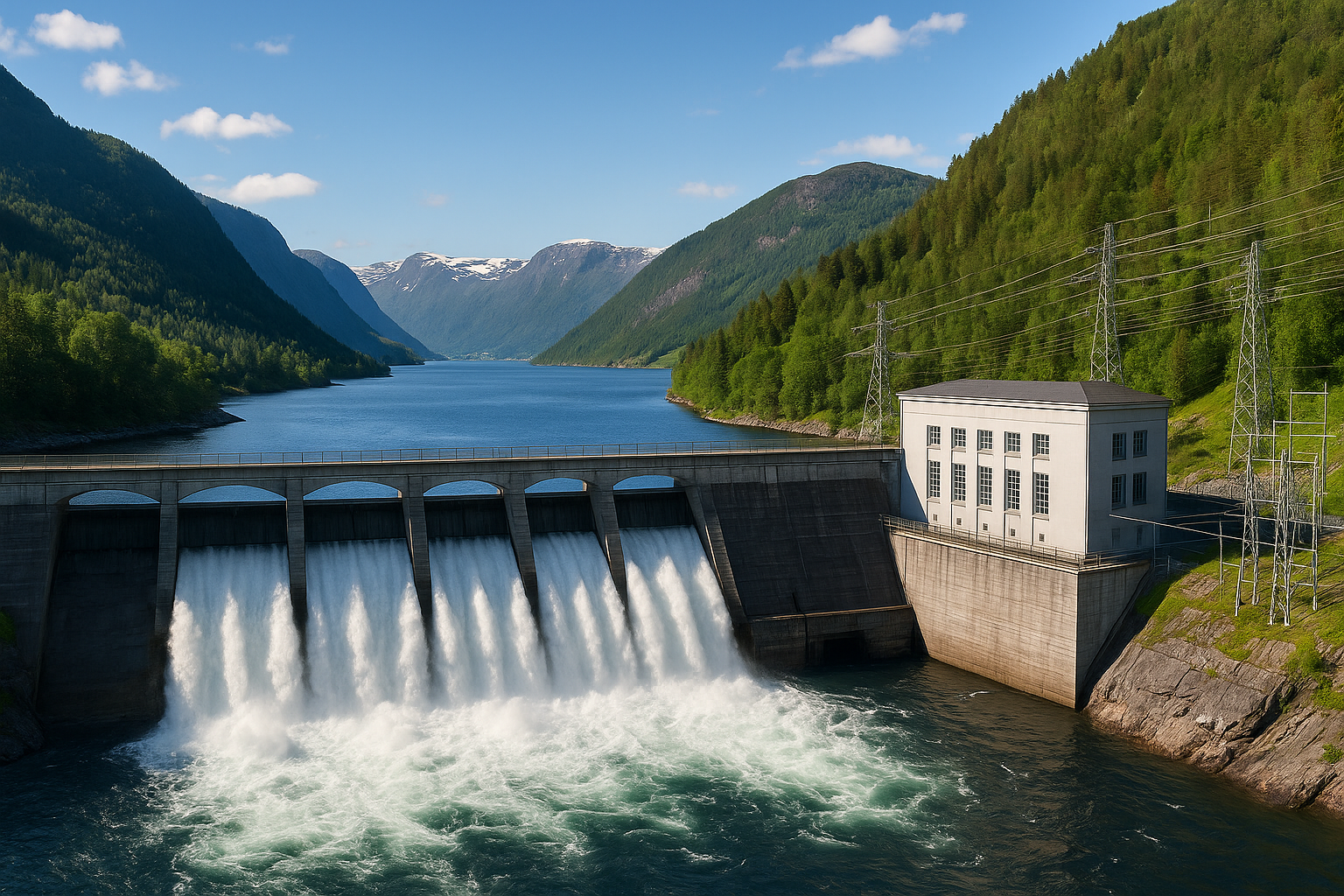
Energy transition: Norwegian hydropower as a stability anchor for the European power grid - creative image: Xpert.digital
Hydroconnect project reveals: Norwegian hydropower makes expensive pumped storage works unnecessary
Hydropower instead of pumping storage: How Norway could stabilize Europe's power grid
The energy transition in Europe faces significant challenges, but a natural resource could play a key role for its success: the Norwegian hydropower. The Fraunhofer Institute for Energy Management and Energy System Technology examined the Hydroconnect composite project how this natural energy source can significantly contribute to stabilizing the European power grids and at the same time drastically reduces the need for costly new pumped memory.
Norway's unique energy position in Europe
Norway occupies an extraordinary position in the European energy landscape. With around 90 percent of the electricity from hydropower, the Scandinavian country is uniquely positioned across Europe. This impressive number is based on the unique geographical location of the country with its deep fjords, steep mountains and inexhaustible water resources. Over 1,600 hydropower plants are distributed across the country, which at 385,000 square kilometers is only slightly larger than Germany.
The Norwegian hydropower production achieved a historical record value in 2024 with 157.2 terawatt hours. This amount exceeds German hydropower production by eight times, although both countries are comparable in terms of space. What makes these numbers particularly noteworthy is the fact that Norway not only covers your own needs, but also produces considerable surpluses for export. The country is already exporting around 14 terawatt hours of electricity and is therefore the largest electricity exporter in Europe.
The Norwegian hydropower systems have an impressive storage capacity in over 1,000 water reservoirs, which can store up to 70 percent of the annual power consumption. These natural stores offer flexibility that the rest of the world desperately searches, while it has been available in Norway for decades.
The challenges of the European energy transition
In order to achieve the goal of climate neutrality by 2050, the expansion rates of wind power and photovoltaics in Europe must be increased by four to five times today. However, this massive change has fundamental challenges. Wind and sun produce electricity dependent on the weather, not as required. This volatility requires flexible solutions that can quickly react to fluctuations between supply and demand.
The unpredictability of renewable energies currently leads to expensive problems. In Germany, the compensation for declining wind turbines that had to be switched off due to network overload cost around 610 million euros in 2017. This situation illustrates the urgent need for flexible memory and compensation mechanisms in the European energy system.
The installed performance of wind and solar energy in Europe could more than triple by 2050 and grow to over 1,800 gigawatts. However, this huge capacity must be supplemented by appropriate flexibility mechanisms in order to ensure a stable and reliable energy system.
Hydroconnect: Scientific foundations for the energy future
The international research project Hydroconnect, in which Sintef Energy Research, which Norwegian University of Science and Technology and the University of Trento are involved, has systematically examined how Norwegian hydropower can contribute to European climate neutrality. The researchers analyzed 15 different scenarios for the years 2030 and 2050, using a comprehensive database with over 850 hydropower systems and more than 3,600 individual reservoirs.
The results are impressive: the expansion of the Norwegian hydropower by eleven gigawatts and the corresponding expansion of the interconnectors can be reduced by around 70 gigawatts of additional capacity in photovoltaics, electrolysis and battery storage. These numbers demonstrate the enormous systemic added value, the flexible hydropower plants and their connection to the European neighboring systems.
The project used sophisticated modeling tools, in particular the energy system model Scope Scenario Development to analyze various future scenarios. Not only technical aspects were taken into account, but also greenhouse gas emissions, electricity prices and environmental impacts on Norwegian waters were systematically assessed.
Pumped memory: The underestimated potential of Europe
While attention is often focused on new technologies, in Europe there is a huge unused potential in the form of pumped storage power plants. A European study identified an impressive potential of 2,291 gigawatt hours at possible locations for pumped storage power plants in the EU 15 countries as well as Norway and Switzerland. The greatest potential is 1,242 gigawatt hours in the south of Norway, which is 54 percent of the overall potential.
This capacity is seven times higher than the current pump storage capacity in Europe and would be sufficient to supply Malta with electricity for a whole year. In order to achieve the same energy storage capacity with lithium-ion batteries, 95 million batteries from ordinary electric cars would be required.
Pumped storage power plants are currently experiencing a comeback after they were not considered economically. However, this changes rapidly because they are becoming increasingly important in the energy transition. The technology is simple but effective: excess electricity pumps water into higher storage lakes, if necessary it flows back through turbines and generates electricity.
In Austria, for example, the energy supplier network invests more than 200 million euros in the modernization of its pumped storage power plants in the Carinthian Alps. The systems now have a turbine output of 1.5 gigawatts and can temporarily store the electricity surpluses of several hundred wind turbines.
Interconnectors: The power bridges of Europe
The key to the use of the Norwegian hydropower lies in the so -called interconnectors - powerful submarines that connect the national power grids. These “power bridges” not only make the national networks safer, but also cheaper in the electricity in Europe.
The most prominent example is Nordlink, which has connected Germany and Norway directly since April 2021. The 623 -kilometer submarine cable can transmit up to 1,400 megawatts and thus supply more than 3.6 million German households with electricity. The investment costs of around two billion euros are shared in equal parts between Norwegian and German partners.
The functional principle is elegant: when there is a fleece on the German North Sea coast and the wind turbines stand still, Norway's hydropower plants step in. However, if Germany produces too much wind power, it flows to Norway, so that the hydropower plants there can be temporarily shut down. The Norwegian fjords act as “virtual memory”.
Norway has already been connected to the European power grid via several interconnectors: with the Netherlands via Norned (since 2008), with Denmark via several connections and with Great Britain via a new cable. This networking makes it possible to optimally use the flexible Norwegian hydropower in order to compensate for fluctuations in wind and solar energy in other countries.
Novel photovoltaic solution for reducing costs and saving time

Novel photovoltaic solution for reducing costs and saving time: Xpert.digital
More about it here:
Hydropower beats battery storage: Why Norway Europe's energy future determines
Flexibility as the core of the energy transition
Hydropower is the most flexible source of renewable energy. In contrast to battery storage, which can only save energy for short periods of time, hydropower plants offer flexibility to a wide range of time from milliseconds to entire seasons. This property makes it an indispensable building block for network stability.
The Norwegian hydropower can react to fluctuations in needs within minutes. It can export electricity to a large extent if there is little wind and sun available in Europe, and vice versa when there is an oversupply. This ability makes Norway a central player in a climate -neutral, networked European energy market.
The flexibility of hydropower goes far beyond the pure power generation. Hydropower plants can provide various system services, including control power for frequency husbandry, voltage husbandry and blind performance compensation. These services are essential for stable network operation, especially with increasing proportion of volatile renewable energies.
Economic and political dimensions
However, the increasing integration of Norwegian hydropower into the European electricity markets also brings challenges. The Norwegian population experiences rising electricity prices, while large amounts of electricity are exported. This situation has led to political tensions and even contributed to the break of the Norwegian government.
The EU-critical center party and other parties criticize that Norwegian households have to pay higher electricity prices because hydropower reserves are sold abroad. EU requirements restrict Norway's control over these reserves. The Norwegian finance minister even blamed EU energy policy for government collapse.
Despite these political challenges, the economic advantages of integration remain considerable. Expansion by eleven gigawatts of hydropower and new interconnectors reduces system costs, resembles electricity prices and dampens price peaks in low wind and solar energy. The analyzes show that more wind power increases Norwegian electricity exports and helps to stabilize the European system.
Virtual power storage and decentralized solutions
In addition to the large hydropower plants, virtual power storage also gives importance. These network thousands of small storage units into a large, intelligent system. In Germany, for example, the Sonnen company has already connected 25,000 batteries to a virtual power plant with 250 megawatt hours of capacity.
These decentralized solutions perfectly complement the large hydropower plants. While Norway offers long -term stability with its hydropower, virtual power plants can quickly react to local fluctuations and relieve the distribution network. The combination of central Norwegian hydropower and decentralized storage solutions creates a robust and flexible energy system.
Environmental effects and sustainability
Hydropower in Europe plays a key role for a sustainable energy system. It provides large amounts of low -carbon electricity at low costs and limits the social expenditure for the development of a climate -neutral energy system. The EU Commission has expressly confirmed the importance of hydropower for the European Green Deal and realized that it is indispensable as a flexible, controllable source of renewable energy.
Waterproof reservoirs offer additional advantages beyond the generation of electricity: they secure water availability for flood protection, irrigation, water supply and relaxation. This multifunctionality makes hydropower a particularly valuable resource in times of climate change.
The hydroconnect project also examined the environmental impact on Norwegian reservoirs and river systems. The interdisciplinary project combines meteorology, energy analysis and environmental research to link weather data, electricity generation and ecological factors such as ice tear formation in reservoirs.
Europe's hydropower: 47 percent potential still unused
The perspectives for European hydropower are promising. The economic hydropower potential in Europe, which has not yet been developed, is 47 percent of the technically accessible potential. Especially in the Alps, Scandinavia and the Pyrenees, there are still considerable unused possibilities.
The modernization of existing hydropower plants is considered one of the most efficient opportunities to increase electricity production and at the same time minimize environmental pollution. New technologies such as speed -controlled machine rates make hydropower plants even more flexible and efficient.
Europe is also a leading for innovative hydropower concepts. Projects such as alpheus develop circular offshore dams that use sea water as energy stores. In the future, these could create additional storage capacities that correspond to thousands of batteries.
The digitization and automation of the networks will provide decentralized hydropower plants for even more flexibility, especially on the distribution network level. At the same time, intelligent fish promotion aids such as the Hydroconnect hydropower belt will ensure that hydropower also meets ecological requirements.
Systemic importance for climate neutrality
Norwegian hydropower will continue to be a central component for a climate -neutral energy system in Europe in the future. The analyzes of the hydroconnect project clearly show the systemic added value flexible hydropower plants and their connection to the European neighboring systems.
The expansion of less new pumped storage plants can actually make the expansion of the multiple performance of other technologies unnecessary. This finding is fundamental for energy policy: Instead of only relying on new technologies, Europe should optimally use the existing natural storage capacities and network intelligently.
The combination of Norwegian hydropower, modernized pumped memory and intelligent interconnectors creates an energy system that is both stable and affordable. This infrastructure forms the backbone for the successful integration of the massively growing wind and solar capacities in Europe.
With a few targeted investments in networking and modernizing existing hydropower capacities, Europe can take a crucial step towards climate neutrality without endangering the security of supply or affordability. Norwegian hydropower proves to be the natural stability anchor that Europe urgently needs for its successful energy transition.
We are there for you - advice - planning - implementation - project management
☑️ Construction and advice on photovoltaic open-space systems
☑️ Solar park planning ☑️ Agri-photovoltaic implementation
☑️ Solar outdoor systems with dual-use solutions
Xpert.Solar is your ideal partner for the planning, consulting and construction implementation of ground-mounted photovoltaic systems and agricultural photovoltaic projects due to our many years of experience and expertise in the solar energy industry. Xpert.Solar has an experienced team of professionals that offers tailored solutions to farmers and investors. From location analysis to financial and legal advice to technical implementation and monitoring, Xpert.Solar supports its customers professionally and reliably to ensure successful and sustainable implementation.

Konrad Wolfenstein
I would be happy to serve as your personal advisor.
You can contact me by filling out the contact form below or simply call me on +49 7348 4088 965 (Munich) .
I'm looking forward to our joint project.
Write to me

Xpert.Digital - Konrad Wolfenstein
Xpert.Digital is a hub for industry with a focus on digitalization, mechanical engineering, logistics/intralogistics and photovoltaics.
With our 360° business development solution, we support well-known companies from new business to after sales.
Market intelligence, smarketing, marketing automation, content development, PR, mail campaigns, personalized social media and lead nurturing are part of our digital tools.
You can find out more at: www.xpert.digital - www.xpert.solar - www.xpert.plus
Keep in touch








