

Mumbai, the logistics bottleneck: Why automated warehouses must save India's economy
Xpert Pre-Release

Available in 27 languages 📢
Prefer Xpert.Digital on GoogleⓘPublished on: August 26, 2026 / Updated on: August 26, 2026 – Author: Konrad Wolfenstein
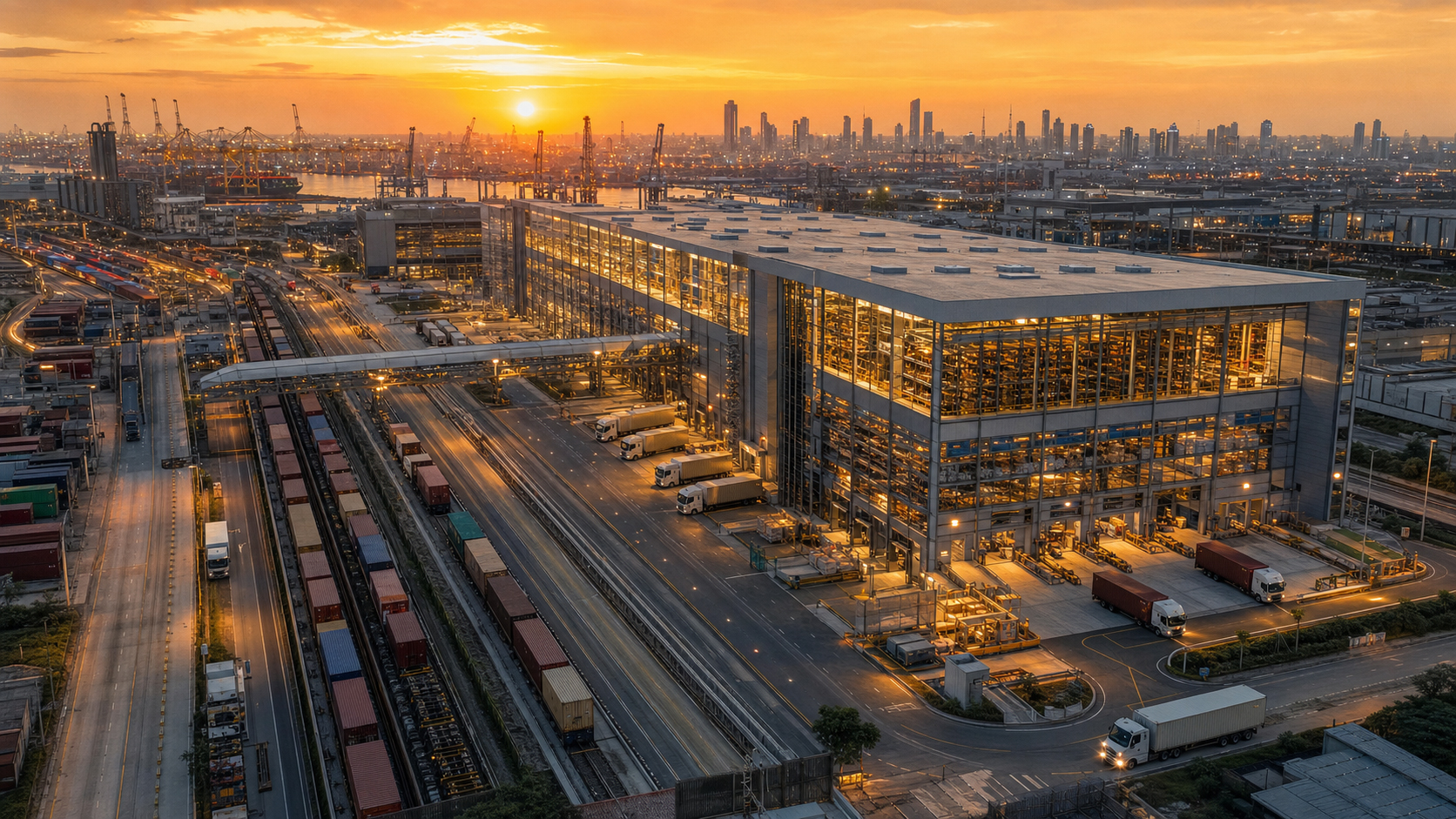
Mumbai, the logistics bottleneck: Why automated warehouses must save India's economy – Creative image on the topic, with AI: Xpert.Digital
India's economic regions and the race for modern warehouse logistics
High-tech warehouses instead of traffic chaos: The gigantic transformation in India's supply chains
From Pune to Chennai: These regions are now deciding India's economic future
India is rapidly positioning itself as the new "factory of the world." But while ambitious government programs are attracting billions in investment and global supply chains are rapidly realigning, the country's economic rise is threatened by a crucial bottleneck: its own warehousing logistics. Overburdened ports, outdated infrastructure, and skyrocketing land prices in industrial hotspots are forcing India to radically rethink its approach. To compete with the global economic elite, it is no longer enough to simply build new production facilities – goods must also be stored, handled, and transported efficiently. From the cutting-edge high-tech and automotive clusters in the north to the export-driven ports in the south, a quiet but massive revolution is underway. Vast freight corridors on the rails and the rapid automation of warehouses are intended to pave the way to the future. This in-depth analysis sheds light on the country's key economic regions, highlights where the expansion of logistics infrastructure is most urgently needed, and clarifies the gigantic opportunities that the emerging market for automated warehouse systems now offers.
When the world's factory suffocates in its own warehouses
India's economy is growing faster than its infrastructure can keep pace, and nowhere is this gap more evident than in warehouse logistics. While government programs like the Production Linked Incentive program are building new factories and global trade is shifting supply chains from China to South Asia, the country still struggles with fragmented, semi-automated warehouses, congested ports, and a rail network that is only now beginning to reach its full potential. It is precisely at this juncture between industrial ambition and logistical reality that India will be able to live up to its claim of becoming the next global manufacturing power.
India's economic landscape is not a single entity, but a patchwork of growth engines
India does not possess a single economic powerhouse, but rather several clearly defined clusters that differ significantly in their focus, maturity, and global interconnectedness. McKinsey analyses show that approximately 49 metropolitan clusters, encompassing 183 districts, will drive roughly three-quarters of the country's future economic growth, with value creation increasingly concentrated in a few high-performing regions. The west of the country, with Mumbai, Pune, Ahmedabad, and Surat, remains the economic engine, fueled by a mix of finance, automotive, textile, and chemical production, as well as its proximity to the country's major ports. The north is concentrated in the commuter belt around Delhi, encompassing the industrial cities of Gurugram, Manesar, Bhiwadi, Neemrana, and Noida, home to automotive manufacturing, electronics production, and increasingly, data centers and AI startups. The south, with Chennai, Bengaluru, Hyderabad and Coimbatore, has established itself as a center for automotive manufacturing, high-tech, biotechnology and global service centers, while the east, with Kolkata and the eastern Indian states, continues to function as a supplier of raw materials but is increasingly trying to connect with the western and southern growth centers through new port projects and industrial corridors.
These four economic regions differ fundamentally in their function for the overall economy. While the west and south are primarily export-oriented and strongly integrated into global supply chains, the north mainly serves the domestic consumer market around the capital region with its more than thirty million inhabitants. The east, despite its wealth of natural resources, remains disadvantaged in terms of infrastructure, which directly impacts its attractiveness to international investors. A look at the investment friendliness of the states vividly confirms this pattern: NITI Aayog's most recent "Investment Friendliness Index" from 2026 places Gujarat in first place with a score of 56.6, followed by Maharashtra with 53.7 and Tamil Nadu with 53.3 points, while Goa ranks fourth.
Twelve clusters bear the burden of industrial growth
A closer look at the industrial and warehousing logistics corridors reveals that the country's economic activity is concentrated in a manageable number of high-activity zones. According to current market analyses, thirteen key logistics and manufacturing corridors dominate the country, collectively accounting for between 70 and 80 percent of all Grade A activity in the industrial and warehousing sector. Since 2021, these corridors have concentrated around 75 percent of the country's supply and demand for modern warehouse space. Chennai alone accounts for three of these high-activity clusters, while Delhi-NCR, Pune, and Bengaluru each contribute two clusters, and Mumbai, Kolkata, Ahmedabad, and Hyderabad each have one. Bhiwandi, near Mumbai, remains by far the largest industrial and warehousing location in the entire country, with over 42 million square feet of Grade A warehouse capacity.
At the national level, the warehouse real estate market has accelerated dramatically in recent years. The latest report from CRE Matrix and CREDAI for the second quarter of calendar year 2026 shows demand for the first half of the year at 34.9 million square feet, compared to a new supply of 28.7 million square feet, representing an absorption-to-supply ratio of 1.2. The nationwide stock of Grade A and Grade A Plus warehouses thus reached 451.4 million square feet and is projected to grow to 480 million square feet by the end of the year. Of particular note is that Pune and the Mumbai Metropolitan Region together account for 43 percent of the nationwide demand, while Pune and Chennai together represent 40 percent of the new supply. By comparison, in 2023, the total stock of Grade A and Grade B warehouses in the eight largest markets was approximately 344 million square feet, highlighting the tremendous growth momentum of the past three years.
Mumbai and Bhiwandi as a logistical bottleneck for the West
The region surrounding Mumbai, particularly the suburb of Bhiwandi, remains the backbone of India's warehouse logistics. The current Grade A warehouse stock in the Mumbai Metropolitan Region stands at 82.1 million square feet, with Bhiwandi alone accounting for 85 percent of regional demand, followed by Panvel at 5 percent, and Navi Mumbai and Kalyan at approximately 3 percent each. The vacancy rate is a low 7 percent, while rents have risen by 10.6 percent in a single quarter, making the region one of the most dynamic leasing markets in the country. This close interplay of high demand and limited space makes Bhiwandi the most pressing candidate for the expansion of automated high-bay warehouses, as horizontal expansion is hardly economically viable given land prices and urban densification. Automated storage and retrieval systems that expand vertically are not just one option among many, but the only realistic answer to the structural space shortage.
This pressure is exacerbated by the immediate proximity to the Jawaharlal Nehru Port, India's largest container port, which experienced a severe congestion crisis in the spring of 2026. Reports from June 2026 document a 25 percent stagnation rate at west coast ports, with container dwell times increasing from the usual three days to up to seven days and more than 30,000 containers becoming stuck at the JNPA and Kandla terminals. This episode starkly revealed how vulnerable the western Indian supply chain remains to external shocks as long as port capacity, rail links, and buffer storage areas are not developed in tandem. A functioning intermodal system with sufficient buffer storage could have significantly mitigated the impact of such a disruption.
Delhi-NCR and the surrounding area as a sales market of national importance
The Delhi-NCR capital region occupies a unique position, functioning less as an export hub and more as a massive domestic consumer market. With a current Grade A inventory of 111.6 million square feet, the region is the country's largest warehouse real estate market by area, boasting a vacancy rate of 7.3 percent and rents that have increased by 6.4 percent in the last two years. In the first half of 2026, Delhi-NCR recorded the highest leasing activity of all Indian markets at 5.9 million square feet, followed by Chennai at 4.1 million square feet. Together, these two regions accounted for more than 45 percent of all Grade A leases in the country. Notably, in Delhi-NCR, 93 percent of all transactions in the second quarter of 2026 exceeded 100,000 square feet, indicating a strong concentration of large-scale institutional tenants such as e-commerce companies and third-party logistics providers.
The industrial corridor along National Route 48 between Delhi and Mumbai, connecting cities such as Gurugram, Manesar, Bhiwadi, Bawal, and Neemrana, forms the country's largest automotive ecosystem and accounts for half of India's total car production. This concentration of industrial value creation along a single corridor generates an enormous demand for pallet-based storage solutions for spare parts, semi-finished products, and finished goods, which must circulate rapidly between suppliers and final assembly plants. This corridor requires not so much traditional high-bay warehouses, but rather highly automated pallet warehouses with short turnaround times and close integration with the road network, as the automotive industry's just-in-time manufacturing requires continuous, predictable material flows.
Pune and Bengaluru as the fastest growing logistics markets
While Mumbai and Delhi remain the established heavyweights, Pune has emerged as the true growth engine of Indian warehousing logistics over the past two years. In the first half of 2026, the city recorded the highest absorption rate of any Indian market at 8.5 million square feet, with an absorption-to-supply ratio of 1.4. Meanwhile, the current Grade A inventory has already reached 78.8 million square feet, and the vacancy rate has fallen to just 6 percent. Year-over-year from 2024, leasing activity in Pune has nearly doubled, from 8.6 to 16 million square feet, making it one of Asia's fastest-growing industrial and logistics hubs. This growth is driven by the convergence of the automotive supply industry, mechanical engineering, and a growing IT and electronics manufacturing sector, all of which rely on efficient, technologically advanced warehousing solutions.
Bengaluru, in turn, benefits from its role as a leading center for electronics manufacturing, global centers of excellence for international corporations, and a growing semiconductor industry. In the first quarter of 2026, Pune and Bengaluru together accounted for 46 percent of the nation's demand and 44 percent of new supply, with the manufacturing and automotive sectors accounting for a particularly high 74 percent of leases. However, both cities are increasingly suffering from topographical and infrastructural limitations, as suitable, easily accessible land becomes scarce. It is precisely within this tension between growing demand from the high-tech and automotive industries and limited horizontal availability that the greatest potential lies for automated high-bay racking systems, which can provide many times the storage capacity of conventional warehouses on a smaller footprint.
Your intralogistics experts

Consulting, planning and implementation of complete solutions for high-bay warehouses and automated storage systems - Image: Xpert.Digital
More information here:
India's logistics revolution: How freight corridors and automation are changing the market
Chennai as an axis between automobile production and maritime trade
Chennai, often called the Detroit of India, is home to major plants of international automakers such as Ford, Hyundai, and BMW, as well as numerous automotive component suppliers. The city's Grade A warehouse stock climbed to 64.9 million square feet in the first half of 2026, with 5.4 million square feet of new space added during that same period—a 38.5 percent increase over the previous year. The close integration of automotive manufacturing, port infrastructure via Chennai Port, and growing electronics production, driven in part by iPhone assembly in the Kanchipuram region, makes the city one of the country's most important export hubs. Recent data shows that Kanchipuram was among India's leading export districts in fiscal year 2026, just behind the oil refining center of Jamnagar in Gujarat.
For Chennai, the development of intermodal transport solutions is of particular urgency, as the region is slated to be one of the first five completed under the government's multimodal logistics park program. The planned logistics park covers 158 acres, the majority of which is already owned by the Chennai Port Trust, while the remaining area is being developed by the Tamil Nadu Industrial Development Corporation. Given the region's export orientation, the seamless integration of rail, road, and port is more critical here than in almost any other Indian economic region, as any delay in the flow of goods directly impacts the international competitiveness of the region's automotive and electronics exporters.
The freight rail corridors are fundamentally changing the map of goods transport
A structural turning point for the entire Indian logistics landscape is the completion of the two central rail freight corridors. The eastern corridor between Ludhiana and Sonnagar, spanning 1,337 kilometers, was fully operational by October 2023, while the western corridor between Jawaharlal Nehru Port and Dadri near Delhi, measuring 1,506 kilometers, was finally completed on March 31, 2026, after years of delays. Together, the two corridors form a 2,843-kilometer fully electrified double-track network, constructed with an investment of approximately 1.24 trillion Indian rupees, and is expected to increase daily freight train capacity to over 440 trains.
The economic importance of these corridors can hardly be overstated, as they reduce rail transport costs to around 1.96 rupees per tonne-kilometer compared to 3.78 rupees for road transport, while simultaneously reducing freight emissions by approximately 56 percent. Currently, however, around 71 percent of India's total freight volume is still handled by road, while only 17.5 percent is transported by rail – an extremely unbalanced ratio by international standards. Road transport dominates almost entirely, particularly in non-bulk freight, accounting for 90 percent of the total. With the full commissioning of the freight corridors, the real possibility of shifting large portions of this road traffic to rail now arises for the first time, provided that sufficiently efficient intermodal transshipment facilities and automated storage capacities are available at the hubs. Without this connecting infrastructure, the increased capacity of the rail network would remain largely untapped, as goods would have to be transferred back to trucks at the end of the rail line and temporarily stored in conventional, inefficient warehouses.
As the next step in the development, the 2026 Union Budget announced a further corridor between Dankuni in West Bengal and Surat in Gujarat, with a planned length of over 2,000 kilometers. This would, for the first time, connect the east and west of the country via a dedicated freight route. If this project is realized, it would provide the currently infrastructurally disadvantaged east of India with a direct connection to the prosperous economic centers of the west, potentially opening up new locations for automated warehousing logistics along the entire route.
Multi-modal logistics parks as the missing link
To fully utilize the newly created rail capacity, the Indian government has initiated a program to build 35 multimodal logistics parks across the country, designed to integrate road, rail, and, in some cases, waterways at key hubs. These parks are located in cities including Nagpur, Chennai, Bengaluru, Indore, Mumbai, Hyderabad, Coimbatore, Pune, Surat, and Delhi-NCR. According to the Ministry of Road Transport, five of these parks—Jogighopa, Chennai, Bengaluru, Nagpur, and Indore—are already under construction and are scheduled to become operational between fiscal years 2025 and 2027. These logistics parks are explicitly designed as sites for mechanized warehouses, specialized cold chain infrastructure, and automated handling systems, making them natural anchor points for the expansion of modern high-bay and pallet storage technology.
The Nagpur location deserves particular attention, as its central geographic position in the interior of the country makes it a natural distribution hub between India's four economic regions – similar to the role played by Kansas City or Memphis in the United States. However, this potential remains largely untapped, as the region is not traditionally one of the established industrial centers and therefore does not attract the critical mass of private investment in automated warehouse logistics that comparable locations in Mumbai or Pune have already achieved.
The market for automated storage and retrieval systems is poised for significant growth
The demand for automated storage and retrieval systems (ASRS) in India is still in a relatively early stage of development, but is growing at a remarkable pace. Market analyses estimate the value of the Indian ASRS market at US$273.7 million for 2025, with an expected increase to US$373.5 million as early as 2026. By 2035, the market is projected to grow to US$1.9 billion, representing an annual growth rate of nearly 20 percent. In terms of units, the installed volume is expected to increase eightfold, from around 1,000 systems in 2026 to 8,000 systems by 2035. These figures illustrate that while India still lags far behind the level of automation in Western or East Asian warehouse markets, the catch-up process has already begun with considerable momentum.
Practical examples of this trend include completed projects such as the 120-foot-high automated racking system, finished in February 2026, which logistics provider Godrej Enterprises built for a major pharmaceutical company. Such vertical, rack-based facilities enable scalable growth without requiring additional land and without the lengthy construction times of conventional warehouses. This makes them particularly attractive for pharmaceutical and food technology applications with stringent traceability and temperature control requirements. Given the soaring land prices in established logistics corridors around Mumbai, Delhi, and Bengaluru, such vertical solutions are likely to become the norm rather than the exception in the coming years.
Where expansion is most urgent and promising
A review of all available data suggests a clear prioritization. First priority is the Mumbai-Bhiwandi region, where the combination of extreme land scarcity, the largest existing inventory, immediate port proximity, and the recently demonstrated vulnerability to port congestion creates the most urgent need for automated high-bay warehouses and intermodal buffer capacity. Second priority is the Delhi-NCR corridor along National Route 48, where the density of automotive and electronics manufacturing creates a structural need for high-traffic, automated pallet warehouses, which should be closely integrated with the western freight corridor's terminus in Dadri. Third priority is the Pune-Chennai-Bengaluru corridor, where by far the highest growth rate, coupled with increasing land scarcity, promises the greatest marginal benefit from new automated storage capacity.
A fourth priority, equally relevant in the medium term, is the new East-West Corridor between Dankuni and Surat. Its realization could, for the first time, provide the hitherto underdeveloped east of India with a competitive connection to the western growth centers, thereby opening up a previously untapped market segment for investment in modern warehousing infrastructure. For all four priority regions, simply constructing additional warehouse space is insufficient. Crucially, this space must be technologically advanced, measured by its level of automation, its connection to rail and ports, and its ability to handle goods with minimal dwell time and personnel. The completion of the freight corridors has laid the groundwork for this. Whether India actually utilizes this potential will depend, over the next five years, on the speed with which private investors, state governments, and the national railway company close the last mile between rail, port, and automated warehouse.
📈🚀 From visibility to trust 👀🤝 Your scalable path with Xpert.Digital

From visibility to trust: Your scalable path with Xpert.Digital - Image: Xpert.Digital
In industrial B2B, sustainable business relationships rarely emerge overnight. They develop step by step – through visibility, professional relevance, recurring touchpoints, and growing trust. Xpert.Digital's 4-stage model addresses precisely this: It offers a structured path that begins with a manageable entry point and can evolve into deeper collaboration in business development if needed.
Instead of relying on loud marketing promises, this model puts the relationship at the forefront. Companies start with clearly defined, easily calculable measures and then decide, based on their own experience, how far they want to expand the collaboration. A key factor for this undisturbed trust-building process: The platform completely avoids annoying advertising ads, so the editorial focus remains solely on the companies' expertise.
More information here:
Your global marketing and business development partner
☑️ Our business language is English or German
☑️ NEW: Correspondence in your native language!

Konrad Wolfenstein
I and my team are happy to be available to you as your personal advisor.
You can contact me by filling out the contact form here [email protected]:or simply call me at +49 7348 4088 965. My email address is
I'm looking forward to our joint project.










