
Mumbai's 15-meter miracle: How 800 square meters replace an entire logistics center – 20,000 items, zero chaos
Xpert Pre-Release

Language selection 📢
Published on: February 27, 2026 / Updated on: February 27, 2026 – Author: Konrad Wolfenstein
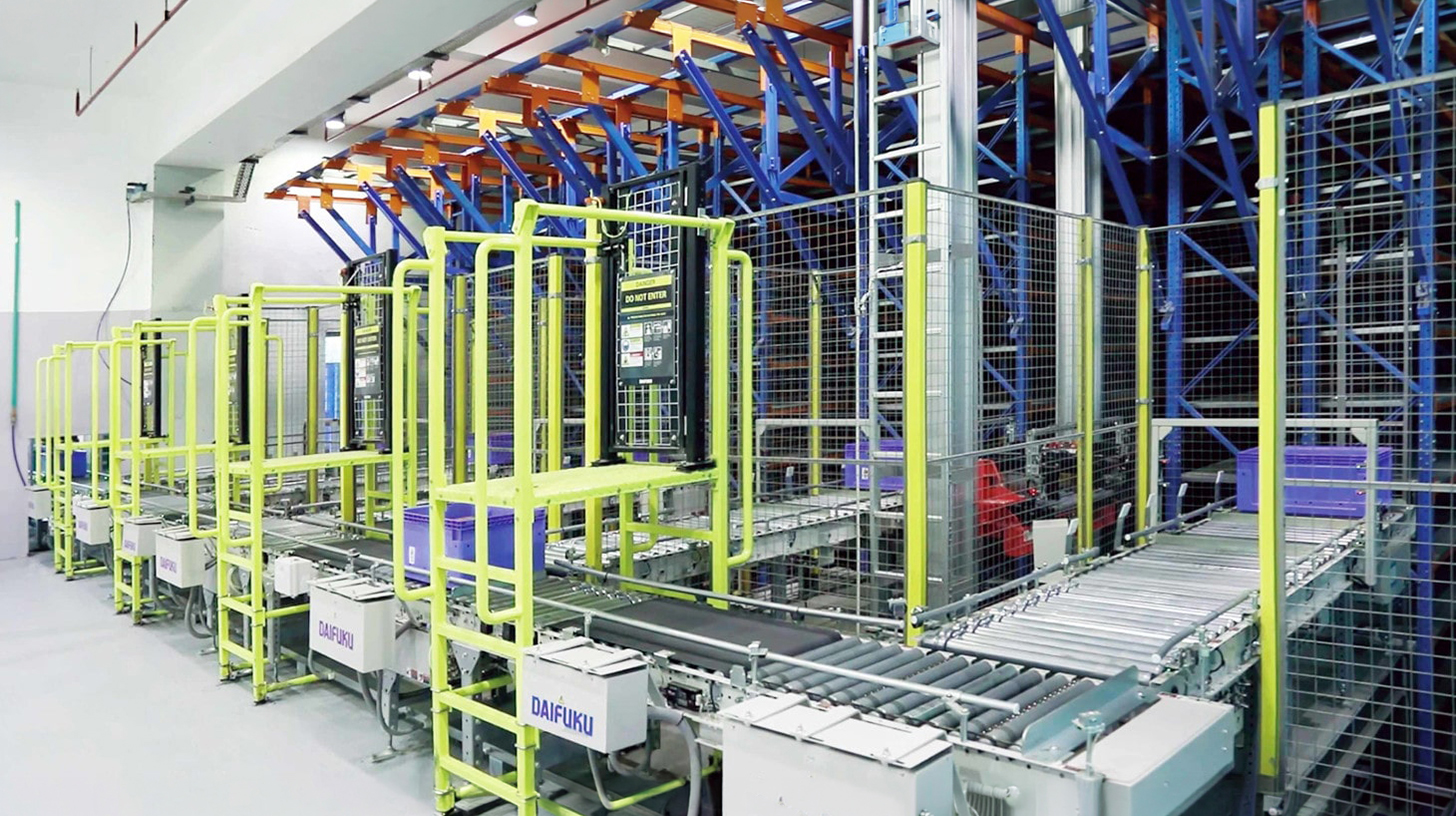
Mumbai's 15-meter miracle: How 800 square meters replace an entire logistics center – 20,000 items, zero chaos – Image: Daifuku
Lack of space in the warehouse? How the Indian medium-sized company Connectwell is outperforming the global competition with Daifuku
Japanese high-tech in a compact space – When 800 square meters achieve more than entire logistics centers: The Connectwell case
The Indian market for electromechanical components is growing rapidly. Its volume was estimated at US$6.75 billion in 2024, and forecasts predict it will rise to nearly US$10 billion by 2035. Amidst this dynamic environment is Connectwell Industries, based in Mumbai, founded in 1978 and now one of the subcontinent's leading manufacturers of terminal blocks, interface modules, and switched-mode power supplies. However, the company's rise was long hampered by a typical growth problem: its own warehouse couldn't keep pace with the speed of business development. The solution came from a Japanese automation giant, transforming an 800-square-meter warehouse into a highly efficient nerve center for the entire value chain. What at first glance appears to be a pragmatic technological decision is, upon closer inspection, an economic lesson in how investments in intralogistics can make the difference between stagnant production and scalable growth.
The fundamental problem: Complexity as a brake on growth
Connectwell operates in a market segment that places extreme demands on warehousing. The company maintains over 20,000 different storage units, ranging from tiny terminal blocks and complex interface modules to switched-mode power supplies for a wide variety of industrial applications. This enormous product diversity creates a level of warehouse complexity that is difficult to manage using conventional methods. Added to this are the specific requirements of a manufacturer that must simultaneously manage raw materials, semi-finished products, and finished goods ready for shipment. The shipping processes themselves were challenging because Connectwell not only supplies the Indian market but also exports its products to more than 80 countries.
The business consequences of this complexity were clear: order picking error rates increased, lead times lengthened, and personnel costs for manual warehouse processes strained margins. For a company with an estimated annual turnover of between 100 and 500 crore Indian Rupees, insufficient warehouse efficiency represented a strategic risk because it directly limited the ability to respond quickly to market demands and capitalize on growth opportunities.
The strategic partner: Why Daifuku in particular?
The chosen automation partner was Daifuku, the world's largest supplier of material handling systems, headquartered in Osaka, Japan. Founded in 1937, the company generated sales of approximately US$4.78 billion in fiscal year 2024 and employs over 11,000 people in more than 25 countries. Daifuku is not just an equipment supplier, but the global market leader in automated storage and retrieval systems, sorting systems, conveyor technology, and automated guided vehicles (AGVs). In the first half of 2025, the company achieved a new record with an operating profit of 51.1 billion yen and raised its annual forecast.
For Connectwell, choosing Daifuku was not simply a matter of supplier selection, but a strategic positioning. In a market where European and Chinese competitors are increasingly relying on automated manufacturing and logistics, Connectwell needed a partner who not only provides the technology but also possesses the expertise to integrate highly complex storage systems into an existing production environment. Daifuku brings experience from over 6,000 completed material flow projects worldwide, providing a crucial reference for implementation in a demanding manufacturing environment.
The technical solution: Vertical intelligence in the smallest possible space
Between 2017 and 2018, Daifuku implemented a mini-load automated storage and retrieval system at Connectwell, fundamentally transforming the existing 800-square-meter warehouse. The system consists of five 15-meter-high stacker cranes that fully utilize the vertical space. A total of 27,360 storage locations are available for raw materials, semi-finished products, and finished goods.
The architectural centerpiece of the solution is the innovative multi-story concept, which combines three functional levels on a comparatively small footprint. Raw materials are received and stored on the ground floor, and finished goods are prepared for shipment. The first floor is dedicated exclusively to providing ready-to-ship products to ensure fast and error-free delivery. The second floor focuses on order picking, assembling kits, and processing semi-finished products, which are seamlessly integrated back into the production cycle.
A key component of the system is the integration of WareNavi, Daifuku's proprietary warehouse management system. Developed based on over 6,000 material flow projects, this software offers real-time inventory management, progress monitoring, performance analysis, and customizable control parameters. WareNavi enables seamless integration with automated storage and retrieval systems, conveyor technology, sorting systems, and manual processes alike, thus creating end-to-end transparency across the entire material flow.
Quantifiable results: The economic balance sheet
The measurable effects of automation at Connectwell are impressive and demonstrate why such investments pay off even for medium-sized manufacturing companies. Storage capacity increased by 80 percent, while the footprint remained the same, because the system consistently utilizes vertical space. Throughput reaches over 600 containers per hour, meeting the demanding picking requirements of a company with tens of thousands of product variants. The error rate dropped dramatically thanks to the automated, precise allocation of containers to storage locations, and work efficiency improved significantly because manual searching and transport processes are largely eliminated.
The space requirement was significantly reduced compared to conventional storage methods. In a city like Mumbai, where commercial space is among the most expensive in India, this aspect has direct financial implications. Every square meter of storage space saved means either lower rent or the opportunity to use the freed-up space for production purposes. For Connectwell, the system also provided a scalable foundation for further growth without requiring proportionally more space or personnel as order volumes increase.
Connectwell's management, specifically CEO Sandeep Saheta, confirmed that customer service had improved dramatically after implementation and that the company was significantly better able to respond to market demands. This qualitative assessment aligns with the general experience that automated warehouse systems not only reduce internal costs but also increase delivery capability and, consequently, customer satisfaction.
The bigger picture: India's logistics revolution
Connectwell's investment is not an isolated case, but part of a broader wave of transformation in India's manufacturing and logistics landscape. The Indian warehouse automation market reached an estimated US$822 million in 2025 and is projected to grow to over US$2.8 billion by 2034, representing an average annual growth rate of approximately 14.75 percent. Other estimates are even more optimistic, forecasting annual growth of up to 23.5 percent.
Several structural factors are driving this development. First, the Indian e-commerce market is growing explosively, reaching a volume of US$129.72 billion in 2025, which is putting enormous pressure on logistics infrastructure. Second, the Indian government is pursuing an ambitious industrial policy with the National Logistics Policy and the Make in India initiative, which promotes automation investments through tax incentives and infrastructure programs. The 2025 budget included record capital expenditures of 11.2 million crore, intended, among other things, to strengthen multimodal logistics parks and warehouse infrastructure. Third, labor costs in India are rising continuously, while at the same time the shortage of skilled workers in warehouse logistics is increasing, making automated solutions increasingly attractive from a business perspective.
Electronics manufacturing in India is poised for a massive leap forward. Production value is projected to increase from US$204 billion in 2024 to over US$610 billion by 2030, representing an annual growth rate of more than 20 percent. The government's Production Linked Incentive Program has already attracted investments exceeding 1.28 crore and created more than 850,000 jobs. For companies like Connectwell operating within this ecosystem, state-of-the-art intralogistics is no longer an option, but a necessity for survival.

Expert partner in warehouse planning and construction
India's warehouse miracle: What German companies now need to learn
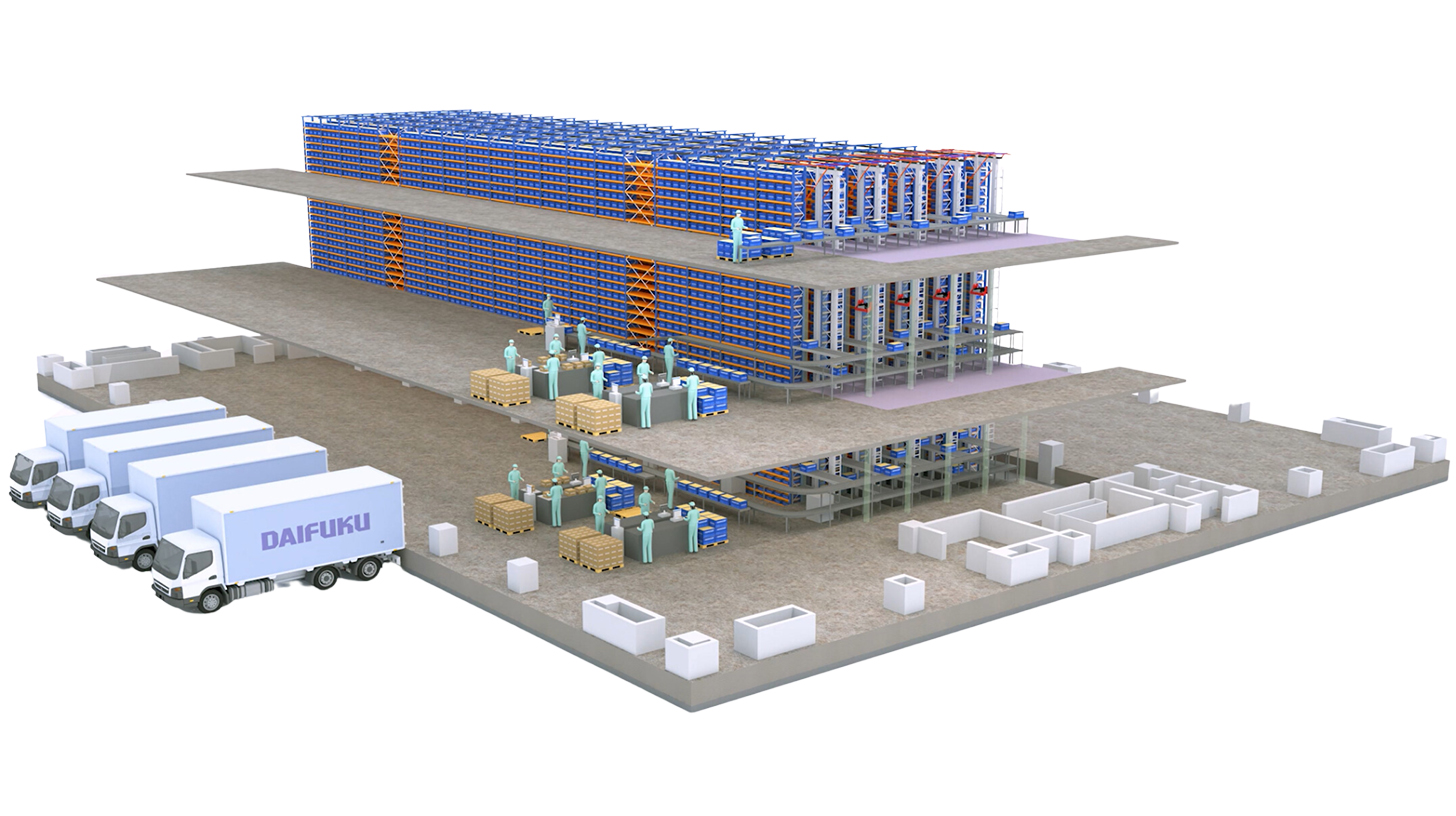
Japanese high-tech in a compact space – When 800 square meters achieve more than entire logistics centers: The Connectwell case – Image: Daifuku
The global market for mini-load systems: Growth with substance
The technology implemented by Connectwell is part of one of the fastest-growing segments of intralogistics. The global market for miniload storage and retrieval machines was estimated at around US$612 million in 2025 and is projected to grow to US$851 million by 2034. Other analyses see the market reaching US$549.8 million as early as 2024, with a projected doubling to over US$1 billion by 2031, representing an annual growth rate of ten percent.
The drivers of this growth are universal: rising storage costs, a shortage of skilled workers, increasing demands for delivery speed, and the growing complexity of product variety in manufacturing and retail. Modern mini-load systems achieve accuracy of over 99.9 percent, and throughput can reach up to 1,000 cycles per hour. The e-commerce and logistics sector dominates demand with a share of 48 percent, followed by manufacturing with 25 percent and the pharmaceutical industry with 14 percent.
Daifuku dominates this segment along with competitors like Swisslog and Kardex, with the Japanese company enjoying a structural advantage through its vertical integration of hardware and software (WareNavi). Daifuku's latest generation of mini-load storage and retrieval machines is 15 percent lighter than its predecessors and consumes significantly less energy thanks to more compact motors. The aluminum masts and polyurethane wheels ensure quiet operation, allowing for use even in close proximity to offices or on upper floors.
Return on Investment: What the numbers really mean
The economic evaluation of an automation investment like Connectwell's requires a differentiated analysis that goes beyond the pure purchase price. The average price of a miniload system in 2025 was approximately US$450,000 per unit. With five storage and retrieval machines plus racking infrastructure, conveyor technology, and software integration, the total investment is in the single-digit millions – a considerable sum for a medium-sized company.
In contrast, there are the quantifiable savings: The 80 percent increase in storage capacity on the same footprint eliminates the need to rent or build additional warehouse space in Mumbai. The increased work efficiency significantly reduces personnel costs in the warehouse. Error reduction lowers the costs associated with returns, reordering, and customer complaints. And the faster and more reliable delivery strengthens customer loyalty and opens up new business opportunities.
Industry studies show that comparable automation projects typically achieve an annual ROI of between 40 and 50 percent, with payback periods of two to three years. BCG analyses demonstrate that companies combining automation with a restructuring of their logistics network can even achieve cash ROIs exceeding 50 percent. For Connectwell, given the extreme real estate costs in Mumbai and the high complexity of its products, the payback period was likely even faster than the industry average.
Daifuku's India strategy: A growth market with potential
For Daifuku, the Connectwell project is more than just a single reference order. It's a building block in its strategic expansion on the Indian subcontinent. The company plans to increase its Indian revenue from a low single-digit percentage to a mid-single-digit percentage of total revenue by fiscal year 2027. To achieve this, Daifuku is investing in local sales capacity, partnerships with regional manufacturers, and expanding its service business.
Daifuku recently announced an investment of 227 crore rupees in a new automation plant in Hyderabad, underscoring its long-term commitment to the Indian market. This localization strategy, which Daifuku CEO Hiroshi Geshiro describes as local production for local consumption, also protects the company from the effects of geopolitical trade conflicts and tariff increases.
The Indian market for automated material handling systems is estimated to reach approximately US$1.47 billion in 2024 and is projected to grow to US$2.66 billion by 2029. The combination of government industrial policy programs, a booming e-commerce sector, and increasing demands from the manufacturing industry is creating an environment where automation investments are no longer a luxury but a business necessity.
What other manufacturers can learn from Connectwell
The Connectwell case illustrates an economic pattern that extends far beyond the Indian market for electromechanical components. The decision to implement an automated warehouse system was not the result of technological hype, but rather the logical consequence of a sober analysis of the company's own growth limits. Three key insights can be generalized.
First: Vertical space utilization is the most efficient response to rising real estate costs in urban industrial locations. In markets where commercial space is expensive and scarce, a 15-meter-high storage and retrieval machine is more economically rational than expanding the footprint. Second: Integrating warehouse management software and automation hardware from a single source reduces interface problems and enables seamless data utilization from goods receipt to shipping. WareNavi, as a unified software platform, provides the real-time transparency essential for the precise control of over 20,000 product variants. Third: Investing in warehouse automation is not merely an operational measure, but a strategic decision that determines the future competitiveness of the entire company.
Between efficiency and dependency: The downside of automation
A balanced assessment cannot ignore the risks. Dependence on a single system provider like Daifuku creates a concentration risk regarding maintenance, spare parts, and system updates. The high initial investment burdens the balance sheet and ties up capital that could be used productively elsewhere. Furthermore, operating a highly automated warehouse system requires specialized personnel, who are not readily available in India. Technology cycles in intralogistics are shortening, meaning that systems installed today will need to be modernized or replaced in ten to fifteen years.
For Connectwell, the advantages clearly outweigh the risks, as the company would not have been able to achieve its growth targets without automation. However, for other medium-sized businesses facing a similar decision, a careful cost-benefit analysis is recommended, taking into account not only the immediate savings but also long-term operating costs, flexibility in changing the product portfolio, and the availability of services.
A warehouse as a strategic weapon
The global warehouse automation market was valued at US$26.5 billion in 2024 and is projected to expand further at a compound annual growth rate (CAGR) of 15.9 percent through 2034. The Asia-Pacific region is driving this growth particularly strongly, with a projected rate of 17.9 percent. In this context, Connectwell's story is not a niche topic for warehouse technology specialists, but rather an exemplary case of one of the key economic transformations of our time: the shift of competitive advantage from pure product quality to operational excellence across the entire supply chain.
Connectwell has transformed its Mumbai warehouse space from a bottleneck into a strategic advantage through a targeted investment in Japanese automation technology. The 80 percent increase in capacity, the throughput of over 600 containers per hour, and the near-error-free order picking are not abstract metrics, but the tangible foundation that enables an Indian mid-sized company with over 20,000 product variants to competitively supply more than 80 countries. In a world where the lines between manufacturing and logistics are increasingly blurred, this is a strong position.

Xpert.Plus Warehouse Optimization - High-bay warehouses and pallet warehouses: Consulting and planning
Your global marketing and business development partner
☑️ Our business language is English or German
☑️ NEW: Correspondence in your native language!

Konrad Wolfenstein
I and my team are happy to be available to you as your personal advisor.
You can contact me by filling out the contact form here or simply call me at +49 7348 4088 965. My email address is: [email protected]
I'm looking forward to our joint project.
☑️ SME support in strategy, consulting, planning and implementation
☑️ Creation or realignment of the digital strategy and digitization
☑️ Expansion and optimization of international sales processes
☑️ Global & Digital B2B trading platforms
☑️ Pioneer Business Development / Marketing / PR / Trade Fairs
Our global industry and economic expertise in business development, sales and marketing

Our global industry and economic expertise in business development, sales and marketing - Image: Xpert.Digital
Industry focus areas: B2B, digitalization (from AI to XR), mechanical engineering, logistics, renewable energies and industry
More information here:
A thematic hub offering insights and expertise:
- Knowledge platform covering global and regional economies, innovation and industry-specific trends
- A collection of analyses, insights, and background information from our key areas of focus
- A place for expertise and information on current developments in business and technology
- A hub for companies seeking information on markets, digitalization, and industry innovations










