
Deceptive record: India's DAP stockpiles – Why India's fertilizer strategy hangs by a thread
Xpert Pre-Release

Available in 27 languages 📢
Prefer Xpert.Digital on GoogleⓘPublished on: May 28, 2026 / Updated on: May 28, 2026 – Author: Konrad Wolfenstein
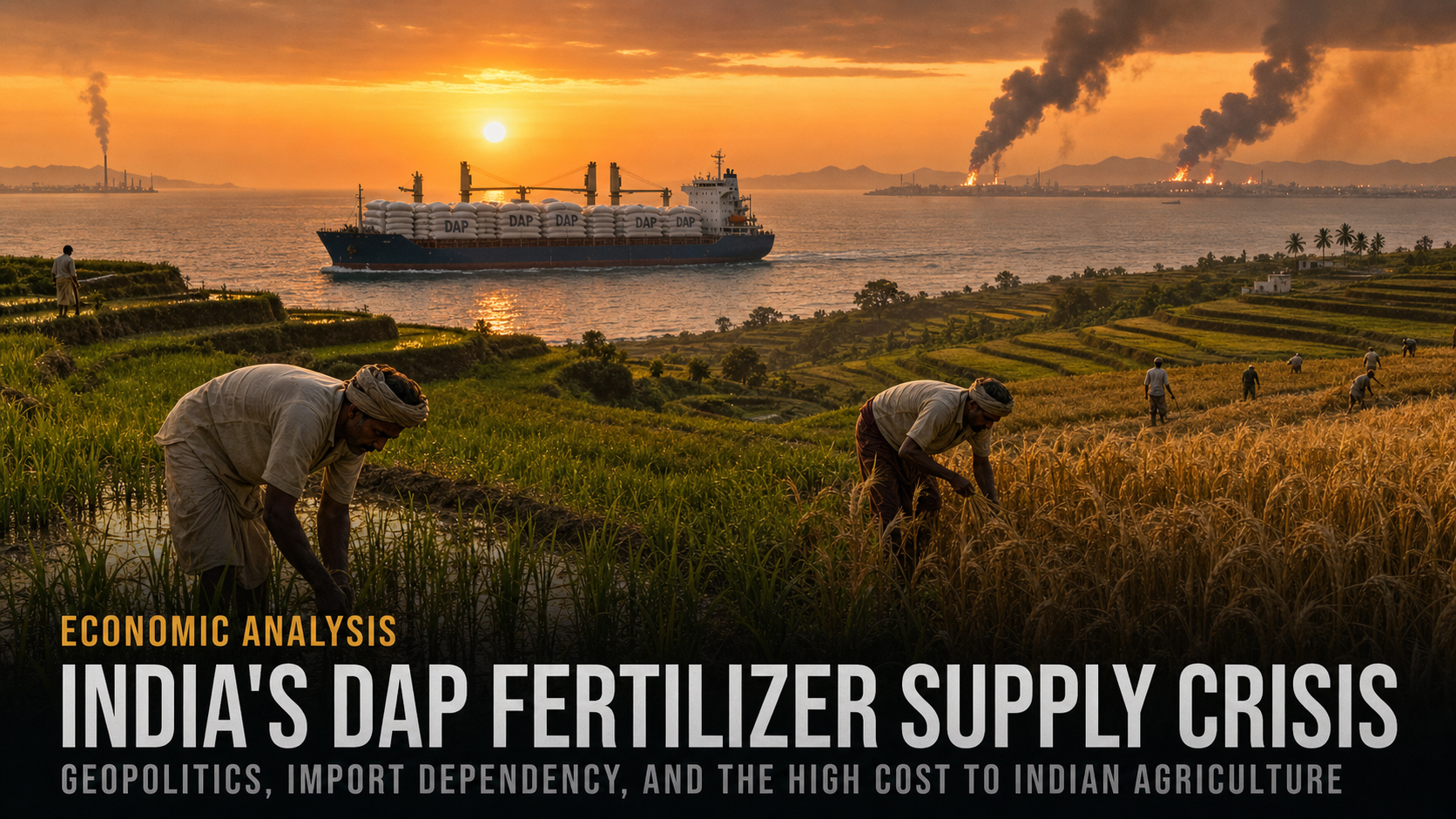
Deceptive record: India's DAP stockpiles – Why India's fertilizer strategy hangs by a thread – Image: Xoert, Digital
Strait of Hormuz closed: Why this is becoming a matter of survival for India's farmers
Fertilizer as a global weapon: The invisible crisis behind India's April figures
Geopolitics meets global food security: The explosive fertilizer dilemma of the superpower India
India's agriculture is at a critical turning point. At first glance, national stockpiles of the vital DAP fertilizer appear to be showing a slight recovery in spring 2026, while domestic production is soaring to record levels. But appearances are deceiving: a blatant dependence on imported raw materials, exploding global market prices, and the geopolitical escalation surrounding the Strait of Hormuz are severely destabilizing the fragile supply system. While the government in New Delhi attempts to artificially stabilize fertilizer prices for millions of farmers through unprecedented subsidies and strategic bulk purchases, a structural deficit with global implications is being revealed. The stakes are far higher than just agricultural balance sheets – they concern the food security of 1.4 billion people and how long India's agricultural policy can withstand global pressure.
Deceptive stabilization: What's behind the April figures
In April 2026, India's diammonium phosphate (DAP) stockpiles saw a slight increase. According to data from the Fertilizers Association of India (FAI), stockpiles rose to just under 1.93 million tons by early May, after combined imports and domestic production marginally exceeded domestic demand. While this may sound reassuring, the figures mask structural imbalances that could put India's food security under long-term pressure.
The recovery appears even more modest when viewed from a historical perspective. Compared to the end of April last year, when stocks had fallen to around 1.60 million tons, the current figure certainly represents an improvement. However, the long-term average for this time of year, from 2022 to 2024, is still more than a million tons higher than the current stock. In other words, India is structurally carrying a significant stockpile deficit that cannot be resolved by short-term fluctuations but rather points to profound changes in the global fertilizer landscape.
Production dynamics: Domestic records, but on shaky ground
Domestic DAP production has developed surprisingly robustly so far this year. In April 2026, India produced 303,000 tons of DAP, only slightly less than in the same month of the previous year. For the period from January to April, domestic production reached 1.175 million tons, significantly exceeding the 933,000 tons of the first four months of 2025. At first glance, this is a positive trend, suggesting capacity expansions in the processing sector and government production incentives.
In January 2026, India set a historic monthly record for phosphate and potash fertilizer production. Production of P&K fertilizers, including DAP and NPK, reached 15.76 lakh metric tons, the highest monthly output ever recorded in the country. The government under Prime Minister Modi hailed this as a milestone on the path to agricultural self-sufficiency, in line with the Aatmanirbhar Bharat strategy. Production capacity in the P&K sector increased significantly from 159.54 lakh metric tons in 2014/15 to 211.22 lakh metric tons in 2024/25.
But lurking behind these figures is a dangerous dependency problem. DAP production is not a self-sufficient process: sulfuric acid and ammonia are essential intermediates for its manufacture. India imports both raw materials in significant quantities. Sulfur comes predominantly from the Persian Gulf, as does ammonia. These are precisely the supply routes that have been acutely threatened since the beginning of the US-Iranian conflict at the end of February 2026 and the de facto closure of the Strait of Hormuz. The production success of the first four months of the year therefore masks the fragility of the supply base that underlies any further production growth.
Import collapse: When global geopolitics meets Indian farmland
The most striking finding in the current market situation is the dramatic decline in DAP imports. In April 2026, India imported only 49,000 tons of DAP. This brought the total import volume for January to April to 298,000 tons, which is only 39 percent of the imports for the same period in 2025. This figure is an economic policy alarm bell: The country, which relies on finished imported goods for more than half of its DAP consumption and produces the rest from imported raw materials, is sourcing just 39 percent of the previous year's volume from abroad.
The reasons for this slump are multifaceted. Global DAP prices have risen sharply since the beginning of the year, driven by the Hormuz crisis. Jordan, one of India's main suppliers, signed an import contract in mid-2025 at US$781.50 per ton CFR – more than 50 percent above the previous price level of US$515 to US$525. Saudi Arabia's SABIC even reached US$810 per ton, bringing the historical highs of US$900 to US$1,000 per ton from 2022 back within reach. As of May 26, 2026, DAP was trading at US$785 per ton on international markets, representing a month-on-month change of 8.28 percent and an annual increase of 18.22 percent compared to the same period of the previous year.
Importers are thus facing a classic cost-uncertainty trap: On the one hand, they are under pressure from global market prices, which have risen rapidly since the outbreak of the conflict. On the other hand, there is a lack of clarity from the government regarding whether it will provide additional financial support beyond existing nutrient-based subsidies. In a market where government price caps and subsidies significantly influence business calculations, this uncertainty effectively amounts to a buying strike. Importers are holding back because they would incur substantial losses by entering into a purchase agreement at current global market prices below the fixed retail selling price. Industry reports quantified these losses for importers at a CFR price of US$632 per ton at approximately US$101 per ton, or about one-sixth of the total purchase price.
The Strait of Hormuz: A geopolitical bottleneck for global food security
On February 28, 2026, US and Israeli forces launched Operation Epic Fury against Iranian nuclear and military infrastructure. Iran responded with drone attacks on merchant ships in the Persian Gulf and effectively closed the Strait of Hormuz. Within days, tanker traffic through the narrow, 55-kilometer-wide strait had virtually ceased. Major shipping companies suspended their transits, and leading war risk insurers withdrew their coverage. Without insurance, commercial shipping through the strait is no longer economically or legally viable.
The economic dimension of this development can hardly be overestimated. According to the International Monetary Fund and the IFPRI, approximately 27 percent of global oil exports, 20 percent of global liquefied natural gas (LNG) shipments, and 20 to 30 percent of global fertilizer trade, including urea, ammonia, phosphates, and sulfur, flow through the Strait of Hormuz. Persian Gulf countries account for roughly 43 percent of global seaborne urea exports, approximately 44 percent of global sulfur trade, and more than a quarter of global ammonia exports. The key difference from the 2022 Russian-Ukrainian crisis is that this time the goods cannot be diverted: they are physically trapped behind this bottleneck.
Particularly consequential is the so-called sulfur spiral, which NDSU economists analyzed in detail in their March 2026 Agricultural Trade Monitor. Sulfur is considered a critical precursor to phosphate fertilizer production worldwide. China imports approximately four million metric tons of sulfur annually from the Persian Gulf, while Morocco's OCP Group, the world's largest phosphate exporter, sources around 3.7 million metric tons. If these supply chains break down, there is a risk not only of a direct supply shock for finished fertilizers but also of an indirect supply decline via the intermediate trade. Phosphate fertilizers will become scarcer and more expensive, even if the producers are located outside the immediate conflict region – because they lack the raw material sulfur.
Consortium strategy: Together against the price shock
Given this situation, the Indian fertilizer industry sought new procurement strategies. On May 7, 2026, the importer Indian Potash Limited (IPL) achieved a remarkable success in a joint tender, acting on the recommendation of the government: The consortium secured more than 1.3 million tons of DAP (dry ammonia). A few days later, on May 6, IPL published another tender for 521,000 tons of ammonia for deliveries between June and August to locations on the east and west coasts, issued on behalf of leading domestic fertilizer producers such as IFFCO, PPL, Indorama, CIL, GSFC, and FACT. These six companies together account for approximately 90 percent of India's annual offshore procurement.
The consortium tactic has strategic significance far beyond short-term volume gains. It signals to global suppliers that India, as a major buyer, is acting in concert and thus possesses a stronger negotiating position. At the same time, the model carries systemic risks: While coordinated purchases at the same time can yield price advantages for all major importers, they can also contribute to procyclical price spikes on the world market if other major buyers act similarly. In an already strained market, pooled demand could produce the opposite effect.
The government's recommendation for consortium purchasing also demonstrates that New Delhi has recognized that the existing system of fragmented individual purchases is reaching its limits in times of acute supply shortages. The political will for market coordination is evident, but the question of long-term institutional structures for more resilient procurement remains open.
Demand side: Growing declines as a double-edged signal
Demand for DAP from Indian farmers showed remarkable growth in the first months of 2026. In April 2026, domestic DAP sales reached 326,000 tons, exceeding the April figure of the previous year by 114,000 tons. Total sales since January amounted to 1.736 million tons, representing a 49 percent increase compared to the same period in 2025. This growth rate signals a significant recovery in farmer demand.
From a nuanced economic perspective, however, this demand trend sends a double-edged signal. On the one hand, it shows that the measures to ensure affordable prices are working: The government has capped retail prices for DAP at a maximum of 1,350 rupees per 50-kilogram sack and pays importers and producers substantial compensation through the nutrient subsidy system and additional packages. Domestic prices are thus largely decoupled from the exploding global market. On the other hand, this decoupling comes at a price: Government subsidy costs rise proportionally to world market prices, without the fiscal burden being passed on to farmers through higher market revenues.
The fact that prices of 1,700 to 1,800 rupees per sack have already been reported on black markets, significantly exceeding the official cap of 1,350 rupees, also points to local supply shortages that are not visible in the aggregated statistics. Regionally uneven distribution is a chronic problem in India's fertilizer logistics, exacerbated by the current import crisis.
🎯🎯🎯 Global Sourcing & Commodity Trading with integrated logistics

Raw materials, global procurement & trade - Image: Xpert.Digital
State-of-the-art cargo planes, optimized transport routes, and multimodal logistics chains are interchangeable—they can be bought, leased, or outsourced. What money can't buy are direct contacts with producers in Peruvian mines, reliable supply relationships in the CIS countries, and years of built-up trust in markets that are unfamiliar to outsiders. The decisive competitive advantage in global commodity trading lies not in transporting the good from A to B, but in knowing where the good comes from, who produces it, and how to gain access before others even know the market exists. Whoever owns the network sets the price. Everyone else pays it.
More information here:
Triple superphosphate alert: The underestimated second danger behind India's fertilizer crisis
TSP: An underestimated risk
Besides DAP, a second product deserves special attention: triple superphosphate (TSP). TSP stocks fell by 31,300 tonnes in April 2026 because no imports arrived to replace domestic sales. Estimated Indian TSP stocks stood at around 374,000 tonnes at the end of April. India only began importing TSP in June 2024 and has since relied almost exclusively on the Moroccan supplier OCP: By mid-2025, India had secured long-term offtake agreements for 1.5 million tonnes of DAP and 1 million tonnes of TSP from Morocco, with further supplementary deliveries of 300,000 tonnes of DAP and 200,000 tonnes of TSP in July 2025.
TSP is a direct phosphate fertilizer without nitrogen and supplements DAP where the soil is low in phosphate but deficient in nitrogen. The concentration of exports on a single source is problematic: Morocco's OCP, for its part, obtains around 3.7 million tons of sulfur annually from the Persian Gulf. If this raw material is unavailable, OCP supplies are also indirectly at risk – a secondary chain reaction that is rarely given sufficient consideration in short-term market reports.
Government subsidy architecture: Social buffers with fiscal costs
India's subsidy system for phosphate and potash fertilizers is complex and politically sensitive. The Nutrient Subsidy Scheme (NBS Scheme), introduced in 2010, sets fixed subsidy amounts per kilogram of nutrients for nitrogen, phosphorus, potassium, and sulfur. It covers 28 fertilizer categories, including DAP (Dual Agronutrient). Beyond these base rates, the government has repeatedly introduced special packages, such as an extra payment of 3,500 rupees per metric ton of DAP for domestic producers and comparable compensation payments to importers.
For the 2025/26 fiscal year, subsidies for urea alone amounted to the equivalent of approximately US$12.7 billion. The total burden of phosphate and potassium (P&K) subsidies represents one of the largest single items in the Indian agricultural budget. By shielding farmers from global price fluctuations, the government is essentially buying social stability in rural areas, which represent a significant share of the electorate. This political and economic calculation is understandable. At the same time, the artificial price suppression of DAP creates a structural bias in nutrient use: because DAP is relatively inexpensive, farmers tend to overuse phosphate, which negatively impacts soil quality and water availability in the long term.
Global Price Outlook and Market Structure: What Follows the Shock
In its analysis from May 2026, the World Bank quantified the full extent of the current price shock. The global fertilizer price index rose by more than 12 percent in the first quarter of 2026 compared to the previous quarter, reaching its highest level since October 2022 in April 2026. The main driver was the collapse in exports following the closure of the Hormuz reservoir. For the full year 2026, the World Bank expects the fertilizer price index to rise by more than 30 percent, driven by higher input costs, particularly for nitrogen- and phosphate-based fertilizers.
According to World Bank projections, DAP prices are expected to rise by almost six percent in 2026 before new production supply provides some relief in 2027. Urea faces an even more dramatic price increase of almost 60 percent in 2026. The DAP price rose by more than ten percent in April 2026 alone, driven by dwindling supply and sharply increased sulfur costs, which have doubled since January 2026. China, which supplied around 2.29 million tons of DAP to India in 2023/24, has not yet made any deliveries this year and is maintaining its export restrictions, further exacerbating supply-side pressures.
This price situation differs structurally from the fertilizer crisis of 2022. Back then, grain prices rose sharply in parallel with fertilizer prices, which at least partially relieved the burden on farmers. This compensation is lacking in the current crisis: The Persian Gulf is not a major grain-growing region, so a shortfall in fertilizer supply is not offset by higher grain revenues. Farmers are facing shrinking margins and may be tempted to switch to crops with lower fertilizer requirements or reduce fertilization intensity, which leads to lower yields and ultimately higher consumer prices.
Supply situation in Kharif 2026: Sufficient, but vulnerable
Despite all structural deficiencies, the Indian government reports a comfortable supply situation for the start of the 2026 Kharif season. As of March 23, 2026, DAP reserves stood at 21.80 lakh metric tons, well above seasonal demand. Between April 1 and April 26, DAP was available at 22.35 lakh metric tons, compared to a seasonal demand of 5.90 lakh metric tons. For the entire 2026 Kharif season, the government estimates the total fertilizer requirement at 390.54 lakh metric tons, of which approximately 190 lakh metric tons – nearly 49 percent – are already available as initial stocks.
To ensure long-term supply, the government launched a global import tender for urea early on and secured contracts for 1.35 million tons by mid-February 2026, with approximately 90 percent of these deliveries expected before the end of March. Import tenders are also underway for non-urea fertilizers, specifically 12 lb. tons of DAP, 4 lb. tons of TSP, and 3 lb. tons of ammonium sulfate. In addition, special market surveillance measures are in place in 652 counties to prevent stockpiling and price distortions.
The short-term balance is therefore less dramatic than the raw import figures suggest. The real risk lies in the medium term: If the Hormuz crisis persists and India does not establish alternative supply structures for sulfur and ammonia, the moment will approach when increased domestic production will have to be reduced again due to a lack of raw materials, and rising global market prices will overwhelm government budget buffers.
Structural dependency: The real dilemma of Indian fertilizer policy
India's vulnerability to global fertilizer price shocks is not an acute misfortune, but rather the result of decades of structural decisions. The country produces approximately 15 million tons of phosphate fertilizers annually, but consumes around 25 million tons, resulting in an import gap of ten million tons. Domestic DAP production is around four million tons, while demand is considerably higher. For domestic production, phosphoric acid, sulfuric acid, phosphate rock, and ammonia are imported in substantial quantities.
Depending on the perspective, the import quota thus ranges between 50 and 100 percent: More than half of the DAP consumed is imported as a finished product, the remainder comes from imported raw materials processed domestically. From a purely economic standpoint, this dependency is one of the biggest weaknesses in the supply chain that underpins India's food security for 1.4 billion people. In normal market conditions, these structural risks are masked by sufficient buffers and favorable prices. In a rare but highly intense shock event like the closure of the Hormuz River, they become glaringly apparent.
Long-term solutions being discussed by experts include building up strategic reserves of sulfur and ammonia, investing in phosphate mines in third countries—a path China has pursued with considerable success—diversifying sources of finished fertilizers, and incentivizing the transitional use of alternative nutrients such as single-nutrient superphosphate, which comes from a different raw material pathway. Furthermore, agricultural experts caution against continuing subsidized, low-cost access to DAP indefinitely, as it encourages inefficient land use and slows down the necessary transformation towards balanced, soil-conserving farming practices.
Geopolitical realignment: India between old suppliers and new dependencies
The crisis has fundamentally restructured India's sources of DAP and phosphate intermediates. In the 2023/24 season, India imported 2.29 million tons of DAP from China alone. In 2024/25, this figure plummeted to 840,000 tons, and so far, there have been no Chinese deliveries in 2026. Saudi Arabia, Morocco, Jordan, and Russia have taken China's place, with Saudi Arabia and Morocco now being the dominant suppliers.
India has signed long-term supply contracts with Morocco's OCP Group for 1.5 million tons of DAP and 1 million tons of TSP for 2025. Saudi Arabia supplies both DAP and NPS fertilizers. Russia and Morocco continue to fulfill their Indian obligations via alternative routes, primarily through the Cape of Good Hope. This diversion significantly increases transit times and logistics costs, but maintains supplies.
But even this diversification has systemic limits. As explained, Morocco's production capacity is itself dependent on sulfur from the Persian Gulf. Saudi Arabia's shipping routes pass through the Strait of Hormuz. On closer inspection, the apparent diversification of supply chains reveals a complex interdependence, in which the real vulnerability lies one level deeper in the raw material inputs, not in the immediate trading partners. India has diversified the visible nodes in the network, but the underlying network topologies remain dangerously concentrated.
Economic conclusions: Structural reform instead of reactive crisis management
The current data on India's DAP stockpiles, production output, and import trends in April 2026 cannot be interpreted as an isolated snapshot, but rather as a symptom of a systemic mismatch between national supply strategies and global dependency structures. The slight recovery in stockpiles to just under 1.93 million tons at the beginning of May 2026 is real, but not sustainable as long as raw material sourcing continues through the same vulnerable corridor.
The government's strategic approach—early purchases, consortium tenders, price caps, geographic diversification, and state production incentives—is pragmatic and showing discernible results. However, it is insufficient to resolve the structural dependency. India's DAP dilemma is ultimately a lesson in the limitations of reactive resource policy in an era of multipolar geopolitical tensions. Only when India secures its own phosphate reserves, builds up a strategic sulfur stockpile, and decouples domestic fertilizer production from imported commodity monopolists will it be able to place the food supply for 1.4 billion people on a sustainable foundation. Until then, any recovery in stockpiles remains what it was in the April 2026 figures: a temporarily reassuring signal amidst persistent structural uncertainty.
The picture of India's DAP stockpiles in April 2026 can be summarized as follows: A country that has secured its short-term fertilizer needs through skillful state management is simultaneously facing fundamental questions about long-term supply resilience. The Strait of Hormuz has acted as a wake-up call this time – whether it will also lead to structural consequences will be the crucial agricultural policy question of the coming years.
Your contact for raw materials ⛏️ Global sourcing 🚢🌐 & trading 📦

Dmitry Kovalenko
I would be happy to serve as your personal advisor.
Dmitry Kovalenko
Tel: +49 7348 4088 961
Your contact for raw materials ⛏️ Global sourcing 🚢🌐 & trading 📦

Konrad Wolfenstein
I would be happy to serve as your personal advisor.
Konrad Wolfenstein
Email: [email protected]
Our global industry and economic expertise in business development, sales and marketing

Our global industry and economic expertise in business development, sales and marketing - Image: Xpert.Digital
Industry focus areas: B2B, digitalization (from AI to XR), mechanical engineering, logistics, renewable energies and industry
More information here:
A thematic hub offering insights and expertise:
- Knowledge platform covering global and regional economies, innovation and industry-specific trends
- A collection of analyses, insights, and background information from our key areas of focus
- A place for expertise and information on current developments in business and technology
- A hub for companies seeking information on markets, digitalization, and industry innovations





