
Kyiv's asymmetric economic warfare: Russia's "Amazon" is burning – How Ukraine wants to cripple Putin's economy
Xpert Pre-Release

Available in 27 languages 📢
Prefer Xpert.Digital on GoogleⓘPublished on: August 17, 2026 / Updated on: August 17, 2026 – Author: Konrad Wolfenstein
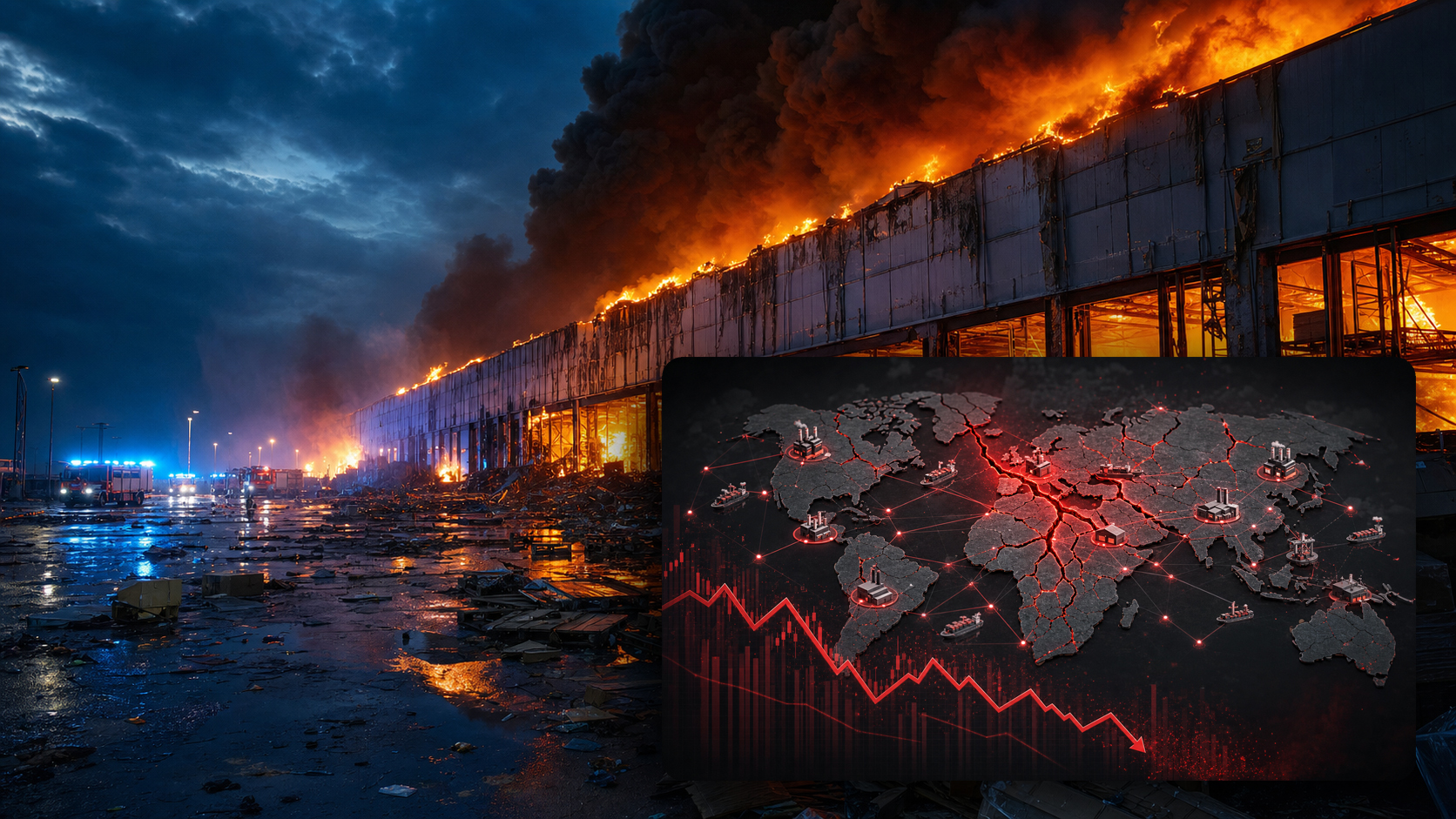
Kyiv's asymmetric economic warfare: The "Amazon of Russia" is burning – How Ukraine wants to cripple Putin's economy – Image: Xpert.Digital
Drones on Wildberries: Will this new tactic trigger the collapse in Russia?
Billions in damages and empty shelves: The war reaches everyday Russian life
A time bomb for 400,000 traders: Why the attacks on Wildberries are so dangerous
Since mid-July 2026, Ukraine has been pursuing a completely new, asymmetric strategy in its war against Russia: Instead of focusing on purely military targets, it is increasingly targeting civilian, but systemically important, trade infrastructure. The focus of the massive drone attacks is "Wildberries," by far the country's largest online marketplace. With billions of dollars in physical damage and the value of destroyed goods far exceeding that, this campaign is currently triggering unprecedented shockwaves. But behind the burning warehouses lies far more than a logistical problem: The targeted strike against the "Amazon of Russia" threatens the livelihoods of hundreds of thousands of small retailers, fuels the already critical inflation, and puts massive pressure on the Russian central bank and the credit system. Is this targeted economic warfare the final straw for the fragile Russian war economy, or is the system under Vladimir Putin once again demonstrating its remarkable resilience? An in-depth analysis of the new economic front line.
Economic warfare in the camp: The Wildberries attacks and Russia's vulnerability
Destroyed warehouses: When cardboard boxes become collateral damage
Since mid-July 2026, Ukraine has been pursuing a new form of warfare, one that targets not tank columns or military bases, but the civilian commercial infrastructure of its adversary. At the center of this is Wildberries, Russia's largest online marketplace and, with a share of approximately five percent of total Russian retail sales, a systemically important player in the consumer economy. Within a few weeks, around twenty of the company's logistics centers were hit by drones, damaging or completely destroying at least one-fifth of its total warehouse capacity. Material damage is estimated at two to three billion euros, while the value of goods destroyed at third-party vendors is estimated at up to 28 billion euros. However, these figures alone tell only part of the story. The crucial question is whether and how a targeted attack on warehouses is actually capable of structurally crippling an economy that has proven remarkably resilient to Western sanctions for over four years.
The series of attacks marks a shift in Ukraine's strategy. Instead of exclusively targeting military objectives such as oil refineries, ammunition depots, or air defense installations, the focus has now shifted to a company that, according to Ukrainian sources, serves a dual purpose. On the one hand, Wildberries allegedly uses its platform to supply the Russian army with militarily usable goods such as drone components, navigation devices, fiber optic cables for guided combat drones, and flak jackets. On the other hand, the corporation is deeply embedded in the Russian financial and credit system, making it a lever for exerting economic pressure on banks, the state budget, and ultimately the Kremlin itself. The selection of this target is therefore less a random occurrence than a calculated escalation in a war that is increasingly being decided on economic grounds rather than solely on the battlefield.
From burning warehouse to balance sheet time bomb
The immediate physical damage is only the starting point of a far more complex chain reaction. Wildberries itself reported liabilities of more than €13 billion at the end of 2025, making the company one of Russia's largest borrowers and closely linking it to major Russian state-owned banks. If a significant portion of its inventory is lost to fire, not only will the company's own liquidity deteriorate, but a domino effect will be triggered among the more than 400,000 merchants who sell through the platform. Many of these small and medium-sized enterprises have financed their inventory with borrowed capital. If the goods burn, the expected revenue, which was intended to cover loans, rent, wages, and tax debts, will also disappear. The liabilities themselves, however, remain. Economists studying the Russian economy therefore consider a wave of bankruptcies among the affected small merchants a realistic scenario, especially since Wildberries has contractually classified drone attacks as force majeure, thus excluding any obligation to compensate sellers.
This creates a transmission mechanism that complements traditional sanctions but functions fundamentally differently. While Western financial sanctions primarily target access to capital, technology, and international payment systems, physical attacks on storage infrastructure directly impact the real economy and the balance sheets of thousands of small actors simultaneously. It is a form of economic warfare that is not mediated through regulatory authorities and banking supervision, but directly destroys physical assets and can thereby trigger a crisis of confidence in the credit system that spreads through bank balance sheets.
When empty shelves drive up prices
Besides the impact on the balance sheet, the attacks are hitting the Russian economy in a second, politically sensitive area: inflation. In many Russian regions, especially outside the major cities, Wildberries plays a central role as a distribution channel for consumer goods because brick-and-mortar retail has become less common. When storage capacity disappears, the supply of goods dwindles in the short term, while demand remains constant. This classic supply shortage creates price pressure, which is compounded by the already existing inflationary forces of the Russian war economy, such as rising wages in the defense sector, a chronic labor shortage, and a weak ruble.
So far, this effect is not yet clearly evident in official inflation statistics. Annual inflation was recently around six percent, even slightly lower than in previous months. However, this snapshot does not fundamentally contradict the hypothesis of a Wildberries effect, as the systematic attack campaign only began in mid-July, while official price statistics naturally react with a delay of several weeks to months. From an economic perspective, it is plausible that a price surge due to destroyed inventories and disrupted supply chains will only be reflected in consumer price indices in the coming months, particularly in regions with low retail density where Wildberries has a particularly dominant market position.
For the Russian central bank, this risk presents an uncomfortable dilemma. Over the past few months, the central bank has gradually lowered its key interest rate from a peak of 21 percent to its most recent level of 14 percent in order to support the weakening economy without reigniting the painstakingly contained inflation. Should the warehouse fires trigger a new surge in inflation, the central bank governor would likely be forced to slow down or even suspend further interest rate cuts. Since high real interest rates are already stifling investment, eroding corporate profits, and making lending more expensive, a renewed tightening of monetary policy would further restrict the Kremlin's room for maneuver in economic policy, without necessarily leading to an abrupt systemic collapse.
Between fear of collapse and routine wartime economics
To realistically assess the impact of the Wildberries attacks, it is worth examining the overall economic situation in Russia in the summer of 2026. After two boom years with growth rates exceeding four percent, fueled by a massive expansion of arms production and government demand, the Russian economy contracted nominally in the first quarter of 2026. The budget deficit had already exceeded the planned limit for the entire year in the first three months, while oil and gas revenues plummeted by around 45 percent compared to the previous year. The liquid assets of the state wealth fund, once a key Kremlin safety net, shrank from 6.5 percent of GDP at the start of the war to just 1.8 percent.
At the same time, it is becoming clear how resilient the system has been so far. Neither a catastrophic sovereign default nor mass social unrest has occurred, and the International Monetary Fund still expects moderate growth of around one percent for 2026, which is formally above the forecasts for Germany, France, and Italy. However, this resilience is based almost entirely on a highly intensive, state-controlled war economy that is increasingly reaching its own structural limits because manufactured capital goods are being consumed at the front instead of building civilian growth capacities. Economists from Kiel and Vienna agree that the situation is one in which reserves are largely depleted, while dependence on China, the only remaining major customer and technology supplier, is continuously growing.
In this fragile overall picture, the Wildberries attacks act as an additional stress factor, impacting an already weakened system at specific points. They are not an independent trigger for a collapse, but they exacerbate existing vulnerabilities in the credit and consumer sectors at a time when the government has hardly any fiscal buffers left to cushion losses.
Hub for Security and Defense - Advice and Information

Hub for Security and Defense - Image: Xpert.Digital
The Security and Defence Hub offers expert advice and up-to-date information to effectively support companies and organizations in strengthening their role in European security and defence policy. Working closely with the SME Connect Defence Working Group, it particularly promotes small and medium-sized enterprises (SMEs) that wish to further develop their innovative capacity and competitiveness in the defence sector. As a central point of contact, the Hub thus creates a crucial bridge between SMEs and European defence strategy.
Related to this:
A systemically important target? Economic warfare against logistics giants: What attacks on Wildberries really achieve
What makes a warehouse attack effective
The central strategic question is under what conditions attacks on civilian logistics infrastructure actually have a noticeable economic impact and at what level of destruction the first measurable effects can be expected. From an economic perspective, several criteria can be identified that determine the effectiveness or ineffectiveness of such a campaign.
First, the market concentration of the targeted player is crucial. Wildberries accounts for an estimated quarter to a third of the total Russian online retail volume and generates roughly five percent of the country's total retail sales. An attack on such a dominant player has systemic leverage because there are hardly any comparable alternative capacities among competitors like Ozon or Yandex Market that could step in at short notice. If the market share were smaller or the sector more fragmented, the failure of individual warehouses would simply be compensated for by competitors without any economically significant effect.
Secondly, the proportion of actually destroyed storage capacity is crucial. Various sources and satellite image analyses now agree that approximately one-fifth of the total storage area is damaged or completely out of service. Analyses of supply chain shocks in other contexts indicate that a capacity loss of around ten to fifteen percent leads to the first noticeable shortages and price reactions, while a loss of approximately twenty to twenty-five percent is likely to result in regional supply gaps and significant delivery delays. The current destruction rate at Wildberries is therefore already in the range where noticeable disruptions are to be expected, even if these are not yet fully reflected in aggregated national inflation data because large cities with alternative distribution channels initially mitigate the effect.
Thirdly, the geographical distribution of the targets plays a role. Ukraine deliberately targeted not only locations in the immediate border region, but also warehouses deep in the Russian hinterland, from Volgograd across the Urals to the St. Petersburg region. This distribution prevents the disruption from being compensated for by a mere regional redistribution of goods flows and instead necessitates a nationwide adjustment of logistics networks, which significantly increases the costs and complexity of countermeasures.
Fourth, the time factor is significant. Individual attacks can be relatively easily compensated for by a robust logistics network, for example by rerouting goods flows or using alternative warehouses. However, a continuous campaign lasting weeks and months with recurring hits on ever-changing locations prevents the rebuilding of capacity and forces the company into a permanent reactive mode, tying up investments in security, replacement buildings, and insurance contingency plans instead of in growth and efficiency.
Fifth, the target company's financial vulnerability must be considered. A highly indebted corporation like Wildberries, with liabilities exceeding €13 billion, is more sensitive to sudden asset losses than a company with solid capital buffers, because banks and creditors become more restrictive more quickly as the risk of default increases, leading to higher refinancing costs. Furthermore, the close ties to Russian state-owned banks mean that a crisis at the corporation would not remain isolated but could spread to the wider banking system through loan defaults.
The limits of the attrition strategy
Despite these plausible mechanisms, it would be an oversimplification to overestimate the Wildberries campaign as a potential trigger for economic collapse. The Russian economy has repeatedly demonstrated its ability to absorb short-term shocks over the past four years, whether by circumventing sanctions, massively diverting oil and gas exports to Asia, or tightly controlling inflation through monetary policy. In the case of Wildberries, too, the state has instruments at its disposal to mitigate the most immediate social consequences, such as providing loans to affected small businesses, deferring taxes, or offering targeted support to state-owned banks that supply the company with capital.
Moreover, the effect remains more visible in insider reports, industry estimates, and journalistic investigations than in official macroeconomic indicators. Official annual inflation has even declined slightly recently, demonstrating that macroeconomic indicators react to sectoral shocks with considerable delay and a dampened effect. Therefore, anyone who measures the impact of the attacks solely by the national inflation rate systematically underestimates the actual microeconomic burden, which is initially concentrated among the more than 400,000 affected retailers and in specific regions with high Wildberries dependence, before potentially being reflected in aggregated data with a delay.
The campaign's true significance therefore lies less in a singular risk of economic collapse than in its additive effect within an already heavily burdened system. It exacerbates an already fragile credit landscape, in which the number of non-performing loans and personal bankruptcies has already risen sharply; it increases the risk of a gradual erosion of confidence in the consumer sector; and it further restricts the central bank's monetary policy leeway, without any single factor alone causing the system to collapse.
Psychological impact and social mood
Economic indicators capture only part of the impact of such attacks. Another, difficult-to-quantify but politically significant effect concerns the mood of Russia's urban population, who rely heavily on online shopping in their daily lives. For millions of Russian households, Wildberries is a daily point of contact with consumption and a sense of economic normalcy, even amidst a war that has lasted for over four years. Burning warehouses, delayed deliveries, and media images of plumes of smoke rising from well-known logistics hubs bring the war into civilian life in a way that is far more visible than abstract statistics on budget deficits or oil price drops.
This symbolic dimension was likely a deliberate strategy employed by the Ukrainian leadership. The aim is to create a growing sense of insecurity among the urban middle class, which has so far been largely spared the effects of the war and represents the main consumer group for online retail. Unlike military targets, which remain abstract for the majority of the population, the destruction of warehouses directly impacts purchasing habits, delivery times, and product availability. Whether this will actually generate political pressure on the leadership in Moscow, however, remains to be seen, as authoritarian systems possess extensive capabilities to suppress public criticism and disseminate alternative narratives, such as portraying the attacks as terrorist acts against civilian infrastructure.
Asymmetric economic warfare
The attacks on Wildberries warehouses represent a remarkable evolution of Ukrainian war strategy, supplementing classic military objectives with the targeted weakening of civilian, yet systemically important, economic structures. Their effectiveness depends crucially on whether the targeted company holds a dominant market position, whether the level of destruction exceeds a critical threshold of approximately fifteen to twenty percent of its total capacity, whether the attacks are geographically widespread and sustained, and whether the target company is already financially vulnerable. In the case of Wildberries, all these conditions largely apply, making the campaign one of the more effective examples of economic attrition in the current war.
At the same time, a look at Russia's overall macroeconomic situation shows that the attacks will not trigger an isolated collapse scenario, but rather act as an amplifier within a system already under considerable pressure due to declining energy revenues, depleted state reserves, high real interest rates, and a structurally overheated war economy. The crucial question for the coming months is therefore less whether a single attack on a logistics company will bring down the Russian economy, but rather whether the combination of several parallel pressures—from sanctions and falling oil prices to targeted attacks on civilian commercial infrastructure—will, in total, reach a critical threshold at which gradual erosion transforms into a visible structural crisis.
Consulting - Planning - Implementation

Markus Becker
I would be happy to serve as your personal advisor.
Head of Business Development
Chairman SME Connect Defense Working Group
Consulting - Planning - Implementation
Konrad Wolfenstein
I would be happy to serve as your personal advisor.
You can contact me at wolfenstein∂xpert.digital or
Just call me on +49 7348 4088 965 .





