
Russia in trouble? Sanctions offensive 2026: How the US is stopping Russia's shadow fleet and bringing India into line
Xpert pre-release

Available in 27 languages 📢
Prefer Xpert.Digital on GoogleⓘPublished on: January 7, 2026 / Updated on: January 7, 2026 – Author: Konrad Wolfenstein
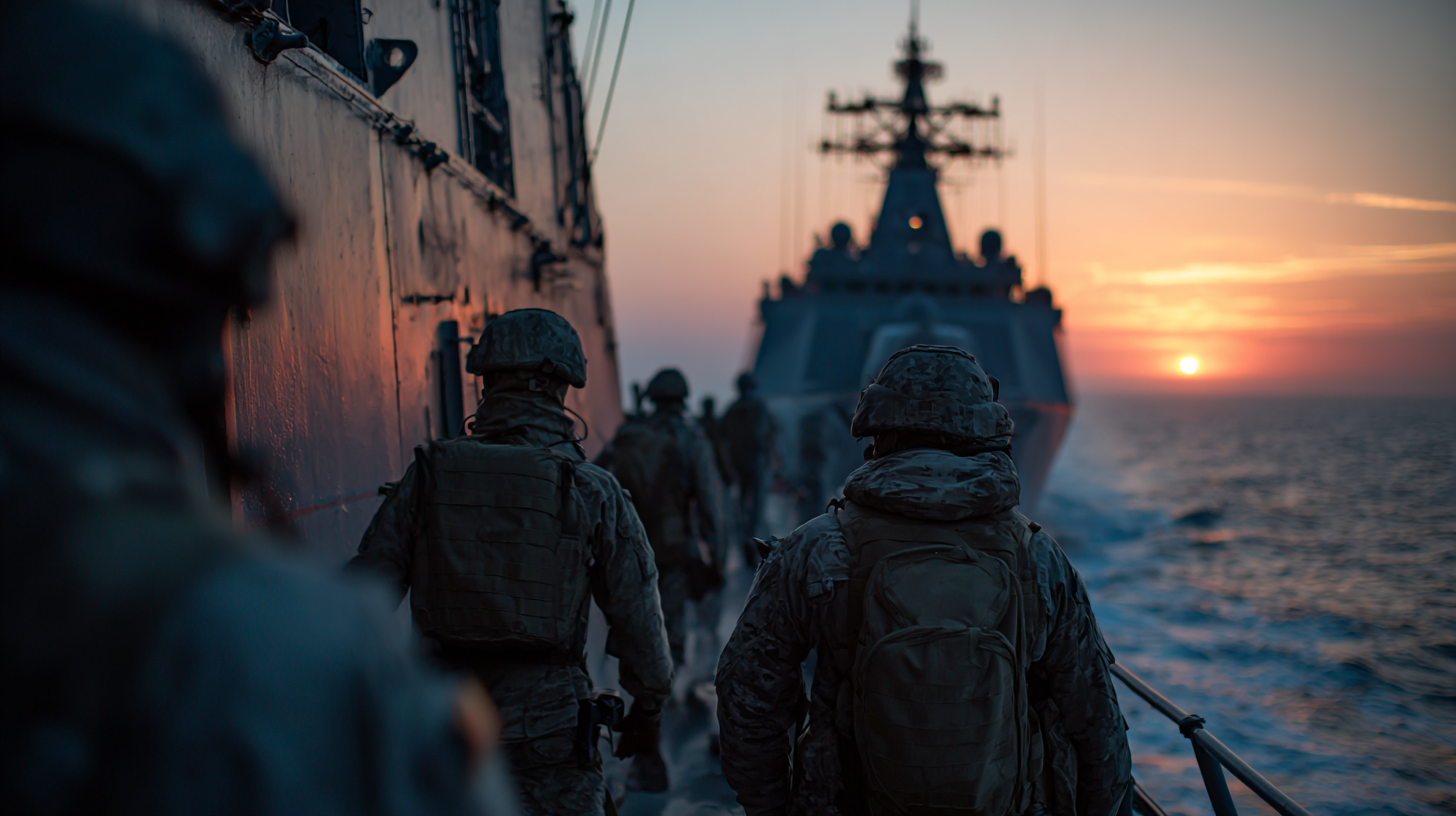
Russia in trouble? Sanctions offensive 2026: How the US is stopping Russia's shadow fleet and bringing India into line – Symbolic image: Xpert.Digital
Russia's war chest is bleeding dry: US pressure is working – the US seizes oil tankers and India reduces oil imports
The collapse of Russia's energy sector: Economic consequences of the tightened sanctions
Russia is in a phase of economic disintegration. This is no longer being driven solely by traditional sanctions, but by a new, harsh dimension of enforcement: the forcible seizure of ships in international waters. The impounding of the tankers Marinera in the North Atlantic and Sophia in the Caribbean in January 2026 marks a turning point in US strategy. These operations are not mere tactical maneuvers, but targeted attacks on the economic backbone of the Kremlin's war economy: the so-called shadow fleet. The consequences of this escalation extend far beyond the loss of individual ships and could trigger a deep crisis in Russian public finances.
Structure and weaknesses of the Shadow Fleet
The Russian shadow fleet system, built up since the 2022 invasion of Ukraine, consists of 600 to 1,400 tankers with opaque ownership structures and virtually no oversight. In June 2024, this fleet transported 4.1 million barrels of crude oil daily, representing approximately 70 percent of Russia's total maritime oil exports. The average age of the ships is over 18 years, making them prone to breakdowns and requiring constant repairs. The Kremlin has invested up to ten billion dollars in this fleet—a massive sum now jeopardized by the intervention of the US and the UK.
The seizure of the Marinera, a supertanker with a deadweight tonnage of over 318,000 tons, is a direct blow to Russia's shipping capacity. The vessel changed flags multiple times—from Panama to Palau and finally to the Russian flag in December 2025—and was renamed Marinera from Bella 1. This was a desperate attempt to gain legal protection from the Kremlin. The Marinera was en route to load oil and ship it to Russia. Simultaneously, in the Caribbean, the Sophia, loaded with 1.8 million barrels of Venezuelan crude oil, was also seized.
Rhetorical defenses and real revenue losses
The Russian side reacted with outrage, calling the actions a violation of international law. The Security Council and the Foreign Ministry labeled them piracy and pointed to Russian crew members. Moscow coupled this with an indirect threat: The Defense Ministry claimed that submarines and naval units had been dispatched to protect the Marinera. However, this military threat hardly reflects reality. Russia is economically strained by the war and cannot simultaneously fight in Ukraine and allocate massive resources to protect merchant ships in the Atlantic. The protests, therefore, largely remain rhetorical without any real impact.
The structural problem for Russia is more serious than the loss of individual ships. Oil sales are almost the only way Russia still earns any significant foreign currency. In November 2025, oil revenues fell by 27 percent compared to the previous year. Revenues from oil and gas, which were the state's most important source of income in 2025, are collapsing dramatically. The energy sector, which contributed $193 billion to the budget in 2024, is now shrinking noticeably. Several factors are responsible: falling oil prices, tougher sanctions against the shadow shipping industry by the EU and the US, Ukrainian drone attacks on refineries, and extremely high transport costs due to the scarcity of available tankers.
Geopolitical pressure on India and China
The pressure is also focused on India as a major customer. India sources about 38 percent of its crude oil from Russia and was its most important customer until the end of 2025. Imports were still around 1.9 million barrels per day in November. Then the situation changed rapidly. US sanctions against Rosneft and Lukoil in October 2025 took effect: Reliance Industries, India's largest refinery operator, announced that it would no longer accept Russian oil from December 2025 and would convert its facilities. This is no small adjustment, but rather cripples a major part of the Russian export chain. Experts expect that deliveries to India could fall by 50 to 70 percent to below one million barrels per day – a collapse of the existing trade relationship.
This decline is politically motivated. India is under immense pressure from the Trump administration. The US threatened sanctions against countries that continue to buy Russian oil. In talks with Prime Minister Modi, Trump made it clear that a reduction in imports was expected, partly to facilitate negotiations in the Ukraine conflict. Modi relented, even though this contradicts traditional Indian foreign policy, which views Russia as a partner. Indian refineries are now meticulously checking their records to avoid inadvertently buying directly from sanctioned Russian companies.
China, which buys about 47 percent of Russian oil, has not changed its stance for the time being. Beijing continues to prioritize trade with Russia and is not yielding to pressure as quickly as India. However, China is also coming under scrutiny from US tariffs and sanctions. The West's strategy seems clear: first persuade India to reconsider, then increase pressure on China.
Our global industry and economic expertise in business development, sales and marketing

Our global industry and business expertise in business development, sales and marketing - Image: Xpert.Digital
Industry focus: B2B, digitalization (from AI to XR), mechanical engineering, logistics, renewable energies and industry
More about it here:
A topic hub with insights and expertise:
- Knowledge platform on the global and regional economy, innovation and industry-specific trends
- Collection of analyses, impulses and background information from our focus areas
- A place for expertise and information on current developments in business and technology
- Topic hub for companies that want to learn about markets, digitalization and industry innovations
More than just sanctions: This new strategy is bringing Russia's economy to the brink of ruin
Dramatic budget situation and war economy
The consequences for Russia's budget are devastating. The planned deficit for 2025 was originally calculated at just 0.5 percent of gross domestic product (GDP). But even before the costly December, the actual budget shortfall was already at 1.7 percent. Economists now expect an annual deficit of up to 3.1 percent. The problem is not temporary, but structural. The state spends around 40 percent of its budget – roughly 135 to 150 billion euros annually – on the military and security alone. Such a figure is unprecedented internationally for a country not engaged in a direct struggle for survival against an equally powerful adversary.
According to the IMF, Russian economic growth will fall to 0.9 percent in 2025, down from 4.1 percent in 2024. Other forecasts are even more pessimistic. Stagnation prevails, artificially masked only by military spending, while the private sector suffers. Weak growth is also expected for 2026. The central bank is keeping the key interest rate at an extreme 21 percent to combat inflation of almost 10 percent. This is stifling private investment and leading to a combination of rising prices and stagnation.
State financing is becoming increasingly precarious. Originally slated to decrease in 2026, military spending has now been announced by Moscow for a rebound in 2027. To plug the resulting budget gaps, the Kremlin is raising the value-added tax and imposing heavier burdens on smaller businesses. These are typical signs of a war economy: the population foots the bill while armaments take precedence. State reserves, long a reliable buffer, are now half depleted. Russia is consuming its gold and savings faster than new money is coming in.
Physical risks and the costs of seizure
The problem of the shadow fleet is exacerbated by the poor condition of the ships. The tankers are old, poorly maintained, and often barely insured. The risk of accidents and environmental disasters is increasing. Incidents in the Baltic Sea, where ships have run aground or lost cargo, are becoming more frequent. Every accident ties up resources and causes diplomatic tensions. The EU also warns that the shadow fleet could be used to sabotage submarine cables or pipelines, which further increases security pressure on Russia.
Sanctions policy has entered a new phase: from paperwork directly to the water. Instead of merely freezing accounts, ships are now being impounded. This is legally controversial, but the message is clear: the US is prepared to take military action against Russia's merchant marine. This sets a new psychological boundary and signals to shipowners and investors that the risk to the shadow fleet is becoming incalculable.
The seizures are hitting the market hard. A supertanker like the Marinera costs between 60 and 80 million dollars. If Russia loses several such ships per month, as is possible in an intense scenario, the damage quickly adds up to hundreds of millions of dollars – quite apart from the lost profits from oil sales. Macroeconomically, this creates a vicious cycle: To export the usual quantities, costs and risks increase, which reduces profits and puts an ever-greater strain on the state budget.
Strategic dilemma
India will be the test case for this strategy. Should India drastically and permanently reduce its imports, Russia's oil exports could plummet by up to 30 percent. This would create a $30 to $50 billion hole in the state coffers. Such a deficit would be virtually impossible to finance; the Kremlin would either have to print money (which would fuel inflation), take on debt, or drastically cut public spending. All of these options are politically explosive.
The fact that Russian submarines are attempting to protect tankers illustrates the Kremlin's dilemma. These military units are actually needed in the Ukraine conflict. If they now have to guard merchant ships, they are lacking elsewhere. This is a classic sign of overstretch: A country cannot simultaneously wage a major war, secure its borders, and militarily protect global trade routes. The system is in danger of collapsing under the weight of these numerous simultaneous demands.
The US calculation is that economic pressure will force Russia to the negotiating table. If oil revenues continue to decline, the budget will become unsustainable and the domestic political pressure on Putin could become too great. Experts see this as a potential turning point.
But caution is advised: war economies often react differently than normal markets. Dictatorships can often pass on economic pressure to the population for a long time without falling. There is no guarantee that economic hardship will immediately lead to political change. The Kremlin could choose to continue down the path of war, even as prosperity dwindles. The seizure of the tankers is therefore likely not the end, but the beginning of a protracted escalation. Russia will try to find new avenues, and the US will continue to tighten the screws. This economic war could last for years, while Russia's economy continues to bleed dry.
Your global marketing and business development partner
☑️ Our business language is English or German
☑️ NEW: Correspondence in your national language!

Konrad Wolfenstein
I would be happy to serve you and my team as a personal advisor.
You can contact me by filling out the contact form or simply call me on +49 7348 4088 965 (Munich) . My email address is: wolfenstein ∂ xpert.digital
I'm looking forward to our joint project.
☑️ SME support in strategy, consulting, planning and implementation
☑️ Creation or realignment of the digital strategy and digitalization
☑️ Expansion and optimization of international sales processes
☑️ Global & Digital B2B trading platforms
☑️ Pioneer Business Development / Marketing / PR / Trade Fairs
🎯🎯🎯 Benefit from Xpert.Digital's extensive, five-fold expertise in a comprehensive service package | BD, R&D, XR, PR & Digital Visibility Optimization

Benefit from Xpert.Digital's extensive, fivefold expertise in a comprehensive service package | R&D, XR, PR & Digital Visibility Optimization - Image: Xpert.Digital
Xpert.Digital has in-depth knowledge of various industries. This allows us to develop tailor-made strategies that are tailored precisely to the requirements and challenges of your specific market segment. By continually analyzing market trends and following industry developments, we can act with foresight and offer innovative solutions. Through the combination of experience and knowledge, we generate added value and give our customers a decisive competitive advantage.
More about it here:










