
Russia's economic siege: Between military conflict at sea and the collapse of trade alliances
Xpert Pre-Release

Available in 27 languages 📢
Prefer Xpert.Digital on GoogleⓘPublished on: January 14, 2026 / Updated on: January 14, 2026 – Author: Konrad Wolfenstein
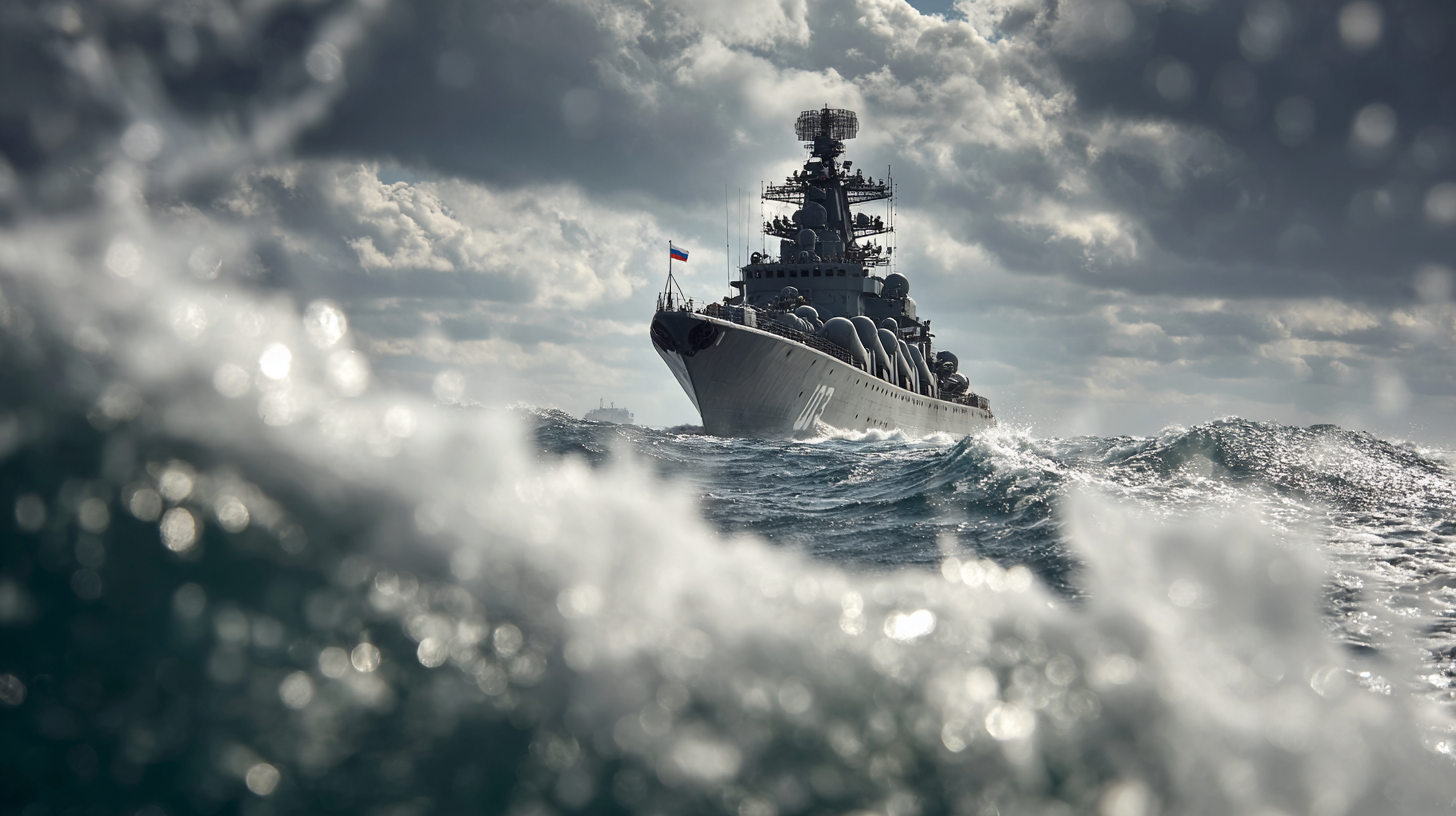
Russia's economic siege: Between military conflict at sea and the collapse of trade alliances – Creative image: Xpert.Digital
Russia 2026 on the brink of financial collapse: 22% VAT and the failure of the war economy
Power vacuum in Venezuela: Maduro's arrest destroys Russia's secret supply route
The global political situation in 2026 shows a significant escalation in the economic war against the Russian Federation. What originally began as a system of bureaucratic sanctions has developed into a genuine physical confrontation on the world's oceans. The United States and its allies are no longer limiting themselves to mere observation, but are actively intervening militarily to finally disable the Russian "shadow fleet.".
This article analyzes the events of January 2026, beginning with the spectacular seizure of the tanker Marinera in the North Atlantic by US special forces. This incident ends the era in which Moscow could operate largely unpunished at sea. At the same time, the last major pillars of the Russian export economy collapse: Venezuela ceases to be a logistics hub, and India, under pressure from new US tariffs, undergoes a radical about-face.
Domestically, the Kremlin faces a dangerous mix of exploding war costs, a value-added tax increased to 22 percent, and a risky dependence on the Chinese yuan. This text examines how the disruption of maritime supply chains and the loss of key partners are driving Russia into an unprecedented isolation. This development is pushing the country to the brink not only financially, but also technologically and socially.
Suitable for:

Washington's maritime guillotine and the end of Eurasian energy dreams: How the dismantling of the shadow fleet is driving the Kremlin into a financial dead end
The global political order of 2026 is characterized by a fundamental shift in the enforcement of international sanctions. This goes far beyond the mere monetary and diplomatic maneuvering of recent years. At its core is the move from passively monitoring economic restrictions to actively halting Russian trade flows with military force. This new phase of the conflict is most clearly demonstrated by the coordinated operations of the US and its allies against the so-called shadow fleet. This refers to the opaque collection of outdated tankers that Russia has been building since 2022 to circumvent the G7's price limits. The economic consequences of this direct intervention are severe and mark the beginning of a new era of uncertainty for Russian maritime commodity exports.
The end of impunity at sea and the escalation in the North Atlantic
The seizure of the tanker Marinera, formerly known as Bella 1, in the stormy waters of the North Atlantic between Iceland and Great Britain on January 7, 2026, represents an unprecedented turning point in US strategy. This is not an isolated incident, but the culmination of a weeks-long chase that began in the Caribbean. The Marinera, a vessel with a history of involvement in the illicit Iranian oil trade and alleged links to Hezbollah financing, attempted to break a US blockade off Venezuela in December 2025. After the crew refused inspection by the US Coast Guard, the ship fled into the open Atlantic. There, it abandoned its Panamanian flag, demonstratively painted a Russian flag on its hull, and registered itself under a new name in the Russian shipping register.
This provocative flag change on the high seas was intended to grant the ship the protection of the Russian state. However, due to this deception, US authorities declared the vessel stateless. The subsequent operation, carried out by US special forces and the Coast Guard, supported by British surveillance aircraft, clearly demonstrates Washington's willingness to risk direct military conflict with Russia to enforce its sanctions. The fact that Russia even deployed a submarine to escort the tanker at one point underscores the strategic importance of this incident for Moscow.
| Event | Date | Location | Participating actors |
|---|---|---|---|
| Seizure of the Marinera (ex Bella 1) | 07.01.2026 | North Atlantic (Iceland-UK) | US Navy, US Coast Guard, RAF |
| Seizure of the MT Sophia | 07.01.2026 | Caribbean | US Southern Command |
| Seizure of the skippers | 10.12.2025 | Caribbean (Grenada-Trinidad) | US Coast Guard, FBI |
| Beginning of the blockade of Venezuela | 17.12.2025 | Caribbean Sea | US Navy (Operation Southern Spear) |
The economic rationale behind these military operations is to increase the so-called friction costs for Russian foreign trade. Every successful seizure not only deprives the system of valuable transport vessels but also drives up insurance premiums and risk surcharges for all remaining ships in the shadow fleet. Experts estimate that an increase in transport costs of just five US dollars per barrel of oil represents a loss of approximately 0.5 percent of Russia's total economic output. In a situation where profits are already under pressure due to falling global market prices and high discounts, this naval siege acts as an accelerant for the Russian financial crisis.
The dismantling of the Venezuelan oil hub and the loss of important safe havens
A key pillar of Russia's strategy to circumvent Western sanctions was cooperation with other sanctioned states, particularly Venezuela. However, Operation Southern Spear by the United States largely destroyed these logistical networks in the Western Hemisphere. The surprise arrest of Venezuelan President Nicolás Maduro by US special forces in January 2026 left a power vacuum, costing Russia one of its most important strategic partners in South America. For years, Venezuela served as a hub for transshipping oil at sea, mixing Russian oil with crude from other sources to obscure its origin.
The US blockade, enforced in part by boarding tankers like the Skipper and the Centuries, has effectively closed this shipping route. The economic consequences for Russia are twofold: First, the Kremlin loses access to Venezuelan heavy crude oil, which was often needed for blending in Russian refineries. Second, it loses a crucial base for maintaining and supplying its shadow fleet in the Atlantic. The loss of Venezuela also means that Russia can no longer finance its presence in the Caribbean through energy deliveries to allies like Cuba, which in turn diminishes Moscow's influence in the region.
The US legal justification for these operations rests on a broad interpretation of the right to self-defense and the fight against international drug trafficking. It claims that Venezuelan state structures were directly involved in the illegal trade. This argument allows Washington to use military force against civilian tankers, which are classified as tools of a criminal state. For Russia, this poses an existential threat, as the same legal model could be applied to the entire shadow fleet. This would make the ships vulnerable to military intervention worldwide.
India's strategic shift under pressure from American tariffs
While military actions in the Atlantic disrupt physical trade, Washington's economic pressure on India is destroying the financial basis of Russian exports. India had become the largest buyer of cheap Russian deep-sea oil after 2022, with imports soaring from virtually zero to over two million barrels per day in the summer of 2024. However, this alliance was severely damaged by the Trump administration's aggressive trade policies in 2025. The imposition of 50 percent tariffs on Indian goods, half of which was explicitly justified by the purchase of Russian oil, fundamentally altered the economic calculations in New Delhi.
Suitable for:

Indian refining giant Reliance Industries, operator of the world's largest refinery in Jamnagar, announced in January 2026 that it would no longer accept Russian oil shipments. This decision is a direct response to Washington's threat to completely exclude Indian companies from the US financial system and the American market. With Indian exports to the US already having plummeted by over 20 percent in 2025, the damage caused by the trade restrictions now outweighs the benefit of the Russian price reductions, which recently averaged $12.20 per barrel.
| Trade parameters India | Status 2024 (peak level) | Status January 2026 |
|---|---|---|
| Russian oil import volume | ~2.0 million barrels/day | <1.0 million barrels/day |
| US customs on Indian goods | Standard fare | 50% (sanction rate) |
| Main customers (private sector) | Reliance Industries | Complete stop |
| Main customer (state-owned) | IOC, Bharat Petroleum | Reduced quantities |
The Indian government is forced to choose between its long-term strategic partnership with Moscow and access to the Western market. The US demand that Indian refineries disclose their oil purchases weekly demonstrates the extent to which Washington now controls New Delhi's energy policy. If India, its second most important customer after China, is lost, Russia will have to offer its oil at even lower prices and resort to even riskier routes. This will drive up transportation costs to a level where production will become unprofitable for many Russian oil fields.
Our global industry and economic expertise in business development, sales and marketing

Our global industry and business expertise in business development, sales and marketing - Image: Xpert.Digital
Industry focus: B2B, digitalization (from AI to XR), mechanical engineering, logistics, renewable energies and industry
More about it here:
A topic hub with insights and expertise:
- Knowledge platform on the global and regional economy, innovation and industry-specific trends
- Collection of analyses, impulses and background information from our focus areas
- A place for expertise and information on current developments in business and technology
- Topic hub for companies that want to learn about markets, digitalization and industry innovations
The end of the illusion: Russia's economy can no longer finance the war
The Yuan Trap and the Loss of Financial Independence
The crisis in Russian foreign trade is exacerbated by persistent payment problems. The attempt to conduct oil trade with India in rupees ended in disaster. Russia accumulated billions of rupees in Indian accounts, for which it had no use, as it imports hardly any goods from India. The rupee is not freely convertible internationally, and India does not produce the kind of high technology that Russia needs to replace Western products. This forced Russian oil traders to demand payments in Chinese yuan by 2025.
This development represents a massive shift in the balance of power. India, which sees China as a major rival, now has to buy yuan on the world market to pay for Russian oil. Paradoxically, this strengthens the global importance of the Chinese currency. For Russia, the switch to the yuan means total dependence on the Chinese financial system. Since the yuan is the only currency that Russia can directly convert into rubles on a large scale without using Western banks, Beijing now has de facto control over pricing and the solvency of the Russian state budget.
To escape total dependence, the Kremlin is increasingly experimenting with cryptocurrencies such as Bitcoin, Ethereum, and so-called stablecoins like Tether (USDT). In 2025, estimated transactions worth tens of millions of US dollars per month were processed through crypto intermediaries to expedite the exchange of yuan and rupees for rubles. The Russian central bank, which continues to prohibit crypto payments domestically, has created an experimental legal framework for foreign trade to allow select investors to use digital currencies. However, this avenue remains uncertain: As a centrally controlled organization, the issuer of Tether can freeze funds at any time if they are associated with sanctioned Russian addresses. This makes the "crypto bridge" a high-risk gamble for Russian exporters.
Suitable for:

The stress test of 2026: VAT increase and industrial slump
Within Russia, the year 2026 clearly demonstrates the limitations of the existing growth model. Following a period of war-induced overheating in 2024, during which the economy grew by 4.3 percent, a period of sustained stagnation has now set in. Projected growth for 2026 is a mere one percent, while inflation remains stubbornly high despite tight monetary policy. To cover exploding military spending, which now accounts for approximately 40 percent of the total budget, the government increased the value-added tax from 20 to 22 percent on January 1, 2026.
This tax increase is a desperate attempt to raise an additional 1.2 trillion rubles for the war machine, but it will massively dampen private consumption. Combined with the tightening of tax rules for small businesses, it will systematically stifle the Russian middle class. Hundreds of thousands of small businesses, which previously formed the backbone of local supply chains, now face a tax burden that threatens their existence. The result is that economic power will become even more concentrated in the hands of the state and large, defense-related industries, destroying the country's innovative capacity in the long run.
| Economic data Russia | 2024 (Actual) | 2025 (estimate) | 2026 (forecast) |
|---|---|---|---|
| Economic growth (GDP) | 4,3% | 1,0% | 0,7% – 1,3% |
| VAT rate | 20% | 20% | 22% |
| military share of the budget | ~30% | 40% | >40% |
| Key interest rate (annual average) | ~16% | ~21% | >16% |
Under Elvira Nabiullina, the Russian central bank is desperately trying to curb inflation with double-digit interest rates. But this policy is reaching its limits, as state military spending is completely unaffected by interest rates – it continues regardless of the cost. While arms factories are operating around the clock, investment in the civilian economy is lacking. Over 30 percent of Russian companies are already operating at a loss, as the cost of loans exceeds operating profits. This contradiction is leading to a distorted economic structure: growth is only occurring where goods are produced that will soon be destroyed on the battlefield. While this secures jobs in the short term, it does not create lasting prosperity.
The depleted labor market and the failure of technological independence
The biggest obstacle for the Russian economy in 2026, however, is not a lack of money, but an acute labor shortage. The unemployment rate is at a historic low. This is not due to a booming economy, but rather to the massive loss of people to the labor market – through conscription, flight abroad, and death on the front lines. The Central Bank has declared that the country's labor reserves are almost completely depleted, pushing production capacity to its physical limits.
This labor shortage is driving wages up in a way that isn't justified by increased output, further fueling prices. While companies are trying to counteract this by investing in automation and AI, access to the necessary Western components is extremely difficult. The tightened sanctions and the targeted crackdown on the shadow fleet, which often smuggled such technological goods, are having an effect. The government's stated goal of technological independence for 2025 and 2026 remains largely wishful thinking, as domestic industry is unable to produce complex chips or precision machinery in sufficient quantities and quality.
Social peace in Russia is increasingly bought with government handouts, which are losing value due to rising inflation. While pensions and the minimum wage are adjusted, real wages in the private sector, unrelated to the military, are falling. The year 2026 thus marks the end of the illusion that Russia can simultaneously wage a major war and maintain a modern standard of living for its population. The economic base is being systematically eroded in favor of military buildup. This is driving the country into a long-term dependence on raw material exports at rock-bottom prices, while the cost of importing essential goods is skyrocketing due to logistical constraints.
Global market disruptions and the breakdown of supply chains at sea
The hunt for the shadow fleet has repercussions that extend far beyond Russia. Since roughly one-sixth of the world's tanker fleet is now considered part of the Russian shadow fleet, combating it is leading to a massive shortage of global shipping space. The average age of these ships is over 20 years, which drastically increases the risk of environmental disasters and accidents, especially when these vessels deactivate their tracking systems to remain undetected. In 2026, the utilization rate of the remaining legally operating supertankers rose to over 92 percent, the highest level since 2019.
This scarcity is driving up freight rates worldwide, which in turn is impacting energy costs for Western economies. Nevertheless, Washington is determined to pay this price in order to physically limit Russian revenues. The strategy of deterrence relies on shipping companies and insurers considering the risk associated with Russian oil too high. The regulation requiring verifiable proof of insurance for access to ports closes the last loopholes for ships without top-tier insurance coverage.
For Russia, this means it has to register more and more of its own ships directly under its flag. This makes it impossible to credibly deny involvement and turns the ships into legitimate targets for military interventions during blockades, as the Marinera case vividly demonstrated. Russia's maritime logistics are in a state of permanent retreat. Attempting to circumvent the blockade via the Northern Sea Route through the Arctic is not yet a realistic alternative for the mass export of crude oil by 2026 due to the climate and the lack of icebreakers.
Outlook for the Russian economy: Between isolation and collapse
A comprehensive analysis of the data and events at the beginning of 2026 paints a picture of the progressive disintegration of the Russian economy. US military operations against the shadow fleet have destroyed confidence that maritime trade will remain unaffected. At the same time, pressure on India has cut off its most important source of revenue. Russia is now more economically isolated than at any other time since the end of the Cold War. While the transformation into a war economy has stabilized arms production, the price is being paid by the citizens through massive inflation, a destroyed middle class, and total technological dependence on China.
The outlook for 2026 is characterized by a worsening of these trends. Should Washington extend the physical blockade to further key routes, this could lead to a genuine supply crisis within Russia. Export revenues would then no longer be sufficient to cover both rising import costs and the burdens of the war. The Russian central bank is increasingly becoming the crisis manager of a system that no longer possesses financial reserves and whose future depends solely on whether Beijing is willing to keep the system alive with Chinese money.
Ultimately, Russia's economic catastrophe demonstrates that modern superpowers can be brought to their knees not only by military defeats, but also by the systematic severing of their ties to global supply and logistics chains. The dismantling of the shadow fleet in the North Atlantic was, in this respect, not merely a police measure, but an act of economic warfare. Its long-term consequences will permanently alter the geopolitical landscape of the 21st century. Russia is entering an era in which it is consuming its resources faster than it can regenerate them. In the long run, this will lead to a loss of state power and a profound societal disintegration.
Your global marketing and business development partner
☑️ Our business language is English or German
☑️ NEW: Correspondence in your national language!

Konrad Wolfenstein
I would be happy to serve you and my team as a personal advisor.
You can contact me by filling out the contact form or simply call me on +49 7348 4088 965 (Munich) . My email address is: wolfenstein ∂ xpert.digital
I'm looking forward to our joint project.
☑️ SME support in strategy, consulting, planning and implementation
☑️ Creation or realignment of the digital strategy and digitalization
☑️ Expansion and optimization of international sales processes
☑️ Global & Digital B2B trading platforms
☑️ Pioneer Business Development / Marketing / PR / Trade Fairs
🎯🎯🎯 Benefit from Xpert.Digital's extensive, five-fold expertise in a comprehensive service package | BD, R&D, XR, PR & Digital Visibility Optimization

Benefit from Xpert.Digital's extensive, fivefold expertise in a comprehensive service package | R&D, XR, PR & Digital Visibility Optimization - Image: Xpert.Digital
Xpert.Digital has in-depth knowledge of various industries. This allows us to develop tailor-made strategies that are tailored precisely to the requirements and challenges of your specific market segment. By continually analyzing market trends and following industry developments, we can act with foresight and offer innovative solutions. Through the combination of experience and knowledge, we generate added value and give our customers a decisive competitive advantage.
More about it here:










