
EU billions in loans for Ukraine: 60 billion for drones and missiles – turning point in the war or a gain in time?
Xpert Pre-Release

Available in 27 languages 📢
Prefer Xpert.Digital on GoogleⓘPublished on: April 22, 2026 / Updated on: April 22, 2026 – Author: Konrad Wolfenstein
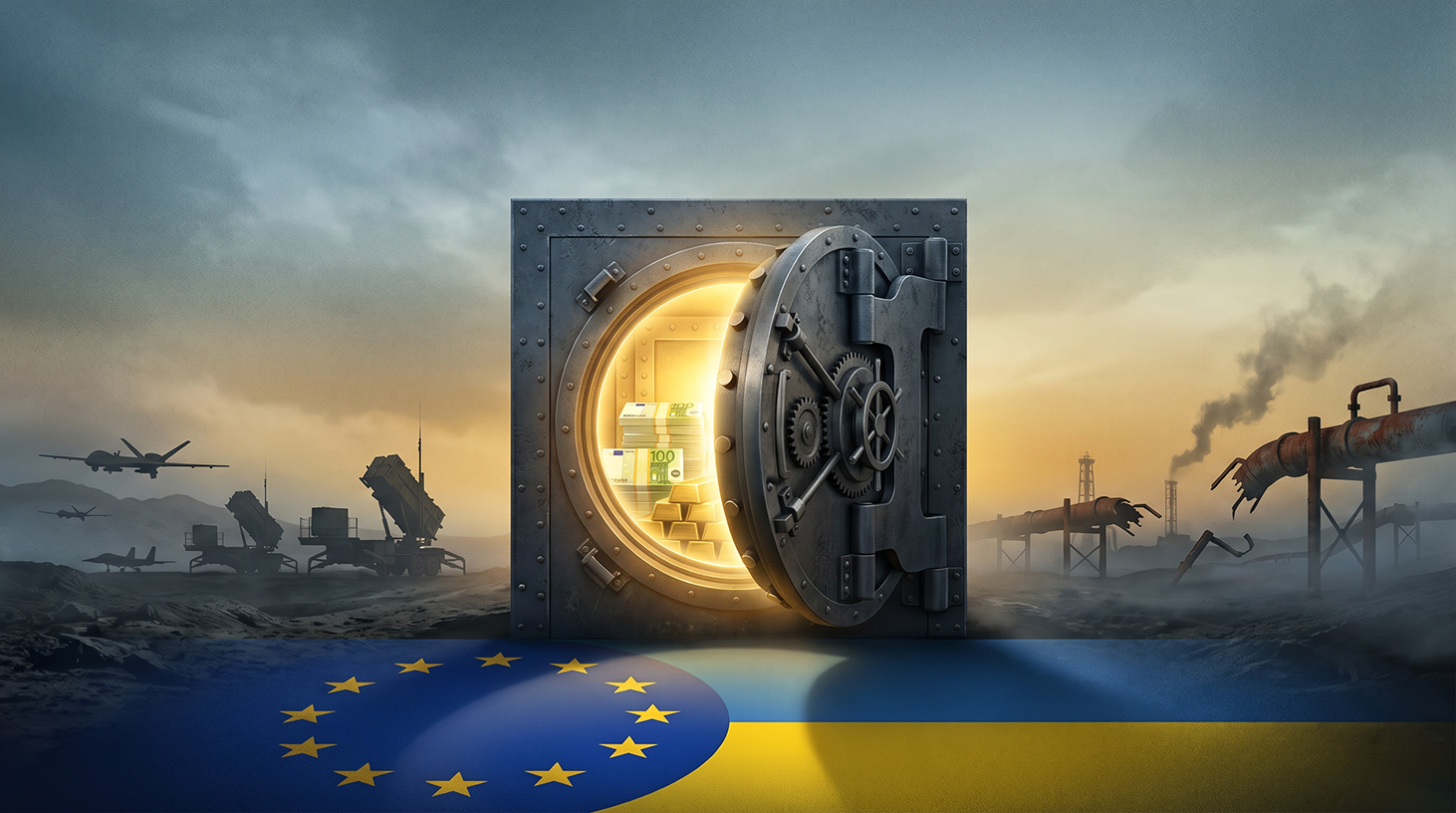
EU billions in loans for Ukraine: 60 billion for drones and missiles – turning point in the war or just buying time? – Image: Xpert.Digital
New sanctions package and 90 billion: The EU's double blow against Putin's war economy
Will the taxpayer ultimately foot the bill? The risky architecture of the new EU-Ukraine loan
After months of diplomatic wrangling and a historic election defeat for Hungarian Prime Minister Viktor Orbán, the path is finally clear: The European Union has approved a €90 billion aid and loan package for Ukraine. It is a decision of immense geopolitical significance, going far beyond mere emergency financial assistance. While the US under Donald Trump has drastically reduced its support, Europe is stepping into the breach and becoming the primary financier of Ukraine's war economy. With €60 billion explicitly earmarked for military procurement such as drones and air defense systems, the EU is de facto financing the ongoing defensive war against Russia. This unprecedented "reparations loan" is to be secured by frozen Russian assets – a bold but legally complex construct that could ultimately pose significant risks for European taxpayers. Flanked by a tough 20th sanctions package, this step marks a fundamental reorientation of European security policy: The EU is deciding to accept the conflict as its own existential security struggle.
When 90 billion euros are supposed to shift the front line – and why that could become more expensive than expected
The long road to yes: How a pipeline dispute blocked Europe
After months of obstruction by Hungary, EU member states finally approved the €90 billion aid package for Ukraine on April 22, 2026. The decision, made at the ambassadorial level, marks the provisional end of an exceptionally protracted institutional struggle that had seriously jeopardized the EU's ability to act for months. The failure to disburse the funds was no accident, but rather the result of a complex mix of energy policy dependencies, domestic political calculations, and a geopolitical power play that extended far beyond Brussels.
At the heart of the dispute was the Druzhba pipeline, that Soviet-era infrastructure project from the 1960s that transports Russian oil through Belarusian and Ukrainian territory to Hungary and Slovakia. Deliveries were interrupted at the end of January 2026 – according to Ukrainian sources, as a result of Russian airstrikes on the pipeline infrastructure. Budapest and Bratislava, however, disputed this account and accused Kyiv of deliberately delaying repairs to exert political pressure. Hungary responded by blocking the EU loan to Ukraine – a legally permissible decision because the resolution requires unanimity from all 27 member states.
Hungarian Prime Minister Viktor Orbán had previously cited the Druzhba pipeline as the official reason for his veto. At the same time, he signaled that he would lift the blockade as soon as oil deliveries resumed: a transparent deal that the European Parliament, by a vote of 458 to 140, still considered institutionally questionable in February 2026, yet still approved the loan. On April 22, 2026, shortly after Ukrainian energy officials confirmed the resumption of deliveries, Hungary relented – and the EU was able to make the decision that had been long overdue since December 2025.
Orbán's End: What Hungary's Change of Power Means for Europe
The real break, however, was not the pipeline agreement, but the election result of April 12, 2026. Péter Magyar and his conservative Tisza party won the Hungarian parliamentary elections with a two-thirds majority – 141 out of 199 seats – while Orbán's Fidesz plummeted to 52 seats. It was the end of a 16-year era in which Viktor Orbán had systematically transformed Hungary into a corrective force against the European mainstream.
This change of power has significant strategic implications for EU-Ukraine policy. During his election campaign, Magyar promised to make Hungary a reliable partner in NATO and the EU. He signaled his willingness not to block the disbursement of the EU loan, but also made it clear that Hungary, due to its own budgetary situation, would not assume any financial responsibility for the loan. At the same time, he strictly rejects accelerated EU accession for Ukraine and announced that Hungary would seek a binding referendum on the matter. The European policy deadlock has therefore not been completely lifted, but merely broken in its most aggressive form. Where Orbán actively sabotaged, Magyar will remain passively on the sidelines – this is a significant difference, but not a complete change of course.
The timing of this course correction is geopolitically significant. Orbán's blockade coincided with a period in which Russia continued to try to shift the front line and Ukraine was urgently awaiting the release of funds. Brussels had already attempted to release at least an initial tranche in March 2026, but was thwarted by Hungary. At the time, Chancellor Friedrich Merz described Orbán's stance as an act of gross disloyalty and threatened consequences. The fact that the resumption of oil deliveries ultimately provided the decisive argument demonstrates the deep structural dependency into which Hungary had been drawn under Orbán himself – and from which Magyar must now gradually extricate itself.
The architecture of the loan: Who pays, who is liable, who benefits
The €90 billion package is unusual in its structure and politically bold. It does not consist of direct transfers from national budgets, but rather an interest-free loan that the EU raises on the capital market at favorable conditions and passes on to Ukraine. The EU budget serves as collateral – and thus ultimately the taxpayers of the member states. Germany, for example, bears annual interest costs of around €700 million. The total interest burden for all EU member states is estimated at €3 billion per year.
Ukraine's repayment obligation is tied to a political condition that fundamentally alters its nature: Kyiv only has to repay the money if Russia pays war reparations after the end of its war of aggression. If Russia refuses to do so—which, given historical experience with lost wars, must be assumed—Russian assets frozen in the EU are to be used as collateral. Currently, around €300 billion of Russian assets are frozen worldwide, of which approximately €210 billion are under EU jurisdiction alone, mostly managed by the international clearing house Euroclear, based in Brussels. The interest income from these frozen funds has been flowing to Ukraine since 2024.
The legal structure of this so-called reparations loan is deliberately cautious. The EU does not intend to directly confiscate Russian property—which would be highly controversial under international law—but instead plans to use bonds secured by Russian central bank reserves. Russia has threatened retaliation in any instance where state property is seized. Whether this arrangement would withstand scrutiny before an international arbitration tribunal in the event of a prolonged conflict remains unclear. However, the decisive political will within the EU is clear: 25 of the 27 member states have decided on the permanent freezing of Russian assets; only Hungary and Slovakia voted against it.
The disbursement will be made in two tranches: €45 billion is to be paid out in 2026, and another €45 billion in 2027. In March 2026, the European Commission had already taken the first preparatory steps and, following a positive assessment of Ukraine's financing strategy, prepared an implementing decision for the first tranche. Ukraine's total financing needs for 2026 and 2027 are estimated at €135 billion – the remaining €45 billion is to be contributed by G7 partners and the International Monetary Fund, which had announced its own aid program of around $8.1 billion.
Military power through capital: What 60 billion can achieve on the front lines
The most significant aspect of the loan is its clear earmarking: 60 of the 90 billion euros are explicitly designated for defense-related expenditures. This corresponds to two-thirds of the total sum and de facto represents massive EU financing of arms – a historic shift in Europe's foreign policy orientation. As recently as December 2025, when the agreement was reached at the EU summit, Chancellor Friedrich Merz presented the package as a strong signal. What was initially hailed as a diplomatic success is proving, in its concrete implementation, to be a considerable intervention in the traditional structures of European peace policy.
Ukraine itself had registered a defense requirement of at least $120 billion (around €102 billion) for 2026 and requested $60 billion in support from its allies. EU funds cover the majority of this international financing need, while simultaneously relieving the burden on other partners such as the US, which significantly reduced its direct military aid under President Trump. The EU loan thus becomes the key lever for closing the transatlantic funding gap. The fact that a portion of the EU funds is also intended for the purchase of American defense systems – Germany and the Netherlands advocated for roughly a quarter of procurement from outside Europe – demonstrates how pragmatic defense planning has become at the EU level as well.
The drone industry is a particular focus of military investment. Commission President Ursula von der Leyen explicitly emphasized that drone procurement and production should be a priority. Ukraine had already built up considerable capacity by 2025; its production potential for long-range drones could grow to a capital value of $35 billion by 2026. Besides drones, air defense systems – especially Patriot missiles – are also high on the priority list: Ukraine considers them indispensable in the fight against Russian ballistic missiles, while European alternatives such as SAMP/T are regarded as less effective. This procurement would therefore inevitably strengthen the American defense industry, even if the financing is European.
The strategic impact of these investments depends on the development of the front line. Military analysts predict that the front line will remain largely static in 2026 due to ongoing drone saturation. Drones have rendered any conventional war of maneuvers virtually impossible: larger troop formations are destroyed during deployment before an attack can even begin. Occasional local incursions are possible, but not strategic breakthroughs. The EU billions, therefore, do not change the nature of the war, but rather Ukraine's endurance capacity – they prolong the defensive struggle, they do not force its conclusion.
Hub for Security and Defense - Advice and Information

Hub for Security and Defense - Image: Xpert.Digital
The Security and Defence Hub offers expert advice and up-to-date information to effectively support companies and organizations in strengthening their role in European security and defence policy. Working closely with the SME Connect Defence Working Group, it particularly promotes small and medium-sized enterprises (SMEs) that wish to further develop their innovative capacity and competitiveness in the defence sector. As a central point of contact, the Hub thus creates a crucial bridge between SMEs and European defence strategy.
Related to this:
How sanctions and loans could stabilize the war in 2026
The 20th sanctions package and its impact on Russia's war economy
Simultaneously with the release of the loan, the EU's 20th sanctions package against Russia was also launched – again after months of blockage by Hungary and Slovakia. It contains targeted measures intended to further reduce the Kremlin's energy revenues. In the energy sector, EU companies are prohibited from participating in the repair of Russian refineries damaged by Ukrainian attacks. Transactions with port terminals in Russia and third countries, as well as LNG terminal services and maintenance work for Russian LNG tankers, are banned. A previous exemption for natural gas condensates from the import ban on Russian crude oil is also eliminated. Furthermore, import bans on additional metals, chemicals, and critical raw materials are expected to reduce Russian revenues by up to €570 million per year, according to the EU.
These measures build on the effects of previous sanctions packages, which have indeed left a significant mark on Russia's state budget. Russian export revenues from fossil fuels fell to around €193 billion in the fourth year of the war – a decline of 19 percent compared to the previous year and 27 percent compared to the pre-war period. Revenues from oil and gas alone fell by almost 24 percent in 2025. Moreover, the sanctions are hitting Russia at a time when state spending on the war is at historic highs.
The targeted measures against Russian energy companies like Rosneft and Lukoil, which are curbing exports to India and China, are having a particularly harsh impact. India, long one of the largest buyers of Russian oil, significantly reduced its purchases in 2025 – partly due to a US deal designed to gradually wean India off Russian oil imports. China remains the largest single buyer of Russian oil, but also imported 14 percent less. Russia is increasingly selling its oil at substantial discounts, which masks the nominal export volume but dramatically reduces its economic benefit. The price ceiling for Russian crude oil was lowered from $60 to $47.60 per barrel in the 18th sanctions package.
The 19th sanctions package already included a complete ban on LNG imports from Russia, applicable to long-term contracts from January 2027 and earlier for short-term contracts. The ban on the transit of Russian LNG through European ports for onward transport to third countries was particularly politically sensitive, as European ports such as Zeebrugge in Belgium had previously served as transshipment points for Russian LNG. This entire phase-out plan is coordinated with the complete import ban on Russian natural gas, agreed upon in January 2026 and set to expire no later than autumn 2027. In just under four years of war, the EU has reduced the share of Russian gas in its total imports from 40 percent to around 13 percent – an energy policy transformation that was considered economically unfeasible only a few years ago.
Structural funding gap: Europe steps in where America steps out
The EU loan is of vital importance to Ukraine not only militarily, but also economically. The €30 billion in budget support from the overall package is intended to ensure that the Ukrainian state remains functional – teachers, doctors, and civil servants will be paid on time, and social transfers will continue. Without this support, Ukraine would be forced to resort to direct tax increases or an expansion of the money supply, both of which would further fuel the already high inflation and destabilize the population.
The fact that the EU is now effectively assuming the role of primary financier of Ukraine's military economy has a clear geopolitical cause: The US under Donald Trump has drastically reduced its direct aid. Ukraine anticipates a need for at least $27 billion in US military equipment alone by 2026, but can no longer finance this through direct US aid. Instead, EU funds are to be used for these procurements – a paradoxical arrangement in which European taxpayers' money is indirectly financing the American defense industry.
Since the start of the war in 2022, the EU has supported Ukraine with a total of around €193 billion, of which almost €70 billion was for military aid. The new €90 billion loan increases this amount to around €283 billion – a sum that has no historical parallel except for the Marshall Plan after the Second World War. The difference lies in the fact that the Marshall Plan financed post-war reconstruction; the EU loan is financing the ongoing war itself.
How the war will change as a result of the loan: A sober assessment
The central question is: What will the release of the EU loan actually change about the course of the Russia-Ukraine war? The answer is nuanced, but generally sobering for all those hoping for a swift turnaround in the war.
First, the loan secures Ukraine's military endurance. Sixty billion euros for defense will enable the continuous procurement of drones, ammunition, air defense systems, and other equipment that makes all the difference in a war of attrition. The front line is likely to remain largely static in 2026—not because Ukraine is victorious, but because drone saturation prevents any rapid advance. The money prevents a Ukrainian collapse, but it does not force a Russian one.
Secondly, the loan reduces the psychological and diplomatic pressure on Kyiv to make hasty compromises. As long as liquidity is secured and the state functions, the Ukrainian government has more room to maneuver in negotiations – it does not have to sacrifice territory out of necessity to buy financial relief. This strengthens Ukraine's negotiating position for any future ceasefire.
Thirdly, the loan will enable the strengthening of Ukraine's domestic defense industry. If a significant portion of the €60 billion is spent in Ukrainian companies, it will create sustainable industrial capacity that extends beyond the war. Ukraine has already built a remarkable drone industry; with sufficient capital, it could become a serious player in the global defense market.
Fourth, Russia's strategic situation remains ambivalent despite the EU loan. The Russian economy is suffering from sanctions and falling energy revenues, but an economic collapse is not in sight. The recruitment system can barely keep pace with the heavy losses, but analysts estimate that military equipment will last until the end of 2026. Assuming he remains capable of acting, President Putin is unwilling to end the war on terms that fall far short of Moscow's maximalist demands. While the EU loan reduces the chances of a Russian victory, it does not automatically increase the likelihood of a peace favorable to Ukraine.
Fifth, the loan alters the strategic logic of the conflict on a global scale: with this step, Europe has made it clear that it understands the war in Ukraine as its own existential security conflict and is prepared to pay for it on an unprecedented scale. This is a message that will be perceived far across the Atlantic – and that will help shape the geopolitical architecture of the next decade.
Long-term repayment risks and legal pitfalls
The financing structure of the loan carries significant legal and political risks that are often overlooked in current reporting. The underlying assumption is that Russia will pay reparations after the war, or that the frozen assets will be used for repayment. Both scenarios are questionable.
Russia has no incentive to voluntarily pay war reparations, and even after a military defeat, their enforcement would be highly controversial internationally. The use of frozen assets—formally belonging to the Russian central bank—occupies a legally ambiguous area between international law, EU law, and national property law. If Russia never pays and the assets remain frozen long-term, it could be debated in a few decades whether this amounts to de facto expropriation. Should Ukraine agree to a peace treaty that does not include reparations—a scenario at least conceivable in peace negotiations mediated by Trump—the repayment condition would be virtually impossible to fulfill.
In this case, the EU would be left to shoulder the interest costs, and the frozen Russian assets would be of little political use as collateral. This would represent a significant financial burden for taxpayers in the member states. In this scenario, Germany would have to raise hundreds of millions of euros annually in the long term without receiving any direct compensation in the form of reparations payments.
The geopolitical foundation: Europe as a security policy actor
Beyond all financial and technical questions, the EU loan represents a fundamental reorientation of European security policy. In less than four years, the EU has transformed its support for Ukraine from a defensive response to Russian aggression into a proactive strategy of military support – with a loan more than twice the size of the German armed forces' annual budget. The decision came at a time when the US, under Trump, was questioning its own role as guarantor of European security.
This shift has significant repercussions for the EU itself. The loan agreement demonstrates that the Union is capable of exceptional action under the pressure of geopolitical threats – but also how vulnerable the unanimity rule is in security policy matters. A single member state like Hungary under Orbán was able to block a decision for months that 26 other member states deemed necessary. This experience is likely to give new impetus to the debate on reforming the unanimity principle in EU foreign and security policy.
The loan is ultimately a commitment: Europe is choosing not to be merely a spectator, but to actively invest in the foundations of a future European security framework. Whether 90 billion euros will be sufficient for this is an open question. Whether it would have been possible to make Europe secure without this step is a question that history will answer.
Consulting - Planning - Implementation

Markus Becker
I would be happy to serve as your personal advisor.
Head of Business Development
Chairman SME Connect Defense Working Group
Consulting - Planning - Implementation
Konrad Wolfenstein
I would be happy to serve as your personal advisor.
contact me at wolfenstein ∂ xpert.digital
Just call me on +49 7348 4088 965 .





