
When steel learns to walk: How Beijing is reinventing the automation of the world – and why the rest can hardly keep up
Xpert Pre-Release

Available in 27 languages 📢
Prefer Xpert.Digital on GoogleⓘPublished on: March 29, 2026 / Updated on: March 29, 2026 – Author: Konrad Wolfenstein
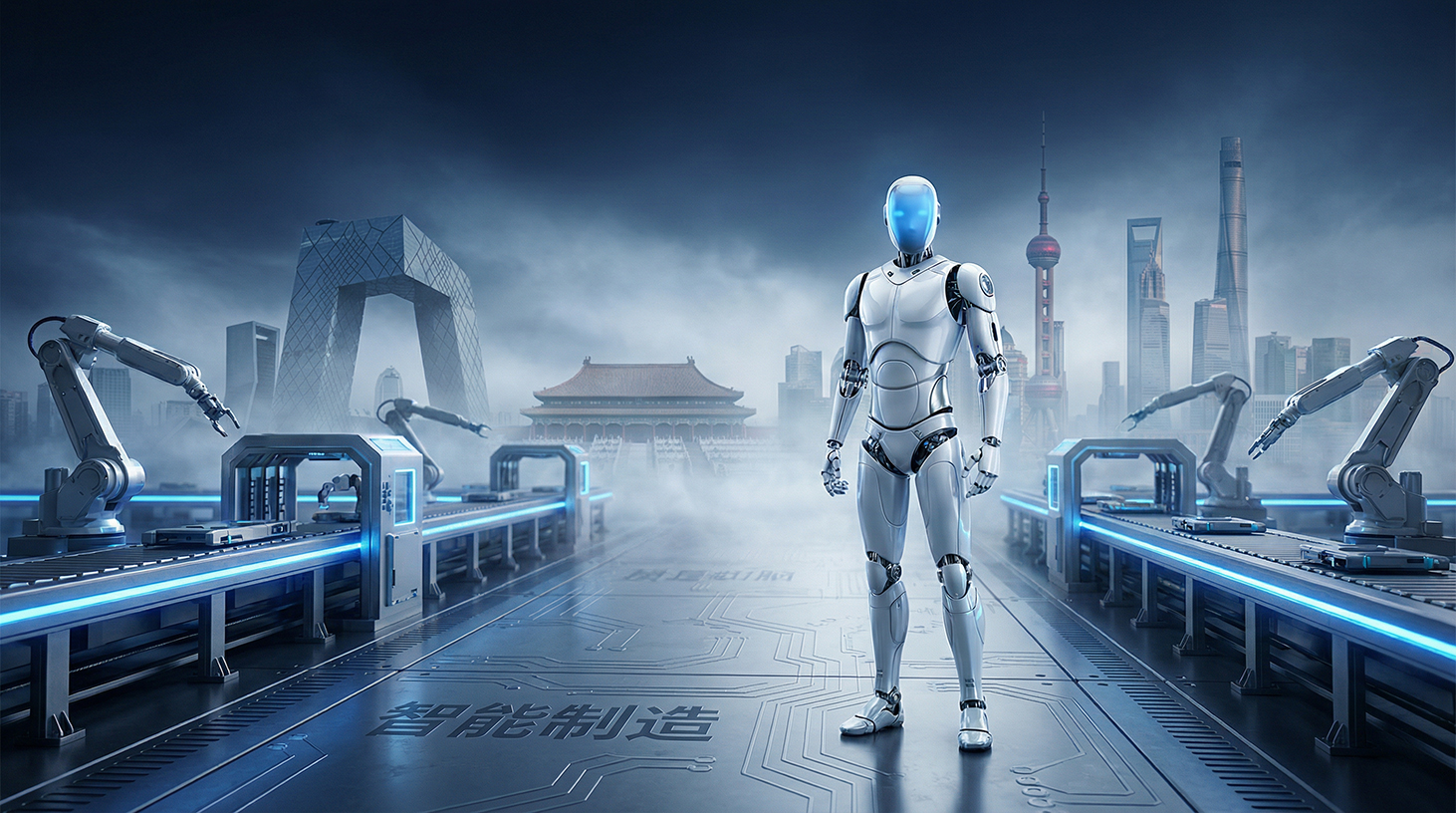
When steel learns to walk: How Beijing is reinventing the world's automation – and why the rest can hardly keep up – Image: Xpert.Digital
Five trillion dollar market: Why Europe can only watch the robot boom unfold
For under $10,000: How China is currently taking over the global robot market
Humanoid robots are still considered by many to be distant science fiction – but in China, the future has already arrived on factory floors. With breathtaking speed and massive government support, the People's Republic has built up an almost insurmountable lead in the past two years. While Western competitors like Tesla are still experimenting with prototypes and Europe largely plays the role of spectators, Beijing is building an entirely new industry from scratch. Driven by breakthroughs in artificial intelligence (keyword: embodied AI) and unprecedented cost advantages, over 150 Chinese startups are preparing to dominate the first true mass market for robots. This article takes an in-depth look at how China is reinventing the automation of the world, why price pressure is already enormous – and what hurdles the industry still faces.
Related to this:

China's humanoid robot revolution: The first true mass market that no longer wants to be one
Anyone who thinks humanoid robots are still science fiction hasn't been paying close attention to China over the past two years. According to an industry report jointly published by Leaderobot and nine other institutions, there are now between 150 and 200 companies in China operating in this segment alone. The National Development and Reform Commission (NDRC) counts over 160 active players. This number sounds impressive—and it is. What appears today to be a wave of startups is, in reality, the beginning of an industrial transformation comparable in scope and pace to the rise of the electric vehicle industry.
In 2025, approximately 18,000 humanoid robots were shipped worldwide, representing a 508 percent increase compared to the previous year. Chinese companies dominated the market with a share of 80 to 90 percent. Shanghai-based AgiBot alone shipped between 5,000 and 5,168 units, making it the world's largest single supplier, even ahead of its much-discussed American competitor, Tesla. These figures are not only a sign of industrial policy success but also the result of a strategically developed ecosystem that has grown over many years.
Related to this:

From ChatGPT to embodied intelligence: A real-time paradigm shift
The decisive catalyst for the current boom lies in the period between 2023 and 2025. Over half of all companies currently active in China's humanoid robotics industry were founded in the past two years. This wave of start-ups was driven by two external shocks: the global attention surrounding ChatGPT, which dramatically increased awareness of large-scale language models, and Tesla's Optimus presentation, which demonstrated the economic viability of humanoid robots in industrial contexts.
What distinguishes this new generation of startups from earlier ventures is their technological background. Older companies predominantly came from mechanical and control engineering; their core competencies lay in actuators, joints, and drive units. The new founding teams, on the other hand, have a clear AI background. They think from the perspective of foundation models and attempt to operationalize the concept of embodied AI—that is, AI systems that not only operate in digital environments but also physically interact in the real world. This paradigm shift is profound: The robot is no longer primarily conceived as a mechanism, but as a learning system that uses its body to understand the world.
The Carnegie Endowment for International Peace describes this development as the core of China's national AI strategy shift. While Washington and most of Silicon Valley are focusing on scaling language models, Beijing has placed a fundamentally different bet: decisive AI dominance will not emerge in the digital realm, but through systems that operate autonomously in the physical world. This strategic divergence explains why Chinese government funds are flowing not only into software companies, but also systematically into robotics hardware.
DeepSeek also played a catalytic role in this process, a role that has not yet been fully appreciated outside of China. When it became clear in January 2025 that China's AI capabilities in the area of large-scale language models could compete with American rivals, this signaled to the political leadership that the moment had arrived for the transformation into the real economy. The combination of sophisticated AI software with an existing hardware base in robotics and electromobility resulted in a logical strategic synthesis.
Three cities, one industry: The geopolitics of robot clusters
China's humanoid robotics industry is not geographically evenly distributed. It is concentrated in three key areas: Beijing in the north, the Yangtze River Delta with Shanghai, Hangzhou, and Suzhou in the center, and Shenzhen in the south. This concentration is not accidental, but rather the result of decades of industrial policy that deliberately created regional ecosystems with specific specializations.
Beijing is considered the intellectual center of the industry. With over 20,000 companies operating in the broader field of robotics and industry revenue exceeding 20 billion yuan in 2023, the capital has developed its strengths, particularly in algorithms, control systems, and intelligent software. Institutions such as Beihang University and state research centers ensure a close link between basic research and industrial application.
Shanghai, on the other hand, has positioned itself as the epicenter of the embodied AI wave. The city is home to roughly one-third of China's entire robotics industry and aims to achieve core industrial production of 50 billion yuan by 2027. Of particular importance is its data infrastructure: AgiBot has established the world's first open-source database for humanoid robots in Shanghai, based on one million real-world interactions. These datasets are essential for training future foundation models and represent a strategic competitive advantage that Western competitors have yet to develop.
Shenzhen, in turn, brings its unique strength as a global manufacturing and supply base to the industry. In March 2025, the city announced its intention to develop a 100 billion yuan sector by 2027 and to foster over 1,200 robotics-related companies. Unitree, the Hangzhou-based company with arguably the most extensive global media presence, has already established a subsidiary in Shenzhen to benefit from the local supply chain. The close integration with the electric vehicle industry plays a key role here: sensors, actuators, battery systems, and motor components—the core elements of the modern electric vehicle—are largely the same as those required by a humanoid robot.
Cost advantage as a strategic weapon
If one factor most clearly explains China's early market leadership, it's its superior cost structure. According to an analysis by Morgan Stanley, humanoid robots built with Chinese components cost around $46,000 – compared to $131,000 for similar robots from non-Chinese supply chains. The largest single factor is actuators ($22,000 in China versus $58,000 elsewhere), followed by grasping and dexterity systems for the hands. With projected sales of around one million units by 2034, Chinese supply costs are expected to fall further to about $16,000 per robot – a 65 percent cost reduction compared to today.
This cost advantage doesn't primarily stem from low wages, but rather from structural efficiency: local component sourcing, economies of scale, government subsidies, and close integration with the electromobility value chain. Unitree's H1 humanoid robot is now available for under $10,000 – a price simply unattainable for Western competitors. While these affordable models still have limitations in payload and safety features, the price pressure is already having an effect: it's putting the market under pressure and forcing mass adoption before the technology is perfect.
The Chinese government is amplifying this effect through a comprehensive subsidy program. Reuters reported that more than $20 billion flowed into state-funded robotics programs in late 2024 and early 2025 alone – through grants, tax breaks, loans, and state-affiliated venture capital firms. Furthermore, in March 2025, the NDRC announced a state steering fund intended to channel a total of $137 billion into AI and robotics startups over 20 years.
Everyone wants the same thing: the struggle for a few niches
Despite this structural support, a fundamental economic challenge looms. Although the companies differ technologically in their architecture, foundation models, and hardware platforms, almost all target the same four application scenarios: factory automation, logistics, hazardous areas, and, in the medium to long term, household and care facilities. The market is still small in its current phase, and despite all the press releases, commercial scaling is largely in its infancy.
The delivery and deployment figures put the hype into perspective: UBTech delivered around 500 Walker S2 units by the end of 2025, with a target of 5,000 units annually by 2026. AgiBot was the first company worldwide to reach the 5,000 cumulative delivery mark. Tesla, often cited as a benchmark, demonstrably produced only a few hundred units of its Optimus. This shows how early this industry still is – and how long the path from pilot projects to true mass production will be. At the same time, this provides context for the structural upheavals to be expected in the industry over the next three to five years: When, from 160 to 200 competitors, only ten to twenty globally relevant companies emerge, the selection pressure will be brutal.
Crucial for survival in this phase is not just superior technology. Four factors will determine success or failure: first, the breadth and resilience of the supply chain; second, the quality of customer networks within the industry; third, the ability to rapidly pilot and iterate in real-world production environments; and fourth, capital efficiency in a market where subsidy conditions are not yet permanently secured. Companies like AgiBot, which went from founding to global market leadership in delivery in under three years, demonstrate that speed has become the most important survival criterion in this phase.
🎯🎯🎯 Data-driven B2B industry hub as a quasi-in-house solution

The quasi-in-house solution: How Xpert.Digital closes operational gaps in B2B marketing and sales – Smart Content-Driven Business - Image: Xpert.Digital
Xpert.Digital is a data-driven B2B industry hub led by Konrad Wolfenstein . The company acts as an external, quasi-in-house solution for industrial partners, closing operational gaps in marketing, content, and sales – without requiring additional resources on the client side.
More information here:
China's secret dominance: Europe risks losing the most important technology race
State strategy as an engine of growth: The 15th Five-Year Plan and its implications
The institutional framework for China's robotics ambitions can hardly be overstated. The 14th Five-Year Plan (2021–2025) already set clear goals for robotics – and most of these were met or even exceeded. In March 2026, the National People's Congress adopted the 15th Five-Year Plan (2026–2030), which mentions AI by name more than 50 times and describes an AI-driven industrial future in which robots compensate for labor shortages and factories operate with minimal human intervention. Humanoid robots are explicitly named as one of the key levers.
This state-driven logic is economically sound. China is facing a demographic turning point: its population is shrinking, and the dependency ratio – the ratio of older people to the working-age population – will rise to around 40 percent by 2040. At the same time, industry is expected to undergo technological advancements, transitioning from labor-intensive mass production to highly automated manufacturing of high-quality goods. Humanoid robots solve both problems simultaneously: they replace missing workers and structurally increase productivity.
Furthermore, in February 2026, China published the first national standardization system for humanoid robots and embodied AI. This seemingly technical step has strategic significance: whoever defines the standards shapes the global access requirements for this market. Here, China is attempting to create regulatory path dependencies in its favor, analogous to the success story of its electromobility standards.
Related to this:

Where will the first true mass market emerge?
The question of when the first scalable mass market for humanoid robots will emerge is the most relevant from a business and investor strategy perspective in the industry. A serious answer must differentiate between three time horizons.
In the short term (2025–2028), industrial automation is the only truly viable market. Factories offer structured, repetitive environments where the error tolerance window for still-developing robots is widest. Companies like BYD, Geely, and Foxconn are already early adopters. The decisive advantage: In the industrial environment, costs can be clearly calculated, the return on investment can be determined, and safety standards can be defined. McKinsey estimates that current production costs for humanoid robots are still between $150,000 and $500,000, which, for the time being, limits the real market to large companies with sufficient capital and a willingness to test.
In the medium term (2028–2033), the logistics market will open up. Warehousing, parcel distribution, and intralogistics offer similarly structured environments to factories, but with an enormous additional market volume. Companies like JD.com and Cainiao (Alibaba's logistics arm) have already initiated early trials. The combination of autonomous navigation, gripping systems, and increasing adaptability will gradually make robots competitive in this sector.
The true mass market – surpassing anything seen so far in terms of volume – will only emerge in the household and care sectors from 2033 to 2035. With an aging global population, a structural shortage of caregivers, and a growing desire for autonomy in old age, this sector offers by far the greatest potential for demand. Goldman Sachs has revised its forecast for the global humanoid robot market for 2035 to between $38 billion and $82 billion – a sixfold upward revision compared to previous estimates. By 2050, Morgan Stanley projects a total market volume of $5 trillion when the entire ecosystem effect of robots, supply chains, and service networks is taken into account.
However, different rules apply to this household market than to the factory. Robustness and repeatability alone are not enough. What's needed is empathy for social situations, intuitive language understanding, sensitive motor skills, and a safety design that accommodates living in close quarters with humans. These requirements are technologically more complex than anything the industry has solved so far – and they explain why predictions of humanoid household robots as early as 2027 are far too optimistic.
The global power struggle: China vs. USA vs. Europe
Elon Musk has stated publicly that, in his view, there are no significant competitors outside of China in the race for humanoid robots. This is an exaggeration, but not entirely inaccurate. Chinese companies currently supply around 80 to 90 percent of all humanoid robots sold worldwide. In 2024, Unitree shipped an estimated 36 times more units than American competitors like Figure AI and Tesla combined.
RBC Capital Markets identifies China as likely the most important market for humanoid robots worldwide and predicts that by 2050 it could account for over 60 percent of a total global market of $9 trillion. This concentration reflects not only a favorable production base but also strategic depth: China boasts the largest domestic market and the most complete supply chain in the field of humanoid robotics, along with the most government support programs, the highest startup activity, and now also the strongest shipment figures – it is rare to possess all these competitive advantages simultaneously.
Europe, and Germany in particular, has largely remained a spectator in this debate. Companies like Neura Robotics from Metzingen – with Schaeffler as a strategic partner – are trying to keep pace technologically, but are focusing on high-quality manufacturing partnerships rather than mass production. The structural prerequisites – supply chain depth, government risk capacity, and production scalability – are simply lacking in Europe to the extent that would benefit this industry during its growth phase.
A sober look at risks and open questions
Alongside the justified optimism, several structural risks deserve honest consideration. First, technological maturity in key areas remains limited: manual dexterity, long-term reliability, safety in unstructured environments, and true autonomy beyond demo videos are not yet at the level that justifies widespread industrial adoption. Many orders in China are so-called intent orders—letters of intent without binding purchase guarantees—which makes it difficult to distinguish between speculative demand and genuine market demand.
Secondly, a capital-destroying cutthroat competition threatens when over 160 companies are vying for the same three or four use cases. Referring to the Chinese electric vehicle industry here is a double-edged sword: Yes, China has achieved global market leadership in this segment – but dozens of companies went bankrupt along the way, and the resulting overcapacities continue to cause international concern.
Thirdly, the ethical, legal, and social implications of large-scale robot deployment in society have barely been discussed, let alone addressed by regulations. Issues of labor displacement, product liability for autonomous robots in care settings, and data security in highly networked systems will significantly occupy the industry in the next phase.
The finding: Structural advantage, but no guaranteed victory
What China has built in humanoid robotics is impressive – and it's more than just a wave of startups. It's a comprehensive industrial policy system encompassing state strategy, supply chain control, talent density, access to capital, and market size. This combination explains why Chinese companies iterate faster, produce more cheaply, and deliver more than their Western competitors. The lead is real.
But it's not a free pass. The markets the industry is truly waiting for—households, care services, the general service sector—have different technological requirements than the current pilot environments. Those who want to succeed there need not only affordable actuators and good marketing, but genuine everyday robustness, social intelligence, and a level of safety that will convince even a critical public. Until then, the race for the first true mass market for humanoid robots remains the most exciting economic spectacle of the next decade.
Your global marketing and business development partner
☑️ Our business language is English or German
☑️ NEW: Correspondence in your native language!

Konrad Wolfenstein
I and my team are happy to be available to you as your personal advisor.
You can contact me by filling out the contact form here or simply call me at +49 7348 4088 965. My email address is: [email protected]
I'm looking forward to our joint project.
☑️ SME support in strategy, consulting, planning and implementation
☑️ Creation or realignment of the digital strategy and digitization
☑️ Expansion and optimization of international sales processes
☑️ Global & Digital B2B trading platforms
☑️ Pioneer Business Development / Marketing / PR / Trade Fairs
📈🔵 Ambidexterity or doom: The only management concept that still works in the triple crisis💡

When proven strategies fail: Organizational adaptability in the digital transformation of ambidexterity - Image: Xpert.Digital
We are currently experiencing a period of economic turmoil that differs fundamentally from previous recessions. A deceptive silence prevails in the boardrooms of European and international companies – broken only by the sound of failing strategies that were considered a guarantee of success just yesterday. This is not merely a cyclical downturn, but a profound structural break. The tools with which companies achieved growth for over two decades simply no longer work.
More information here:









