
Electricity instead of natural gas: The Caucasus with Bulgaria as Europe's new energy hub?
Xpert Pre-Release

Available in 27 languages 📢
Prefer Xpert.Digital on GoogleⓘPublished on: August 31, 2026 / Updated on: August 31, 2026 – Author: Konrad Wolfenstein
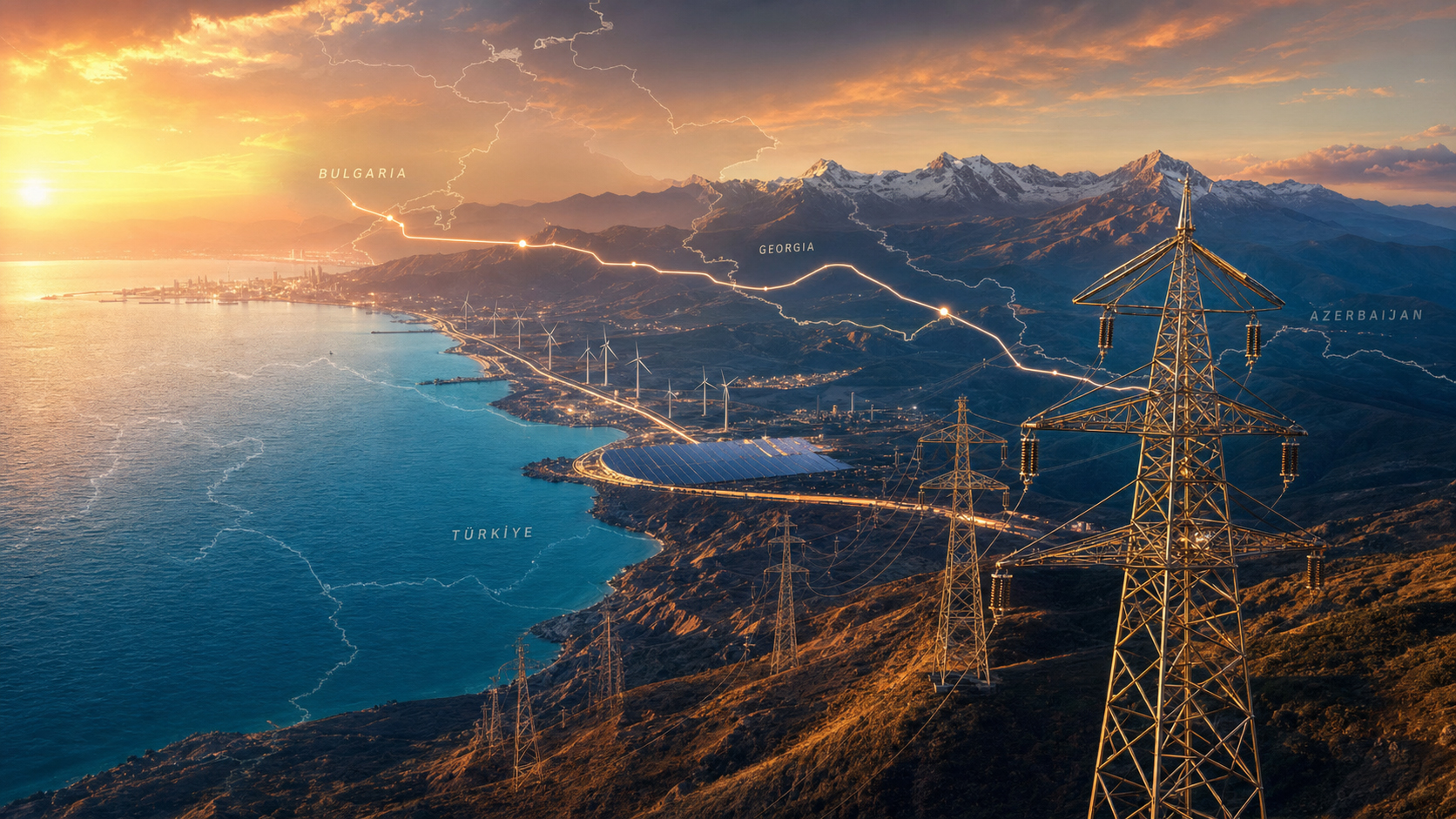
Electricity instead of natural gas: The Caucasus with Bulgaria as Europe's new energy hub? – Image: Xpert.Digital
Green electricity instead of gas: The critical but interesting plan for Europe's new potential energy artery
A multi-billion dollar project in the Caucasus: How four countries are securing our future electricity supply
New mega-cable planned: Why Turkey is suddenly becoming a green energy hub
Instead of oil and natural gas, green electricity is increasingly moving to the center of geopolitical interests. With an ambitious mega-project, Azerbaijan, Georgia, Turkey, and Bulgaria aim to create a new energy hub that will channel renewable electricity from the Caucasus and Central Asia directly into the European single market. But behind the sober, technical vision of a transcontinental power corridor lies far more than just climate policy. It's about a lucrative geo-economic role reversal that promises billions in profits, but at the same time harbors enormous security risks. Fears of sabotage, unresolved territorial disputes, and the mammoth task of technically synchronizing the power grids make it clear: the path to this new, green energy artery is paved with geopolitical dynamite. The following examines how these four countries could forever change Europe's energy supply – and what enormous hurdles still need to be overcome.
A political signal with economic implications
The announcement initially sounds technical and unspectacular: Azerbaijan, Georgia, Turkey, and Bulgaria are negotiating the establishment of a transit corridor for overland electricity transport. However, behind this matter-of-fact formulation lies one of the most ambitious energy policy realignments in the region between the Caspian Sea and the European Union in recent years. Georgia's Deputy Minister for Economy and Sustainable Development, Inga Pkhaladze, described the initiative as economically very important and interesting, as Georgia will not only serve as a transit country but also export its own electricity, which in turn should strengthen local businesses and the development of the domestic energy sector. According to her, the initiative is intended to enable the export of electricity from any interested country, especially its neighbors, to Europe via Georgia.
This statement marks a turning point in the region's energy history. For decades, the South Caucasus was primarily known as a transit corridor for oil and natural gas, most notably through the Baku-Tbilisi-Ceyhan pipeline and the later Southern Gas Corridor with its central component, TANAP. Now, a comparable model is to be applied to the electricity sector, with the aim of transporting renewable energy from the Caucasus and potentially from Central Asia via Turkey to Bulgaria and thus into the European Union. Turkish Energy Minister Alparslan Bayraktar himself drew this comparison, equating the future Azerbaijan-Georgia-Turkey electricity corridor with TANAP, the gas artery that fundamentally altered the structure of Caspian gas deliveries to the West.
From natural gas to green electricity: A geo-economic role reversal
The idea of a transregional power corridor is by no means new, but rather the result of a multi-year diplomatic process. As early as December 2022, Hungary, Romania, Georgia, and Azerbaijan agreed on a strategic partnership in the development and transmission of green energy and founded the joint Green Energy Corridor Power Company, or GECO for short. In September 2024, the transmission system operators of the four countries – Transelectrica from Romania, Azerenerji from Azerbaijan, Georgian State Electrosystem, and Hungary's MVM – signed a joint venture agreement to realize the so-called Black Sea Energy submarine cable. This project envisions a cable connection of approximately 1,195 kilometers through the Black Sea, of which about 1,100 kilometers will run underwater, with a capacity of around 1,000 megawatts and planned construction costs of up to €3.5 billion. The European Commission has already signaled its willingness to provide €2.3 billion in funding for this project.
In parallel, the idea of a purely land-based route developed, circumventing the costly and technically complex construction of a submarine cable and instead relying on existing and planned expansion of transmission networks across Georgian and Turkish territory. Azerbaijani energy expert Ilham Shaban, director of the Center for Oil Research in Azerbaijan, places the current negotiations in a historical context: The idea first took shape at an energy forum in Istanbul in November 2024, when the four countries agreed to create new interconnection facilities. The first official document, a Memorandum of Understanding, was signed in Baku on April 4, 2025. The energy ministers of the four states have continued coordinating the project in regular meetings since then, most recently in mid-May 2026 on the sidelines of the Istanbul Natural Resources Summit, where they agreed to establish a joint venture of the transmission system operators to transport renewable energy generated in the Caucasus and Caspian regions to Bulgaria via the Turkish grid.
Georgia between opportunity and geopolitical risk
For Georgia, a country without significant fossil fuel reserves but with considerable hydropower potential, its role as an energy hub represents a strategic upgrade that extends far beyond commercial interests. On May 18, 2026, President Ilham Aliyev and Georgian Prime Minister Irakli Kobakhidze signed a comprehensive energy cooperation agreement in Baku, covering gas deliveries, transit, and electricity supply to Georgia and its onward transmission to Turkey. On July 9, President Aliyev ratified the corresponding agreement on electricity supply and transit. However, figures on the current trading volume demonstrate how small the base still is: According to data for 2025, Georgia exported only around 0.5 terawatt-hours of electricity, almost four-fifths of which went to Turkey, while the transit volume was approximately 0.7 terawatt-hours, of which around 63 percent originated from Azerbaijan.
These comparatively small quantities illustrate that the project is still in its early stages and that its real economic leverage would only emerge with the expansion of the infrastructure and the development of new generation capacities. At the same time, an incident from the summer of 2026 demonstrates just how fragile Georgia's ambitions as an energy bridge actually are. Transmission line failures on July 24 and 25, 2026, transformed a technical malfunction into a public debate about possible sabotage, the role of Russian interests, and the true cost of Tbilisi's transit ambitions. This episode illustrates a structural weakness of the entire project: the physical infrastructure runs through a region characterized by unresolved territorial conflicts, Russian influence in nearby Abkhazia and South Ossetia, and a volatile security situation in the wider Caucasus.
Azerbaijan's dual role as supplier and hub
For Azerbaijan, the new corridor project represents a consistent continuation of its long-standing strategy to position itself as a multifunctional energy exporter, supplying not only oil and gas but also, increasingly, electricity from renewable sources. In a television interview, President Ilham Aliyev stated that his country intends to increase electricity exports to neighboring countries and enter the European energy market. Currently, the only route for electricity deliveries to Europe runs through Georgia and Turkey, but Azerbaijan aims to expand its export routes. For the export of 500 megawatts or even 1,000 megawatts of electricity, there are currently two options: one to Turkey and another to Iran. According to Aliyev, Europe could also be a potential customer in the future.
It is noteworthy that Azerbaijan is not limiting its commitment to a single route, but is pursuing several corridors in parallel. In addition to the land corridor now being negotiated via Georgia, Turkey, and Bulgaria, and the aforementioned submarine cable project through the Black Sea to Romania and Hungary, Azerbaijan, Kazakhstan, and Uzbekistan also signed an agreement in November 2024 for the laying of a power cable on the seabed of the Caspian Sea. This project, known as the "Green Caspian Energy Corridor," is intended to lay a high-voltage line from Aktau in Kazakhstan to the Alat Free Trade Zone in Azerbaijan, approximately 400 kilometers away, and was institutionally underpinned by the establishment of the Baku-based Green Corridor Alliance. In summary, this creates the image of a country that consciously wants to position itself as a central hub between Central Asia, the Caucasus and Europe, with Turkey taking the technical lead in land-based corridors, while Azerbaijan is the driving force in submarine cable projects.
Turkey as a central energy hub between East and West
Within this network of competing and complementary corridors, Turkey plays a key role, extending its existing importance as an energy hub for natural gas to the electricity sector. The country's geographical location between the Caucasus, the Middle East, and Southeast Europe allows Ankara to position itself as an indispensable link without having to produce significant amounts of its own renewable energy for export. Instead, the Turkish transmission grid functions as a physical transit medium for electricity from the Caucasus and potentially from Central Asia.
According to the Bulgarian Telegraph Agency, the government in Ankara intends to begin transporting green electricity from Azerbaijan to Bulgaria via Georgia and Turkey this year, with the long-term goal of also transporting green hydrogen along the same route. However, this is contingent on significant efforts to harmonize technical standards, joint infrastructure planning, and shared investment responsibility between the participating countries. Following the ministerial meeting in Istanbul, Bulgarian Deputy Energy Minister Kiril Temelkov announced that a roadmap would be developed to identify activities that would accelerate the implementation of the green energy corridor between Azerbaijan and Bulgaria.
Find a partner in Bulgaria 🇧🇬 🔍🤝 and become a partner ➕

Bulgaria - Find and become a partner - Image: Xpert.Digital
Bulgaria is transforming from an underestimated EU market into a strategic nearshoring hub for European industrial SMEs. With low location costs, EU legal certainty, access to the Eurozone, and strong logistics networks on the Black Sea, the country offers robust alternatives to Asian supply chains.
At the same time, Bulgarian companies also benefit from this growing economic network, which serves as a strong springboard for their own expansion into Germany, Europe and global markets.
More information here:
A thematic hub offering insights and expertise:
- Knowledge platform covering global and regional economies, innovation and industry-specific trends
- A collection of analyses, insights, and background information from our key areas of focus
- A place for expertise and information on current developments in business and technology
- A hub for companies seeking information on markets, digitalization, and industry innovations
Energy corridor under scrutiny: Between geopolitical opportunities and technical reality
Bulgaria as a gateway to the European single market
In this arrangement, Bulgaria assumes the role of gateway to the European Union, a situation of considerable strategic importance for the country itself. As the easternmost EU member on the Black Sea and with a direct border with Turkey, Bulgaria possesses the geographical prerequisites to act as the primary entry point for electricity originating in the Caucasus into the European single market. Bulgaria was already included in the submarine cable project in June 2023, while the land route now being negotiated could represent a significantly more cost-effective and faster-implementable alternative or complement to the multi-billion-euro cable project.
For Bulgaria, this presents an opportunity to further expand its existing role as an energy hub at the intersection of Southeast Europe, the Black Sea region, and the rest of the European interconnected grid. At the same time, the country faces the challenge of providing the necessary grid capacity to both receive and transmit larger volumes of electricity to other EU member states. An analysis by the Azerbaijani portal Caspia Lab succinctly summarizes the roles of the four participating countries: Azerbaijan could become both a supplier and a transit hub, Georgia would act as a central bridge and independent electricity exporter, Turkey would function as a central energy hub, and Bulgaria would serve as the gateway to the European market.
Between political symbolism and technical reality
Despite the impressive diplomatic momentum, independent experts urge caution in assessing the actual degree of implementation. Ilham Shaban emphasizes that while the project has progressed beyond the stage of a mere political declaration of intent, it would still be premature to speak of immediate implementation, as the undertaking remains in the phase of establishing technical, economic, and legal foundations. This assessment is supported by the timeline to date: almost two years have passed between the initial brainstorming in November 2024, the signing of the memorandum in April 2025, and the announcement of concrete negotiations in August 2026, without a binding timetable for the construction of physical infrastructure yet being established.
Key technical challenges include the need to synchronize grid frequencies and transmission standards between the participating countries, as the Georgian and Azerbaijani power grids, in particular, are historically more closely integrated with the post-Soviet interconnected system than with the European grid. Full integration into the European transmission network of the ENTSO-E organization requires extensive technical adjustments and significant investments in substations, high-voltage lines, and intelligent control systems. Furthermore, the question of financing arises: while concrete cost estimates of €3.5 billion and a partial commitment of €2.3 billion from the European Union already exist for the submarine cable project, comparable reliable figures are still lacking for the newly negotiated land route.
The European perspective: Diversification after the gas crisis
From the European Union's perspective, this initiative fits seamlessly into the strategy pursued since Russia's war of aggression against Ukraine: to systematically reduce energy dependence on Russia and develop alternative sources of energy of all kinds. Within the framework of the Global Gateway Initiative, the EU supports such projects both financially and organizationally, with the Caucasus region explicitly envisioned as a bridge for supplying Europe with renewable energy from the wider Central Asian region. The concept of the so-called Caspian-Black Sea-EU Green Energy Corridor, or CEGEC for short, assumes that the immense potential for wind, solar, and hydropower in Central Asia and the Caucasus far exceeds regional domestic demand and could be exported to the European Union on a significant scale from 2030 onwards.
For the European Union, the strategic value of this diversification lies not only in the sheer quantity of energy available, but above all in the spreading of geopolitical risk. An energy corridor that transports green electricity instead of fossil fuels also aligns better with the climate policy objectives of the European Green Deal than conventional gas or oil imports. At the same time, it must be borne in mind that this new corridor is by no means geopolitically risk-free, as it continues to run through countries that are themselves affected to varying degrees by authoritarian regimes, territorial conflicts, or foreign policy instability.
Economic implications for the economies involved
The economic implications of the corridor extend beyond pure energy trading and touch upon key issues of regional economic development. For Georgia, whose economy is traditionally heavily reliant on services, agriculture, and tourism, a successful establishment as an energy transit country could mean additional foreign exchange earnings, investments in domestic generation capacity, and a strengthening of its geopolitical negotiating position vis-à-vis larger neighbors. The support for local businesses through energy sector development, emphasized by Deputy Minister Pkhaladze, also points to potential multiplier effects in sectors such as construction, engineering services, and industrial supply.
For Azerbaijan, the diversification of export routes offers the opportunity to gradually emancipate its economy from the historical dominance of hydrocarbon exports and instead establish a second pillar based on renewable energies, which will also meet the long-term requirements of global decarbonization. Turkey, through its role as a transit country, can generate revenue from transit fees and simultaneously further solidify its geopolitical importance as an indispensable link between East and West, similar to its successful approach in the natural gas sector with the Southern Gas Corridor. Finally, for Bulgaria, its new role as an entry point to the EU single market could attract additional investment in modernizing its domestic transmission grid and strengthen the country's position within the Southeast European energy architecture.
Competing routes and the question of prioritization
A notable aspect of the current developments is that the participating states are not relying on a single corridor concept, but are pursuing several parallel projects, some of which are complementary, while others represent competing alternatives. Alongside the land route now under negotiation, the ambitious submarine cable project through the Black Sea remains in existence. Technical studies for this project are being conducted by the Italian consulting firm CESI, and it entered its next preparatory phase for the necessary marine surveys in February 2026. This cable is intended to cross the exclusive economic zones of Turkey and Bulgaria, but deliberately avoids their national territorial waters to prevent political complications.
The existence of two parallel projects raises the question of whether they are truly complementary capacity expansions or rather a strategic safeguard against the failure of one of the two projects. Critical voices within the expert community, such as those associated with the previously cited analysis by Caspia Lab, even question the extent to which the current announcements are actually close to implementation or whether they are at least partly symbolic energy PR intended to generate political attention without a secure basis for financing and implementation. This skepticism seems quite justified given the numerous declarations of intent, memoranda, and ministerial meetings that have not yet resulted in any concrete construction work.
Security risks and the vulnerability of critical infrastructure
The aforementioned disruptions to Georgian transmission lines in July 2026 vividly illustrate the risks a cross-border energy corridor through a geopolitically fragile region faces. Unlike, for example, a submarine cable, which is relatively protected, at least from direct sabotage by ground troops, the land route runs through areas potentially vulnerable to physical attacks, technical manipulation, or politically motivated disruptions. The debate surrounding possible sabotage and Russian influence in connection with the July 2026 incidents suggests that Moscow may have a significant interest in hindering or discrediting the establishment of an energy infrastructure independent of Russia in the South Caucasus.
This security dimension must not be underestimated in any objective economic assessment of the project. Investors and participating governments must therefore not only calculate the technical and financial aspects of the corridor, but also allocate significant resources for the physical protection of the infrastructure and for redundancy systems that ensure uninterrupted operation in the event of disruptions. The additional costs for security measures could noticeably impact the overall project's economic viability and represent a factor of uncertainty that has thus far received little attention in public announcements.
Outlook: Realistic expectations for a long-term transformation
The negotiations between Azerbaijan, Georgia, Turkey, and Bulgaria on a new energy corridor undoubtedly mark a significant step in the energy policy realignment of the Black Sea and Caucasus region. They fit into a larger mosaic of parallel initiatives, ranging from the bilateral agreements between Azerbaijan and Georgia and the submarine cable project with Romania and Hungary to the even earlier plans for a Caspian power link with Kazakhstan and Uzbekistan. What all these projects have in common is the aim of unlocking the enormous potential of renewable energies in Central Asia and the Caucasus and making them accessible to the European market via various transit routes.
Nevertheless, the project's true economic and political significance should be assessed with due objectivity. Current export volumes are still marginal compared to overall European demand, the technical and regulatory hurdles for full integration into the European interconnected network are considerable, and the security situation in the region remains volatile. While the Southern Gas Corridor and TANAP may serve as a geo-economic model, their realization required more than a decade of intensive diplomatic and financial efforts. It therefore seems realistic to view the current state of negotiations as an important but still early milestone on a long road, the ultimate success of which will depend significantly on whether the participating states succeed in harmonizing technical standards, developing viable financing models, and, above all, ensuring the long-term physical security of the cross-border infrastructure.
🎯🎯🎯 Data-driven B2B industry hub as a quasi-in-house solution

The quasi-in-house solution: How Xpert.Digital closes operational gaps in B2B marketing and sales – Smart Content-Driven Business - Image: Xpert.Digital
Xpert.Digital is a data-driven B2B industry hub led by Konrad Wolfenstein . The company acts as an external, quasi-in-house solution for industrial partners, closing operational gaps in marketing, content, and sales – without requiring additional resources on the client side.
More information here:
Your global marketing and business development partner
☑️ Our business language is English or German
☑️ NEW: Correspondence in your native language!

Konrad Wolfenstein
I and my team are happy to be available to you as your personal advisor.
You can contact me by filling out the contact form here [email protected]:or simply call me at +49 7348 4088 965. My email address is
I'm looking forward to our joint project.





