
The German natural gas crisis and the fossil fuel lull: When the natural gas system, which supposedly always works, fails
Xpert Pre-Release

Available in 27 languages 📢
Prefer Xpert.Digital on GoogleⓘPublished on: February 13, 2026 / Updated on: February 13, 2026 – Author: Konrad Wolfenstein
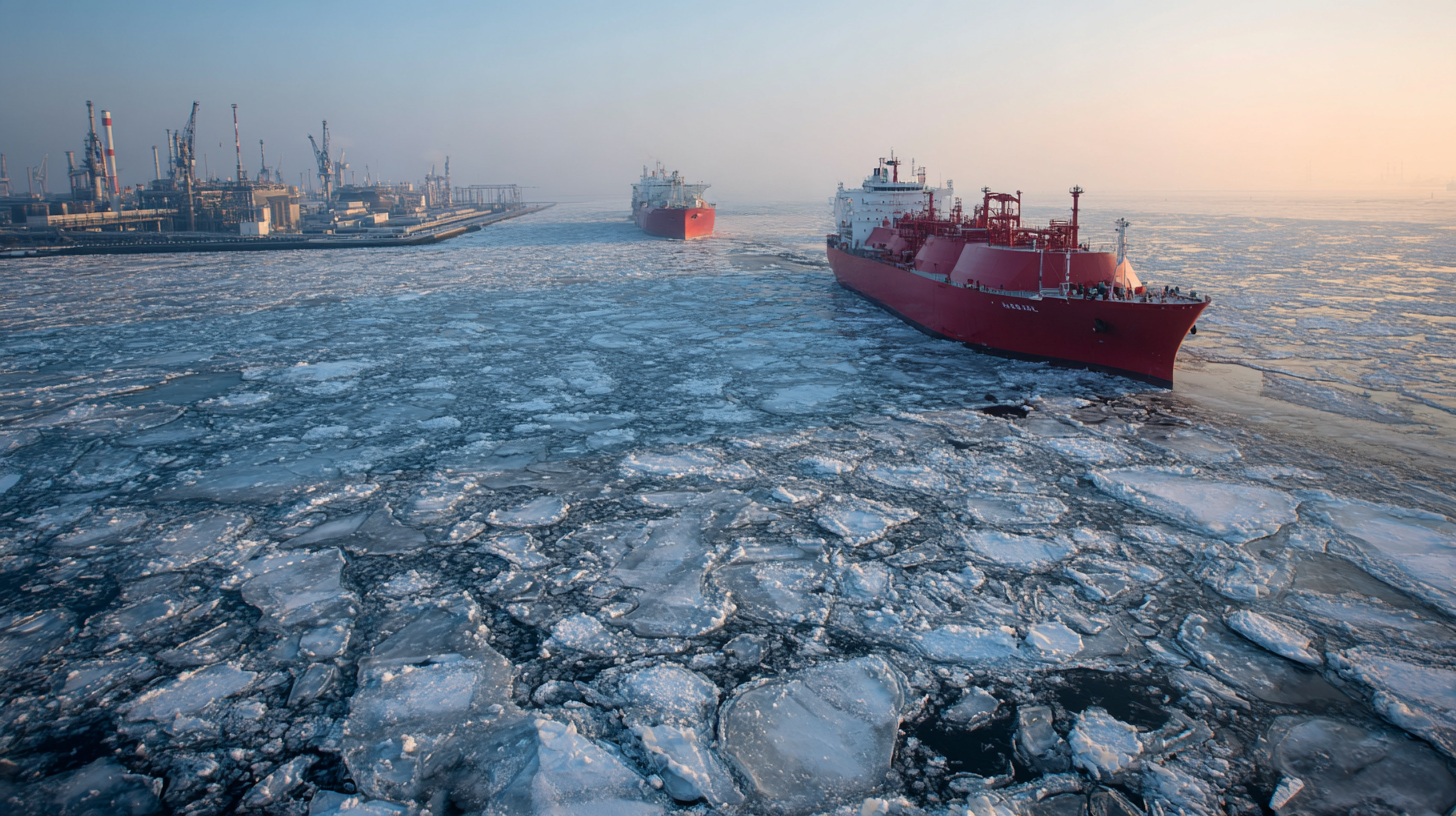
The German natural gas crisis and the fossil fuel shortage: When the natural gas system, which supposedly always works, fails – Creative image: Xpert.Digital
Storage facilities at a historic low: Filled to approximately 25 to 27 percent – The myth of a secure fossil fuel supply
System failure in the ice: What happens when the "reliable" energy source suddenly stops supplying power?
It was a scenario that shouldn't even be included in the reassurances of energy policy: In February 2026, a massive ice sheet settled off the coast of Rügen, bringing the Mukran LNG terminal to a standstill. While in Germany the "dark doldrums" of renewable energies—those periods when wind and sun are not generating power—are often and loudly debated politically, here a "fossil dark doldrums" of far more threatening proportions occurred. For over a week, no tanker could dock, the gas supply was disrupted, and this at a time when German gas storage levels had fallen to a historic low of under 30 percent.
Currently, German natural gas storage facilities are at a historically low level. Data from mid-February 2026 shows that gas storage facilities in Germany are approximately 25 to 27 percent full, depending on the specific day's measurements. Other sources cite a fill level of around 32 percent for the same period, which is also considered the lowest value for early February since observations began.
This means that gas storage levels are significantly below pre-crisis levels and even below the target levels of recent years, which were usually between 40 percent (end of January) and 80 percent (November 1).
This incident is more than a weather-related anecdote; it is symptomatic of a structural vulnerability often overlooked in the debate about security of supply. While pipeline gas flows continuously, LNG supply is a chain of individual deliveries, susceptible to extreme weather, logistical bottlenecks, and geopolitical tensions. We have freed ourselves from the fatal dependence on Russian pipeline gas, only to enter into a new, volatile dependence on liquefied natural gas.
The economic and security policy record of this system is sobering: Around 81 billion euros flow abroad annually for fossil fuel imports, while domestic renewable energies have long been the most cost-effective source of electricity. Yet double standards still prevail: A lack of storage capacity for renewables is considered a technical disqualifying factor; a port that freezes over in the case of fossil fuels, or a pipeline that is blown up, is merely considered an operational accident.
The following analysis sheds light on the background of this imbalance. It analyzes why the decentralized energy transition is not the security risk, but rather the actual insurance policy against geopolitical blackmail and physical attacks – and why the true costs of clinging to fossil fuels are far higher than the price on the gas bill.
Why frozen ports reveal more about our energy security than any calm weather
Despite the dramatic nature of the topic, we would like to point out that only a small proportion – just over ten percent – reaches Germany via LNG tankers from overseas (of which 96 percent currently come from the USA). The current natural gas crisis has far deeper and more politically significant causes than the focus on LNG terminals alone would suggest.
In February 2026, something happened that received little attention in the German energy debate, even though it should have been at the center of it. A thick layer of ice formed off the coast of Rügen, making the port of Mukran impassable for LNG tankers. The terminal there, one of the most important elements of Germany's gas infrastructure after the cessation of Russian pipeline deliveries, was unable to feed liquefied natural gas into the grid for over a week. Only the deployment of the icebreaker Neuwerk and the multi-purpose vessel Arkona made it possible to clear the shipping channel and guide the waiting tanker Minerva Amorgos, which had already been moored off Sassnitz for two weeks, to the terminal. At the same time, German gas storage levels plummeted to a historic low of around 32 percent, the lowest value ever recorded at the beginning of February. What transpired here was not a minor operational mishap, but a systemic disruption with potentially far-reaching consequences, raising fundamental questions about the architecture of our energy supply.
A terminal in the ice and the illusion of reliable supply chains
The Mukran LNG terminal was built in record time to create an alternative supply route after the end of Russian gas deliveries via Nord Stream. It was intended to guarantee security of supply. However, the reality of the winter of 2025/2026 revealed a fundamental weakness that had clearly been underestimated during the planning phase. The Federal Maritime and Hydrographic Agency reported particularly difficult ice conditions off the east coast of Rügen, which caused fairway buoys to disappear under the ice and reduced the navigational margin for the enormous LNG tankers to a critical minimum. The structural difference to pipeline gas became immediately apparent. While pipeline gas flows continuously, LNG arrives in individual batches, with each tanker representing a separate logistical challenge. If a ship is delayed by days, the entire supply is affected accordingly. Unlike an undersea pipeline, an LNG terminal is directly exposed to weather, ice, and sea conditions.
This vulnerability coincides with an already strained supply situation. At the beginning of February 2026, German gas storage facilities were at a fill level of less than 30 percent, the lowest level ever recorded on that date. Within a single month, reserves had plummeted by 25 percentage points, from 56 percent on New Year's Day to the current low, while gas consumption was around 7.4 percent above the long-term average. The gas storage facility in Rehden, Lower Saxony, once Germany's largest, had a fill level of just over eleven percent. According to calculations by the broadcaster ntv, the gas reserves would theoretically have lasted for about six more weeks, with hardly any room for additional strain.
The billion-dollar boondoggle of fossil fuel import dependency
The economic dimensions of Germany's dependence on fossil fuel imports are remarkable. According to a data analysis by KfW Research, imports of crude oil, natural gas, and hard coal cost Germany an average of €81 billion per year, which corresponds to approximately 2.5 percent of its gross domestic product or €1,000 per capita. In 2024, crude oil alone accounted for €51 billion and natural gas for €19 billion. Import dependence is 95 percent for natural gas, 98 percent for crude oil, and 100 percent for hard coal. Domestic natural gas production covered only about 5.4 percent of demand in 2024.
This structural dependency dramatically revealed its cost when Russia turned off the gas tap. In 2022, energy import costs exploded to a record high of €146 billion. While costs have since fallen, current levels remain significantly higher than pre-war levels. In 2024, the net import bill for coal, oil, and gas still amounted to around €69 billion. Although dependency has been diversified, from a 35 percent Russian share in 2021 to just 0.1 percent in 2024, the main suppliers are now Norway with 30 percent, the US with 19 percent, and the Netherlands with 17 percent. This represents a redistribution of dependency, not its elimination. Even the EU was still paying €1.31 billion for fossil fuel imports from Russia alone in July 2025, €995 million of which was for natural gas.
Where does our gas really come from?
In Germany, LNG terminals are currently primarily filled with fossil natural gas – that is, conventional methane. Fossil LNG is generally delivered by sea in special LNG tankers and originates to a very large extent from the United States.
Conventional methane, on the other hand, comes predominantly from fossil natural gas and oil fields, i.e., from drilling in deeper rock layers.
LNG stands for Liquefied Natural Gas, which is transported in cryogenic tankers and regasified at the terminal before being fed into the German natural gas network. The terminals in Wilhelmshaven, Brunsbüttel, and Lubmin/Mukran are explicitly designed as natural gas import terminals, through which Germany primarily intends to replace Russian pipeline gas and stabilize its supply security.
Where LNG deliveries come from via ships
Germany is currently heavily dependent on the USA for LNG imports by ship. Analyses of German gas imports show that in 2024, around 91 percent of the LNG delivered to German terminals originated in the USA. According to the Federal Network Agency, this share increased to approximately 96 percent of LNG imports in 2025, further highlighting the dominance of US LNG supplies. US LNG production is considered well-developed and is generally extracted from shale gas fields using fracking.
Besides the USA, smaller quantities of LNG also come from other exporting countries, such as Qatar, Nigeria, Egypt, Angola, and Trinidad and Tobago, but these play only a minor role for the German market. Overall, LNG imports accounted for around 10.3 percent of total German natural gas imports in 2025, less than one-tenth of total gas imports, but significantly more than in 2022.
Share of fossil natural gas from pipelines and LNG tankers
Of Germany's total fossil natural gas imports, the vast majority still arrives via pipelines, primarily from Norway, the Netherlands, and Belgium. Only a small share – just over ten percent – reaches Germany by LNG tanker from overseas, mainly from the USA. This means that the majority of Germany's fossil natural gas comes from pipeline imports, while LNG deliveries by ship serve as a flexible, but still significantly smaller, supplementary source of electricity.
The LNG terminals thus result in a dual supply structure: On the one hand, a stable basic supply of pipeline gas from Northern Europe, and on the other hand, a flexible but weather- and geopolitics-dependent LNG component via sea.
Fossil LNG today – and non-fossil gases in the future
The infrastructure of LNG terminals is currently primarily designed for handling fossil natural gas from overseas, particularly from the USA. However, there is already discussion about the possibility of these terminals eventually handling not only fossil gases, but also non-fossil gases such as biogenic gas or green e-methane or hydrogen. Political and industry discussions explicitly emphasize that LNG infrastructure can be part of the energy transition if it is increasingly supplied with climate-friendly gas in the future, instead of exclusively fossil fracking gas from the USA.
Our EU and German expertise in business development, sales and marketing

Our EU and German expertise in business development, sales and marketing - Image: Xpert.Digital
Industry focus areas: B2B, digitalization (from AI to XR), mechanical engineering, logistics, renewable energies and industry
More information here:
A thematic hub offering insights and expertise:
- Knowledge platform covering global and regional economies, innovation and industry-specific trends
- A collection of analyses, insights, and background information from our key areas of focus
- A place for expertise and information on current developments in business and technology
- A hub for companies seeking information on markets, digitalization, and industry innovations
The fossil fuel lull: Why we misjudge the risks of gas and LNG
The double standard in the supply security debate
A remarkable double standard has become established in the German energy debate. When wind and sun fail to shine, it is referred to as a "dark doldrums," a term that has been instrumentalized for years as a trump card against the energy transition. In December 2024, electricity generation from renewable energies fell to less than 6,000 megawatts, leading to a supply gap of up to 30 percent of electricity demand. Such events immediately dominate the public debate. But when an LNG terminal freezes over for weeks, gas storage levels plummet to historic lows, and tankers are unable to dock, it is dismissed as an unfortunate operational mishap, not a systemic failure.
The list of disruptive factors in the fossil fuel system is long and constantly growing. In September 2022, four explosions destroyed both sections of Nord Stream 1 and one section of Nord Stream 2. This act of sabotage demonstrated the vulnerability of key energy infrastructure. Submarine cables and pipelines in the North and Baltic Seas also remain at risk, as Dutch military expert Frederik Mertens of The Hague Center for Strategic Studies warns, who identifies both physical deep-sea sabotage and cyberattacks as realistic threats. In the spring of 2023, the Dutch intelligence service warned that Russia might be preparing acts of sabotage against energy infrastructure in the North Sea. Geopolitical tensions, autocratic regimes that use energy supplies as leverage, freezing ports, disrupted supply chains: all of these are the dark clouds of the fossil fuel system, but nobody calls them that.
The economic superiority of renewable system architecture
The counter-argument is clear. Current levelized costs of electricity (LCOE) show that renewables already represent the cheapest form of electricity generation. Ground-mounted photovoltaic systems produce electricity for 3.2 to 6.8 cents per kilowatt-hour, onshore wind turbines for 4 to 8 cents. New fossil fuel power plants, on the other hand, cost between 8 and 16 cents, and this trend is rising. According to IRENA, in 2024, electricity from renewable technologies was already produced more cheaply than electricity from fossil fuels in around 91 percent of all newly installed projects. By 2045, the LCOE of gas and steam power plants will rise to between 14.1 and 40.5 cents per kilowatt-hour due to rising CO2 prices and decreasing full-load hours.
In 2024, renewable energies already supplied 59 percent of Germany's electricity, making it the most important source of power – a new record. At the same time, electricity generation from hard coal fell by 31 percent and from lignite by nine percent to historic lows. Conventional electricity generation declined by eleven percent overall. Germany currently maintains approximately 65 gigawatts of dispatchable capacity from gas and coal-fired power plants to bridge supply gaps. However, the power plant strategy also envisions the construction of an additional 10 gigawatts of hydrogen-capable gas-fired power plants, which can initially be operated with natural gas and later with green hydrogen.
Storage, flexibility, and the end of a specious argument
The argument that a renewable energy system cannot function without storage is correct, but it is not an argument against the energy transition; rather, it describes a solvable technical challenge. Storage capacity in Germany is growing rapidly. Between 2021 and January 2025, residential storage systems increased from 1.6 to 14.8 gigawatt-hours, in addition to large-scale battery storage systems with 2.2 gigawatt-hours and commercial storage systems with 726.8 megawatt-hours. Total installed storage capacity amounted to 25.5 gigawatts at the end of 2025, which corresponds to approximately 43 percent of the target for 2030. The installed storage capacity at the end of 2025 was 79.4 gigawatt-hours, covering almost six percent of average daily electricity consumption.
The potential for further scaling is enormous. The grid development plan anticipates 41 to 94 gigawatts of large-scale battery storage capacity and 60 to 81 gigawatts of small-scale battery storage capacity between 2025 and 2045. Up to 25 percent of Germany's storage needs could be met on decommissioned power plant sites alone. Co-location models, in which storage facilities are built directly next to wind or solar power plants, offer a potential of around 33 gigawatts when combined with plants exceeding five megawatts of capacity. The preferential planning permission for storage facilities, which places them on a par with other critical infrastructure, provides the urgently needed planning certainty.
The Federal Network Agency has confirmed that Germany's electricity demand can be met 100 percent until at least 2031, even with reduced coal-fired power generation. The period of low wind and solar power generation is not an insurmountable physical problem, but rather a solvable system and design challenge that can be overcome through the intelligent interplay of storage, flexibility, load management, Europe-wide distributed generation, and controllable backup power plants.
Decentralization as a geopolitical insurance policy
The security policy dimension of the energy transition is systematically underestimated. Federal Environment Minister Carsten Schneider succinctly summarized this at the BMUKN conference at the end of January 2026 when he described renewable energies as "security energies." They not only reduce dependence on raw material imports, but their decentralized structure also makes them less vulnerable to external attacks. Around the same time, the German Renewable Energy Federation (BEE) emphasized that decentralized electricity generated by millions of individual renewable energy plants, distributed across the country, already makes a significant contribution to energy independence. This decentralization strengthens the resilience of the energy system against sabotage, cyberattacks, and supply disruptions.
The German Institute for International and Security Affairs (SWP) describes the geopolitical dimension of the energy transition as a fundamental system change. In a decarbonized energy system, economic value is no longer primarily generated from fossil resources, but rather through technology-dependent processes for producing final and usable energy. Electrifying the energy system reduces dependence on fossil fuel supply chains, strengthens access to energy as an economic factor, and thus indirectly also promotes national and international security.
The true risk calculation
The Energy Storage Initiative models Germany's security of supply annually, and its November 2025 update was more alarming than any previous edition. In a typical winter, storage levels would drop to around 20 percent by the end of April, without any safety margin. In an extremely cold winter, storage could have been depleted as early as mid-January 2026, resulting in shortfalls and potential rationing. Four factors further exacerbate the situation: a below-average initial fill level, higher gas consumption since summer 2025, the cessation of transit through Ukraine since January 1, 2025, and weaker storage filling within the EU internal market. Almost 50 percent more gas would need to be stored next summer than in the previous year to meet the fill level targets for the winter of 2026/2027.
The images of the frozen LNG terminal on Rügen are therefore far more than a winter anecdote. They illustrate a system that remains structurally vulnerable as long as it relies on global supply chains, fossil fuels, and centralized infrastructure. The real question is not whether the energy transition will work. After all, costs are falling, technologies are maturing, and storage capacity is growing. The real question is how long Germany will continue to delude itself into thinking that a fossil fuel-based system, whose terminals freeze over, whose pipelines are blown up, and whose suppliers allow themselves to be politically manipulated, represents the safe alternative.
Your global marketing and business development partner
☑️ Our business language is English or German
☑️ NEW: Correspondence in your native language!

Konrad Wolfenstein
I and my team are happy to be available to you as your personal advisor.
You can contact me by filling out the contact form here or simply call me at +49 7348 4088 965. My email address is: [email protected]
I'm looking forward to our joint project.
☑️ SME support in strategy, consulting, planning and implementation
☑️ Creation or realignment of the digital strategy and digitization
☑️ Expansion and optimization of international sales processes
☑️ Global & Digital B2B trading platforms
☑️ Pioneer Business Development / Marketing / PR / Trade Fairs
🎯🎯🎯 Benefit from Xpert.Digital's extensive, five-fold expertise in one comprehensive service package | BD, R&D, XR, PR & Digital Visibility Optimization

Benefit from Xpert.Digital's extensive, five-fold expertise in a comprehensive service package | R&D, XR, PR & Digital Visibility Optimization - Image: Xpert.Digital
Xpert.Digital possesses in-depth knowledge across various industries. This allows us to develop tailored strategies precisely aligned with the requirements and challenges of your specific market segment. By continuously analyzing market trends and monitoring industry developments, we can act proactively and offer innovative solutions. The combination of experience and expertise generates added value and provides our clients with a decisive competitive advantage.
More information here:










