

Germany's industrial lifelines are becoming clogged: BASF as a warning sign of an aging logistics nation
Xpert Pre-Release

Available in 27 languages 📢
Prefer Xpert.Digital on GoogleⓘPublished on: September 27, 2026 / Updated on: September 27, 2026 – Author: Konrad Wolfenstein
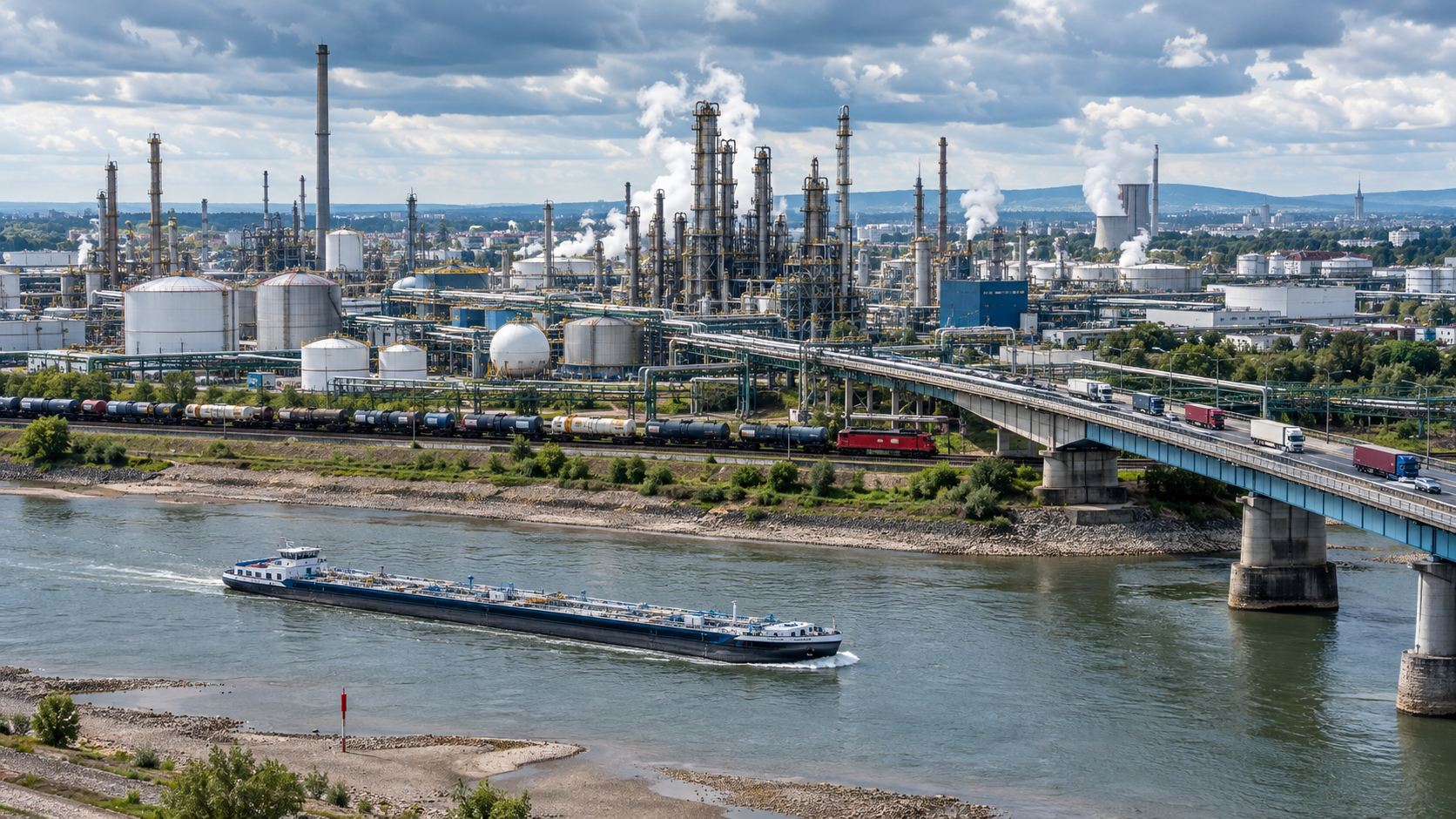
Germany's industrial lifelines are becoming clogged: BASF as a warning sign of an aging logistics nation – creative image on the topic, with AI: Xpert.Digital
How the Rhine and rail crisis is endangering the chemical company BASF and German industry
Ludwigshafen as a reflection of the challenges of an aging logistics nation
Advantage of synergy or systemic risk? The logistics crisis as exemplified by BASF
In the current debate surrounding Germany's competitiveness as an industrial location, the chemical company BASF in Ludwigshafen is coming into focus. The site is not only the heart of chemical production but also a striking example of the challenges facing the entire German logistics sector. The close integration of production, energy supply, and logistics in the world's largest contiguous chemical complex makes Ludwigshafen a prime example of efficiency, but it also harbors considerable risks. If transport routes such as the Rhine or the rail network are disrupted, the economic consequences are far-reaching. Production interruptions and supply bottlenecks threaten not only the company itself but also the entire value chain in Germany. Given climate risks, dilapidated infrastructure, and increasing demands on logistics, it is clear that the resilience of the industrial system can no longer be considered optional. The need for a comprehensive, strategic realignment of infrastructure policy is more urgent than ever to secure the future of the Ludwigshafen site and, consequently, of German industry.
If the Rhine floods and the railway line is disrupted, it's not just a chemical company that will lose – Germany as an industrial location will lose out
Ludwigshafen illustrates the entire German dilemma
The BASF site in Ludwigshafen is more than just a large factory. It is an industrial system where production, energy, raw materials, intermediates, and logistics are so closely intertwined that the performance of each individual element determines the productivity of the entire complex. Approximately 125 production plants with roughly 200 facilities are located on about ten square kilometers. Around 2,850 kilometers of pipelines, more than 230 kilometers of railway, and over 100 kilometers of roads connect the individual parts of the site. This scale makes Ludwigshafen the largest contiguous chemical complex in the world and a symbol of Germany's industrial strength.
However, this high level of integration creates a particular vulnerability. The interconnectedness saves energy, reduces transport between plants, and enables the use of byproducts as raw materials for other processes. This is economically efficient as long as material flows, plants, and external transport routes function reliably. However, if a central supply axis falters, chain reactions ensue. Missing raw materials cannot be replaced at will. Intermediate products often cannot be stored for long periods. Continuously operating chemical plants cannot be spontaneously switched on and off like a machine in a workshop. Production interruptions therefore not only result in lost revenue but also in additional costs for shutdown and restart processes, safety measures, quality controls, and the stabilization of downstream value chains.
Ludwigshafen thus encapsulates Germany's crucial industrial policy question: Can a highly developed production model remain competitive in the long term if public infrastructure becomes slower, more prone to disruption, and more expensive? BASF can modernize plants, charter specialized vessels, increase inventory levels, and digitally manage traffic flows. However, the company cannot single-handedly deepen the Rhine, renovate the national rail network, replace dilapidated bridges, or shorten approval times. The limit of operational optimization is reached where public infrastructure becomes a bottleneck.
The synergy advantage becomes a systemic risk
The integrated production principle is one of BASF's key competitive advantages. Production facilities are not isolated, but rather interconnected in terms of materials, energy, and logistics. Heat from one process can be used in another. Byproducts are further processed instead of being disposed of. Large quantities move within the plant via pipelines, which is more cost-effective, safer, and produces fewer emissions than transport by road or rail. This industrial density enables economies of scale that a single, smaller site could hardly achieve.
However, this same density increases the consequences of a disruption. In a traditional network with independent factories, a failure often remains locally contained. In a highly integrated chemical plant, the shutdown of a basic materials plant can affect several downstream production lines. From an economic perspective, integration increases both efficiency during normal operation and the potential extent of damage in a crisis. This is not an argument against the plant. However, it does mean that its logistics cannot be treated like an ordinary transport function. It is part of the production architecture and therefore just as system-critical as energy supply, process control technology, or plant safety.
The cost logic of past decades has partly underestimated this particularity. Companies optimized inventories, reduced buffers, and consolidated volumes on the most cost-effective modes of transport. In a stable environment, such approaches lower unit costs. However, they can create hidden dependencies. Low inventory levels improve tied-up capital in the short term but increase the risk that even a short delay will disrupt production. A high proportion of inland waterway transport reduces transport costs and emissions but creates a strong dependence on water levels. Shifting to rail sounds like a convincing alternative strategy, but it only works if free track, locomotives, wagons, personnel, and suitable transshipment points are actually available.
The economically relevant metric is therefore no longer solely the average price per ton transported. The decisive factor becomes the total cost, taking into account the probability of failure, restart costs, customer losses, and strategic dependencies. A seemingly more expensive logistics concept can be more cost-effective for the economy as a whole if it prevents production downtime. The network therefore doesn't need to abandon efficiency altogether, but rather adopt a broader definition of efficiency in which resilience is given a measurable value.
The Rhine is both a lifeline and a bottleneck
For Ludwigshafen, the Rhine is the most important major transport route. Around 40 percent of goods traffic at the site is handled by ship, with rail and truck each accounting for approximately 30 percent. At the three company-owned ports, numerous inland vessels typically dock, delivering liquid, solid, and gaseous materials or transporting products. Inland waterway transport is particularly economical for bulk goods and large quantities of liquids. One ship replaces many trucks, requires comparatively little personnel, and usually has low energy consumption per ton-kilometer.
These advantages, however, are not independent of the water level. If the water level drops, ships can only carry a portion of their normal cargo. The ship continues sailing, but transports significantly less. This increases the cost per ton, while simultaneously requiring more ships to move the same quantity. Since the available fleet cannot be expanded indefinitely in the short term, transport capacity becomes scarce. Freight rates and low-water surcharges rise. Companies compete for suitable vessels, while arrival times become less predictable.
The low water levels of 2018 made this mechanism visible. The supply to the Ludwigshafen site was so severely restricted that BASF had to reduce production. According to the company, the resulting loss in earnings amounted to approximately €250 million. The overall economic impact was even greater. Empirical studies show that a month with 30 days of low water can reduce German industrial production by about one percent. At the height of the crisis, the effect on industrial production was even estimated at around 1.5 percent. Industries at the beginning of the value chain are particularly affected because shortages of basic materials have a ripple effect on many downstream companies.
The Rhine is therefore not just a regional waterway. It is a major industrial artery of Europe and part of the Rhine-Alpine Corridor between the North Sea ports, the German industrial centers, Switzerland, and northern Italy. Its capacity impacts refineries, chemical plants, steel mills, building material manufacturers, energy suppliers, and agricultural logistics. When the water level drops, it doesn't just create an isolated shipping problem, but a supply shock for the real economy.
Climate risks are becoming balance sheet risks
Low water levels are not a new phenomenon. What is new is the growing economic relevance of more frequent or prolonged extreme periods. Higher temperatures, altered precipitation patterns, and lower summer flows increase uncertainty for companies that rely on dependable waterways. However, not every dry year is automatically a disaster. Modern forecasts, adapted vessels, and flexible planning can mitigate many of the impacts. The combination of prolonged low water levels, high industrial demand, a limited shipping fleet, and simultaneously restricted alternative transport options by rail and road becomes problematic.
For corporate management, this changes the nature of climate risk. It is no longer just a long-term sustainability issue, but also an operational and financial risk. Low water levels can affect raw material prices, freight costs, inventory, production volumes, delivery dates, and profits. Moreover, the effects are not linear. A moderate reduction can often be compensated for by reduced cargo capacity and additional voyages. However, below critical water levels, capacity drops sharply while costs skyrocket. In extreme situations, only specially designed vessels are available.
Companies therefore need scenario-based planning. Instead of calculating with an average water level, they must model several levels of stress: short periods of low water, seasonal bottlenecks, extreme droughts, and simultaneous disruptions to other modes of transport. For each level, minimum stock levels, alternative supply routes, available charter capacities, prioritized production chains, and financial impacts should be defined. This preparation is not an excessive safety margin. It is akin to insurance against events whose occurrence is variable but whose potential damage is very high.
The crucial shift in perspective lies in not treating climate adaptation as an add-on to the actual corporate strategy. For a location like Ludwigshafen, it is an integral part of the site strategy. A chemical industry group that regularly has to reduce its capacity utilization at low water levels loses attractiveness in international comparison, even if its plants are technologically outstanding.
BASF has reacted, but doesn't have all the levers at its disposal
BASF has drawn concrete conclusions from its experiences in 2018. Together with the Federal Institute of Hydrology, the company developed a digital early warning system that can predict water level developments up to six weeks in advance. This lead time makes it possible to build up stockpiles, bring forward shipments, secure additional vessels, and plan alternative modes of transport earlier. The economic benefit arises not only from improved forecasting but also from the additional decision-making time.
Furthermore, low-water-capable vessels have been integrated into the logistics. Particularly efficient special tankers can navigate the critical section of the Rhine near Kaub with significant cargo even at very low water levels. An innovative tanker can transport approximately 650 tons at a water level of 30 centimeters in Kaub. At moderate low water levels, its capacity of approximately 2,500 tons is roughly twice that of conventional ships. BASF has also made loading facilities more flexible and expanded them to facilitate transfers between ships, rail, and trucks.
These measures significantly increase resilience. At the same time, they demonstrate how expensive compensating for insufficient system resilience at the company level can be. Specialized vessels are technically demanding, limited in number, and not sufficient in every situation. Additional inventory ties up capital. Chartered capacity incurs costs even when it is not fully needed. Shifting to rail requires the availability of train tracks and rolling stock. More trucks exacerbate congestion, driver shortages, and emissions.
BASF can therefore mitigate the consequences of the infrastructure trap, but cannot eliminate the trap on its own. Operational resilience and public infrastructure are complementary. The worse the condition of the overall system, the more capital individual companies have to invest in stopgap solutions. This capital may then be lacking for new production facilities, research, electrification, or climate-friendly processes. Infrastructure deficiencies thus act like an indirect location tax: they don't appear on a tax bill, but permanently increase production costs.
The railway is a backup route without sufficient reserves
Rail transport is indispensable for BASF. The company's own rail network in Ludwigshafen spans more than 230 kilometers. Block trains connect the site with locations including Schwarzheide and Antwerp. The combined transport terminal enables the integration of rail and road transport. Rail offers significant advantages for heavy goods, hazardous materials, and predictable quantities. It can transport large volumes, reduces road congestion, and produces lower emissions per ton-kilometer than trucks.
In theory, rail is therefore the obvious backup for lost shipping capacity. In practice, however, it quickly reaches its limits. Additional transport requires not only available track capacity, but also locomotives, drivers, suitable tank cars, shunting capacity, and personnel at loading points. These are precisely the resources that many companies demand simultaneously during periods of low water. The reserve is therefore not exclusively available. The greater the crisis on the Rhine, the greater the pressure on the same rail system.
The German rail network has been suffering for years from bottlenecks, construction sites, unreliability, and a significant need for modernization. Companies are increasingly critical of transport times and punctuality in rail freight. Uncoordinated construction work, a lack of alternative routes, and limited sidings further hinder modal shifts. Single wagonload traffic is particularly vulnerable because it requires numerous shunting and consolidation operations. Block trains generally perform better, but require sufficient and regular freight volumes between fixed points.
German freight transport clearly illustrates the structural imbalance. In 2024, approximately 71 percent of transport volume was attributable to road transport, around 20 percent to rail, just over six percent to inland waterways, and almost three percent to pipelines. Rail thus contributes an important but limited share. If it is to simultaneously accommodate growth, support climate goals, and serve as a crisis reserve for waterways, it needs more capacity than would be required under average, normal operation.
The crucial industrial policy task is to stop viewing network redundancy as an unproductive luxury. Alternative routes, additional passing loops, high-performance nodes, and spare capacity windows reduce maximum utilization on paper. In reality, they increase the reliability and economic value of the system. A fully utilized network is efficient as long as nothing unforeseen happens. For an export-oriented industrial nation, that's not enough.
The truck remains necessary, but unsuitable as an all-purpose reserve
Road freight transport is flexible, readily available, and indispensable for short distances and time-critical deliveries. Trucks can transport individual shipments directly from sender to recipient, without the need for a marshalling yard or port. For the last mile and many specialized transport needs, there is no realistic alternative. Precisely for this reason, it would be wrong to treat trucks as a problem in general.
However, roads are only of limited use as a large-scale replacement for ships and trains. A single inland vessel can carry the cargo of many dozens or even hundreds of trucks, depending on its size and the water level. If shipping capacity is unavailable, this volume cannot be transferred to roads at short notice without providing additional vehicles, drivers, loading areas, and access routes. Around large industrial plants, bottlenecks quickly arise at gates, parking areas, and internal roads.
There are also negative economic consequences. More trucks increase wear and tear on roads and bridges, worsen traffic jams, and cause additional emissions. In turn, dilapidated bridges lead to weight restrictions, detours, and longer travel times. Thus, the alternative solution exacerbates part of the original infrastructure problem. The shortage of drivers also limits scalability. Even if enough vehicles were available, there is often a lack of personnel for a sustained increase in capacity.
For BASF and similar companies, road transport should therefore be part of a tiered system. It is suitable for critical sub-volumes, short-term peaks, and feeder traffic to rail or shipping terminals. However, it cannot replace a robust national strategy that relies on efficient waterways, rail corridors, and pipelines. Declaring roads a universal reserve shifts costs and risks onto an already heavily burdened network.
Pipelines are the underestimated infrastructure
In public debate, rail, road, and waterway transport dominate. However, pipelines are of equally strategic importance to the chemical industry. Within the Ludwigshafen plant, approximately 2,850 kilometers of pipelines connect production facilities, storage areas, and energy supply systems. These long-distance pipelines can continuously transport large quantities of certain gases and liquids. They require minimal personnel, eliminate numerous individual transports, and, if properly designed, are highly efficient.
The limitations lie in its high specificity. A pipeline is tied to specific products, pressures, safety requirements, and fixed start and end points. It cannot accommodate just any substance on short notice. Planning, permitting, and construction are capital-intensive. Nevertheless, its importance will grow. The transformation of industry requires new networks for hydrogen and carbon dioxide, more powerful power lines, and potentially additional connections between chemical parks, ports, storage facilities, and import terminals.
For Ludwigshafen, future viability therefore depends not only on traditional freight logistics. A climate-neutral or significantly lower-emission chemical complex requires large quantities of renewable energy, climate-friendly hydrogen, and solutions for unavoidable carbon dioxide emissions. If these networks are lacking or arrive too late, modern plants at the site could be less economically viable than new capacities in regions with more favorable energy and raw material supplies.
The new logistics architecture must therefore consider material, energy, and data flows together. A chemical park is not merely a production site, but a node in several infrastructure networks. Simply renovating roads and railways solves part of the problem. So does simply lowering energy prices without expanding networks and transport routes. Competitiveness arises from the interplay of all these systems.
The real crisis is structural, not cyclical
The German chemical industry has been facing challenges for several years. High energy and raw material costs, weak demand in key customer sectors, intense import competition, and increasing regulation are putting pressure on capacity utilization. In 2025, the average capacity utilization of chemical plants was around 72.5 percent. Pure chemical production declined by approximately 3.3 percent, while the pharmaceutical sector performed better. Capacity utilization remained low in 2026 as well. A temporary increase in production and sales in the second quarter did not yet signify a sustainable turnaround.
Low capacity utilization is particularly problematic for capital-intensive plants. Fixed costs for personnel, maintenance, security, energy infrastructure, and depreciation continue to accrue even when production decreases. When capacity utilization falls, these costs are spread across a smaller quantity. The location loses price competitiveness, even though technical productivity may remain unchanged. Additional logistics costs thus impact an industry whose margins are already under pressure.
BASF is responding with a far-reaching restructuring. The company generated sales of €59.7 billion in 2025, down from €61.4 billion in the previous year. EBITDA fell from €6.2 billion to €5.6 billion. At the same time, significant special charges were incurred for restructuring, particularly in connection with the cost-cutting program in Ludwigshafen. By mid-2026, approximately 7,000 jobs had been reduced company-wide since the beginning of 2024. The number of full-time equivalents at BASF SE in Ludwigshafen fell below 30,000 for the first time since 1954. According to the company, the proportion of highly competitive production units at the site increased from 78 percent in 2024 to 88 percent by mid-2026.
These figures illustrate two sides of the same coin. Ludwigshafen is not being abandoned, but rather selectively modernized and downsized. Unprofitable plants are being closed, and competitive areas are being strengthened. At the same time, BASF continues to invest in selected production facilities, such as modernized plants and additional capacity for specialized intermediates. This is understandable from a business perspective. However, it also means that every new investment in Germany must be more strongly justified than before.
In this situation, infrastructure issues act as a multiplier. Good logistics cannot fully compensate for high energy prices. However, poor logistics can ultimately disqualify an already disadvantaged location from investment decisions. Therefore, it is too simplistic to explain the crisis in the chemical industry solely as a consequence of the energy price shock or a weak economy. It is part of a broader location problem.
Your intralogistics experts

Consulting, planning and implementation of complete solutions for high-bay warehouses and automated storage systems - Image: Xpert.Digital
More information here:
True multimodality: The new logistics of the chemical industry
Zhanjiang intensifies internal competition for locations
BASF operates several integrated production sites worldwide. Besides Ludwigshafen, these include Antwerp, Freeport, Geismar, Nanjing, and the new Zhanjiang site in southern China. Zhanjiang was officially inaugurated in March 2026. Investments in the billions are planned over several years for the development of this new integrated production site. Located in a major growth market, the site is intended to supply customers in China with locally produced chemicals.
The comparison between Ludwigshafen and Zhanjiang should not be oversimplified. BASF is not automatically relocating all production from Germany to China. Customer proximity, product specialization, existing facilities, research, supply chains, and regional demand differ. Ludwigshafen possesses a knowledge and infrastructure network that has developed over decades and cannot be replicated overnight. At the same time, a new location offers the opportunity to plan plants according to current technical standards and to build them closer to growing sales markets.
This creates internal competition for capital. BASF plans investments of around €13 billion for the period 2026 to 2029. This is significantly less than in earlier planning stages. When the investment budget decreases, the pressure increases to prioritize projects strictly according to return on investment, risk, and strategic importance. Infrastructure quality not only affects operating costs but also the expected availability of a plant over decades.
Germany cannot win this competition through appeals alone. A traditional location doesn't receive a lasting advantage simply because it's historically significant. Ludwigshafen must impress with productivity, innovation, customer focus, expertise, security of supply, and the ability to transform. Reliable logistics are a fundamental prerequisite for this. If companies have to systematically factor in disruptions to rail, waterways, and roads in addition to higher energy and regulatory costs, the investment calculation will shift in favor of other regions.
Resilience costs money, failures cost more
In many companies, resilience is still viewed as a cost center. Additional warehouses, long-term charter agreements, alternative suppliers, and spare transport capacity initially appear inefficient. They increase ongoing expenses and tie up capital. This view is understandable, but incomplete. It compares visible preventative costs with a normal world in which disruptions do not occur.
A sound calculation must consider the total expected costs. These include the probability of a disruption occurring, potential production downtime, restart costs, contractual penalties, special freight charges, customer churn, and reputational damage. In continuous chemical processes, avoiding downtime can have significant economic value. Investing in a specialized vessel or additional inventory is then not merely an expensive reserve, but a viable option for maintaining production.
However, there is a point of diminishing effectiveness. A company cannot maintain complete parallel structures for every conceivable crisis. Excessive inventory incurs costs and can create additional risks, especially with substances that have a limited shelf life or are hazardous. A dedicated fleet is not practical for every product. Multiple modes of transport are only helpful if their disruptions are not strongly correlated. A flood, a closed railway line, and a damaged bridge can all affect the same region simultaneously.
The optimal strategy therefore lies between maximum just-in-time efficiency and costly full hedging. It is based on prioritizing critical material flows. Not every raw material requires the same safety stock. Not every product justifies the same delivery guarantee. Particularly critical intermediate products should be secured via multiple sources of supply, modes of transport, or storage locations. Less critical quantities can remain more cost-optimized.
Resilience thus becomes a portfolio strategy. The crucial point is not to build up as many reserves as possible everywhere, but to deploy scarce resources where a failure would have the greatest ripple effect.
The new logistics system needs true multimodality
Multimodality is often reduced to the mere availability of multiple modes of transport. A location is considered well-positioned if it can be reached by ship, rail, and road. This is insufficient. True multimodality means that goods can be transferred between modes of transport quickly and at reasonable additional costs. This requires compatible loading points, standardized containers, available vehicles, digital data, trained personnel, and pre-agreed capacities.
The requirements for the chemical industry are particularly stringent. Many substances require special tanks, safety distances, permits, and cleaning protocols. A product transported by inland waterway cannot simply be transferred to any tank car or tank truck. The transshipment facility must also be approved for the substance. Therefore, flexibility must be technically prepared well in advance of a crisis.
A viable concept for Ludwigshafen should integrate four levels. The first level is the basic supply via the most economical mode of transport. The second consists of contractually secured reserves, such as low-water-capable vessels and additional rail capacity. The third level comprises regional buffer storage facilities and alternative transshipment points along the Rhine or in adjacent corridors. The fourth level is a digital control system that integrates water levels, inventory, facility requirements, transport positions, and network disruptions in real time.
The greatest progress comes not from a single mode of transport, but from the coordination of the system. If a forecast warns of a critical water level six weeks in advance, purchasing, production, sales, and logistics must automatically evaluate shared scenarios. Which raw materials will become scarce? Which products have the highest margins or customer relevance? Which facilities can adjust their operation? Which shipments should be prioritized? Which customers require new delivery dates early? Only when these decisions are made in an integrated manner does data translate into operational resilience.
Digital logistics is more than shipment tracking
Digitalization offers significant opportunities, but it cannot eliminate physical bottlenecks. A digital system does not create an additional railway line or raise the water level of the Rhine. Its value lies in making better use of existing capacity, identifying bottlenecks earlier, and accelerating decision-making.
For a chemical industry network, a digital twin of logistics should map the most important material flows. It would need to link inventory levels, expected consumption, ship positions, train arrivals, road transit times, water level forecasts, and plant statuses. Simulations could show when a raw material becomes critical and which production chains would be affected. Based on this information, transport could be prioritized before the crisis becomes acute.
Another key factor is predictive arrival time. Unreliable information is often almost as problematic as delays themselves in industrial supply chains. If a train arrives three hours late, but the delay is known in advance, personnel and loading points can be rescheduled. If it arrives unexpectedly late, waiting times and subsequent problems arise. Reliable data standards between infrastructure operators, railway companies, ports, freight forwarders, and shippers are therefore essential for efficiency.
The digital automatic coupler could also transform European rail freight transport in the long term. It is designed to connect wagons mechanically, pneumatically, and digitally, accelerate shunting processes, and enable data lines throughout the entire train. The technology has undergone extensive testing until 2026, but widespread implementation requires significant investment and European coordination. For chemical logistics, faster, more transparent, and less labor-intensive freight transport would be particularly valuable.
However, digitalization should not be misunderstood as a replacement for maintenance. An intelligent control system on an overloaded network can optimize the situation. Both are necessary: modern control systems and additional physical capacity.
Germany invests a lot, but too slowly and in too fragmented a way
The investment needs of Germany's infrastructure are enormous. Hundreds of billions of euros are budgeted for highways, railways, and energy networks over the next decade. The municipal investment backlog was projected to exceed 200 billion euros in 2025. The gaps are particularly large in schools, roads, and transport infrastructure. Around a third of highway bridges are considered to be in need of modernization or reinforcement. The rail network and federal waterways also require significant repairs.
The investment framework plan for 2025 to 2029 allocates approximately €167 billion for transport infrastructure. Of this, roughly €106.8 billion is earmarked for railways, €52.25 billion for federal highways, and €7.5 billion for federal waterways. The scale is considerable. However, the crucial factor is not just the amount of money allocated, but how quickly it can be implemented in effective projects.
Planning and approval times, staff shortages in authorities, lengthy coordination processes, and limited construction capacity are delaying implementation. At the same time, numerous construction sites on an already strained network initially lead to additional disruptions. This is an unavoidable renovation paradox: to become more reliable in the long term, the system must be able to cope with short-term burdens caused by closures and detours.
An industry-oriented infrastructure policy must therefore prioritize. Not every road, lock, or railway line has the same economic importance. Corridors with high freight volumes, system-critical industries, and few alternative routes should be given preferential treatment. These include the Rhine and the parallel rail axes of the Rhine-Alpine Corridor, key chemical and port connections, and hubs around Mannheim and Ludwigshafen.
This does not mean planning infrastructure solely according to corporate interests. It means considering macroeconomic chain reactions. A bottleneck that delays raw materials for numerous industries can cause greater damage than its local condition might suggest.
The Middle Rhine region needs more than symbolic measures
A key project is the optimization of cargo handling on the Middle Rhine between Mainz and St. Goar. The goal is to increase the usable channel depth at narrow points from 1.90 to 2.10 meters. Twenty centimeters may seem small, but can be crucial during low water. Depending on the vessel, additional cargoes of approximately 200 to 250 tons would be possible, which corresponds to roughly ten to fifteen truckloads per trip.
This project illustrates the significant economic impact of targeted infrastructure measures. A relatively small improvement to the navigation channel increases the capacity of each voyage, lowers costs per ton, and reduces the need for additional vessels. At the same time, the effect should not be overestimated. Even an optimized navigation channel cannot prevent extreme low water levels. However, it does raise the threshold at which transport becomes uneconomical or impossible.
A combination of expansion, maintenance, and digital control is needed. Sediments must be monitored, navigation channels reliably marked, and water level forecasts further improved. Ports and transshipment facilities require sufficient capacity. Furthermore, permits for urgently needed adaptation projects should be expedited without a blanket reduction of environmental standards.
The Rhine is simultaneously a transport route, an ecosystem, a drinking water resource, and a habitat. A purely technical approach to deepening the river's course is therefore insufficient. Sustainable solutions must integrate shipping, aquatic ecology, and flood protection. Balancing these competing interests is challenging but achievable. The greater risk lies in postponing necessary decisions for years, thereby losing both economic and ecological options.
Industrial policy must think in terms of corridors rather than individual projects
Germany traditionally plans infrastructure according to mode of transport and responsibilities. Rail, road, waterways, energy, and digital networks are handled by different processes, budgets, and authorities. However, for businesses, the outcome of the overall system is what counts. A new rail link is of little use if the terminal is missing. A modern port fails to realize its full potential if access bridges are closed. A hydrogen plant remains underutilized if the pipeline network is delayed.
Effective industrial policy should therefore define strategic corridors and plan all relevant infrastructure jointly. The Rotterdam–Antwerp–Rhineland–Rhine-Neckar–Basel region is one such corridor. Here, seaports, inland waterways, railways, highways, pipelines, chemical parks, and major sales markets converge. Its efficiency influences a significant portion of European value creation.
For each corridor, bottlenecks, the consequences of disruptions, and the investment sequence should be assessed transparently. Maximum capacity is not the only important factor. The feasibility of diversions and recovery time must also be considered in the planning. A high-capacity route without alternatives can be riskier than a slightly slower network with multiple options.
Public investments also require reliable timelines. Companies make location decisions that have long-term implications. A non-binding outlook stating that a route will be expanded at some point or a hydrogen network will be available later has limited value. Investment security arises from funded projects, clear milestones, and transparent responsibilities.
The transformation initially exacerbates the logistics requirements
The decarbonization of industry is often understood as a technological transformation within the factory. In reality, it changes entire supply chains. New plants must be built, large components transported, power grids reinforced, and new raw materials sourced. Hydrogen, biomass, recycled materials, and captured carbon dioxide all require their own infrastructure. During the transition phase, this increases logistical demands before efficiency gains take effect.
This connection is particularly important for the chemical industry. Many climate-friendly processes require large amounts of renewable electricity. Electrified steam crackers, heat pumps, and electrolyzers increase the demands on grid connections. Hydrogen can partially replace natural gas and fossil fuels, but it must be available in sufficient quantities and at competitive prices. Carbon capture is only effective if transport and storage options exist.
Ludwigshafen possesses technical expertise, research strength, and a dense industrial structure. These advantages can accelerate the transformation. At the same time, the existing plant complexity increases the conversion effort. New networks must be integrated into existing systems without unduly disrupting production. Any delay in external infrastructure could jeopardize internal projects.
The political debate must therefore not pit climate protection against location policy. A high-performance rail network, modern inland vessels, efficient terminals, and new energy grids reduce emissions and strengthen competitiveness. Conversely, a poorly coordinated transformation can encourage production shifts without significantly improving the global emissions balance.
The regional damage extends far beyond BASF
BASF shapes Ludwigshafen and the entire Rhine-Neckar region. The site directly employs tens of thousands of people. In addition, jobs are created at suppliers, service providers, tradespeople, logistics companies, engineering firms, and research institutions. The economic impact extends to municipal revenues, real estate markets, and educational structures.
When BASF closes individual plants or reduces staff, this is initially a corporate decision. However, in aggregate, such measures can weaken regional networks. Specialized suppliers lose contracts, skilled workers migrate away, training capacities decline, and municipal budgets come under pressure. A gradual process in which investments increasingly shift to other locations while existing plants in Ludwigshafen are merely operated but not fundamentally modernized would be particularly problematic.
At the same time, alarmism would be unwarranted. Ludwigshafen remains BASF's largest integrated production site and possesses considerable technological substance. The majority of the plants are still considered competitive. New investments in selected areas demonstrate that the site has a future. The crucial question is what kind of future emerges: a modernized, smaller, and highly specialized integrated production site, or a gradually thinned-out system with growing fixed-cost problems.
Infrastructure policy indirectly, but permanently, influences this development. A reliable location attracts new value creation. A location prone to disruption first loses projects that can be easily relocated. Later, related activities also come under pressure. Therefore, the region should not treat logistics, energy, land development, skilled workers, and research separately. Together, they form the industrial ecosystem.
New logistics concepts need clear responsibilities
A robust concept cannot be created simply by increasing funding. It requires a clear division of responsibilities. BASF is responsible for the resilience of its own supply chains, plants, and warehouses. Logistics service providers must modernize their fleets, improve data quality, and offer flexible capacities. Infrastructure operators are responsible for infrastructure condition, construction site coordination, and transparent performance data. The federal government, states, and municipalities must reliably organize planning, financing, and permitting.
Today, gaps often arise at the interfaces. A company plans additional rail transport, but the terminal cannot handle it. An infrastructure operator is renovating a railway line while a crucial diversionary route is closed. A port is being expanded, but the road connections remain inadequate. Such problems are less a consequence of a lack of individual expertise than of inadequate overall management.
For systemically critical industrial regions, permanently operating corridor platforms would be beneficial. These platforms would allow shippers, transport companies, ports, network operators, authorities, and municipalities to coordinate capacity plans, construction sites, and crisis scenarios. It is crucial that these bodies do not merely engage in non-binding exchanges, but rather prepare decisions and make progress measurable.
Key performance indicators also need to be adjusted. The success of a transport network should not be measured solely by investment sums or tonnage transported. Punctuality, predictable transit times, readily available reserves, the duration of disruptions, and the quality of alternative routes are all relevant. For industrial companies, reliable arrival times are often more important than a theoretically high top speed.
From maximum efficiency to robust productivity
The German industrial model was geared for decades towards high efficiency, specialized division of labor, and reliable infrastructure. This model was successful because companies could assume that energy, raw materials, and transportation were largely available. The crises of recent years have shown that these assumptions can no longer be taken for granted.
The answer must be neither a costly return to complete self-sufficiency nor an unchanging adherence to extremely lean supply chains. What is needed is robust productivity. This combines competitive unit costs with the ability to withstand disruptions. This includes targeted inventory levels, alternative suppliers, multimodal transport options, digital transparency, and redundant infrastructure.
For BASF, this means aligning the integrated production system not only with material and energy efficiency, but also with resilience to disruptions. Critical material flows should be evaluated based on which plants and customers would be affected by a failure. Investments in logistics must be given the same strategic priority as investments in production capacity. A new plant without a secure supply is only productive on paper.
For Germany, robust productivity means not reflexively viewing spare capacity as waste. An additional track, a diversionary corridor, or a deepened shipping channel creates an economic option value. This infrastructure becomes valuable precisely when the standard system fails. Therefore, its benefits are not consistently apparent every year, but rather emerge most strongly during crises.
The infrastructure trap can be solved politically
Germany is not trapped in an inevitable downward spiral. The country possesses high levels of engineering expertise, strong companies, high-performing research, and substantial financial resources. The problems are solvable if priorities, procedures, and responsibilities are realigned.
First, the maintenance and modernization of critical corridors must be given priority. Second, rail needs additional capacity and better construction site coordination so that it functions not only during normal operations but also as a backup system. Third, the resilience of the Rhine should be strengthened through channel optimization, modern ships, forecasting systems, and efficient ports. Fourth, energy, hydrogen, and carbon dioxide networks must be integrated with transport planning. Fifth, permitting procedures require binding deadlines and sufficient staff.
BASF's ongoing task remains the consistent modernization of its Ludwigshafen site. Not every plant can be preserved, and not every production facility will remain competitive in Germany. A credible site strategy must differentiate between assets worth preserving, future-proof specialty products, and structurally unprofitable areas. Infrastructure policy must not hinder necessary business adjustments. However, it should ensure that good plants do not lose out due to avoidable systemic deficiencies.
The clear perspective, therefore, is this: Germany's problem is not that BASF is too big, the Rhine too important, or the Verbund system too complex. The problem lies in the fact that a highly developed industrial system is encountering an infrastructure whose reliability can no longer keep pace with its complexity. New logistics concepts must combine operational preparedness, multimodal capacity, and public modernization.
If this succeeds, Ludwigshafen can transform from a warning sign into a model location. If it fails, adaptation will still occur, but in a different way: through reduced production, less investment, and a gradual relocation of industrial value creation. The choice is not between change and stagnation. It is between planned modernization and unplanned decline in importance.
Your global marketing and business development partner
☑️ Our business language is English or German
☑️ NEW: Correspondence in your native language!

Konrad Wolfenstein
I and my team are happy to be available to you as your personal advisor.
You can contact me by filling out the contact form here [email protected]:or simply call me at +49 7348 4088 965. My email address is
I'm looking forward to our joint project.










