
Industrial supply chains in transition: “Best Practices for Industrial Supply Chain Optimization”
Xpert Pre-Release

Available in 27 languages 📢
Prefer Xpert.Digital on GoogleⓘPublished on: June 23, 2026 / Updated on: June 23, 2026 – Author: Konrad Wolfenstein
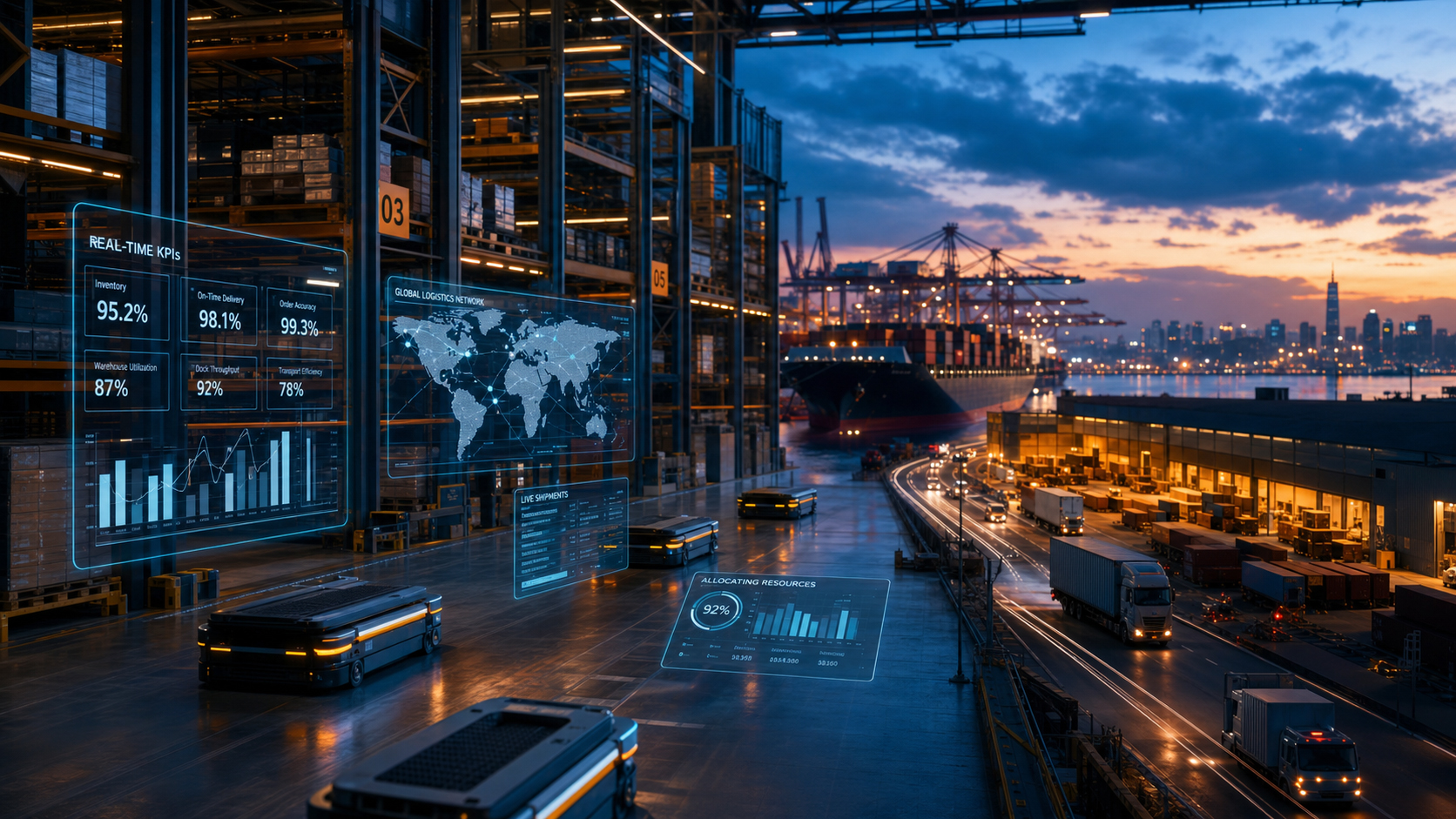
Industrial supply chains in transition: “Best Practices for Industrial Supply Chain Optimization” – Image: Xpert.Digital
Efficiency was yesterday: Why resilience is today the most important design principle in logistics
The end of single-sourcing: The new strategy for resilient industrial supply chains
From AI to nearshoring: The best strategies for optimizing industrial supply chains
The days when the industrial supply chain was viewed merely as an unavoidable cost factor and a purely logistical issue are definitively over. The global crises of recent years, at the very latest, have forced a fundamental paradigm shift in boardrooms: Today, the supply chain is the central nervous system of every successful industrial company. Whether geopolitical tensions, unpredictable market volatility, escalating freight costs, or the urgent call for greater sustainability – the challenges have grown massively, and disruptions are the new normal.
But this growing complexity presents a tremendous entrepreneurial opportunity. Those who stop merely reacting to crises and instead begin proactively shaping their supply chain gain a decisive advantage. By combining innovative technologies such as artificial intelligence, digital twins, and intelligent intralogistics with proven lean principles and strategic nearshoring, the supply chain can be transformed into a genuine competitive advantage. The following guide highlights key best practices and demonstrates in detail how companies can not only significantly reduce costs through data-driven visibility, resilient procurement networks, and smart automation, but also sustainably secure their profitability and future viability in a highly dynamic world.
Those who do not actively optimize their supply chain leave market share, margins and resilience to chance
"Proven methods for optimizing industrial supply chains"
Modern industrial companies face a fundamental realization: the supply chain is no longer a downstream logistics problem, but a primary strategic competitive factor. The disruption spiral of recent years—caused by the COVID-19 pandemic, geopolitical tensions, climate events, Suez Canal blockades, and escalating protectionism—has impressively demonstrated that operational excellence alone is insufficient. Anyone who still believes they can get by with reactive crisis management is ignoring a structural reality: supply chain disruptions are no longer the exception, but the new norm. The annual number of potential business interruption alerts rose to approximately 59,000 in 2025—an increase of about 33 percent compared to the roughly 44,000 alerts in 2024. Against this backdrop, a thorough, data-driven examination of best practices in industrial supply chain optimization is not only advisable, but essential from a business perspective.
The foundation of every optimization: Why visibility comes before strategy
Before companies even consider optimization measures, they must first fulfill a fundamental prerequisite: complete, near-real-time transparency across their supply chain. This insight sounds obvious, but it is shockingly rarely implemented in practice. According to Gartner, more than 50 percent of all supply chain costs are driven by strategic design decisions that are made once and rarely questioned afterward—concerning physical assets such as production facilities, distribution centers, and procurement sources. Those who cannot see these costs cannot control them.
Complete transparency means more than just real-time access to inventory levels or delivery times. It encompasses the entire value chain: from raw materials through Tier 2 and Tier 3 suppliers to the last mile of delivery. According to Accenture, companies that rely on so-called supply chain control towers—digital platforms that aggregate all data streams in a single cockpit—achieve measurable results: a reduction in logistics costs of three to five percent, an improvement in work efficiency of ten to twenty percent, and an inventory reduction of five to fifteen percent. While these figures may initially seem modest, they add up to considerable sums for a company with a logistics volume of several hundred million euros.
The real challenge lies in connecting data points across previously isolated systems—ERP, WMS, TMS, procurement platforms. Advanced control tower solutions utilize AI-powered decision support that detects anomalies, simulates scenarios, and proactively provides recommendations before a problem escalates. The shift from reactive to anticipatory supply chain management represents the key leap in quality.
When data becomes a weapon: AI and predictive analytics as core competencies
Anyone still relying on experience and historical averages as the basis for inventory planning and procurement decisions is simply using the wrong tools in a market with highly dynamic demand. Artificial intelligence and predictive analytics have evolved from pilot projects to industry-standard tools in recent years. According to McKinsey, AI-supported sales operations reduce logistics costs by five to twenty percent, inventory levels by twenty to thirty percent, and procurement expenditures by five to fifteen percent.
These figures are not based on theoretical models, but on real-world business practice. Predictive analytics improvessegenaccuracy by 20 to 50 percent compared to traditional spreadsheet approaches, with a typical payback period of six to twelve months. The decisive advantage lies in the ability to predict disruptions two to four weeks before they occur—enough time to activate alternative sources of supply, reallocate inventory, or adjust production plans.
Particularly revealing is the finding of a joint study by Deposco and Fulfillment IQ from 2025: Companies using unified AI platforms that integrate planning, execution, and analytics achieve a two- to three-fold higher return on investment than companies relying on isolated, standalone solutions. This underscores a fundamental principle: AI investments only reach their full potential when embedded in a coherent, cross-siloed data architecture. According to BCG, 86 percent of supply chain executives plan to invest in AI and advanced analytics for cost reduction in 2025—a clear indication that the industry has taken note.
The silent revolution in the warehouse: Automation and intralogistics as productivity levers
The transformation of industrial intralogistics is happening faster than many decision-makers realize. While robotics and automation were long considered the domain of large corporations, the technology is now accessible and economically viable for medium-sized businesses as well. By 2025, 48 percent of the surveyed companies stated that they were already using robotics in their operations—a continuous increase that demonstrates the structural demand for automation solutions.
Autonomous mobile robots (AMRs), automated storage and retrieval systems (AS/RS), and AI-controlled picking robots are no longer visions of the future, but operational reality in modern distribution centers. Their deployment addresses two of the most pressing challenges simultaneously: labor shortages and efficiency improvements. According to an industry survey from 2025, 67 percent of logistics managers see the greatest need for improvement in capacity utilization, 58 percent in order accuracy, and 49 percent in packaging optimization—all areas where automation solutions can directly make a difference.
The decisive shift in intralogistics in 2025 lies not in individual robotics installations, but in their networking. Orchestration platforms that connect AMRs, automated guided vehicles (AGVs), conveyor technology, automated warehouses, and human workers into an integrated execution system elevate automation to a qualitatively new level. AI does not take control of the entire process, but rather supports decision-making by predicting bottlenecks and adjusting priorities in real time. This form of human-machine collaboration is not only more efficient but also more robust against unforeseen events.
The Digital Twin: When simulation becomes the basis for decision-making
Among the technological innovations of recent years, the digital twin stands out as a particularly powerful concept—and its strategic importance for supply chain optimization is still underestimated. A digital twin is a synchronized digital representation of a physical system that makes it possible to simulate operational scenarios before they are implemented in reality. For complex industrial supply chains, this means that decision-makers can simulate the impact of a delivery delay, a production disruption, or a fluctuation in demand in the digital model before reacting—instead of improvising after the damage has occurred.
The range of use cases is considerable. At the asset level, digital twins enable predictive maintenance of machinery and vehicles by evaluating sensor data in real time and forecasting failures. At the process level, warehouse workflows, picking strategies, and transport routes can be optimized. At the network level, companies can map their entire procurement and distribution network—including all suppliers, warehouses, and transport hubs—as a living model and simulate geopolitical risk scenarios. A global logistics company managing hundreds of vehicles and distribution points reduced its response time to deviations from days to hours by using a digital twin, as rerouting recommendations were automatically generated and customer notifications were updated in real time.
2025 marks a turning point: Digital twins will no longer be tested only in pilot projects, but integrated into ongoing logistics operations. The market for digital twins in logistics is growing accordingly – driven by decreasing implementation costs, improved data integration, and the increasing pressure to enhance resilience. For industrial companies operating complex, globally distributed supply chains, the digital twin is not a luxury, but a strategic tool for risk mitigation.
From single sourcing to supply chain architecture: The reorganization of procurement strategy
No issue has shaken industrial procurement strategy more profoundly in recent years than the realization of the structural vulnerability of monolithic supply chains. Single-sourcing—reliance on a single supplier for critical components—has proven to be a security illusion in practice: advantageous in calm times, but existentially threatening in times of crisis. The industry's response is multi-sourcing and geographical diversification, coupled with a systematic reassessment of the supplier network.
Multi-sourcing doesn't simply mean doubling procurement channels. It's a structured decision-making architecture that defines the optimal balance between efficiency, cost optimization, and risk mitigation for each category. For critical, high-volume components, dual-sourcing models with defined volume shares of approximately 70:30 or 60:40 between the primary and alternative suppliers are recommended. Operationally, multi-sourcing ensures greater on-time delivery and volume flexibility—a finding well-supported by scientific studies.
The speed at which companies are restructuring their networks is remarkable: Between 2022 and 2024, 73 percent of the surveyed supply chain decision-makers added or removed production sites; 50 percent developed new sources of supply among existing partners; and 48 percent actively established new supplier relationships. These figures demonstrate a historically rare dynamism in the industrial procurement landscape—a dynamism that can be leveraged strategically but also requires coordination efforts. Building a diversified supplier network follows a proven seven-step process: from taking stock of the current portfolio and conducting market research and qualifying new suppliers to continuous monitoring and optimization.
Nearshoring and regionalization: Geopolitics as a driver of a structural paradigm shift
The relocation of production and procurement sites closer to end markets—nearshoring and regionalization—is more than a temporary trend. It reflects a fundamental reassessment of the cost-risk equation in globalized supply chains. The 2025 Global Supply Chain Resilience Report, based on surveys of thousands of global logistics and production managers, confirms nearshoring and regionalization as dominant strategies with growing momentum in Europe and North America.
The economic logic behind it is compelling: Shorter transport routes reduce transit times and freight costs, lessen exposure to geopolitical risks such as embargoes or port strikes, and improve responsiveness to demand fluctuations. The 2024 Red Sea crisis provided a cautionary tale: Companies heavily reliant on the Suez route had no contingency plans and faced delivery delays of a week or more, resulting in production stoppages and rapidly escalating warehousing costs. However, the ability to quickly restructure networks comes at a price: According to Gartner, most companies need at least 12 months to regionalize just 25 percent of their supply chain capacity—39 percent need 19 months or more.
For European industrial companies, nearshoring also opens up specific opportunities in Eastern Europe, North Africa, and Turkey—regions that are becoming increasingly attractive due to lower labor costs, improved infrastructure, and proximity to the EU. Diversifying into these regions combines operational resilience with long-term competitiveness and simultaneously creates new foundations for stable, collaborative supplier relationships. Nearshoring is not a blanket recommendation for all product categories, but rather a differentiated strategic decision that considers labor costs, quality standards, infrastructure, and political stability simultaneously.
LTW Intralogistics Solutions

LTW Intralogistics – Engineers of Flow - Image: LTW Intralogistics GmbH
LTW offers its customers not individual components, but integrated complete solutions. Consulting, planning, mechanical and electrotechnical components, control and automation technology, as well as software and service – everything is networked and precisely coordinated.
In-house production of key components is particularly advantageous. This allows for optimal control of quality, supply chains, and interfaces.
LTW stands for reliability, transparency, and collaborative partnership. Loyalty and honesty are firmly anchored in the company's philosophy – a handshake still means something here.
Related to this:
AI-ready supply chains: Faster decisions, higher returns
Lean principles in a digital world: Eliminating waste, activating value streams
The Lean philosophy—originally derived from the Toyota Production System—has proven its effectiveness in industrial production for decades. In a world of hyper-complex, global supply chains, it remains highly relevant as a methodological foundation, but gains a new dimension through digital tools that reveal inefficiencies and accelerate improvement processes. Value stream mapping, just-in-time production, and Kanban systems are not outdated concepts—they are being further developed into precise optimization instruments through digital visualization tools and AI-supported process analysis.
Kaizen—the principle of continuous, incremental improvement—is proving to be the cultural backbone of successful supply chain transformations. Industrial companies that have consistently integrated Kaizen into their supply chain culture report substantial reductions in working capital over multi-year transformation processes—in one documented case, by more than fifty percent within four years. The strength of Kaizen lies not in spectacular individual successes, but in the accumulated impact of thousands of small improvements that together create a cultural infrastructure of continuous excellence.
The transition from a push supply chain—where production and stockpiling are based on forecasts—to a demand-driven lean supply chain is one of the most effective optimization measures available. It not only reduces storage costs and tied-up capital but also increases responsiveness to actual market demand. Combined with digital demand-sensing tools that process signals from point-of-sale data, e-commerce platforms, and social media in real time, this creates a planning foundation that far surpasses traditional forecasting methods.
Sustainability as an obligation and an opportunity: ESG integration into the supply chain strategy
Supply chain sustainability is no longer a corporate social responsibility exercise to be written into the annual report and then forgotten. It has become a regulatory obligation and a competitive factor. The EU Supply Chain Directive and the Corporate Sustainability Reporting Directive (CSRD) require large companies to report and manage emissions from their entire value chain, including Scope 3 emissions. Scope 3 emissions—those generated outside the company along the supply chain—represent, on average, around 75 percent of all corporate emissions. At the same time, around 70 percent of companies surveyed by MIT stated that they do not have sufficient data from their suppliers to accurately measure these emissions.
This data gap is a strategic problem. Companies that don't know their Scope 3 emissions can neither manage them nor credibly communicate them to regulators and investors. Sustainable supply chain optimization therefore begins with consistent data collection at all supply chain levels—and requires both technological infrastructure and close cooperation with supplier partners. Route optimization to reduce fuel consumption, shipment consolidation, investments in low-emission vehicle fleets, and energy-efficient warehousing are operational measures that simultaneously reduce costs and the carbon footprint.
Scope 3 reduction measures in the supply network can theoretically address up to 70 percent of a company's total carbon footprint. This dimension makes sustainability management an economically rational investment—especially given the growing carbon pricing mechanisms, the threat of supply chain law sanctions, and increasingly climate-conscious procurement guidelines from major customers. Sustainability and profitability are no longer opposites in modern supply chain strategy—but increasingly congruent goals.
Integrated business planning model: When silos break down and added value is created
A frequently underestimated lever for supply chain optimization lies in the organizational architecture itself: the integration of demand planning, supply planning, production, warehousing, pricing, event management, and distribution into a coherent planning system—known as Integrated Business Planning (IBP). IBP overcomes the traditional silo mentality, where sales, production, purchasing, and logistics follow their own, often conflicting, planning cycles.
Operational reality shows that many companies, despite having ERP systems, still plan in functional silos: Sales systematically overestimates demand, production maintains ample buffer stock, purchasing hedges against shortages through early-buying strategies, and logistics optimizes locally. The result is oversized inventory, insufficient delivery capacity coupled with excess capital tied up in unused stock, and slow decision-making cycles. Integrated Business Planning (IBP) implementations require not only technological integration but, above all, a change in governance structures: clear process responsibilities, standardized KPIs, and a company-wide planning cycle with defined escalation and decision-making rules.
Advanced IBP approaches also link internal planning with external signals: supplier capacities, market price developments, competitor activities, and macroeconomic indicators are all incorporated into the planning process. AI-supported scenario analyses make it possible to evaluate multiple planning scenarios in parallel and prepare contingent decisions—a significant improvement over the classic consensus plan, which relies on a single demand forecast and structurally fails when deviations occur.
Supplier management as a value creation partnership: Beyond the limits of price competition
Transactional supplier management—reduced to price negotiations, quality checks, and reminders for late deliveries—is outdated in a volatile global environment. What companies need today are robust, collaborative supplier relationships based on shared goals, transparency, and mutual added value. This insight is not new, but its operational implementation remains incomplete in many places.
Best practice begins with rigorous supplier segmentation based on spending volume, strategic criticality, and risk exposure. Based on this, differentiated engagement models are developed: key suppliers receive more intensive support, joint development projects, and deeper data transparency; less critical suppliers are efficiently managed via standardized processes and self-service portals. Regular supplier audits—supported by data-driven metrics such as error rates, on-time delivery, and sustainability scores—form the basis for fact-based partnership discussions.
Electronic data interchange (EDI) and collaborative planning platforms, which give suppliers insight into demand forecasts, inventory levels, and production plans, dramatically improve planning accuracy on the supplier side. Studies show that collaborative forecasting approaches can improve supplier forecast accuracy by 35 to 42 percent and reduce supply chain disruptions by 31 percent. In a world where disruptions escalate, building robust, transparent supplier partnerships is the most effective insurance against production downtime.
The economic imperative: What's at stake
The total costs of the US logistics industry reached approximately $2.6 trillion in 2024—equivalent to 8.8 percent of GDP, compared to a pre-crisis baseline of 7.4 to 8.0 percent. This structurally elevated cost base is largely the result of established supply chain vulnerabilities: excessively long and concentrated supply chains, insufficient buffers, lack of visibility, and delayed digital transformation. The economic impact of supply chain disruptions does not propagate linearly, but rather exponentially through value networks: estimates suggest that roughly half of the total effect of a disruption results from its amplification by the supply chain network.
At the company level, the return on targeted optimization investments is clear: According to Accenture, companies with AI-ready supply chains are 23 percent more profitable than their competitors. Predictive analytics implementations typically deliver a return on investment within eight to fourteen months, with sustainable cost reductions in logistics, warehousing, and procurement. These figures place investments in supply chain optimization in a unique return category—far superior to many other corporate investment projects.
Particularly revealing is the correlation between the breadth of AI adoption and business success. McKinsey describes the paradigm in which leading companies view AI not as a collection of isolated use cases, but rather as an integrated data foundation and capabilities that seamlessly connect planning, execution, and analytics. This integrated approach delivers a two- to three-fold higher return on investment than networked, standalone solutions.
Resilience as a design principle: The end of the optimization dogma
For decades, a single overarching principle governed the industrial supply chain: efficiency. Just-in-time became the production philosophy, single-sourcing the cost strategy, and global expansion the basis for economies of scale. These principles have undeniably created enormous prosperity—but at the same time, they have produced systems optimized for efficiency yet fragile against disruption. The pandemic has ruthlessly exposed this systemic fragility.
The new paradigm is resilience as a design principle. This doesn't mean sacrificing efficiency, but rather creating a balanced relationship between efficiency and resilience—which inevitably implies higher inventory costs, a broader supplier footprint, and more generous safety buffers. The core instruments of a resilience strategy—supplier diversification, nearshoring, inventory buffers for critical components, scenario planning, and contingency playbooks—are not luxuries, but fundamental business safeguards.
Scenario planning and stress testing should become a regular part of strategic planning cycles. This involves not only addressing known risks, but also developing responsiveness to unknown, unpredictable events—black swan scenarios, which by definition cannot be derived from historical data. Companies that embed resilience as a systemic design feature of their supply chain benefit not only from a lower risk of failure, but also from faster recovery after disruptions—an advantage that translates into market share gains over less resilient competitors.
The human dimension: competence, culture and change management
No technology, no algorithm, and no process design can be effective without qualified people who understand, use, and continuously improve these tools. This sounds obvious, but it is often underestimated in practice. The digitalization of the supply chain creates a new need for skills: data analysts who understand logistics processes; supply chain managers who can critically evaluate AI recommendations; and leaders who can break down functional silos and promote cross-departmental collaboration.
The cultural dimension deserves particular attention. Continuous improvement cultures don't arise from directives, but from lived examples, clear structures for problem identification, and the consistent celebration of small improvements. Kaizen implementations that are successful in the long term are characterized by employees actively identifying problems, proposing solutions, and taking ownership of improvement processes—instead of remaining in a mode where problems are hidden to avoid confrontation. This cultural shift is the most difficult, yet most effective, part of any supply chain transformation.
Investments in training and talent development pay off immediately. Supply chain organizations that train their teams in data analysis, digital planning tools, and agile working methods build sustainable internal expertise instead of remaining permanently dependent on external consultants. Strategic sovereignty over one's own supply chain begins with building human expertise—and never ends.
Conclusion: The optimized supply chain as a strategic differentiator
Industrial supply chain optimization is not a one-off project, but an ongoing strategic process. Companies that invest in visibility, consistently use AI and analytics, strategically diversify their supplier base, actively evaluate nearshoring options, integrate sustainability into their procurement strategy, and build a culture of continuous improvement create a supply chain that is not only more cost-efficient, but also more resilient and future-proof.
The data is clear: AI-ready supply chains are demonstrably more profitable, predictive analytics delivers a rapid ROI, digital twins transform decision-making, and resilience investments pay off in crises through market share gains. Those who understand these connections and act strategically position their supply chain not as a cost factor, but as a source of sustainable competitive advantage.
Consulting - Planning - Implementation

Konrad Wolfenstein
I would be happy to serve as your personal advisor.
You can contact me at wolfenstein∂xpert.digital or
Just call me on +49 7348 4088 965 .
Your container high-bay warehouse and container terminal experts

Container high-bay warehouses and container terminals: The logistical interplay – expert advice and solutions - Creative image: Xpert.Digital
This innovative technology promises to fundamentally change container logistics. Instead of stacking containers horizontally as before, they will be stored vertically in multi-story steel racking structures. This not only allows for a drastic increase in storage capacity within the same area, but also revolutionizes all processes at the container terminal.
More information here:










