
The illusion of security: When ports, energy and chips are all at risk: Germany's logistics put to the test
Xpert Pre-Release

Available in 27 languages 📢
Prefer Xpert.Digital on GoogleⓘPublished on: January 15, 2026 / Updated on: January 15, 2026 – Author: Konrad Wolfenstein
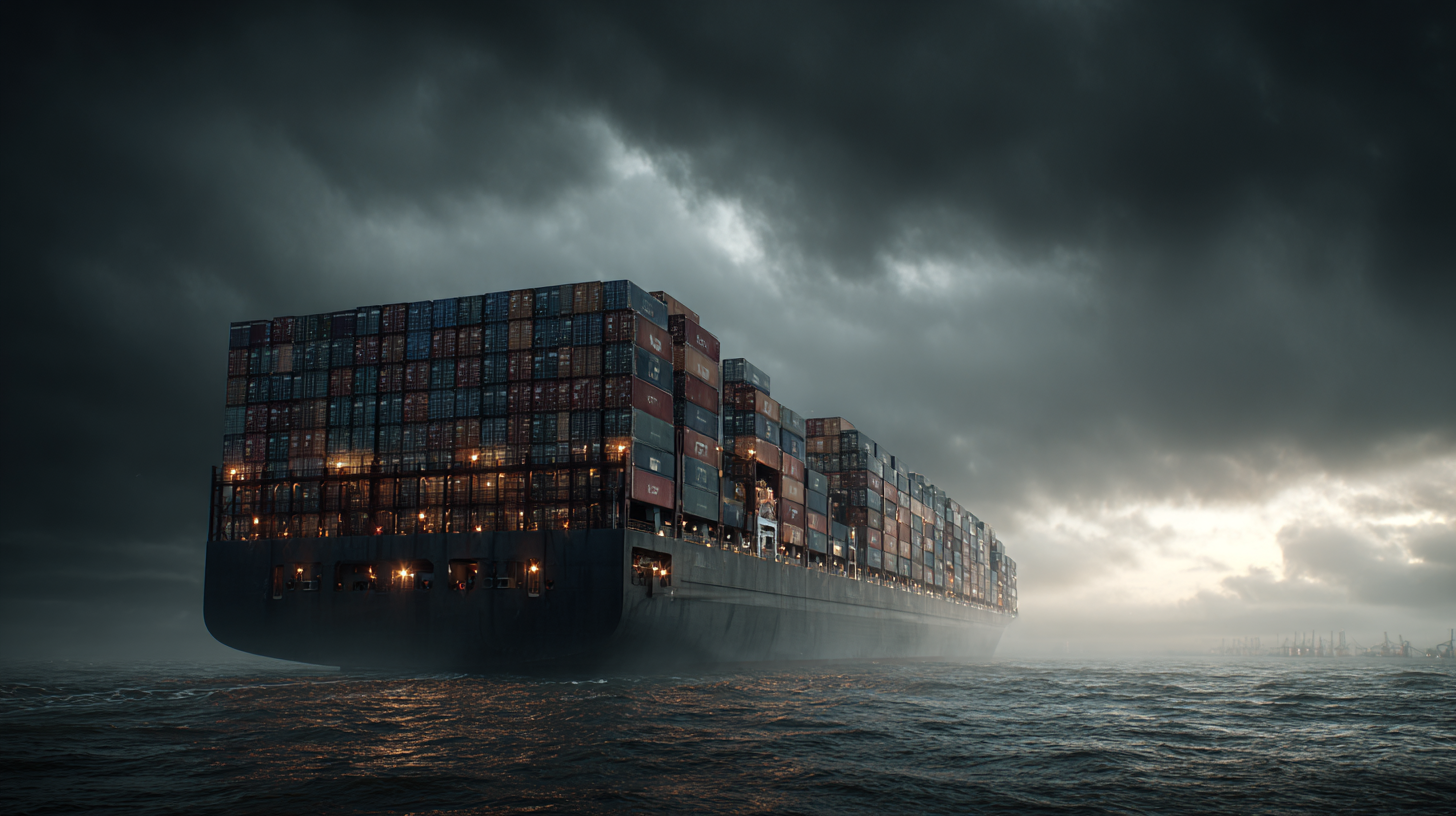
The illusion of security: When ports, energy, and chips are all at risk: Germany's logistics put to the test – Creative image: Xpert.Digital
Sewn on a knife's edge: Why Germany's supply chains wouldn't survive a system shock
From export world champion to risk ecosystem: The underestimated danger to Germany's supply
The real lesson from the constant crises: Germany's economy is geared towards efficiency, not security
For decades, Germany has been considered a logistics model: an export-oriented economy, a dense network of highways and railways, efficient ports, highly optimized supply chains, and an industry that has perfected just-in-time and just-in-sequence delivery. But the crises of recent years—the pandemic, the war in Ukraine, the energy crisis, and Houthi attacks in the Red Sea—have exposed an uncomfortable truth: Germany's security of supply rests on far more shaky ground than long assumed.
Dependence on imported energy sources is around 98 percent for petroleum and still very high for natural gas, even though Russian pipeline imports were reduced to almost zero within a short period. At the same time, industries producing key future technologies – from batteries and electric motors to high-performance magnets – are heavily dependent on critical raw materials and intermediate products from just a few countries of origin, primarily China.
From an economic perspective, this is a classic systemic risk: German value creation is based on long, cross-border, and highly interconnected supply chains. If something breaks down at just a few nodes, shocks quickly spread throughout entire industries. Corona lockdowns in Asia, wiring harness failures in Ukraine, gas throttling from Russia, or detours around the Cape of Good Hope have already demonstrated precisely this.
This situation necessitates a strategic reassessment. The discussion about security of supply can no longer be understood solely as an economic question of stockpiles and supplier lists. It touches upon national security strategy, civil defense, and the ability to remain economically viable in a geopolitically more turbulent world.
This is precisely where the concept of dual-use logistics comes in: the systematic integration of civilian logistics and military security thinking. This does not imply a militarization of the economy or a nationalization of supply chains. Rather, it involves designing infrastructure, capacities, data, and planning logic in such a way that they increase economic efficiency during normal operations – and can be seamlessly mobilized for security needs in the event of a crisis or conflict.
The central thesis of this article is therefore: The German supply chain is structurally vulnerable today, and incremental adjustments to the existing system are insufficient. Only a deliberately designed dual-use logistics system can create the robust foundation necessary to guarantee both economic stability and the ability to act in security policy.
Suitable for:

What economic resilience of supply chains really means
Resilience is often used imprecisely in political debate. A more precise understanding is economically useful. Resilient supply chains are characterized by four key features:
- Absorption capacity: The ability to withstand short-term shocks – such as delivery delays, price spikes or partial failures – without systemic collapse.
- Adaptability: The ability to reconfigure supply structures in the medium term – alternative suppliers, changed routes, substitutions in production.
- Restart speed: The ability to quickly return to a functional level after a disruption.
- Learning ability: The willingness to draw structural consequences from crises instead of returning to the pre-crisis status.
From a company perspective, these goals are traditionally at odds with the efficiency paradigm. Inventories tie up capital, redundant suppliers increase purchase prices, and additional transport capacity makes logistics more expensive. In highly competitive markets, companies exploit every opportunity to reduce these "excess capacities.".
However, the crises since 2020 have shown that what appears to be cost savings at the company level represents a hidden risk at the macroeconomic level. If a single, extremely efficient and cheapest supplier fails, the macroeconomic damage from a production standstill can be many times greater than the logistics costs saved.
A dual-use-oriented resilience policy must therefore calculate differently. It views logistical redundancies, strategic warehousing, and diversified supply chains as insurance premiums against systemic collapses – with significant positive externalities for the overall economy. According to this logic, certain reserves are no longer seen as "inefficiencies" but as strategic infrastructure.
Suitable for:

An overview of Germany's structural vulnerabilities
The vulnerability of the German supply chain stems from several overlapping structures:
- High import dependency for energy and critical raw materials.
- Strong integration into global value chains with low vertical integration in core industries.
- Concentration of important supply relationships in a few countries, especially China and, until recently, Russia.
- Aging and partly underfunded infrastructure for roads, railways, bridges and waterways.
- Civil logistics is geared towards cost and efficiency optimization, while military logistics is undersized and dependent on civilian infrastructure.
The following areas are particularly critical:
Energy: From gas shock to structural reorientation
Before the Russian attack on Ukraine, Germany sourced approximately 55 percent of its pipeline gas from Russia. This dependence was radically reduced in an astonishingly short period; Russian gas now plays only a marginal role. This was achieved through a combination of LNG terminals, supplier diversification, cost-saving measures, and substitutions.
At the same time, overall import dependency remains high. For crude oil, it is almost entirely import-based; for gas, coal, and other energy sources, domestic production is low. Any serious disruption to global energy trade flows—whether caused by geopolitical conflicts, tanker shortages, or sabotage of underwater infrastructure—therefore has a direct impact on the German economy.
The war in Ukraine has also shown how closely energy and industrial supply are intertwined: High gas prices and uncertainty led to production cuts in chemicals, steel and energy-intensive industries, with long-term consequences for investment decisions.
Critical raw materials and China as a single point of failure
German industry is highly dependent on critical raw materials, which are predominantly imported. Analyses show that Germany and Europe rely 100 percent on imports for the majority of raw materials classified as critical by the EU.
The concentration of suppliers is particularly problematic:
- For 23 of the 48 raw materials examined, Germany had a high to very high import concentration in 2023.
- China's share of German imports of rare earth elements rose from 32 percent to 69 percent.
- For individual products such as bismuth, magnesium or certain lithium batteries, the Chinese share is sometimes significantly over 50 percent.
- Around 20 to 25 percent of imports of rare earth or lithium-containing products come from China; for “vulnerable” imports – i.e., those with high supply concentration and country risk – the share from China is even twice as high, at 55 to almost 60 percent.
This dependency affects not only raw materials in their original form, but increasingly also processed intermediate products and high-tech components such as permanent magnets, battery cells, power electronics, and chemical precursors. This is precisely where a large part of the value creation for future industries lies.
Industrial components: From cable harnesses to semiconductors
Over the past few decades, German industry has systematically reduced its vertical integration and outsourced intermediate processes. This made production more flexible and cost-effective – until global supply chains became disrupted.
Examples:
- During the Corona pandemic, car manufacturers and machine builders struggled with massive shortages of semiconductors, cable harnesses and other components.
- The failure of a few cable harness factories in Ukraine led to production stoppages at German premium manufacturers in 2022.
- Semiconductor shortages affected large parts of the industry, from vehicle production to consumer electronics.
Industry surveys show that at times up to 70 to 80 percent of German industrial companies were affected by material and supply bottlenecks. The realization that highly optimized, globally extended supply chains represent a systemic risk only gained widespread acceptance under this pressure.
Food, pharmaceuticals and healthcare: Invisible bottlenecks
The security of supply for food and medicines is also vulnerable:
- Germany is a net importer of numerous agricultural products and is increasingly dependent on global supply chains, for example for animal feed, fertilizers or specialty ingredients for the food industry.
- The pharmaceutical industry and healthcare sector source many active ingredients and intermediate products from just a few regions, particularly China and India. Studies show that a number of critical medicines depend on highly concentrated supply chains.
Shortages of paracetamol, antibiotics, or cancer medications in Europe have already highlighted this problem. Here, the principle of efficiency – global sourcing from low-cost countries – directly clashes with the obligation to provide supplies in crisis situations.
Infrastructure and transport corridors: bottlenecks in the backbone
Physical infrastructure is the backbone of every supply chain. Decades of underinvestment, particularly in bridges, waterways, and railways, have led to a backlog of necessary investments. Analyses of military mobility in Europe show that numerous roads and bridges are not designed to support the weight of modern military vehicles; a similar situation exists for heavy freight transport in the civilian sector.
Furthermore, Germany's location as a transit country makes it particularly dependent on functioning corridors: ports in the North Sea and Baltic Sea, the Rhine and Danube waterways, Alpine passes, and rail lines to Eastern Europe. Disruptions in one part of the network – such as low water levels on the Rhine, bridge damage, or port strikes – quickly impact large parts of the logistics network.
Digital vulnerability: Data streams as the new Achilles' heel
Modern logistics is virtually inconceivable without digital control, tracking, platforms, and optimized route planning. This increases efficiency but also creates new points of attack and failure
- Cyberattacks on freight forwarders, terminal operators or traffic control systems can paralyze entire supply chains.
- Dependence on global cloud platforms and a few software providers creates concentration risks.
The National Security Strategy explicitly points out that the protection of critical infrastructures and digital systems is a central component of resilience. Nevertheless, the practical implementation of a robust, redundant digital backbone for logistics is still in its early stages.
A summary overview:
| Area | Typical dependency | Recent stress test | Structural problem |
|---|---|---|---|
| energy | High import quota for oil and gas | Ukraine war, gas stop, price shocks | Focus on individual supplier countries |
| Critical raw materials | High dependence on imports and China | Export restrictions, CRMA discussion | Little diversification, low recycling rate |
| Industrial components | Global just-in-time supply chains | Corona, Ukraine wiring harnesses, chips | Low vertical integration, single sourcing |
| Food, pharmaceuticals | Import dependency in inputs and active ingredients | Supply bottlenecks, export bans in times of crisis | Low inventory levels, global concentration |
| Infrastructure | Aging roads, bridges, waterways | Low water levels, closures, bottlenecks | Investment backlog, lack of dual-use design |
| Digital systems | Dependence on a few platforms | Increasing cyber incidents, critical infrastructure debates | Low redundancy, unclear responsibilities |
Hub for security and defense - advice and information

Hub for security and defense - Image: Xpert.digital
The hub for security and defense offers well-founded advice and current information in order to effectively support companies and organizations in strengthening their role in European security and defense policy. In close connection to the SME Connect working group, he promotes small and medium -sized companies (SMEs) in particular that want to further expand their innovative strength and competitiveness in the field of defense. As a central point of contact, the hub creates a decisive bridge between SME and European defense strategy.
Suitable for:
Tanks next to packages: This surprising logistics strategy aims to make Germany crisis-proof
Real-world stress tests: What the last few years reveal about the German supply chain
The vulnerability of German supply chains is not a theoretical projection, but can be clearly seen in three successive crises.
Suitable for:

Coronavirus pandemic: The shock for just-in-time delivery
The pandemic was the first global stress test of modern supply chains on this scale. Lockdowns, border closures, and factory shutdowns in Asia and Europe severed numerous value chains. German companies faced delivery times, shortages, and price spikes that had previously been considered exceptional
- At the height of the pandemic, up to eight out of ten industrial companies in Germany reported material shortages.
- The mechanical engineering and automotive industries experienced historic production declines; in April 2020, car production in Baden-Württemberg fell by over 80 percent compared to the same month of the previous year.
- Construction companies reported widespread shortages of materials and sharp price increases for wood, steel and insulation materials.
Many companies reacted ad hoc: multiple suppliers, increased inventory, and short-term adjustments to procurement strategies. Studies show that in 2022, around two-thirds of German companies adapted their supply chains due to their experiences during the crisis – primarily through diversification of procurement and temporarily increased inventory levels.
The pandemic made it clear how little buffer there was in the system and how quickly failures in distant regions impact domestic value creation.
Ukraine war and energy crisis: Vulnerability to geoeconomic blackmail
The Russian attack on Ukraine triggered several shocks:
- The drastic drop in Russian gas supplies led to massive price increases and supply insecurity. Model calculations predicted that a complete gas shutdown would result in economic output declines of several percentage points and supply deficits of up to 15 percent of previous gas consumption.
- The dependence on Russian energy sources and metals proved to be a strategic weakness: numerous metals and raw materials, including nickel, coal, oil, fertilizers and special steels, came to a significant extent from Russia.
- Companies in energy-intensive industries reduced production or shifted investments, which has long-term effects on the industrial base.
At the same time, new supply chains for LNG, alternative pipeline flows, coal imports, and substitute products had to be established at short notice. Political measures—from the construction of new LNG terminals to the nationalization of systemically important utilities—demonstrate how closely economic security of supply and the state's ability to act are linked.
Red Sea and Houthi attacks: The fragility of global sea lanes
Since the end of 2023, Houthi militias have been regularly attacking merchant ships in the Red Sea. Shipping companies are increasingly avoiding passage through the Bab al-Mandab Strait and the Suez Canal, which affects significant portions of Asia-Europe trade.
The consequences:
- The number of container ships in the Suez Canal temporarily plummeted by over 70 percent.
- Routes between Asia and Europe were extended by an average of 7 to 14 days, in some cases even more.
- Shipping companies need around 40 percent more ships to handle the same volumes via roundabout routes, which increases freight costs and capacity bottlenecks.
- Industrial companies with just-in-time structures – such as car manufacturers and electronics groups – had to reduce production because parts arrived late.
Interestingly, serious supply gaps have so far been avoided because companies had already adapted their ordering and storage strategies based on their experiences during the pandemic. Many rebuilt buffer stocks or extended lead times. However, this case demonstrates how dependent German industry is on a few maritime corridors and how costly detours are on a global scale.
Lessons from the stress tests
Several lessons can be learned from these crises:
- The likelihood of simultaneous or overlapping crises is increasing. Pandemic, war, energy shortages, and maritime insecurity all occurred within a few years.
- Systems that are solely focused on efficiency collapse more quickly under such multiple shocks.
- Ad-hoc measures by companies (more warehouses, different suppliers) are not enough to neutralize systemic risks.
- Government interventions – for example in energy infrastructure or financial aid – become a last resort when structural resilience is lacking.
The consequence is that security of supply must increasingly be understood as a task of overall defense: the economy, the state and the armed forces share responsibility and instruments.
Previous responses: Reactive adjustments instead of strategic rebuilding
Businesses and the government are reacting to the experiences described – but so far primarily incrementally.
Company:
- Diversification of suppliers and geographical distribution of procurement sources has become standard practice.
- Some companies increased their inventory levels and built up "just-in-case" reserves, although this trend has recently slowed somewhat as immediate bottlenecks have decreased.
- Some industries are relying more heavily on insourcing and greater vertical integration, particularly in the automotive industry.
- Nearshoring and friendshoring strategies – i.e., the relocation of production stages closer to Europe or to politically reliable partner countries – are gaining in importance.
State:
- The National Security Strategy and the paradigm of "integrated security" explicitly define security of supply as a security policy task. Resilience, including energy and raw material security, is one of the three pillars, alongside military strength and sustainability.
- The concept of civil defense and new framework guidelines for overall defense emphasize the importance of logistics, infrastructure and supply, even in the event of a defense emergency.
- At EU level, the Critical Raw Materials Act and other measures address raw material dependency, for example through diversification, recycling and the promotion of European funding.
- Investment programs for the modernization of ports, railways and roads, often designed as dual-use projects, are intended to strengthen both civilian freight transport and military mobility.
These approaches are a step in the right direction, but remain limited in several respects:
- They are often sector- or instrument-specific (raw materials, energy, individual infrastructures), but not systemic across the entire supply chain.
- The integration of civilian economy and military logistics is often mentioned conceptually, but only implemented in a rudimentary way in practice.
- Governance and responsibility are fragmented: departments, states, municipalities and companies act in parallel, but not necessarily in a coordinated manner.
The idea of dual-use logistics comes into play precisely at this interface.
Why traditional crisis planning is no longer sufficient
Traditionally, crisis planning was conceived in two worlds:
- Civil emergency planning: disaster relief, supplies in the event of natural disasters, pandemics, and technical malfunctions.
- Military logistics: Ensuring supplies and mobility in the event of defense or alliance action.
This separation is outdated for several reasons:
- Modern threats are hybrid: cyberattacks on logistics systems, sabotage of infrastructure, disinformation, economic extortion, sanctions, military threats and supply stoppages are intertwined.
- The same physical and digital infrastructures – ports, railway hubs, data lines – are used simultaneously by the economy and, in case of emergency, by armed forces.
- In times of crisis, the supply of the civilian population and the armed forces compete for the same scarce resources: fuel, transport capacity, storage space, and critical materials.
Defense policy guidelines and more recent documents on civil defense explicitly emphasize that civil defense must be able to support the armed forces to ensure their operational capability – and that this is a task for society as a whole. At the same time, practical implementation falls short of this ambition: The Bundeswehr (German Armed Forces) struggles with logistical capacity bottlenecks, insufficient personnel, and inadequate integration of civilian resources.
Advice - planning - implementation

Markus Becker
I would be happy to serve as your personal advisor.
Head of Business Development
Chairman SME Connect Defense Working Group
Advice - planning - implementation
Konrad Wolfenstein
I would be happy to serve as your personal advisor.
contact me at wolfenstein ∂ xpert.digital
Just call me on +49 7348 4088 965 (Munich) .
Your dual -use logistics expert

Dual -use logistics expert - Image: Xpert.digital
The global economy is currently experiencing a fundamental change, a broken epoch that shakes the cornerstones of global logistics. The era of hyper-globalization, which was characterized by the unshakable striving for maximum efficiency and the “just-in-time” principle, gives way to a new reality. This is characterized by profound structural breaks, geopolitical shifts and progressive economic political fragmentation. The planning of international markets and supply chains, which was once assumed as a matter of course, dissolves and is replaced by a phase of growing uncertainty.
Suitable for:
Our EU and Germany expertise in business development, sales and marketing

Our EU and Germany expertise in business development, sales and marketing - Image: Xpert.Digital
Industry focus: B2B, digitalization (from AI to XR), mechanical engineering, logistics, renewable energies and industry
More about it here:
A topic hub with insights and expertise:
- Knowledge platform on the global and regional economy, innovation and industry-specific trends
- Collection of analyses, impulses and background information from our focus areas
- A place for expertise and information on current developments in business and technology
- Topic hub for companies that want to learn about markets, digitalization and industry innovations





