
India's logistics real estate is undergoing a transformation: How Vantrock is addressing the bottleneck with warehouse parks near cities
Xpert Pre-Release

Available in 27 languages 📢
Prefer Xpert.Digital on GoogleⓘPublished on: November 11, 2026 / Updated on: November 11, 2026 – Author: Konrad Wolfenstein
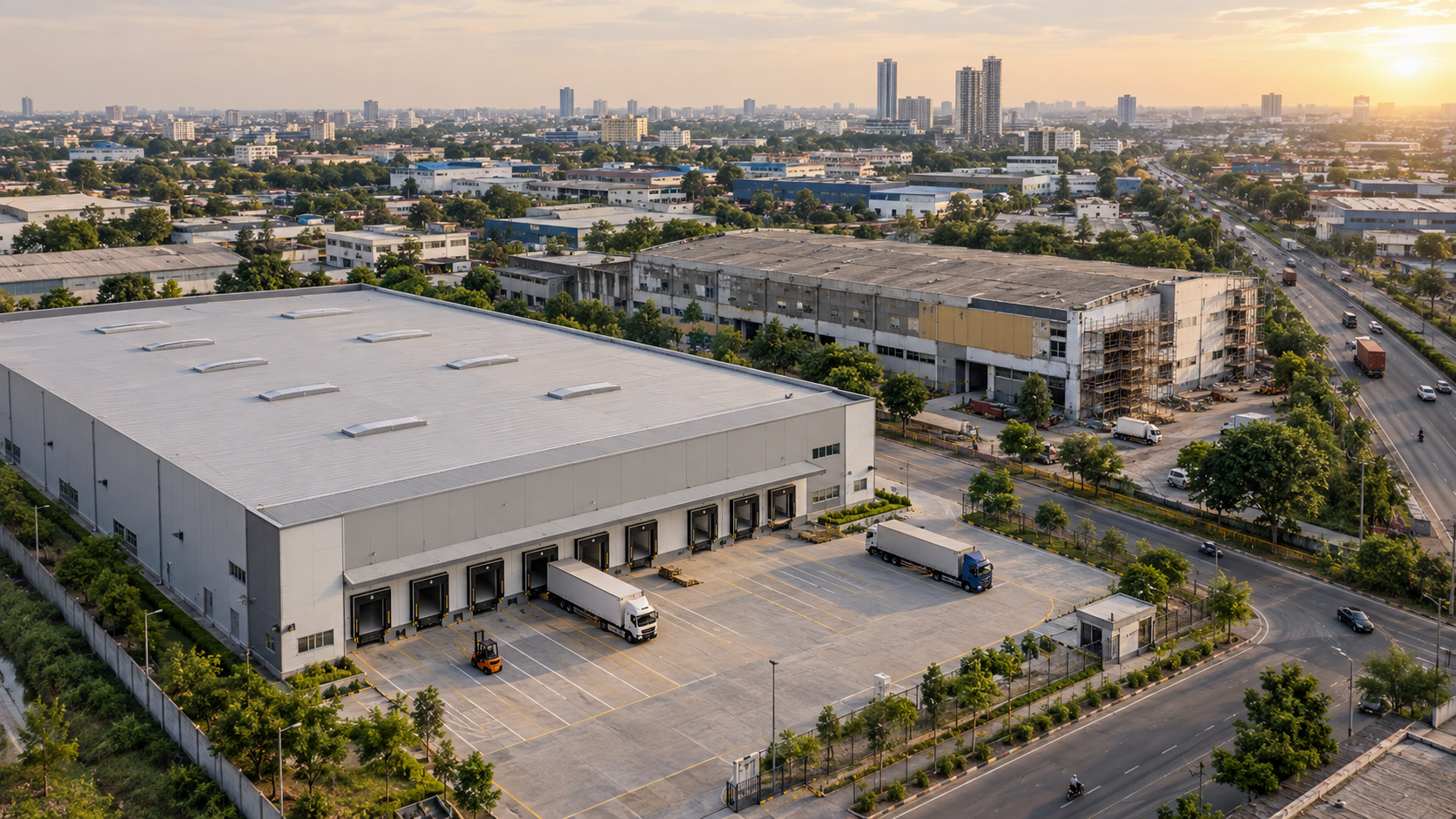
India's logistics real estate is undergoing a transformation: How Vantrock is addressing the bottleneck with warehouse parks near cities – Creative image on the topic, created with AI: Xpert.Digital
Cheap warehouses in the wrong location can become the most expensive link in the supply chain
A billion-dollar investment with a clear location bet
Vantrock Real Assets plans to invest 3,100 crore Indian rupees in warehouse, industrial, and logistics properties. This equates to 31 billion rupees. The planned development area covers 11.5 million square feet, or approximately 1.07 million square meters. The company cites a gross development value of 4,200 crore rupees, or 42 billion rupees. Behind these figures lies a strategy that goes beyond simply constructing additional warehouses: The Mumbai-based platform aims to create high-quality logistics space in areas where companies are already operating and available land has become scarce.
This project addresses a problematic trend in the logistics real estate market. When established industrial parks offer hardly any available space, project developers are turning to more distant locations. Larger plots of land can often be more easily combined there. However, this may result in longer transport routes, more complex staff travel, and reduced proximity to customers or production facilities for future users.
Vantrock is countering this with a combination of densification and existing building modernization. The company aims to develop remaining plots of land within established logistics corridors and upgrade older warehouses to a higher quality standard. Economically, this is a bet that good accessibility, reliable building standards, and short development times will be more important than the lowest possible land price.
The outlook is compelling, but not without risk. The scarcity of attractive locations makes their acquisition, legal securing, and development difficult. Success therefore depends less on the size of the announced investment than on the ability to implement complex individual projects with discipline.
The figures show the potential, but not yet a guaranteed return
For economic analysis, investment volume and gross development value must be clearly distinguished. The planned 31 billion rupees represent the intended capital investment. The gross development value of 42 billion rupees, on the other hand, represents the expected value of the developed properties. It is neither equivalent to sales revenue already achieved nor to a guaranteed profit.
The difference amounts to eleven billion rupees. This corresponds to approximately 35.5 percent of the planned investment volume or about 26.2 percent of the stated gross development value. These figures illustrate the targeted increase in value. However, a reliable project return cannot be derived from this.
This analysis lacks, among other things, information on the timing of payments, the equity ratio, specific financing terms, lease agreements, ongoing operating costs, and a potential future sale. The precise definition of the investment budget is also crucial. While it should cover permits, construction, and financing, how land rights, long-term lease obligations, and different partnership models are economically reflected within it remains essential for a complete valuation.
Calculated across the entire planned area, this results in an investment intensity of approximately 2,696 rupees per square foot, or around 29,000 rupees per square meter. The corresponding gross development value is approximately 3,652 rupees per square foot, or around 39,300 rupees per square meter. These average values are helpful as a guideline but should not be interpreted as uniform construction costs. A modernized existing warehouse, a cold storage facility, and a multi-story logistics building each have different technical and economic requirements.
The lack of space is primarily a problem of finding the right quality in the right place
A supply gap of approximately 117 million square feet of high-quality warehouse space is expected in India between 2026 and 2031. This equates to roughly 10.87 million square meters. The entire Vantrock pipeline theoretically represents just under one-tenth of this size. This comparison illustrates the project's relevance but does not describe either its market share or its actual achievable contribution to closing the supply gap.
A national land use forecast cannot be directly applied to individual locations. Warehouse space is not a commodity that can be arbitrarily exchanged. A modern building may stand empty in one region, while suitable capacity is lacking in another corridor. Similarly, a property may be structurally sound but economically unviable due to poor access, inadequate energy supply, or an inconvenient distance to customers.
The crucial bottleneck therefore lies in the combination of several characteristics: site quality, technical suitability, legal usability, operational reliability, and actual availability. Only when these factors come together does a space emerge that offers tangible added value for demanding users.
The perceived scarcity also requires a nuanced perspective. High occupancy rates in particularly sought-after parks do not necessarily mean that all of the country's warehouse properties are fully leased. This distinction is crucial for investors. The assumption of a general shortage can lead to inflated valuations. In contrast, the more precise assumption of a shortage of suitable properties in specific corridors demands precise local market knowledge.
Why total costs are more important than the cheapest rent
The economic attractiveness of a logistics location cannot be measured solely by the rent per square meter. For the user, the total operating costs are what count. These include not only rent and utilities, but also transportation, personnel, energy, maintenance, inventory, and the economic consequences of potential delays.
A warehouse near the city, even with higher rent, can be cheaper than an inexpensive warehouse far outside the actual sales area. The crucial factor is whether shorter distances and more reliable processes offset the additional real estate costs. This calculation varies considerably depending on the business model. For frequent deliveries, tight delivery windows, and numerous daily vehicle movements, proximity to the warehouse can be particularly valuable.
A purely illustrative example clarifies the mechanism: If a suitable location costs ten million rupees more in rent annually, but reduces total transport and processing costs by 15 million rupees, this results in an economic benefit of five million rupees. This makes no statement about a specific Vantrock project. The example merely shows why a higher rent can be compatible with lower overall costs.
Conversely, proximity to a city is not an end in itself. Narrow access roads, regular traffic congestion, or limited operating hours can negate the geographical advantage. Therefore, location evaluation should not only consider the distance on the map, but also the actual achievable transport capacity under normal operating conditions.
The first construction phase must prove the entire business approach
The first development phase encompasses approximately three million square feet, or about 279,000 square meters. Its stated value is 1,100 crore rupees, equivalent to eleven billion rupees. Projects are planned for Pune, Bengaluru, and the National Capital Region. Construction is scheduled to begin in 2027, with initial rental income expected from 2028 onward. The properties are currently in advanced stages of negotiation, documentation, and permitting.
This timeline is economically significant. An announced project pipeline is not yet a completed and leased real estate portfolio. Various risks exist between securing land, obtaining permits, starting construction, technical acceptance, and receiving rent payments. Delays in an early phase can impact the overall revenue development.
At the same time, the first construction phase has a function that extends beyond its own scale. It must demonstrate that the company can secure attractive properties, adhere to realistic construction costs, and attract solvent tenants. Only these verifiable results transform a plausible strategy into a repeatable business model.
The remaining 8.5 million square feet, approximately 790,000 square meters, are to be developed in the aforementioned markets and additionally in the Mumbai metropolitan area. A phased project launch is planned over a period of 12 to 18 months; the overall completion of the properties is targeted within four years. Project launch and full completion are explicitly defined as distinct milestones.
Four target regions require more than a uniform hall concept
Pune, Bengaluru, the National Capital Region, and the Mumbai metropolitan area form the spatial focus of the planning. This concentration across multiple markets can limit risk compared to focusing exclusively on a single location. However, sufficient diversification does not automatically result.
The same economic pressures can also occur in different regions. Rising financing costs, higher construction prices, or more cautious expansion decisions by large tenants would affect several projects simultaneously. Furthermore, a portfolio may be geographically dispersed while economically heavily dependent on a few industries or major clients.
The crucial question, therefore, is which user groups actually require the individual buildings. A distribution-oriented site needs different floor plans than a production-oriented hall. A regional warehouse follows a different transport logic than an inner-city transshipment point. Requirements for power supply, shift work, staff availability, and expansion possibilities also differ.
A viable portfolio therefore requires not only multiple locations, but also a transparent and comprehensible link between building, user, and local demand. This is precisely where the importance of an operator-oriented platform lies: it must view properties not merely as rentable square meters, but as an integral part of concrete operational processes.
Infill development creates location advantages and increases complexity
The strategy focuses on sites within already established industrial and logistics corridors. These infill sites utilize gaps in existing economic areas, instead of relocating new developments exclusively to their outer edges.
Vantrock focuses on properties ranging from approximately 15 to 60 acres. This corresponds to roughly six to 24 hectares. Each location is said to have a development potential of approximately 400,000 to 1.5 million square feet, or about 37,000 to 139,000 square meters. These ranges represent different project possibilities and should not be automatically applied to determine a uniform land use.
The economic strength of such sites lies in their integration into existing supply and production relationships. Companies need to make fewer changes to their networks when new capacities are developed near existing facilities. Existing transport links and an established commercial environment can further enhance their leasing potential.
This is countered by higher transaction and development hurdles. Ownership can be fragmented, access rights must be secured, and existing uses must be taken into account. A property that appears attractive at first glance may, upon closer examination, reveal significant limitations.
The potential added value therefore does not arise solely from the purchase of scarce land. It arises from the ability to overcome legal, technical, and operational obstacles in such a way as to create a permanently usable property.
Modernizing existing buildings can save time, but it can't save every building
A second focus is the acquisition of older warehouse properties and their upgrade from Grade B to Grade A level. Such modernizations are said to be possible within six to twelve months. Compared to a completely new building, this can offer a significant time advantage, provided the building structure, permitting situation, and scope of the work allow it.
The economic appeal lies in earlier access to rental income and the utilization of existing building resources. Furthermore, older warehouses are often located in sites whose locational advantages would be difficult to replicate today. A technically outdated property can therefore combine a valuable location with an inadequate building.
However, not every weakness can be remedied through economically viable renovation. Low ceiling height, unfavorable column grids, insufficient floor load-bearing capacity, or a lack of maneuvering space can permanently limit future usability. Even a renovated facade and modern lighting cannot transform an unsuitable building structure into a high-performance logistics property.
The crucial assessment must therefore take place before the purchase. A technical condition analysis, a reliable cost estimate, and a clear picture of the intended future use are required. Otherwise, a seemingly inexpensive acquisition risks turning into an expensive renovation with limited rental potential.
Grade A must describe operational performance
In the project approach, the term Grade A signifies a higher quality standard. However, this designation is insufficient for an economic evaluation. What matters is the specific characteristics a building offers and whether they are relevant to the respective user.
These include, for example, load-bearing capacity, usable height, suitable gates, a reliable power supply, adequate ventilation, good lighting, and safe access. Equally important are areas for vehicle movement, technical maintenance, and potential future expansion. Which features are actually required depends on the intended use.
The true quality of a warehouse is ultimately revealed in its operation. A technically well-equipped building loses value if delivery vehicles regularly have to wait in the access area or if the power supply is unsuitable for the usage profile. Conversely, a clearly structured, reliably operated warehouse can be highly efficient without possessing any conceivable additional features.
For Vantrock, this leads to a clear requirement: Modernization must create measurable improvements. These include lower failure rates, better space utilization, greater process stability, and reduced operating costs. A quality promise only becomes economically viable when it is reflected in these metrics.
Your intralogistics experts

Consulting, planning and implementation of complete solutions for high-bay warehouses and automated storage systems - Image: Xpert.Digital
More information here:
The role of modernization in the logistics sector
Fire protection and building safety are part of the investment calculation
Anshul Singhal leads Vantrock as founder and CEO. Shailesh V. Haribhakti chairs the board of directors. Within the described strategy, improving older warehouses in terms of fire safety, structural integrity, lighting, and ventilation is a high priority. Modernization is thus understood not only as a structural but also as an organizational task.
This classification is economically relevant. Severe damage can affect not only the immediate loss of the building itself, but also inventory, delivery capacity, and customer relationships. Therefore, for a user, it is not only important whether a property is insurable in principle. Equally crucial is how reliably operations can continue and what dependencies arise in the event of damage.
Safety investments initially incur additional costs. However, their benefits often become apparent in avoided incidents and improved operational control. Precisely for this reason, there is a risk of underestimating their value in short-term profitability calculations.
A dispassionate assessment, however, must consider both sides. Not every technological upgrade is equally valuable to every user. Conversely, security flaws can create economic risks that are not adequately offset by low rental rates. The task of a professional platform is to define a verifiable standard and ensure its consistent operation.
Different business models are emerging, ranging from large warehouses to dark stores
The planned range of uses extends from large-scale warehouses and custom-designed buildings to multi-story facilities, last-mile logistics, dark stores, self-storage options, and cold chain solutions. Industrial sites, employee accommodations, and mixed-use developments are also included.
This breadth opens up multiple sources of demand but also increases the demands on development and operation. A large-scale distribution center relies on sufficient throughput, good connectivity, and efficient floor plan design. A dark store, on the other hand, serves the rapid picking and delivery of orders and requires particularly precise alignment with its local delivery area.
Self-storage facilities, in turn, follow a different revenue logic. Many smaller users, shorter contract terms, and a more sales-oriented operation distinguish them from large warehouses leased on a long-term basis. Cold chain properties require specialized technology and a different approach to operating costs.
The strategic challenge lies in not treating these uses simply as variations of the same property. They require different skills, contractual structures, and risk models. A broad platform can benefit from this if it develops specialized capabilities. Without this specialization, however, the diversity risks becoming an organizational burden.
Cold chains require different calculations than dry storage areas
In cold chain facilities, the building envelope is only one part of the economic system. Temperature control, insulation, technical monitoring, maintenance, and, if necessary, emergency supplies significantly influence ongoing operations.
The location must therefore be suitable not only from a transport logistics perspective. Energy connections, technical support, and the requirements of the stored products must also be considered. A well-located plot of land can be attractive for a standard warehouse without automatically fulfilling the prerequisites for economical refrigeration operation.
For rental purposes, it is also crucial who finances the technical equipment and who bears the responsibility for maintenance, energy consumption, and replacement investments. A high nominal rent may be of little economic significance if it is offset by substantial technical obligations.
Cold chains can represent a valuable specialization. However, they are not an automatic profit booster. Their economic success depends particularly on the alignment of technical planning, lease agreements, and the actual flow of goods.
Multi-story logistics is only worthwhile with appropriate process planning
Multi-story warehouses are one possible solution to limited land availability. By utilizing multiple levels, more building space can be accommodated on a limited footprint. However, whether this results in an economic advantage depends on the additional construction and operating costs.
Vertical goods movements require suitable ramps, elevators, or other conveying solutions. Additional requirements arise regarding the load-bearing structure, fire protection, and the separation of traffic flows. Therefore, the additional space is not available with the same operational simplicity as in a single-story warehouse.
The crucial factor is the relationship between land scarcity and process effort. For goods with specific handling profiles and well-planned processes, a multi-story solution can be advantageous. However, very high vehicle throughput or difficult-to-handle goods can create additional bottlenecks.
The correct question, therefore, is not how many square meters can be created through construction. It is how much economically usable logistics capacity is possible on the property. Only this perspective connects real estate development with the actual needs of the users.
Flexible land models reduce the initial equity requirement
Vantrock will not exclusively purchase high-quality properties. Long-term lease agreements, joint ventures, and collaborative developments with landowners are also planned. Financing will combine equity, construction loans, and forward funding.
This structure can help distribute limited equity across multiple projects. Those who don't need to acquire every single plot of land outright can allocate a larger portion of their capital to construction, modernization, and technical equipment. In return, landowners gain the opportunity to participate in a development without having to finance and organize it alone.
However, the financial burden doesn't disappear. In a lease, the purchase price becomes a long-term obligation. In a joint venture, profits and decision-making rights are shared. Each structure therefore changes not only the initial capital requirement but also the distribution of future risks and profits.
For financing banks and institutional investors, loan terms, transferability, termination rules, and dispute resolution are therefore particularly important. A property can be structurally sound and still lose value if the underlying usage rights are not adequately secured.
Forward funding redistributes risks, but does not eliminate them
With forward funding, an investor provides capital during the development phase. For the project developer, this can reduce their own financing needs and secure a future inflow of capital at an early stage. In return, the investor gains access to a property that is still under construction.
The economic impact depends heavily on the contract terms. Crucially, it depends on who bears the burden of cost increases, delays, and deviations from the agreed-upon building quality. The question of whether a specific pre-leasing target must be met also influences the allocation of risk.
Such a model can be attractive for standardized and well-documented projects. It becomes more difficult with modernizations of existing buildings, where the full technical condition only becomes apparent during the course of the work. In these cases, uncertainties must either be mitigated through thorough preliminary assessments or appropriately distributed contractually.
For Vantrock, the benefit therefore lies not only in additional capital. A convincingly structured financing model can also have a disciplining effect because it demands clear construction, quality, and leasing targets. Conversely, overly rigid commitments can restrict entrepreneurial flexibility.
Construction delays can turn a location advantage into a financing problem
The period between initial capital commitment and reliable rental income is a key factor in real estate development. During this phase, expenses are incurred without sufficient ongoing income to offset them.
With an average outstanding loan volume of ten billion rupees, an additional percentage point in the annual interest rate would theoretically result in 100 million rupees in additional costs. This is purely a hypothetical example and not an assumption about Vantrock's actual financing. However, it illustrates how significant even small changes in interest rates can be in large-scale development projects.
Delays have a similar effect. They can extend financing costs, postpone rent payments, and make it more difficult to secure the business of attracting potential tenants. If promised completion dates have to be changed, the developer's negotiating position can also suffer.
A phased approach can mitigate these risks if later phases are linked to actual leasing success. However, it must not lead to the necessary infrastructure being built only incompletely. Here, too, economic strength lies in carefully coordinating construction progress, capital disbursement, and demand.
Higher rents are only sustainable if users receive value in return
An anticipated supply gap suggests that high-quality spaces can command higher rents. However, this correlation is not unlimited. Tenants can only sustainably pay higher rents if their own financial situation allows it.
The rent increase must therefore be justified by a demonstrable benefit. This could lie in shorter distances, improved processes, a more suitable building structure, or increased operational reliability. If this benefit is lacking, the higher rent remains merely an additional burden.
The difference between theoretical demand and actual demand is particularly important. Many companies may desire modern warehouse space. However, this does not necessarily mean that they will enter into long-term contracts under the conditions required by the developer.
For evaluating the pipeline, specific details on pre-leases, lease terms, tenant creditworthiness, and agreed-upon adjustment mechanisms would therefore be particularly informative. Without this information, the direction of the strategy can be assessed, but not the security of future returns.
Modernization can conserve resources, but must be assessed on a site-specific basis
Reusing existing buildings can limit the need for new building materials and additional land development. Improved integration into existing transport networks can also combine economic and environmental benefits.
However, these opportunities are not automatically available. An older building may have high energy consumption or require such extensive renovations that a large part of the original resource advantages is lost. Similarly, an inner-city location can create additional burdens for the surrounding area if traffic and operating hours are not adequately considered.
A reliable sustainability assessment must therefore combine several levels: construction costs, ongoing energy consumption, transport impacts, and long-term adaptability. A building that can only be repurposed later at high cost can be economically and ecologically inflexible despite initially good indicators.
The most sensible approach is not to prioritize existing building modernization over new construction as a matter of principle. A concrete life-cycle analysis is crucial. It must demonstrate which solution offers greater operational benefits over its actual service life, with a reasonable investment of resources and capital.
Employee accommodation and mixed-use developments extend the responsibility
The planned scope also includes accommodation for employees and mixed-use developments. This approach therefore goes beyond simply providing storage space.
From a business perspective, accommodation close to the workplace can reduce long commutes and improve site accessibility. However, whether this translates into an economic advantage depends on demand, quality, and organizational design. Accommodation is not merely a supplementary building product, but a long-term, operational use.
Mixed-use developments can combine different space requirements. At the same time, they create additional demands regarding the separation of traffic flows, safety, administration, and technical infrastructure. Residential uses and intensive logistics operations are incompatible without careful planning.
For a platform, this means an expansion of responsibility. The more diverse the uses become, the more it must manage not only development but also ongoing operations and service quality. Additional revenue opportunities thus directly entail additional complexity.
Data centers and other asset classes should remain a later addition
In the long term, Vantrock plans to expand into further real estate and infrastructure categories. These include global corporate competence centers, office locations outside of central business districts, individually saleable office units, data centers, and infrastructure assets. These areas will be pursued as separate strategies.
The separation makes economic sense. Experiences with land acquisition, financing, and institutional partnerships can be partially transferred. However, the technical and operational logic differs considerably.
For a data center, for example, power supply, cooling, digital connectivity, and technical availability are paramount. The attractiveness of a site cannot be assessed using the same criteria as for a regional distribution center. User agreements and investment profiles also follow different requirements.
Early expansion into many asset classes could tie up capital and management resources before the core business has sufficiently proven its viability. Conversely, later diversification can be beneficial once processes, financing, and operational management are functioning reliably. The order of development is therefore a crucial part of the strategy and not merely an organizational matter.
The quality of the resulting portfolio is crucial
The economic impact of Vantrock's project cannot be measured solely by the completed area. Crucial factors include the stability of rental payments, actual operating costs, the technical quality of the buildings, and the long-term viability of their locational advantages.
A large portfolio can be weak if it is based on insufficiently secured property rights, few tenants, or high ongoing liabilities. Conversely, a smaller portfolio can create significant value if it is well-let, efficiently financed, and usable for the long term.
For proper performance monitoring, several indicators should therefore be considered together: secured land, approved building areas, completed buildings, rented space, and actual rents received. Equally important are the gap between planned and realized budgets and the ability to adapt buildings to new users without disproportionate additional investment.
The announced 11.5 million square feet thus form the framework for development. Their economic value is derived from the quality of the individual projects. This distinction is particularly important when combining densification, modernization of existing buildings, and specialized uses.
A compelling strategy with high implementation requirements
The key strength of this approach lies in addressing a specific bottleneck: companies don't simply need additional warehouses, but rather suitable space in economically viable locations. The combination of densification and modernization can meet this need more effectively than simply expanding into increasingly distant new housing developments.
The planned 31 billion rupee investments are therefore primarily of interest as a means of site and quality development. Their value arises when legally and technically complex plots of land are transformed into functioning business locations. The targeted gross development value of 42 billion rupees, on the other hand, remains a target figure, the realization of which depends on leasing, cost control, and capital market conditions.
The overall outlook is therefore cautiously positive. Vantrock is not pursuing arbitrary expansion, but rather a comprehensible approach to improving existing logistics facilities. In particular, upgrading suitable existing buildings can be economically viable if locational advantages are preserved and technical deficiencies are remedied at reasonable costs.
The greatest risk lies in overestimating general scarcity and underestimating project-specific difficulties. Prime locations don't justify every price, short modernization times don't justify every portfolio acquisition, and flexible financing doesn't justify every long-term commitment. The crucial factor will be whether Vantrock consistently considers these limitations. If so, a major investment announcement can result in a portfolio that not only creates real estate value but also improves the actual performance of supply chains.
Your global marketing and business development partner
☑️ Our business language is English or German
☑️ NEW: Correspondence in your native language!

Konrad Wolfenstein
I and my team are happy to be available to you as your personal advisor.
You can contact me by filling out the contact form here [email protected]:or simply call me at +49 7348 4088 965. My email address is
I'm looking forward to our joint project.