
Trump's risky diesel deal with Putin: Six senators from both major parties oppose this course of action
Xpert Pre-Release

Available in 27 languages 📢
Prefer Xpert.Digital on GoogleⓘPublished on: October 12, 2026 / Updated on: October 12, 2026 – Author: Konrad Wolfenstein
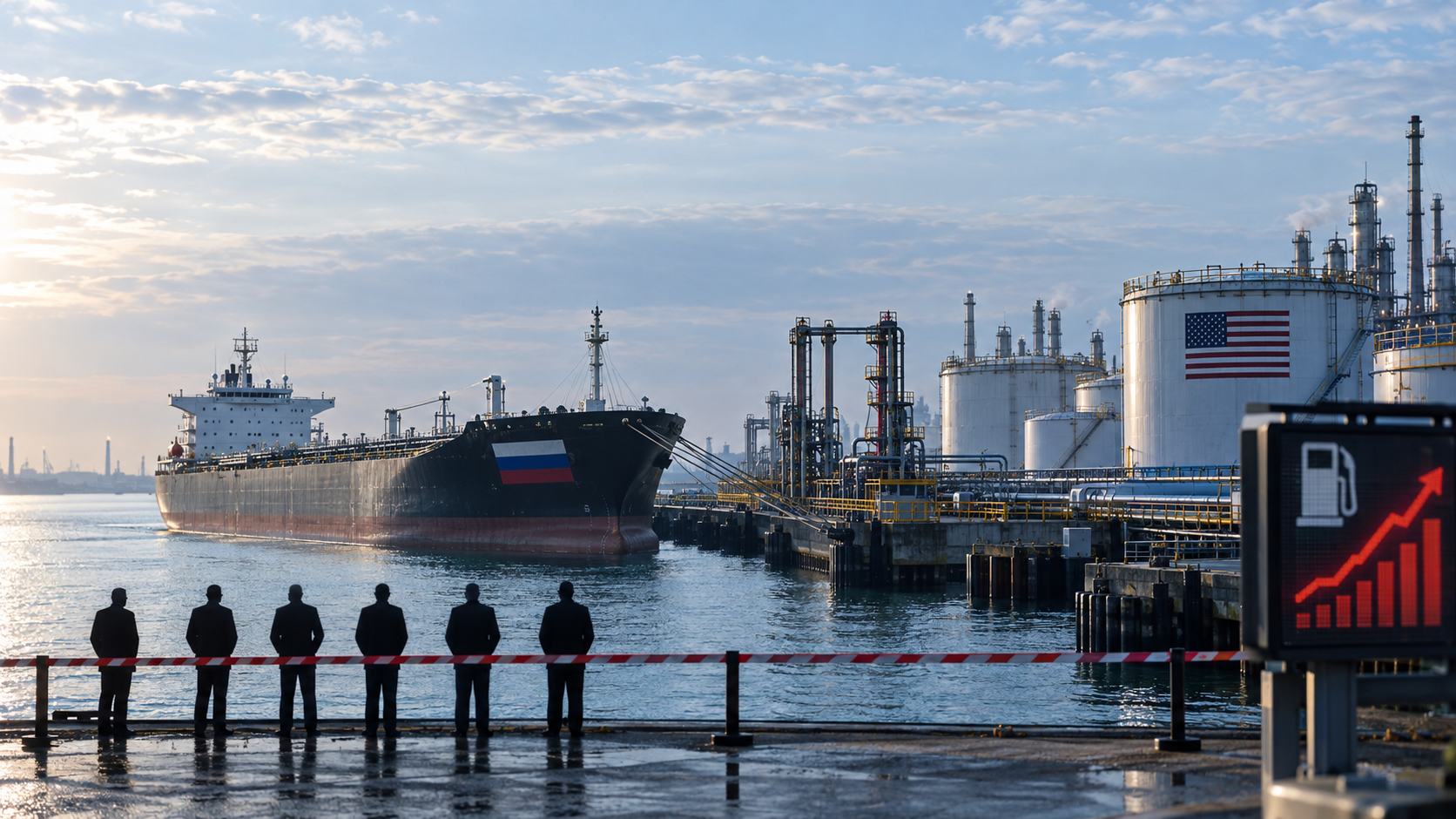
Trump's risky diesel deal with Putin: Six senators from both major parties oppose this course of action – Creative image on the topic, with AI: Xpert.Digital
America's diesel crisis: How Trump's deal could affect the economy
America's diesel dependency: Can Russian imports lower prices?
Price dampening or geopolitical risk? The import of Russian diesel explained
The planned import of Russian diesel fuel into the United States is more than just an unusual trade decision; it is a complex interplay of acute supply shortages and geopolitical tensions. President Donald Trump's aim with this plan is to lower rising diesel prices and thus provide relief to consumers, agriculture, and industry. But while the announced delivery volumes of more than 4 million tons in the coming months appear promising at first glance, the deal also raises numerous questions. Six senators from both major parties have already spoken out against the decision, fearing that easing sanctions against Russia during the Ukraine war poses not only legal but also security risks. This conflict within the American power structure illustrates that the debate surrounding diesel imports raises not only an economic but also a fundamental foreign policy question. Thus, the discussion about America's diesel crisis is quickly becoming a battle between short-term relief and long-term economic security.
Cheaper fuel, higher prices: How short-term relief becomes a strategic liability
A price problem becomes a fundamental foreign policy issue
The planned import of Russian diesel fuel into the United States is far more than an unusual trade decision. It links an acute supply crisis in the American fuel market with the question of how resilient sanctions are when their economic costs become politically significant domestically. President Donald Trump is clearly pursuing the goal of lowering the high price of diesel and thus providing relief to consumers, agriculture, logistics, and large parts of industry. The announced delivery volumes are initially expected to exceed 300,000 tons. Another 500,000 tons are planned for November, followed immediately by one million tons, and potentially another three million tons later. This could bring the total volume to as much as 4.8 million tons, provided Russia can actually produce and export this quantity.
Six senators from both major parties oppose this course of action. Four Republicans and two Democrats argue that the administration should not open up a new source of revenue for Russia as long as the war against Ukraine continues. They also accuse the administration of neither adequately consulting Congress nor providing the legally required justification for easing the existing restrictions. This bipartisan opposition is politically significant because it prevents the conflict from appearing as a typical dispute between government and opposition. Rather, it reveals a clash of two differing conceptions of economic security within the American power structure.
The government initially views diesel as a scarce commodity whose price should be reduced. Its critics, on the other hand, see Russian diesel as a strategically compromised commodity whose import generates financial, legal, and security-related costs. Both perspectives contain a kernel of truth. High diesel prices directly burden the American economy. At the same time, the effectiveness of sanctions depends on their continued application even when compliance becomes inconvenient. The crucial economic conflict, therefore, is not whether lower diesel prices are desirable. Rather, the point of contention is what price the United States is willing to pay for short-term relief and whether the chosen measure can actually solve the underlying supply problem.
America's diesel crisis despite its own oil records
At first glance, it seems contradictory that one of the world's largest oil producers and exporters of petroleum products needs Russian diesel. This contradiction is resolved when a distinction is made between crude oil and refined products. Record levels of crude oil production do not automatically guarantee a sufficient diesel supply. Crude oil must first be processed in refineries. The actual amount of diesel produced depends on the technical configuration of the plants, the types of crude oil used, maintenance times, legal fuel standards, and plant capacity.
American refineries were already operating at very high capacity utilization. At the same time, operational crude oil processing capacity decreased compared to the previous year. At the beginning of 2026, the United States had approximately 130 operational refineries with an atmospheric distillation capacity of roughly 18.2 million barrels per day. This was about 250,000 barrels per day less than a year earlier. Diesel and other middle distillates typically constitute only a portion of total refinery output. Even at high utilization, their production cannot therefore be increased indefinitely without considering the production of other products, technical limitations, and the economic viability of the facilities.
Adding to the pressure is an exceptionally tight inventory situation. The US Energy Information Administration projected that nationwide middle distillate stocks could fall below 100 million barrels in October 2026 for the first time since 2003. On the East Coast, inventories in September were around 32 percent below their five-year seasonal average. The situation is particularly critical there because heating oil and diesel will compete for similar refinery components and logistics capacity in the upcoming winter season. Low inventories make the market vulnerable to refinery outages, extreme weather, port disruptions, or short-term spikes in demand.
The average retail price for diesel recently stood at around $6.29 per gallon. A year earlier, it was significantly below $4. This development cannot be explained solely by higher crude oil prices. The crucial factor is the so-called crack spread, the difference between the value of refined products and the cost of the crude oil used. A high diesel crack spread indicates that not only is crude oil scarce or expensive, but, more importantly, that available refining capacity and the supply of the finished product are not keeping pace with demand.
The US is therefore not primarily suffering from a lack of oil in the ground, but from a combination of tight product inventories, limited refinery flexibility, regional transportation bottlenecks, and a strained global market. This is precisely why additional diesel fuel from abroad can be more effective in the short term than additional crude oil. From this narrow market perspective, the government's approach is understandable. However, it only addresses the immediate symptom and not the structural cause.
Why diesel affects the entire economy
Diesel is not an ordinary consumer good. Its price acts like an indirect tax on a large part of the real economy. Trucks transport food, industrial components, building materials, consumer goods, and packages. Agricultural machinery consumes significant amounts during planting and harvesting. Construction equipment, mining, rail transport, inland shipping, emergency power generators, and parts of the public infrastructure also depend on middle distillates. While private drivers can reduce their journeys or switch to more fuel-efficient vehicles when gasoline prices rise, short-term alternatives are limited in many diesel-dependent industries.
The timing of the price shock is particularly problematic. High fuel costs hit agriculture during the harvest season, when combine harvesters, tractors, and transport vehicles are in especially intensive use. A single large combine harvester can consume around 300 gallons of diesel in a workday. For corn and soybean farms, fuel costs per acre have risen significantly within a year. Since many farmers sell their produce at prices determined by national or global commodity markets, they cannot easily pass on higher operating costs to their customers. The diesel shock therefore initially squeezes their margins and exacerbates the financial pressure on farms already struggling with high interest rates, expensive inputs, and volatile producer prices.
In road freight transport, the pass-through of costs is faster, but by no means frictionless. Large transport companies can contractually adjust diesel surcharges. Small and independent carriers, on the other hand, often have to pre-finance fuel and have a weaker negotiating position with their clients. If prices rise permanently, companies with low liquidity, despite good capacity utilization, run into difficulties. This can lead to bankruptcies, capacity reductions, and subsequently, further increases in freight rates. The initial energy price shock then transforms into a capacity and financing shock.
For consumers, the effect appears with a time lag. The diesel component of the total cost of a single product is often small. However, over long supply chains, many transport- and energy-dependent stages add up. Fresh food, meat, dairy products, and refrigerated goods are particularly sensitive because they rely on temperature-controlled transport. Building materials and heavy industrial goods are also disproportionately affected, as their transport is expensive relative to the value of the goods.
Empirical estimates suggest that a prolonged diesel price shock will permeate broader price indices over six to 18 months. Freight rates and transport-related services will rise first. This will be followed by food, merchandise prices, and, to some extent, housing-related costs, as construction, maintenance, and utilities become more expensive. This presents monetary policy with a dilemma. A short-term supply shock should not automatically be countered with higher interest rates. However, if it persists and affects inflation expectations or wage demands, the central bank cannot ignore it indefinitely.
From a domestic economic perspective, the government therefore has a legitimate motive. Even a moderate reduction in diesel prices could lessen the burden on numerous companies, dampen inflationary pressure, and improve consumer confidence. This explains why the political temptation is strong to mobilize readily available quantities. However, it does not yet explain whether Russian diesel is the best, or even a sufficiently effective, solution.
Large tonnage, limited market impact
The announced quantities sound enormous, but they must be considered in relation to consumption and the global market. American consumption of middle distillates is roughly just over four million barrels per day. Depending on density and product specifications, 300,000 tons of diesel corresponds to approximately 2.2 to 2.3 million barrels. The first tranche would therefore, theoretically, cover only slightly more than half a day of total US consumption. Even the initial 1.8 million tons mentioned before the optional large tranche would only cover a few days of American demand.
This does not mean that the deliveries would be ineffective. Commodity prices react not only to physical annual volumes but also to short-term availability, expectations, and risk premiums. In a very tight market, an additional shipment can lower the price for immediate delivery, discourage traders from precautionary purchases, and reduce the spread between short-term and later futures contracts. The psychological impact of a political commitment can temporarily outweigh its physical contribution to total consumption.
Crucially, it must also be determined whether the Russian quantities actually go directly to the United States or are generally made available on the global market. Additional diesel flowing to Latin America, Africa, or Asia can indirectly influence American prices. If other buyers purchase Russian goods, non-Russian shipments become available, which can then be diverted to the US or Europe. Petroleum markets operate through such displacement mechanisms. Therefore, it would be too narrow a measure to assess the impact solely based on the number of tankers arriving at American ports.
Nevertheless, considerable doubts remain. The additional three million tons announced are contingent on Russia's refineries being able to supply them. These very capacities are strained by technical failures, sanctions, export restrictions, and war damage. Russia had previously limited its diesel exports to stabilize the domestic market. A political commitment neither creates new refinery capacity nor repairs damaged facilities. The larger the announced quantity, the more its realization depends on conditions beyond Washington's control.
Logistics also takes time. Tankers must be available, insurance and payment methods clarified, ports selected, and fuel quality checked. Russian fuel does not automatically meet all regional American specifications. Sulfur content, cold-weather properties, additives, and seasonal regulations may necessitate blending or further processing. The price advantage at the point of origin can therefore be partially offset by freight, insurance, financing, and adaptation costs.
The deal should therefore be understood more as a price-dampening signal and a temporary bridge, not as a structural solution. Its economic impact is likely to be greatest if the market interprets the deliveries as a credible start to a broader easing of supply constraints. If quantities fail to materialize or are delayed, this effect could quickly reverse. In that case, the announcement would even generate additional volatility.
The global market turns an import into a systemic intervention
In 2025, Russia was among the world's largest diesel exporters. Its exports amounted to roughly 780,000 to 800,000 barrels per day, representing approximately one-tenth of globally traded diesel. The United States, with more than 1.2 million barrels per day, was itself the largest exporter. This situation demonstrates that the crisis cannot be explained by a simple bilateral shortage. The US produces and exports large quantities, while at the same time certain regions of the country suffer from limited supplies and high prices.
There are economic and infrastructural reasons for this. Refineries on the Gulf Coast are closely intertwined with Latin America and Europe. Long-term contracts, suitable port facilities, product quality, and attractive international margins direct deliveries abroad. Domestic US transportation regulations and limited pipeline capacity make it difficult to transport fuel quickly and cost-effectively to every region in need. At times, the East Coast can be supplied more easily by tanker from Europe than from an American refinery on the Gulf of Mexico.
Importing Russian diesel would therefore not prove that America as a whole produces too little diesel. It would reflect a spatial and temporal misdistribution within a globally integrated market. The economic benefit depends on whether additional quantities arrive precisely where the shortage is most acute. A delivery to a well-supplied port might only slightly lower the national average price. In contrast, targeted deliveries to the East Coast before winter could have a significantly greater impact at the local level.
At the same time, the easing of US sanctions is changing trade flows far beyond the United States. Traders, shipping companies, banks, and insurers are heavily reliant on the American financial and sanctions system. A general license reduces the risk of transactions involving Russian diesel violating US regulations. This facilitates not only direct imports but potentially also deliveries to third countries. While European and British restrictions remain in place, the American decision could nevertheless increase liquidity and available transport capacity on the global market.
The deal is therefore not just a purchase, but an intervention in the global sanctions and trade architecture. Its impact can be greater than the physical quantity because it alters the risk assessment of private market participants. This is precisely where its short-term economic appeal and its long-term strategic risk lie.
Our US expertise in business development, sales and marketing

Our US expertise in business development, sales and marketing - Image: Xpert.Digital
Industry focus areas: B2B, digitalization (from AI to XR), mechanical engineering, logistics, renewable energies and industry
More information here:
A thematic hub offering insights and expertise:
- Knowledge platform covering global and regional economies, innovation and industry-specific trends
- A collection of analyses, insights, and background information from our key areas of focus
- A place for expertise and information on current developments in business and technology
- A hub for companies seeking information on markets, digitalization, and industry innovations
The political consequences of Trump's diesel deal
The bill for Russia
For Russia, opening up the market offers several advantages. The most obvious is additional export revenue. Even if diesel is sold at a discount, it generates foreign currency earnings, taxes, and refinery margins. Not every dollar flows directly into the Russian state budget, but the petroleum industry is closely linked to public revenue, state-controlled companies, and the financing of the entire economic system. Additional sales therefore indirectly improve Moscow's fiscal and foreign trade position.
Even more important could be the political value. A relaxation of policy by Washington weakens the message that Russian energy will be permanently avoided until the war ends. Moscow can argue that economic necessities forced the United States to make a pragmatic about-face. This strengthens Russia's negotiating position with other customers and makes it more difficult for Western governments to persuade third countries to reduce their Russian energy purchases.
At the same time, the benefits for Russia should not be overestimated. If damaged or operating at capacity refineries cannot produce the announced quantities, the political commitment will remain partly symbolic. Russia also needs to supply its domestic market. High domestic fuel prices or supply shortages are also politically risky for the Kremlin. Every ton exported competes with domestic consumers unless production increases accordingly.
A temporary license until April 2027 does not create a reliable long-term sales outlook. Refinery companies and traders must expect the permit to expire, be challenged in court, or be politically revoked. This uncertainty limits investment and increases the required risk premium. The deal may provide Russia with short-term relief, but it is no substitute for a stable normalization of energy relations.
From an American perspective, it is crucial to weigh Russia's financial advantages against the potential price decrease. If small revenues for Moscow would significantly relieve the burden on the American economy, a limited exception could be economically justified. However, if the price at American pumps barely drops while Russia gains political legitimacy and new trade channels, the cost-benefit ratio would be unfavorable.
Legal uncertainty becomes an economic risk
The dispute touches upon two aspects of American policy toward Russia. First, the 2022 law terminating Russian energy imports prohibits, in principle, the import of Russian energy products. Repealing this law is contingent upon political conditions and a congressional process. Second, the Treasury Department has the authority, under sanctions law, to issue general licenses for specific transactions. Such a license permits, until April 7, 2027, transactions related to the sale, delivery, unloading, and import of diesel fuel of Russian origin. Debits against certain accounts of the Russian Central Bank, the National Wealth Fund, or the Treasury Department remain prohibited.
The government can therefore argue that it is not repealing the entire statutory prohibition, but rather creating a limited, time-limited exception within existing executive powers. Senators counter that an exception explicitly permitting imports into the United States contradicts the purpose and procedural requirements of the law. This controversy is not legally insignificant. It determines whether a president can effectively partially override an energy embargo enacted by Congress through an administrative license.
For businesses, the uncertainty is already proving costly. Traders must clarify whether contracts can still be fulfilled if courts, Congress, or a subsequent government ruling the license differently. Banks are scrutinizing payment methods particularly closely. Insurers are demanding higher premiums or excluding certain risks. Shipping companies must consider potential secondary consequences in Europe and the UK. These transaction costs diminish the economic advantage of the supposedly cheaper diesel.
Legal certainty is a key production factor in energy markets. A supplier can only plan reliably if contracts, financing, and logistics remain valid throughout the entire delivery period. A politically contested exception, on the other hand, creates a short planning horizon. Market participants might try to process large volumes as quickly as possible before the legal situation changes. This would provide short-term relief, but at the same time make further price spikes more likely when the license expires.
Furthermore, the credibility of the separation of powers is at stake. Sanctions exert their influence not only through the wording of individual regulations, but also through the expectation that the government and Congress will jointly pursue a stable course. Open institutional conflict signals to foreign governments and companies that restrictions may be negotiable or politically reversible. This reputational damage is difficult to quantify, but in the long run, it can incur higher costs than the short-term fuel savings.
The sanctions discount and its hidden price
Proponents of the deal might argue that purchasing sanctioned or politically compromised goods is economically attractive precisely because of the discount. Russia has fewer sales opportunities, longer transport routes, and higher financing costs. A buyer with market access can exploit this weakness and purchase goods more cheaply. From a purely commercial perspective, it would be unreasonable to reject a cheaper offer for purely symbolic reasons when households and businesses are simultaneously suffering from high prices.
This view, however, is too simplistic because the discount doesn't come for free. It's the price paid for political, legal, and reputational risks. Once Washington reduces these risks through licensing, the discount could shrink. Part of the benefit then shifts from the American buyer to the Russian seller, to intermediaries, shipping companies, and insurers. Whether the end consumer actually benefits depends on the intensity of competition along the supply chain and whether refineries and traders pass on lower procurement costs.
Furthermore, a single exceptional case can alter expectations regarding future sanction relief. Market participants might speculate that rising prices will lead to further exemptions. This reduces the incentive to establish alternative supply chains, increase inventories, or invest in additional refinery flexibility. Short-term price relief can thus hinder long-term adjustment.
The sanctions discount also has foreign policy opportunity value. Partner states might be less rigorous in enforcing their own restrictions if the United States claims exemptions for itself. Third countries under American pressure over Russian energy imports would gain a strong argument against Washington's demands. The US would thus not only be buying diesel, but also selling off a portion of its moral and diplomatic negotiating power.
Economically, this effect can be understood as a loss of a public good. A credible sanctions coalition benefits all participating states because it concentrates pressure on Russia. However, individual states have an incentive to opt out and purchase cheaper energy, while the others continue to bear the political costs of the sanctions. If the most important actor adopts this logic, the coalition risks eroding. The short-term rational behavior of one country can then lead to a worse outcome for the collective.
Trump's deal as a political price cap without a price cap
The agreement also has domestic political implications. High fuel prices are dangerous for governments because they are visible daily and directly felt by consumers. While diesel has less of a direct impact on private households than gasoline, its hidden costs affect food, delivery services, and numerous other goods. Therefore, the pressure to demonstrate decisive action increases before elections.
The announcement of large deliveries fulfills this communicative function. It signals that the president is personally negotiating with a foreign head of state and organizing additional supplies. Unlike long-term refinery projects or infrastructure reforms, the deal promises rapid results. This is politically attractive, even if the actual price reduction remains limited.
Economically, this approach resembles an indirect price cap. The government does not set a maximum price but attempts to lower market expectations by mobilizing additional goods. This is fundamentally more market-oriented than an administrative price freeze. It avoids immediate rationing and maintains the price signal. However, the effectiveness of the measure depends on the credibility and sustainability of the additional supply.
If the effect consists primarily of an announcement, the market may react in the short term and later be disappointed. Companies might postpone purchases because they expect prices to fall. If deliveries don't arrive, they will have to replenish their inventories at less favorable conditions. Therefore, a politically motivated announcement can actually increase volatility.
The deal therefore contains an asymmetric political incentive. If the price falls, the government can claim credit, even though global factors such as crude oil prices, refinery repairs, or seasonally lower demand also play a role. If the price remains high, it can point to damaged Russian refineries, traders, or resistance in Congress. For economic evaluation, this political communication logic must not be confused with a robust supply concept.
Winners and losers of the potential reopening
American consumers and businesses would be among the immediate winners, provided the additional volumes actually lower wholesale prices. Freight forwarders, agriculture, construction, parcel services, and energy-intensive industries could particularly benefit. Public institutions with large vehicle fleets, including schools and municipalities, would also see some relief. Lower freight rates could ease price pressures on food and consumer goods.
American refineries and exporters, on the other hand, are among the potential losers. An additional supply reduces the diesel crack spread and thus the refinery margin. This is desirable from a consumer perspective, but can weaken incentives for maximum production or investment. A situation in which the US imports Russian diesel while American producers continue to export large quantities would be particularly paradoxical. Politically, it would then be difficult to justify why foreign goods are needed when domestic production is being exported.
An export ban would not be a simple alternative. Refineries depend on the sale of various products. If certain quantities cannot be sold internationally, the profitability of the entire refinery operation can decline. Companies might reduce processing, leading to shortages not only of diesel, but also of gasoline, kerosene, and other products. Furthermore, regions with weak domestic transport connections would not automatically be better supplied. A blanket export ban could therefore simply shift the symptoms regionally instead of improving overall supply.
Russian refineries, traders, and the state stand to gain from new sales opportunities. International shipping companies and commodity traders could profit from increased transport volumes and arbitrage opportunities. European consumers could indirectly benefit if more diesel circulates on the global market. At the same time, Ukraine and the sanctions coalition would suffer a political disadvantage, as additional Russian energy sales and the perception of Western disunity would strengthen Moscow's position.
The distributional impact within the US is also uneven. Regions with limited supplies and high import dependency could benefit more than the interior. Large companies with flexible procurement are more likely to secure favorable quantities than smaller businesses. Whether the price advantage translates to the pump depends on regional competition, storage costs, taxes, and transportation routes. A national average can mask these differences.
What a viable diesel strategy should achieve
An economically sound strategy should distinguish between emergency aid and structural policy. For the immediate crisis, time-limited measures can be useful if they are transparent, legally sound, and tied to clear conditions. These include targeted releases of strategic or regional reserves, temporary flexibility in fuel specifications, improved coordination of transport capacities, and the accelerated elimination of specific logistical bottlenecks. Limited imports from less politically problematic sources could also be considered, even if they are somewhat more expensive.
In the medium term, the resilience of refinery and distribution infrastructure must increase. This includes reliable framework conditions for maintenance, modernization, and capacity preservation. Not every old refinery should be kept artificially alive. However, an unplanned reduction in capacity in an already concentrated market increases vulnerability. Investments in port facilities, pipelines, storage, and product flexibility can have a greater regional impact than additional crude oil production.
Inventory management also deserves more attention. Extremely low inventory levels increase the price sensitivity of the entire system. Companies keep inventories low for cost reasons, because tied-up capital, insurance, and storage losses are expensive. The macroeconomic benefits of higher reserves are not fully considered in private decisions. Therefore, regional minimum requirements, tax incentives for seasonal stocks, or a strategic middle distillate reserve with clear release rules would be conceivable.
In the long term, there is no alternative to a gradual reduction of our dependence on diesel. Electric delivery vehicles, alternative drive systems for local transport, more efficient logistics, rail transport, and modern agricultural machinery can all reduce consumption. However, for heavy long-haul trucks, agriculture, construction, and emergency power supply, rapid replacement solutions remain limited. A realistic strategy must not confuse technological transitions with immediate substitutability.
Crucially, foreign policy consistency is also essential. If exceptions appear necessary, they should be negotiated jointly with allies, limited in quantity, clearly defined in terms of duration, and tied to verifiable conditions. A portion of potential Russian revenues could be limited through price ceilings, trust models, or skimming mechanisms. Such instruments are complex and not foolproof, but they are strategically more coherent than a broad release without any discernible return.
Between economic reason and strategic shortsightedness
The strongest justification for Trump's actions is the acute situation. Diesel prices of more than six dollars per gallon, unusually low inventories, and already high refinery utilization justify swift action. Additional product volumes can be valuable in the short term, especially if they reach particularly scarce regions before winter. Anyone who ignores this pressure underestimates the importance of diesel for inflation, agriculture, logistics, and industrial competitiveness.
The strongest criticism, however, is that the deal fails to adequately price its strategic side effects. It opens up revenue opportunities for Russia, weakens the credibility of American sanctions, creates conflict with Congress, and could unsettle allies. At the same time, the physical impact of the initial deliveries is limited relative to American consumption. The large subsequent volumes are uncertain and depend precisely on the capacity of Russian refineries.
A sober cost-benefit analysis therefore leads to a nuanced judgment. A narrowly defined, legally secured exception could be justifiable in an acute supply situation if it demonstrably benefits the most affected regions and keeps Moscow's profits to a minimum. An open or recurring dependence on Russian deliveries, on the other hand, would be economically and strategically short-sighted. It would mask a structural American refining and logistics problem with a geopolitically risky import.
The resistance of the six senators is therefore more than mere symbolic moralizing. It points to the central institutional question of whether short-term price interests should be allowed to override a legally mandated sanctions strategy. At the same time, simply halting the deal is not enough. Those who reject Russian diesel must explain how the real supply gap will be closed and price pressure reduced. Sanctions are only politically sustainable in the long term if their economic costs are shared and limited by credible alternatives.
Ultimately, the controversy reveals an uncomfortable truth: energy security is not about producing as much crude oil as possible. It arises from sufficient refining capacity, robust storage facilities, flexible transportation routes, diversified suppliers, and a foreign policy that remains credible even under price pressure. Trump's diesel deal may calm the market in the short term. However, the more Washington treats it as a substitute for a long-term strategy, the greater the risk that temporary relief will turn into a permanent political and economic burden.
🎯🎯🎯 Data-driven B2B industry hub as a quasi-in-house solution

The quasi-in-house solution: How Xpert.Digital closes operational gaps in B2B marketing and sales – Smart Content-Driven Business - Image: Xpert.Digital
Xpert.Digital is a data-driven B2B industry hub led by Konrad Wolfenstein . The company acts as an external, quasi-in-house solution for industrial partners, closing operational gaps in marketing, content, and sales – without requiring additional resources on the client side.
More information here:
Your global marketing and business development partner
☑️ Our business language is English or German
☑️ NEW: Correspondence in your native language!

Konrad Wolfenstein
I and my team are happy to be available to you as your personal advisor.
You can contact me by filling out the contact form here [email protected]:or simply call me at +49 7348 4088 965. My email address is
I'm looking forward to our joint project.