
Just in time for the Munich Security Conference, the headline: Putin's 15,000 soldiers can beat NATO!
Xpert Pre-Release

Available in 27 languages 📢
Prefer Xpert.Digital on GoogleⓘPublished on: February 13, 2026 / Updated on: February 13, 2026 – Author: Konrad Wolfenstein
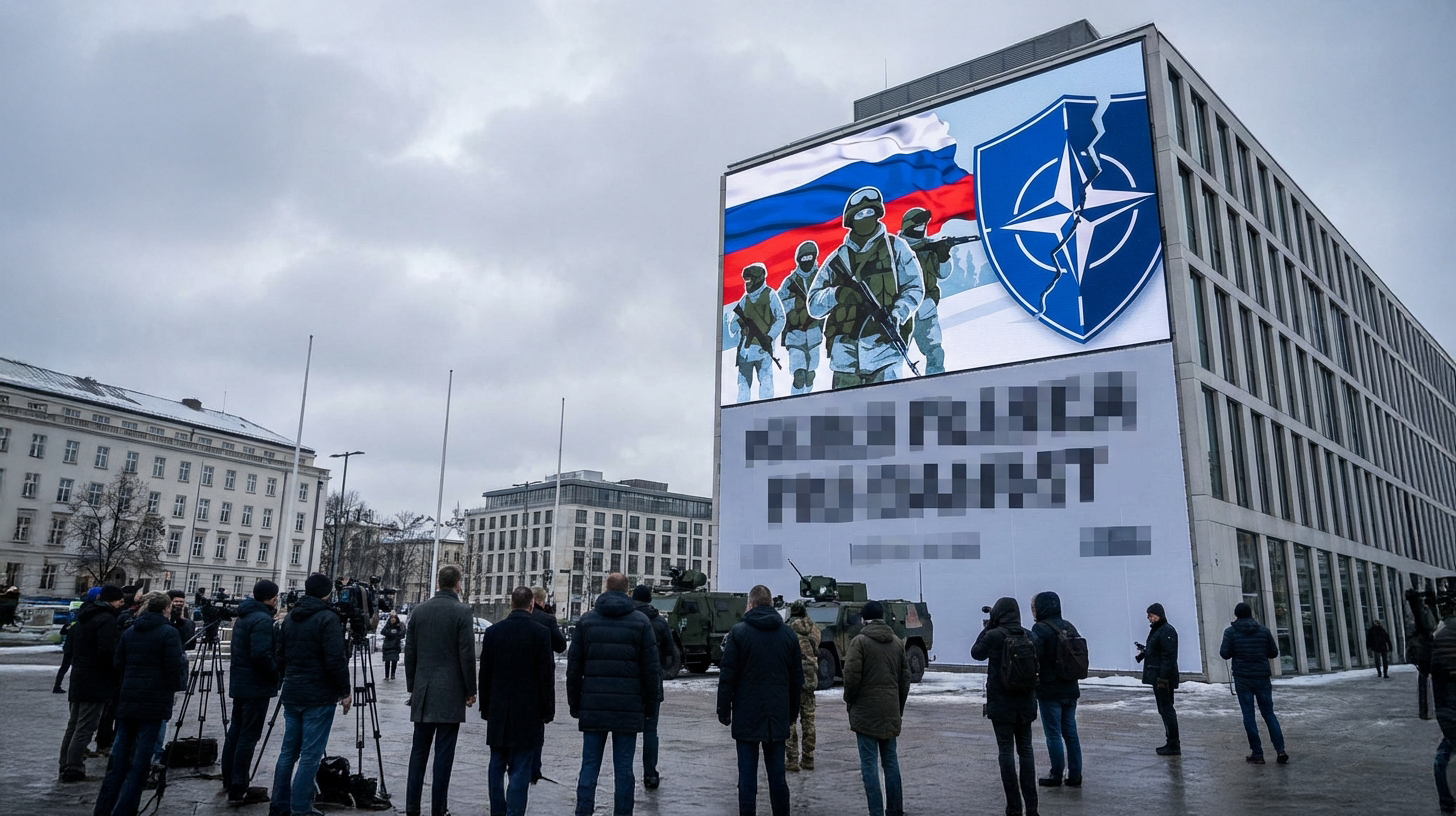
Just in time for the Munich Security Conference, the headline: Putin's 15,000 soldiers can beat NATO! – Creative image: Xpert.Digital
Behind the scenes of the "World" war game: What the headline about NATO weaknesses conceals
Not tanks, but politics: The true (and concealed) result of the NATO war simulation
The war game did not primarily reveal military shortcomings or a shortage of tanks. Rather, the true, but concealed, result was a problem of political decision-making and unity.
It sounded like the ultimate shock scenario, just in time for the Munich Security Conference: Vladimir Putin could bring NATO to its knees with only 15,000 soldiers. But what's really behind the viral headline?
When BILD and Die WELT reported on an exclusive war simulation shortly before the most important meeting of Western defense policy, the excitement was palpable. The scenario: a Russian lightning attack on the Baltic states that paralyzes the world's most powerful military alliance within a matter of days. The message seemed clear – we are defenseless, we must rearm. But anyone who scratches the surface of this news report encounters massive contradictions.
How can an army that claims to have lost over 1.2 million men in Ukraine and is bogged down in a grueling war of attrition suddenly be capable of a highly mobile blitzkrieg against NATO? A more in-depth analysis of the war game conducted at Helmut Schmidt University reveals that the simulation's outcome had less to do with Russian strength than with Western indecisiveness.
This article takes a sober look behind the headline. We analyze the methodological limitations of the war game and contrast the simulated scenarios with the hard facts of Russia's military exhaustion.
Related to this:

When fear becomes a media business model, sober analysis is the first to die
The timing was perfect. On the eve of the 2026 Munich Security Conference, the most important annual meeting of Western security policy, BILD ran a headline that made even hardened security experts sit up and take notice: Putin could defeat NATO with just 15,000 soldiers. A war simulation, conducted in December 2025 by Die WELT in cooperation with the German Wargaming Center at the Helmut Schmidt University of the German Armed Forces in Hamburg, had shown that a small Russian force could bring the most powerful military alliance in history to its knees within a few days. The news made international headlines, with reports in the Wall Street Journal, Politico, the British Independent, and numerous other media outlets. What at first glance appears to be a serious strategic warning, upon closer inspection warrants a more nuanced assessment that considers both the methodological limitations of the wargame and the economic interests behind the threat communication.
The mechanics of the simulation: What was actually simulated
The war simulation itself was methodologically quite ambitious. Sixteen participants, including former high-ranking German and NATO officials, played through a scenario set in October 2026 in separate rooms. Austrian military analyst Franz-Stefan Gady took on the role of the Russian Chief of the General Staff, while Alexander Gabuev, director of the Carnegie Russia Eurasia Center in Berlin, played Vladimir Putin. Participants on the Western side included, among others, former Inspector General of the Bundeswehr Eberhard Zorn and Member of Parliament Roderich Kiesewetter.
The scenario assumed a ceasefire in the Ukraine war in the summer of 2026. Russia then fabricated a humanitarian crisis in its Kaliningrad exclave and used this as a pretext to occupy the Lithuanian city of Marijampole, located at a strategically important European transport hub, with approximately 12,000 troops stationed in Belarus and additional forces from Kaliningrad. Russian drones mined the Polish-Lithuanian border, and NATO troops stationed there were blockaded at their base. In the simulation, the United States refused to invoke Article 5, Germany hesitated, and Poland mobilized but did not intervene.
The result after three simulated days: Russia had gained control of the Suwalki Corridor, NATO's only land connection to the Baltic states, effectively paralyzing the alliance. Gady summarized the key finding: Deterrence depends not only on capabilities but also on what the enemy believes about the other side's will. In the war game, he and his Russian colleagues knew that Germany would hesitate, and that was enough to win.
What the simulation doesn't show: Constructed premises and methodological limitations
However revealing the results may be regarding political decision-making processes, the headline only tells half the story. The simulation worked with a number of premises which, taken together, constructed a worst-case scenario that is unlikely to occur in reality.
First, the scenario assumes that the US will not intervene and invoke Article 5 within the first 48 hours. While this is conceivable under an isolationist US administration, it is by no means the most likely outcome. The US maintains a permanent troop presence in Europe and has significant security interests of its own in the Baltic states. Second, the simulation assumes that Germany and Poland will remain passive despite clear Russian aggression against a NATO member—a course of action that, while perhaps politically plausible, underestimates the existing automatic escalation mechanisms of the NATO command structure. Third, and Gabuev himself emphasized this, European countries would likely have reacted earlier in reality, based on intelligence reports, than in the simulation, where the flow of information was artificially restricted.
Former NATO spokeswoman Oana Lungescu, who played the role of NATO Secretary General in the war game, described the outcome as very realistic, unfortunately, but also emphasized the diagnostic nature of the exercise. This is precisely the crucial point: a war game is not war. It is a tool for identifying weaknesses in decision-making processes and command structures, not a prediction of the actual course of a war.
The reality of the Russian military: An army on the verge of exhaustion
A sober assessment of Russia's actual military situation stands in stark contrast to the headline. The Institute for the Study of War (ISW), in its comprehensive analysis from November 2025, arrives at a damning conclusion: Since the full-scale invasion of Ukraine, the Russian military has undergone a rapid and comprehensive transformation, optimizing itself for conducting trench warfare. The degraded armed forces are now likely no longer capable of conducting effective large-scale maneuver warfare. Russia can only carry out positional offensives and is incapable of significant operational maneuvers.
The casualty figures from the war in Ukraine are catastrophic for Russia. According to Ukrainian data, largely confirmed by NATO sources, Russia lost over 1.2 million soldiers by January 2026, including approximately 30,000 killed in December 2025 alone, with at least another 30,000 wounded or missing each month. In 2025, Russia recruited roughly 403,000 to 405,000 men for contract service, a monthly average of about 34,000, which is significantly lower than the total monthly losses of around 60,000. Thus, since the end of 2025, Russia has been losing more soldiers than it can recruit.
The situation regarding equipment is no better. The Dutch open-source intelligence project Oryx visually confirmed over 20,000 pieces of Russian military equipment lost by January 2025, including 15,039 destroyed units. The Ukrainian armed forces estimate total Russian losses by the end of 2025 at almost 12,000 tanks, almost 25,000 armored vehicles, and almost 38,000 artillery systems. The International Institute for Strategic Studies warned as early as 2025 that if the current rate of losses and destruction continues, Russia will no longer have enough main battle tanks for effective offensives by the beginning of 2026.
At the same time, despite this massive investment of manpower and materiel in Ukraine, Russia has achieved little. Since the start of its full-scale invasion in 2022, Russia has brought approximately 19 percent of Ukrainian territory under its control, with about seven percent already occupied before 2022. Territorial gains since January 2024 amount to less than 1.5 percent of Ukrainian territory. The CSIS report from January 2026 notes that in its most significant offensives, Russian forces advanced at an average rate of between 15 and 70 meters per day, slower than almost any major offensive campaign in any war of the last century. Russia paid for these minimal territorial gains with the highest rate of casualties of any major power in a war since World War II.
Hub for Security and Defense - Advice and Information

Hub for Security and Defense - Image: Xpert.Digital
The Security and Defence Hub offers expert advice and up-to-date information to effectively support companies and organizations in strengthening their role in European security and defence policy. Working closely with the SME Connect Defence Working Group, it particularly promotes small and medium-sized enterprises (SMEs) that wish to further develop their innovative capacity and competitiveness in the defence sector. As a central point of contact, the Hub thus creates a crucial bridge between SMEs and European defence strategy.
Related to this:
Russia's victory over NATO? The inconvenient truth behind the fearmongering
NATO's overwhelming superiority in numbers
Not tanks, but hesitation: Europe's greatest threat is something else
Comparing the Russian military to that of NATO makes the absurdity of the mere headline even clearer. NATO has 3.44 million active soldiers compared to Russia's 1.32 million. The ratio of combat aircraft is 22,377 to 4,957, for naval vessels 1,143 to 339, and for main battle tanks 11,495 to 5,750. NATO's combined defense budget in 2024 amounted to approximately US$1.47 trillion, compared to Russia's estimated US$110 to 149 billion. Even excluding the US, the European NATO states spent more on defense than Russia, adjusted for purchasing power parity: US$430 billion compared to US$300 billion.
A study commissioned by Greenpeace and conducted by peace researchers Herbert Wulf and Christopher Steinmetz in 2024 concluded that NATO is far superior to Russia in almost all key military parameters, even without the US. NATO member states possessed 5,406 combat aircraft, 2,073 of which were in Europe, compared to only 1,026 Russian aircraft. Only in the area of nuclear weapons was there near parity. The study also found that Russia lagged significantly behind in many areas of weapons development, a gap that could hardly be closed within a decade.
Related to this:

Where the simulation nevertheless hits a nerve
All these figures do not mean that the simulation is worthless. On the contrary, it identifies a real and serious vulnerability, which, however, has nothing to do with Russia's military strength. The real problem lies in the West's political decision-making. The question of whether Germany would actually be prepared to risk its own soldiers for the defense of Lithuania is not hypothetical, but one that affects the credibility of NATO's entire deterrence strategy.
Gady formulated this precisely: Russia's war aim in the Baltics is not conquest, but the discrediting of NATO as an alliance. If Russia can credibly demonstrate that NATO states will not stand together in a crisis, the strategic damage would be far greater than any territorial gain. The war game showed that the greatest danger does not come from Russian tanks, but from the search for consensus in Brussels, Berlin, and Washington.
This finding is certainly valuable. The RAND Corporation reached similar conclusions back in 2016, stating that Russian forces could reach Tallinn and Riga within 36 to 60 hours. Almost a decade later, this key vulnerability persists: once Russia establishes facts on the ground, reversing them will be extraordinarily costly.
Russia's capacity for reconstitution: A question of time, not will
The question of whether Russia could pose a threat to NATO in the medium term is more nuanced than the headline suggests. In 2024, the Carnegie Endowment for International Peace analyzed Russia's reconstitution pathways up to 2030 and concluded that while Russia was pursuing a long-term program to rebuild its armed forces, this was significantly hampered by sanctions, economic constraints, and a labor shortage. NATO Secretary General Mark Rutte warned in June 2025 that Russia could be capable of launching military operations against NATO member states within five years. The ISW confirmed this assessment but emphasized that Russia would not necessarily have to reduce its armed forces to pre-2022 levels to do so.
Russian Defense Minister Andrei Belousov stated at an expanded meeting of the Defense Ministry's executive committee in December 2024 that a large-scale conflict with NATO was possible within the next decade and that the Russian military needed to be structured accordingly, regardless of the outcome in Ukraine. NATO intelligence estimates project that Russia will produce approximately 1,500 tanks, 3,000 armored vehicles, and 200 Iskander missiles by 2025, a significant portion of which is likely to be recycled from Soviet-era stockpiles.
At the same time, the Russian economy is showing clear signs of stress. Economic growth slowed to 0.6 percent in 2025, manufacturing output declined, inflation remained stubbornly high, and the country is suffering from an acute labor shortage. According to the CSIS, Russia had no companies among the world's 100 largest technology companies, which significantly limits its long-term competitiveness in key technologies such as artificial intelligence.
The necessary distinction: Legitimate concerns versus fear-mongering
All of this does not mean that concerns about Russian aggression are unfounded. BND chief Martin Jäger warned that Russia would not shy away from a direct military confrontation with NATO if it deemed it necessary. Former CIA Director David Petraeus identified Lithuania as the most likely target should Russia succeed in Ukraine. These warnings deserve attention.
But the claim that Russia could defeat NATO with 15,000 soldiers is a gross oversimplification that doesn't hold up to reality. A country that, after four years of war, controls less than 20 percent of Ukraine with over a million soldiers and enormous material expenditure, advancing at a rate of 15 to 70 meters per day, cannot simultaneously defeat an alliance with 3.44 million soldiers, a defense budget ten times larger, and technological superiority in almost every area. What the simulation actually shows is not Russia's strength, but Europe's political weakness, and that is a fundamentally different problem that cannot be solved with billions in military spending alone.
The more honest headline should have read: War game shows that Europe caves under political pressure. But this headline would have generated fewer clicks, created less fear, and fit less well into the narrative that justifies higher defense spending. The fact that the problem is primarily political and not military in nature is systematically downplayed in the media coverage, because political will cannot be bought from Rheinmetall.
Europe between a turning point in history and threat inflation
The ECB has presented sobering figures in its analysis of the impact of additional defense spending. The additional military expenditure in the eurozone between 2025 and 2027 totals approximately 0.6 percent of GDP. The growth effect amounts to only 0.06 to 0.12 percentage points per year, and the impact on inflation remains limited. The widespread expectation that rearmament can serve as an economic stimulus is not supported by the data.
At the same time, critics warn of the opportunity costs. Every euro spent on weapons is a euro less available for education, healthcare, and the energy transition. Peace researchers Wulf and Steinmetz argue that NATO's existing conventional superiority does not justify the need for a permanent increase in military spending at the expense of other essential areas.
This does not mean that Europe has no defense deficits. The operational readiness of the German armed forces remains problematic, the European arms industry is fragmented, and political coordination in crisis situations clearly needs improvement. However, solving these problems requires, first and foremost, structural reforms, better integration, and above all, political will—not panic over an army that is currently being worn down by the war in Ukraine.
Related to this:

What remains: The right question, packaged incorrectly
The war simulation by WELT and the German Wargaming Center poses a crucial question: Is Europe prepared to stand up for its allies when it matters most? The answer provided by the simulation is unsettling. However, the media's presentation of this finding in the headline "Putin could defeat NATO with 15,000 soldiers" is misleading, sensationalist, and plays into the hands of those who will exploit the generated sense of threat one way or another.
The credibility of the claim is therefore a matter of perspective. As a diagnostic tool for identifying political weaknesses in NATO's decision-making structures, the simulation is valuable. As a statement about the actual military threat situation, it is grossly distorted. And as a media event launched to coincide with the Munich Security Conference and appearing amidst exploding arms stocks and multi-billion-dollar rearmament programs, it serves precisely the threat economy that Eisenhower, in his famous 1961 farewell address, called the military-industrial complex.
Russia poses a serious security challenge. But a country that systematically wears down its armed forces in the Ukraine war, loses more soldiers each month than it recruits, shrinks economically to the level of a regional power, and falls behind technologically, is incapable of defeating NATO militarily, neither with 15,000 nor with 150,000 soldiers. What Russia can do, however, is exploit the political fault lines within the alliance. And that should be the real headline.
Consulting - Planning - Implementation

Markus Becker
I would be happy to serve as your personal advisor.
Head of Business Development
Chairman SME Connect Defense Working Group
Consulting - Planning - Implementation
Konrad Wolfenstein
I would be happy to serve as your personal advisor.
contact me at wolfenstein ∂ xpert.digital
Just call me on +49 7348 4088 965 (Munich) .
Your dual-use logistics experts

Dual-use logistics experts - Image: Xpert.Digital
The global economy is currently undergoing a fundamental transformation, a watershed moment that is shaking the foundations of global logistics. The era of hyper-globalization, characterized by the relentless pursuit of maximum efficiency and the "just-in-time" principle, is giving way to a new reality. This new reality is marked by profound structural breaks, geopolitical power shifts, and increasing fragmentation of economic policy. The once taken-for-granted predictability of international markets and supply chains is dissolving and being replaced by a period of growing uncertainty.
Related to this:





