
Thales GM400 Alpha with a range of 515 km: Why Bulgaria's new super radar could make Putin nervous on the Black Sea
Xpert Pre-Release

Available in 27 languages 📢
Prefer Xpert.Digital on GoogleⓘPublished on: June 12, 2026 / Updated on: June 12, 2026 – Author: Konrad Wolfenstein
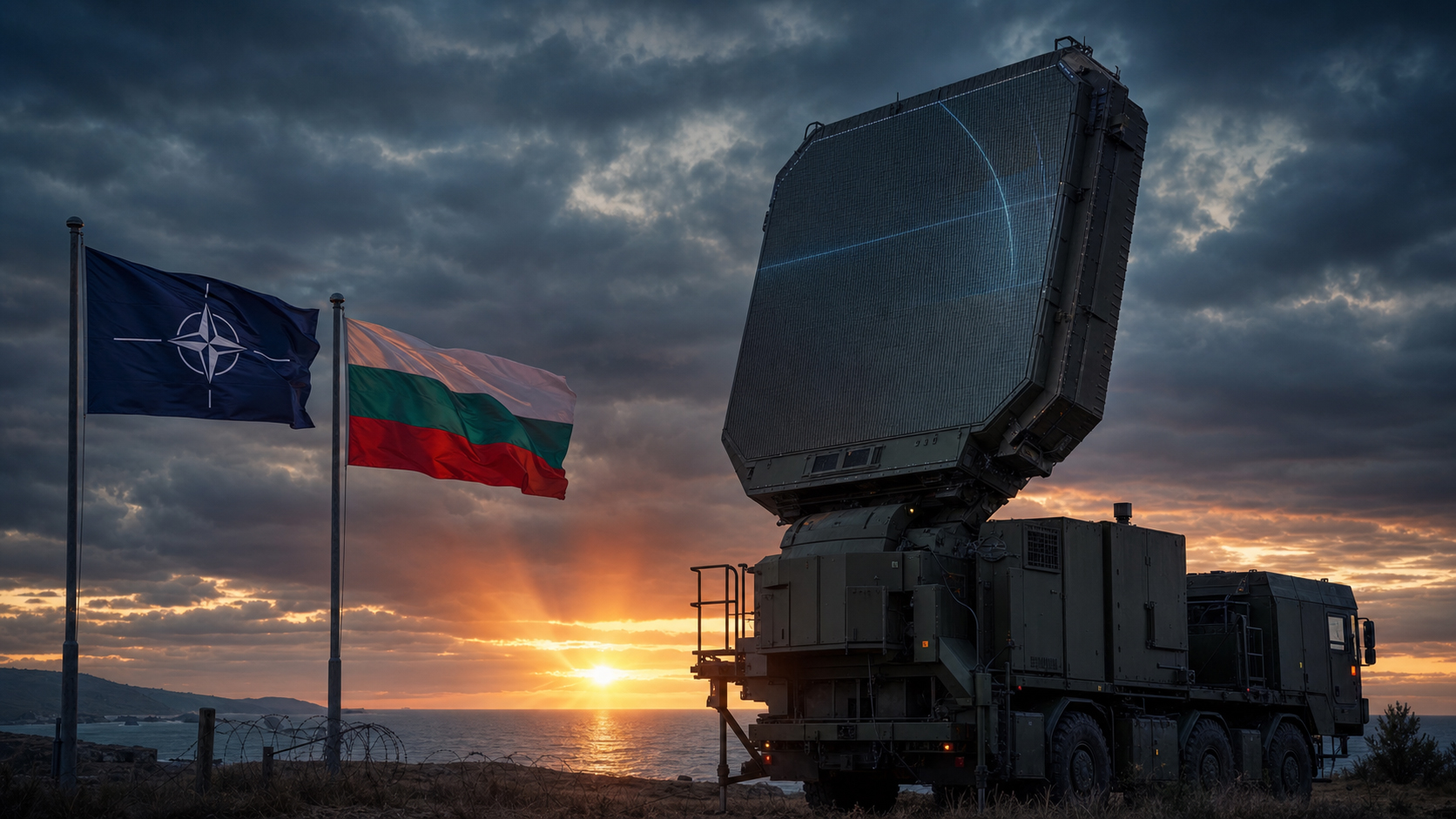
Thales GM400 Alpha with a range of 515 km: Why Bulgaria's new super radar could make Putin nervous on the Black Sea – Creative image: Xpert.Digital
195 million euro deal: How Bulgaria is sealing off Europe's eastern flank with this French radar
Without this system, the new F-16s are blind: Bulgaria's secret arms coup
Bulgaria's purchase of seven Thales GM400 Alpha radars may appear at first glance to be a routine military procurement, but behind the €195 million deal lies a geopolitical bombshell. On the strategically sensitive Black Sea coast, this investment not only marks the definitive end of Sofia's historical dependence on Russia, but also a true milestone in European defense integration. With revolutionary EU financing, multinational procurement models, and cutting-edge French high technology, the NATO member is preparing for a completely altered threat landscape – and simultaneously creating the essential technological foundation for its new F-16 fighter jet fleet. This analysis explores why this procurement project is sending shockwaves far beyond Bulgaria's borders and how it is fundamentally changing the European defense landscape.
Historic turning point: How Bulgaria is buying Europe's most powerful radar system with EU billions
186 to 3 votes: Bulgaria's ingenious radar deal is a resounding slap in the face for Moscow
On June 9, 2026, the Bulgarian parliament voted 186 to 3 in favor of purchasing seven long-range radar systems from the French defense and technology company Thales. The few dissenting votes came from none other than the pro-Russian party Vasrashdane (Rebirth), perfectly illustrating the political symbolism of this decision. Less than a week after the parliamentary vote, the government formally approved the purchase and declared its swift implementation a matter of urgency – any delay beyond June 2026 would have jeopardized the manufacturer's reserved production capacity and pushed delivery to after 2030.
What at first glance appears to be a routine arms procurement by a medium-sized NATO member is, upon closer inspection, a condensed lesson in the intersection of industrial policy, alliance strategy, European defense integration, and geopolitical change on the alliance's eastern flank. The project is budgeted at up to €195 million, with the initial base contract with Thales Land & Air Systems (Thales LAS France SAS) set at €114.1 million – the surcharge to the maximum amount takes into account potential price and security developments in the coming years.
The device: Why the GM400 Alpha in particular?
The selected system, the Ground Master 400 Alpha (GM400α), is the flagship of Thales' radar product family and is considered one of the most powerful land-based airspace surveillance radars in the world. It is a fully digital, three-dimensional, long-range radar based on an active electronically scanned array (AESA) in the S-band, utilizing gallium nitride (GaN) technology. The decisive technological leap compared to its predecessor, the GM400, is that the Alpha variant offers a range of up to 515 km thanks to five times the computing power and improved detection algorithms – corresponding to a surveillance area increased by more than 20 percent with identical energy consumption of the transmitting and receiving components.
A particularly important technical feature is the so-called digital stacked-beam technology. This allows the system to simultaneously detect and track low-flying, slow-moving drones (UAVs) hiding in the clutter near radar and high-flying fighter-bombers at ranges of up to 515 km – without compromising the detection of different threat classes. According to the manufacturer, operational availability exceeds 98.5 percent, and the mean time between critical failures (MTBCF) is more than 3,000 operating hours. The entire system is packed into a single ISO 20-foot container weighing approximately ten tons, making it easily deployable.
The relevance of these specifications for Bulgaria is obvious: The Black Sea, on whose western coast Bulgaria lies, has become a highly dynamic threat area. Russia has transformed Crimea into an "aircraft carrier" for its air force and stations surface-to-air missile systems and frigates equipped with Kalibr long-range cruise missiles there. Drones of various designs, short-range ballistic missiles, and fast fighter jets comprise the complex threat spectrum that demands precisely the system combination of long-range detection and low-level target detection provided by the GM400α.
The procurement model: More than a bilateral purchase agreement
The deal is not simply a purchase agreement between Sofia and a French company. It is embedded in a novel cooperation model with significant geopolitical and industrial policy implications. On June 16, 2025 – even before the final parliamentary vote, but following Thales' winning bid in March 2024 – Bulgarian Defense Minister Atanas Zapryanov and French Defense Minister Sébastien Lecornu signed a framework cooperation agreement at the Paris Air Show in Le Bourget. The transaction is being handled through the Direction Générale de l'Armement (DGA), the French military procurement agency, which is acting as the technical and commercial intermediary for the Bulgarian partner.
This mechanism – where one partner country purchases equipment through the procurement apparatus of another, larger NATO member state – is not a given and deserves economic recognition: The Joint Procurement Agreement (DGA) pools the needs of several countries, thereby achieving lower unit costs, ensuring standardization, and relieving smaller procurement agencies of complex technical management. The framework agreement is explicitly open to other EU and NATO members who can join the joint procurement platform for Thales radar systems. According to the official press release from the French Ministry of Defense, several countries have already signaled their interest. Bulgaria is thus not only a buyer but also a pioneer in a potentially much larger multinational procurement program.
The competitive history of the deal warrants a closer look: Five bidders competed in the tender, including Lockheed Martin (USA), Leonardo (Italy), ELTA Systems (Israel), Indra (Spain), and Thales (France). Thales won with a bid of approximately €142 million – about 25 percent below the company's own initial offer price and significantly below its US competitor. This price reduction is unlikely to be a coincidence: In times of massively increasing defense spending and full order books, winning a reference plant in a strategically important NATO country is a valuable door opener for subsequent business in the region.
The financing model: The EU-SAFE mechanism as a driver
The source of funding for this project is as significant as the project itself. Bulgaria is financing the radar purchase through the European defense loan instrument SAFE (Security Action for Europe). SAFE was adopted by the Council of the European Union on May 27, 2025, as part of the so-called "ReArm Europe" package and provides up to €150 billion in long-term, competitively priced loans for defense procurement. Participation in the instrument is voluntary, but 19 member states have already expressed interest. Bulgaria was among the first wave of eight countries whose national investment plans were approved by the European Commission on January 15, 2026.
From an economic perspective, SAFE represents a paradigm shift in European defense financing: instead of requiring individual states to finance their defense spending entirely from national budgets, the instrument allows for borrowing at the EU level, secured by the EU budget's headroom. For smaller economies like Bulgaria, this is transformative – a country with a GDP of around €93 billion (2025 estimate) and a projected budget deficit of 4.1 percent of GDP in 2026 could hardly manage an arms investment of this magnitude on its own without drastically reducing other budgetary priorities.
The macroeconomic integration of this project into Bulgaria's fiscal policy is not straightforward. In its spring 2026 forecast, the European Commission predicted economic growth of 2.5 percent for the current year. The budget deficit is rising noticeably, partly due to defense spending – the Commission anticipates a deficit of up to 4.3 percent of GDP in 2027 with a second wave of defense deliveries. The SAFE loans help to mitigate this fiscal pressure by reducing borrowing costs through EU creditworthiness and extending repayment terms. Without this mechanism, the project would hardly have been budgetarily justifiable – or at least would have provoked considerable political resistance.
Bulgaria's defense transformation: A long overdue jolt
To fully understand the scope of this procurement project, one must consider Bulgaria's starting point. For decades, the country has benefited from a deep dependence on Russia, not only in energy policy but also in the military sphere. Until very recently, Bulgarian airspace was patrolled by outdated MiG-29 jets, whose pilots averaged only about 15 flight hours per year – a level that barely guaranteed operational readiness. NATO temporarily took over parts of Bulgaria's active airspace surveillance because Sofia was simply unable to fulfill this responsibility itself.
The turnaround began with the decision to purchase 16 F-16 Block 70s from Lockheed Martin – in two tranches of eight aircraft each in 2019 and 2022, for a total of nearly €2.2 billion. This made Bulgaria the second European country, after Slovakia, to receive the most advanced F-16 variant, the Block 70. In October 2024, the first aircraft completed its maiden flight in Greenville, South Carolina, and in December 2025, Lockheed Martin completed the production of all initial fleet aircraft for Bulgaria and Slovakia. In addition, Bulgaria has ordered 193 Stryker infantry fighting vehicles worth $1.3 billion.
Against this backdrop, the strategic logic of the radar deal becomes fully clear: Modern fighter jets need modern ground-based radar infrastructure to reach their full potential. The air situation picture generated by a GM400α is the basis for the operational coordination of F-16 squadrons. Without a robust, long-range, and reliable radar network, the effectiveness of these expensive fighter jets is significantly limited. The radar investment is therefore not a standalone project, but rather the logical and essential complement to the jet procurement – only together do they create the integrated air defense system mandated by NATO standards.
The geopolitical depth dimension: The Black Sea and Russia's shadow
It would be an oversimplification to view this deal solely from the perspective of Bulgarian modernization policy. Its true significance lies in the geopolitics of the Black Sea and NATO's southeastern flank. Since Russia's annexation of Crimea in 2014 and its comprehensive invasion of Ukraine since February 2022, the Black Sea has transformed from a relatively stable marginal sea into a highly militarized area of tension. Russia has built up a comprehensive military capability package in Crimea: long-range bombers, frigates equipped with Kalibr cruise missiles, submarines, and air defense systems.
Bulgaria and Romania are the only NATO states with direct western access to the Black Sea. Monitoring their airspace, detecting threats early, and contributing to NATO's overall air situational awareness is therefore not a nationalistic whim, but a genuine collective security requirement for the Alliance. The GM400α, with its 515 km range, can monitor a significant portion of the Black Sea and the Ukrainian coast from the Bulgarian coast – a strategic advantage that extends far beyond Bulgarian territory.
The domestic political dimension, however, significantly complicates the picture. In the snap parliamentary elections of April 2026, the pro-Russian party of former President Rumen Radev (Progressive Bulgaria) was projected to achieve a clear victory, possibly with ambitions for an absolute majority. The pro-Russian nationalist party Vasrashdane, considered the fiercest critic of Western arms deals, suffered heavy losses and struggled to enter parliament, but a change of government to Radev's camp would also recalibrate Bulgaria's foreign and security policy standing. Against this backdrop, the urgency with which the incumbent government pushed the radar resolution through parliament before the end of its term can also be interpreted as a hedging strategy: an existing contract with France, financed by EU funds and embedded in a NATO procurement program, is considerably more difficult to reverse than a mere parliamentary resolution.
Hub for Security and Defense - Advice and Information

Hub for Security and Defense - Image: Xpert.Digital
The Security and Defence Hub offers expert advice and up-to-date information to effectively support companies and organizations in strengthening their role in European security and defence policy. Working closely with the SME Connect Defence Working Group, it particularly promotes small and medium-sized enterprises (SMEs) that wish to further develop their innovative capacity and competitiveness in the defence sector. As a central point of contact, the Hub thus creates a crucial bridge between SMEs and European defence strategy.
Related to this:
Arms integration in action: What the Bulgaria deal means for Europe's security architecture
Thales as a beneficiary: A corporation in the arms boom
The economic context for Thales itself is remarkable. The company, in which the French state holds a stake, is experiencing a period of exceptional growth. In 2024, Thales achieved new record highs with order intake of €25.3 billion and sales of €20.6 billion – a sales increase of 8.3 percent and an operating profit increase of 5.7 percent to €2.4 billion. For 2025, the group projected further sales growth to between €21.7 and €21.9 billion, and in the first half of 2025, organic growth of 8.1 percent to €10.27 billion was already reported.
Geographically, France is Thales' most important market with 28.8 percent, followed by Europe with 25.1 percent and North America with 14.2 percent. The Bulgarian deal should therefore not be viewed in isolation, but rather as part of a targeted strategy to tap into European defense budgets, which are increasing massively in the wake of the Ukraine war and NATO decisions. The GM400/GM400α system is a key element in this strategy: it is deployed in more than 20 countries, and the Ground Master family has sold over 70 units to more than 15 nations worldwide. NATO operators of the system include Estonia, Finland, Slovenia, Germany, the Netherlands, and Canada.
Procurement via the DGA is doubly advantageous for Thales: it reduces sales costs for direct contracts with individual countries, anchors the company in the institutional procurement apparatus of EU partner states, and raises the barrier to entry for competitors from the Anglo-Saxon defense sector. The fact that, following the Bulgaria deal, the DGA is also offering itself as a pool manager for GM400 procurements for other countries effectively creates a European radar procurement consortium with Thales as the sole supplier – a classic network effect business model with significant lock-in potential.
The NATO target of five percent: Cost pressures and opportunities
Bulgaria's defense spending was historically low. In 2024, according to NATO figures, the country spent 2.18 percent of its GDP on defense – respectable considering the circumstances at the time, but far from the new NATO target. At the NATO summit in The Hague in June 2025, member states formally agreed to increase their defense spending to at least five percent of GDP by 2035 – divided into 3.5 percent for nuclear defense spending and 1.5 percent for defense-related infrastructure such as roads, bridges, railway networks, cyber infrastructure, and power grids.
For Bulgaria, this goal represents a fiscal challenge. The country's GDP in the first quarter of 2025 was approximately €93 billion on an annualized basis, with strong growth momentum at 3.1 percent in the same period. Five percent of GDP for defense would imply annual expenditures of over €4.5 billion – several times the current level. This is unrealistic to manage in the short term, especially given a budget deficit projected to exceed 4.1 percent of GDP by 2026. This is precisely where the SAFE mechanism demonstrates its macroeconomic value: it allows modernization measures to be brought forward through EU-subsidized borrowing without jeopardizing the national budget in the short term.
At the same time, Bulgaria is not a passive arms importer. Its national arms industry has experienced a remarkable boom as a result of Russia's full-scale invasion of Ukraine. In 2022, Bulgaria's arms exports increased by 200 percent, as Sofia—unlike many Western European countries—was able to produce and supply Soviet-standard ammunition, which Ukraine desperately needed. At the end of August 2025, the German arms manufacturer Rheinmetall announced plans to build a new one-billion-euro ammunition factory in Bulgaria to produce 155mm artillery shells to NATO standards—partially financed by the EU, in cooperation with the state-owned company VMZ-Sopot.
European arms integration: From individual purchases to a systems approach
The Thales GM400α deal exemplifies a profound structural shift in the European defense landscape. The purchase via the DGA as a joint procurement platform is a practical example of the demand aggregation that the EU and NATO have been advocating for years, but rarely implementing in a straightforward manner. The economic logic is compelling: defense procurement is a market with high fixed costs in research, development, and production. Every additional unit a manufacturer produces reduces the average manufacturing cost. Countries that procure jointly can realize this cost reduction and also obtain homogeneous systems that facilitate interoperability and joint maintenance.
The EU's SAFE financing instrument, which provides up to €150 billion in loans by 2030, is acting as a catalyst for precisely this development. It incentivizes joint procurement, as joint procurement projects receive preferential treatment. For the European defense industry, the prospect of predictable large-scale orders across multiple partner countries offers a strategic planning certainty that was previously lacking and justifies investments in production capacity. Thales, which operates Europe's largest radar factory near Limours, south of Paris, benefits directly from this systemic shift.
The consolidation of the European defense industry is a politically desired but difficult-to-implement process. The Franco-German defense cooperation project (MGCS for tanks, FCAS for fighter jets) has been stalled for years due to strategic conflicts and national industrial interests. The GM400α deal, however, demonstrates that pragmatic procurement cooperation is possible beneath the surface of major political debates – provided the technology is convincing, the prices are right, and an administrative intermediary like the DGA fosters trust.
Risks and controversies: What the enthusiasm obscures
Despite the project's strategic soundness, risks and critical objections cannot be ignored. Firstly, a delivery period of 30 to 36 months after contract signing is no guarantee in a European defense market suffering from massive capacity constraints. Defense companies worldwide report material shortages, a lack of skilled workers, and overflowing order books. The decision not to postpone contract signing beyond June 2026, for fear of losing production slots, is a direct symptom of this strained industrial situation.
Secondly, the political change in Bulgaria poses a real risk to implementation. A new government under former President Rumen Radev, considered pro-Russian, could at least call into question procurement priorities, cooperation with Western allies, and financing agreements. While a signed contract is formally difficult to terminate, delays in maintenance, integration, and training could limit the operational usability of the systems for years.
Third, the budgetary burden is more real than the SAFE mechanism suggests. The loan must be repaid. In a country with limited financial resources, structural budget problems, and simultaneously massive defense commitments (F-16s, Strykers, radars, munitions factories), considerable debt burdens accumulate in the medium term. The European Commission has already warned that Bulgaria's deficit could rise to 4.3 percent of GDP due to defense spending—a level that would raise questions under a strict interpretation of the EU Stability and Growth Pact, even though defense spending currently receives preferential political treatment.
Fourth, a critical analysis would be incomplete without addressing the issue of industrial offsets. Arms contracts of this magnitude typically include clauses that compensate the buyer by ensuring that a portion of the contract volume flows back into local industry—through supplier agreements, technology transfer, or shared maintenance capabilities. Whether and to what extent Bulgaria negotiated such offsets is not transparently apparent from publicly available documents. For a country that simultaneously aims to modernize its domestic defense industry, this represents considerable potential.
A 195 million euro signal
Anyone who views the purchase of seven radar systems for 195 million euros as a mere act of armament underestimates the overall strategic significance of this decision. It is simultaneously a contribution to NATO collective defense in one of the most exposed regions of Europe, proof of the functionality of the new European defense financing framework, a step towards strengthening the European defense technology base, and a domestic political statement from a country that, despite considerable Russian attempts at influence, is decisively moving westward.
The fact that the decision was passed by a vote of 186 to three, and that the three dissenting votes came from the pro-Russian party, is not a footnote – it is the core political message of the project. Bulgaria is signaling that air superiority, alliance loyalty, and technological modernization are goals that command a majority, even if the domestic political situation remains complex. The economic costs are real, but in light of the alternatives – permanent dependence on allies for its own airspace surveillance, technological obsolescence, and declining credibility within the alliance – they are not disproportionate.
For European defense and security policy, the Bulgaria deal is a piece of a rapidly emerging puzzle: More and more medium-sized European states are using EU financing instruments, French procurement structures, and proven Western European technology platforms to fundamentally transform their defense capabilities. Whether this will be enough to meet the strategic challenges of the 2030s remains to be seen. But the direction is clear – and the Black Sea has long since ceased to be dormant.
🎯🎯🎯 Data-driven B2B industry hub as a quasi-in-house solution

The quasi-in-house solution: How Xpert.Digital closes operational gaps in B2B marketing and sales – Smart Content-Driven Business - Image: Xpert.Digital
Xpert.Digital is a data-driven B2B industry hub led by Konrad Wolfenstein . The company acts as an external, quasi-in-house solution for industrial partners, closing operational gaps in marketing, content, and sales – without requiring additional resources on the client side.
More information here:
Your global marketing and business development partner
☑️ Our business language is English or German
☑️ NEW: Correspondence in your native language!

Konrad Wolfenstein
I and my team are happy to be available to you as your personal advisor.
You can contact me by filling out the contact form here [email protected]:or simply call me at +49 7348 4088 965. My email address is
I'm looking forward to our joint project.





