
Without this substance, Europe comes to a standstill: The secret power of AdBlue in logistics
Xpert Pre-Release

Available in 27 languages 📢
Prefer Xpert.Digital on GoogleⓘPublished on: May 23, 2026 / Updated on: May 23, 2026 – Author: Konrad Wolfenstein
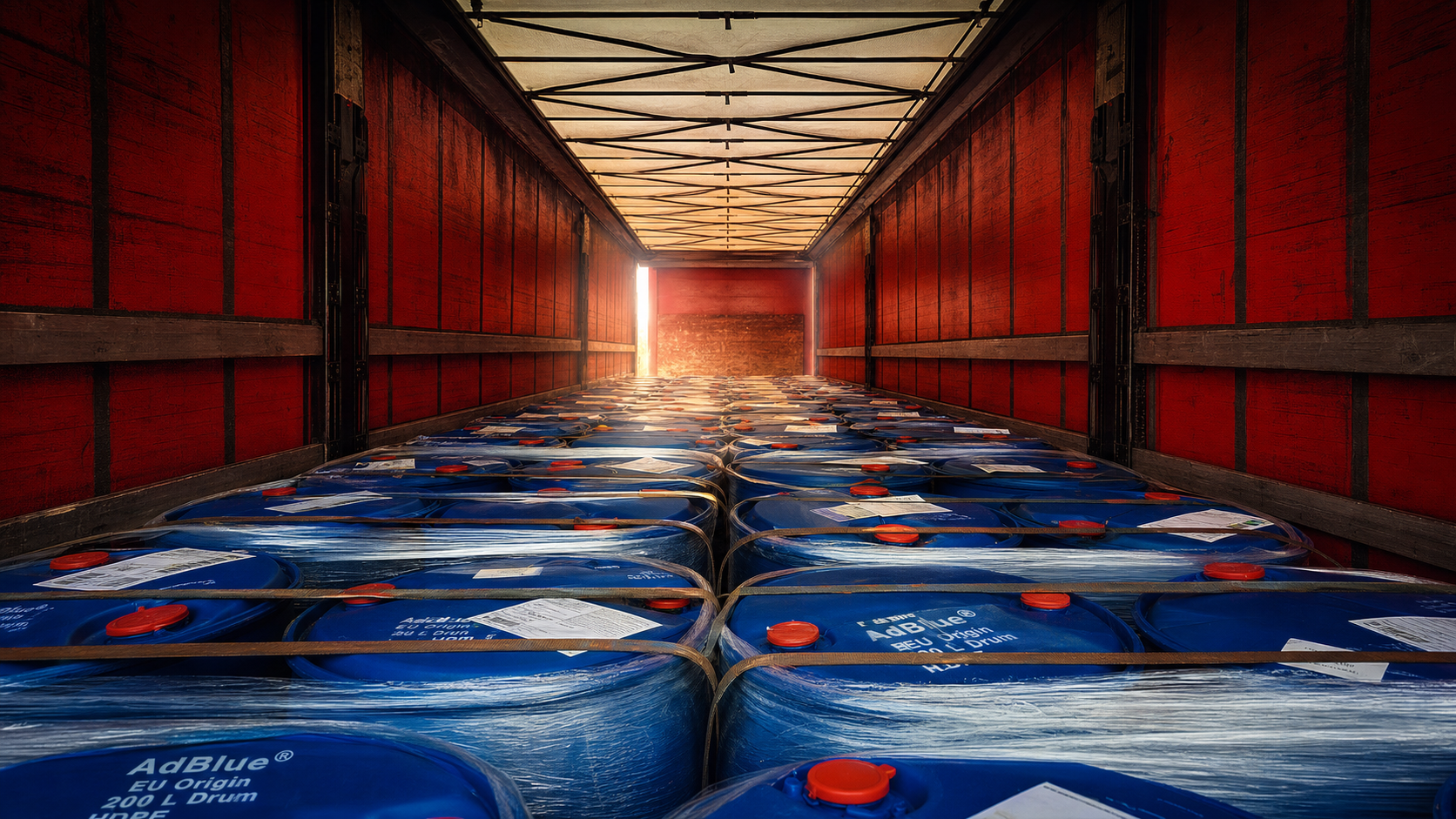
Without this substance, Europe comes to a standstill: The secret power of AdBlue in logistics – Image: Xpert.Digital
The AdBlue cost trap: What fleet managers need to know now about the hidden price driver
The multi-billion dollar AdBlue market: Why this unassuming liquid dominates our supply chains
The Achilles' heel of truck fleets: Why the price of AdBlue could explode again at any time
An unassuming liquid plays a crucial role in driving the European economy: AdBlue. Chemically a simple mixture of urea and demineralized water, this systemic substance has long since become an absolute matter of survival for modern logistics. Without this standardized additive, the engines of virtually all current diesel heavy-duty trucks would fall silent – and with them, global supply chains would inevitably grind to a halt. But behind this seemingly niche product lies a highly dynamic, multi-billion-dollar market. Extreme price volatility due to its close ties to the natural gas market, stringent ISO quality standards, and the emerging structural shift towards e-mobility pose major challenges for fleet managers and logistics companies. This article illuminates the strategic depth of the global AdBlue market, analyzes the complex procurement logic for companies, and demonstrates why security of supply has long since become a decisive competitive advantage in this invisible powerhouse.
AdBlue – The silent system substance of modern logistics
An inconspicuous liquid with systemic reach
From a purely chemical perspective, AdBlue is a remarkably simple substance: 32.5% by weight of technically pure urea dissolved in demineralized water – colorless, odorless, and standardized according to the internationally binding standard ISO 22241 (also known as AUS 32, Aqueous Urea Solution 32). What makes this fluid economically significant is not its chemical complexity, but its sheer indispensability: without it, no modern diesel heavy-duty truck can operate in Europe. The German Federal Association of Road Haulage, Logistics and Waste Disposal (BGL) once aptly described a potential AdBlue shortage as a possible threat to approximately 90 percent of all truck traffic in Germany. This is not rhetorical exaggeration, but a sobering regulatory fact: modern Euro 6 diesel engines simply refuse to start once the AdBlue supply is exhausted.
The underlying technology is selective catalytic reduction, or SCR for short. In the exhaust system, AdBlue is finely atomized upstream of the catalytic converter and reacts with the nitrogen oxides (NOx) contained in the exhaust gas. Through an intermediate step – thermal hydrolysis and subsequent thermolysis of the urea to ammonia – the harmful nitrogen oxides are converted into elemental nitrogen and water vapor. The emission reduction rate is impressive: depending on the installation situation and driving cycle, NOx emissions can be reduced by up to 90 to 95 percent. SCR technology is therefore the backbone of the entire modern diesel emissions strategy in Europe – and AdBlue is its only operating fluid.
The engine itself doesn't need AdBlue to run. A diesel engine burns diesel fuel and powers the truck – that would work perfectly fine without AdBlue.
The fact that AdBlue still needs to be added is solely due to environmental and legal reasons. Here is the detailed explanation:
1. What is AdBlue good for? (Environmental protection)
Diesel engines emit nitrogen oxides (NOx) during combustion. These gases are harmful to the environment, contribute to smog formation, and are toxic to the human respiratory system.
To meet stringent emissions standards (such as Euro 5 and Euro 6), modern trucks (and also cars) are equipped with a selective catalytic reduction (SCR) system.
AdBlue (a mixture of distilled water and urea) is injected into the hot exhaust system. There, it reacts chemically with the harmful nitrogen oxides, converting them into completely harmless water vapor and nitrogen (a natural component of the air we breathe). AdBlue is therefore a type of "chemical exhaust cleaning system."2. Why can't modern trucks drive without them anymore?
Although the engine could run without AdBlue, the truck's electronics prevent it from running without it. When the AdBlue tank is empty, the following happens:
Power reduction: The engine control unit drastically reduces the truck's power (limp mode). A fully loaded truck will then barely be able to climb a hill or will only be able to travel at a walking pace (e.g., a maximum of 20 km/h).
Start lock: If the truck is parked without AdBlue, the engine often cannot be started at all until AdBlue has been refilled.
Manufacturers are legally required to incorporate these locks into the software to ensure that vehicles comply with emissions standards at all times.
3. What happens if you cheat?
Some transport companies or drivers attempt to manipulate the system with illegal devices (so-called AdBlue emulators). These devices trick the vehicle's electronics into believing there is enough AdBlue present, even though the tank is empty. This is strictly illegal
Expiry of the operating permit: The truck is no longer allowed on the road.
Tax evasion and toll fraud: Since truck tolls in Germany and Europe are calculated according to emissions classes, a truck without a functioning AdBlue system pays too little toll.
Severe penalties: Anyone caught faces drastic fines and confiscation of profits.
AdBlue has nothing to do with the truck's engine; it's solely responsible for exhaust gas purification. The fact that trucks can't run without it isn't due to the engine's mechanics, but rather because the onboard electronics and legal regulations prohibit it in order to keep the air clean.
From research to regulatory obligation: How AdBlue became mandatory
The introduction of AdBlue as a standard operating fluid is inextricably linked to European emissions legislation. In the commercial vehicle sector, SCR was already used with the Euro 4 and Euro 5 standards in the early 2000s; however, at that time the technology was still optional. It was only with the introduction of the Euro 6 standard, which became mandatory for type approval of new vehicle models from September 2014, that AdBlue became a de facto mandatory component for all larger series-production diesel engines. Simultaneously, industry-wide infrastructures were developed: Yara International, the world's largest AdBlue producer, operates five production facilities worldwide and has invested €28 million in its plant in Brunsbüttel alone – a facility with an annual capacity of 1.1 million tons, which can theoretically meet half of European demand.
The brand name AdBlue is a registered trademark of the German Association of the Automotive Industry (VDA). Technically identical products are marketed in North America as DEF (Diesel Exhaust Fluid) and in South America as Arla 32. This variety of names belies the complete standardization: The same ISO 22241 specification applies worldwide, defining the urea content at 31.8 to 33.2 percent by weight, the refractive index at 1.3814 to 1.3843 at 20 °C, and strict limits for impurities such as biuret, aldehydes, and heavy metals.
The global market: billions in value, growth expectations, and geographical weight
The global AdBlue market is considerably larger than its niche image suggests. Various market research institutes estimate the market volume for 2025 at around US$35 to 38 billion – with a projected compound annual growth rate (CAGR) of 5.5 to 8.3 percent until the early 2030s. A more conservative estimate from the research firm Mordor Intelligence puts the volume at around US$33.93 billion for 2026, with an annual growth rate of 5.23 percent until 2031, which would correspond to a target market volume of US$43.81 billion. Even this conservative assessment shows that we are talking about a structural growth market, not a stagnant commodity segment.
Europe is currently the largest single market, driven by early and stringent emissions legislation. Germany occupies a prominent position: According to the Future Market Report, it accounts for approximately 15.7 percent of the global market share. This is remarkable for a single country and reflects the density of Germany's freight transport network, the large fleet size in the commercial vehicle sector, and the early regulatory implementation of the Euro 6 standard. The fastest-growing market segment is currently high-performance and heavy-duty vehicles, which account for approximately 46.8 percent of the market share by vehicle segment. North America held a dominant share of the overall market in 2025, with approximately 37 percent, reflecting accelerated EPA regulation in the US and Canada. The fastest-growing sub-market is Asia-Pacific, driven primarily by the tightening of Chinese emissions standards.
According to a detailed factor analysis by Mordor Intelligence, key growth drivers of the market are: stricter NOx emission regulations in the EU, China and India (+1.8 percentage points to the projected CAGR), the rapid increase in SCR usage in mobile machinery (+1.2 percentage points), the expansion of retail infrastructure in emerging markets and the increase in diesel mileage in e-commerce-driven logistics growth.
Fuel consumption dynamics: What fleet managers really need to calculate
From a fleet management perspective, AdBlue consumption is a directly calculable and predictable cost factor. The rule of thumb is that a truck consumes between 5 and 7 percent of its diesel consumption as AdBlue in practice. For a typical 40-ton semi-trailer truck with a diesel consumption of 30 to 32 liters per 100 kilometers, this results in an AdBlue requirement of approximately 1.5 to 2.2 liters per 100 kilometers. On an annual basis and with a mileage of 150,000 kilometers – a realistic figure for long-haul trucks – this amounts to 2,250 to 3,300 liters of AdBlue per vehicle per year. With a current market price of around 0.32 to 0.40 euros per liter in the bulk purchaser segment and 1.10 to 1.40 euros per liter in canister or petrol station sales, annual costs of between around 700 and 4,600 euros per vehicle arise, depending on the procurement method – a range that raises the very concrete question of the right procurement strategy for large fleet operators.
For passenger car drivers, consumption is considerably lower: Modern Euro 6d vehicles often consume only around 1 to 1.5 percent of their fuel consumption in AdBlue under real-world driving conditions, which corresponds to approximately 0.5 to 1.5 liters per 1,000 kilometers. With a typical tank size of 12 to 20 liters, a single fill-up is sufficient for 10,000 to 20,000 kilometers – roughly one refill per year for frequent drivers.
This consistency in consumption is significant from a business perspective: Unlike diesel, whose price fluctuates considerably due to geopolitical shocks and refinery capacities, AdBlue consumption is a relatively stable planning parameter. However, the price is anything but stable.
Price volatility and systemic fragility: Energy price linkage as an Achilles' heel
Urea is produced industrially through the reaction of ammonia with carbon dioxide. Ammonia, in turn, is produced in the energy-intensive Haber-Bosch process, which requires significant quantities of natural gas – partly as an energy source, partly as a hydrogen supplier for ammonia synthesis. This production chain makes AdBlue an energy price derivative. The crisis period of 2021 to 2022 dramatically demonstrated this.
In the fall of 2021, as European natural gas prices climbed to record highs due to supply bottlenecks and increased demand, AdBlue prices also skyrocketed. From just under 20 cents per liter at the beginning of 2020, they rose to over 69 cents at times – and in some areas even higher. Major manufacturers such as BASF and SKW Piesteritz, Germany's largest ammonia and urea producer, drastically reduced their production or temporarily halted it entirely, as manufacturing had simply become uneconomical. Yara, the world's largest AdBlue supplier, reduced its production in Ferrara and Le Havre to just 45 percent of its normal capacity.
The immediate consequences were supply shortages across Europe, drastically shortened supply chains, panic buying, and an acutely threatened supply of goods. The logistics industry issued a stark warning to the Federal Ministry for Economic Affairs and Energy at the time, warning of an "impending supply collapse." This crisis was not an isolated event: in early March 2022, immediately after the Russian attack on Ukraine and the renewed energy price shock, the scenario repeated itself in a milder form. Only when gas prices normalized again in 2023 and 2024 did the situation on the AdBlue market also ease. For early 2025, the ADAC (German Automobile Club) projected end-consumer prices of €1.10 to €1.40 per liter – significantly below the peak of the crisis, but structurally higher than pre-crisis levels.
This dependency is not a short-term market anomaly, but an inherent structural feature of the entire urea value chain. As long as natural gas dominates as the primary raw material in ammonia production, every energy price crisis will directly and rapidly impact AdBlue prices and availability. For logistics companies, this means that AdBlue costs are not independent of geopolitical risks.
Security of supply as a strategic asset: The procurement logic of fleet operators
This vulnerability leads to a clear conclusion for fleet managers and logistics companies: AdBlue procurement should not be treated as a mere commodity transaction, but as a strategic procurement objective with an explicit focus on security of supply. The experiences of the 2021 and 2022 crises have led to a fundamental rethink in many companies – away from just-in-time procurement via local filling stations and towards structured supply relationships with certified major suppliers.
The range of available packaging and delivery options is broad and allows for a precise fit to the respective needs:
- Tanker trucks with a payload of up to 24 metric tons are the most economical option for large consumers with their own tank farm. The price per liter is lowest at this level; the investment in infrastructure – underground or surface tanks from 4,000 liters – quickly pays for itself.
- 1,000-liter IBCs (Intermediate Bulk Containers), palletized and sealed, offer the ideal combination of flexibility and cost-effectiveness for businesses with medium-sized consumption. IBCs can be directly fitted with dosing pumps and stored decentrally on company premises.
- 200-liter HDPE drums with red caps are the classic standard for smaller fleets, workshops, and farms. They are manageable enough for manual handling, yet large enough to reduce logistics frequencies to an economically viable level.
- 10- and 5-liter canisters serve individual vehicle owners as well as the private end-customer market; they are sold at petrol stations, in hardware stores and via online retail.
The option of private-label bottling – that is, packaging standard-compliant AdBlue under one's own brand – opens up further strategic possibilities for mineral oil traders, fleet operators, and industrial customers. Suppliers such as Dr. Stöcker, Stockmeier, and Bauer Blue make it possible to obtain certified AUS-32-compliant AdBlue in customer-specific bottling and under the customer's own label – with all the quality guarantees of ISO 22241, but with the customer's brand presence. For trading companies with existing logistics and customer networks, this is an attractive differentiation model.
🎯🎯🎯 Global Sourcing & Commodity Trading with integrated logistics

Raw materials, global procurement & trade - Image: Xpert.Digital
State-of-the-art cargo planes, optimized transport routes, and multimodal logistics chains are interchangeable—they can be bought, leased, or outsourced. What money can't buy are direct contacts with producers in Peruvian mines, reliable supply relationships in the CIS countries, and years of built-up trust in markets that are unfamiliar to outsiders. The decisive competitive advantage in global commodity trading lies not in transporting the good from A to B, but in knowing where the good comes from, who produces it, and how to gain access before others even know the market exists. Whoever owns the network sets the price. Everyone else pays it.
More information here:
AdBlue price gap: How fleets can save up to €100,000 annually
Quality as a competitive criterion: What ISO 22241 really means
In commodity competition, there's a tendency to view quality standards as mere formal hurdles to be pragmatically overcome. In the case of AdBlue, this attitude carries significant economic risks. The SCR catalyst is sensitive to contaminants: traces of heavy metals, excessive biuret content, incorrect pH, or a deviation in urea concentration can lead to irreversible damage to the catalyst system. The repair costs for a damaged SCR catalyst on a 40-ton truck quickly exceed several thousand euros – an economic loss that easily surpasses any savings achieved by using inferior AdBlue.
ISO 22241 therefore defines binding limits: The urea content must be exactly between 31.8 and 33.2 percent by weight, the refractive index at 20 °C between 1.3814 and 1.3843, and the insoluble fraction must not exceed 20 mg/kg. These parameters are not theoretical laboratory values, but rather practically relevant indicators of product quality and shelf life. AdBlue should be stored at temperatures between -11 °C and +30 °C and, if stored correctly, has a minimum shelf life of 12 to 18 months.
For purchasing managers in logistics and fleet management companies, this results in a clear quality criterion: ISO 22241 certification is non-negotiable. Products without this certification may appear cheaper on the spot market, but they create a latent liability risk towards vehicle manufacturers and significantly increase the risk of consequential damages and warranty losses.
Value chain and market structure: Concentration at the producer level, fragmentation in trade
The production side of the AdBlue market is considerably more concentrated than the broad distribution landscape would suggest. Yara International from Norway is by far the largest European and one of the world's leading producers – its plant in Brunsbüttel alone can produce 1.1 million tons of AdBlue annually, enough to meet half of European demand. Other key players include BASF, CF Industries Holdings, GreenChem, and Shell. SKW Nitrogenwerke Piesteritz is Germany's largest ammonia and urea producer and thus a central supplier of raw materials for German AdBlue production.
This concentration on the production side has direct implications for market power and supply stability: If Yara reduces its capacity at two plants to 45 percent, an immediate European supply gap will arise. Diversifying suppliers – both geographically and in terms of production sites – is therefore a valid tool for minimizing risk on the procurement side.
The distribution side, however, is highly fragmented: mineral oil traders, chemical wholesalers like Brenntag, direct manufacturer depots, gas stations, online platforms, agricultural traders like BayWa AG, and specialized AdBlue distributors all serve the market. Brenntag and Yara have maintained a Europe-wide exclusive partnership for the Air1 branded product since 2006, which is distributed in the Benelux countries, Great Britain, France, Spain, and Switzerland. This partnership illustrates that even in the seemingly standardized AdBlue market, brand loyalty and service networks are competitive factors.
The pricing architecture of the market: From tanker truck to jerrycan
The price range for AdBlue is significantly wider than the product's simplicity would suggest. This is due to the widely varying logistics costs depending on the packaging and delivery route. The following price levels can be roughly outlined (as of 2024/2025):
- Bulk delivery by tanker truck: 0.25 to 0.45 euros per liter depending on the quantity purchased and the delivery distance
- IBC container (1,000 liters): 0.30 to 0.55 euros per liter
- 200-liter barrels: 0.40 to 0.65 euros per liter
- 10-liter canisters in stores: 0.60 to 1.00 euros per liter
- Gas station for end consumers: 1.10 to 1.40 euros per liter
This tiered pricing reflects logistics costs, not quality differences – the product is standardized identically in all cases. For companies with an annual consumption of several thousand liters or more, setting up their own storage infrastructure and direct delivery via IBC or tanker truck is therefore extremely worthwhile. The difference between purchasing from a gas station and bulk delivery can easily amount to €50,000 to €100,000 per year for a medium-sized fleet of 50 trucks.
This tiered pricing structure creates an attractive market model for retailers and distributors: Building a reliable procurement network at the production level and distributing goods via efficient logistics chains enables significant margins at lower distribution levels. Security of supply plays a key role here: A supplier who remains able to deliver even in crisis situations can command price premiums that justify a loyal customer base.
The EU origin label: a quality signal and a political statement
In a market with clear, standardized product specifications, the "EU Origin" label may initially seem like a marketing ploy. However, it has substantial economic implications. The reason is that AdBlue is not only produced in the EU. Significant quantities of technical-grade urea and pre-packaged AUS 32 are imported into the global market, particularly from China and the Middle East – sometimes at considerably lower prices. Quality control in these regions of origin, however, is less transparent and not always equivalent to the ISO 22241 compliance of European producers.
From a regulatory and liability perspective, AdBlue produced in the EU is therefore clearly preferable: European producers are subject to the EU chemicals regulation (REACH), strict production hygiene standards, and complete traceability under ISO 9001 and ISO 14001. This is a relevant factor for fleet managers, who bear the burden of proof for careful product selection in the event of damage. Furthermore, geopolitical considerations come into play: In the post-Covid era and following the experiences of the energy crisis, dependence on non-European supply sources for a system-critical substance has acquired a new level of risk.
Accordingly, the “EU Origin” label is deliberately used by quality-conscious suppliers as a differentiating feature – a signal to customers that no compromise on quality is made in favor of short-term cost optimization.
Structural change and long-term perspective: What electrification means for the market
A comprehensive analysis of the AdBlue market would be incomplete without an honest examination of the long-term structural change: the electrification of heavy goods transport. Battery-electric trucks do not need AdBlue. If electric trucks replace the diesel heavy goods fleet on a large scale, the AdBlue market will shrink structurally in the medium term.
How strong and how fast? Strategy& (PwC) forecasts that electric trucks will account for over 20 percent of new global registrations by 2030; by 2040, this figure is expected to reach 90 percent. Similar forecasts come from the ifeu Institute, which already stated in 2022 that, with moderate CO₂ prices, battery-electric trucks would be significantly cheaper than new diesel vehicles for almost all applications in 2030. PwC pointed out in an earlier study that electric trucks could be cheaper in terms of total cost of ownership as early as 2025. And Sennder predicted that by 2025, Germany would be the only major European market where electric trucks would already be economically competitive.
This sounds like an immediate threat to the AdBlue market. The reality is more nuanced. First, forecasts of market penetration rates often refer to new registrations – however, the existing fleet of millions of Euro 6 diesel vehicles will remain in operation for decades and will continue to require AdBlue. Second, the charging infrastructure is currently severely lacking: By 2035, €6.1 billion in public investment would be needed in Europe alone, supplemented by €28.6 billion from the private sector. Third, the range of electrified heavy-duty trucks is still limited today, even though a range increase from 600 to approximately 900 kilometers is predicted by 2030. For international long-haul logistics, diesel will remain indispensable for the foreseeable future.
The growth of global freight transport – driven by e-commerce and expansion into emerging markets – will more than compensate for the decline due to electrification, at least in the coming decade. The AdBlue market will therefore grow before it begins to shrink. Against this backdrop, the forecasts for 2026 to 2033, with a CAGR of 5 to 8 percent, appear plausible.
Fleet management in practice: Avoiding supply gaps, optimizing costs
The above analysis yields concrete recommendations for fleet managers and logistics managers. The experiences of the crises in 2021 and 2022 showed that companies that procured AdBlue solely reactively and without contractual safeguards were the first to come under pressure in shortage situations. Companies with long-term supply contracts, their own warehouse infrastructure, and diversified sources of supply, on the other hand, were largely able to mitigate the bottlenecks.
The most important strategic levers are: First, establishing a buffer stock sufficient to meet fleet demand for at least four to six weeks. For a fleet of 20 trucks with a monthly AdBlue requirement of approximately 300 to 500 liters per truck, this translates to a storage requirement of roughly 6,000 to 12,000 liters – achievable with a handful of IBC containers on the company premises. Second, prioritizing long-term supply contracts over spot purchases, especially when the fleet's operations are critically dependent on this substance. Third, carefully selecting suppliers who offer ISO 22241-compliant, EU-produced AdBlue with a traceable quality assurance chain – and who prioritize their contract customers even during market shortages.
These principles apply across all sectors: to freight forwarders, bus companies, construction firms, agricultural businesses, and public administration alike. The common denominator is: AdBlue is not an optional additive, but an essential resource with systemic relevance.
A market with underestimated strategic depth
AdBlue is a prime example of the economic category of "hidden critical input"—a resource that is barely noticeable in everyday operation, but whose failure triggers immediate and far-reaching systemic consequences. Chemically simple, logistically manageable, mandated by regulations, and capable of standardized quality: the substance has nevertheless developed pronounced market dynamics and supply risks stemming from its dependence on natural gas as a raw material.
Europe represents the largest single market, with Germany being the most significant national market worldwide. The production landscape is oligopolistically concentrated, while distribution is highly competitive and diverse. Private-label models, bulk contracts, and ISO 22241-certified EU products are the cornerstones of a professional procurement strategy in this market.
The electrification of heavy goods vehicles is a real future reality – but it's not an overnight transformation. Well into the 2030s, AdBlue will remain the indispensable foundation for the smooth operation of Europe's diesel commercial vehicle fleet. For suppliers, this means that the window for sustainable growth in a clearly regulated, standardized, and high-demand market will remain open for the foreseeable future. For buyers, it means that those who treat AdBlue as a strategic resource – rather than a thoughtless consumable – gain a genuine cost and operational advantage over the competition.
Your contact for raw materials ⛏️ Global sourcing 🚢🌐 & trading 📦

Dmitry Kovalenko
I would be happy to serve as your personal advisor.
Dmitry Kovalenko
Tel: +49 7348 4088 961
Your contact for raw materials ⛏️ Global sourcing 🚢🌐 & trading 📦

Konrad Wolfenstein
I would be happy to serve as your personal advisor.
Konrad Wolfenstein
Email: [email protected]
Our global industry and economic expertise in business development, sales and marketing

Our global industry and economic expertise in business development, sales and marketing - Image: Xpert.Digital
Industry focus areas: B2B, digitalization (from AI to XR), mechanical engineering, logistics, renewable energies and industry
More information here:
A thematic hub offering insights and expertise:
- Knowledge platform covering global and regional economies, innovation and industry-specific trends
- A collection of analyses, insights, and background information from our key areas of focus
- A place for expertise and information on current developments in business and technology
- A hub for companies seeking information on markets, digitalization, and industry innovations





