

The blind spot of rearmament: MEP Tomáš Zdechovský and SME Connect fight for small and medium-sized enterprises (SMEs)
Xpert Pre-Release

Available in 27 languages 📢
Prefer Xpert.Digital on GoogleⓘPublished on: June 26, 2026 / Updated on: June 26, 2026 – Author: Konrad Wolfenstein
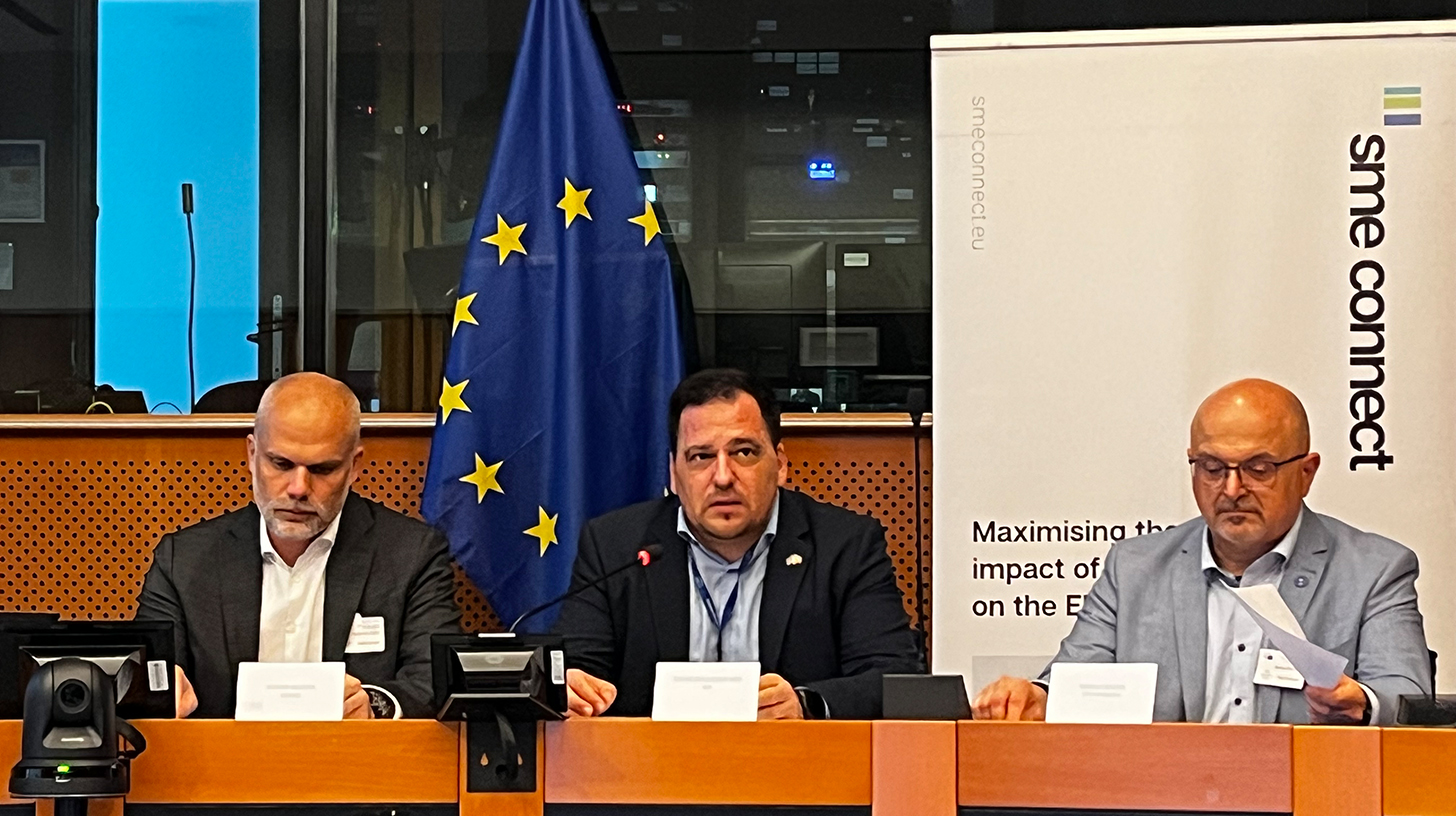
The blind spot of rearmament: MEP Tomáš Zdechovský and SME Connect fight for small and medium-sized enterprises (SMEs)
The GLOBSEC presentation of June 22, 2026, ruthlessly exposed the central paradox of the European security transition
A warning from the eastern flank: What is really causing Europe's defense to fail?
Europe's billion-euro illusion: Why record budgets won't save us in a crisis
The war in Ukraine has jolted Europe out of a security policy slumber. For the first time since the Cold War, record sums are flowing into defense, and NATO's prestigious two percent spending target seems finally within reach for many nations. But a closer look behind the scenes of this new European rearmament reveals a sobering reality: more money does not automatically mean more security. A recent and comprehensive report by the think tank GLOBSEC ruthlessly exposes the particular problems on the exposed eastern flank. From cumbersome bureaucratic hurdles in troop mobilization and serious financial bottlenecks for medium-sized defense companies to alarming delivery times of over five years – Europe is investing massively, but too often fails in industrial and logistical implementation. This detailed analysis sheds light on why a functioning infrastructure, swift political decision-making processes, and the reduction of dependencies are now crucial for the credibility of our deterrence.
Related to this:

Europe's defense transformation: Between record spending and industrial reality
More money doesn't solve security problems – unless it translates into real skills
Europe is experiencing a paradigm shift in security policy, the magnitude of which seemed unimaginable in decades of peace. Russia's ongoing aggression against Ukraine has shaken the continent's fundamental strategic assumptions and triggered an unprecedented arms race. For the first time since the Cold War, in 2025 all EU NATO members reached the two percent of GDP target for defense spending – a historic milestone, but one that should be understood less as a triumph and more as the starting point of a much deeper challenge.
The crucial question posed by the Bratislava-based think tank GLOBSEC in its comprehensive 2026 annual report on the combat readiness of the eastern flank is not whether Europe is spending more money. That fact is beyond doubt. The real question is: Will this money be transformed into deployable, sustainable, and deterrent military capabilities? The answer the report provides, based on extensive data, is sobering: No.
The event on June 22, 2026, jointly organized by SME Connect and GLOBSEC and under the patronage of MEP Tomáš Zdechovský, brought together precisely those stakeholders on whom progress depends: politicians, security experts, industry representatives, and small and medium-sized enterprises. The insights presented paint a clear picture: Europe has begun to awaken, but the time until it is fully capable of acting is shorter than political rhetoric suggests.
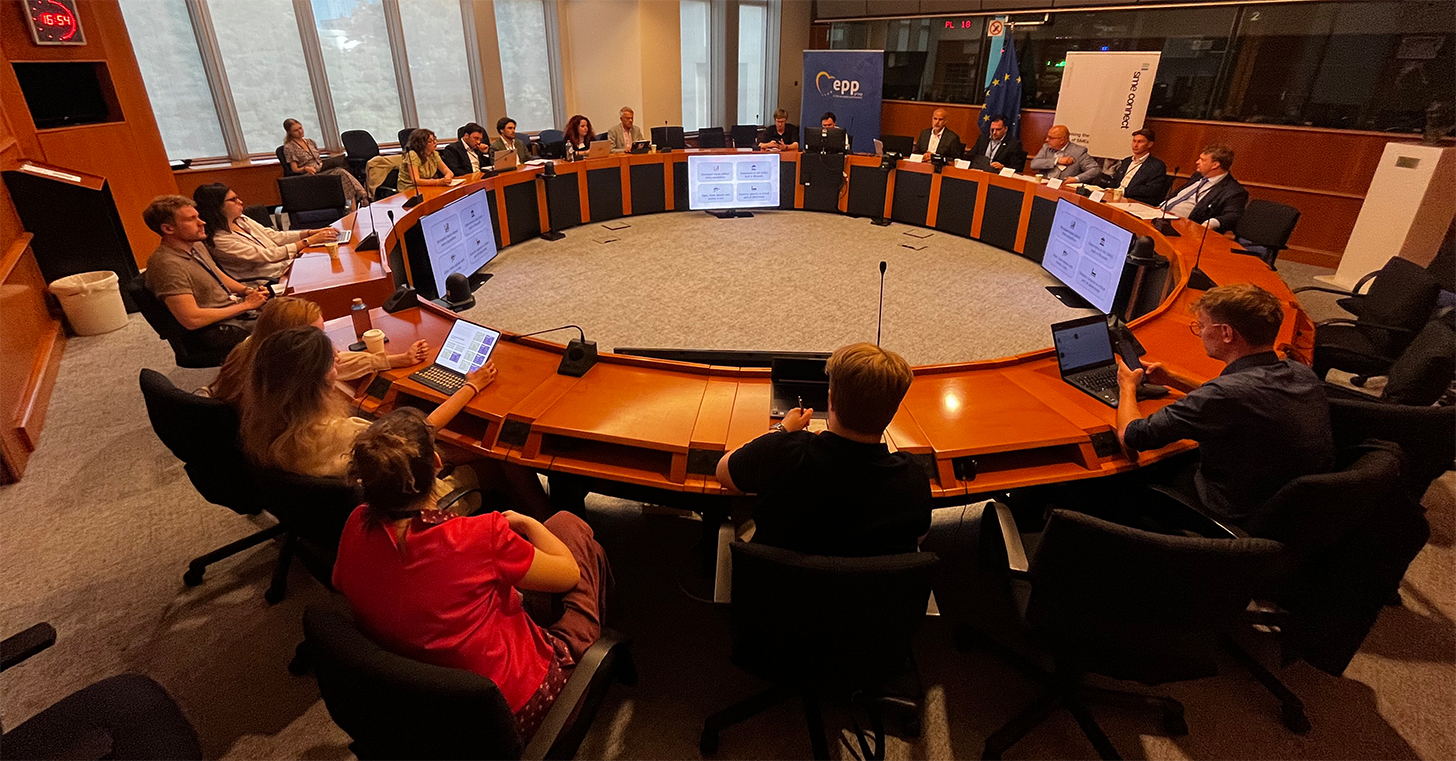
The event on June 22, 2026, jointly organized by SME Connect and GLOBSEC and under the patronage of MEP Tomáš Zdechovský
From goal to reality: Who is really delivering on the eastern flank?
The GLOBSEC combat readiness map covers ten countries on NATO's eastern flank, from the Baltic to the Black Sea. The analysis measures not only expenditure figures, but also three fundamental pillars: military strength and modernization, political decision-making capacity in crisis situations, and the resilience of society and the industrial base.
The result of this multidimensional assessment is clear: Finland, the Baltic states, and Poland are at the forefront of operational readiness. Finland, for example, combines a rapid crisis decision-making process, one of the largest reserve systems in Europe with approximately 900,000 mobilizable soldiers, and deep societal resilience into an integrated defense model that can serve as a blueprint for other countries. These countries have not only increased their strategic reserves but have also invested significantly in modern weapons, from main battle tanks to long-range precision systems, and have substantially improved operational mobility and the capability for integrated land-air-sea-space operations through national and multinational exercises.
Poland stands out among all European NATO members: With 4.48 percent of its gross domestic product in 2025, Warsaw not only more than doubles the two percent target, but even surpasses the United States at 3.22 percent – a signal that can hardly be overestimated, both politically and symbolically. The Baltic states follow closely behind: Lithuania spent 4.0 percent, Latvia 3.73 percent, and Estonia 3.38 percent of their GDP on defense.
However, Romania serves as a prime example that sheer troop strength and geographical location are not sufficient indicators of actual operational readiness. The country possesses the second-largest armed forces on its eastern flank – nearly 182,000 soldiers – and a strategically irreplaceable position on the Black Sea. Nevertheless, the GLOBSEC report concludes that Romania must significantly accelerate the speed of decision-making and the integration depth of its deployment capabilities to translate its size advantage into credible deterrence. Size alone is not strength.
The other end of the spectrum shows a Europe that remains stuck at its target and makes no further progress. France (2.05 percent), Italy (2.01 percent), Spain, Belgium, Portugal, and Luxembourg – all at the two percent mark, without any discernible ambitions beyond it. Hungary and the Czech Republic have even reduced their share of GDP for 2025. Given the new Hague target of 5 percent by 2035, of which 3.5 percent must be allocated to the core defense budget, almost all major European economies face a structural gap of one to one and a half percentage points in meeting the core target alone.
Deterrence requires action, not words: The decision problem
Martin Sklenár, former Minister of Defense of the Slovak Republic and Distinguished Fellow of the GLOBSEC Future of Security Programme, formulated a principle during the presentation that forms the intellectual foundation of the report: Deterrence arises from concrete actions, not from political declarations. Credible security begins in capital cities – and it is built there.
This statement points to an often underestimated bottleneck: the political decision-making architecture. For its report, GLOBSEC developed its own Decision-Making Timeline Index, which assesses the speed of action of Eastern flank nations in an acute crisis – based on legal triggers, decision-making chains, authority structures, and the ability to mobilize forces and integrate allies. The result: In crisis scenarios where hours make the difference, many countries fail due to structural blockages in their mobilization bureaucracy that seemed irrelevant in peacetime.
Political polarization exponentially increases this risk. Where national consensus on security policy is lacking or crumbling, even properly funded armed forces become pawns in domestic political battles. Sklenár explicitly warned that weak decision-making structures and societal divisions can undermine operational readiness – and that public support and political consensus are fundamental components of deterrence, not merely communication tasks.
The report's analysis also reveals an often-neglected dimension: sustainability. Even countries with respectable armed forces encounter critical gaps in maintenance. Maintenance capabilities, resupply logistics, transport infrastructure – these are not glamorous skills, but they determine whether an attack can be repelled even after weeks or months. The poor transport infrastructure in several Eastern Flank nations is considered a real and serious gap; mobility as a strategic enabler requires sustained investment.
Germany's historic step: The brigade in Lithuania as a geopolitical signal
Germany's most symbolic contribution to deterrence on its eastern flank is the deployment of Panzer Brigade 45 in Lithuania – Germany's first permanent overseas deployment of a complete combat unit since the Second World War. Since its official activation on April 1, 2025, in Vilnius, the brigade has been undergoing structured development. At the inauguration ceremony in May 2025, Chancellor Friedrich Merz emphasized that the brigade was not a political symbol, but a military contribution to deterrence and defense.
The geopolitical significance of this decision is determined by Lithuania's geographical location. Wedged between the Russian exclave of Kaliningrad and pro-Russian Belarus, the country is considered the most exposed state on NATO's entire eastern flank. The brigade will be stationed in Rudninkai, approximately 30 kilometers from the Belarusian border – a location whose proximity to the potential threat axis leaves no doubt about its strategic purpose. By the end of 2027, around 4,800 soldiers, along with approximately 200 civilian personnel, are to be permanently deployed, at which point the brigade will have achieved full combat capability.
Fritz von Stülpnagel, Managing Director of DefenceTech Europe, addressed this development in the GLOBSEC discussion and formulated a clear strategic demand: He would like to see other Western European states follow Germany's example and station permanent troop presences on the eastern flank. The defense of the eastern flank must be considered a shared European responsibility, not a regional problem for the border states. Greater military integration strengthens NATO's deterrence and reduces the risk of strategic miscalculations by potential adversaries.
This position finds its economic counterpart in a simple logic: presence is deterrence. A permanently stationed alliance contingent on the eastern flank signals credibility in a way that rotating units or political promises cannot replicate. It sends the signal that in the event of an attack on the host country, soldiers from the sending country would be directly affected – the classic logic of extended tripwires, as also characterized the American troop presence in Germany during the Cold War.
The industrial paradox: Europe invests – and cannot deliver
If the political-military section of the GLOBSEC report tells a story of uneven progress, then its industrial policy twin report – Stress-Testing Europe's Defence Industrial Scale-Up, produced jointly with McKinsey & Company – tells a story of structural failure. The central diagnosis: Europe's defense spending is increasing. Its delivery capacity is not.
Based on a survey of 280 companies in the European defense supply chain and 15 structured interviews with industry leaders, the report documents a dramatic order-to-capability gap: Around half of European defense companies report that more than 40 percent of planned production could not be carried out as intended. At the same time, less than 20 percent of Tier 2 to Tier 4 suppliers receive advance payments – meaning that these small and medium-sized enterprises, which form the industrial backbone, must pre-finance their own rearmament.
This finding is economically explosive. Almost 40 percent of defense SMEs report that access to bank financing is difficult or very difficult – a figure more than twice as high as for SMEs in other sectors. Commercial banks have historically treated defense as an ESG risk, which, paradoxically, is hindering private financing precisely at the moment when democratic security is becoming a strategic imperative. The NATO Innovation Fund analysis speaks of a structural bottleneck: without credit, prototypes cannot become production lines – and without production lines, Europe cannot achieve its readiness targets.
European institutions have begun to respond. The European Investment Bank has dramatically increased its lending volume for the defense sector: from one billion euros in 2024 to a planned 3.5 billion euros in 2025, accompanied by an initial private loan fund for the defense industry with a target size of 500 million euros. A first intermediary credit line of 500 million euros to Deutsche Bank enables total financing of one billion euros for European SMEs in the security and defense sector. The path is open – however, the scale falls significantly short of the need.
The skills shortage as a strategic vulnerability
Among the industrial bottlenecks, one stands out that cannot be resolved in the short term by even the most generous fiscal policy: the shortage of skilled labor. The GLOBSEC-McKinsey report states that the most acute constraint on European defense production is not funding – it is skilled personnel, machinery, and critical components.
A single experienced engineer in a key position can be irreplaceable for up to ten years. Many defense companies have tripled or quadrupled their production within just a few years – with a corresponding increase in job openings in a market where electronics mechanics, assembly technicians, software developers, quality inspectors, and factory planners are already in short supply. Onboarding and training take time – precisely what the industry doesn't have in the current situation.
This bottleneck is intertwined with the problem of scalability at a deeper level. Europe's defense sector is not a monolithic bloc of a few large companies like in the US, but a patchwork of thousands of small and medium-sized enterprises embedded in national supply chains with often differing standards, certification requirements, and procurement rules. This structural fragmentation is the real competitive disadvantage: it prevents economies of scale, complicates coordination of capacity planning and demand forecasts, and means that a single bottleneck in the supply chain can delay entire production programs.
Hub for Security and Defense - Advice and Information

Hub for Security and Defense - Image: Xpert.Digital
The Security and Defence Hub offers expert advice and up-to-date information to effectively support companies and organizations in strengthening their role in European security and defence policy. Working closely with the SME Connect Defence Working Group, it particularly promotes small and medium-sized enterprises (SMEs) that wish to further develop their innovative capacity and competitiveness in the defence sector. As a central point of contact, the Hub thus creates a crucial bridge between SMEs and European defence strategy.
Related to this:
Rapid Deployment Dual-Use Hubs: Logistics as a key to European defense capability
Procurement in the brake caliper: Why five-year delivery times undermine deterrence
Markus Becker, co-managing director of the Defence & Security Working Group at SME Connect and head of business development at LTW Intralogistik, brought up a figure in the discussion that encapsulates the entire dilemma: Average delivery times in the European defense sector now exceed five years. Five years – in a time when the battlefield in Ukraine transforms monthly, drone swarms force decisions in minutes, and the tactical situation demands a speed of adaptation that traditional procurement cycles simply cannot provide.
These delivery delays are not accidental, but rather a systemic consequence. Procurement in Europe is fragmented, with countries often favoring domestic suppliers and having systems developed according to national specifications. This leads to a proliferation of design variants—each slightly adapted to different operational doctrines—which drives up costs and lead times. Lengthy certification processes, complex procurement rules, and unclear planning prospects for industry prevent companies from making early investments to increase capacity.
The GLOBSEC report and the accompanying industry analysis recommend a series of coordinated measures: faster contract signings, advance payments cascaded down the supply chain, accelerated certifications, and a workforce strategy that reflects the seriousness of the situation. The European Parliament and the Commission have established institutional approaches with the European Defence Industry Programme (EDIP) and the European Defence Fund 2026, but operational implementation still lags far behind political ambitions.
Related to this:

The concept of dual-use hubs: Logistics as security infrastructure
One of the most conceptually innovative contributions to the GLOBSEC event was delivered by Markus Becker with his concept of Rapid Deployment Dual-Use Hubs. This idea transcends the classic separation between civilian and military infrastructure, transforming it into a strategic resource: a network of modular logistics centers that serves civilian supply chains in peacetime and seamlessly supports military operations in times of crisis – through storage, maintenance, spare parts management, and ammunition distribution.
The concept is not abstract. Ukraine's experience demonstrates how crucial logistics is for sustaining a military operation. In a protracted high-intensity conflict, supply, maintenance, and the rapid distribution of ammunition and spare parts determine the operational pace at least as much as weapons technology. The GLOBSEC report emphasizes that resilience, mobility, logistics, and industrial scalability have become essential components of defense readiness—not add-ons, but core elements.
The economic logic of dual-use hubs is compelling: infrastructure that needs to be built anyway is planned from the outset with defense-related requirements in mind. When a railway line is upgraded for heavy military transport, civilian freight transport also benefits. When digital platforms offer tracking with military-grade precision, the civilian supply chain gains transparency. Returns on investment are spread across civilian and military users, increasing political viability and reducing costs per sector. Given McKinsey's finding that every euro of European NATO procurement that remains in Europe generates 1.5 to 1.9 euros in revenue streams across the entire EU defense ecosystem—even without considering the multiplier effects on jobs, research, and industrial expertise—the importance of a competitive intra-European defense supply chain becomes clear.
Drones, AI and the Ukraine factor: Learning under fire
No aspect of modern defense has been accelerated more intensely by the Ukraine war than the integration of drones and artificial intelligence into military operations. What initially seemed experimental—the massive deployment of civilian commercial FPV drones as precise short-range weapons, the use of AI-supported reconnaissance for target identification and artillery correction—has fundamentally revised basic assumptions about land warfare.
EU Parliamentarian Zdechovský highlighted the lessons learned from Ukraine as crucial for future defense planning and emphasized the growing importance of drones and artificial intelligence for weapons system development. This lesson has concrete operational implications: radar systems today must not only detect long-range threats but also distinguish birds from inexpensive commercial drones. Mobility and survivability are no longer optional but fundamental requirements. Development must keep pace with the battlefield – a fundamental contradiction to the long-standing procurement logic of traditional armaments.
The EU defense roadmap has identified drone defense as a flagship initiative: The European Drone Defence Initiative and the Eastern Flank Watch are to be fully operational by the end of 2027. However, this also reveals the structural challenge: Europe still imports around 40 percent of its defense equipment from outside the EU – and these dependencies are concentrated precisely in the most critical capability areas: long-range strike systems, long-range air defense, early warning and detection systems, tactical transport capabilities, fifth-generation fighter jets, and large drones. Europe is also dependent on imported microchips and risks falling behind in AI on the battlefield.
Standardization versus flexibility: The tension in modern armaments
Horst Heitz, Chairman of the Steering Committee of SME Connect, identified a fundamental area of tension that shapes 21st-century defense planning: the balance between standardization and flexibility in a rapidly changing technological environment. This tension cannot be resolved, but it can be managed – provided the right institutional framework is in place.
Standardization enables economies of scale, interoperability, more cost-effective spare parts supply, and simplified training. NATO interoperability is based on standardized interfaces. At the same time, modern warfare, as vividly demonstrated by Ukraine, demands a speed of adaptation that overwhelms traditional standardization processes. If the tactical requirements for a particular class of drone change within months, a five-year procurement cycle cannot provide an adequate response.
The consequence is a procurement reform that considers both dimensions: Core systems with a long-term perspective and high interoperability requirements need standardization and joint European procurement. Rapidly evolving technologies – drones, AI applications, electronic warfare – require agile, simplified procurement processes that do not stifle innovation with bureaucracy. Zdechovský explicitly emphasized the need to simplify procurement procedures and strengthen the European defense market to improve efficiency and responsiveness.
The economic multiplier: Why European procurement is strategic in Europe
Behind the defense policy debate lies an industrial policy decision of extraordinary significance. The Oxford Economics analysis, cited in the Euronews report from June 2026, estimates that around 40 percent of EU defense equipment is sourced from non-European suppliers – a permanent outflow of purchasing power that weakens the European defense industry base and perpetuates strategic dependencies.
The GLOBSEC-McKinsey finding that every euro of European NATO arms procurement remaining in Europe generates 1.5 to 1.9 euros in revenue flows through the European defense ecosystem has immediate economic implications. Europeanized procurement is not just security policy self-sufficiency – it is industrial policy. It creates jobs, preserves technological expertise, strengthens member states' tax revenues, and reduces geopolitical dependencies that can become leverage against European interests in times of crisis.
The Hague target of 5 percent of GDP by 2035, of which 3.5 percent is to be allocated to the core defense budget, implies a level of spending across the entire European Union that will transform the continent's economy into an unprecedented engine for the arms industry. For 2026, Oxford Economics expects an increase of only 0.1 percentage points to 2.6 percent of GDP for the EU as a whole – after the significant jump of the previous year, a virtual standstill for countries that still have some catching up to do. The structural gap between leaders and laggards will thus not narrow, but widen.
Public consensus as a defense resource
One of the most important – and often underestimated – insights of the GLOBSEC framework is the inclusion of societal resilience as a defense variable. Security is not just a matter of equipment and budgetary decisions: it is built or lost within the nexus of public support, political consensus, and institutional trust.
Sklenár emphasized that collective defense remains indispensable and that public support and political consensus are crucial for maintaining defense commitments and making difficult security decisions. This is no trivial matter. In countries where populist forces actively question NATO membership or the mutual defense clause, societal polarization becomes an immediate security risk—not from external threats, but from the internal erosion of the logic of deterrence.
The Ukraine crisis has divided Europe on this issue. While in the Baltic states and Poland, the populations broadly support the need for massive defense spending – fueled by historical experience and geographical proximity to the threat – Western governments are struggling to legitimize significant budget increases against societal spending preferences focused on social services, infrastructure, and climate protection. The narrative that security investments are not optional expenditures but necessary responses to the current threat environment must be politically won in this societal debate – in every single capital city in Europe.
Recommendations for action: What follows from the analysis
The synthesis of the GLOBSEC report, the McKinsey industry analysis, and the Brussels expert discussion suggests a number of concrete conclusions that go beyond political wishful thinking.
First, procurement reform must be structural, not cosmetic. Delivery times of five years or more are strategically unacceptable in today's security environment. Accelerated tendering procedures, simplified certification pathways, and expanded exemptions for critical capabilities must be institutionally enshrined.
Secondly, advance payments must be systematically cascaded down the entire supply chain. If less than 20 percent of Tier 2 to Tier 4 suppliers receive upfront financing, the industrial base is structurally underfunded. The risk lies with the wrong actor – the small companies that have the least capacity to bear it.
Thirdly, joint European procurement and standardization are not options, but efficiency multipliers. Every euro spent on defense within Europe generates 1.5 to 1.9 euros in added value. Procurement outside Europe exports not only purchasing power, but also technological expertise and industrial capacity.
Fourth, dual-use infrastructure concepts – such as the Rapid Deployment Dual-Use Hubs proposed by Becker – must be integrated into national infrastructure planning and EU cohesion programs. Infrastructure that considers civilian and military requirements from the outset pays for itself through both use paths and strengthens overall resilience.
Fifth, the skills shortage is not a sector-specific problem, but a strategic one. The recommendation to retrain around 200,000 employees in the defense industry by the end of 2026, as foreseen in the EU defense roadmap, indicates the scale of the issue – but retraining alone is not enough. Attractive career paths in the defense industry are needed that can compete with those in the tech sector.
Europe must build, not just decide
The GLOBSEC presentation of June 22, 2026, ruthlessly exposed the central paradox of Europe's security transformation. After decades of neglect, Europe has begun to seriously modernize its military capabilities. The political commitments are real, budgets are growing, and institutional architectures are taking shape. And yet, a dangerous gap exists between what is promised on paper and allocated in budgets and what actually exists in terms of operational capabilities, functioning logistics, and scalable production.
This gap is not primarily a question of political will – that exists in many capitals. It is a question of institutional capacity, industrial infrastructure, and time. Deterrence doesn't work on promises. It works on the basis of tangible, visible, and sustainable capabilities that a potential aggressor must factor in. Zdechovský was right: it's not just about spending more – it's about spending wisely. Sklenár was right: Europe must act now and not wait for the next crisis.
The message that ran through the entire discussion is as simple as it is urgent: security investments are no longer optional political expenditures. They are the fundamental condition for Europe to survive as a sovereign continent in an increasingly dangerous world. Every capital city that hasn't yet grasped this will understand it at the latest when the bills for postponed decisions come due – with significantly higher interest rates.
Consulting - Planning - Implementation

Markus Becker
I would be happy to serve as your personal advisor.
Head of Business Development
Chairman SME Connect Defense Working Group
Consulting - Planning - Implementation
Konrad Wolfenstein
I would be happy to serve as your personal advisor.
You can contact me at wolfenstein∂xpert.digital or
Just call me on +49 7348 4088 965 .





