
Smart factory automation in the battery factory: How Daifuku and Panasonic Energy are reinventing dry cell battery production
Xpert Pre-Release

Available in 27 languages 📢
Prefer Xpert.Digital on GoogleⓘPublished on: March 9, 2026 / Updated on: March 9, 2026 – Author: Konrad Wolfenstein
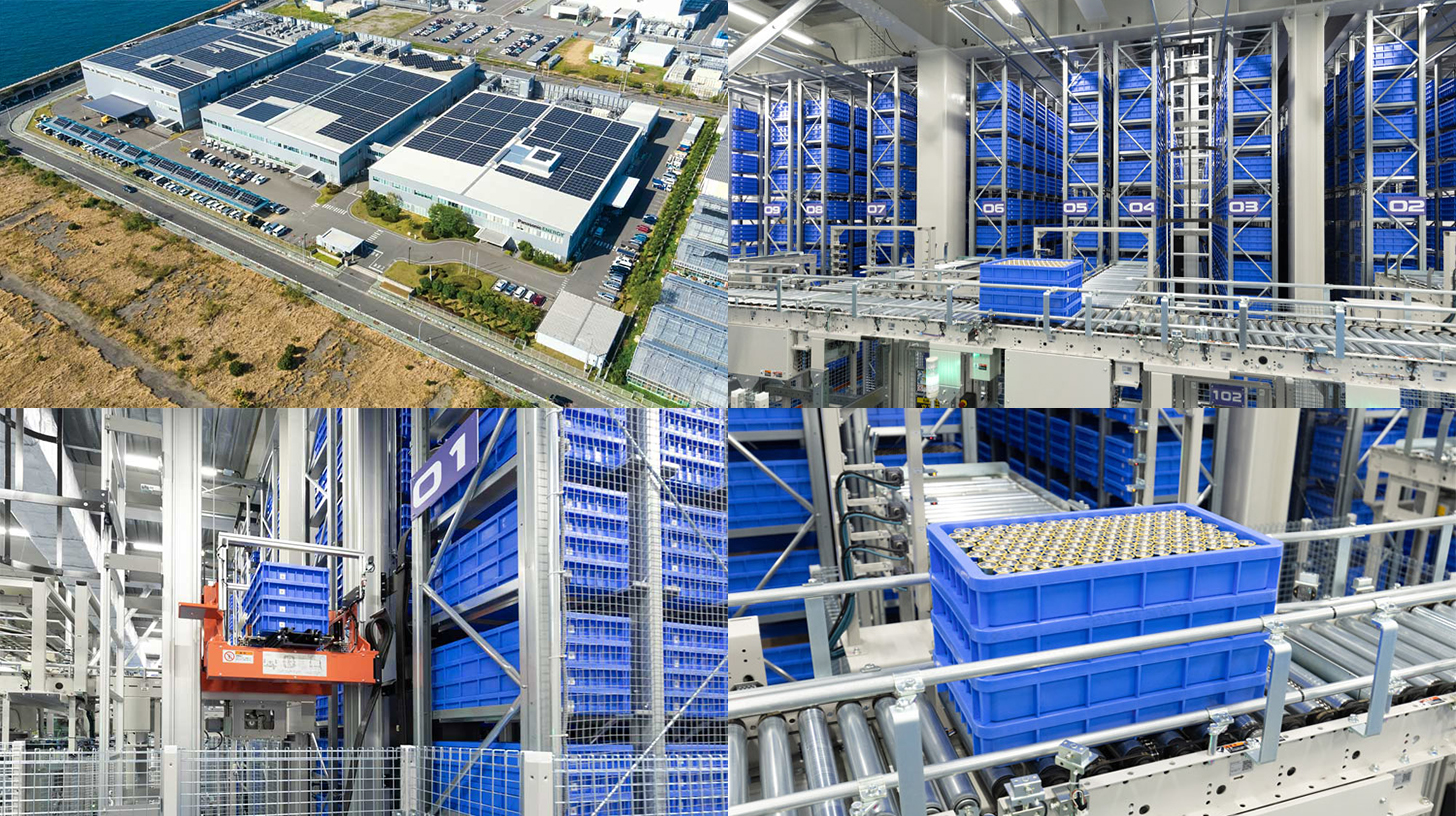
The silent revolution in the battery factory: How Daifuku and Panasonic Energy are reinventing dry cell battery production – Images: Daifuku
200 billion batteries later: A look inside Panasonic's new high-tech factory of the future
When robots build the batteries that keep our remote controls alive, the future of manufacturing has already begun
The dry-cell battery is one of the most inconspicuous yet ubiquitous products of modern consumer society. Billions of these small energy storage devices find their way into remote controls, flashlights, toys, and medical devices every year. But behind the apparent banality of this mass-produced item lies an industrial transformation that exemplifies the change in the entire Japanese manufacturing landscape. Panasonic Energy's relocation of dry-cell battery production to the new Nishikinohama factory in Kaizuka, Osaka, and the associated implementation of a highly automated production system by material flow specialist Daifuku, is far more than a simple operational relocation project. It represents a strategic realignment at the intersection of demographic change, sustainability imperatives, and the demands of a global smart factory transformation.
One hundred years of battery history and the farewell to Moriguchi
Panasonic has an exceptionally long tradition of producing dry-cell batteries. The company's energy business began in 1923 when Matsushita Electric Housewares Manufacturing Works launched a spherical, battery-powered bicycle lamp and the accompanying Excel dry-cell battery. Panasonic began manufacturing its own dry-cell batteries in 1931, and as a pioneer of international expansion, it established its first production plant outside Japan in Shanghai in 1939. Since then, the company has built factories in Thailand, Peru, Costa Rica, Brazil, Belgium, India, Indonesia, and Poland, and by the end of September 2020, it had become the first Japanese company to cumulatively ship 200 billion dry-cell batteries worldwide.
For over nine decades, the Moriguchi plant in Moriguchi City, Osaka, was the heart of Japan's domestic battery production. This factory manufactured up to 48 million dry-cell batteries per month in sizes D, C, AA, and AAA. However, the aging of the buildings, the spatial limitations of an established industrial site, and the growing demands of modern, automated manufacturing made a fundamental realignment unavoidable. The decision was made in favor of the Nishikinohama Industrial Park in Kaizuka City, where a former solar panel factory was completely rebuilt and designed as a global flagship plant for the future of the dry-cell battery business.
The timing was deliberate. In 2023, Panasonic's energy business celebrated its 100th anniversary, and the commencement of full operations in Nishikinohama in November 2023 marked this milestone with an industrial achievement. Plant management clearly stated their objective: to create an intelligent production system that could serve as a global benchmark for dry-cell battery manufacturing and ensure long-term supply security for the market.
Why dry cell batteries in particular need to be automated
The decision to fully automate dry cell battery production may seem surprising at first glance. Dry cell batteries are an established, mature product with manageable technological complexity. However, this very fact makes the economic logic behind the automation project particularly insightful.
The global market for dry-cell batteries was valued at approximately US$22.95 billion in 2024 and is projected to reach US$32.18 billion by 2035, representing an average annual growth rate of about 3.12 percent. Within the narrower alkaline battery segment, which forms the core of Nishikinohama's production, the market value was US$8.9 billion in 2024, with a forecast of US$14.31 billion by 2033, also representing an annual growth rate of 5.5 percent. Globally, over 10 billion alkaline batteries are manufactured annually, with the Asia-Pacific region dominating the market with a 38.3 percent share in 2025.
These figures illustrate that dry cell batteries are by no means a shrinking market, but they are subject to intense price and cost competition. Margins are slim, production volumes are enormous, and production efficiency determines economic viability. In such an environment, automation is not a luxury, but a business necessity. Furthermore, demand is being driven by the Internet of Things, smart home devices, portable medical equipment, and the ongoing need for emergency power sources in the face of increasingly frequent natural disasters.
Japan's demographic time bomb as an accelerator of factory automation
However, the real driver behind Panasonic Energy's automation decision lies deeper than mere cost optimization. Japan faces an unprecedented demographic challenge that is putting the entire manufacturing sector under pressure to transform. The Recruit Works Institute forecasts a labor shortage of 11 million workers by 2040, with nearly 30 percent of the population over 65 years old by 2042. The working-age population (15-64 years) has already fallen to 59.7 percent of the total population.
The McKinsey Global Institute estimates that Japan needs a 2.5-fold increase in productivity growth over the next decade just to maintain its current GDP growth rate. Before the pandemic, Japan was on track to automate roughly 27 percent of existing jobs by 2030, potentially replacing the work of 16.6 million people. Even then, the country would still face a labor shortage of 1.5 million.
This macroeconomic reality was of direct relevance to the Nishikinohama project. The new factory has 20 percent more floor space than the old Moriguchi plant, and production is spread across three buildings, with materials, semi-finished products, and finished goods flowing from building A through B to C. The significantly longer transport distances between the process stages would have required a substantial increase in staff to continue manual transport using handcarts. Given the difficulty of recruiting additional workers and the safety and quality risks associated with manual transport, such as tipping battery crates, automation became an essential prerequisite for continued operation.
The Daifuku ecosystem and the architecture of the smart factory
Daifuku, the world's leading provider of material handling systems and logistics equipment, was chosen as the automation partner. For nine consecutive years, Daifuku has held the top spot in the ranking of the world's largest material handling system suppliers by the trade magazine Modern Materials Handling. Founded in 1937, the company has evolved from a Japanese machine manufacturer into a global intralogistics group operating in over 50 countries and offering solutions for e-commerce, semiconductor manufacturing, automotive production, the food industry, and airports.
The latest business figures underscore the company's dynamism. In the first half of fiscal year 2025 (January to June 2025), Daifuku achieved sales of 326.4 billion yen, an increase of 7.9 percent compared to the previous year. Operating profit rose by an impressive 34 percent to 51.1 billion yen, and net profit increased by 26.6 percent to 37.6 billion yen. All key figures marked record highs for a half-year period. For the full year 2025, the company forecasts orders and sales of 700 billion and 650 billion yen, respectively, and an operating profit of 87 billion yen. Daifuku President Hiroshi Geshiro emphasized that the strategy of local production for local markets limits the impact of the US tariff increases.
For the Nishikinohama factory, Daifuku developed an integrated automation solution that combines two core technologies: the Ramrun monorail transport system and the Mini Load Automated Storage and Retrieval System.
The Ramrun monorail and the reinvention of in-plant transport
The Ramrun system is one of the most successful product lines in Daifuku's nearly ninety-year history. Developed in 1983 in response to the growing demand for more flexible transport systems in automotive manufacturing, it was first installed at Toyota Motor Corporation's Motomachi plant. The name stands for Random Access Monorail, a play on the computer term Random Access Memory, and reflects the system's flexibility and free access.
The system allows individual carriers, equipped with their own motors and wheels, to move independently along aluminum rails at variable speeds and precise stopping positions. The maximum transport speed is 120 meters per minute, and with 20 different speed settings, the system can be adapted to both robotic and manual production lines. Daifuku has installed Ramrun systems worldwide with a total track length of over 400 kilometers, primarily in the automotive industry, where the system is used to transport vehicle bodies and heavy components.
At the Nishikinohama factory, the Ramrun system utilizes the ceiling space of the production halls to transport finished batteries from Building B to the automated storage facility in Building C, and then on to the packaging processes. Empty containers are automatically returned on the return journey. The maximum transport weight is approximately 80 kilograms for D-size batteries, a load easily manageable for a system that moves body parts weighing several tons in the automotive industry. A key innovation is the integration of a barcode system that dynamically adjusts position and speed commands, thus enabling easy adaptation to future changes in the production plan or expansions of the Ramrun stations.
Technologically remarkable is the Ramrun HID variant, introduced in 1993, a world first contactless power supply system based on electromagnetic induction. This High Efficiency Inductive Power Distribution System supplies energy to moving components without physical contact, thus eliminating sparking and abrasion, and significantly reducing maintenance requirements. This contactless technology is not only used in the automotive industry, but also in the semiconductor, pharmaceutical, and food industries.
The automated small parts warehouse as the backbone of inventory optimization
The second pillar of the automation solution is Daifuku's Mini Load AS/RS, an automated small parts warehouse with a stacker crane. The system approach for the Nishikinohama factory evolved organically. Panasonic Energy's initial inquiry concerned Daifuku's SPDR (Spider) system for temporary storage and sorting. At the old Moriguchi plant, battery boxes were stacked flat, and employees manually searched for the correct products using delivery notes.
However, Daifuku's project team realized that the real challenges needed to be considered more broadly. After thorough analysis, the team recommended the Mini Load AS/RS as a more suitable solution, as it could handle the different box sizes for D to AAA batteries and reduce the storage requirement to one-third of the space needed for flat storage. The Mini Load AS/RS operates with an aluminum storage and retrieval machine with urethane wheels, which moves quickly and quietly and maximizes storage density thanks to its high-precision positioning.
A key advantage of the new warehouse solution lies in the fundamental redesign of the inventory strategy. At the old Moriguchi factory, dry cell batteries were traditionally stored in shrink-wrapped packs of varying quantities. If, for example, the two-packs ran out, ten-packs couldn't simply be repackaged; new batteries had to be produced. The new strategy involves storing batteries unpackaged and picking them only when needed. This allows for a more flexible response to demand fluctuations, improves the accuracy of production planning, and reduces overall inventory. The new tracking system also enables the rapid location of specific products, significantly increasing operational efficiency compared to visual searching on flat pallets.
The latest generation of the Mini Load AS/RS is also 15 percent lighter than its predecessor, with a smaller motor that reduces power consumption. In a factory committed to carbon neutrality, this energy efficiency is a crucial factor.
The warehouse automation market and why Daifuku is in the right place at the right time
The automation solution for the Nishikinohama factory is not an isolated project, but rather part of a massive global trend toward warehouse and intralogistics automation. The worldwide warehouse automation market was valued at US$22.1 billion in 2024 and is projected to reach US$57.8 billion by 2030, representing a compound annual growth rate (CAGR) of 17.4 percent. The automated storage and retrieval systems (AS/RS) segment alone is expected to grow from approximately US$10 billion in 2025 to around US$15 billion by 2030, with a CAGR of 8.5 percent.
The Japanese smart factory market reflects this dynamic. With a volume of US$4.2 billion in 2025, it is projected to reach US$9.2 billion by 2034, representing an annual growth rate of 9.03 percent. The drivers are manifold: the increasing integration of AI and robotics, the need to compensate for the labor shortage, rising demands on product quality, and the Japanese government's political commitment to the digital transformation of industry.
For Daifuku, a global market leader in material handling systems and conveyor technology, this trend opens up enormous growth opportunities. The overarching market for material handling and material handling equipment is projected to grow from US$252.53 billion in 2025 to US$489.65 billion by 2034. Daifuku is strategically positioning itself with a diversified portfolio that includes not only classic AS/RS and conveyor technology, but also shuttle-based micro-fulfillment systems, high-throughput sorting systems for parcel distribution centers, and modular AMR/AGV systems.
The three-year odyssey of factory relocation
The relocation project from Moriguchi to Nishikinohama was a logistical masterpiece that took approximately three years, from 2021 to 2023. The central challenge was maintaining battery production throughout the entire relocation process. The solution was a phased approach: First, production of D and C batteries was ramped up at the Moriguchi plant to build up sufficient stock. Then, the production equipment was dismantled and reassembled at the Nishikinohama factory, with D and C batteries being produced on the ground floor and AA and AAA batteries on the first floor, each using similar equipment. The same process was then repeated for the AA and AAA lines.
Unexpected challenges arose from the site's history. The Nishikinohama factory had been a solar panel plant until 2003, and although the plant design was based on the original blueprints, undocumented electrical installations and piping were discovered. Furthermore, it turned out that the roof had a slight slope, resulting in varying ceiling heights on the upper floor. Daifuku responded flexibly to these issues, for example, by extending the overhead conveyor system to compensate for the differing ceiling heights.
This pragmatic problem-solving ability is a hallmark of Japanese industrial culture and a key factor in the project's success. Despite the need to procure additional materials at short notice and to organize work for the track extension, the installation was completed without major problems thanks to the cooperation of all parties involved on site.

Expert partner in warehouse planning and construction
Japan's answer to Industry 4.0: Why humans remain irreplaceable
Change management in battery factories and the limits of automation
An often underestimated dimension of automation projects is change management. At the Nishikinohama factory, not all employees were initially enthusiastic about the changes, as the workforce was accustomed to the conventional production system. Their concerns were varied: complex operating procedures, the impact on daily work, and the fear that overall inventory might decrease after the introduction of the automated warehouse.
The project team's approach was systematic and data-driven. Information about the increased transport distances in the new factory was visualized and communicated as early as the design phase. Joint visits to the equipment manufacturers allowed employees to experience the automation technology firsthand and gain a clear understanding of the finished plant. To address concerns about reduced inventory levels, simulations based on the production results of the previous three years were conducted, demonstrating that the reduced inventory would not pose a problem.
Project manager Toma Suzuki, who joined Panasonic Energy in 2016 and was initially involved in the maintenance, design, and development of production equipment at the Moriguchi plant, formulated a fundamental guiding principle: the customers of the internal production engineers are the employees on the production line. This approach—treating colleagues within the Panasonic Group like external customers and actively seeking their perspectives—was key to the acceptance of the change process.
Equally noteworthy is the conscious decision not to pursue 100 percent automation. With an automation level of around 80 percent, the Nishikinohama factory has achieved a high level. The remaining 20 percent primarily concerns the supply of electrode materials and tasks requiring human intervention, such as temporary machine stoppages. To be able to react appropriately in such situations, a safe working environment must first be ensured, and maintaining production in the event of problems requires a certain familiarity with the equipment. This pragmatic realization—that the optimal solution lies not in the complete elimination of human labor, but in a well-considered division of tasks between humans and machines—distinguishes the Japanese automation philosophy from some Western approaches that promote the “dark factory” as the ultimate goal.
The CO2-free factory as an ecological imperative
The Nishikinohama factory is not only a showcase for automation technology, but also a flagship project for sustainable industrial production. The entire roof is covered with solar panels that power a photovoltaic system with a capacity of approximately 2 megawatts. A novel installation method was developed that required no extensive modifications to the transformer station, thus significantly reducing both costs and construction time. The factory has achieved net-zero CO2 emissions since fiscal year 2024, aligning itself with Panasonic Energy's sustainability strategy.
The company's environmental commitment extends beyond individual sites. By September 2024, all nine Panasonic Energy production facilities in Japan had achieved carbon-neutral factory status. In April 2025, the company also signed a long-term geothermal power purchase agreement with Kyuden Mirai Energy, providing an annual electricity supply of approximately 50 gigawatt-hours and reducing CO2 emissions by about 22,000 tons per year. This measure increased Japan's self-sufficiency in renewable energy for electricity consumption from about 15 to around 30 percent, and the overall CO2 reduction effect reached approximately 50,000 tons per year, equivalent to the annual CO2 absorption of about 56 square kilometers of forest.
These figures illustrate that combining automation and decarbonization is not a contradiction, but rather a mutually reinforcing strategy. Automated systems like the Mini Load AS/RS, whose latest generation is 15 percent lighter and consumes less power, contribute directly to energy efficiency. Reducing overall inventory through intelligent warehousing decreases space requirements and thus indirectly reduces energy consumption for lighting, cooling, and transportation.
The economic anatomy of the automation decision
From a business perspective, the investment decision for Nishikinohama automation can be broken down into several value-creation dimensions. The first and most obvious lever is labor cost reduction. Eliminating the need to recruit additional personnel for internal transportation was an immediate economic benefit in a labor market where attracting production workers is becoming increasingly difficult. In Japan, a single production worker costs between 4 and 6 million yen annually, including social security contributions and benefits, and the savings of several dozen jobs over the plant's lifetime add up to a substantial sum.
The second lever is inventory optimization. Switching from packaging-based to packaging-free storage enables significantly more flexible order processing and reduces overall inventory. In the consumer goods industry, inventory typically ties up 15 to 25 percent of working capital, and every reduction frees up capital that can be used elsewhere.
The third lever concerns quality and safety costs. Manually transporting heavy battery crates with handcarts was not only inefficient but also posed a risk of accidents and product damage. Stacked crates could tip over, leading to employee injuries and damaged batteries. Automating transport largely eliminates these risks, thereby reducing costs associated with scrap, rework, and work-related downtime.
The fourth lever is production flexibility. The barcode-controlled Ramrun system and the Mini Load AS/RS enable rapid adaptation to changing production plans and demand patterns. In a market where demand for different battery formats and package sizes fluctuates, this flexibility is a crucial competitive advantage.
Japan's Smart Factory Strategy in an International Context
The Nishikinohama factory is a microcosm of Japan's broader strategy to transform its manufacturing sector. Japan has a unique starting point: a long-standing manufacturing culture that has perfected precision and quality over decades, coupled with the most pressing demographic challenges among the major industrialized nations.
The Smart Factory concept, which has its roots in the German Industry 4.0 initiative, is expanded in Japan through a specifically Japanese perspective. While the German approach relies heavily on standardization and horizontal integration, Japan emphasizes vertical integration within the factory, the perfection of the human-machine interface, and incremental improvement through Kaizen principles. The Nishikinohama factory embodies this approach: Instead of striving for a fully automated, lights-out factory, a well-thought-out 80/20 split was chosen, deploying human flexibility and judgment where they offer the greatest added value.
However, studies show that only a minority of Japanese companies have fully completed the transition to the smart factory. The challenges lie in redesigning traditional processes, securing management commitment, and effectively utilizing technologies such as digital twins. In September 2024, Kyocera invested approximately 66 billion yen in the construction of a state-of-the-art smart factory in Nagasaki for semiconductor packages and fine ceramic components. Horizon Innovation Park in Japan showcased advanced automation technologies in October 2024, sponsored by Canon, Ricoh, and Fujifilm.
The Japanese automotive industry saw an 11 percent increase in robot installations in 2024, driven by the shift to electric vehicles and hydrogen propulsion. The automotive sector accounts for approximately 25 percent of annual robot installations in Japan, second only to the electronics sector. This momentum in the automotive industry, traditionally the largest customer for Daifuku's conveyor technology, creates a multiplier effect that also drives automation in related sectors such as battery production.
Daifuku's global expansion strategy and the future of material handling technology
The collaboration with Panasonic Energy illustrates Daifuku's ability to apply its extensive technology portfolio across industries. The company pursues a consistent diversification strategy that extends far beyond its traditional core markets.
In North America, Daifuku is prioritizing the integration of the 2012 Wynright acquisition to deliver turnkey e-commerce fulfillment projects and reduce lead times through new assembly facilities and service centers in the Midwest and Southeast of the US. In India, expanded sales engineering teams and partnerships with local manufacturers are expected to increase the revenue share from low single digits to mid-single digits by fiscal year 2027. In the ASEAN region, capacity is being expanded to capitalize on the China Plus One relocation strategy of multinational companies.
New product lines include shuttle-based AS/RS systems for micro-fulfillment and cold chain storage, high-throughput sorting systems for parcel distribution centers, and modular AMR/AGV systems to complement fixed automation. In parallel, Daifuku is scaling its cleanroom transport systems for semiconductor manufacturing and airport system retrofits to serve global investment cycles in chip factories and aviation hubs.
The opening of a new factory building at the Daifuku main plant (“Mother Plant”) in July 2025 underscores the company's growth ambitions. In India, a new production facility was built, covering a land area of 133,020 square meters and with a building area of 33,987 square meters, for the manufacture of material handling systems, including AS/RS, rail-guided pallet sorters, box sorters, and conveyors, representing an investment of approximately 4 billion yen.
Palletizing, loading and the next automation steps
Despite achieving an 80 percent automation level, the transformation of the Nishikinohama factory is not yet complete. The next focus is on the post-shrink-wrapping processes, particularly palletizing and loading. Currently, employees must manually load cartons weighing 15 kilograms or more onto pallets, which are then transferred to trucks using forklifts. This process must be performed more than 1,000 times a day, representing a significant physical strain and making it an obvious candidate for the next stage of automation.
The remaining 20 percent of non-automated processes mainly involve the feeding of positive and negative electrode materials. While there is still room for automation here, the conscious decision not to automate all processes follows a well-thought-out strategy. Temporary machine stoppages require human intervention, and maintaining production in problem situations demands a familiarity with the equipment that can only be developed through regular human presence. This insight aligns with the Japanese "Mother Factory" concept, which plays a central role in the professional discourse: core technologies and quality standards are developed and perfected at the domestic site before being standardized for mass production and, if necessary, outsourced.
The factory as a communal space and the social dimension of automation
One unusual aspect of the Nishikinohama factory deserves special attention: its function as a social meeting place. Since it began operations in 1966, the site has focused on factory tours and battery-building workshops, which have attracted more than one million participants. These programs have been revised and expanded as part of the relocation to offer even more enriching experiences.
This approach is remarkable in the global industrial landscape. While many manufacturers increasingly conceal their production facilities behind security fences and confidentiality agreements, Panasonic Energy opens its doors and uses the factory as a tool for public relations and recruitment. In a country where manufacturing is struggling with a growing shortage of young talent, as young people prefer service and technology professions, showcasing modern, clean, and highly automated production environments is a strategic advantage in attracting talent.
What the Osaka battery factory teaches the world
The transformation of dry cell battery production at Panasonic Energy is instructive on several levels. At the operational level, the project demonstrates how established technologies such as overhead conveyor systems and automated small parts warehouses can be combined in a new context to achieve substantial efficiency gains. The decision to initially automate internal transport and warehousing, rather than the actual production processes, reflects a pragmatic view of the greatest levers for value creation.
At a strategic level, the Nishikinohama factory illustrates a traditional Japanese manufacturer's response to the converging challenges of demographic change, sustainability requirements, and global competition. Investing in automation is not an option, but a matter of survival. Without automated systems, it would be simply impossible to maintain production in Japan as the working-age population continues to shrink and competition for labor intensifies from better-paying industries such as semiconductors and technology.
On a global scale, the project sends a clear message: Even in seemingly mature industries with moderate growth rates, there is significant potential for productivity gains and value creation optimization through intelligent automation. The dry-cell battery is not a high-tech product, but its manufacture can become the stage for a technological revolution that sets standards for the entire manufacturing industry. Annual shipments of AMR robots are projected to increase from around 547,000 units in 2023 to approximately 2.79 million by 2030, with revenue growth from $18 billion to $124 billion. In this world of accelerated automation, the Osaka battery factory is not the exception, but the rule of tomorrow.
The partnership between Panasonic Energy and Daifuku demonstrates that the future of manufacturing lies not in isolation, but in collaboration between specialists. Panasonic Energy contributes its deep understanding of its production processes, while Daifuku brings decades of expertise in material handling technology. Together, they have created a factory that not only produces batteries but also offers a glimpse into the future of industrial manufacturing, where humans and machines operate not as competitors, but as complementary partners.

Xpert.Plus Warehouse Optimization - High-bay warehouses and pallet warehouses: Consulting and planning
Your global marketing and business development partner
☑️ Our business language is English or German
☑️ NEW: Correspondence in your native language!

Konrad Wolfenstein
I and my team are happy to be available to you as your personal advisor.
You can contact me by filling out the contact form here or simply call me at +49 7348 4088 965. My email address is: [email protected]
I'm looking forward to our joint project.
☑️ SME support in strategy, consulting, planning and implementation
☑️ Creation or realignment of the digital strategy and digitization
☑️ Expansion and optimization of international sales processes
☑️ Global & Digital B2B trading platforms
☑️ Pioneer Business Development / Marketing / PR / Trade Fairs
Our global industry and economic expertise in business development, sales and marketing

Our global industry and economic expertise in business development, sales and marketing - Image: Xpert.Digital
Industry focus areas: B2B, digitalization (from AI to XR), mechanical engineering, logistics, renewable energies and industry
More information here:
A thematic hub offering insights and expertise:
- Knowledge platform covering global and regional economies, innovation and industry-specific trends
- A collection of analyses, insights, and background information from our key areas of focus
- A place for expertise and information on current developments in business and technology
- A hub for companies seeking information on markets, digitalization, and industry innovations










