
The technical lobby trap: How a ministry scandal surrounding the 10-hour rule is virtually shutting down battery storage
Xpert Pre-Release

Available in 27 languages 📢
Prefer Xpert.Digital on GoogleⓘPublished on: May 13, 2026 / Updated on: May 13, 2026 – Author: Konrad Wolfenstein
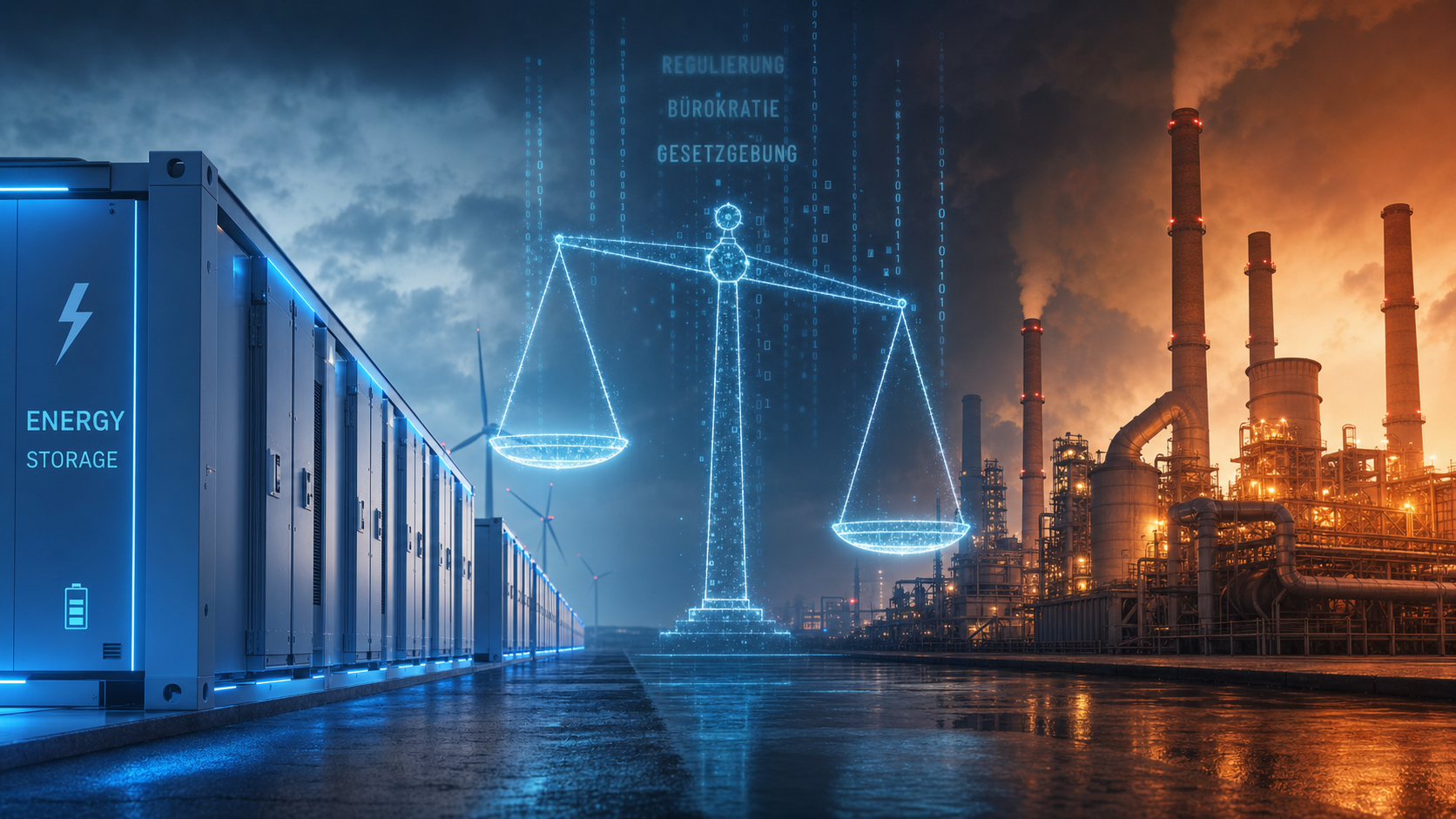
The technical lobby trap: How a ministry scandal surrounding the 10-hour rule is virtually shutting down battery storage – Image: Xpert.Digital
Explosive chat logs: Ministry ordered anti-storage rules directly from energy company
Regulatory Capture: How the Ministry of Economic Affairs pulled the plug on an entire technology
“Gas lobby minister”? The unprecedented EnBW deal that jeopardizes the energy transition
An unprecedented lobbying effort is shaking German energy policy and raising fundamental questions about the independence of government regulation. At its heart is the planned Power Plant Act (StromVKG) and an inconspicuous technical requirement – the so-called 10-hour rule. What at first glance appears to be a dry detail concerning grid stability turns out, upon closer inspection, to be a tailor-made exclusion criterion against modern battery storage systems, designed by the very energy companies that stand to profit massively from it.
Particularly explosive: The initiative didn't originate unsolicited from industry. Instead, the Federal Ministry for Economic Affairs and Energy, under Katherina Reiche, actively commissioned the relevant arguments from the energy supplier EnBW. Experts consider this a textbook example of "regulatory capture"—the hijacking of state institutions by special interests. At stake are guaranteed billions in subsidies, which are to be financed through consumers' electricity bills, a looming technological standstill in the energy transition, and blatant violations of democratic transparency obligations. The following analysis examines the chronology of events, the disastrous economic impact of this technological lobbying trap, and the far-reaching systemic consequences for the German electricity market.
Related to this:

The 10-hour rule: Regulatory capture in the German power plant law
The process surrounding the so-called 10-hour rule in the planned German power plant law (Electricity Supply Security and Capacity Act, StromVKG) represents a textbook case of regulatory capture: The Federal Ministry for Economic Affairs and Energy, under Katherina Reiche, commissioned the very energy company that directly profits from these tenders to draft the technical tender criteria that will control billions of euros in state funds. This process remained hidden for months, violates transparency obligations according to experts, and raises fundamental questions about the state of democratic regulatory processes in German energy policy.
The legal framework: What the Electricity Supply Act (StromVKG) regulates
The Electricity Supply Act (StromVKG) creates a capacity market through which operators of dispatchable power generation plants – so-called backup power plants – will in future be compensated not only for electricity actually generated, but also for simply maintaining capacity. Two tender rounds for a total of approximately 11 gigawatts (GW) of new capacity are planned for 2026; the first bidding deadline is scheduled for September 1, 2026, and the second for December 8, 2026. The costs will be financed from 2031 onwards via a new consumer levy.
The central instrument is the so-called long-term capacity, for which 15-year commitment periods are stipulated. This category is reserved for the most financially attractive tender volumes and thus significantly determines which technologies will become part of Germany's baseload power supply in the coming decades.
Related to this:

The technical design of the 10-hour rule
The wording of the draft bill
According to Section 12, Paragraph 5 of the draft bill, bids for long-term capacities are only permissible for installations that are "technically capable of feeding electricity into the public grid at the level of their installed capacity for at least ten consecutive hours without interruption." Additionally, for "installations of energy-limited technology classes"—i.e., battery storage systems—the further requirement applies that this 10-hour feed-in capacity must be "fulfilled at any time, at the latest after one hour.".
The economic impact of the refilling obligation
The 10-hour charging requirement alone would be achievable for modern large-scale battery storage systems – albeit expensively. The decisive exclusionary effect, however, lies in the one-hour recharging period: it forces battery storage operators to build a charging infrastructure whose feed-in capacity is many times greater than its discharge capacity. This combined requirement makes construction economically unfeasible and practically excludes battery storage systems from receiving subsidies.
Leonhard Gandhi from the Fraunhofer Institute for Solar Energy Systems ISE commented precisely on this: "From my point of view, the 10-hour rule is arbitrarily chosen in order to establish a pre-selection of technologies." Fraunhofer ISE models emphasize that Germany will need between 100 and 170 GWh of battery storage capacity by 2030, depending on the scenario – the current level is around 25 GWh.
Parallel patterns in German regulatory history
This is not the first time that technical requirements have been deliberately used to exclude battery storage from the market. Transmission system operators already attempted to enforce a minimum activation time of 30 minutes for primary control reserve – twice the EU requirement of 15 minutes. The Federal Network Agency corrected this. The Electricity Supply Act (StromVKG) continues this pattern at a significantly more consequential regulatory level.
Related to this:

The core process: Contract lobbying on behalf of a ministry
Chronology of the process
| Date | Event |
|---|---|
| January 13, 2026 | EnBW's chief lobbyist Holger Schäfer sends Christian Schmidt, head of the electricity department at the Federal Ministry for Economic Affairs and Energy, a paper entitled "Considerations for supplementary criteria to the 10h rule". |
| January 15, 2026 | Two days later, Minister Reiche reached an agreement with the EU Commission on the principles of the power plant strategy. |
| Until the end of March 2026 | Deadline for registration in the lobby register has expired – registration will not take place. |
| April 9, 2026 | Der Spiegel inquires with EnBW. |
| April 14/15, 2026 | Der Spiegel publishes the investigation; EnBW subsequently uploads the document to the lobby register. |
On January 13, 2026, EnBW's chief lobbyist, Holger Schäfer, sent a document entitled "Considerations for Supplementary Criteria to the 10h Rule" to Christian Schmidt, head of the electricity department at the Federal Ministry for Economic Affairs and Energy. Two days later, on January 15, 2026, Minister Reiche reached an agreement with the EU Commission on the principles of the power plant strategy. The deadline for registration in the lobby register expired at the end of March 2026, but registration did not occur. On April 9, 2026, Der Spiegel inquired with EnBW; after the investigation was published on April 14/15, 2026, EnBW subsequently uploaded the document to the lobby register.
The crucial point: The initiative came from the ministry
What distinguishes this process from ordinary lobbying is the change in direction of the initiative. Der Spiegel revealed, based on text messages, that the ministry under Katherina Reiche had actively requested EnBW to develop arguments – this was not an unsolicited lobbying submission. EnBW confirmed to Der Spiegel that the proposals had been prepared "at the request of the ministry." The ministry did not deny this account despite repeated inquiries.
The document contained five concrete proposals, all of which were "aimed at disadvantaging battery storage systems in the auctions." Battery storage operators, however, were never consulted.
The violation of transparency obligations
EnBW should have registered the transaction in the lobby register by the end of March 2026 – this is legally required for ongoing legislative procedures. The company only uploaded the document after a media inquiry. EnBW offered no explanation for the oversight. The Bundestag administration is now required to review the matter and consider potential fines.
Our EU and German expertise in business development, sales and marketing

Our EU and German expertise in business development, sales and marketing - Image: Xpert.Digital
Industry focus areas: B2B, digitalization (from AI to XR), mechanical engineering, logistics, renewable energies and industry
More information here:
A thematic hub offering insights and expertise:
- Knowledge platform covering global and regional economies, innovation and industry-specific trends
- A collection of analyses, insights, and background information from our key areas of focus
- A place for expertise and information on current developments in business and technology
- A hub for companies seeking information on markets, digitalization, and industry innovations
Billions for gas, billions for corporations: Who pays the new consumer levy?
The structural conflict of interest: Who benefits?
EnBW's self-interest
EnBW is not only a lobbyist for gas-fired power plants, but is also actively planning their construction. The company is investing around €1.6 billion in new hydrogen-capable gas-fired power plants in Baden-Württemberg and is aiming for a
EnBW has a total capacity of approximately 1.5 gigawatts at its Stuttgart-Münster, Altbach/Deizisau, and Heilbronn sites. Furthermore, EnBW is considered the corporation with the highest lobbying expenditures in Germany – even ahead of BASF and Volkswagen.
According to Campact, EnBW plans to build half of all new gas-fired power plants in Germany. The company therefore has a direct financial interest in keeping battery storage – the most important competing technology for short-term capacity provision – out of government tenders.
RWE's parallel integration
The competitor RWE was also consulted by the Ministry of Economic Affairs and submitted lobbying documents with similar arguments in favor of gas-fired power plants. The simultaneous involvement of Germany's two largest electricity producers underscores that this was not an isolated contact, but rather a systematic consultation process.
The minister's biography as a structural feature
Katherina Reiche (CDU) has been Federal Minister for Economic Affairs and Energy since May 6, 2025. Prior to her appointment, she was CEO of Westenergie AG, a subsidiary of the energy company E.ON and one of Germany's largest gas network operators. Simultaneously, she chaired the state energy commission of the CDU Economic Council of North Rhine-Westphalia, of which Westenergie is also a member.
LobbyControl warned of potential conflicts of interest when she was appointed. The accusation that she is a "gas lobby minister" has gained considerable traction in light of the EnBW affair. Wolfgang Jäckle, a lawyer at Transparency International Germany, explained: "Ministers are prohibited from allowing their decisions to be guided by one-sided interests and neglecting the common good. If the recent reports are accurate, Reiche allowed herself to be guided precisely by such special interests when deciding on the backup energy supply procedure."
Related to this:

Political science classification: Regulatory Capture
The theoretical concept
Regulatory capture is a form of government failure that occurs when regulatory bodies are misused to prioritize the commercial interests of a small special interest group over the common good. The concept, developed by Nobel laureate George Stigler, is based on the observation that industries with a strong vested interest in regulatory decisions devote significantly more resources to them than the general public.
The classic mechanism: Regulated industries allocate large budgets to influencing regulators. Individual citizens, whose benefits are diffusely distributed, do not. Regulatory capture is particularly likely in profitable sectors and when public participation, transparency, and access to information are asymmetrically distributed.
Application to the German case
The EnBW process fulfills all the core features of Regulatory Capture:
Change of direction of action
It is not the corporation that is pressuring the ministry, but rather the ministry that is requesting arguments from the corporation – a particularly advanced stage of co-optation.
One-sided consultation
Only stakeholders who benefit from the preferred technology option were included; competitors (battery storage operators) were systematically excluded.
Revolving door phenomenon
The minister herself comes from the favored industry.
blackout
The process was not made transparent and was only documented after media intervention.
Normative anchoring
The lobby arguments were directly incorporated into the draft bill.
EU dimension: Technological openness as a condition
The EU Commission had made its fundamental approval of the German power plant strategy conditional on the condition that the tenders be "competitive and non-discriminatory." The EnBW case and the de facto exclusion of battery storage systems call precisely this condition into question. Reiche himself apparently negotiated the 10-hour rule into the EU deal.
Reactions and institutional criticism
Federal Cartel Office
On May 6, 2026, the German Federal Cartel Office published a strongly worded statement on the draft Electricity Supply Act (StromVKG). The authority criticizes the draft for "favoring established providers" and "effectively excluding battery projects from funding." In a statement from December 2025, the Cartel Office had already called for a capacity cap of 10 percent per bidder to ensure supplier diversity – this was not included in the current draft. The authority warns that the draft "fails to utilize the opportunity to guarantee the most competitive market design possible.".
Impending risk of litigation
Battery storage operators and law firms are considering legal action against the tendering rules, which could jeopardize the entire law. Handelsblatt reported in early May 2026 that the legality of the tender conditions is being questioned.
Civil society and transparency organizations
- LobbyControl demands clarification and describes the reliance on a previous consultation under Habeck as insufficient, since the circumstances have changed.
- abgeordnetenwatch.de states: "The existing transparency rules fail as soon as a minister opens the door to lobbyists."
- Campact described the revelations as a "scandal".
- FragDenStaat submitted a comprehensive Freedom of Information Act (FOIA) request for the release of communications between the Ministry, EnBW and RWE since October 2025.
Related to this:

Systemic consequences: What's at stake
Technological lock-in effects
With 15-year commitment periods for long-term capacities starting in 2031, tender decisions made now will have an impact well into the 2040s. If gas-fired power plants are subsidized by the state and battery storage is systematically excluded, a technological and economic lock-in will be created that will structurally slow down the energy transition.
Financial dimension
The costs of the capacity market will be passed on to all electricity customers via a new consumer levy starting in 2031. Billions in subsidies for a technology option whose selection criteria were helped to formulate by a directly interested corporation represent a structural redistribution of wealth from consumer to corporate interests.
Distortion of competition
The Federal Cartel Office explicitly points to the risk of strengthening existing market power. Since the draft does not provide for a capacity cap per bidder, RWE and EnBW could together capture the majority of the state-guaranteed capacity revenues – without giving new providers, especially battery storage operators, a realistic chance of participating.
Related to this:

A structural, not an episodic process
The EnBW lobbying paper affair is not an unfortunate isolated incident. It is the expression of a systematic pattern that combines several elements: a minister with institutionalized close ties to the gas industry, a regulatory design that elevates consultation with favored industries to a method, and a transparency regime that only takes effect under media pressure.
The term regulatory capture accurately describes the situation – not in its softer version (the authority allows itself to be influenced), but in its most extreme form: The regulatory entity itself designs the regulatory criteria, at the invitation of the regulator, for a market that allocates billions of state funds.
The open questions are: Will the lawsuits from battery storage operators overturn the tendering rules in court? Will the EU Commission consider the lack of technological neutrality a violation of state aid regulations? And: Will the Bundestag administration initiate fine proceedings against EnBW for the delayed registration in the lobby register?
The 10-hour rule, as LobbyControl puts it, is not a technical specification. It is a political instrument – designed for a specific outcome, drafted by a specific party, to the detriment of all others.





