
Katherina Reiche orders, lobby delivers: Arguments against battery storage and in favor of gas-fired power plants in the Federal Ministry for Economic Affairs and Energy
Xpert Pre-Release

Available in 27 languages 📢
Prefer Xpert.Digital on GoogleⓘPublished on: April 15, 2026 / Updated on: April 15, 2026 – Author: Konrad Wolfenstein
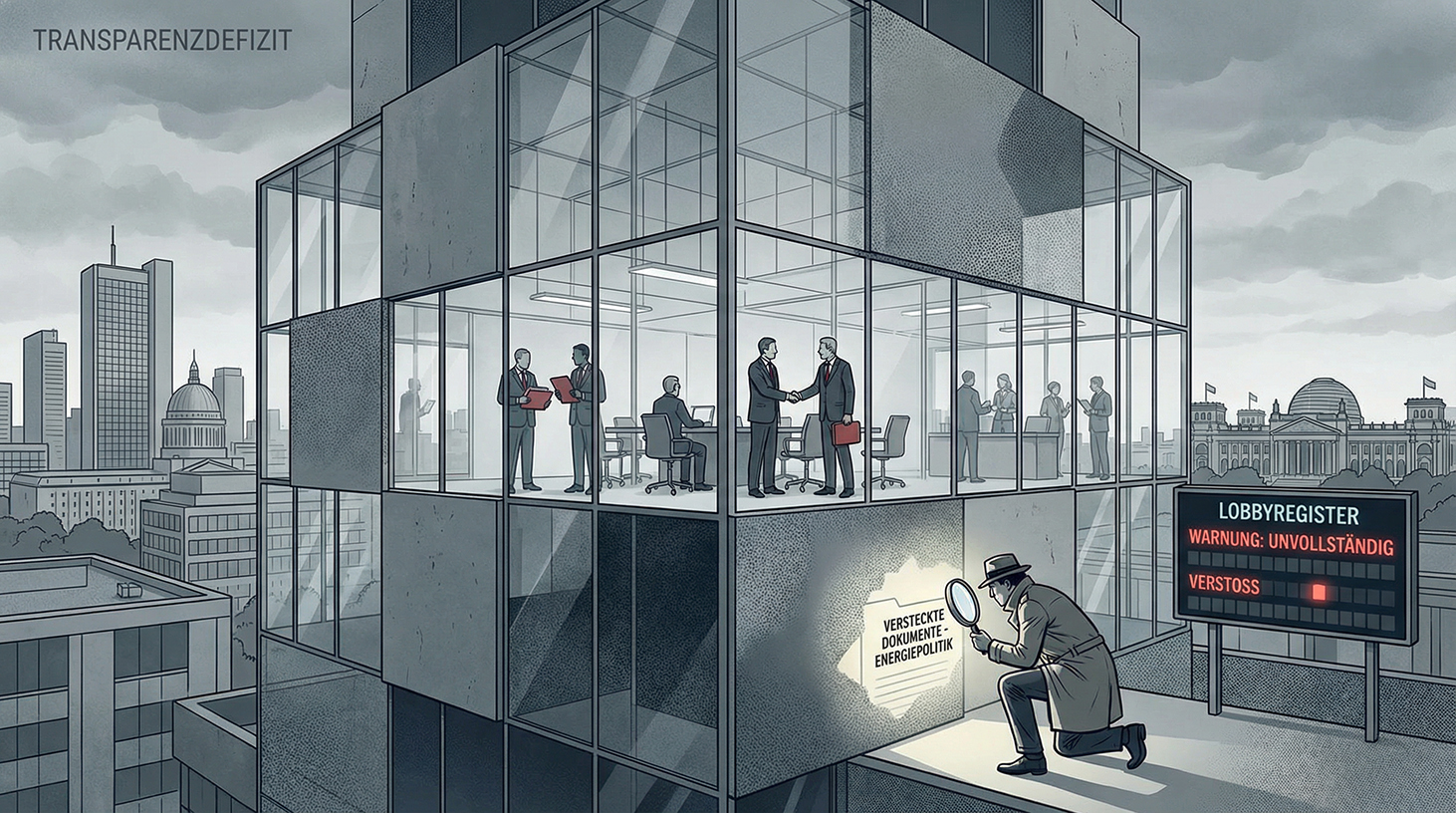
Katherina Reiche orders, lobby delivers: Arguments against battery storage and in favor of gas-fired power plants at the Federal Ministry for Economic Affairs and Energy – Image: Xpert.Digital
Revolving door effect in top-level politics? The energy minister's fatal lobbying network
Batteries vs. Gas: Is the "new" German power plant strategy a rigged game?
An unprecedented incident at the Federal Ministry for Economic Affairs and Energy sheds a revealing light on the deep entanglements between top politicians and energy companies in Germany. The very ministry headed by Katherina Reiche, who herself has a long career in the gas industry, asked the energy giant EnBW for tailor-made arguments. The aim: to deliberately disadvantage battery storage in the multi-billion-euro power plant strategy in favor of fossil gas-fired power plants. What is particularly explosive is not only that the regulator bought arguments from the regulated, but also that the process initially remained hidden and exposed serious loopholes in the lobby register. The revelations raise fundamental questions – about the so-called revolving door effect in politics, a merely feigned technological openness, and far-reaching decisions that are clearly made against economic reason. A profound insight into a system in which political control and private sector interests are virtually indistinguishable.
Fittingly,

Who orders the electricity – and who orders the arguments for it?
The ministry as an extended arm of the energy companies?
In April 2026, Der Spiegel revealed an incident whose simplicity is particularly disturbing: The Federal Ministry for Economic Affairs and Energy, under Katherina Reiche, had commissioned proposals from the energy company EnBW that would severely disadvantage battery storage systems in the planned tenders for the so-called power plant strategy. On January 13, 2026 – two days before Minister Reiche reached a basic agreement with the EU Commission on the power plant strategy – EnBW's chief lobbyist, Holger Schäfer, sent a text message to Christian Schmidt, the responsible department head at the Federal Ministry for Economic Affairs and Energy. It contained several proposals specifically targeting battery storage systems and designed to give gas-fired power plants decisive structural advantages in the capacity auctions.
The source for this specific information – EnBW chief lobbyist Holger Schäfer, department head Christian Schmidt, text message on January 13 – is the original Spiegel article from April 14, 2026. Since the Spiegel article is behind a paywall, it is not directly accessible. However, the information was reproduced verbatim and confirmed by ntv.de and t-online.de
ntv.de reports directly: “On January 13, two days before Reiche reached a basic agreement with Brussels on a power plant strategy, EnBW's chief lobbyist Holger Schäfer reportedly sent a text message to Christian Schmidt, head of department at the Federal Ministry for Economic Affairs and Energy. It contained several proposals, primarily aimed at preventing battery storage. According to EnBW, the message was created ‘at the request’ of the ministry. The ministry has not denied this, even after repeated inquiries.”
t-online.de confirms the same facts with almost identical words: "According to the report, the head of the electricity department at the BMWE, Christian Schmidt, received a message from Holger Schäfer, the chief lobbyist of EnBW, on January 13th."
What elevates this process beyond a typical lobbying interaction is the answer to a simple question: Who actually asked whom for what? According to EnBW, the message was created "at the request" of the ministry. The ministry has not denied this account despite repeated inquiries from Der Spiegel. In short, this means that a federal ministry under democratic control asked one of Germany's largest energy companies to provide arguments that would disadvantage a specific technology in a government tender process—specifically, the very technology that most strongly competes with this company's business model.
The incident might have gone unnoticed were it not for another problem: EnBW had failed to register the ordered document in the German Bundestag's lobby register, as legally required. Only after Der Spiegel inquired with EnBW on April 9, 2026, did the company upload the document. EnBW offered no explanation for its omission. The ministry, in turn, stated that compliance with lobby register regulations was solely the responsibility of the lobbyists themselves; it did not conduct "systematic reviews." This single incident thus reveals three interconnected problems: structural conflicts of interest at the ministry level, the active involvement of corporate lobbyists in shaping political regulation, and a systematic gap in the lobby register's transparency regime.
More information here:
Rich people, Western energy, and the revolving door without a safety lock
Understanding this process requires a picture of Katherina Reiche that extends beyond her current official title. The CDU politician, born in 1973 in Luckenwalde, was a member of the German Bundestag from 1998 to 2015 and held, among other positions, the office of Parliamentary State Secretary in the Federal Ministry for the Environment. After leaving politics, she moved directly into the energy sector without a cooling-off period: in 2015, she became CEO of the Association of Municipal Enterprises (VKU), a lobby group whose member companies are often active in the gas sector. From 2020, she served as CEO of Westenergie AG, a subsidiary of the E.ON Group and thus one of Germany's largest energy suppliers.
In April 2025, Friedrich Merz nominated Reiche as the designated Federal Minister for Economic Affairs and Energy. She was sworn in on May 6, 2025. The anti-corruption organization LobbyControl immediately raised the alarm: "In her new role, Ms. Reiche will not be able to avoid issues affecting the business interests of Westenergie, E.ON, or Ingrid Capacity. This is a clear case of a conflict of interest," explained LobbyControl spokesperson Christina Deckwirth. Particularly noteworthy is the fact that Reiche's former employer, Westenergie, is seeking connection to the planned hydrogen core network—a decision that falls under the purview of the Ministry of Economic Affairs and Energy. The VKU (Association of Municipal Enterprises), which Reiche chaired until shortly before her appointment, also lists requests in the lobby register that are directly addressed to the Ministry of Economic Affairs.
The Reiche case is not an isolated incident, but rather the latest chapter in a long German tradition of the so-called revolving door effect: the rapid, often seamless transition between high political offices and leading positions in the private sector, and vice versa. Prominent precursors include Gerhard Schröder (who went directly from the Chancellery to the top of Nord Stream AG), Ronald Pofalla (from Head of the Chancellery to the board of Deutsche Bahn), and Eckart von Klaeden (from Minister of State to Daimler lobbyist). As early as 2014, the EU Commission explicitly warned in a corruption report that Germany must find a way to prevent these revolving door effects and criticized the lack of a legally binding cooling-off period. Structurally, little has changed since then. To this day, there is no clear, legally defined waiting period that limits the transition from top executive positions to directly regulatory-relevant industry positions.
Reiche has repeatedly rejected the lobbying allegations. She argues that the need for gas-fired power plants arises from the technical requirements of security of supply and points to the necessity of CCS technologies for CO₂ capture as a complementary measure. The question of whether someone with her specific career background, lacking structurally secure mechanisms for distancing themselves from conflicts of interest, is even capable of making such impartial assessments arises independently of her personal integrity. The institutional conflict of interest exists regardless of individual will.
Related to this:

The power plant strategy: Technological openness as a backdrop
To fully understand the EnBW situation, it is necessary to examine the power plant strategy and its specific details. Following the phase-out of nuclear power and the planned coal phase-out, Germany faces the challenge of creating weather-independent reserve capacities for times when wind and solar power do not provide sufficient electricity. The fundamental question is: Which technologies should fulfill this role?
After taking office in May 2025, Minister Reiche openly stated her intention to primarily fill this supply gap with gas-fired power plants – initially, the plan called for up to 20 gigawatts of new capacity. However, the project met with resistance from the EU Commission, which requires formal technological neutrality for the approval of state subsidies under state aid rules. Reiche had assured Brussels of technological neutrality. The actual implementation of the agreement in principle reached in January 2026 tells a different story.
Of the 12 gigawatts to be tendered in 2026, 10 gigawatts are subject to a so-called long-term criterion: the plants must be able to supply electricity continuously for at least ten hours. According to the current state of technology, only gas-fired power plants can meet this criterion at competitive costs. Only the remaining 2 gigawatts will be tendered without regard to technology, which leaves battery storage systems a minimal chance of participation. This means that 83 percent of the first tender round is effectively geared towards gas-fired power plants, even though the term "gas-fired power plant" is not officially used anywhere. The long-term criterion acts as a technological filter, favoring the desired technology without formally mandating it.
It is precisely in this gray area between declared technological openness and actual technological preference that the EnBW paper comes into play. The company sent proposals to the responsible department head that would further disadvantage battery storage – in other words, tighten the screws on a system that was already biased in favor of gas-fired power plants. And, as the company itself admits, it did so at the ministry's request. It must be noted that this is not a typical lobbying situation in which a company representative tries to influence a ministry. It is the reverse: The ministry is seeking arguments from an affected party to support a pre-existing political preference.
This phenomenon is not limited to EnBW. As early as February 2026, the Handelsblatt newspaper reported on a similar position paper from the energy company RWE, which contained far-reaching demands regarding the design of power plant strategy and also aimed at structurally disadvantaging battery storage systems. Among other things, RWE proposed a stricter ten-hour criterion and local content requirements that would effectively exclude battery storage systems from tenders. The Handelsblatt described it as a lobbying document; the question of whether the ministry had also actively solicited proposals in this case remained initially unanswered.
Related to this:

What the cost reality says about gas-fired power plants and battery storage
The German government's energy policy decisions are taking place against a remarkable technological and economic backdrop, which further underscores the urgency of critical analysis. While the ministry is optimizing the tendering conditions for gas-fired power plants, the cost situation between the two competing technologies has shifted dramatically in favor of battery storage in recent years.
According to data from market research firm BloombergNEF, global benchmark costs for a four-hour battery storage project fell by 27 percent to $78 per megawatt-hour in 2025—the lowest figure since BNEF began collecting data in 2009. Drivers of this development include overcapacity in battery production, fueled by the electric vehicle market, increasing competition among manufacturers, and improved system designs. At the other end of the cost equation are gas-fired power plants, which are at historic highs: BloombergNEF documented a 16 percent increase in the levelized cost of electricity (LCOE) for new combined cycle gas turbine (CCGT) power plants in 2025, reaching $102 per megawatt-hour. A key driver of this increase is the exploding demand for gas turbines for data centers, which has doubled plant prices within two years.
The Fraunhofer Institute for Solar Energy Systems reaches similar conclusions in its cost analysis: According to these calculations, gas-fired power plants incur electricity generation costs of between 7 and 15.4 cents per kilowatt-hour in the best-case scenario; during periods of low utilization – typical for purely reserve power plants – costs can rise to over 30 cents per kilowatt-hour. In the EU, the cost of battery storage reached approximately €180 per kilowatt-hour of installed capacity in 2025, with a forecast of €170 for 2026. Rystad Energy expects costs to decrease further, making battery storage increasingly attractive from an economic perspective.
Even more impressive are the figures for combined solar-storage projects: Globally, around 87 gigawatts of solar-plus-storage projects were added in 2025, delivering electricity at an average cost of $57 per megawatt-hour. In many regions, this undercuts not only new fossil fuel power plants but also the operation of existing ones. In California and parts of Texas, combined solar-storage systems are already cheaper than new gas-fired power plants.
A study by the Forum for Ecological and Social Market Economy, commissioned by Green Planet Energy, arrives at electricity generation costs of around 19.2 cents per kilowatt-hour for a 500-megawatt gas-fired power plant operating at full load for 1,000 hours – a rather optimistic assumption for a reserve power plant. Of this, 6.8 cents alone are attributable to the most volatile component: the gas fuel. When externalized costs such as climate damage, which are not incurred with battery storage, are taken into account, the effective costs for gas-fired power plants increase considerably.
| technology | Costs 2025 (global) | Cost trend | Sources |
|---|---|---|---|
| Battery storage (4h) | $78/MWh | sharply declining (−27% pa) | BNEF 2025 [22] |
| Gas-fired power plant (CCGT) | $102/MWh | sharply increasing (16% per year) | BNEF 2025 [22] |
| Solar storage (combined) | $57/MWh | falling | BNEF 2025 [22] |
| Gas (Fraunhofer, Best Case DE) | 7–15.4 ct/kWh | increasing with lower occupancy | Fraunhofer ISE [23] |
| Gas (reserve operation, Forum ÖM) | ~19.2 ct/kWh | volatile (depends on gas price) | Forum ÖM [24] |
The conclusion drawn from this data is inconvenient for a policy that aims to establish gas-fired power plants as the primary option for ensuring security of supply: the economic superiority of the alternatives is not merely a theoretical projection, but is already evident in real market prices. If, nevertheless, tender conditions are developed that structurally disadvantage battery storage, this can hardly be justified on economic grounds – unless one considers the interests of gas-fired power plant operators as the benchmark for rationality.
Our EU and German expertise in business development, sales and marketing

Our EU and German expertise in business development, sales and marketing - Image: Xpert.Digital
Industry focus areas: B2B, digitalization (from AI to XR), mechanical engineering, logistics, renewable energies and industry
More information here:
A thematic hub offering insights and expertise:
- Knowledge platform covering global and regional economies, innovation and industry-specific trends
- A collection of analyses, insights, and background information from our key areas of focus
- A place for expertise and information on current developments in business and technology
- A hub for companies seeking information on markets, digitalization, and industry innovations
Lobby register under scrutiny: How the EnBW case exposes transparency in energy policy
The lobby register: A promise of transparency with enforcement gaps
The EnBW case exposes a structural weakness in the German lobby register that extends beyond this specific incident. The Lobby Register Act came into force on January 1, 2022, and obligates all those who engage in lobbying activities vis-à-vis the German Bundestag and the Federal Government to register and disclose their concerns and activities. With the reform of March 1, 2024, the requirements were tightened: now, the specific legislative or regulatory proposals to which the lobbying relates must also be specified. The law provides for fines of up to €50,000 for violations.
EnBW failed to register the commissioned document on its power plant strategy in the lobby register, even though the company is listed there under registration number R002297 and is generally subject to mandatory lobbying requirements. The company merely stated that the message bore the EnBW lobby register number and was therefore "clearly identifiable." This is legally questionable: Simply marking a document internally with a registration number does not replace the legally required public registration of the contact and its content.
The real problem, however, lies elsewhere: The ministry was aware of the document, neither noticed nor objected to its non-registration, and now states that it does not, as a matter of principle, conduct systematic checks on whether lobbyists comply with their legal obligations. This reveals an enforcement gap that jeopardizes the entire transparency concept of the lobby register. A register based on self-reported information from lobbyists, and whose completeness is not actively verified by any party, can only be as transparent as the lobbyists themselves allow it to be.
The question is justified whether, based on these findings, EnBW's actions should be classified as "egregious" or merely "questionable"—a distinction that practically demands attention in the context of this specific incident. The answer depends on the normative perspective. Formally speaking, it constitutes a violation of the Lobby Register Act, which can be punished with fines. Materially speaking, the damage is limited for the time being: the document has now been registered, and media coverage has raised public awareness of its contents. Politically speaking, however, it is yet another episode in a pattern that undermines trust in the integrity of government decision-making processes: decisions affecting multi-billion-euro markets and shaping Germany's energy infrastructure for decades to come are made in direct exchange with those who directly benefit—without this exchange being publicly documented at the time it takes place.

Structural causes: Why the revolving door turns
The Reiche case and the EnBW affair are symptomatic of a deeper institutional problem. Anyone who has worked in the energy sector for many years naturally develops an understanding of problems and solutions shaped by the perspective of that industry. This is not a moral failing, but an epistemic consequence of professional socialization. The question of political institutional design is therefore not whether individuals possess sufficient integrity to overcome conflicts of interest, but rather how institutions can be designed so that such conflicts do not arise in the first place, or at least are effectively made visible.
To this day, Germany lacks a legally binding cooling-off period for top politicians and state secretaries who move to companies or associations directly affected by their former work – or from there to a ministry. The EU Commission already called for this in 2014. France introduced stricter regulations after the "Verrou de Grenelle" scandal; clearer cooling-off periods also exist in Great Britain and the USA for certain categories of transitions. The German debate has been going in circles for decades: voluntary commitments instead of laws, 18 months instead of 24 or 36 months, exceptions instead of rules. The result is cases like that of Reiche, who moved directly from the energy company to the ministry that oversees and regulates precisely those energy companies.
The Abgeordnetenwatch investigation into the "Merz government's lobbying file" documents that Reiche is far from the only cabinet member who entered office with significant conflicts of interest. This is not the exception, but rather the norm in a personnel policy that strategically brings expertise from the private sector into key ministries – with the advantage of specialized knowledge and the disadvantage of structural ties that cannot simply be dissolved by taking the oath of office.
During Reiche's first year in office, the Ministry of Economic Affairs initiated further steps that complete this picture. A draft amendment to the Renewable Energy Sources Act (EEG) from February 2026 stipulates that the fixed feed-in tariff for new photovoltaic systems up to 25 kilowatts should be eliminated. The Minister's monitoring concept calls into question the existing expansion targets for renewable energies and anticipates an electricity demand of 600 to 700 terawatt-hours in 2030, while the existing expansion targets are geared towards 750 terawatt-hours. Reiche's planned energy transition reform also envisages a systematic reduction of subsidies for renewables. Overall, this paints a picture of a ministry actively working to slow down the energy transition – while simultaneously exploiting companies that have a vested interest in the continued existence of fossil fuel infrastructure.
Related to this:

The EU as a corrective and its limits
An often underestimated factor in this story is the role of the European Commission. Brussels proved to be an unexpected counterweight to the Ministry of Economic Affairs' pro-gas-power-plant policies. Because state aid for new power plants requires approval from the EU Commission under state aid rules, Reiche could not unilaterally implement her original plan for 20 gigawatts of gas-fired power plants. The agreement on 12 gigawatts, with the long-term criterion and a technology neutrality component for 2 gigawatts, was the result of a compromise solution that reflects Brussels' pressure for formal technology neutrality.
However, the limitations of this corrective mechanism are obvious. Brussels examines state aid law, not the efficiency of technology selection or the integrity of the decision-making process. The formal requirement of technological neutrality is easily circumvented by technical tender parameters that effectively favor a particular technology without explicitly mentioning it – precisely the function of the long-term criterion. And if the responsible ministry develops these tender parameters in close consultation with the favored company, without publicly documenting this process at the time, then the EU corrective mechanism is rendered ineffective.
The EU Commission's state aid approval process was not yet complete following the agreement in principle reached in January 2026. The German Environmental Aid Association (Deutsche Umwelthilfe) objected to the potential for double funding through investment aid and subsequent compensation via the capacity market and did not rule out an action to invalidate the state aid approval. The outcome of this legal dispute will show whether and to what extent European state aid law can actually function as an effective barrier against nationally motivated industrial policies favoring individual energy technologies.
Security of supply and the refusal to engage in technology debate
Behind the political and institutional developments lies a legitimate energy policy debate, which unfortunately gets overshadowed by accusations of lobbying. Following the nuclear phase-out and the planned coal phase-out, Germany is indeed facing the challenge of providing readily available reserve capacities that are independent of the weather. This is not a phantom, but a real systemic requirement. The question is not whether, but how and with which technology these capacities should be created.
The argument in favor of gas-fired power plants is that they can supply electricity continuously and reliably for many hours or days, which is necessary for bridging so-called "dark doldrums"—periods of several days with little wind and sun in winter. Furthermore, a functioning gas network infrastructure already exists, and the power plants could be converted to run on hydrogen in the future (H2-ready). The opposing view is that battery storage is becoming increasingly competitive, even for longer holding periods, with decreasing costs; in combination with other flexible capacities such as biogas or demand-response systems, it could meet the need for dispatchable power without building new fossil fuel infrastructure.
This debate is complex and has no easy answer. Battery storage systems with a holding time of only four hours cannot, in fact, bridge multi-day periods of low wind and solar output on their own – other solutions are needed for that. The question is whether a ten-hour criterion is the right measure, or whether other technical parameters (such as combined solutions, seasonal storage, or smart grid infrastructures) could meet the demand more efficiently and cost-effectively. A transparent, technology-neutral competitive bidding process, in which different technologies demonstrate their capabilities under equal conditions, would be the market-based answer to this question. The parameters proposed by EnBW and RWE attempt to prevent precisely this kind of competition.
Particularly revealing in this context is a study from the summer of 2025 on the potential of 10-hour battery storage systems, which was analyzed on behalf of pv magazine: According to this analysis, if such long-term storage systems had access to tenders under the same conditions as gas-fired power plants, billions in total costs could be saved. The methodological basis of this calculation is not without controversy, but it illustrates that the cost dynamics for battery storage systems are trending toward competitiveness, even for longer holding periods – provided they are given the opportunity to prove themselves in the market.
What this case means for energy policy
The EnBW incident, in its legal substance, is not a scandal in the sense of a criminally relevant act. It is an administrative offense by EnBW that was subsequently rectified. The ministry acted formally correctly, if one accepts the legal construct that completely delegates the responsibility for oversight to the stakeholders. No: The real problem lies one level deeper.
It lies in the matter-of-fact way in which an economics ministry requests arguments from an affected corporation to support a politically favored decision. It lies in the normality with which a minister whose career to date is rooted in the gas industry regulates through that very sector. It lies in the structural weakness of a lobby register that relies solely on self-disclosure and whose completeness is not actively verified by any authority. And it lies in the impossibility for the public to track the influence of corporate interests on government regulatory decisions in real time – before the decisions have already been made.
Transparency International Germany summed up the case perfectly: "This isn't outright corruption, but it leaves a bad taste in the mouth." This bad taste is the real political problem. Democratic legitimacy of government action requires not only that decisions are lawful; it requires that citizens can have confidence in the impartiality of those decisions. This trust hasn't been shaken by a single incident—it's being gradually eroded by the cumulative pattern of revolving-door personnel changes, undocumented corporate contacts, and technologically disguised preference for certain technologies.
What should follow
The analysis of the case points to a number of institutional reforms that appear necessary regardless of the political assessment of the specific power plant strategy.
First, Germany needs a legally binding cooling-off period for members of the federal government and state secretaries when transitioning to directly regulatory positions in the private sector – and vice versa. The regulations in place in many EU countries and at the European Commission level, which stipulate cooling-off periods of 18 to 36 months for directly affected areas, could serve as a model. Such a regulation would not only protect public trust but also shield the politicians themselves from accusations of conflicts of interest.
Secondly, the lobby register must be strengthened through active review mechanisms. It is implausible that a ministry aware of having received a corporate document would fail to verify whether that document has been properly registered. A clearer shared responsibility of the addressed government agencies for the register's completeness would close the transparency gap. The Bundestag administration, which maintains the register, lacks the capacity for proactive reviews; institutional strengthening is needed here.
Thirdly, the decision-making criteria for tendering procedures – that is, the technical parameters that determine billions of euros in taxpayer money and the long-term energy infrastructure – should be developed in a transparent, participatory process involving all technology providers and independent scientific expertise. This would not be bureaucratization, but rather the implementation of genuine technology competition, which is in the public interest.
Whether these reforms can be expected under the current government is another question. The structural incentives that lead to such situations are strongest in the government most dependent on industry – and easiest to break for the one with the political power to emancipate itself from it.
🎯🎯🎯 Data-driven B2B industry hub as a quasi-in-house solution

The quasi-in-house solution: How Xpert.Digital closes operational gaps in B2B marketing and sales – Smart Content-Driven Business - Image: Xpert.Digital
Xpert.Digital is a data-driven B2B industry hub led by Konrad Wolfenstein . The company acts as an external, quasi-in-house solution for industrial partners, closing operational gaps in marketing, content, and sales – without requiring additional resources on the client side.
More information here:










