

Economic analysis of a strategic cooperation opportunity: Why China's high-tech factories urgently need German expertise
Xpert Pre-Release

Available in 27 languages 📢
Prefer Xpert.Digital on GoogleⓘPublished on: July 11, 2026 / Updated on: July 11, 2026 – Author: Konrad Wolfenstein
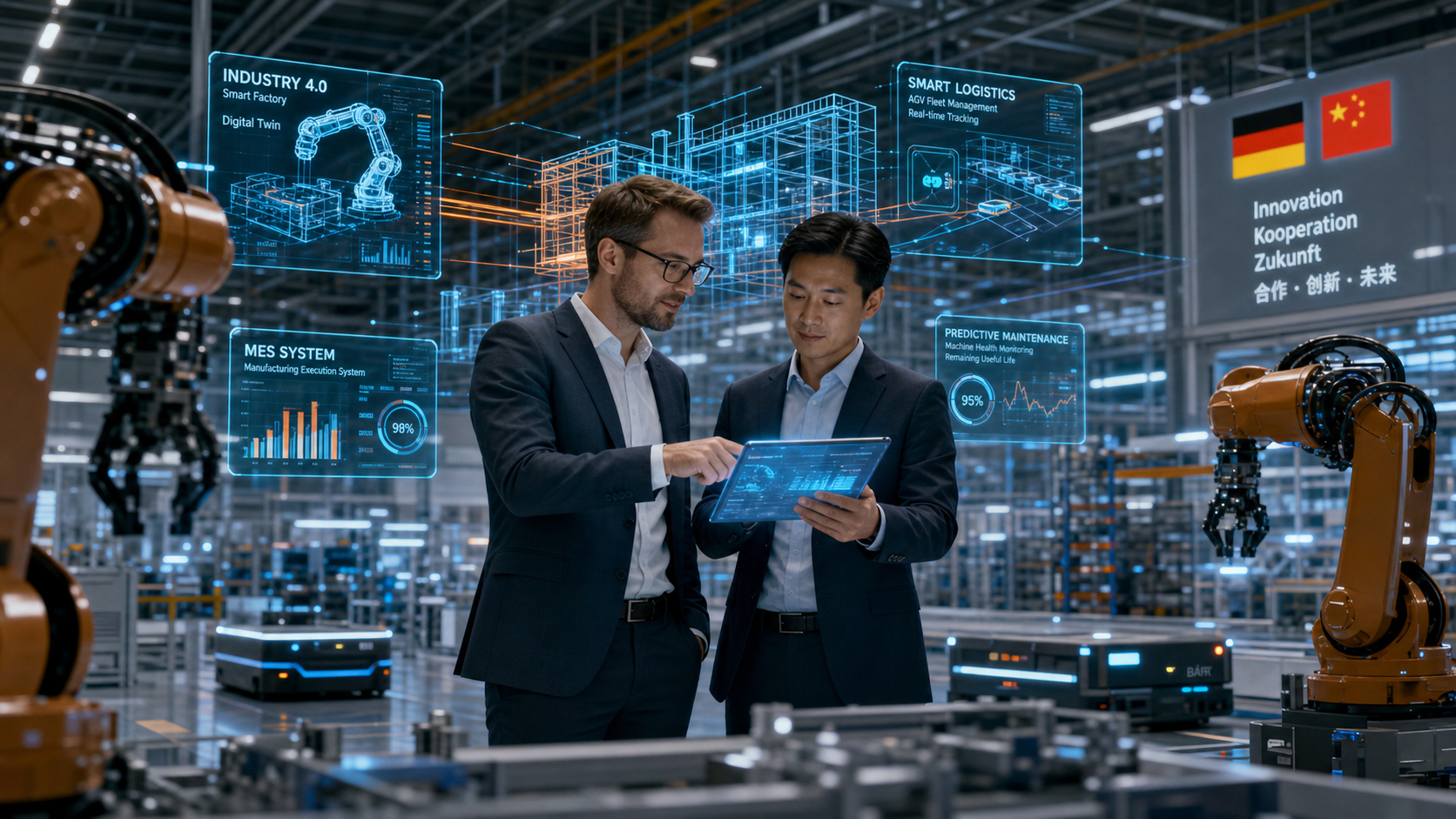
Economic analysis of a strategic cooperation opportunity: Why China's high-tech factories urgently need German expertise – Image: Xpert.Digital
The digitalization paradox: China is currently outpacing Germany – and yet is asking for help
Secret export commodity: Process knowledge: How German managers are now conquering the Chinese market
China's industrial transformation: Why the old image of the "workbench" is a fatal misconception
For a long time, a clear division of roles prevailed in the global economy: Germany researched and supplied cutting-edge technology, while China acted as a cost-effective, reliable manufacturing hub. However, anyone still viewing bilateral economic relations through this lens is overlooking a tectonic shift – and thus one of the most lucrative business opportunities of our time. China's manufacturing industry has undergone an unprecedented technological modernization leap and has long since overtaken the DACH region in terms of digitalization. Yet, this rapid ascent conceals a fascinating paradox: While Chinese factories are equipped with state-of-the-art infrastructure, sensors, and artificial intelligence, they sorely lack the profound process knowledge that has organically developed in German industry over decades.
Technology alone does not create competitiveness. Whether it's the seamless implementation of complex MES systems, the flawless orchestration of bills of materials (BOMs), or the creation of true operational excellence from gigantic data sets – Chinese industry is desperately seeking German implementation expertise. This is creating a massive structural demand for experienced practitioners who know how to integrate machines, software, and personnel into a cohesive whole. The following article examines in detail why this "digitalization gap" presents a strategic window of opportunity for German manufacturing experts, which specific niches are currently in highest demand, and how this knowledge can be marketed highly profitably in a changing geopolitical environment.
A paradigm shift that many haven't noticed yet
Anyone still viewing economic cooperation between Germany and China through the lens of the early 2000s is living in a long-outdated reality. The old picture – Germany exports technology, China manufactures cost-effectively and imports know-how – has fundamentally shifted. Yet it is precisely in this tectonic shift that one of the most significant business opportunities lies for German experts in the manufacturing industry, provided they understand the nature of the new playing field and the rules that apply.
The Chinese manufacturing industry has undergone a modernization leap in the past decade that is unprecedented internationally. At the same time, Chinese executives in medium-sized to large industrial companies have recognized that technological infrastructure alone does not create competitiveness. What is lacking is what has been cultivated in Germany over decades: practical implementation expertise, the process logic behind the systems, and the organizational understanding that truly brings technology to life. This is precisely where a structural demand for German expertise is emerging – coupled with a supply that is currently hardly systematically organized.
China's industrial transformation: Facts beyond the headlines
The stark data from the MHP Industry 4.0 Barometer 2026, compiled in cooperation with Ludwig Maximilian University of Munich, paints a picture that is likely to surprise many in Germany. The global level of digitalization in industry has risen from 48 percent in 2022 to 66 percent in 2026. China leads this statistic with 72 percent, followed by the USA with 69 percent. The DACH region – Germany, Austria, and Switzerland – is at just 57 percent. The finding is thus statistically clear: In terms of the breadth of industrial digitalization, China has overtaken Germany.
This finding, however, requires significant differentiation, which is crucial for understanding the opportunity for cooperation. The degree of digitalization and the depth of implementation are not the same thing. When the China Academy of Information and Communications Technology reported in February 2026 that 89.6 percent of all large industrial companies in China had undertaken digital transformations, and that figures exceeding 94 percent were achieved in the automotive, shipbuilding, and electronics sectors, this primarily referred to the level of technological equipment. What this statistic does not capture is how deeply these systems are embedded in daily operations, how consistently data is used, and whether the implemented technologies actually deliver the promised efficiency gains.
Herein lies the central paradox of Chinese industrial digitalization: The country has built up massive technological capacities in a very short time, but faces the challenge that technology delivers suboptimal results without process understanding and implementation experience. Digital twins are already used by 84 percent of Chinese logistics companies – at the same time, the industry is intensely demanding knowledge about how to actually derive operational benefits from these systems. It is this gap between technological infrastructure and operational excellence that offers German experts a unique market niche.
Structural demand: Who buys what and why
The target group of the Sino Cooperation Initiative – executives from Chinese companies with annual sales exceeding 2 billion renminbi – is economically significant. Two billion renminbi is roughly equivalent to 250 million euros. Those operating in this revenue segment in China are not running small businesses. They are typically medium-sized to large industrial companies active in the national or even global market, with substantial investment budgets, and those making strategic decisions at the level of general managers and plant managers.
The Sino-Cooperation platform has already gained considerable experience in this segment. In 2024, it organized 96 online seminars on Industry 4.0 topics and connected German and Chinese companies. By the end of 2024, the associated Chinese social media platform, "German Industrial Think Tank," had reached 280,000 followers and generated 2.5 million views – a sign of the genuine demand for German industrial perspectives in China.
A noteworthy shift, explicitly documented by the platform for 2024, is that Chinese companies are no longer seeking only one-sided knowledge transfer, but rather collaborative partnerships on equal footing. This signal should be taken seriously. It means that German experts can no longer act as superior instructors, but rather as cooperation partners with specific, in-demand expertise. Those who understand this shift and incorporate it into their training programs will achieve lasting success. Those who ignore it risk being perceived as irrelevant.
The range of topics: Nine fields with varying strategic depth
The nine training areas identified by Sino-Cooperation are not randomly selected. They precisely reflect the most pressing implementation gaps in the Chinese manufacturing industry. An economic analysis of these areas reveals where the greatest structural demand exists and which German skills are most in demand.
Smart logistics and production line planning: Where speed and depth diverge
China's logistics sector has taken a leading global role in digital infrastructure. Nevertheless, significant shortcomings remain in the integrated planning of production lines and logistics flows. In the German manufacturing industry, companies like Bosch, BMW, and BASF have decades of experience in seamlessly integrating physical material flows and digital planning logic to generate genuine efficiency gains. The Busch-Jaeger case study exemplifies how consistent supply chain digitalization can transform an anonymous stock manufacturer into a customized order-based manufacturer – with a continuous value chain from customer configurator to setup optimization.
For Chinese executives, the potential for transferring knowledge from this experience is enormous. What is often taken for granted in Germany – the simultaneous integration of material planning, capacity planning, and supplier communication within a digitized system – is by no means a lived reality in many Chinese companies, even if the technical prerequisites for it may nominally exist.
MES and MOM: The underestimated integration problems
The market for Manufacturing Execution Systems (MES) in China is one of the fastest growing worldwide. It reached a volume of US$2.68 billion in 2024 and is projected to grow to over US$6.7 billion by 2032. These figures illustrate the market's dynamism but mask the real problem: purchasing and installing MES systems is considerably easier than effectively integrating them into existing production environments.
German companies have accumulated decades of implementation experience in this area, experience that cannot be found in software manuals. They know how to integrate a Manufacturing Execution System (MES) into a heterogeneous machine landscape, what organizational resistance arises during implementation, and how to win over shop floor employees to data-driven processes. This kind of experiential knowledge—enriched with concrete case studies of both failed and successful implementations—is of immediate operational benefit to Chinese managers. Manufacturing Operations Management (MOM) goes a step further: It not only coordinates production execution but also integrates quality, maintenance, and resource management into a comprehensive operational framework.
BOM Management: The underestimated data backbone of the company
Bill of materials (BOM) management is one of those business topics that may seem trivial from the outside but can lead to some of the most serious efficiency problems in practice. A BOM is far more than just a parts list – it's the structuring document that synchronizes design, purchasing, manufacturing, and sales. If BOMs are maintained in separate databases across different departments, inconsistencies arise, leading to production errors, delivery delays, and increased costs.
Modern PLM solutions with integrated BOM software create a central, always up-to-date database accessible to all authorized stakeholders. In German companies, which have decades of experience with multi-level bills of materials in complex product variants, an awareness of these interrelationships is deeply ingrained. The engineering change management processes, which ensure that design changes reliably reach manufacturing and purchasing, are a prime example of organizational know-how that cannot simply be digitized but requires a lived process culture.
APS: The underestimated heart of manufacturing efficiency
Advanced Planning and Scheduling (APS) is one of the technology fields where the gap between theoretical potential and practical implementation is particularly large. APS systems promise simultaneous optimization of material and capacity planning that goes beyond what classic ERP systems can achieve. They enable short-term detailed planning while taking real capacity constraints into account and allow for real-time what-if analyses.
The Fraunhofer Group has accumulated extensive research and implementation experience in this area within the German manufacturing industry. Siemens offers Opcenter APS, one of the market-leading solutions proven in German industrial companies. The transfer potential in this area is particularly high for Chinese executives: those who understand the logic behind APS implementations can significantly improve the management of the interrelationships between order management, supplier deadlines, capacity utilization, and customer satisfaction.
Industrial data use: From data collection to decision logic
The collection of industrial data is often already a reality in modern Chinese manufacturing environments. Machines are equipped with sensors, OPC UA protocols enable standardized communication, and data histories are stored. The real problem lies a step further: What do you do with this data? Which anomalies are relevant early warning signals, and which are statistical noise? How do you build data models that deliver operationally usable insights?
German industry has developed considerable expertise in this area. The example of semiconductor manufacturer Globalfoundries at its Dresden site demonstrates how predictive maintenance control for production-critical components can be implemented using audio data acquisition and machine learning models, drastically reducing unplanned downtime and lowering maintenance costs. Such practical implementation examples, enriched with the specific challenges that had to be overcome along the way, are precisely what Chinese senior managers are looking for when they request practical training.
Quality management: From test protocol to integrated process control
The digital transformation of quality management is one of the areas in which Germany has a systematic advantage due to its historical focus on precision manufacturing and compliance with standards. German companies have understood that quality is not checked at the end of a process, but must be built into every production step – a principle that has been institutionalized in the German automotive and mechanical engineering industries for decades. The digital extension of this principle – through real-time statistical process control, automated test protocols, and integrated quality data in the MES – is a transfer topic that has immediate operational relevance for Chinese manufacturing leaders.
Predictive Maintenance and Remote Monitoring: The Proactive Factory
Predictive maintenance is one of the areas where the economic potential is easiest to quantify. A BearingPoint survey of German companies revealed that those consistently implementing predictive maintenance were able to reduce their machine and plant downtime by 18 percent and their maintenance and service costs by 17 percent. At the same time, these companies recorded an average revenue increase of ten percent.
75 percent of German companies are actively addressing this issue. German implementation approaches – from phased sensor deployment and edge computing architectures to cloud-based analytics models – are proven in practice and deliver reliable results. For Chinese production managers responsible for machinery with significant investment value, the remote monitoring concept is particularly attractive: the ability to centrally monitor equipment at multiple locations and predict maintenance needs before they lead to production downtime.
Digital supply chain: From transparency to resilience
China's 15th Five-Year Plan (2026–2030) explicitly prioritizes strengthening supply chains as a strategic security resource. For German experts, this presents a paradoxical opportunity: The Chinese side wants to digitize and make supply chains more resilient – and is seeking the expertise that has been built up in Germany over years of experience with just-in-sequence systems, global supply chain management, and digitized procurement processes. At the same time, the Chinese market is changing in such a way that localization requirements, regulatory compliance, and political priorities are increasingly overshadowing pure market logic. German experts who help Chinese executives build digital supply chains that are both efficient and resilient thus offer added value that extends beyond technical training formats.
Digital twins, AI and machine learning: Technology fields with differentiation potential
The market for digital twins is set to grow significantly. In 2022, it was estimated at US$8.6 billion globally; by 2030, it is projected to exceed US$137 billion. China already leads in adoption rates: In logistics, 84 percent of Chinese companies use digital twins at least partially. At the same time, the MHP Barometer shows that only 42 percent of companies in the DACH region report comparable use. This finding seems counterintuitive: China is technologically more advanced – yet it is still seeking German expertise. The reason lies in the quality of the application. German companies like Siemens, BMW, and BASF have not only installed digital twins but have also integrated them into complex production systems, thereby learning how to fully exploit the potential of this technology.
🎯🎯🎯 Sino-Cooperation

Sino-Cooperation is a platform based in China and Germany
Sino-Cooperation is a platform based in China and Germany that promotes exchange and cooperation between German and Chinese companies, especially through events, digital formats and an online cooperation exchange for market entry and partnerships.
More information here:
Complementary strengths: How knowledge transfer between Germany and China becomes lucrative
The paradox of the digitalization gap: China is ahead, yet still willing to learn
A crucial misunderstanding needs to be addressed here, as it is strategically decisive for the positioning of German experts. While the MHP Barometer data shows that China leads the world in industrial AI adoption rates at 71 percent – compared to only 37 percent in the DACH region (Germany, Austria, and Switzerland) – adoption does not equate to maturity. The MHP Barometer notes that in Europe, particularly in Germany, AI is often limited to pilot projects rather than being fully integrated into production processes – a conclusion that also applies, in a mirrored sense, to parts of Chinese industry.
What China has: technological platforms, government support, speed of scaling, and a significant proportion of digitally upgraded facilities. What China is still developing: the process logic that has evolved over decades, the organizational understanding of the relationship between technology and business results, the culture of iterative learning from mistakes, and the institutionalized quality standards that are taken for granted in Germany.
It is precisely this difference that opens the market for German knowledge transfer. And it didn't arise by chance: China's plan to integrate smart technologies into all key industrial sectors by 2027 and to complete an initial round of digitalization in mechanical engineering by 2030 is ambitious. Achieving these goals requires knowledge that cannot be acquired through technology investments alone. This is precisely the business model behind the Sino-Chinese cooperation initiative.
Geopolitics as a framework: Navigating opportunities without ignoring risks
Any serious economic analysis of market entry or a cooperation model with China must include the geopolitical dimension without resorting to sweeping warnings. In 2023, the German government presented its first explicit China strategy, which focuses on de-risking rather than de-coupling – a distinction directly relevant to knowledge transfer programs.
What does de-risking mean in the context of training services for Chinese industrial leaders? Training on digitalization topics such as MES implementation, APS, digital twins, and quality management falls within a scope that is generally not subject to export control restrictions. It involves organizational and methodological know-how, not sensitive dual-use knowledge or militarily relevant technologies. This does not completely eliminate risks—the issue of intellectual property protection remains relevant, as does careful partner selection—but it significantly reduces regulatory hurdles.
At the same time, geopolitical dynamics show that the window for such cooperation will not remain open indefinitely. China's 15th Five-Year Plan (2026–2030) emphasizes technological self-reliance as a strategic goal. This does not mean that knowledge transfer is undesirable, but rather that Chinese companies want to learn in order to empower themselves in the long term—a goal that is fully compatible with a partnership-oriented training approach. Those who utilize these opportunities for cooperation now are building relationships that can endure beyond individual training programs.
Experience from the German-Chinese Industry 4.0 cooperation, which the Federal Ministry for Economic Affairs and Energy and GIZ have been supporting since 2015, shows that institutionalized cooperation formats between German and Chinese experts from business and science are sustainable in the long term. For example, 80 German and Chinese experts work together in the German-Chinese Working Group on Companies in Intelligent Manufacturing, a model that forms the basis for further bilateral knowledge transfers.
Formats and added value: Why practical training is the right approach
Sino-Cooperation's requirement that training be based on real-world case studies and provide concrete solutions to genuine implementation challenges is economically sound. Senior managers with budget responsibility in multi-billion-RMB companies are simply not interested in conceptual PowerPoint presentations – they have decisions to make and are looking for actionable knowledge.
For German experts, this means a clear requirement for the format of their reports. Simply stating that Germany is a leader in Industry 4.0 is not enough. What's needed are concrete project descriptions outlining the initial situation, implementation challenges, solutions used, and measurable results. Failures in the first implementation phase, organizational resistance during MES rollout, the first digital twin proof-of-concept that didn't work as expected – this kind of honest experiential knowledge is often more valuable than embellished success stories.
Online training offers significant advantages in terms of flexibility: it allows the participation of experts who are not permanently based in China and permits a modular, in-depth exploration of individual topics over several sessions. In-person training in Beijing, Shanghai, or Shenzhen offers the advantage of direct interaction, enables factory visits, and fosters personal relationships that are crucial for long-term collaborations. Both formats complement each other effectively: online formats for conceptual introductions and knowledge transfer, and in-person formats for in-depth case studies, group exercises, and networking.
Who has an interest in creating this offer?
For the specific development of offers, various profiles of potential providers on the German side can be identified, each bringing different strengths:
Firstly, there are specialized management consultancies and engineering service providers that have supported specific MES, APS, or Digital Twin implementations and whose case studies directly meet the requirements for practical training. These stakeholders often possess the most extensive experiential knowledge, but may have less experience in preparing it for training formats.
Secondly, Fraunhofer Institutes and technical universities that conduct applied research with industry partners and have supported implementation projects. Fraunhofer IPA, for example, has extensive publications and project experience in the areas of APS and supply chain management. These institutions have a reputational advantage and can combine scientific rigor with practical relevance.
Thirdly, experienced managers and plant managers who have directly overseen their digitalization journey in large German industrial companies and are now ready to pass on this knowledge in a training context. This group is often underestimated, but possesses the most authentic experiential knowledge from practical implementation.
The Steinbeis Foundation, which in 2024 entered into a cooperation agreement with Sino-Cooperation for joint events on "AI+Manufacturing" in key Chinese industrial cities, demonstrates that institutionalized knowledge transfer formats in this field have already taken concrete organizational forms. This partnership offers interested German experts and institutions a potential point of contact.
Economic assessment: What is the value of this knowledge transfer?
An economic analysis without an assessment of market value would be incomplete. The training needs for Chinese executives in the manufacturing industry are substantial. China's government plan to implement smart technologies across key industrial sectors by 2027 and to establish 500 new state-of-the-art smart factories by 2030 necessitates a massive skills development initiative at the executive level. The MES market alone, projected to grow from US$2.68 billion in 2024 to over US$6.7 billion by 2032, is generating enormous demand for implementation expertise.
Training courses for senior managers in China typically command substantial daily rates, comparable to those of international experts from established industrialized nations. For practical training on specialized Industry 4.0 topics, daily rates for external trainers are generally in the five- to six-figure euro range per program – depending on the scope, the trainers' reputation, and the depth of the case studies. Entering the market via the Sino Cooperation Platform, which offers the first publication free of charge and provides access to a verified network of Chinese industrial partners, significantly reduces market entry costs.
The real economic logic for German experts, however, lies not only in the direct training fee. Every training engagement generates market knowledge, personal networks, and potentially follow-up contracts in the form of consulting projects, software licenses, system integration services, or long-term cooperation agreements. Anyone entering this market today and positioning themselves as a competent partner lays the foundation for a business relationship that extends far beyond individual training sessions.
The downside of China's rise: Why speed alone doesn't solve problems
The impressive digitalization figures of Chinese industry tell only half the story. Behind the record numbers lie structural distortions that are often overlooked in Western analyses but are felt daily in Chinese boardrooms. The rapid technological advancement has created a number of serious problems that cannot be solved by further investments in hardware and software – and these problems form the core of the demand for German collaborative expertise.
Perhaps the most pressing problem is the fragmented system landscape. In recent years, Chinese manufacturing companies have invested heavily in individual digitalization components – an MES here, an APS there, sensors on the shop floor, a cloud platform for data analysis. However, these systems were often not planned as an integrated whole, but rather procured as isolated, standalone solutions. The result is data silos, incompatible interfaces, and an operational reality in which plant managers possess dozens of dashboards but lack a single reliable, consistent data basis for decision-making. German industry, which also made this mistake in the early stages of digitalization and learned from it, possesses precisely the integration expertise that Chinese companies urgently need today. It is no coincidence that several of the nine training topics offered by Sino-Cooperation – MES/MOM, BOM management, and APS – directly address this integration problem.
A second, often underestimated problem concerns the skills gap at the middle management level. China's top management has recognized the strategic value of digitalization and made corresponding investment decisions. However, an operational gap exists between the board level, which approves budgets in the billions of RMB, and the shop floor, where the technology must function. Production managers, quality managers, and maintenance supervisors face the challenge of operating and optimizing systems for which they have never received systematic training. While the Chinese education market has rapidly scaled up technical training programs, these programs typically teach software operation, not process understanding. Anyone who wants to know how to not only install a Manufacturing Execution System (MES) but also make it the central nervous system of a factory needs experiential knowledge – and this knowledge resides primarily in German minds.
Added to this is the problem of rushed implementation cycles. In Chinese industrial companies, the political and economic pressure to implement digitalization projects quickly is enormous. Government funding programs are tied to deadlines, competitive pressure demands visible results, and the speed of implementation, deeply ingrained in Chinese culture, leaves little room for the iterative, step-by-step implementation logic that is considered best practice in German industry. The result is projects that are technically complete but operationally immature: a digital twin that exists, but whose data model is not calibrated; a predictive maintenance system whose algorithms were trained on uncleaned data; a fully automated production line whose cycle times in real-world operation do not match the planning assumptions. German industrial experts who know such situations from their own experience and how to systematically resolve them are invaluable to Chinese executives.
Another structural deficit lies in the area of organizational change management. Digitalization is never a purely technical project – it changes workflows, responsibilities, qualification requirements, and, not least, corporate culture. In Germany, this realization is now common knowledge, supported by years of experience with failed IT projects that were technically sound but poorly managed organizationally. In China, however, change management as an independent discipline in the industrial context is still comparatively unsystematized. The resistance encountered when introducing data-driven processes on the shop floor – from the skepticism of experienced machine operators towards algorithmic recommendations to the need to redefine decision-making processes – is similar in both countries. The difference is that German companies have developed methods to productively address this resistance instead of ignoring it.
Quality culture also presents a challenge that runs deeper than individual testing processes. German quality standards – whether in automotive supply according to IATF 16949, in mechanical engineering according to ISO standards, or in industry-specific regulations – are not merely documentation requirements, but rather the expression of a mindset that has evolved over generations and understands quality as an integral part of every process step. Chinese companies that want to export to international markets or become suppliers to global corporations regularly reach the limits of their quality systems – not because they lack the necessary measuring technology, but because the organizational anchoring of a consistent quality philosophy requires time and experience that cannot be rushed.
Finally, Chinese industry is grappling with the challenge of retaining skilled workers in a rapidly changing technological landscape. Digitalization experts are in extremely high demand in China, leading to high employee turnover. Companies regularly lose those employees who have just acquired the knowledge to operate and further develop new systems. German companies are also familiar with this problem, but have developed strategies—from systematic knowledge management and internal academies to documented process standards—that ensure critical implementation knowledge is not tied to individuals, but remains embedded within the organization.
All these challenges explain why the demand from Chinese executives for German cooperation partners is not a polite gesture, but rather the result of rational economic calculation. Chinese industrial managers have recognized that, despite all the technological upgrades, their factories are not yet reaching the performance levels that the installed systems theoretically allow. The gap between investment and return – between what the technology could do and what it actually achieves in day-to-day operations – is the real business problem these companies want to solve.
Crucially, the nature of the collaboration has changed. The Chinese side no longer acts as an apprentice humbly asking for instructions. The managers participating in training bring considerable expertise of their own – in scaling, in the application of AI, and in the speed of technological implementation. What they are looking for is not a teacher-student relationship, but a partnership-based exchange where German process experience meets Chinese scaling expertise. This symmetry is new and valuable for both sides. German experts who are willing not only to teach but also to learn – for example, from the Chinese ability to roll out pilot projects to hundreds of locations in record time – will find that a training engagement results in genuine bilateral knowledge enrichment.
The old shop-bench narrative is definitively history. It has been replaced by a logic of cooperation based on complementary strengths: Germany contributes depth, process maturity, and decades of proven implementation experience. China brings speed, scalability, technological infrastructure, and a vast domestic market that serves as a testing ground for innovative manufacturing concepts. Those who understand this complementarity and leverage it as a business model position themselves not as service providers to a catching-up nation, but as equal partners in one of the most dynamic industrial transformations of our time.
The strategic window: Act now or catch up later
A dispassionate look at the data reveals a shifting landscape. China's 15th Five-Year Plan emphasizes technological self-reliance; Chinese companies will increasingly be able to build up their own implementation expertise internally. This doesn't mean the market for German knowledge transfer will disappear anytime soon – but the strategic relevance of German know-how will decrease as Chinese companies accumulate their own implementation experience.
German-Chinese Industry 4.0 cooperation, which has been institutionalized at the political level since 2015, forms the strategic framework for bilateral knowledge transfer. Despite geopolitical tensions, China remains a key economic partner for Germany, as demonstrated by the involvement of Mercedes-Benz with ByteDance, BMW with Alibaba and DeepSeek, and Bosch in the Suzhou Industrial Park. These commitments signal that the logic of economic complementarity persists – even if it unfolds within a changed geopolitical context.
For German experts in the manufacturing industry, this means that offering practical training within the framework of the Sino Cooperation Initiative is not a philanthropic project, but an economically rational decision with strategic implications. Those who take the offer seriously, understand the requirements for practice-based content, and are willing to engage in a collaborative – not paternalistic – partnership will find a market that still offers considerable growth potential.
Complementarity as a lasting foundation
The fundamental question is not whether China can learn from Germany – that is undeniably true, even if the direction has shifted and today there is more complementary learning than one-sided technology transfer. The real question is whether German experts and institutions are able to impart their knowledge in a format that meets the demands of discerning Chinese senior managers: practical, case-based, honest about challenges, and methodologically rigorous.
The Sino-Cooperation initiative addresses a real market need. The demographic and economic target group is attractive. The identified areas – from smart logistics to MES and APS, to digital twins and supply chain management – precisely cover the implementation gaps that the Chinese manufacturing industry still needs to close on its path to full digitalization. And despite all the complexities, the geopolitical framework allows for economic cooperation in this area.
What's missing is the systematic mobilization of German expertise. Germany has it. China is asking for it. What's still needed is the bridge that Sino-cooperation offers to build.
🎯🎯🎯 Data-driven B2B industry hub as a quasi-in-house solution

The quasi-in-house solution: How Xpert.Digital closes operational gaps in B2B marketing and sales – Smart Content-Driven Business - Image: Xpert.Digital
Xpert.Digital is a data-driven B2B industry hub led by Konrad Wolfenstein . The company acts as an external, quasi-in-house solution for industrial partners, closing operational gaps in marketing, content, and sales – without requiring additional resources on the client side.
More information here:
Your global marketing and business development partner
☑️ Our business language is English or German
☑️ NEW: Correspondence in your native language!

Konrad Wolfenstein
I and my team are happy to be available to you as your personal advisor.
You can contact me by filling out the contact form here [email protected]:or simply call me at +49 7348 4088 965. My email address is
I'm looking forward to our joint project.





