

Oversized toys? Hype vs. reality: Why China's robotics industry relies on welders instead of humanoids
Xpert Pre-Release

Available in 27 languages 📢
Prefer Xpert.Digital on GoogleⓘPublished on: August 19, 2026 / Updated on: August 19, 2026 – Author: Konrad Wolfenstein
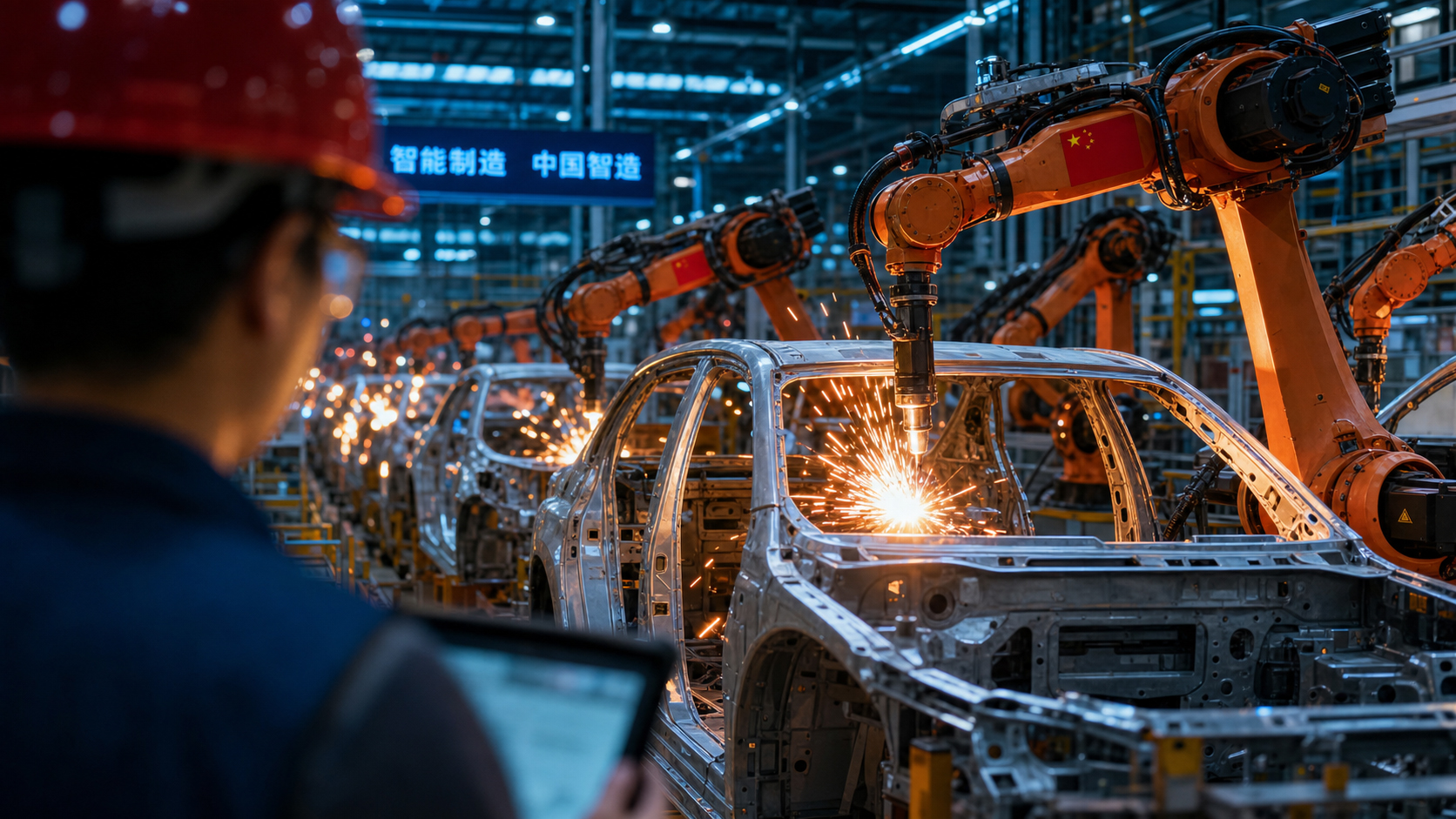
Oversized toys? Hype vs. reality: Why China's robotics industry relies on welders instead of humanoids – Creative image on the topic, with AI: Xpert.Digital
237 million missing workers: How a simple problem is driving China's true robot transformation
Oversized toys? The bitter truth behind the hype surrounding humanoid robots
Bucking the trend: Why this Chinese tech chief is deliberately not building humanoid robots
Humanoid robots currently dominate social media: they dance, box, fold laundry, and give the impression that they will take over our jobs tomorrow. But a closer look behind the scenes of Chinese industry reveals a completely different, far more pragmatic picture. While humanoid machines often remain oversized research objects in test labs, the real economic revolution is taking place behind the scenes. One Chinese technology entrepreneur has consciously opted against the glittering hype – and is instead building highly specialized welding robots. His motives reveal a fascinating mix of demographic necessity, technological responsibility, and a razor-sharp analysis of what truly scales. This sober strategy not only exposes the current bubble surrounding humanoid systems but also provides a far-reaching strategic lesson for Western industrial companies that don't want to fall behind in global competition.
When the hype doesn't pay the bills
Few technologies are currently being discussed with as much enthusiasm as the humanoid robot. Videos of dancing, boxing, and marathon-running machines from Chinese factories and research labs are flooding social media, creating the impression that the future of work is just around the corner. The reality behind the scenes, however, is considerably more sobering. In 2025, China produced approximately 12,800 humanoid robots, while around 773,000 conventional industrial robots rolled off the assembly lines during the same period. The vast majority of the humanoid systems delivered went not to factories, but to research institutions, educational programs, and testing environments. At one of the largest manufacturers, Unitree, more than 70 percent of revenue in the third quarter of 2025 still came from the education and research sector, while the share of actual industrial applications was a mere nine percent. This discrepancy between media staging and economic substance forms the starting point for a remarkably unspectacular, but economically viable counter-narrative: the focus on specialized welding robots instead of general humanoid machines.
Two principles instead of a trend barometer
A Chinese entrepreneur who develops welding robots explained his conscious decision against entering the field of humanoid systems with two guiding principles, which he calls technological laws and technological responsibility. The first principle describes a historical pattern: Major technological upheavals first take hold in manufacturing before permeating people's private lives. The steam engine revolutionized factories first, not households. Computers served military and scientific calculations for decades before becoming everyday objects. New technologies are almost always expensive, unstable, and technically immature in their early stages, which is why they must first be deployed where the economic benefits are significant enough and the operating environment structured enough to compensate for this immaturity. The intelligence of robotic systems, he believes, must develop in real, controlled production environments before it can be transferred to the significantly more complex and unstructured environment of everyday human life.
Responsibility as an underestimated competitive factor
The second guiding principle, technological responsibility, shifts the focus from mere feasibility to societal impact. Technology should serve humanity, not primarily compete with it for jobs. Robots should preferably take over those tasks that are dangerous, monotonous, or physically demanding, rather than displacing employees in well-staffed, socially accepted professions. This stance is by no means new, but rather reflects precisely the historical logic by which the first industrial robots were introduced into automotive production in the 1960s and 1970s. Welding work in vehicle manufacturing has always been considered particularly unpleasant because it is simultaneously monotonous, physically demanding, and associated with health risks such as fumes, heat, and sparks. This is precisely why welding was one of the first areas in which machines replaced humans without triggering a widespread societal debate about displacement.
From confusion to a clear target group
What is remarkable about the described entrepreneurial approach is the methodical reduction of complexity. Instead of getting lost in an endless analysis of potential fields of application, from agriculture and forestry to animal husbandry and fishing, the entrepreneur chose a more pragmatic approach: examining the actual distribution of occupations within the Chinese economy. He focused on occupational groups with particularly large numbers of employees, such as lathe operators, metalworkers, riveters, electricians, and welders. Ultimately, the decision fell on welding, based on three understandable factors. First, the willingness of younger workers to perform this physically demanding and health-damaging work is steadily declining. Second, skilled welding generates a comparatively high added value within the industrial production chain. Third, training a competent welder requires a long period of time, making the profession structurally vulnerable to skills shortages.
A shrinking workforce with a high average age
Demographic reality powerfully underpins this assessment. According to the entrepreneur's estimates, around ten million people work as welders in China alone, with tens of millions more worldwide, making this occupational group comparable in size to the global number of ride-hailing drivers. At the same time, he estimates that the average age of these workers is already over 45. This aging is not an isolated phenomenon of the welding profession, but rather an expression of a much broader structural shift in the Chinese workforce. Current calculations indicate that more than 124 million Chinese men are currently between 50 and 59 years old, and more than 112 million women between 45 and 55 will retire from the workforce in the next ten years. In total, this amounts to approximately 237 million people who will no longer be available to the Chinese labor market in the foreseeable future. In such a situation, the much-discussed fear of job loss due to automation in many traditional craft professions does not actually arise, because simply not a sufficient number of young people are willing to fill this gap.
Mature infrastructure as a bottleneck for progress
In addition to market selection, the entrepreneur expressed fundamental skepticism regarding the maturity level of today's robotics infrastructure as a whole. He argued that a truly universal control standard, comparable to a unified operating system that seamlessly integrates various hardware components, is still lacking. Furthermore, the supply chain for robotics components is far from comparable maturity to the highly standardized automotive or consumer electronics industries. He likens this situation to that of autonomous driving some fifteen years ago, when fundamental technical problems such as sensors, computing power, and safety remained unresolved, preventing widespread market penetration. His central idea is that an industry cannot truly scale until its fundamental bottlenecks are addressed. In the case of electric vehicles, it was the combination of range anxiety and high battery costs that delayed market penetration for many years, until technological advancements and economies of scale removed these barriers.
🎯🎯🎯 Sino-Cooperation

Sino-Cooperation is a platform based in China and Germany
Sino-Cooperation is a platform based in China and Germany that promotes exchange and cooperation between German and Chinese companies, especially through events, digital formats and an online cooperation exchange for market entry and partnerships.
More information here:
Humanoid robots vs. industrial robotics: Why the hype obscures the reality
The numbers behind the humanoid boom
Current market data confirms this cautious assessment in astonishing detail. While the Chinese Ministry of Industry and Information Technology reports a planned annual production of over 100,000 humanoid robots for 2026—a fivefold increase compared to around 20,000 units the previous year—independent analyses by Reuters Breakingviews show that only about 12,000 humanoid robots were actually sold in 2025. The vast majority of these went to scientific and educational research and testing purposes, not to commercial or industrial applications. A Chinese robot rental company bluntly summarized the current technological reality by stating that the robot sales market hasn't really taken off yet because today's machines can't operate independently and are essentially oversized toys. Even optimistic voices from the industry, such as those from the company UBTech, acknowledge that the average productivity of a humanoid robot currently only reaches about 30 to 40 percent of the performance of a human worker, with expectations of rising to around 80 percent by the beginning of 2027. Chinese regulators themselves warned in November of the danger of a market bubble, given the more than 150 competing manufacturers of humanoid systems and more than 450,000 registered companies in the broader field of intelligent robotics.
Where the scaling actually takes place
In contrast to the volatile expectations surrounding humanoid systems, the field of classic, specialized industrial robots exhibits a significantly more stable and resilient growth dynamic. Over the past five years, China has installed more industrial robots than all other countries in the world combined, and in 2024, for the first time, it manufactured the majority of the systems used domestically, with a market share exceeding 57 percent, after years of foreign suppliers dominating the market. A particularly striking example is the collaboration between the automation company Siasun and the automotive manufacturer Geely, in which, after almost four years of development work and overcoming more than 1,000 technical hurdles, nearly one hundred welding robots were integrated into the main production line of a new electric vehicle plant. Automotive body welding is traditionally considered one of the most technically demanding disciplines in automation because it requires the highest precision, durability, and process stability, and was long dominated by foreign suppliers. The successful transfer of this expertise to Chinese hands marks not only a technological but also a strategic advancement in the industrial value chain.
Another narrative about Chinese innovation logic
This case study refutes a widespread Western perception that Chinese companies primarily drive technological development based on short-term competitive calculations or purely extractive logic. Instead, the approach described follows a more socio-politically oriented rationality that links three elements: economic necessity in light of demographic shifts, social responsibility towards employees in demanding jobs, and the technological maturity of the available infrastructure. Rather than focusing on the media visibility of a technology, the entrepreneur asks the more fundamental question: which specific problem is large enough, urgent enough, and economically viable enough for an automation solution to truly scale up? This approach is more reminiscent of engineering pragmatism than marketing tactics and reflects a tradition in which Chinese industrial policy deliberately prioritizes sectors with clearly identifiable societal needs before investing in open, speculative future markets.
Strategic implications for Western companies
For European, and especially German, industrial companies traditionally strong in mechanical engineering and automation technology, this development presents a twofold challenge. Firstly, technological leadership in specialized industrial robots is increasingly shifting to China, as the case of Siasun and Geely vividly demonstrates. Secondly, Western public debate risks becoming overly focused on the hype surrounding humanoid systems, while the truly economically relevant substance lies in highly specialized, yet unspectacular, automation solutions. European companies wishing to compete with Chinese suppliers should focus less on which technology is currently generating the most media attention and more on identifying which specific bottlenecks in their own manufacturing, logistics, or service delivery can actually be solved by specialized, sophisticated automation. In view of demographic change, which also affects European economies, the demand for alternative solutions to unattractive, physically demanding professions is likely to continue to grow structurally in the coming years, regardless of whether the media-dominating debate about humanoid robots actually fulfills its high expectations.
China's innovation strategy: Why specialized automation beats the hype surrounding humanoid robots
The described entrepreneurial decision against entering the field of humanoid robotics and in favor of focusing on welding robots demonstrates that technological innovation in China is by no means solely driven by short-term hype, but is often based on a sober analysis of demographic trends, societal needs, and technological maturity levels. While humanoid robots undoubtedly represent a significant long-term field of development, current data shows that actual economic value creation today arises predominantly from specialized, less spectacular automation solutions such as welding robots. This finding not only provides a more nuanced perspective on Chinese innovation strategies but also offers important guidance for Western companies that do not want to fall behind in the global automation race.
🎯🎯🎯 Data-driven B2B industry hub as a quasi-in-house solution

The quasi-in-house solution: How Xpert.Digital closes operational gaps in B2B marketing and sales – Smart Content-Driven Business - Image: Xpert.Digital
Xpert.Digital is a data-driven B2B industry hub led by Konrad Wolfenstein . The company acts as an external, quasi-in-house solution for industrial partners, closing operational gaps in marketing, content, and sales – without requiring additional resources on the client side.
More information here:
Your global marketing and business development partner
☑️ Our business language is English or German
☑️ NEW: Correspondence in your native language!

Konrad Wolfenstein
I and my team are happy to be available to you as your personal advisor.
You can contact me by filling out the contact form here [email protected]:or simply call me at +49 7348 4088 965. My email address is
I'm looking forward to our joint project.





