
Record trade between Germany and Bulgaria: An economic signal with explosive potential
Xpert Pre-Release

Available in 27 languages 📢
Prefer Xpert.Digital on GoogleⓘPublished on: August 1, 2026 / Updated on: August 1, 2026 – Author: Konrad Wolfenstein
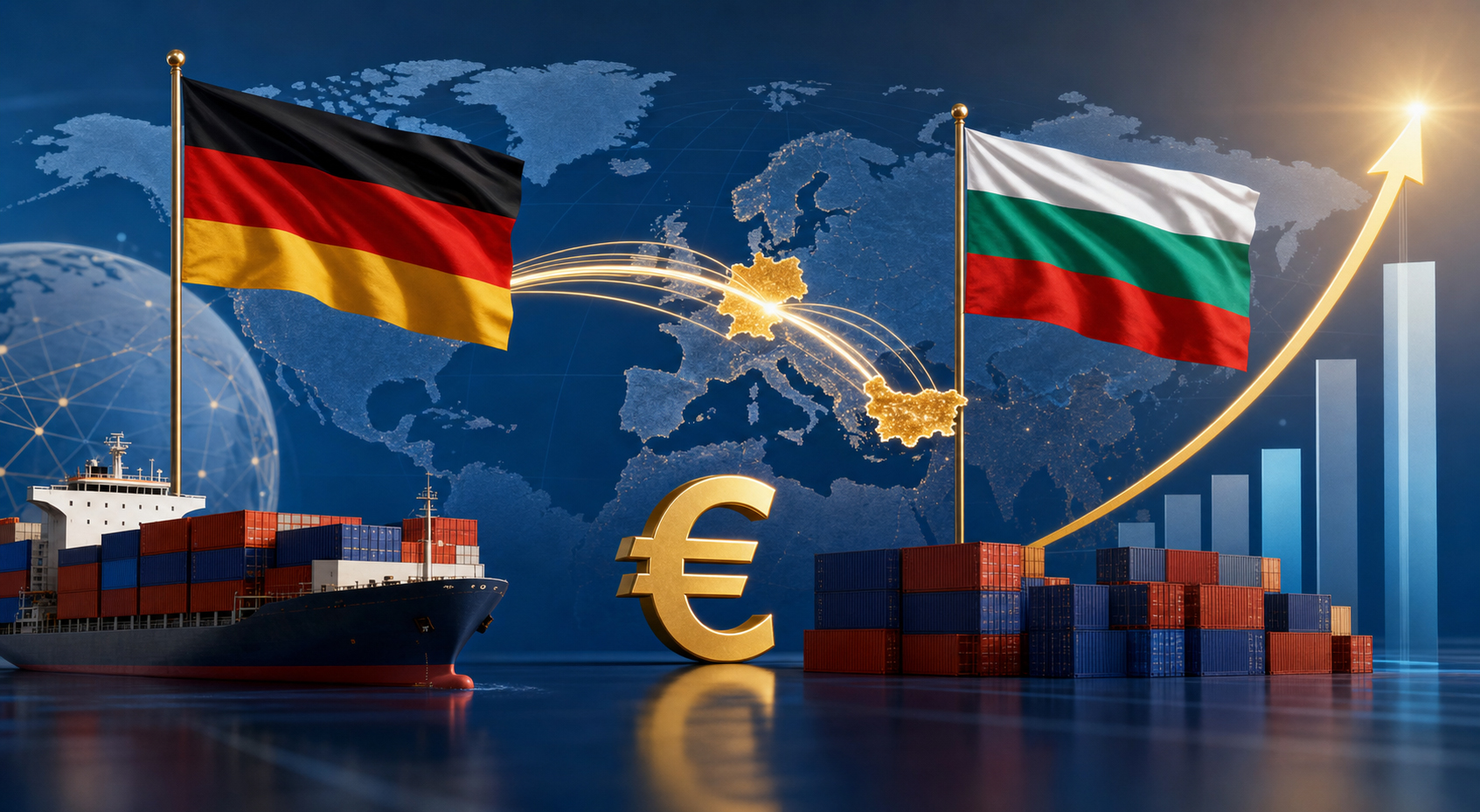
Record trade between Germany and Bulgaria: A potentially explosive economic signal – Image: Xpert.Digital
Hidden beneficiaries of the crisis: Why the German economy is now investing billions in Bulgaria
Goodbye Asia, hello Balkans: How this EU country is becoming the new workshop of German industry
The new Eurozone is booming: That's why Bosch, Lidl & Co. are relocating their operations to the Black Sea
Germany is grappling with high energy prices, excessive bureaucracy, and the creeping threat of deindustrialization. Yet, while the country is intensely debating the loss of global competitiveness and alarming disadvantages as a business location, a remarkable economic success story is unfolding in Southeast Europe. Bulgaria, long perceived as the poorest EU member state, has rapidly and almost unnoticed transformed itself into a strategically indispensable partner for German industry. With a record trade volume of €12.65 billion in 2025, the historic introduction of the euro in early 2026, and a highly skilled, German-speaking workforce, the Balkan state is increasingly attracting the attention of major German corporations and innovative medium-sized businesses. Our comprehensive analysis of the current situation reveals why companies like Bosch, Lidl, and Daimler are no longer focusing on Asia but on the Black Sea nation, what key role the Free State of Bavaria plays in this development, and whether this marks the beginning of a groundbreaking symbiosis or a warning sign for Germany's economic competitiveness.
How a poor EU country is becoming the secret winner of Germany's economic crisis
In 2025, with a foreign trade volume of €12.65 billion, Germany and Bulgaria are more closely intertwined than ever before, and this new record is far more than a statistical footnote. It marks the provisional culmination of a quiet but profound shift in economic power within the European Union, in which a country long considered the poorest member of the community is increasingly emerging as a reliable industrial partner of Europe's largest economy. While Germany has been debating locational disadvantages, high energy prices, and declining competitiveness for years, an economy has developed on the Black Sea coast that is beginning to close precisely those gaps that German companies increasingly perceive as burdens at home. The following analysis contextualizes the current figures, examines the structural drivers of this development, and ventures a well-founded assessment of where this partnership is likely to move in the coming years.
Between the lines of the statistics: What the bare numbers really mean
With a total volume of €12.65 billion, Bulgaria ranks 36th out of 238 partner countries and regions in German foreign trade. At first glance, this ranking seems modest compared to major trading nations like China, the USA, or France. However, the real significance lies not in the absolute size, but in the structure and dynamics of this trade. Between January and October 2025, Germany exported goods worth €5.3 billion to Bulgaria, an increase of 7.2 percent compared to the previous year, while imports from Bulgaria amounted to €5.2 billion during the same period. The resulting German trade surplus of around €84 million is remarkably small and demonstrates that this is not a classic colonial structure where Germany is merely seeking a sales market, but rather a nearly balanced, bilaterally integrated economic area. Bulgaria buys German machinery, vehicles, and food products, while Germany, in return, imports high-quality intermediate goods, electrical engineering products, and recycled metals from Bulgaria. This balance is an indication of an economic relationship that has moved away from the mere supply of raw materials or consumer goods and is increasingly anchored in industrial value chains.
Bavaria as the secret Bulgaria champion of the German economy
Within Germany, this trade relationship exhibits a remarkable regional concentration. In 2025, the Free State of Bavaria recorded a trade volume of approximately €2 billion with Bulgaria, representing about one-sixth of total bilateral trade, even though Bavaria accounts for only a fraction of Germany's economic output. This concentration is no accident, but rather the result of years of targeted location strategies pursued by Bavarian companies, which have a strong presence in the automotive supply industry, mechanical engineering, and the IT sector. Companies such as Bosch, with its engineering center in Sofia, the packaging machinery manufacturer Multivac, and numerous medium-sized automotive suppliers have long since established Bulgaria not merely as a sales market, but as an integral part of their production and development networks. Geographical proximity plays an underestimated role in this: Sofia is reachable from Munich by plane in approximately one and a half to two hours, which significantly facilitates close operational control of German subsidiaries or development centers and gives Bulgaria a logistical advantage over more distant nearshoring locations.
The introduction of the euro as an economic turning point with political undertones
On January 1, 2026, Bulgaria became the 21st member of the European Union to adopt the euro, thus taking a historic step toward integration that is likely to fundamentally change future trade dynamics between the two countries. The binding exchange rate was set at 1.95583 leva per euro, exactly matching the previous central rate in Exchange Rate Mechanism II, in which the lev had participated since July 2020. This eliminates an exchange rate risk for German companies that previously always had to be factored into their calculations, making investment decisions significantly more predictable. At the same time, the path to this accession was anything but smooth. Originally planned for 2024, the introduction of the euro was delayed by two years due to a period of double-digit inflation, and even the final inflation rate of 2.7 percent was only slightly below the reference value of 2.8 percent set by the European Central Bank and the European Commission. Critics argue that, similar to Croatia's accession in 2023, the calculation of this reference value deliberately selected countries with particularly low and particularly high inflation to facilitate Bulgaria's entry. Consequently, public support for the new currency in Bulgaria is lukewarm; nearly half the population expressed skepticism in surveys, and the preparation of the first state budget in euros triggered mass protests with more than 500,000 participants, ultimately leading to the government's resignation.
A country catching up despite political turmoil
Anyone considering Bulgaria's ongoing political crisis, with seven parliamentary elections since 2021 and recurring corruption scandals, might conclude that the country is an unstable and therefore unattractive economic partner. However, the actual growth figures tell a different story. With a gross domestic product that increased by around three percent in 2025, according to the European Commission, Bulgaria is growing significantly faster than the eurozone average of approximately 1.3 percent, and also faster than Germany, whose economy has stagnated or experienced only minimal growth for years. For 2026, most institutions anticipate somewhat more moderate, but still robust, growth of between 2.1 and 3.3 percent, driven primarily by private consumption and increased investment following the introduction of the euro. This discrepancy between political instability and economic stability is typical for Bulgaria and is often overlooked: The close peg of the lev to the euro, which has been in place since 1999, has imposed monetary discipline on the country for decades, cushioning many politically turbulent periods economically. At the same time, more than a fifth of the Bulgarian population still lives below the national poverty line, highlighting the deep social divide between a prosperous, export-oriented business sector and large segments of the population who have so far barely benefited from this economic upswing.
Find a partner in Bulgaria 🇧🇬 🔍🤝 and become a partner ➕

Bulgaria - Find and become a partner - Image: Xpert.Digital
Bulgaria is transforming from an underestimated EU market into a strategic nearshoring hub for European industrial SMEs. With low location costs, EU legal certainty, access to the Eurozone, and strong logistics networks on the Black Sea, the country offers robust alternatives to Asian supply chains.
At the same time, Bulgarian companies also benefit from this growing economic network, which serves as a strong springboard for their own expansion into Germany, Europe and global markets.
More information here:
A thematic hub offering insights and expertise:
- Knowledge platform covering global and regional economies, innovation and industry-specific trends
- A collection of analyses, insights, and background information from our key areas of focus
- A place for expertise and information on current developments in business and technology
- A hub for companies seeking information on markets, digitalization, and industry innovations
Nearshoring boom: From low-wage country to innovation driver – Why Bulgaria is now strategic for German companies
Why German corporations are discovering Bulgaria as an extended workbench
The real driver behind the growing trade volume lies less in traditional goods exchange than in the increasing relocation of production and development capacities by German companies to Bulgaria. The motivation for this is clearly economic: Bulgaria levies the lowest corporate tax rate in the entire European Union at ten percent, complemented by an equally low flat-rate income tax, and even just 7.5 percent for the self-employed. In addition, it boasts very low wages and ancillary wage costs compared to other European countries, favorable commercial rents, and low energy prices. At the same time, the country is a full member of the European Union, the Schengen Area, and now also the Eurozone, thus offering full access to the EU single market and legal certainty according to European standards. This combination of cost advantages and institutional reliability is virtually unparalleled elsewhere in Europe. Concrete examples illustrate the scale of this development: Bosch has expanded its engineering center in Sofia to over 450 employees who develop software for driver assistance systems, automated driving, and electromobility. The discount supermarket chain Lidl maintains its own IT competence center, Lidl Digital, in the Bulgarian capital, developing platforms for online retail. Daimler subsidiary MBition has opened a development office, while Volkswagen's software subsidiary CARIAD is also considering establishing a presence in Sofia. The Aachen-based electric car manufacturer Next.e.GO Mobile has announced plans to build a microfactory in Lovech, which would make it the first German automaker to produce in Bulgaria. Commerzbank is also planning to establish an IT center with several hundred specialists. A remarkable 80 percent of all sensors installed in European vehicles are already manufactured in Bulgaria, a fact that impressively demonstrates Bulgaria's deep industrial integration into the European, and especially the German, automotive value chain.
The skilled labor factor: Bulgaria's underestimated asset
A key, often underestimated reason for Bulgaria's attractiveness as an investment location lies in the quality and focus of its education system. More than 60,000 students graduate annually, roughly half of them in subjects relevant to IT, engineering, and linguistics. Many Bulgarian university graduates also have international experience, particularly in Germany, speak fluent German or English, and thus possess a cultural understanding that significantly simplifies collaboration with German parent companies. This combination of professional qualifications, language skills, and a familiar work culture explains why Bulgaria has become a preferred location in recent years for IT nearshoring, business process outsourcing, and increasingly, research and development in the automotive sector. At the same time, however, this also reveals one of the country's greatest structural weaknesses: the competition for these highly qualified professionals is now so intense that many companies, including German subsidiaries, are finding it increasingly difficult to fill vacancies. The ongoing emigration of young, well-educated Bulgarians to wealthier EU countries further exacerbates this problem and represents one of the greatest long-term risks to the sustainability of the Bulgarian growth model.
Strategic realignment instead of deindustrialization: The geopolitical dimension
The growing interconnectedness between Germany and Bulgaria cannot be viewed in isolation from the broader geopolitical and economic shifts of recent years. Following the experiences of disrupted global supply chains during the pandemic and the energy price shocks triggered by Russia's war against Ukraine, German companies are increasingly seeking production locations that are geographically closer, politically more stable, and legally anchored within the EU framework than many Asian locations. Bulgaria benefits in two ways: it offers the cost advantages previously sought almost exclusively in the Far East, and the legal and logistical security of an EU member state. Its strategic location on the Black Sea, with access to key port infrastructure, and its connection to European Corridor VIII, which links Eastern and Western Europe, also significantly reduces transport times to Western Europe compared to deliveries from Asia. However, this development should not be prematurely interpreted as a sign of Germany's deindustrialization. Rather, a division of labor is emerging in which Germany is increasingly concentrating research, development, and high-end manufacturing, while more labor- and cost-intensive production steps are being outsourced to Bulgaria and similar locations. Whether this will actually develop into a mutually beneficial symbiosis, or whether Germany will lose valuable industrial substance in the medium term, remains one of the central economic policy issues of the coming years.
Opportunities and risks of an unequal but growing partnership
The available data paints a picture of an economic relationship that is in a crucial transitional phase. The record figure of €12.65 billion in 2025 is impressive, but it should not obscure the fact that Bulgaria still plays a comparatively minor role compared to Germany's major trading partners, ranking only 36th in Germany's foreign trade rankings. The true significance of this relationship lies in its growth dynamics and structural quality. The combination of stable economic growth, significantly above the Western European average, the newly achieved currency stability through the introduction of the euro, low tax rates, and a growing number of highly skilled, German-speaking professionals makes Bulgaria one of the most attractive locations for German investors within the enlarged European Union. At the same time, considerable risks remain: persistent political instability with frequent changes of government, a deeply entrenched corruption problem in politics and public administration, a growing shortage of skilled workers, and the social divide between a thriving business sector and a population that continues to be largely affected by poverty. For German companies facing location decisions, this results in a nuanced assessment: Bulgaria offers significant cost and growth advantages, but simultaneously requires careful consideration of institutional risks that differ considerably from those in Western European locations. The coming years, particularly the initial phase following the introduction of the euro, will reveal whether Bulgaria can leverage the resulting momentum to establish itself permanently as Germany's preferred industrial partner, or whether political setbacks will once again hamper this positive trend.
🎯🎯🎯 Data-driven B2B industry hub as a quasi-in-house solution

The quasi-in-house solution: How Xpert.Digital closes operational gaps in B2B marketing and sales – Smart Content-Driven Business - Image: Xpert.Digital
Xpert.Digital is a data-driven B2B industry hub led by Konrad Wolfenstein . The company acts as an external, quasi-in-house solution for industrial partners, closing operational gaps in marketing, content, and sales – without requiring additional resources on the client side.
More information here:
Your global marketing and business development partner
☑️ Our business language is English or German
☑️ NEW: Correspondence in your native language!

Konrad Wolfenstein
I and my team are happy to be available to you as your personal advisor.
You can contact me by filling out the contact form here [email protected]:or simply call me at +49 7348 4088 965. My email address is
I'm looking forward to our joint project.





