
Oil market on borrowed time: Deceptive calm at the pump – Why the real oil price shock is yet to come
Xpert Pre-Release

Available in 27 languages 📢
Prefer Xpert.Digital on GoogleⓘPublished on: August 3, 2026 / Updated on: August 3, 2026 – Author: Konrad Wolfenstein
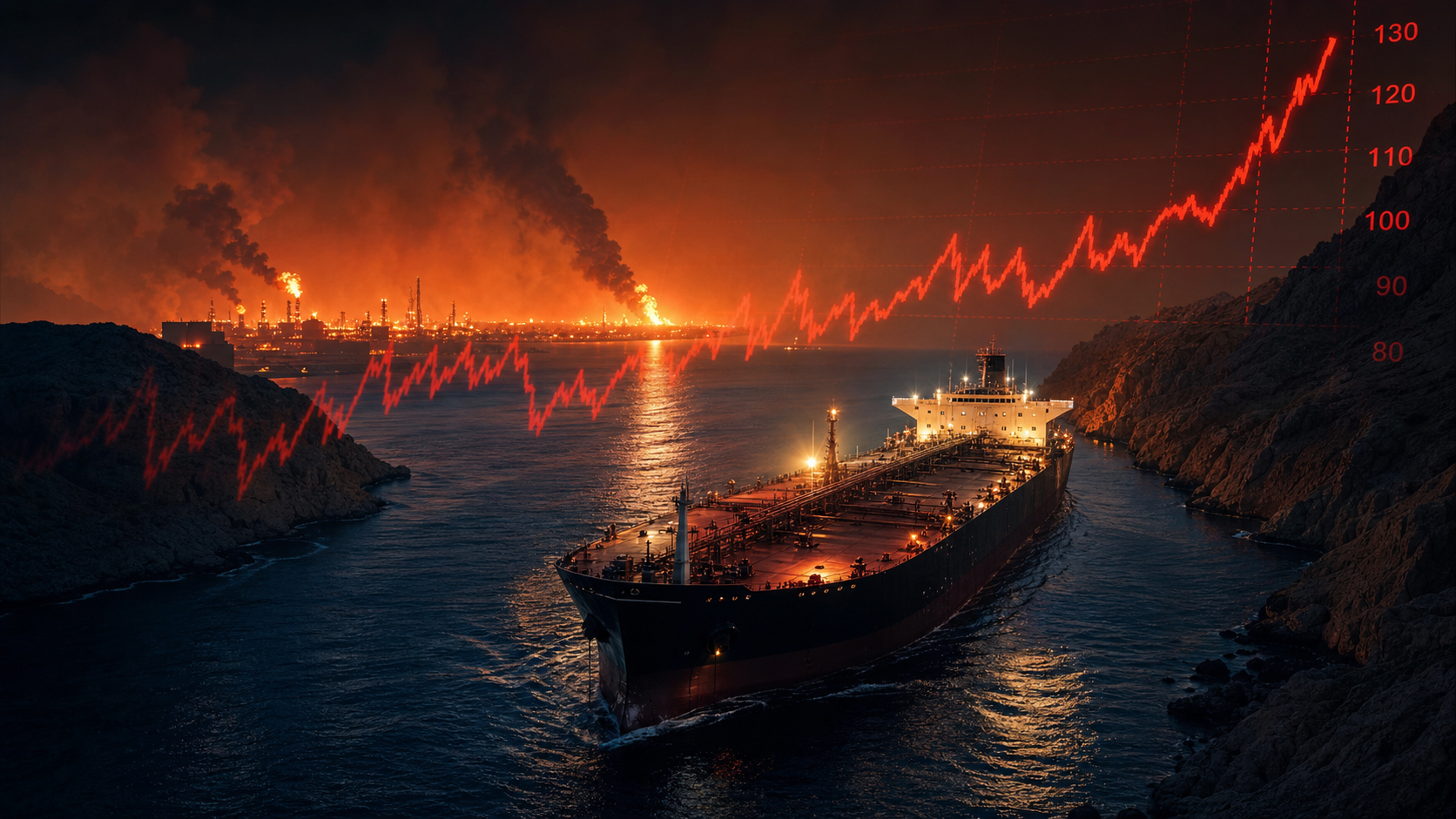
Oil market on borrowed time: Deceptive calm at the pump – Why the real oil price shock is yet to come – Image: Xpert.Digital
Countdown to crisis: If Trump's risky oil gamble fails, price collapse threatens – Why the current price easing is a dangerous illusion
Global energy crisis: Why the worst is yet to come for motorists and the economy
For months, the geopolitical conflagration in the Middle East has held the world in suspense – and yet we seem to be filling up our tanks without a care in the world. Although the Strait of Hormuz, one of the most vital arteries of global oil supply, is effectively blocked by the military escalation in the Persian Gulf, the truly massive, existential price shock on the markets has so far failed to materialize. But anyone who believes the worst is over is under a very dangerous illusion. The current calm on the markets is not a sign of stability, but rather the result of drastic emergency measures: We owe it to the historic and rapid depletion of strategic reserves, a painful dampening of global demand, and, not least, a high-risk bet by the financial markets on the US government's political concessions. A closer look at the raw figures and the inexorably expanding conflict zones reveals unequivocally: The global oil market is on probation. If the buffers run out and diplomatic efforts ultimately fail, the real catastrophe for the global economy is yet to come.
Why the calm at the petrol stations is deceptive and the real price shock is yet to come
Since the outbreak of the Iran-Iraq War in late February 2026, the global economy has been grappling with a paradox. One of the planet's most vital oil transport routes, the Strait of Hormuz, has been effectively blocked for months, yet the feared global supply catastrophe has so far failed to materialize. This apparent stability, however, masks a structural vulnerability that could dramatically escalate in the coming months if the conflict in the Persian Gulf is not resolved politically.
A war of habituation: How the perception of the crisis has changed
Wars that drag on for months without a clear turning point alter the psychological perception of the public and the markets. Following the killing of Ayatollah Ali Khamenei and the Israeli and American airstrikes against the Iranian regime, the price of oil soared within weeks to well over $100 per barrel, peaking at times to nearly $120 to $126. The investment bank Bernstein had even considered prices between $120 and $150 possible in an extreme scenario of a protracted conflict, while Iranian military officials openly threatened oil prices of up to $200 to put pressure on Western economies.
A temporary ceasefire between Washington and Tehran in April 2026 brought about a significant easing of tensions. The Brent crude price fell by around 16 percent to approximately $92, accompanied by an even sharper decline in European natural gas prices of up to 20 percent. However, the positions of the two sides in the conflict have since diverged further: The US government declared the ceasefire a failure, while the Iranian leadership dismissed the previous negotiations as useless and closed the strait again. The oil price is currently only about a quarter above pre-war levels, which many market participants mistakenly interpret as a sign of de-escalation, even though the underlying supply situation remains fragile.
The deceptive balance: Why disaster has been averted so far
The global economy has so far only escaped the feared energy catastrophe because several balancing mechanisms were activated simultaneously and more quickly than analysts had anticipated. However, the head of the International Energy Agency, Fatih Birol, has already issued a stark warning that the situation could worsen at any time given the renewed escalation of hostilities, and called for the complete and unconditional opening of the Strait of Hormuz to prevent a further deterioration of the global energy security situation.
Among the key mitigating factors is the partial rerouting of oil shipments via alternative pipelines, such as the Saudi East-West pipeline to Yanbu on the Red Sea and the Abu Dhabi crude oil pipeline to Fujairah in the United Arab Emirates on the Gulf of Oman. However, these capacities cover only a fraction of the volumes normally transported through the Strait of Hormuz, through which approximately 17 to 20 million barrels of crude oil flowed daily before the war began, representing about one-fifth of global oil production. At the same time, other oil-producing countries, particularly the United States, Brazil, Venezuela, Kazakhstan, and Russia, have significantly increased their exports to fill some of the resulting gap.
Another key buffer was the drastic reduction of Chinese oil imports by almost half. This was made possible by the country's enormous strategic reserves, allowing Beijing to make a significant contribution to stabilizing the global market. Most consequential, however, was the historic, coordinated release of strategic oil reserves by the member countries of the International Energy Agency (IEA). On March 11, 2026, the 32 IEA member states unanimously decided to release more than 400 million barrels from their emergency reserves – the largest such action in the organization's history. Approximately 271.7 million barrels came from government stockpiles, and another 116.6 million barrels from mandated industrial reserves, with the vast majority originating from North and South America. Germany alone contributed around 19.5 million barrels. In total, almost 290 million barrels have actually been released into the market since the decision.
A calculation that doesn't add up: The structural deficit in the oil market
Despite these massive interventions, figures from the International Monetary Fund show that in the first months of the war—March, April, and May—only around seven million barrels of crude oil per day reached the global market from the Persian Gulf, instead of the usual 20 million barrels. Alternative oil-producing countries were only able to absorb a comparatively small portion of this enormous shortfall, 1.7 million barrels. Far more crucial for stabilization were the reduction in global oil consumption by 5.8 million barrels and the use of reserves amounting to 4.1 million barrels per day.
This breakdown reveals the fundamental weakness of the current situation: a significant portion of the stability achieved so far is not based on genuine additional supply, but rather on the consumption of finite reserves and a dampening of demand that is painful for many economies and cannot be sustained indefinitely. As one US economics portal aptly put it, the oil market is effectively living on borrowed time. The International Monetary Fund also explicitly warns that current prices do not fully reflect the actual historic disruption to oil supplies. At the beginning of the war, markets still had sufficient buffers to absorb the shock. However, this margin is shrinking continuously because reserve capacities have already been activated, demand has already fallen, and inventories have already been depleted. If these reserves are not replenished promptly, the global economy will face the next shock from a significantly weaker starting position, which, given the recent renewed escalation, poses an acute risk.
Also noteworthy is the historical comparison: Measured by the sheer extent of the supply disruption, the current war with Iran is already considered by the International Monetary Fund to be more consequential than the Iran-Iraq War of the 1980s or the two oil crises of the 1970s, even though those conflicts lasted considerably longer. This underscores the extraordinary importance of the Strait of Hormuz for today's far more interconnected global economy.
🎯🎯🎯 Data-driven B2B industry hub as a quasi-in-house solution

The quasi-in-house solution: How Xpert.Digital closes operational gaps in B2B marketing and sales – Smart Content-Driven Business - Image: Xpert.Digital
Xpert.Digital is a data-driven B2B industry hub led by Konrad Wolfenstein . The company acts as an external, quasi-in-house solution for industrial partners, closing operational gaps in marketing, content, and sales – without requiring additional resources on the client side.
More information here:
Oil price poised for breakout: Why the current calm in the markets is deceptive and the TACO trade against Trump is now faltering
New front lines: When the crisis spreads to further bottlenecks
The danger is no longer confined to the Strait of Hormuz. Houthi militias in Yemen, allied with Iran, have begun shelling tankers at the entrance to the Red Sea and are threatening to block this crucial waterway for global trade. This would not only jeopardize the remaining Saudi Arabian oil shipments via the Red Sea, but also severely impact global container traffic through the Suez Canal. Adding to the tension, drone attacks have now even set fire to gas tankers in the Egyptian Mediterranean port of Damietta, as confirmed by Egyptian authorities. The crisis thus threatens to escalate from a regional conflict in the Persian Gulf into a widespread threat to the maritime trade infrastructure of the entire Middle East.
Parallels can also be drawn in the related liquefied natural gas (LNG) market: As early as March 2026, the United States had to compensate for war-related supply disruptions from Qatar, illustrating how closely intertwined oil and gas markets are in the current crisis. Even after the announced reopening of the Strait of Hormuz, industry experts anticipate a protracted recovery phase. The shipping company Hapag-Lloyd stated that a return to logistical normalcy will take at least three more months even after the strait reopens, as insurance issues, route planning, and mine clearance require considerable lead time. Bundesbank President Joachim Nagel also warned that the global oil supply will only normalize gradually.
The risky calculation: Why the bet on Trump's change of heart is shaky this time
A key, yet often overlooked, reason for the relative calm of the financial markets lies in a speculative calculation known among market participants as the so-called TACO trade – an acronym for the bet that Trump, after making bombastic threats in international conflicts, will ultimately always back down. Many investors continue to assume that while the American president uses tough rhetoric, he cannot afford persistently high energy prices given the upcoming congressional elections in the fall of 2026 and will therefore ultimately push for a diplomatic solution.
This gamble, however, is proving significantly riskier in the current phase of the conflict than in previous episodes. Unlike the first ceasefire attempt in April, mutual trust between Washington and Tehran has now completely shattered, as both sides have broken the previously concluded agreement and are refusing to budge from their respective maximalist demands. So far, the American president has shown no signs of compromise, which is increasingly calling into question the fundamental assumptions of many market participants. Should these expectations in the financial markets shift, it is likely to lead to abrupt and sharp price swings, since a significant part of the current price stabilization is based on a potentially flawed political forecast rather than solid fundamentals.
Looking ahead: Between price corridor and risk of outbreak
The crucial question for the coming months is whether the oil price will continue to move within its current range of roughly $80 to $100 per barrel, or whether a significant upward breakout is imminent. The CEO of the Italian oil company ENI warned several weeks ago that prices are likely to break out of this range by early 2027 at the latest, should the war with Iran continue unabated. This assessment aligns with the analysis of the International Monetary Fund, which concludes that alternative oil-producing countries cannot adequately close the resulting supply gap in the long term because the structural shortfall in the Persian Gulf is simply too large to be compensated for by increased production from other countries.
From an economic perspective, the current lull in the oil market is not a sign of structural stability, but rather the result of a unique combination of short-term, yet irreversible, emergency measures. The strategic reserves of industrialized countries have fallen to a historically low level, dampening demand due to high prices is increasingly weighing on the economies of both emerging and industrialized nations, and the geopolitical situation shows no signs of lasting improvement. The only viable way to prevent a historic energy price shock with far-reaching consequences for inflation, economic growth, and social stability in numerous countries lies in a lasting and reliable peace in the Persian Gulf. As long as this remains elusive, the oil market will remain in a fragile state of flux, at risk of collapse at any time.
📈🚀 From visibility to trust 👀🤝 Your scalable path with Xpert.Digital

From visibility to trust: Your scalable path with Xpert.Digital - Image: Xpert.Digital
In industrial B2B, sustainable business relationships rarely emerge overnight. They develop step by step – through visibility, professional relevance, recurring touchpoints, and growing trust. Xpert.Digital's 4-stage model addresses precisely this: It offers a structured path that begins with a manageable entry point and can evolve into deeper collaboration in business development if needed.
Instead of relying on loud marketing promises, this model puts the relationship at the forefront. Companies start with clearly defined, easily calculable measures and then decide, based on their own experience, how far they want to expand the collaboration. A key factor for this undisturbed trust-building process: The platform completely avoids annoying advertising ads, so the editorial focus remains solely on the companies' expertise.
More information here:
Your global marketing and business development partner
☑️ Our business language is English or German
☑️ NEW: Correspondence in your native language!

Konrad Wolfenstein
I and my team are happy to be available to you as your personal advisor.
You can contact me by filling out the contact form here [email protected]:or simply call me at +49 7348 4088 965. My email address is
I'm looking forward to our joint project.










