
Igniter and thermal batteries: No rocket can fly without this component – The secret arms boom in Bavaria
Xpert Pre-Release

Available in 27 languages 📢
Prefer Xpert.Digital on GoogleⓘPublished on: August 15, 2026 / Updated on: August 15, 2026 – Author: Konrad Wolfenstein
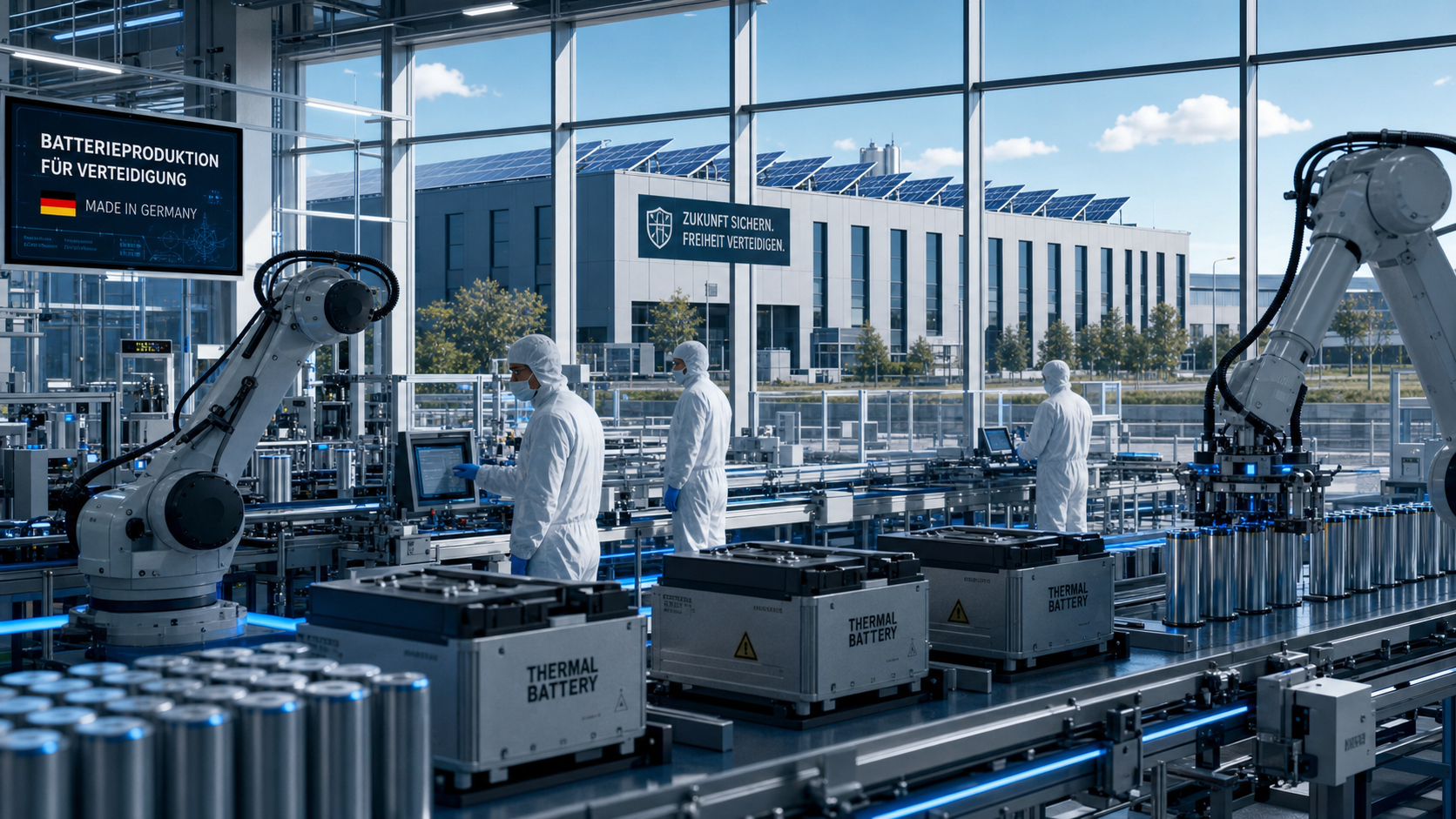
Igniter and thermal batteries: No rocket can fly without this component – The secret arms boom in Bavaria – Creative image on the topic, created with AI: Xpert.Digital
From car manufacturer to arms manufacturer: Why skilled workers are now switching industries en masse
Armaments instead of venture capital: The incredible figures behind Germany's new boom
Billion-dollar boom in the provinces: How a small battery factory is becoming a turning point in history
The inauguration of a factory for specialized batteries in rural Bavaria might sound like routine business at first glance. But the new "Battery Tech Hub" of the company Diehl Defence in Röthenbach an der Pegnitz is far more than an ordinary industrial building: it is the concrete symbol of a military paradigm shift. While traditional sectors like the automotive industry are faltering, the German defense industry is experiencing an unprecedented multi-billion-euro boom – fueled by amended laws, gigantic special state funds, and the acute threat situation in Europe. This in-depth look at an industry in a rapidly changing state of emergency reveals how seemingly insignificant thermal batteries have become the bottleneck of modern warfare, why defense companies are suddenly creating habitats for sand lizards, and how the shortage of skilled workers is being solved almost automatically by the decline of other sectors.
Defense capital instead of venture capital: How a Bavarian battery factory became a symbol of Germany's turning point
When sand lizards and detonators become neighbors – Germany's most profitable growth industry is rearmament
The inauguration of a new production building is not usually an event that garners national attention. However, when the Bavarian Interior Minister travels to Röthenbach an der Pegnitz to personally open a facility for specialized batteries, it speaks volumes about the state of European security architecture, rather than about the building itself. Diehl Defence has commissioned a new building, its so-called Battery Tech Hub, at its Röthenbach an der Pegnitz site. Operating as a subsidiary, Diehl Energy Products GmbH, the facility is expected to employ well over 180 people. Bavarian Interior Minister Joachim Herrmann used the occasion to underscore the geopolitical importance of battery cells for the defense sector, emphasizing that security and freedom are not givens but must be defended daily. This choice of words by a state minister at the inauguration of a factory hall marks a break with decades of German reticence regarding the public celebration of defense capabilities.
The underestimated key component of modern warfare
Batteries are among those components that are rarely mentioned in public debates about rearmament, even though they are functionally indispensable. Without detonators and thermal batteries, missiles, guided missiles, and defense systems remain useless shells, because the electronic control, ignition, and power supply of these systems depend entirely on highly specialized battery technologies. Diehl Energy Products primarily produces thermal batteries based on the technology of the global market leader EaglePicher Technologies, as well as customized battery packs and, for over two decades, lithium backup batteries. The fact that such a niche product now justifies a dedicated new factory building of approximately 10,800 square meters illustrates how sharply the demand for defense electronics has increased in recent years. The new building comprises about 7,000 square meters for manufacturing, development, and logistics, as well as around 3,700 square meters of office space, complemented by a parking garage with over 600 spaces for the entire site.
Growth that exceeds one's own planning
Particularly revealing is the observation that global demand for specialized batteries rose faster than anticipated when planning began in 2024. To address this, an additional extension was built alongside the main building, significantly increasing production capacity for detonators and thermal batteries even during the construction phase. Originally, at the groundbreaking ceremony in February 2024, the plan called for space for 120 employees; this target has since risen to over 180. This adjustment midway through construction indicates that the order situation in the European defense industry is more volatile and dynamic than traditional investment planning typically anticipates. Anyone planning a defense manufacturing plant today must apparently assume that actual demand will exceed the initial capacity estimates even during the construction period.
The corporation benefits from the tailwind of the arms race
Diehl Defence is no longer the smaller division within the Nuremberg-based family-owned group, but rather its most important growth driver. In fiscal year 2025, the entire Diehl Group achieved consolidated sales of €5.42 billion, an increase of 15.4 percent compared to the previous year, while net profit rose from €343.5 million to €492.3 million. The defense division's share of this result grew disproportionately: Diehl Defence increased its sales by almost 28 percent to around €2.33 billion, meaning the division now contributes almost 43 percent to consolidated sales. At the same time, the defense division's workforce grew by more than 800 employees in 2025 to over 5,400; in the medium term, the group plans to employ around 7,000 people in this area alone. For the current fiscal year, the Group's Executive Board expects a further jump in sales to around €6 billion, driven in particular by the internationally popular IRIS-T air defense system.
An investment offensive with billions in volume
The new building in Röthenbach is not an isolated project, but rather part of a group-wide investment program of approximately €1.5 billion, designed to modernize and expand the infrastructure and production lines at all Diehl Defence locations. Strategic priorities of this investment wave lie in the defense against drone and hypersonic threats, as well as the integration of artificial intelligence into networked defense systems. In doing so, the company is not only responding to acute munitions and equipment needs, but also positioning itself for the next generation of asymmetric threat scenarios, ranging from swarms of small drones to supersonic and hypersonic weapons. An investment volume of this magnitude, spread across multiple locations and technology fields, demonstrates that Diehl is not reacting to a short-term surge in demand, but rather anticipating a structural and multi-year shift in the European security architecture.
Bavaria as a testing ground for a new permitting law
A key factor in the rapid realization of the battery technology hub was a new state law specifically designed to accelerate defense projects. Bavaria was the first German state to enact a law to support the German Armed Forces (Bundeswehr) in 2024 and followed up in April 2026 with the Law to Promote the Defense Industry in Bavaria, which came into effect on May 1, 2026. The aim of this law is to reduce regulatory hurdles for the development, testing, and production of defense equipment and to position Bavaria as a leading region for innovation in the defense sector. Specifically, the law provides for simplifications and expedited processes in building regulations and historic preservation, gives greater weight to the interests of the defense industry in state planning, and offers companies additional support in raising capital, including through the Bavarian Development Bank (LfA). For locations like Röthenbach, this means in practice that construction projects that previously required years of approval processes can now be realized in a fraction of the time.
Green paint for an arms factory
Unusual for an arms project is the demonstrative emphasis on ecological standards. According to Diehl Defence, the new building uses efficient heat pumps for heating and cooling to minimize energy consumption and will be equipped with a photovoltaic system in the future. During construction, targeted environmental mitigation measures were also implemented, including reforestation, the creation of habitats for sand lizards, and the installation of nesting boxes for bats and birds. This combination of munitions equipment and nature conservation measures may seem contradictory at first glance, but it reflects a deliberate communication strategy by the arms industry, which seeks to present itself as a responsible, ESG-compliant industrial partner. For a company increasingly reliant on capital markets, public funding, and public acceptance of its site expansions, such measures are less about cosmetics and more about strategic necessity to minimize resistance in permitting processes and from the local public.
Hub for Security and Defense - Advice and Information

Hub for Security and Defense - Image: Xpert.Digital
The Security and Defence Hub offers expert advice and up-to-date information to effectively support companies and organizations in strengthening their role in European security and defence policy. Working closely with the SME Connect Defence Working Group, it particularly promotes small and medium-sized enterprises (SMEs) that wish to further develop their innovative capacity and competitiveness in the defence sector. As a central point of contact, the Hub thus creates a crucial bridge between SMEs and European defence strategy.
Related to this:
Germany's defense industry is undergoing a transformation: How Diehl Defence is profiting from the new defense budget
The fiscal foundation of the arms buildup
The investment decisions of Diehl and other defense companies do not occur in a vacuum, but are a direct response to a historic realignment of public budgets. The German federal budget for 2026 projects total defense spending of €108.2 billion, comprised of €82.7 billion from the regular defense budget and €25.5 billion from the special Bundeswehr fund. Further increases to €139.7 billion are already budgeted for 2027 and €153.9 billion for 2028, underscoring the unprecedented nature of this fiscal realignment. Approximately €47.9 billion is earmarked for military procurement alone in 2026, of which €12.67 billion from the regular defense budget and a further €2.13 billion from the special fund are specifically allocated for ammunition. This scale was only made possible by the 2022 amendment to the Basic Law, which exempted defense spending from the debt brake, and by the original special fund for the German Armed Forces amounting to €100 billion. For companies like Diehl Defence, this represents a rare combination of reliable, multi-year guaranteed demand and political support, a combination that currently exists in almost no other German industrial sector.
Diehl in the competition among Germany's major arms manufacturers
Diehl Defence is part of a broader trend in which German defense companies are expanding their production capacities at an unprecedented pace. Rheinmetall, its largest German competitor, achieved group sales of around €9.75 billion in 2024, of which approximately €8.4 billion came from the security sector, and invested €766 million in tangible and intangible assets in the same year, representing an investment rate of 7.9 percent. Rheinmetall also broke ground in February 2024 on a new ammunition factory in Unterlüß with a production capacity of 200,000 rounds of artillery ammunition per year, highlighting the parallel timing and industry-wide nature of this capacity expansion. In comparison, Diehl's €1.5 billion investment program is of a similar scale relative to its revenue, but focuses more on guided missile technology, air defense, and the necessary electronic and energy components rather than on conventional artillery ammunition. This division of labor among German defense companies demonstrates that the current arms buildup is not just affecting a single company, but an entire industrial ecosystem.
Skilled workers as the scarcest resource of this turning point
An often underestimated aspect of capacity expansion is the question of where the necessary personnel will come from. Diehl's defense division increased its workforce by more than 800 people to over 5,400 in 2025 alone and plans for around 7,000 employees in the medium term. Remarkably, defense division head Helmut Rauch stated that, given the weakening automotive industry, they are currently receiving many applications and there are no recruitment bottlenecks. This suggests a tectonic shift in the German labor market: skilled workers being laid off in the automotive industry due to the transition to electromobility and weak sales figures are finding a natural alternative in the booming defense industry. For regions like Middle Franconia, which are home to both automotive suppliers and defense manufacturing sites, this presents a structural opportunity to maintain industrial employment despite the crisis in the traditional automotive sector.
The geopolitical logic behind the battery factory
Investment in specialized batteries cannot be considered in isolation from the international security situation. Russia's ongoing war against Ukraine, the intensified discussion about a possible escalation of the conflict into NATO territory, and the increasing threat from drone swarms and hypersonic weapons have dramatically increased the demand for European air defense. Diehl now supplies its IRIS-T system to several European customers, which directly explains why the underlying fuse and battery technology could become a bottleneck if production capacities do not grow accordingly. Furthermore, the German government is providing an additional €11.5 billion in 2026 as part of its so-called capacity-building program for states attacked in violation of international law, primarily to support Ukraine. These funds will flow, at least in part, into orders placed with German defense manufacturers, thus reinforcing the existing demand dynamic, which Diehl is addressing with its capacity expansion in Röthenbach.
Opportunities and risks of a one-sided growth story
From an economic perspective, the question arises as to how sustainable this growth model actually is. Current demand for military equipment is based primarily on political decisions and geopolitical tensions, not on an organically growing civilian market. Should the security situation in Europe ease, or should future federal governments reduce defense spending again due to fiscal constraints, the currently high investment rates in capacity building could quickly lead to overcapacity. At the same time, a look at the planned budget figures up to 2028, with a further increase to €153.9 billion, shows that the political commitment to high defense spending is considered secure in the medium term. For companies like Diehl Defence, this means an exceptionally high degree of planning certainty, but coupled with a structural dependence on government contracts and the broader political climate, which can naturally change more rapidly than a multi-year investment decision in concrete and machinery.
Regional value creation and industrial structural change
For the Nuremberg region, and especially for Röthenbach an der Pegnitz, the expansion of Diehl's sites has considerable structural policy significance. In addition to the battery technology hub, further buildings for administration, production, integration, logistics, system testing, and education and training will be constructed at the site by the end of 2026. This concentration of investment at a single location not only creates direct jobs at Diehl itself, but also typically attracts suppliers, service providers, and skilled workers from the surrounding area, thus generating a regional multiplier effect. At the same time, the economic character of the region is changing: where automotive suppliers once formed the industrial core, the defense industry is now moving more into the focus of local value creation. This shift is part of a larger nationwide trend in which traditional industrial regions are realigning their economic base in the wake of the changing times in security policy.
An industry in a state of emergency
The opening of the battery tech hub in Röthenbach is ultimately more than just a minor business development: it is a case study of the fundamental transformation that German industrial and security policy has undergone since the watershed year of 2022. Within just a few years, the defense industry has transformed itself from a politically sensitive niche segment into one of the most dynamic growth sectors of the German economy, fueled by record sales, double-digit growth rates, and unprecedented fiscal support from the government. At the same time, the industry remains caught in a peculiar dilemma: it must gain public acceptance for products designed for destruction, and it is doing so, among other things, through environmental compensation measures and by emphasizing its role as a reliable employer in economically disadvantaged regions. Whether this growth model will be sustainable beyond the next decade will depend significantly on whether the underlying geopolitical threat persists and whether the political will to continue increasing defense spending can be maintained in a potentially more fiscally strained future.
Consulting - Planning - Implementation

Markus Becker
I would be happy to serve as your personal advisor.
Head of Business Development
Chairman SME Connect Defense Working Group
Consulting - Planning - Implementation
Konrad Wolfenstein
I would be happy to serve as your personal advisor.
You can contact me at wolfenstein∂xpert.digital or
Just call me on +49 7348 4088 965 .





