
Kakinada is set to become India's new logistics hub – but will more infrastructure be enough?
Xpert Pre-Release

Available in 27 languages 📢
Prefer Xpert.Digital on GoogleⓘPublished on: November 5, 2026 / Updated on: November 5, 2026 – Author: Konrad Wolfenstein
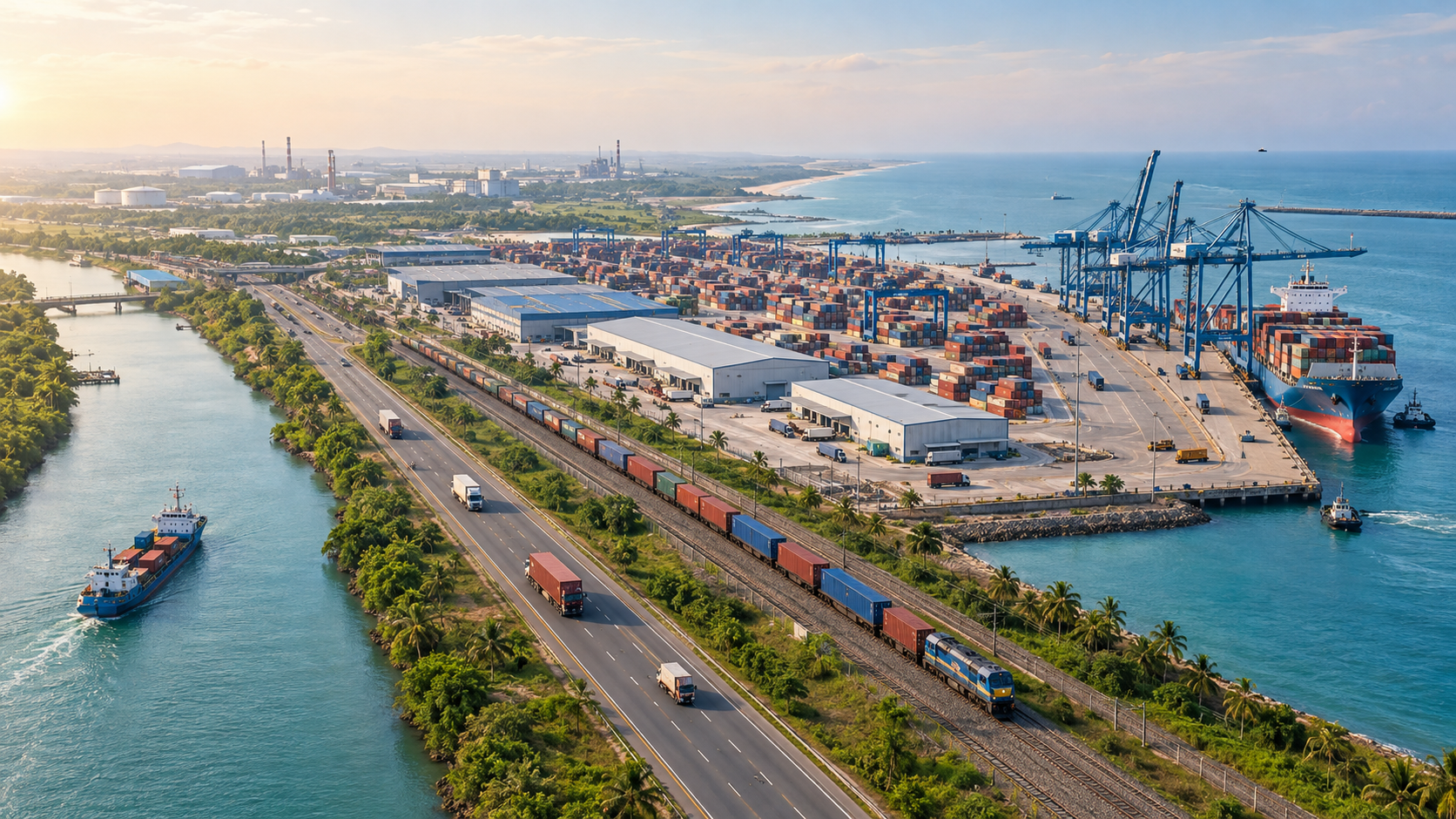
Kakinada is set to become India's new logistics hub – but will more infrastructure be enough? – Creative image on the topic, created with AI: Xpert.Digital
More roads, more port traffic: What could really make Kakinada competitive
India's port plans: Can Kakinada generate more prosperity from increased cargo?
Kakinada on the rise: Why roads and ports alone won't trigger an export boom
Andhra Pradesh aims to develop Kakinada into an international logistics and export hub. To achieve this, port facilities will be better integrated with roads, railways, and inland waterways. The starting point is impressive: In the 2025/26 fiscal year, Kakinada Deep Water Port, Anchorage Port, and the nearby Rava Port together handled 22.42 million tons of goods. All ports in the state reached approximately 210 million tons – twelve percent more than the previous year. At the same time, numerous road projects are underway in Andhra Pradesh, with more planned.
However, large cargo volumes and extensive construction projects do not yet answer the crucial question: Will Kakinada actually become more economically competitive as a result? A port does not become an international hub simply by handling more freight. The decisive factor is whether goods can be reliably transported between production facilities, roads, railways, and the port – and whether additional services, processing, and industry develop locally. Kakinada's long-term success therefore depends less on individual large-scale projects than on how well infrastructure, businesses, and public administration work together.
Kakinada and India's export economy: How port infrastructure can become a competitive business location
More roads, more quays, more freight – but does this also lead to more prosperity?
Andhra Pradesh aims to develop Kakinada into an international logistics and export hub. The focus is on connecting existing port facilities with roads, railways, and inland waterways. The project builds on an already significant economic foundation: In the 2025/26 financial year, Kakinada Deep Water Port handled 18.42 million tons, Anchorage Port 3.42 million tons, and the nearby Rava Port a further 0.58 million tons. Together, these three locations accounted for 22.42 million tons. All of Andhra Pradesh's ports handled approximately 210 million tons, a 12 percent increase over the previous year. Simultaneously, 104 road projects, totaling 1,967 kilometers and representing an investment of 38,815 crore rupees, are underway in the state. An additional 51 projects, covering 2,624 kilometers, are planned. The total associated investment exceeds 100 crore rupees.
These figures illustrate the state government's ambitions. However, they do not yet answer the crucial economic question: Can the expansion of individual transport routes create a cohesive production, trade, and logistics system that makes companies permanently more competitive?
A port doesn't become an international hub simply because more goods pass through its docks. Crucially, it depends on how reliably it is connected to its economic hinterland, what services develop around it, and how much additional value creation remains in the region. Kakinada's prospects, therefore, depend less on a single major project than on the quality of the overall interplay between infrastructure, industrial policy, private investment, and public administration.
A maritime base with economic weight
Kakinada is not starting from scratch. The region boasts various maritime facilities, including the deep-water port, the anchorage port, the fishing port, and other port sites and facilities in the vicinity of Yanam and the special economic zone, as outlined in the development plan. This infrastructure provides a foundation whose economic benefits could be enhanced through better integration.
The diversity of facilities is initially an advantage. Different goods and business groups require different services. Fishing companies have different needs than industrial shippers or agricultural exporters. A high-performing location must take these differences into account, instead of processing all goods flows according to the same pattern.
The three ports with specific cargo throughput figures account for just under 10.7 percent of Andhra Pradesh's total port throughput. This share represents a significant scale, but should not be equated with the region's full economic weight. It encompasses neither all maritime activities nor the local value added through processing, storage, or services.
This distinction is crucial. A location can handle large quantities of goods and yet generate only limited income if it primarily serves as a transit point. Conversely, specialized services or the processing of exportable products can generate considerable economic impact with comparatively smaller transport volumes.
The real change in strategy lies behind the harbor frontage
The core concept of the project is to no longer view ports merely as docking points. They should become trading centers that connect agriculture, fishing, and industry with national and international markets.
This shifts the focus from the individual terminal to the entire supply chain. For an exporter, the port's efficiency begins with the collection of their goods. It continues through transport, any intermediate storage, quality controls, documentation and customs clearance, right up to the actual shipment.
Faster processing at the quay is of little use if trucks block long access roads beforehand or trains cannot be reliably scheduled. Likewise, a new road is of no help if the goods then have to wait for onward transport without suitable storage or refrigeration facilities.
The economic value of the plan therefore lies in its integration concept. The individual modes of transport should not merely coexist, but function in a coordinated manner. Only when transitions are reliably organized will infrastructure become a service that businesses can actually use.
The evaluation should be based on this: not solely on kilometers, construction volume and terminal areas, but on the actual improvement of complete transport chains.
Why increased turnover does not necessarily prove a structural breakthrough
The 12 percent growth in port throughput in Andhra Pradesh is a positive sign of activity. It shows that significantly more goods were moved through the state's ports in the fiscal year under review. However, this indicator is insufficient for a comprehensive economic assessment.
The available data does not specify, for example, how the growth is distributed across individual product groups. Similarly, information is lacking regarding the proportion attributable to exports, imports, or other trade relations. Therefore, neither a corresponding increase in exports nor a similar rise in regional production can be inferred from the overall growth.
The quality of this growth also remains an open question. Higher volumes could be linked to a broader industrial base. However, they could also result from a few particularly large volumes of goods. This makes a significant difference to the resilience of a logistics hub.
A diversified customer base would make Kakinada less dependent on individual industries. At the same time, it requires greater specialization in warehousing, handling, and transport. The economic policy challenge, therefore, is to translate volume growth into a broader and more resilient locational advantage.
Properly classifying road investments
The aforementioned road projects are an essential component of the development approach. Taken together, the ongoing and planned projects comprise 155 projects covering 4,591 kilometers. However, a spatial clarification is crucial: the program applies to Andhra Pradesh as a whole, not exclusively to Kakinada.
The Indian units of measurement also require clear explanation. One crore is equivalent to ten million rupees. The 38,815 crore rupees mentioned for ongoing projects thus amount to 388.15 billion rupees. One lakh crore is equivalent to one trillion rupees. The total volume of the projects in question exceeds this threshold.
These sums should not be interpreted as the immediately available budget for the logistics center. They describe a broader transport policy context. The information provided does not indicate what proportion of this will directly improve Kakinada's accessibility.
Therefore, the size of the road network alone is not the decisive factor for its impact on the location. Crucial are the specific routes, their connection to production areas, and their accessibility to port facilities and transshipment points. A short, strategically important connection can be more economically valuable than a long route that barely touches relevant freight flows.
Logistics costs consist of more than just freight prices
The goal of lower transport costs is understandable, but it needs to be precisely defined. Companies don't just bear the costs of the transport provider. They also have to factor in storage costs, tied-up capital, insurance, potential product losses, and the economic consequences of delayed deliveries.
Cheap transport can therefore be expensive overall. If goods are in transit for a long time or their arrival is difficult to predict, companies need larger safety stocks. They have to pre-finance capital, reserve storage space, and, if necessary, use more expensive alternatives at short notice.
For export-oriented companies, reliability is often just as important as the nominal price. Those who can reliably meet delivery deadlines improve their position with customers. Conversely, those who regularly have to explain delays risk price reductions, additional expenses, or the loss of orders.
Kakinada's economic success should therefore be measured by total logistics costs. A proper evaluation would examine how transport duration, fluctuations, storage requirements, damage, and actual freight costs change together. Only then can it be determined whether the location effectively reduces the burden on businesses.
The last connection determines the entire system
Large infrastructure projects can easily create the impression that competitiveness is primarily determined by major transport corridors. In practice, however, a comparatively short connecting route can become the bottleneck of the entire system.
This applies, for example, to access to the port area, the connection between a warehouse and a rail loading facility, or access to an industrial production area. If traffic jams, waiting times, or additional transshipments regularly occur at such points of contact, efficient long-distance connections lose some of their benefit.
Economically, this is a bottleneck problem. The efficiency of a transport chain is not limited by its best connection, but often by its weakest. Additional capacity elsewhere can then only have a limited effect.
For Kakinada, this leads to a clear priority: First, the actual obstacles must be identified. Only then can a sensible decision be made as to whether roads, rail connections, terminal areas, access management, or organizational improvements promise the greatest additional benefit. A needs-based expansion is more economically convincing than an approach focused solely on visible large-scale projects.
The railway must be part of the operational concept
The planned link to the rail network is an important component of the multimodal approach. However, it remains abstract as long as no concrete operational procedures and connection solutions are described.
For companies, it's not just about whether there's a railway line nearby. Crucial factors are the availability of suitable loading facilities, the availability of transport services at the required times, and the reliability of the transfer of goods between rail and port.
In addition, there are requirements for consolidating freight volumes. A rail connection unfolds its economic benefits particularly when sufficient and predictable transport can be organized. Small, irregular shipments may require upstream collection and distribution structures.
A convincing concept for Kakinada would therefore require the joint development of infrastructure and operations. This includes coordinated timetables, clear responsibilities, and transparent handover processes. Otherwise, there is a risk of a nominally multimodal infrastructure where, for practical reasons, companies remain almost exclusively dependent on road transport.
National Waterway 4 is an opportunity with conditions
The planned use of National Waterway 4 broadens the transport policy approach. Inland waterway transport could create an additional option for connecting suitable goods with ports and complementing road transport.
However, this does not automatically guarantee cost reductions. Whether water transport is economical depends on the entire transport chain. Additional transshipments, arrivals and departures, storage times, and the actual availability of the connection must all be taken into account.
For time-critical or smaller shipments, direct transport may remain more advantageous despite higher pure transport costs. Larger, regularly occurring, and less urgent quantities of goods, on the other hand, might be better suited to consolidated shipping by waterway. Which goods in Kakinada's catchment area meet these criteria would need to be specifically investigated.
So far, neither a detailed implementation plan nor specific connecting projects between the port facilities and the waterway have been identified. The waterway component should therefore be assessed as a development opportunity, not as an already proven competitive advantage.
Agricultural exports need quality assurance all the way to the ship
For agricultural producers, improved connections to ports can open up new sales opportunities. However, economic benefits do not automatically arise from a shorter distance or a new road.
Export readiness often requires seamless organization of collection, sorting, packaging, and storage. For sensitive products, additional requirements arise regarding temperature control and timing. Efficient logistics must preserve the quality of the goods, not merely expedite their movement.
Smaller producers in particular face a problem of consolidation. Their individual quantities may be too small for direct export relationships. Joint collection points, standardized processes, and reliable service providers could help to create economically manageable flows of goods from many small deliveries.
Whether higher export revenues actually reach the producers also depends on market organization. If a few intermediaries or service providers control access, efficiency gains can be distributed unevenly. Therefore, inclusive regional development must consider not only transport costs but also the practical market access of smaller businesses.
LTW Intralogistics Solutions

LTW Intralogistics – Engineers of Flow - Image: LTW Intralogistics GmbH
LTW offers its customers not individual components, but integrated complete solutions. Consulting, planning, mechanical and electrotechnical components, control and automation technology, as well as software and service – everything is networked and precisely coordinated.
In-house production of key components is particularly advantageous. This allows for optimal control of quality, supply chains, and interfaces.
LTW stands for reliability, transparency, and collaborative partnership. Loyalty and honesty are firmly anchored in the company's philosophy – a handshake still means something here.
Related to this:
Strategies for successful port development
For the fishing industry, an uninterrupted supply chain is crucial
The involvement of the fishing industry clearly illustrates why a port location must offer more than just cargo handling. Between landing and sale, the quality of the entire processing chain determines the economically viable value of the goods.
This includes appropriate cooling, hygienic processing, reliable storage, and coordinated onward transport. Additional port capacity alone does not solve these requirements. If individual links are missing, a larger flow of goods can even exacerbate existing bottlenecks.
An integrated development approach would therefore focus on the connection between the fishing port, processing facilities, cold storage facilities, and export logistics. This could lead to additional activities that extend beyond the actual transport.
At the same time, a distinction must be made between higher export volumes and sustainable economic development. Increased marketing opportunities do not automatically equate to the long-term sustainable use of natural resources. A sound concept should consider economic utilization, product quality, and long-term availability together, without subordinating any one of these aspects to short-term volume growth.
Industrial developments require reliable supply chains, not location promises
Kakinada could become attractive for industrial companies if import procurement, production, and export can be reliably linked. The port would then not merely be a starting point for finished goods, but an integral part of the company's entire value chain.
Proximity to maritime trade is only one location factor, however. Companies must also assess the supply of energy and water, the availability of suitable land, labor, suppliers, and operational services.
This highlights an important limitation of infrastructure policy. It can create the necessary conditions, but it cannot replace economically viable business models. A factory does not become competitive simply because it is located near a port.
A more promising development approach is one that identifies specific industrial requirements and provides suitable services. This could include specialized storage facilities, shared services, or coordinated transportation. However, it is impossible to reliably determine which industries would particularly benefit without information on product structures, company demand, and existing production capacities.
The 18-month period must be measured against realistic conditions
New industrial units are required to be built within 18 months of receiving their permits. This requirement clearly reflects the goal of translating investment announcements into actual economic activity more quickly.
Such a deadline can create binding obligations. It can prevent approved projects from remaining permanently unimplemented. However, its economic impact depends on whether companies receive the necessary prerequisites in time.
If areas are not fully developed or lack utility connections and access roads, a company has limited control over the timeline. Projects also vary considerably in terms of technical complexity and preparation requirements.
Proper implementation would therefore require distinguishing between delays within the investor's sphere of responsibility and those beyond their control. The public sector should supplement its expected commitments with its own verifiable performance pledges. Otherwise, a tool for accelerating the process risks becoming an additional source of uncertainty.
The institutional bottleneck has not yet been closed
Political support is spread across several ministries. Minister of Roads BC Janardhana Reddy emphasizes transport integration and the maritime economy. Minister of Industry TG Bharat prioritizes investment and the implementation of industrial projects. Minister of Tourism Kandula Durgesh links location development with investment promotion and a stronger economic policy position for tourism.
Furthermore, the Confederation of Indian Industry and regional economic stakeholders are important partners. This involvement can help to identify actual business needs.
However, the central institutional question remains open: Who coordinates the overall system? Neither a specific completion date nor a clear mechanism for the logistics center that reliably integrates port, road, rail, and waterway components has been named.
This is not merely an administrative matter. Without coordinated responsibility, individual projects can fall behind schedule. This could result in, for example, the construction of transport routes in front of the necessary transshipment facilities or industrial sites lacking adequate connections. The economic benefits of investments already made would be delayed.
Private investments follow predictable occupancy rates
Public infrastructure is intended to stimulate additional private investment. However, for warehouses, cold chains, transport services, and processing plants, what matters most is whether there is sufficient and reliable demand.
This creates a typical coordination problem. Companies are more likely to invest when the infrastructure is functioning. Infrastructure becomes more economically attractive when companies commit to binding quantities and location decisions. If each side waits for the other, development can be delayed despite fundamentally favorable conditions.
A phased approach could mitigate this problem. Existing goods flows provide a starting point for developing concrete improvements and complementary services. New capacities could then be expanded according to actual demand.
That would also make financial sense. Not every theoretically possible service needs to be fully developed from the outset. The crucial point is to implement early those investments that eliminate existing bottlenecks and unlock reliable additional demand.
Digitalization is only valuable if it simplifies handovers
An integrated logistics system requires reliable information. Companies need to know when goods will arrive, when they can be transported further, and what documents or approvals are still missing.
Digital applications could support this coordination. However, their benefit does not arise from the mere introduction of a platform. The crucial factor is whether the participating companies and bodies actually exchange compatible data and act on that basis.
A system that requires additional input without replacing existing procedures can actually increase the workload. Similarly, an accurate arrival forecast is of little use if sufficient resources are not available for subsequent processing.
Kakinada believes a problem-oriented approach to digitalization would therefore be beneficial: What information is currently missing at which transition points? What delays result from this? And which stakeholders need to change their workflows? Technology should enable collaboration, not merely make organizational deficiencies visible.
Competitive advantages do not arise from size alone
The designation as an international hub initially describes an ambition. Sustained importance in trade requires that shippers and logistics companies regularly prefer the location over alternatives.
Several factors can be decisive: proximity to production areas, reliable processes, suitable transport options, or specialized services. A pure growth strategy based on the principle of "more capacity creates more demand" falls short.
Kakinada therefore doesn't necessarily need to become as large as possible in every area. A clear positioning in areas where existing trade flows and regional expertise already provide a solid foundation could be more economically convincing.
At the same time, a distinction must be made between additional regional exports and a shift in existing transport routes. If goods merely use a different port, Kakinada can benefit without a corresponding increase in overall economic output. The greater development effect arises when improved logistics enable new business or make existing companies more productive.
Growth must be reflected in regional incomes
The political appeal of a logistics center also lies in the prospect of employment and higher incomes. These effects are possible, but neither automatic nor proportional to the volume of goods handled.
The construction phase generates different activities than the later operational phase. Permanent employment can develop in transport, storage, maintenance, processing, and commercial services. However, the number of people who benefit depends on the specific companies located there and their production methods.
For regional development, the depth of value creation is therefore crucial. If goods are merely passed through, the local economic benefit remains limited. If they are inspected, processed, packaged, or marketed, additional income can be generated.
To achieve this, local companies must have access to contracts and services. Training is also crucial to ensure that new requirements are not met solely by external suppliers and employees. A successful port strategy should therefore be linked to an equally concrete strategy for regional business development.
Tourism and logistics need a coordinated land-use policy
The economic policy focus on tourism demonstrates that Andhra Pradesh is pursuing several development goals simultaneously. Kakinada's maritime environment is intended not only to support industrial and logistics activities, but is also linked to broader regional development.
These goals can complement each other, for example through improved accessibility and additional services. However, they can also place different demands on space, traffic, and environmental quality.
Heavy goods traffic, industrial plants, fishing, and tourism cannot always coexist without conflict. Therefore, forward-looking planning must identify suitable locations and traffic routes before increasing competition for land use makes later adjustments more expensive.
The crucial point is not to favor one economic sector in principle. It's about limiting avoidable conflicts and securing investments in the long term. Allowing different uses today without sufficient coordination could lead to high costs tomorrow for relocations, protective measures, or additional infrastructure.
Environmental and climate risks must be included in the economic analysis
A sustainable logistics location in the long term must take environmental impacts and operational risks into account. This involves not only permits and social acceptance, but also economic stability.
Expanding transport and port areas can trigger additional burdens from traffic, land use, and operational emissions. Shifting suitable transport to rail or waterways could reduce certain burdens. However, actual relief can only be assessed by examining specific transport chains and their capacity utilization.
For a coastal site, it should also be investigated how resilient the facilities, access roads, and supply systems are to extreme weather events and other operational disruptions. Based on the available information, a site-specific risk assessment cannot be derived.
Economically, the direction is clear: infrastructure must not only function under normal operating conditions. Its reliability under difficult circumstances influences insurability, follow-up costs, and the willingness of companies to keep critical supply chains at their location.
Which key performance indicators make actual progress visible?
Reliable performance monitoring must go beyond annual throughput volumes. While these remain important, they only reflect one aspect of economic development.
Particularly informative would be the total transport time between the production site and shipping, as well as any fluctuations in this time. Additional factors to consider would include waiting times at border crossings, actual logistics costs, and the availability of reliable transport options.
Equally important would be information on the product mix. Only this would reveal whether Kakinada is broadening its economic base or remaining predominantly dependent on individual trade flows. For agriculture and fishing, product losses and the utilization of suitable storage and processing capacities would also be relevant.
For regional development, actual industrial investments, sustainable employment, and local value creation must be considered. Investment announcements alone are insufficient. Such a data foundation would make political claims verifiable and simultaneously help private companies base their location decisions on reliable information.
Three possible development paths for Kakinada
A first development path would involve primarily infrastructure expansion. Roads and port facilities would be improved, but coordination would remain limited. This could enable additional volumes without fundamentally altering the regional economic structure.
A second path would be gradual logistical integration. Existing goods flows are organized more reliably, transitions are improved, and complementary services are developed. Companies then benefit not only from additional capacity, but from a genuinely more efficient supply chain.
A third, more ambitious path would be the development of a broader production and export base. Improved logistics would enable additional processing and industrial investment. Regional value creation would increase because more economic activity would take place locally.
These pathways are not predictions. They illustrate that similar construction investments can produce very different results. The decisive factor is whether traffic planning, operational processes, and business development are coordinated. Therefore, the transition from the first to the third pathway requires more than just additional financing.
The economic perspective: Integration before expansion
Kakinada has a genuine maritime base and is linked to a comprehensive infrastructure program in Andhra Pradesh. This gives the project economic substance. Furthermore, the connection of ports, roads, railways, and inland waterways addresses a key requirement for a competitive export economy: reliably organized trade flows.
At the same time, crucial questions remain unanswered. A separate timetable for the logistics center, concrete details regarding waterway connections, and a discernible institutional framework for overall coordination are lacking. Furthermore, the available transshipment figures do not yet allow for any reliable conclusions about export value, product composition, or additional regional income.
The rationale is therefore that Kakinada's greatest opportunity lies not in expanding all capacities as quickly as possible, but in the targeted integration of existing strengths. Priority should be given to demonstrable bottlenecks, reliable handovers, and services that producers and companies urgently need.
A port region only becomes an economically significant hub when its infrastructure enables new business opportunities, increases productivity, and deepens local value creation. Whether Kakinada achieves this will depend not on the grandeur of its announcements, but on the reliability of its subsequent day-to-day operations.
Consulting - Planning - Implementation

Konrad Wolfenstein
I would be happy to serve as your personal advisor.
You can contact me at wolfenstein∂xpert.digital or
Just call me on +49 7348 4088 965 .
Your container high-bay warehouse and container terminal experts

Container terminal systems for road, rail and sea transport in the dual-use logistics concept of heavy-lift logistics - Creative image: Xpert.Digital
In a world marked by geopolitical upheavals, fragile supply chains, and a new awareness of the vulnerability of critical infrastructure, the concept of national security is undergoing a fundamental reassessment. A state's ability to guarantee its economic prosperity, the provision of essential goods and services to its population, and its military capability increasingly depends on the resilience of its logistical networks. In this context, the concept of "dual-use" is evolving from a niche category of export control to a broader strategic doctrine. This shift is not merely a technical adjustment but a necessary response to the "paradigm shift" that demands a profound integration of civilian and military capabilities.
Related to this: