
Hanging by a thread: What really happens when global supply chains break down
Xpert Pre-Release

Available in 27 languages 📢
Prefer Xpert.Digital on GoogleⓘPublished on: April 10, 2026 / Updated on: April 10, 2026 – Author: Konrad Wolfenstein
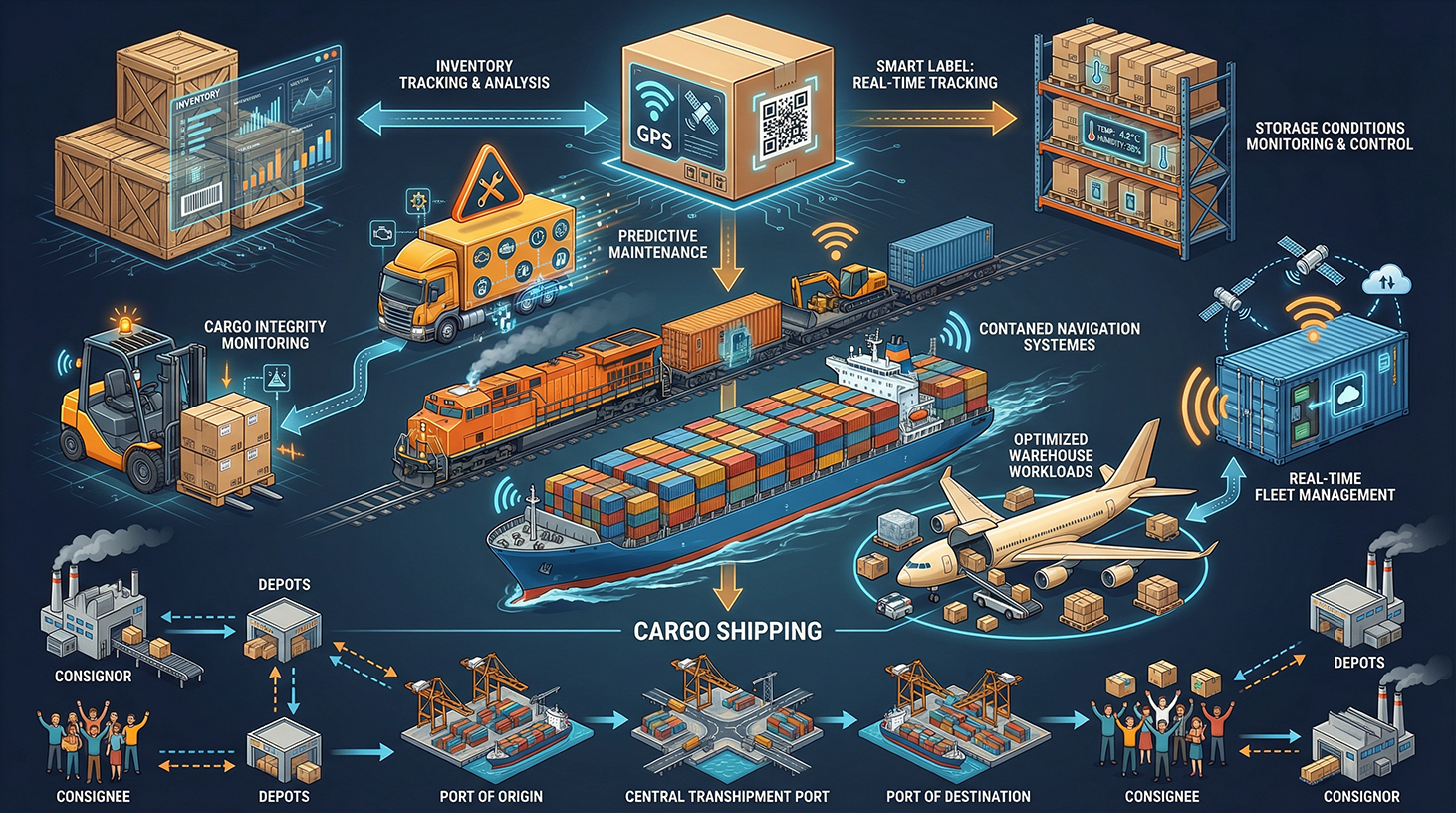
Global freight shipping: Backbone of the world economy in transition – Image: Xpert.Digital
Global freight shipping: Backbone of the changing world economy
From Temu to the supermarket: How global e-commerce is disrupting the world's freight routes
And the end of container Tetris: These gigantic high-bay warehouses are currently revolutionizing our ports
Global freight shipping is the invisible engine of our world economy – yet it is currently undergoing the largest and most expensive transformation in its history. While nearly 80 percent of global trade is handled by water, this highly complex system is under enormous pressure from multiple sides. Geopolitical conflicts such as the attacks in the Red Sea are forcing massive detours, the unprecedented boom in Asian e-commerce is pushing transport capacities to their limits, and the urgently needed conversion to a climate-neutral fleet is costing billions. At the same time, smart technologies – from AI-driven fleet planning and tamper-proof blockchain documents to vast container high-bay warehouses in ports – are revolutionizing the way goods are moved around the globe. This in-depth analysis examines the fascinating but highly fragile architecture of global logistics. It reveals why freight rates are an early indicator of impending crises and why the future of our prosperity is inextricably linked to the resilience of these networks.
Global trade by water: Size and importance of an invisible giant
Global freight shipping is the most underestimated foundation of modern economies. Almost invisible to the average consumer, it moves billions of euros worth of goods around the globe every day – from raw materials to finished products, from container ships to freight trains and trucks, all the way to the last mile for the end customer. The freight shipping market was estimated at around US$12.65 billion in 2024 and is expected to grow to over US$21.5 billion by 2035 – with a compound annual growth rate (CAGR) of around 5 percent. Other market analysts estimate the overall potential to be significantly higher: One study estimates the freight shipping market at US$13.75 billion for 2024 and forecasts an increase to over US$26.5 billion by 2032, which would correspond to a CAGR of 8.45 percent.
These seemingly divergent figures can be explained by differing market definitions: Depending on whether only ocean freight or the entire multimodal freight ecosystem is included, the values vary considerably. However, there is agreement that the sector is experiencing structural growth. Container shipping represents the most robust single market within the freight shipping industry: With a market size of approximately US$123 billion in 2024 and a projection of US$142 billion by 2029, it dominates the segment with a share of over 52 percent. The Asia-Pacific region leads with a market share of 38.7 percent, with China as the largest single country at 15.3 percent.
The concrete meaning of these figures can be illustrated by a single data point: ships deliver over 80 percent of global trade. Disruptions in ports, straits, or shipping routes therefore have a direct impact on the supply of food, medicine, energy, and industrial goods worldwide. Cargo shipping is thus not just one industry among many – it is critical infrastructure of global proportions.
Variety of cargo, variety of systems: What freight really means
The structural architecture of the freight shipping system can be divided into three levels: At the top level are the technological enablers – smart labels, inventory tracking, warehouse monitoring, predictive maintenance, and real-time fleet management. Below this is the physical transport layer with trucks, freight trains, container ships, and cargo aircraft. At the bottom level is the cargo network: Shippers and consignees are connected via the port of departure, transshipment port, and destination port, supplemented by depots on both sides.
This visualization highlights a key aspect: freight logistics is not simply A-to-B transport, but a highly complex network with multiple actors, routes, and intermediate stops. Cargo types can be divided into several main categories: dry goods such as machinery, textiles, and electronics; liquid goods such as crude oil, chemicals, and liquefied gas; refrigerated cargo for perishable food and pharmaceuticals; and hazardous materials with special handling requirements. Each of these categories requires specialized vessel types: bulk carriers (from Handysize to Capesize), container ships (from feeder ships to ultra-large container vessels), tankers (crude oil, LNG, LPG), and Ro-Ro vessels for vehicles.
The economic efficiency of this differentiation is remarkable: Sea freight has an average value of around €2,493 per ton, while air freight achieves an average of €152,807 per ton. This dramatic difference perfectly reflects the market segmentation: Sea freight moves volume, air freight moves value. Nevertheless, in 2023, air freight accounted for only 1 percent of global transport volume, but represented around one-third of the total trade turnover of approximately US$31 trillion.
Technological transformation: When freight thinks digitally
Smart labels are at the forefront of technological development in freight logistics for good reason. They are perhaps the most striking expression of digitalization. They transform every single package into an IoT device with global location and condition tracking. Modern smart labels, such as G+D's IoTgo system, are the size of a credit card, feature GPS precision tracking, integrated shock and temperature sensors, and seamless global cellular coverage, enabling real-time transparency across the entire shipping process. This is no longer a vision of the future, but rather standard practice in professional logistics.
The second key technological pillar is predictive maintenance. IoT sensors continuously monitor the health of trucks, conveyor belts, forklifts, refrigeration units, and ship engines by recording parameters such as vibrations, temperatures, pressure, and operating hours. Early detection of wear patterns allows for proactive maintenance measures before costly breakdowns occur. This represents a substantial competitive advantage, especially in logistics, where vehicles and equipment are subjected to constant stress. Reducing unplanned downtime by measurable percentages translates directly into cost savings and improved customer reliability.
Blockchain technology addresses a structural problem in freight logistics that has plagued the industry for decades: the sheer volume of documents. International freight shipments typically require between 30 and 50 paper documents. Successful pilot projects demonstrate that blockchain solutions can eliminate up to 80 percent of manual data entry. Consortia of companies such as AB InBev, Accenture, APL, and Kühne+Nagel have successfully tested blockchain systems in which freight data is distributed across decentralized ledgers and made accessible to all participants – tamper-proof and traceable. Platforms that combine blockchain with IoT also enable the simultaneous monitoring of location, temperature, and humidity for each individual shipment.
Real-time fleet management completes the digital cycle. Real-time tracking allows dispatchers to dynamically adjust fleet routes, avoid traffic jams, minimize empty runs, and maximize overall utilization. Combined with AI-powered planning algorithms, this enables significant efficiency gains in fuel consumption and on-time delivery – factors that are increasingly determining margins and market share in light of fluctuating diesel prices and rising customer expectations.
Multimodality as an economic principle: How transport networks emerge
Modern freight transport is rarely monomodal. The journey of a product from the manufacturer to the end customer typically involves several modes of transport: A truck brings the goods from the factory to the freight yard or depot; the freight train carries them to the port of departure; the container ship crosses oceans; at the destination port, another truck takes over for distribution, possibly with intermediate storage at the depot. For time-critical goods, the cargo plane enters this chain as an alternative or supplement.
This multimodal logic creates an optimization problem of considerable complexity. Shippers must not only balance costs and speed, but also incorporate reliability, commodity specifics, regulatory requirements, and geopolitical risks into their route planning. Given structural upheavals such as the Houthi attacks in the Red Sea—which dramatically reduced shipping through the Suez Canal and forced detours around the Cape of Good Hope, adding over 11,000 nautical miles—the diversification of trade routes takes on strategic importance. Shipping traffic around the Cape surged to 87 million barrels per day in the first months of 2024, as shipping companies avoided the shorter but dangerous route through the Bab al-Mandab.
Air freight has gained considerable importance in this context. Between October 2023 and October 2024, demand for air freight grew by 11 percent, and the tonnage transported even by 20 percent – while the capacity of providers increased by only 6 percent. A key driver is the booming e-commerce sector of Chinese platforms like Temu and Shein, whose lightning-fast delivery promises are putting pressure on the capacity of air freight corridors between Asia and Europe. The global air freight market was valued at US$172.74 billion in 2024 and is projected to grow to US$273.5 billion by 2032. These figures underscore that air freight is no longer a niche product, but a strategically indispensable element in the multimodal system.
The cargo process cycle: From booking to delivery
The operational process of a freight shipping transaction is far more complex than outsiders might imagine. It begins with booking and scheduling, where capacity on ships or aircraft is reserved and schedules are coordinated. This is followed by packaging and containerization according to product-specific standards, then the documentation – waybill, certificate of origin, customs declarations, and bill of lading. Customs clearance at the point of departure and destination can take hours or weeks, depending on free trade agreements, the type of goods, and the political climate. Loading, transit, unloading, and the last mile complete the process.
Freight forwarders coordinate this process as intermediaries between shippers, shipping companies, and authorities. Their role is growing as supply chains become more complex. Digital booking platforms are beginning to transform this segment: Just as online travel portals revolutionized the flight booking market, digital marketplaces are emerging for air and sea freight, where capacities can be booked and compared in real time. This platformization is likely to increase market transparency and efficiency in the medium term, but at the same time exert margin pressure on traditional freight forwarders.
Tracking systems are now standard for professional shippers. Real-time visibility into the location and status of shipments reduces uncertainty, enables proactive intervention in case of delays, and forms the data basis for continuous process optimization. Combined with AI analytics systems, this creates self-learning logistics networks that optimize themselves – a paradigm shift compared to the manually timed logistics of past decades.
Geopolitics as a pacesetter: Crises, detours and the remapping of the world
No issue is currently shaping the shipping industry more than the geopolitical situation. The Houthi attacks on merchant ships in the Red Sea and at the Bab al-Mandab, the entrance to the Suez Canal, have turned the world's most global sea route into a risk zone: Approximately twelve percent of total global trade is handled via the Suez Canal. The shift to the significantly longer detour around the Cape of Good Hope considerably increases travel times, fuel costs, and planning uncertainty for hundreds of shipping companies. With the escalating war in the Middle East, other straits, such as the Strait of Hormuz, threaten to become problematic for oil transport.
Geopolitical risks extend far beyond individual conflicts. Trade disputes between the US and China, sanctions against Russia, export restrictions on rare earths – all of these are forcing global supply chains to realign. Companies are increasingly pursuing strategies such as "China+1" or "friend-shoring" to reduce one-sided dependencies. In the first half of 2024, documented supply chain disruptions increased by 30 percent, and 76 percent of European shippers reported direct operational impacts from trade disputes, extreme weather events, and cyber incidents. Supply chains have long since ceased to be a purely logistical matter and have become a security policy issue.
Cyberattacks on supply chains are also on the rise. State-sponsored hacking groups are now sabotaging not only government systems but also the digital infrastructure of ports, shipping companies, and logistics providers. The more freight logistics is digitized, the larger the attack surface becomes for actors seeking to advance economic or political interests through sabotage. CISOs and Chief Risk Officers must treat the resilience and security of the digital supply chain as a strategic priority – not as an operational detail.
Freight rates and the economy: The sensitive barometer of the global economy
Freight rates are not just a reflection of the industry's performance – they are a leading indicator of the global economic situation. The massive increase in container freight rates during the COVID-19 pandemic, which rose fivefold to pre-pandemic levels in 2021, was a major driver of global inflation during that period. With the easing of supply chain disruptions, rates fell significantly, but they are under renewed upward pressure in 2025: capacity constraints, geopolitical uncertainties, increasing environmental regulations, and the costs of transitioning to more climate-friendly fuels are ensuring that prices remain structurally high.
Analysts like Drewry predict that structural factors – including persistent capacity bottlenecks and increasingly stringent emissions regulations – will continue to fuel rising prices, even as new shipping capacity enters the market. For shippers, this means increased and difficult-to-predict freight costs. For shipping companies – especially Maersk, Evergreen, and MSC – however, opportunities to improve margins are emerging. German ports are feeling the effects acutely: According to the Northern German Chambers of Industry and Commerce (IHK Nord) business survey, shipping recorded the strongest growth in autumn 2025, rising by 6.7 points to 82.7, while the port industry is suffering from a shortage of skilled workers and challenging economic conditions. The Kiel Canal transported approximately 69.5 million tons of cargo in 2025 – down from 75.6 million tons the previous year, a decrease partly attributable to the significantly reduced shipments to and from Russian ports.
Air freight acts as a buffer and alternative to the volatile sea freight system. When sea routes are unsafe or congested, time-critical goods are diverted to air freight – which in turn creates capacity bottlenecks in the air freight market and drives up rates there as well. This interconnected system means that disruptions in one mode of transport propagate to the others and can lead to systemic price spirals.
LTW Intralogistics Solutions

LTW Intralogistics – Engineers of Flow - Image: LTW Intralogistics GmbH
LTW offers its customers not individual components, but integrated complete solutions. Consulting, planning, mechanical and electrotechnical components, control and automation technology, as well as software and service – everything is networked and precisely coordinated.
In-house production of key components is particularly advantageous. This allows for optimal control of quality, supply chains, and interfaces.
LTW stands for reliability, transparency, and collaborative partnership. Loyalty and honesty are firmly anchored in the company's philosophy – a handshake still means something here.
Related to this:
When supply chains break down: How logistics makes the economy more resilient to crises
Sustainability under pressure: The green transformation of shipping
International shipping is responsible for nearly three percent of all global greenhouse gas emissions – a share that would increase dramatically by 2050 if growth continues unabated. The International Maritime Organization (IMO) has therefore adopted an ambitious strategy: carbon neutrality by 2050, a reduction in emissions of at least 20 percent by 2030, and at least 70 percent by 2040, compared to 2008 levels. From 2027, large ships worldwide will participate in a new carbon pricing system designed to promote alternative fuels and penalize polluters. The system received broad support: 63 countries voted in favor, including China, India, Japan, Brazil, and the European Union.
At the EU level, the targets have been tightened even further. The European Parliament agreed to reduce CO₂ emissions from ships by 80 percent by 2050 compared to 2020, and requires the use of at least two percent renewable fuels from 2034 onwards. This regulatory framework is forcing shipping companies to make massive investments in new propulsion technologies.
The technological alternatives are diverse, but all present challenges. LNG (liquefied natural gas) significantly reduces CO₂ emissions compared to heavy fuel oil, but remains a fossil fuel with the problem of potential methane leaks. Green hydrogen is considered promising in the long term, but requires considerably more storage capacity and specialized infrastructure. Methanol from renewable sources is already compatible with existing engines and is considered safer and biodegradable. Ammonia is CO₂-free during operation, but toxic to handle, which is why the first ammonia-powered ships are still in the planning phase. E-fuels – synthetic fuels – promise a near-zero-emission solution using existing infrastructure, but are still too expensive and insufficiently available. The IMO target of using at least 5 to 10 percent climate-friendly fuels by 2030 is intended to provide the market with the necessary planning certainty to invest in green technologies.
This transformation is not solely a matter of cost – it is a strategic decision. Shipping companies that invest early in low-emission fleets secure a competitive advantage over rivals who have to retrofit later under greater regulatory pressure. At the same time, environmental regulations increase operating costs in an industry already under margin pressure – and lead to rising freight rates as a systemic consequence.
Ports as bottlenecks and drivers of innovation
Ports are the central hubs of the entire shipping system – serving as ports of departure, transshipment, and destination. This central role entails structural vulnerability: port congestion is one of the most chronic problems in global logistics. When ships wait for days in front of congested ports, costs arise for shipping companies, shippers, and ultimately, consumers.
The industry's answer lies in smart port technologies: AI-powered container handling systems, autonomous cranes, digital processing, and improved container tracking. Countries like China, Singapore, and the Netherlands are investing heavily in modernizing their port infrastructure to increase capacity and efficiency. Furthermore, global infrastructure programs such as the Belt and Road Initiative are creating new port facilities in strategically important regions, shaping the geopolitical landscape of maritime shipping.
At the same time, many European ports are struggling with structural problems: a shortage of skilled workers, outdated infrastructure, and regulatory requirements. The IHK Nord report from February 2026 shows that the port industry in Northern Germany is the only maritime sector under pressure, while shipbuilding and shipping are growing. Over 57 percent of port companies complain about a shortage of skilled workers, and over 78 percent cite economic conditions as the main risk. This illustrates that the transformation of ports is not only a technological challenge, but also a labor market policy challenge.
Vertical revolution in the port: High-bay warehouses solve the container Tetris problem
Anyone who has ever watched a port in operation is familiar with the scene: thousands of identical-looking steel boxes, stacked into chaotic blocks, interspersed with cranes, vehicles, and constant rearranging – containers on top must first be moved to access those below. This principle of chaotic stacking, unofficially known as container Tetris, has reached alarming proportions: between 30 and 60 percent of all container movements in a typical terminal are not for onward transport, but simply for restacking. Each of these movements costs time, energy, personnel, and ultimately money – and becomes increasingly expensive with growing ship sizes and increasing cargo volumes.
The underlying problem of available land is structural and will worsen without a systemic change. The world's major seaports have grown organically over time and border directly on densely populated port cities. Horizontal expansion is hampered by existing buildings, geography, and increasingly stringent environmental regulations that prohibit or significantly impede land reclamation. In Germany, data shows that between 2017 and 2021, of the 26 million square meters of newly constructed logistics space, only 1.2 million square meters – approximately 4.6 percent – were located within port areas. Kuno Neumeier, CEO of the Logivest Group, explicitly warned that the lack of new construction threatens to become a major challenge for trimodal logistics. At the same time, cargo volume continues to grow unabated: In 2025, the Port of Hamburg handled a total of 114.6 million tons – an increase of 2.6 percent compared to the previous year, driven primarily by container volumes. Lower Saxony's ports even recorded nine percent more cargo throughput in 2025, with the JadeWeserPort in Wilhelmshaven exceeding the one million TEU mark for the first time. The pressure on existing terminal space is therefore growing faster than the available land area.
The logical answer to this conflict is the same one that urban planning has long since implemented: when horizontal expansion is no longer possible, buildings are built vertically. Container high-bay storage systems – so-called high bay storage systems – transfer this principle to port operations and thus represent one of the most significant infrastructure innovations in port logistics. The concept was largely driven by the joint venture BoxBay, a collaboration between the German machinery and plant engineering company SMS Group from Düsseldorf and the global market leader DP World from Dubai. It is based on a technology that SMS originally developed for steel logistics: fully automated high-bay storage systems for steel coils weighing up to 50 tons. The principle was adapted for ISO standard containers – for both 20-foot units and 40-foot containers weighing up to 32 tons.
The technical functionality is ingenious: Container cranes unload the ships as usual. Driverless transport systems or terminal trucks then take over the onward transport to the high-bay warehouse. There, stacking cranes automatically dock onto the standardized pivot points of the container corners, adjust their length automatically to 20- or 40-foot units, and lift the container onto shelves that rise up to eleven stories high. Crucially, the containers are self-supporting – there are no shelves, which saves steel and makes the system lighter and more cost-efficient. Heavy containers are automatically placed on the lower levels by the control software, lighter ones on the upper levels – similar to cargo planning on freight ships. Refrigerated containers are equipped with special power connections and shaded locations. Retrieval is carried out via underfloor pallets that run on rails and transport the containers to the transfer station, where standard cranes load them onto trucks or trains.
The result is a fundamental increase in efficiency: According to BoxBay simulations, a reference facility can handle more than 500 waterside and 300 landside container movements simultaneously. Direct access to each individual container – without the need for traditional restacking – completely eliminates the costly container Tetris overhead. This means that every container is available at any time without prior preparation, drastically reducing the turnaround time of ships and trucks. Sultan Ahmed Bin Sulayem, Chairman and CEO of DP World, succinctly summarized the strategic significance: The system increases the speed and efficiency of handling – and these are the key factors for the entire port and terminal business. Investment decisions reflect this conviction: In October 2025, BoxBay was awarded a €91.7 million contract for a high-bay container warehouse at the Port of London – the largest order in the company's history to date.
High-bay container warehouses are therefore not a visionary gimmick, but an economically imperative answer to the capacity bottleneck in the port world. At a time when ultra-large container vessels with capacities of up to 24,000 TEU are entering ports built for an earlier generation of ships with 8,000 TEU, horizontal port expansion has simply reached its structural limits. The vertical dimension is the only remaining option – and whoever systematically develops it first will secure capacity leadership for the next generation of ports.
Market structure and competition: Concentration and global power relations
The global freight shipping market is characterized by high concentration and oligopolistic structures on the supply side. A few large shipping companies – MSC, Maersk, CMA CGM, COSCO – control the lion's share of container capacity worldwide. This concentration gives them considerable pricing power over shippers during peak periods. Alliances are formed between shipping companies in the maritime sector to share costs and operate routes more efficiently – a practice that regularly attracts the attention of regulators seeking to ensure competition and market integrity.
In the air freight market, FedEx Express, DHL Aviation, UPS Airlines, Emirates SkyCargo, and Lufthansa Cargo dominate thanks to extensive global logistics networks, strong fleet capacities, and integrated multimodal operations. Their strength lies in digital tracking systems, strategic airport hubs, and investments in temperature-controlled supply chains. Competition for air freight capacity is intensifying as demand exceeds supply—offering margin opportunities for established players but increasing cost pressure for shippers.
Asia remains the dominant force: As the world's leading transshipment hub for ocean freight, Asia accounted for 42.4 percent of goods shipped and 64.5 percent of goods unloaded in 2021. China alone represents 15.3 percent of the global cargo shipping market. This geographical concentration creates dependencies that, in times of geopolitical tension, can lead to vulnerabilities.
Logistics in Germany: Europe's hub and its structural weaknesses
Germany plays a central role in European freight logistics. The logistics sector generated revenue of approximately €331 billion in 2024, making it one of the country's most important economic sectors. The major North German ports of Hamburg and Bremen are crucial gateways for European trade with Asia, America, and Africa. At the same time, structural changes in German industry—the decline in steel and automotive production, and energy price shocks—are impacting freight flows.
The North German port industry is struggling with a dual challenge: declining foreign demand on the one hand and rising labor costs on the other. Thomas Buhck, President of the Northern German Chamber of Industry and Commerce (IHK Nord), warned: "Without intact quays, security of supply is at stake"—a statement that exemplifies how critical port capacity is for the national economy. The investment needs in port infrastructure, digitalization, and skilled worker development are substantial and cannot be met solely through private sector involvement.
At the same time, significant opportunities exist: Germany possesses excellent logistics expertise, a dense rail network, and a geographically advantageous location as a transit country. The digitalization of logistics, in which German companies have traditionally excelled, enables the development of value-added services centered around data, control, and optimization of freight flows. Those who control the digital layer of the global freight market—the platforms, the algorithms, the data—will shape value creation more profoundly in the coming decades than those who merely operate ships.
Systemic risks: What happens when freight shipping fails?
The COVID-19 pandemic painfully demonstrated the fragility of the global freight logistics system under extreme conditions. Lockdowns in Chinese production centers, port closures, crew change bans, and capacity bottlenecks created a perfect combination of disruption that paralyzed global supply chains for months and drove freight rates to historic highs. The economic damage caused by shortages of intermediate products in the automotive industry, semiconductors in electronics production, and medical supplies shortages in hospitals reflects the systemic dependence on a smooth flow of freight.
Climate events are also becoming an increasingly significant risk category. Extremely low water levels on the Rhine – as in 2018 and 2022 – severely restrict inland shipping capacity and disrupt the entire logistics chain for German industry. Persistent droughts, floods, and intensified storms due to climate change increase the likelihood of such events. Climate change is therefore both a cause of the need for regulation in shipping and a direct source of operational risks for the industry.
Increasing the resilience of global freight supply chains is therefore not an optional exercise, but a strategic necessity. Diversifying routes, building strategic warehousing capacity, nearshoring relevant production stages, and investing in digital resilience – all these are elements of a coherent approach to risk reduction. Companies that treat freight logistics as an operational detail are systematically disadvantaged in a world of increasing disruption compared to those that manage it as a strategic asset.
Future growth drivers: Where the next wave is emerging
The growth dynamics of global freight shipping are driven by several structural forces. E-commerce is the most powerful of these: with projected global sales of US$6.3 trillion in 2024 and 2.8 billion annual Amazon visits, online retail has fundamentally changed the logic of consumption. Fast, reliable, and globally connected delivery is no longer a differentiating factor, but the minimum standard. This not only drives the volume of freight flows but also transforms their nature: smaller shipment sizes, higher frequency, and shorter delivery windows.
Just-in-time manufacturing remains an influential production principle, driving demand for precise, on-time freight transport. At the same time, the post-pandemic experience has prompted many companies to maintain larger strategic safety stocks – a counter-movement that, while requiring more storage capacity in the short term, generates more stable freight flows in the medium term. The pharmaceutical and medical goods industries, semiconductor manufacturing, and the electromobility supply chain (batteries, rare earth elements, drive components) are particularly high-growth freight customer segments.
E-commerce is growing particularly dynamically in emerging economies in Asia, Africa, and Latin America: In Africa, the volume of maritime shipping increased by an estimated 5.63 percent, and in Latin America by 3.2 percent. New air freight hubs between China and Europe, as well as in Central and South Asia, are opening up local markets and enabling intermodal onward transport to previously difficult-to-reach regions. Global shipping is thus growing not only in absolute terms, but also geographically – expanding into new markets and across new trade flows.
Economic balance sheet: What the numbers really say
The conclusion is a sober economic assessment: Global freight shipping is a market experiencing structural growth, driven by globalization, e-commerce, and industrial networking. At the same time, it is a sector under immense pressure to transform – technologically through digitalization and automation, regulatoryly through climate protection requirements, and geopolitically through conflicts, sanctions, and the restructuring of global trade patterns.
The system's three-layer architecture—technology layer at the top, physical transport layer in the middle, and network of stakeholders at the bottom—precisely describes where value is created and where risks lurk. Smart labels, predictive maintenance, real-time fleet management, and optimized warehouse utilization are not merely technical features, but economic levers that reduce costs, increase quality, and secure competitive advantages. Companies that consistently implement these technologies will be the industry leaders of the next decade.
The crucial question is not whether, but how quickly and at what cost the transformation will take place. Those who invest too slowly will lose market share and face higher retrofitting costs under regulatory pressure. Those who invest too early and too expensively risk wasting capital on technologies that are not yet ready for market. The key lies in intelligent sequencing: digitalization and efficiency gains first, then gradual decarbonization based on evolving technological standards. For economic actors – from port cities to shipping companies and industrial enterprises – this means that freight logistics is a strategic top priority, not just day-to-day operations.
Consulting - Planning - Implementation

Konrad Wolfenstein
I would be happy to serve as your personal advisor.
contact me at wolfenstein ∂ xpert.digital
Just call me on +49 7348 4088 965 .
Your container high-bay warehouse and container terminal experts

Container high-bay warehouses and container terminals: The logistical interplay – expert advice and solutions - Creative image: Xpert.Digital
This innovative technology promises to fundamentally change container logistics. Instead of stacking containers horizontally as before, they will be stored vertically in multi-story steel racking structures. This not only allows for a drastic increase in storage capacity within the same area, but also revolutionizes all processes at the container terminal.
More information here:










