
The new normal: Why hybrid supply chains are securing the future of European companies
Xpert Pre-Release

Available in 27 languages 📢
Prefer Xpert.Digital on GoogleⓘPublished on: August 12, 2026 / Updated on: August 12, 2026 – Author: Konrad Wolfenstein
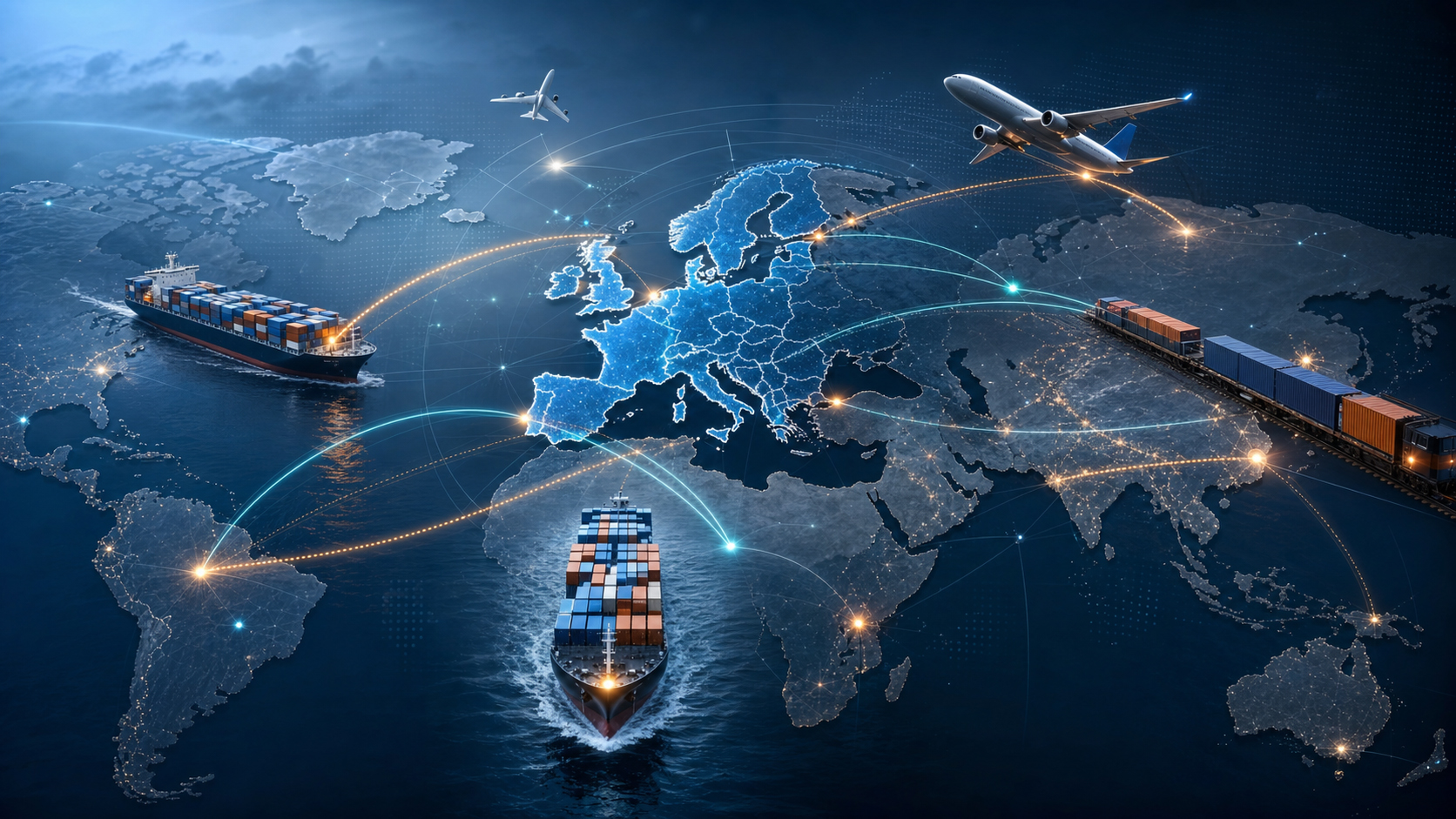
The new normal: Why hybrid supply chains are securing the future of European companies – Image: Xpert.Digital
The dangerous China illusion: Why the German economy cannot opt out
Reshoring, nearshoring, friendshoring: This is the corporations' new secret plan
Neither retreat nor status quo: How “hybrid supply chains” are now saving industry
For decades, an unwritten but ironclad rule prevailed in the global economy: production takes place where it is cheapest. This relentless pursuit of maximum cost efficiency has deeply intertwined European, and especially German, industry with China. But global shocks—from the pandemic and blocked sea lanes to geopolitical conflicts—have radically disenchanted the once successful just-in-time logistics model. Today, companies face a historic challenge: supply chains are highly vulnerable, while a simple, complete withdrawal from the Far East is simply economically unrealistic. Europe is caught in a dangerous dependency trap, particularly regarding critical raw materials for green technologies of the future. The solution lies in a radical rethink, moving away from blanket decoupling fantasies and toward a pragmatic approach. The new paradigm is "hybrid supply chains"—a strategic combination of global efficiency, regional production (reshoring), and alliances with value-oriented partners (friendshoring). The following analysis shows how dependent Germany really is on China, where diversification is absolutely necessary, and what the blueprint for tomorrow's economic resilience looks like.
Between wishful thinking and global market reality: Europe's dangerous love of convenience
For over three decades, a simple business formula was considered irrefutable: whoever relocates production and procurement to where costs are lowest wins. This logic deeply intertwined German and European industry with China, the world's cheapest and most efficient supplier. Today, it is clear that this calculation was incomplete, as it overlooked a variable that now determines the success or failure of entire value chains: geopolitical risk. The past few years have painfully demonstrated that while just-in-time logistics and the global division of labor bring enormous efficiency gains in calm times, they can become an Achilles' heel in times of crisis. The pandemic, the Suez Canal blockade, the war in Ukraine, and most recently Beijing's restrictive export policy on rare earths have shown European companies just how vulnerable their supply chains truly are. The answer is neither a complete decoupling from China nor a naive clinging to the status quo, but a middle ground, increasingly referred to as a hybrid supply chain model. It combines the cost advantages of global procurement with the resilience of regional and diversified structures.
The gradual detachment: How dependent is German industry really on China?
The figures on German industry's dependence on China paint a more nuanced picture than political debate often suggests. According to recent surveys by the ifo Institute, in 2024 just over a third of German industrial companies still sourced important intermediate products from China, a noticeable decline compared to almost half in 2022. The trend is particularly pronounced in the automotive sector, which was able to reduce its dependence by seventeen percentage points within two years, not least due to the accelerated development of its own battery and semiconductor capacities in Europe. A notable exception is the chemical industry, whose integration with Chinese suppliers even increased slightly during the same period. This can be attributed to the close integration of petrochemical value chains and the aggressive capacity expansion of Chinese chemical companies. Data processing remains particularly vulnerable, with import dependence of around 65 percent, followed by electrical engineering at approximately 60 percent and the automotive industry at almost 59 percent. These sectors share a common characteristic: they rely on highly specialized components for which there are hardly any alternative suppliers outside of China in the short term. At the same time, macroeconomic calculations by the Bundesbank and the ifo Institute show that the overall share of Chinese intermediate goods in German final products remains manageable at around two percent, demonstrating that specific but critical dependencies are far more dangerous than a diffuse, general interconnectedness.
The raw materials lever: When a single country decides on future technologies
While dependence on China is gradually decreasing for finished goods and semiconductors, the problem is worsening dramatically for critical raw materials. According to the EU Council, the European Union sources almost 100 percent of its heavy rare earth elements and around 98 percent of the rare earth magnets needed for electric motors and wind turbines from Chinese production. A study by KfW also shows that for nineteen of the thirty-four commodity categories classified as critical, import dependence on China is entirely at 100 percent. For seven minerals classified by the EU as particularly critical, Beijing controls more than three-quarters of global production; for ten other raw materials, the share exceeds fifty percent. The situation is particularly striking for permanent magnets for wind turbines, of which around ninety percent are imported directly from China, according to a Prognos study. The Chinese share is similarly high for graphite-based anode active material for lithium-ion batteries. This concentration is no accident, but rather the result of a decades-long industrial policy strategy pursued by Beijing, which has strategically invested in the processing of critical minerals, while Western economies long neglected the raw materials sector. For Europe's energy transition and the transformation of the automotive industry, this represents a structural risk that extends far beyond short-term supply bottlenecks and calls into question the technological sovereignty of entire future-oriented industries.
Reshoring, nearshoring, friendshoring: The three ways out of dependency
Companies respond to these risks with various strategic options, which can be broadly divided into three categories. Reshoring refers to the complete relocation of production back to the home country, nearshoring to geographically nearby countries, and friendshoring the targeted focus on politically allied or value-oriented trading partners, regardless of geographical distance. A recent survey by the Capgemini Research Institute from 2026 reveals a remarkable shift within Europe: While the proportion of companies investing in nearshoring has decreased from 55 percent in the previous year to 39 percent, the investment rate in reshoring has increased from 34 to 42 percent. This seemingly paradoxical trend reflects structural cost pressures and increasing regulatory complexity within the EU, which make nearshoring projects within Europe itself less attractive. The high importance of friendshoring in Europe is particularly striking: 64 percent of European companies pursue this approach, significantly more than in the US (45 percent) or the UK (39 percent). In the United States, traditional reshoring is accelerating rapidly, from 30 percent in 2025 to almost half of all surveyed companies in 2026, while at the same time 42 percent continue to invest in nearshoring. This transatlantic divergence demonstrates that there is no single global answer to the question of supply chain resilience, but rather that regional cost structures, funding policies, and geopolitical proximity shape the respective strategies.
The limits of decoupling: Why nobody seriously wants to leave China
Despite all diversification efforts, closer examination reveals that a complete withdrawal from China is neither realistic nor economically viable for most European companies. Surveys by the Association of German Chambers of Industry and Commerce (DIHK) show that 22 percent of German companies even intend to expand their activities in China, while only 19 percent plan to reduce them. This counter-trend can be explained by the sheer size of the Chinese market, which remains the most important growth driver worldwide for many sectors, as well as by the technological maturity of Chinese suppliers, which is virtually unmatched in certain segments such as battery production or the solar industry. Furthermore, a fundamental economic principle applies: diversification is expensive. Building parallel supply chains in Southeast Asia, India, or Eastern Europe requires substantial investments in new factories, quality control, and logistics networks, while simultaneously losing economies of scale that were built up over years in China. A study by the German Economic Institute (IW) therefore comes to the sobering conclusion that, despite all the political rhetoric, no significant structural de-risking of the German economy can be observed, particularly with regard to chemical and electronic products. For some especially sensitive product groups, such as certain pharmaceutical ingredients and the rare earth metals scandium and yttrium, the dependency has even become more entrenched. The economic reality is thus more complex than the political buzzword of decoupling suggests.
LTW Intralogistics Solutions

LTW Intralogistics – Engineers of Flow - Image: LTW Intralogistics GmbH
LTW offers its customers not individual components, but integrated complete solutions. Consulting, planning, mechanical and electrotechnical components, control and automation technology, as well as software and service – everything is networked and precisely coordinated.
In-house production of key components is particularly advantageous. This allows for optimal control of quality, supply chains, and interfaces.
LTW stands for reliability, transparency, and collaborative partnership. Loyalty and honesty are firmly anchored in the company's philosophy – a handshake still means something here.
Related to this:
Resilient supply chains: How companies are building hybrid networks for the future
Industry logic instead of blanket judgments: Where diversification actually pays off
A more detailed analysis by economic sector reveals that sweeping statements about the German industry's dependence on China are not very meaningful. Studies by the German Economic Institute (IW) show that, on average across all sectors, only 6.6 percent of all foreign intermediate inputs originate from China, a figure that is by no means exceptionally high by international standards. However, significant differences exist within this average: Manufacturers of data processing equipment and electronic and optical products have by far the highest direct import dependence, at almost 19 percent. A study by Prognos also identifies sector-specific patterns in the concentration of supplier countries: While the automotive and mechanical engineering industries source their intermediate products from many different countries and are therefore structurally less vulnerable, agriculture, food production, mining, wood processing, and the textile industry exhibit a significantly more critical import concentration on just a few supplier countries. It is also noteworthy that dependence on the consumption and investment side is considerably higher than in pure export production, since both intermediate and finished products from China are involved in the latter. Of every hundred euros consumed or invested in Germany, roughly seven euros originate from Chinese value creation, while for purely exported goods, this figure is only around two euros. This distinction is crucial for strategic planning, as it demonstrates that resilience measures should be implemented where critical bottlenecks actually threaten, and not where media attention is greatest. (Note: The definite article "die" before "mediale Achtung" was added for smoother sentence structure.).
Blueprint for resilience: How hybrid supply chains actually work
The term "hybrid supply chain" doesn't describe a rigid model, but rather a strategic toolbox from which companies select based on their industry and risk profile. A key element is dual sourcing, where critical components are deliberately sourced from at least two independent suppliers in different regions, even if this means higher unit costs in the short term. In addition, more and more companies are implementing complete mapping of their supply chains down to the third tier of suppliers—so-called Tier 3 transparency—to uncover hidden dependencies that are often unknown to their own purchasing departments. Digital early warning systems that analyze satellite data, customs data, and news reports in real time also make it possible to identify geopolitical risks early on, before they manifest as concrete supply disruptions. A practical example vividly illustrates this shift: A stair manufacturer whose products were previously assembled from around sixty individual Chinese parts now sources all components exclusively from European manufacturers—a move that, while increasing material costs, has significantly improved production reliability. While such radical insourcing decisions remain the exception, they exemplify the growing pressure to act in certain industries. It is crucial to distinguish between strategic de-risking and complete decoupling: the goal is not to sever trade relationships, but rather to identify and reduce those dependencies that, in a worst-case scenario, would pose an existential threat to one's business model.
The price of security: Why resilience is not a zero-sum game
Every diversification strategy comes at a price, and this is often underestimated in public debate. Relocating production capacity from China to Vietnam, India, or Mexico generally means higher labor costs, reduced economies of scale, and often a lower level of vertical integration, as many of these alternative locations themselves rely on Chinese intermediate goods. Studies by Commerzbank show that the share of Chinese value added in German exports has roughly quadrupled over the past two decades, underscoring the deep structural interdependence that cannot be unraveled within just a few years. At the same time, according to ifo researchers, an abrupt decoupling from China would severely disrupt specific supply chains that are essential for German industry. The economically rational response, therefore, does not lie in a blanket avoidance of risk at all costs, but rather in a careful cost-benefit analysis, weighing the insurance premium for greater resilience against the actual risk of default and its potential economic impact. For highly critical components with low diversification potential, such as certain rare-earth magnets, a higher risk premium may be economically justified, whereas for mass-produced goods with many alternative sources, an overly aggressive diversification strategy would incur unnecessary costs. This differentiation requires significantly more granular risk management than many companies currently practice and is increasingly making supply chain resilience a core strategic competency at the executive level.
Political support: What role must Brussels and Berlin play?
Companies cannot resolve structural raw material dependencies solely through operational measures, which is why European and national industrial policy is playing an increasingly important role. The EU Critical Raw Materials Act aims to cover a significant share of the critical raw materials needed in Europe by the end of the decade through domestic extraction, processing, and recycling—an ambitious goal given the decades of neglect of the European mining sector. At the same time, countries like Germany are investing heavily in building up domestic semiconductor capacities, for example, through collaborations between international chip manufacturers like TSMC and European industrial partners. Diversifying trade relations at the political level is also gaining importance, for example, through free trade agreements with resource-rich countries in Latin America, Africa, and Central Asia, which could potentially open up alternative sources of lithium, copper, and rare earth elements. Critics, however, point out that many of these initiatives are progressing too slowly and that the actual production volume falls far short of the politically stated targets. A significant gap therefore remains between political declarations of intent and industrial reality, forcing European companies to pursue their resilience strategies largely on their own for the time being, without being able to rely on rapid government support.
The lasting coexistence of globalization and regionalization
Developments in recent years indicate that the era of pure cost optimization in global supply chains is definitively over, without this signaling the end of globalization. Rather, a new equilibrium is emerging in which global sourcing and regional production networks coexist and complement each other depending on the product category and risk profile. For standardized, less critical goods, global competition for the lowest costs will continue to dominate, while for strategically important components and raw materials, increasingly regional or at least diversified sourcing structures are being established. This hybrid architecture demands a significantly higher degree of strategic foresight from companies, technological transparency regarding their own supply chains, and a willingness to accept short-term cost disadvantages for long-term stability. Companies that make this transition early gain a structural competitive advantage over rivals who continue to prioritize maximum cost efficiency at any price and could thus be caught off guard again in the next geopolitical shock. The new normal is therefore not deglobalization, but a more deliberate, risk-adjusted form of global division of labor that combines economic prudence with geopolitical acumen.
Consulting - Planning - Implementation

Konrad Wolfenstein
I would be happy to serve as your personal advisor.
You can contact me at wolfenstein∂xpert.digital or
Just call me on +49 7348 4088 965 .
Your container high-bay warehouse and container terminal experts

Container high-bay warehouses and container terminals: The logistical interplay – expert advice and solutions - Creative image: Xpert.Digital
This innovative technology promises to fundamentally change container logistics. Instead of stacking containers horizontally as before, they will be stored vertically in multi-story steel racking structures. This not only allows for a drastic increase in storage capacity within the same area, but also revolutionizes all processes at the container terminal.
More information here:










