
Supply chains at their limit: Geopolitical crises as accelerators of intralogistics transformation
Xpert Pre-Release

Language selection 📢
Published on: April 4, 2026 / Updated on: April 4, 2026 – Author: Konrad Wolfenstein
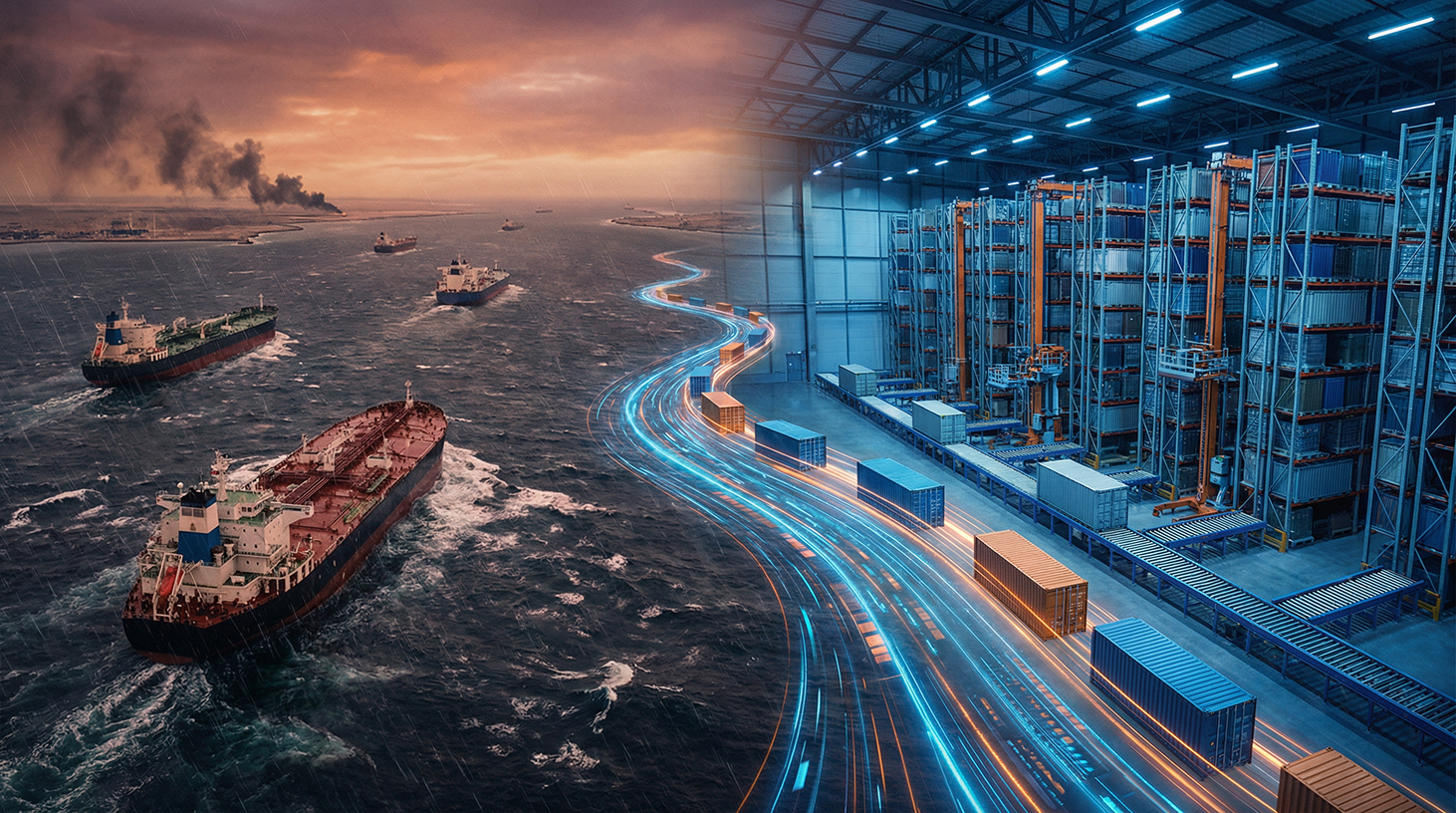
Supply chains at their limit: Geopolitical crises as accelerators of intralogistics transformation – Image: Xpert.Digital
Just-in-case instead of just-in-time: How industrial giants are now preparing for the next supply shock
The nearshoring trap: What companies massively underestimate in regional procurement
For decades, just-in-time supply chains were considered the gold standard – lean, cost-efficient, and optimized for maximum return on investment. But under the pressure of multiple geopolitical crises, this model is crumbling. From the ongoing war in Ukraine to massive conflicts in the Middle East, the vulnerability of our global transport routes is now definitively exposed. For companies, this new reality, characterized by persistent instability, means a drastic rethink. The paradigm shift is: away from minimal inventory and towards just-in-case strategies and regional nearshoring. But those who outsource inventory and build up buffer capacities immediately face the next bottleneck – the warehouse. In times of chronic skills shortages, exploding energy costs, and stringent sustainability requirements, highly automated intralogistics is becoming a crucial survival factor. This article examines how geopolitical shocks are transforming the market and why intelligent, turnkey automation solutions are now the most powerful weapon for a resilient value chain.
Related to this:
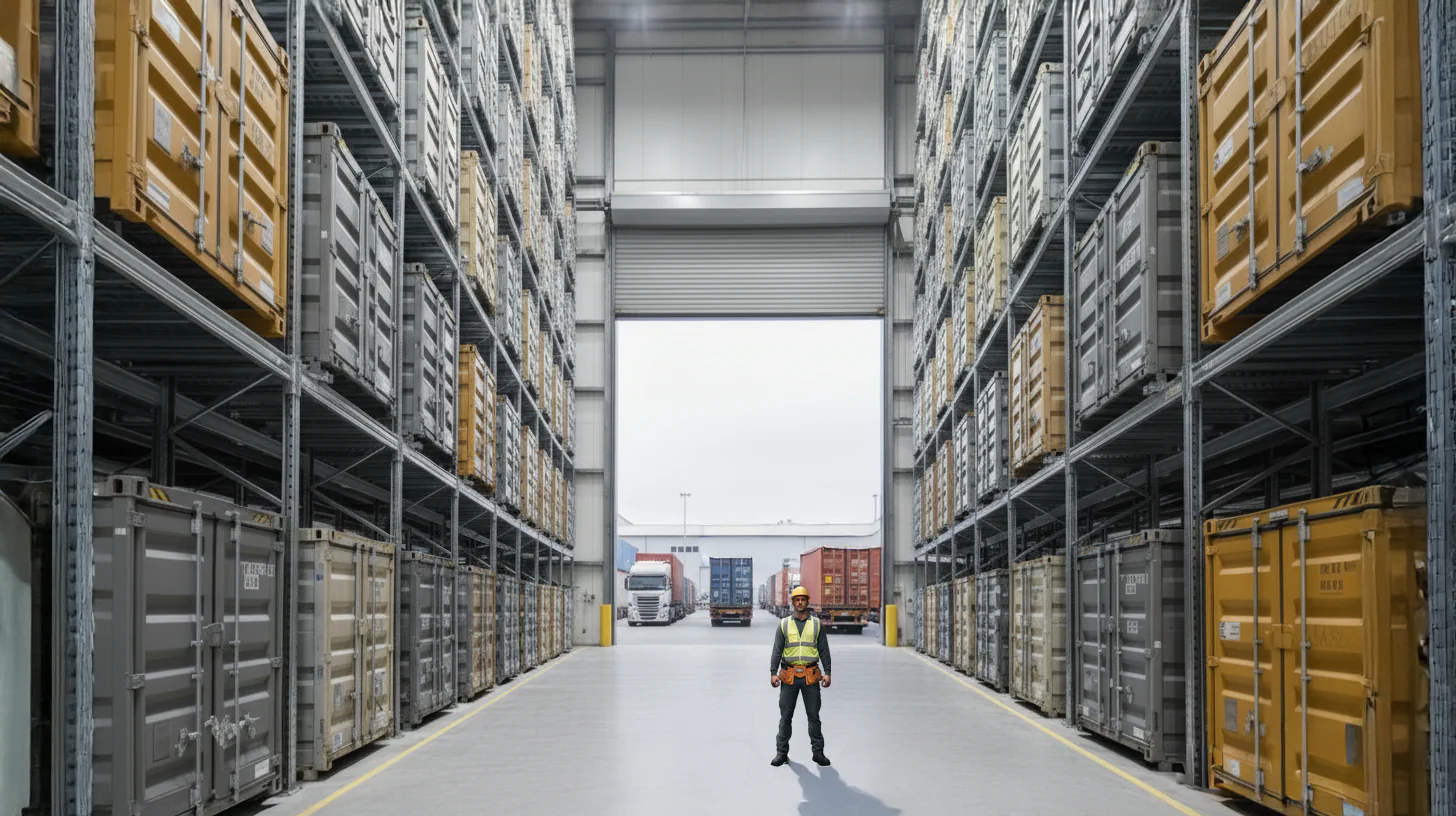
Two wars, one shock: How geopolitical conflicts are shaking the global supply chain system
The simultaneous occurrence of two fundamental geopolitical crises is putting global logistics to a historic test. The ongoing war in Ukraine and the escalating conflict in the Middle East, stretching from the Strait of Hormuz across the Red Sea to the Suez Canal, have combined to create a level of disruption that is definitively exposing the vulnerability of just-in-time supply chains optimized over decades. What initially appeared to be two geographically separate regional conflicts has evolved into a systemic threat to the global economy, simultaneously putting industries, transport routes, and procurement strategies under pressure.
The war in Ukraine is having a disruptive effect on several levels. As one of the world's leading exporters of wheat, corn, sunflower oil, and fertilizers, Ukraine has suffered significant production and export losses due to the conflict. Russia, which accounts for approximately 20 percent of global wheat exports, is also increasingly isolated by sanctions. For energy-intensive industries in Europe, the war has led to a structural energy price shock since 2022, permanently increasing production costs. The once vital rail corridors through Eastern Europe are now considered unreliable, and cross-border freight transport has been largely reconfigured.
The situation in the Middle East, however, threatens the maritime lifelines of global trade to an extent not seen since the 1970s. In March 2026, the situation in the Persian Gulf escalated dramatically once again: Simultaneous disruptions in the Strait of Hormuz and the Red Sea reactivated the worst-case scenario for global supply chains. Shipping companies like Maersk suspended trans-Suez voyages and rerouted their services around the Cape of Good Hope, typically adding 15 to 20 days to Asia-Europe transits. Reports indicated that Iran began charging merchant ships transit fees of up to two million US dollars per voyage for passage through the Strait of Hormuz. The price of oil rose to around 90 US dollars per barrel, European gas spot prices increased by up to 80 percent, and energy-intensive industries began to reduce production.
The cost of uncertainty: What geopolitical instability specifically means for supply chains
Geopolitical risks are no longer abstract strategic debates, but are reflected in concrete business figures. Shipping companies are levying war risk surcharges of up to US$2,000 per container, and spot rates continue to rise because cargo is being diverted and ships have to wait for alternative ports. The significantly increased fuel costs are having a direct impact on calculations for pre- and post-carriage as well as for road transport as a whole. European terminals in Rotterdam, Hamburg, and Algeciras were already operating at around 80 percent capacity in the summer of 2025, and a further simultaneous influx of ships threatens to push capacity utilization to a critical level.
The economic damage assessment is clear. Over the past ten years, large companies have lost an average of 42 percent of their annual EBIT due to supply disruptions. The old mantra of just-in-time production—minimal inventory, maximum capital efficiency—is proving to be a structural weakness in the face of these shocks. A procurement model that is highly efficient when operations run smoothly becomes an existential threat as soon as supply chains break down, because just-in-time production lacks any buffer stocks to absorb production losses. The direct consequence: The EU is increasingly replacing just-in-time inventory management with just-in-case strategies, with the creation of safety stocks becoming the most common adjustment and significantly exceeding supplier diversification.
For supply chain management, this means a fundamental reassessment of the concept of risk. Border closures, port congestion, energy price shocks, tariff increases, and military conflicts have proven to be real operational risks, not theoretical extreme scenarios. Companies must navigate a complex web of trade restrictions, regulatory requirements, and economic volatility that threatens operational stability. Beyond the immediate cost increases, these risks force companies in the long term to fundamentally re-evaluate their supplier relationships, logistics strategies, and, in some cases, even their product design.
Furthermore, an often overlooked but growing risk factor is the pressure to comply along the value chain. European due diligence obligations in supply chains require increasingly complex risk management and documentation processes, which are particularly difficult to fulfill in extensive, opaque global supply chains. The longer and more opaque the supply chain, the greater the vulnerability – both legally and operationally.
The strategic shift: Nearshoring as an answer to geopolitical fragility
The industry's response to this geopolitically enforced fragility is increasingly nearshoring – the relocation of production or procurement closer to the home or end market. For European manufacturers, this primarily means shifting activities to Central and Eastern Europe. According to the Deloitte Supply Chain Pulse Check, geographic diversification strategies such as local and regional sourcing, friendshoring, and reshoring back to Europe are gaining considerable importance in managing geopolitical uncertainty. Half of the surveyed companies indicate that they intend to further diversify their procurement when restructuring their operations in order to achieve greater independence and resilience.
However, despite all the enthusiasm surrounding nearshoring, a sober assessment of the actual reality is necessary. Eurofound's European Restructuring Monitor shows that reshoring accounts for less than one percent of all recorded restructuring cases in Europe, while offshoring reaches around four percent. Even in 2022, when supply chain disruptions and geopolitical tensions reached their peak, the monitor recorded only thirteen reshoring announcements across the EU. Studies show that only 20 percent of companies have diversified their import sources, while only six percent engage in nearshoring within the EU. The rhetoric thus clearly outpaces the operational reality.
Nearshoring is also not a cost-neutral strategy. Energy and labor costs in Europe can be significantly higher than at existing offshore locations, and individual manufacturing steps become correspondingly more expensive. The truly interesting strategic question, therefore, is not whether relocations should take place, but rather what type and extent of relocation makes economic sense. Companies that answer these questions objectively often arrive at hybrid solutions: They retain global suppliers where standardization and scalability are paramount, and bring selected, critical components closer where predictability, responsiveness, and quality control are crucial. Resilience then arises not as a buzzword, but as the result of a supply chain that recognizes its own weaknesses and addresses them proactively.
Nearshoring requires warehouses: The logistical downside of regionalization
Herein lies the often overlooked logistical downside of the nearshoring trend: Companies that regionalize supply chains and build up safety stock inevitably need more and more efficient storage capacity – in close geographical proximity to production and sales markets. The shift from just-in-time to just-in-case is not merely a procurement decision, but a fundamental transformation of the physical warehouse infrastructure. More inventory in closer proximity, coupled with increasing cost pressure, means that storage space must be used more efficiently, intelligently, and with greater space savings than ever before.
This is precisely where intralogistics automation comes into play as a strategic solution. An automated high-bay warehouse fully utilizes the available height – storage spaces of up to 40 meters and more are technically feasible – thus achieving several times the storage capacity of conventional flat warehouses from the same footprint. For a company that wants to increase its inventory while simultaneously using expensive industrial space efficiently in the European nearshoring environment, this space maximization is a crucial economic lever. In a time when the cost per square meter of commercial real estate in metropolitan areas is continuously rising, vertical warehouse management offers an immediate business advantage.
Furthermore, the just-in-case model requires not only more storage capacity but also more precise and faster access times to stored inventory. Inventory buildup without intelligent inventory management is inert capital. Automated warehouse systems with high-performance storage and retrieval machines, shuttle systems, and integrated warehouse management software enable precisely this: the combination of high storage capacity and short, precise access times that makes a responsive supply chain possible in the first place.
The skills shortage as an invisible driver: Automation as a necessity, not an option
Alongside geopolitical disruptions, a structural problem is further exacerbating the urgency of automation investments: the shortage of skilled workers in logistics. In Germany, there is currently a shortage of over 80,000 skilled workers in the sector, and this number is rising. The result is overburdened employees, slower processes, and increasing error rates – precisely the opposite of what companies need in an environment of geopolitical uncertainty and increasing delivery pressure.
In manual warehouses, personnel costs are by far the largest cost factor. Order picking alone can account for over 55 percent of operational warehouse costs. Automation aims to reduce this variable cost and replace it with initial investments that pay for themselves over time. Well-planned automation projects target ROI periods of less than five years, with many even achieving amortization within three years. According to a TMG study of over 2,500 manufacturing companies, 94 percent of those that have already invested in automation solutions reported positive results. At the same time, the same study reveals significant shortcomings: 63 percent of the surveyed companies have not automated their intralogistics at all or only to a limited extent.
Nearly half of all German industrial companies (49 percent) report that high investment costs are preventing them from automating, while 52 percent cite the shortage of skilled workers as their biggest challenge – both problems that automation can solve simultaneously. Companies that have already automated or are planning to do so have been able to reduce their operating costs (49 percent), decrease manual errors (42 percent), and increase productivity (46 percent). Logistics companies, in particular, benefit: 53 percent report reduced costs after automation.
LTW Intralogistics Solutions

LTW Intralogistics – Engineers of Flow - Image: LTW Intralogistics GmbH
LTW offers its customers not individual components, but integrated complete solutions. Consulting, planning, mechanical and electrotechnical components, control and automation technology, as well as software and service – everything is networked and precisely coordinated.
In-house production of key components is particularly advantageous. This allows for optimal control of quality, supply chains, and interfaces.
LTW stands for reliability, transparency, and collaborative partnership. Loyalty and honesty are firmly anchored in the company's philosophy – a handshake still means something here.
Related to this:
Complete solutions in intralogistics: How general contractors eliminate interface risks
The full range of solutions: What automated intralogistics from a single source can achieve today
In this market environment, suppliers who can plan, manufacture, implement, and operate the entire internal material flow from a single source are gaining strategic importance. The concept of the general contractor, who delivers turnkey intralogistics systems, addresses a key weakness of many automation projects: the interface problems between different system suppliers, which in practice lead to significant integration and operational risks.
A fully integrated intralogistics system encompasses far more than just racks and transport vehicles. The heart of modern automated high-bay warehouses consists of high-precision storage and retrieval machines (SRMs) that precisely store and retrieve goods at storage levels up to 40 meters high, with extremely tight manufacturing tolerances. These are complemented by conveyor technology that seamlessly connects the flow of materials and goods between the high-bay warehouse, production, and shipping areas. The crucial link is the integrated warehouse management software, which coordinates the entire system, manages inventory data in real time, and ensures data transfer to higher-level ERP systems. Only this combination creates the seamless material flow that truly delivers the promised efficiency gains.
The range of possible applications is impressively broad. It extends from medium-sized automation projects to fully automated logistics centers with over 100,000 pallet spaces, from temperature-controlled deep-freeze warehouses to climate-certified high-bay warehouses constructed of wood. The latter address a growing strategic requirement: the combination of logistical efficiency with measurable sustainability, which is increasingly becoming a competitive factor in an era of stricter ESG requirements and CO₂ pricing. A high-bay warehouse constructed of wood is not merely an aesthetic statement, but a quantifiable contribution to reducing a company's CO₂ footprint.
For concrete inventory build-up within a nearshoring strategy, the automated small parts warehouse (AS/RS) is a particularly relevant tool. AS/RS systems enable space-saving storage of small-volume goods in containers, boxes, or on trays, while simultaneously ensuring high space utilization and short access times. The use of high-performance storage and retrieval machines and shuttle systems makes high throughputs possible, which significantly impact picking performance. Especially for spare parts logistics, order picking warehouses, or production buffer storage – all areas that are growing as a result of nearshoring transformation – AS/RS systems offer a superior solution compared to manual warehousing.
Related to this::

Digital intelligence as a competitive advantage: Software, AI and the future of warehouse management
The hardware of automated high-bay warehouses is now largely mature and standardized. The decisive differentiating advantage is increasingly shifting to the software level: warehouse management systems that go beyond simple inventory control and optimize material flows based on real-time data, anticipate bottlenecks, and communicate with higher-level planning systems.
Artificial intelligence is evolving into a key tool for optimizing intralogistics. AI-based systems analyze vast amounts of movement, inventory, and order data in real time, identify patterns, predict bottlenecks or peak demand, and automatically optimize warehouse strategies, material flows, and picking processes. A particularly relevant application is the dynamic route planning of automated guided vehicles (AGVs), where AI reacts flexibly to changes in the warehouse environment. In a geopolitical climate characterized by uncertainty, where delivery volumes and demand are harder to predict than ever before, this adaptive intelligence becomes the decisive lever.
In addition, hybrid systems are gaining importance, combining traditional conveyor technology with autonomous mobile robots (AMRs). Conveyor systems handle high throughput on fixed routes, while AMRs take care of flexible transport and last-mile delivery. This hybrid approach combines the strengths of both technologies: the speed and reliability of stationary systems with the flexibility of autonomous vehicles. Furthermore, some companies are using virtual reality to immersively visualize warehouse layouts and automation systems and to conduct ergonomic tests before systems are physically installed – a technology that significantly reduces planning risks in greenfield projects in nearshoring environments.
The general contractor advantage: Why complete solutions are superior in volatile times
In times of geopolitical uncertainty and increased investment demands, choosing the right system partner takes on strategic importance. Companies automating their intralogistics embark on a multi-year transformation path that extends far beyond the actual plant installation. Project risks during planning, interface problems between different system components, start-up risks during commissioning, and long-term operational reliability are critical success factors that determine the actual ROI of the investment.
A general contractor who supplies all system components – storage and retrieval machines, conveyor technology, and software – from its own development and manufacturing processes structurally eliminates the most dangerous interface risks. This is all the more true when projects cross not only national borders but also different regulatory environments – an increasingly realistic requirement when companies build warehouse capacities in various European countries as part of nearshoring strategies. International project experience, an established global service network, and proven operational reliability over decades are not mere marketing arguments in this context, but rather key business risk parameters.
Cable car quality standards as a manufacturing benchmark for storage and retrieval systems – that is, the transfer of extreme precision and safety requirements from cable car construction to intralogistics components – are an example of such a structural quality advantage. In high-bay warehouses with a lifting height of 40 meters, manufacturing tolerances are not a theoretical quality feature, but an operational necessity: Inaccuracies at this height accumulate and lead to operational disruptions that, in an automated system, can immediately paralyze the entire supply chain. Those who cut corners on manufacturing quality here will pay the price later in the form of downtime and service costs.
Sustainability as a strategic location factor: The climate-certified high-bay warehouse
The shift to nearshoring strategies is not taking place in a regulatory vacuum. The EU Carbon Border Adjustment Mechanism (CBAM), stricter ESG reporting requirements, and increasing pressure from customers and investors for measurable sustainability performance are fundamentally changing the cost accounting for warehouse and production sites in Europe. From this perspective, a warehouse building is no longer just a piece of equipment, but an asset with a balance sheet – an energy, material, and CO₂ balance sheet.
In this context, the climate-certified high-bay warehouse constructed of wood represents an interesting convergence: It combines the logistical advantages of highly automated warehouse technology with a building envelope whose sustainability profile is verifiable, certifiable, and communicable. Wood, as a renewable building material, binds CO₂ within the structure, reduces the use of reinforced concrete, and enables a circular economy at the end of the building's service life. For companies that need to optimize their entire supply chain from a sustainability perspective, this is an argument that goes beyond mere symbolic politics.
Furthermore, a highly automated warehouse addresses operational energy consumption more directly than any other measure. Precisely controlled storage and retrieval machines with energy recuperation, demand-controlled lighting systems, and AI-optimized material flows significantly reduce the specific energy consumption per stored unit compared to manually operated warehouses. In an energy environment that has become structurally more expensive due to geopolitical conflicts in the Middle East and Ukraine, this operating cost advantage is a compelling long-term economic argument.
Strategic recommendations: What companies need to do now
The synthesis of geopolitical risk analysis, the nearshoring trend, and the need for automation yields a clear strategic picture for companies that want to position their supply chains competitively for the coming years. Passivity is not an option: The external context—rising transport costs, increasing regulatory requirements, a growing shortage of skilled workers, and ongoing geopolitical instability—continually increases the pressure to act.
The following strategic areas of action stand out as priorities:
First, companies should conduct an honest vulnerability analysis of their existing supply chains. Which supply relationships depend on crisis regions? Which transport routes utilize vulnerable bottlenecks? Where are buffer capacities lacking? This analysis forms the basis for a robust nearshoring and safety stock strategy.
Secondly, the shift from just-in-time to just-in-case is not a temporary crisis management measure, but a structural reconfiguration that requires a robust warehouse infrastructure. Safety stock without automated, intelligent inventory management leads to tied-up capital without any efficiency gains. In this context, investing in automated high-bay warehouses, AS/RS systems, and integrated warehouse management software is not a cost center, but a strategic safeguard.
Thirdly, the selection of the system partner should not be based solely on the lowest bid price, but rather on total cost of ownership, seamless integration, international service availability, and proven project experience. The complexity of a turnkey, fully automated intralogistics system makes the general contractor approach structurally superior to piecing together individual components from various suppliers.
Fourth, sustainability requirements should be integrated into warehouse planning from the outset. Climate-certified building solutions, energy-efficient plant technology, and CO₂ transparency are no longer optional features, but increasingly mandatory components in supplier audits by large industrial customers and prerequisites for certain financing instruments.
Geopolitics as a catalyst for the automation revolution in intralogistics
The simultaneous occurrence of the Iran war, the Red Sea crisis, and the ongoing conflict in Ukraine has shifted the supply chain debate from a strategic consideration to an operational necessity. Companies still waiting for a return to normalcy are overlooking the structural nature of this change: geopolitical instability is the new normal, not a temporary exception.
In this context, the automation of intralogistics proves to be the most effective and sustainable response. It simultaneously addresses the shortage of skilled workers, the need for increased storage capacity for safety stock, cost pressures from rising energy and transportation prices, and current sustainability requirements. Turnkey, fully automated intralogistics systems from a single source – from planning and storage and retrieval systems to conveyor technology, software, and long-term service – are not only the technically superior option, but also the strategically superior solution for a world where geopolitical shocks can create new demands on supply chain stability at any time.
The companies investing in robust, automated warehouse infrastructure today are not just building warehouses. They are building resilience – the ability to deliver reliably in a permanently unstable world, while competitors with fragile supply chains falter. This is the true economic value of intralogistics automation in an age of persistent geopolitical uncertainty.
Consulting - Planning - Implementation

Konrad Wolfenstein
I would be happy to serve as your personal advisor.
contact me at wolfenstein ∂ xpert.digital
Just call me on +49 7348 4088 965 .
Your intralogistics experts

Consulting, planning and implementation of complete solutions for high-bay warehouses and automated storage systems - Image: Xpert.Digital
More information here:










